
Research ArticleGeneticsPulmonology
Open Access |  10.1172/jci.insight.196651
Single-cell multiomic analysis of mesenchymal cells reveals molecular signatures and regulators of lung allograft fibrosis
Lu Lu,1 A. Patrick McLinden,2 Natalie M. Walker,3 Ragini Vittal,2 Yichen Wang,1 Fatemeh Fattahi,3 Stephen T. Russell,2 Michael P. Combs,3 Joshua D. Welch,1,4 and Vibha N. Lama2
1Department of Computational Medicine and Bioinformatics, University of Michigan, Ann Arbor, Michigan, USA.
2Division of Pulmonary, Allergy, Critical Care, and Sleep Medicine, School of Medicine, Emory University, Atlanta, Georgia, USA.
3Division of Pulmonary & Critical Care, School of Medicine, and
4Department of Computer Science and Engineering, University of Michigan, Ann Arbor, Michigan, USA.
Address correspondence to: Joshua D. Welch, 1301 Catherine St. Ann Arbor, Michigan 48109, USA. Phone: 734.615.0618; Email: welchjd@umich.edu. Or to: Vibha N. Lama, 101 Woodruff Circle, Atlanta, Georgia 30322, USA.Phone: 404.712.0380; Email: vlama@emory.edu.
Find articles by Lu, L. in: PubMed | Google Scholar
1Department of Computational Medicine and Bioinformatics, University of Michigan, Ann Arbor, Michigan, USA.
2Division of Pulmonary, Allergy, Critical Care, and Sleep Medicine, School of Medicine, Emory University, Atlanta, Georgia, USA.
3Division of Pulmonary & Critical Care, School of Medicine, and
4Department of Computer Science and Engineering, University of Michigan, Ann Arbor, Michigan, USA.
Address correspondence to: Joshua D. Welch, 1301 Catherine St. Ann Arbor, Michigan 48109, USA. Phone: 734.615.0618; Email: welchjd@umich.edu. Or to: Vibha N. Lama, 101 Woodruff Circle, Atlanta, Georgia 30322, USA.Phone: 404.712.0380; Email: vlama@emory.edu.
Find articles by McLinden, A. in: PubMed | Google Scholar
1Department of Computational Medicine and Bioinformatics, University of Michigan, Ann Arbor, Michigan, USA.
2Division of Pulmonary, Allergy, Critical Care, and Sleep Medicine, School of Medicine, Emory University, Atlanta, Georgia, USA.
3Division of Pulmonary & Critical Care, School of Medicine, and
4Department of Computer Science and Engineering, University of Michigan, Ann Arbor, Michigan, USA.
Address correspondence to: Joshua D. Welch, 1301 Catherine St. Ann Arbor, Michigan 48109, USA. Phone: 734.615.0618; Email: welchjd@umich.edu. Or to: Vibha N. Lama, 101 Woodruff Circle, Atlanta, Georgia 30322, USA.Phone: 404.712.0380; Email: vlama@emory.edu.
Find articles by
Walker, N.
in:
PubMed
|
Google Scholar
|

1Department of Computational Medicine and Bioinformatics, University of Michigan, Ann Arbor, Michigan, USA.
2Division of Pulmonary, Allergy, Critical Care, and Sleep Medicine, School of Medicine, Emory University, Atlanta, Georgia, USA.
3Division of Pulmonary & Critical Care, School of Medicine, and
4Department of Computer Science and Engineering, University of Michigan, Ann Arbor, Michigan, USA.
Address correspondence to: Joshua D. Welch, 1301 Catherine St. Ann Arbor, Michigan 48109, USA. Phone: 734.615.0618; Email: welchjd@umich.edu. Or to: Vibha N. Lama, 101 Woodruff Circle, Atlanta, Georgia 30322, USA.Phone: 404.712.0380; Email: vlama@emory.edu.
Find articles by Vittal, R. in: PubMed | Google Scholar
1Department of Computational Medicine and Bioinformatics, University of Michigan, Ann Arbor, Michigan, USA.
2Division of Pulmonary, Allergy, Critical Care, and Sleep Medicine, School of Medicine, Emory University, Atlanta, Georgia, USA.
3Division of Pulmonary & Critical Care, School of Medicine, and
4Department of Computer Science and Engineering, University of Michigan, Ann Arbor, Michigan, USA.
Address correspondence to: Joshua D. Welch, 1301 Catherine St. Ann Arbor, Michigan 48109, USA. Phone: 734.615.0618; Email: welchjd@umich.edu. Or to: Vibha N. Lama, 101 Woodruff Circle, Atlanta, Georgia 30322, USA.Phone: 404.712.0380; Email: vlama@emory.edu.
Find articles by Wang, Y. in: PubMed | Google Scholar
1Department of Computational Medicine and Bioinformatics, University of Michigan, Ann Arbor, Michigan, USA.
2Division of Pulmonary, Allergy, Critical Care, and Sleep Medicine, School of Medicine, Emory University, Atlanta, Georgia, USA.
3Division of Pulmonary & Critical Care, School of Medicine, and
4Department of Computer Science and Engineering, University of Michigan, Ann Arbor, Michigan, USA.
Address correspondence to: Joshua D. Welch, 1301 Catherine St. Ann Arbor, Michigan 48109, USA. Phone: 734.615.0618; Email: welchjd@umich.edu. Or to: Vibha N. Lama, 101 Woodruff Circle, Atlanta, Georgia 30322, USA.Phone: 404.712.0380; Email: vlama@emory.edu.
Find articles by Fattahi, F. in: PubMed | Google Scholar
1Department of Computational Medicine and Bioinformatics, University of Michigan, Ann Arbor, Michigan, USA.
2Division of Pulmonary, Allergy, Critical Care, and Sleep Medicine, School of Medicine, Emory University, Atlanta, Georgia, USA.
3Division of Pulmonary & Critical Care, School of Medicine, and
4Department of Computer Science and Engineering, University of Michigan, Ann Arbor, Michigan, USA.
Address correspondence to: Joshua D. Welch, 1301 Catherine St. Ann Arbor, Michigan 48109, USA. Phone: 734.615.0618; Email: welchjd@umich.edu. Or to: Vibha N. Lama, 101 Woodruff Circle, Atlanta, Georgia 30322, USA.Phone: 404.712.0380; Email: vlama@emory.edu.
Find articles by Russell, S. in: PubMed | Google Scholar
1Department of Computational Medicine and Bioinformatics, University of Michigan, Ann Arbor, Michigan, USA.
2Division of Pulmonary, Allergy, Critical Care, and Sleep Medicine, School of Medicine, Emory University, Atlanta, Georgia, USA.
3Division of Pulmonary & Critical Care, School of Medicine, and
4Department of Computer Science and Engineering, University of Michigan, Ann Arbor, Michigan, USA.
Address correspondence to: Joshua D. Welch, 1301 Catherine St. Ann Arbor, Michigan 48109, USA. Phone: 734.615.0618; Email: welchjd@umich.edu. Or to: Vibha N. Lama, 101 Woodruff Circle, Atlanta, Georgia 30322, USA.Phone: 404.712.0380; Email: vlama@emory.edu.
Find articles by
Combs, M.
in:
PubMed
|
Google Scholar
|
1Department of Computational Medicine and Bioinformatics, University of Michigan, Ann Arbor, Michigan, USA.
2Division of Pulmonary, Allergy, Critical Care, and Sleep Medicine, School of Medicine, Emory University, Atlanta, Georgia, USA.
3Division of Pulmonary & Critical Care, School of Medicine, and
4Department of Computer Science and Engineering, University of Michigan, Ann Arbor, Michigan, USA.
Address correspondence to: Joshua D. Welch, 1301 Catherine St. Ann Arbor, Michigan 48109, USA. Phone: 734.615.0618; Email: welchjd@umich.edu. Or to: Vibha N. Lama, 101 Woodruff Circle, Atlanta, Georgia 30322, USA.Phone: 404.712.0380; Email: vlama@emory.edu.
Find articles by
Welch, J.
in:
PubMed
|
Google Scholar
|
1Department of Computational Medicine and Bioinformatics, University of Michigan, Ann Arbor, Michigan, USA.
2Division of Pulmonary, Allergy, Critical Care, and Sleep Medicine, School of Medicine, Emory University, Atlanta, Georgia, USA.
3Division of Pulmonary & Critical Care, School of Medicine, and
4Department of Computer Science and Engineering, University of Michigan, Ann Arbor, Michigan, USA.
Address correspondence to: Joshua D. Welch, 1301 Catherine St. Ann Arbor, Michigan 48109, USA. Phone: 734.615.0618; Email: welchjd@umich.edu. Or to: Vibha N. Lama, 101 Woodruff Circle, Atlanta, Georgia 30322, USA.Phone: 404.712.0380; Email: vlama@emory.edu.
Find articles by
Lama, V.
in:
PubMed
|
Google Scholar
|
Published April 27, 2026 - More info
JCI Insight. 2026;11(13):e196651. https://doi.org/10.1172/jci.insight.196651.
© 2026 Lu et al. This work is licensed under the Creative Commons Attribution 4.0 International License. To view a copy of this license, visit http://creativecommons.org/licenses/by/4.0/.
Received: June 11, 2025; Accepted: April 20, 2026

-
Results
Single-cell multiomic profiling of human MCs from lung transplant recipients. To investigate whether CLAD is associated with stable transcriptomic and epigenomic changes in graft MCs, joint scRNA-seq and single-cell assay for transposase-accessible chromatin using sequencing (scATAC-seq) was performed on MCs isolated from BAL of lung transplant recipients (Figure 1 and Supplemental Table 1; supplemental material available online with this article; https://doi.org/10.1172/jci.insight.196651DS1). MCs from patients who had a diagnosis of CLAD at the time of BAL (CLAD MCs) were compared to the MCs obtained from control CLAD-free patients (non-CLAD MCs). The incidence of CLAD increases with time after transplantation, and CLAD diagnosis is generally made after the first year of lung transplantation. To investigate whether transcriptional and epigenomic changes are inherent or acquired, MCs were also studied from BAL samples obtained early in the course (<6 weeks after transplantation). These patients were later clinically classified as having developed CLAD or remained CLAD-free. Single-cell multiome sequencing with the 10X Genomics Chromium platform was performed. To lower library preparation costs, MCs were pooled before loading them onto the 10X Chromium, allowing profiling of multiple donors simultaneously. Each donor was genotyped using an Illumina SNP array. scRNA-seq and scATAC-seq reads were demultiplexed using this genotype information (Figure 1 and Supplemental Figure 5; see Methods and Supplemental Methods). After quality control filtering, we obtained 22,918 MCs in total for further analysis (Supplemental Figure 1).
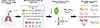 Figure 1
Experimental strategy. Mesenchymal cells (MCs) were isolated from bronchoalveolar lavage (BAL) fluid derived from lung transplant recipients. MCs were screened using clinical parameters and then pooled together prior to single-cell multiome profiling. The donor identity of each cell was determined using genetic variants captured in the gene expression and chromatin accessibility reads. Workflow was created using BioRender.com.
Classification models predict CLAD status of patient-derived MCs from single-cell gene expression. To identify transcriptomic markers of CLAD in patient-derived MCs, we trained classification models to distinguish cells originating from CLAD versus non-CLAD lungs (Figure 2A). To determine the optimal number of genes in the classifier, we quantified the model performance while varying the parameter, which controls the number of genes with nonzero regression coefficients. Higher values of indicate a stronger regularization and result in fewer genes selected. The accuracy score and the corresponding number of genes for each α-value were reported (Figure 2B). The classifiers achieved high accuracy, with the highest test accuracy of 99.2% on classifying the late-time-point MCs (Figure 2B). In addition, we calculated the Jaccard similarity index between each set of selected genes across different parameter values (Figure 2C). The high similarity score between adjacent pairs of α values indicates that a key set of genes persists across a range of α parameters. To ensure that our model learned the true biological signal of CLAD status, rather than simply biological variance among donors, we additionally evaluated our model by holding out all cells from one donor at a time. We observed similar performance training on all donors compared to one donor leave-out, indicating that the model is not simply capturing biological variation among donors (Supplemental Figure 2).
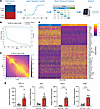 Figure 2
Classifying CLAD status from single-cell gene expression. (A) Workflow of training logistic regression classifier. (B) The blue line indicates average accuracy score of the logistic regression classifiers from 5-fold cross-validation. Error bars indicate the variance in accuracy across folds. The green lines indicate the number of genes with non-zero coefficients from the logistic regression classifiers trained on the test sets. (C) Heatmap showing the overlap of genes among different coefficients. (D) Heatmaps depicting the expression levels of gene signatures in CLAD patient–derived MCs constructed from the logistic regression classifiers with α of 0.1. Each column represents a cell, and each row represents 1 gene colored by gene expression level. (E) RT-qPCR analysis of CXCL12, DCN, CRLF1, and IL6ST expression from CLAD and non-CLAD cell lines. **P ≤ 0.01; ***P ≤ 0.001 by unpaired, 2-tailed Student’s t test.
When applying the same classification approach to the early-time-point MCs, we found that classification was more challenging compared with the late-time-point MCs. The highest test accuracy achieved was 91.2%, and the classifier required more gene features to attain this performance (Supplemental Figure 3A). This suggests that there is less transcriptional difference among the early-time-point MCs than the late-time-point MCs. Differential expression analysis further supports this observation, in that only 66 genes were significantly differentially expressed in the early-time-point MCs. In comparison, 1,707 genes were significantly differentially expressed in the late-time-point MCs (Supplemental Figure 3B).
To select a final α value for subsequent analyses, we identified an “elbow” in the plot of accuracy vs number of genes, choosing a model that uses as few genes as possible without a notable drop in accuracy. We opted for an α of 0.1, which identified 47 genes for the late-time-point group (Figure 2D), and an α of 0.05, resulting in the selection of 54 genes for the early-time-point group (Supplemental Figure 3C). These classifiers achieved test accuracy of 98.7% and 85.8% in the late- and early-time-point groups, respectively. Many of the genes selected by these classifiers are plausibly linked to CLAD based on previous studies. The selected genes for CLAD include DCN, a known gene involved in fibrogenesis (19). We observed that CXCL12, an important homeostatic chemokine implicated in both homeostatic and inflammatory contexts (20–24), was upregulated in CLAD MCs (Figure 2D). To verify differential expression of select genes discovered through scRNA-seq of CLAD MCs, we performed real-time quantitative PCR (RT-qPCR) for CXCL12, DCN, CRLF1, and IL6ST in MCs isolated from additional CLAD and non-CLAD donors (Figure 2E). We successfully verified increased mRNA expression in CLAD MCs for each of the 4 genes examined (Figure 2E).
Chromatin accessibility analysis highlights CEBPD as a key positive regulator in CLAD patient–derived MCs. We next examined differences in chromatin accessibility profiles between CLAD and non-CLAD MCs. First, we performed peak calling on each sample, then merged the peaks, identifying 114,464 accessible peaks that were concordant among donors. Quality control to filter cells was performed for each sample separately (see Methods and Supplemental Figure 4). To find peaks with differential accessibility in each condition, we performed Wilcoxon rank-sum tests on CLAD and non-CLAD samples. Among 114,464 accessible peaks, we identified 2,983 (2.61%) upregulated peaks and 4,120 (3.60%) downregulated peaks in CLAD by setting filtering thresholds of an FDR of 0.05 or less and an absolute log2(fold change) of 1 or greater (Figure 3A).
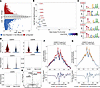 Figure 3
Single-cell chromatin accessibility analysis to identify epigenetic markers of CLAD MCs. (A) MA plot showing marker peaks in CLAD. (B) TF motifs enriched in CLAD ranked by enrichment. (C) Sequence logo of motifs from CEBP family members (CEBPA, CEBPB, CEBPD, CEBPE, and CEBPG) in position weight matrices (PWMs). (D) Violin plots depicting the expression levels of CEBP family members (CEBPA, CEBPB, CEBPD, CEBPE, and CEBPG) across conditions. The width of each plot represents the distribution of expression values. Comparisons are shown between late-time-point MCs with (red) or without (blue) CLAD. (E) Dot plot showing correlation between motif accessibility and its corresponding TF expression. The x-axis is Pearson’s correlation coefficient between motif deviation z scores from chromVAR and its corresponding TF expression. The y-axis is the TF deviation z scores from chromVAR. TFs from CEBP family memebrs are annotated and CEBPD is highlighted in red. (F and G) CEBPD footprinting of late-time-point (F) and early-time-point (G) MCs.
To understand the key TFs that could bind to these accessible chromatin sites, we then performed a motif scan. The CCAAT-enhancer-binding protein (CEBP) family of transcription factors, including CEBPD, a TF involved in proliferation, apoptosis, and possibly fibrogenesis (25–27), was noted to be enriched in CLAD (Figure 3B). However, members of the CEBP family share high similarities in their binding motifs, which can be visualized as sequence logos derived from position weight matrices (PWMs) (Figure 3C) (28). This motif similarity is common among many TF families, making it challenging to pinpoint the specific TFs that might be involved in regulation (29). To address this, we incorporated the matched gene expression data. We first examined the expression of the CEBP family and found that CEBPD is the only TF among the CEBP family that is enriched in CLAD; it exhibited 32-fold higher expression in CLAD MCs than in non-CLAD MCs (Figure 3D). CEBPB showed similar expression levels between the two conditions, while CEBPA, CEBPE, and CEBPG were either expressed at low levels or not expressed at all (Figure 3D). We further calculated a Pearson correlation between the gene expression of TFs and the chromatin accessibility of their corresponding motif. CEBPD yielded the highest correlation of 0.9 (adjusted P = 2.43 × 10–179) (Figure 3E). Moreover, we performed footprinting analysis at predicted CEBPD binding sites. When a TF is bound to DNA, it physically protects that region from transposase activity during ATAC-seq, creating a characteristic footprint, or a localized dip in accessibility at the center of the motif, flanked by regions of higher accessibility. This footprint pattern was clearly observed at CEBPD motifs, indicating active binding of CEBPD (Figure 3F). The footprint pattern exists in both conditions, but the significant difference in accessibility suggests a change in binding affinity between CLAD and non-CLAD MCs, which may drive the gene regulatory differences. In contrast, footprint analysis of early-time-point MCs revealed minimal differences in accessibility, suggesting that CEBPD-associated regulatory changes emerge later in the disease course and are not present shortly after transplantation (Figure 3G). Taken together, these results point to CEBPD as a candidate TF driving gene regulatory changes in CLAD MCs and such alterations do not take place early in the transplantation.
Single-cell analysis reveals temporal cell state shifts in patient-derived MCs. To explore the compositional heterogeneity in MCs derived from lung transplant patients across different time points, we performed integration and unsupervised clustering using linked inference of genomic experimental relationships (LIGER) (30, 31). We integrated samples from 12 donors to identify shared and distinct cell states between CLAD and control cells despite biological variation among donors (Figure 4, A and B). We then annotated clusters using top Gene Ontology (GO) terms from differentially expressed genes (DEGs) and enriched TF motifs (Figure 4A). We also compared published marker genes from previously identified fibroblast cell states, and these published studies were utilized to help with the nomenclature (32, 33). Eight distinct cell states were identified and annotated as proliferating, nerve-associated, immune-interacting, vascular-interacting, intermediate, prefibrotic, fibrotic, and inflammatory (Figure 4A). The marker genes and GO terms for the vascular-interacting and immune-interacting populations are concordant with those identified in a previous cross-tissue study of fibroblast cell states (32). Immune-interacting clusters are enriched for GO terms related to humoral immune response (34) and cytokine-mediated signaling. The nerve-associated cluster exhibits GO terms associated with neurogenesis and neuronal development. The features present in this cluster are similar to those of recently discovered fibroblasts related to airway peripheral nerves (33). The proliferating cell state is distinguished largely by expression of mitotic cell cycle genes, microtubule and cytoskeleton genes, and other markers of proliferation. GO terms enriched in the fibrotic cluster included positive regulation of transcription by RNA polymerase II, cell surface receptor signaling pathway, regulation of cell differentiation, cell communication, signal transduction, and cell motility. These included genes such as CRLF1, VEGFA, HDAC4, ITGB8, and CXCL12. Molecular processes identified by GO analysis in this cluster included terms such as CD4 receptor binding and extracellular matrix (ECM) structural constituents with genes such as IL16, PLSCR4, PLSCR1, various collagens, MRXA5, and LAMB1. The inflammatory cluster shows upregulation of neutrophil-mediated immunity and neutrophil activation genes involved in immune responses.
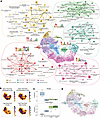 Figure 4
Cell state heterogeneity and cell state shifts in patient-derived MCs. (A) Uniform manifold approximation and projection (UMAP) representation of 22,918 cells derived from lung transplant recipients at the 2 time points. Each dot represents a single cell, and cells are colored by clusters. (B) Density plots of integrated MCs. Top left: Early time point (later developed CLAD). Top right: Early time point (later not developed CLAD). Bottom left: Late time point (CLAD patient–derived). Bottom right: Late time point (non–CLAD patient–derived). (C) Compositional change in fibrotic (top) and inflammatory (bottom) clusters. The bounds of the boxes represent the 25th and 75th percentiles (interquartile range, IQR); the line within each box represents the median; the whiskers extend to the minimum and maximum values within 1.5× IQR from the box bounds; individual data points beyond the whiskers are plotted as outliers. (D) Velocities fit by VeloVAE are visualized as streamlines in the UMAP plot.
Having characterized the cell state diversity of the MCs, we next looked for cell state shifts/compositional differences between MCs across different conditions (Figure 4B). A striking observation was the unique pattern that emerged for CLAD MCs where there was a shift toward the fibrotic state. Most of the cells in the fibrotic cluster came from CLAD patients (Figure 4C). The inflammatory state was predominantly enriched in early-time-point MCs, possibly reflecting innate immune engagement during the early posttransplant period. Notably, the composition of early-time-point MCs was highly similar between patients who later developed CLAD and those who did not develop CLAD, with MCs collected from patients who later developed CLAD having a slight shift toward the fibrotic state. These findings are consistent with previous observations that transcriptional and epigenetic differences between CLAD and non-CLAD MCs emerge later in the disease course and are not apparent shortly after transplantation. Collectively, these results indicate that MCs from different time points and conditions occupy different parts of the fibroblast cell state space.
RNA velocity analysis using VeloVAE (35) to investigate potential relationships among the cell states was performed (Figure 4D). The primary cellular state transition suggested was from prefibrotic to fibrotic, with no clear unidirectional relationship between other states.
Enhancer-driven gene regulatory network analysis reveals putative regulators of the CLAD-enriched fibrotic state. The joint gene expression and chromatin accessibility data we collected provided a unique opportunity to investigate regulatory activity involving the expression of TFs, the chromatin accessibility of TF-binding sites, and the expression of target genes within MCs among different cellular states. For this purpose, we used SCENIC+ to infer an enhancer-driven gene regulatory network (eGRN) (36). SCENIC+ looks for 3-way relationships in which TFs are expressed in cells where peaks containing binding sites for the TFs are accessible, and the accessibility of the binding sites is also correlated with the expression of nearby genes. In total, this analysis identified 447 TFs that are predicted to regulate downstream target genes. Among these TFs, we identified 24 activator eRegulons (correlation coefficient > 0.5) predicted to target a total of 12,174 regions and 3,703 target genes. We also calculated the cell state specificity of each activating TF (Figure 5A). For example, one notable activating factor is NFIB, a TF known to be expressed in lung MCs (37). NFIB shows the highest activity in the nerve-associated state (Figure 5A). Research has demonstrated that NFIB plays an important role in the development and progression of various nerve-related diseases (38, 39). Moreover, HMGA1, a regulator enriched in the inflammatory cluster, has been shown to be involved in inflammatory pathways (40). This is consistent with our observation that, early after lung transplantation, MCs present an inflammatory state. CEBPD, the transcription factor found to be enriched in the CLAD state, showed the highest activity in the fibrotic cluster.
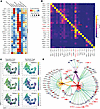 Figure 5
Gene regulatory analysis combining single-cell transcriptomic and epigenomic features nominates regulators of CLAD-enriched fibrotic state. (A) Dot plot showing the state specificity of the predicted targets for each TF. Each row is a TF and each column is a cell state. The color of each square indicates the aggregate expression of predicted target genes for each TF in each cell state. Dot size indicates the area under the recovery curve (AUC) for a classifier trained to predict the cell state from the chromatin accessibility of target peaks. Higher AUC means that the target regions for the TF are more state-specific. (B) Heatmap showing overlap between predicted target regions of each TF. Each square shows the Jaccard similarity index (intersection of target regions divided by the union of target regions) for the pair of TFs in the corresponding row and column. Higher values indicate more overlap between the targets of the pair of TFs. (C) UMAP visualization of CEBPD, FOXP2, and SOX4 and predicted targets. Each dot represents a cell. Dots are colored by TF expression (left) or the sum of target gene expression (right). (D) Visualization of the enhancer-driven gene regulatory network formed by CEBPD, FOXP2, and SOX4. Each circle is a gene; color and size represent the log2(fold change) of the gene’s expression in fibrotic MCs compared with the rest of the cells. Thus, a large, red circle indicates a gene with much higher expression in fibrotic MCs and a large blue circle indicates a gene with much lower expression in fibrotic MCs. Each diamond is a chromatin accessibility peak (putative enhancer) and its color represents the log2(fold change) of the accessibility in fibrotic MCs compared with the rest of the cells (yellow is higher accessibility in fibrotic MCs). Each line indicates a regulatory relationship; line color indicates the strength of the correlation between peak and gene (higher correlation is more yellow). Gene symbols in red letters are part of the CLAD signature from Figure 2E.
We further examined activating factors enriched in the fibrotic cell state. The factors with the most state-specific expression in the fibrotic state and the most predicted targets are CEBPD (2,433 targets), FOXP2 (846 targets), and SOX4 (497 targets). Although PBX1 (1,253 targets) and MEIS1 (561 targets) also have high expression in the fibrotic state and a substantial number of predicted targets, they additionally show substantial activity in the nerve-associated state, indicating that their activity is less specific to the fibrotic state. Interestingly, the predicted targets of CEBPD, FOXP2, and SOX4 substantially overlap, while PBX1 and MEIS1 are predicted to regulate a separate set of genes that overlap between the two factors but are largely disjoint from genes regulated by CEBPD, FOXP2, and SOX4 (Figure 5B). The aggregate expression of predicted gene targets of CEBPD, FOXP2, and SOX4 shows strong enrichment in the fibrotic state (Figure 5C). Strikingly, this aggregate expression is more state-specific than the gene expression of the TFs themselves, likely reflecting state-specific differences in the chromatin accessibility of the TF binding motifs.
We further investigated the predicted gene and peak targets of CEBPD, FOXP2, and SOX4. We plotted their gene regulatory network to confirm the observation of cooperativity among and visualize the target genes of the factors (Figure 5D). Interestingly, 13 of these target genes were also predicted by our logistic regression model as key upregulated genes related to CLAD (Figure 2E). Several of the CLAD signature genes, including DCN, CXCL12, IL6ST, CRLF1, TTC28, and ADGB, are also predicted to be co-regulated by 2 or more of the factors.
CEBPD knockdown partially reverts fibrotic gene expression signatures. Given that CEBPD is noted to be enriched in the CLAD disease state and is the fibrotic cluster-specific factor with the most predicted targets (and the most predicted targets that are also part of our CLAD signature), we decided to further explore the regulatory role of CEBPD. To do this, we knocked down CEBPD using small interfering RNAs (siRNAs). CLAD MCs were treated with either a CEBPD-targeting siRNA (treated group) or a scrambled siRNA (control group) for 16 hours. Knockdown efficacy was confirmed at both the mRNA and protein levels using qPCR and Western blots (Figure 6, A and B). To measure the gene expression changes induced by CEBPD silencing, we performed bulk RNA-seq on both the treated and control groups across the 4 CLAD samples. After sequencing, we obtained more than 36 million reads per sample mapped to genes. Differential expression analysis revealed a total of 2,436 DEGs between control and knockdown samples, with 1,265 genes upregulated and 1,171 genes downregulated after CEBPD silencing (Figure 6C). The overlap between DEGs from the bulk RNA-seq and the predicted downstream targets of CEBPD from the eGRN was examined. Of the 593 genes predicted to be downstream targets of CEBPD as an activator, 85 were indeed downregulated after CEBPD silencing, while 64 remained upregulated (Supplemental Figure 6A). Additionally, of the 201 genes predicted to be downstream targets of CEBPD as a repressor, 11 were upregulated and 32 remained downregulated. Next, we compared the DEGs from the bulk RNA-seq with the previously identified CLAD signature in Figure 2 from the logistic regression model (Supplemental Figure 6B). None of the upregulated genes in CLAD showed significantly higher expression in the CEBPD-silenced group than in the control group. Notably, 5 of the 17 upregulated genes in CLAD, including CXCL12 and IL6ST, were significantly downregulated in the bulk RNA-seq (Figure 6C). Similarly, 6 out of 30 downregulated genes in CLAD were significantly upregulated in the bulk RNA-seq after knockdown (Figure 6C). Furthermore, we added up the total expression of all 17 upregulated signature genes in both control and knockdown cells, and found that the total expression of the upregulated CLAD signature genes (in units of counts per million) was lower in each of the 4 knockdown samples compared with its donor-matched control sample (Figure 6D). These results suggest that silencing CEBPD partially reverts the CLAD gene expression signature we identified.
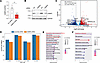 Figure 6
CEBPD knockdown partially reverts CLAD gene expression signature. (A) RT-qPCR analysis of expression of CEBPD relative to GAPDH in CLAD MCs treated with scrambled or CEBPD siRNA. Comparisons were conducted using unpaired, 2-tailed Student’s t test. *P < 0.05. (B) Protein expression of CEBPD in CLAD MCs treated with scrambled or CEBPD siRNA as measured by Western blot analysis. (C) Volcano plot illustrating the differentially expressed genes following CEBPD knockdown in CLAD MCs. The x-axis represents the log2(fold change), and the y-axis represents the –logFDR. Genes that are significantly upregulated (log2FC > 0.5, adj. P < 0.05) are marked in red, while significantly downregulated genes (log2FC < –0.5, adj. P < 0.05) are marked in blue. Non-significant genes are shown in gray. Gene symbols highlighted with texts are part of the CLAD signature from Figure 2E. (D) Bar plot showing the total expression of the upregulated CLAD signature genes between CLAD MCs treated with scrambled (blue) or CEBPD (orange) siRNA. The x-axis is the cell line; control and knockdown samples from the same line are shown as adjacent bars. The y-axis represents the log sum of counts per million. (E) GO enrichment analysis showing downregulation of ECM-related genes after CEBPD knockdown. (F) KEGG pathway enrichment analysis showing downregulation of glutathione metabolism–related genes after CEBPD knockdown.
To further understand the transcriptomic changes induced by CEBPD knockdown, we performed GO enrichment analysis and examined enriched Kyoto Encyclopedia of Genes and Genomes (KEGG) pathways (Figure 6, E and F). The top GO terms identified as downregulated were ECM structural constituent and actin binding, with decreased expression of genes such as COL11A1, COL12A1, FBN2, and POSTN. KEGG pathway analysis also identified downregulation in important pathways of glutathione metabolism, DNA replication, cell signaling, and biosynthesis of amino acids. These data suggest a pivotal role for CEBPD in regulating MC activation and fibrotic differentiation.
CEBPD is a key regulator of fibrotic function in CLAD MCs. To confirm that increased CEBPD expression is associated with CLAD disease state, CEBPD was evaluated at the protein level in a separate cohort of CLAD and non-CLAD MCs matched by time after transplantation (Supplemental Figure 7A). Matched pairs were obtained from patients within 4 months (±1 day) of each other (Supplemental Table 2). Significantly higher CEBPD protein expression was noted in CLAD MCs (paired t test, P = 7.454 × 10⁻⁵), and linear regression analysis demonstrated no significant correlation between time after transplantation and CEBPD protein (non-CLAD: r2 = 0.004015, P = 0.8713; CLAD: r2 = 0.07175, P = 0.4859). To exclude any potential impact of culture conditions on CEBPD expression, MCs from patients with and without CLAD were cultured for 3 passages, and protein samples were collected and analyzed for the expression of CEBPD. Two-way repeated-measures ANOVA demonstrated a significant effect of group, with higher CEBPD protein expression in CLAD MCs (P = 0.0033), but no effect of passage (P = 0.4893) and no group × passage interaction (P = 0.4413), indicating that CEBPD expression was not altered by serial passaging (Supplemental Figure 7B).
To further investigate the functional role of CEBPD in regulating fibrotic transformation of MCs in CLAD, lentiviral constructs were utilized to overexpress CEBPD in non-CLAD MCs (CEBPD-OE) and to silence CEBPD expression in CLAD MCs (CEBPD-KD). CEBPD was noted to regulate both ECM deposition and contractility, with CEBPD overexpression in non-CLAD MCs significantly increasing collagen I and α-smooth muscle actin (α-SMA) expression, whereas CEBPD silencing in CLAD MCs attenuated their constitutive expression (Figure 7, A and B). Immunofluorescence analysis confirmed enhanced α-SMA organization into contractile stress fiber networks in CEBPD-OE non-CLAD MCs, comparable to that observed in CLAD MCs, while CEBPD knockdown disrupted this cytoskeletal architecture (Figure 7, C and D). Consistent with the established role of CEBPD in fibronectin transcription (41), CEBPD overexpression induced robust fibronectin expression in non-CLAD MCs, whereas fibronectin levels were markedly reduced following CEBPD silencing in CLAD MCs (Figure 7E). Functionally, CEBPD-dependent cytoskeletal remodeling was associated with enhanced contractility, as measured by 3D collagen gel contraction. Gel contraction in CEBPD-OE non-CLAD MCs was comparable to CLAD controls but was significantly impaired in CLAD MCs following CEBPD knockdown (Figure 7F). CEBPD also regulated mesenchymal proliferative capacity. BrdU incorporation demonstrated increased proliferation in CEBPD-OE non-CLAD MCs and reduced proliferation following CEBPD silencing in CLAD MCs (Figure 7G). These changes were accompanied by corresponding alterations in cyclin D1 expression (Figure 7H). Finally, scratch assays revealed enhanced wound closure in CEBPD-OE non-CLAD MCs, whereas CEBPD silencing significantly impaired wound closure in CLAD MCs (Figure 7, I and J). Together, these data identify CEBPD as a key regulator of mesenchymal fibrogenic functions, including matrix production, contractility, proliferation, and motility.
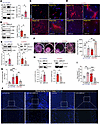 Figure 7
CLAD MC–associated CEBPD promotes fibrogenic functional competence, including mesenchymal contractility, matrix synthesis, proliferation, and migration. (A and B) Western blot analysis of collagen 1 with corresponding densitometry, together with α-SMA and CEBPD expression in CEBPD-overexpressing (CEBPD-OE) (A) and CEBPD-silenced (CEBPD-KD) (B) MCs. (C and D) Representative micrographs showing extent of differentiation via α-SMA expression in CEBPD-OE non-CLAD MCs (C) and loss of α-SMA signal in CEBPD-KD CLAD MCs (D). Nuclei were counterstained with DAPI. Original magnification, ×100 and ×200. Scale bars: 100 μm. (E) Western blot analysis of fibronectin with corresponding densitometry. (F) Contractile capacity assessed using a 3D collagen gel contractility assay, with quantification of gel area at 72 hours and representative gel images. (G) Proliferative potential assessed by BrdU incorporation following 6-hour labeling in CEBPD-OE non-CLAD MCs and CEBPD-KD CLAD MCs. (H) Western blot analysis of cell cycle progression marker, cyclin D1, with corresponding densitometry. (I and J) Migratory potential accessed by wound-healing “scratch” assay in MCs with CEBPD-OE or CEBPD-KD. Quiescent MCs that were wounded at baseline and analyzed after 72 hours for DAPI-stained cells infiltrating the wounded area (I). Images were captured at ×40 magnification showing the margins of the wound within dotted lines and cells infiltrating the wounded area. Inset: magnified ×40 images of cells in the wounded area. (J). Data in A, B, and E–I are represented as mean ± SEM. *P < 0.05, **P < 0.01; ***P < 0.001 by unpaired, 2-tailed Student’s t test (A, B, E, and H) or 1-way ANOVA with Bonferroni’s post hoc test (F, G, and I).
Cultured MCs retain and reflect their in vivo transcriptomic signatures. To determine whether our cultured MCs retain and reflect their in vivo phenotype, we analyzed MCs directly isolated from CLAD human lung autopsy samples. We collected and performed scRNA-seq on cells from human lung autopsy samples, including 1 from a CLAD patient and 2 from healthy controls. Due to the low number of MCs detected in these initial samples (Supplemental Figure 8A), we sequenced 2 additional samples (1 from the same CLAD patient and 1 from the same healthy control) after CD45+ cell depletion (Figure 8A).
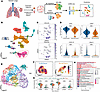 Figure 8
Cultured MCs retain and reflect their in vivo phenotype. (A) Overview of scRNA-seq sample preparation and analysis. Workflow was created using BioRender.com. (B) UMAP representation of 28,279 cells from both non-depleted and CD45+ cell–depleted samples. Each dot represents a single cell, and cells are colored by cell type. MCs are circled in a red dashed line. (C) UMAP colored by COL1A1 (upper) and PDGFRA (bottom) expression. (D) Violin plots depicting the expression levels of DCN (upper left), IL6ST (upper right), CXCL12 (bottom left), and CRLF1 (bottom right) across conditions. The width of each plot represents the distribution of expression values. Comparisons are shown between CLAD tissue (blue) and normal tissue (orange). (E) UMAP representation of 3,902 tissue MCs. (F) Density plots of integrated tissue MCs (left: CLAD tissue; right: normal tissue). (G) Split violin plots showing the expression levels of CEBPD, CRLF1, C1R, DCN, ZFPM2, CXCL12, and NFIB. Each violin is split to compare cluster FOXF1+_MC_1 (CLAD-enriched) with the rest of the MCs, with the width representing the distribution of expression values. (H) GO enrichment analysis showing upregulation of complement activation–related and ECM-related genes in CLAD tissue MCs. ***P ≤ 0.001.
After quality control filtering, we obtained 28,279 cells from both non-depleted and CD45+ cell–depleted samples. We performed integration and unsupervised clustering using LIGER (30, 31), and identified non-immune cell types including mesenchymal, endothelial, epithelial cells, pericytes, and myofibroblasts as well as immune cell types including macrophages, monocytes, mast cells, natural killer (NK)/natural killer T (NKT) cells, red blood cells (RBCs), and proliferating cells (Figure 8B). A total of 4,254 tissue MCs were identified based on the expression of COL1A1 and PDGFRA (Figure 8C). Differential expression analysis between CLAD tissue MCs and healthy controls revealed 5,263 upregulated genes and 5,130 downregulated genes in CLAD tissue MCs. To assess the transcriptional similarity between CLAD tissue MCs and CLAD cultured MCs, we compared these DEGs with the previously identified CLAD signature in Figure 2 from the logistic regression model. Notably, 9 out of 17 upregulated genes in CLAD cultured MCs were also significantly upregulated in the CLAD tissue MCs (Figure 8D and Supplemental Figure 8B). Of these, 5 genes (DCN, IL6ST, CXCL12, CRLF1, and NTNG1) were predicted as the downstream targets of CEBPD based on the eGRN, and 4 genes (IL6ST, CXCL12, NTNG1, and NFIB) had previously been shown to be downregulated after CEBPD silencing. Additionally, 6 out of 30 downregulated genes in CLAD cultured MCs were also significantly downregulated in the CLAD tissue MCs, with 1 gene (ID1) previously shown to be downregulated after CEBPD silencing (Supplemental Figure 8C). These results suggest that MCs in vivo shared key transcriptomic signatures with their cultured counterparts.
To obtain a more fine-grained resolution of cell states in tissue MCs, we performed subclustering (Figure 8E). This analysis identified a subcluster, FOXF1+_MC_1 (CLAD-enriched), which was specifically enriched in CLAD samples (Figure 8F and Supplemental Figure 9A). Importantly, this subcluster exhibited the highest expression of CEBPD compared with other clusters, consistent with the fibrotic state observed in vitro (Figure 8G). Additionally, 5 genes (CRLF1, C1R, DCN, ZFPM2, and CXCL12), predicted as downstream targets of CEBPD based on the eGRN, were significantly upregulated in this subcluster (Figure 8G). Furthermore, 2 CLAD-upregulated signature genes (NFIB and COL3A1) were also significantly upregulated (Supplemental Figure 9B). To further assess the enrichment of our signature genes, we performed gene set enrichment analysis (GSEA) (42, 43). The analysis revealed significant enrichment in the upregulated signature, with a normalized enrichment score (NES) of 1.97. Although the whole downregulated gene set was not significantly enriched, some of the genes still were significantly downregulated in this subcluster (Supplemental Figure 9C). GO enrichment analysis of the DEGs in this subcluster revealed significant upregulation of biological processes related to ECM organization, ECM structural organization, and external encapsulating structure organization, suggesting their fibrotic phenotype and aligning with the top downregulated GO terms observed after CEBPD silencing (Figure 8H). Additionally, several GO terms associated with morphogenesis were enriched, consistent with those observed in the fibrotic state of MCs in vitro. These results suggest this subcluster may represent the in vivo counterpart of the fibrotic state identified in vitro.


