
Oncology

Abstract
Acute myeloid leukemia (AML) is the most common adult leukemia diagnosis. Bone marrow (BM) niche significantly influences the initiation and progression of AML. However, our knowledge about the effect of leukemic niche on leukemia stem cells (LSC) and leukemogenesis is limited. In this study, we identified an extrinsic-regulatory function of latexin (Lxn) in leukemogenesis. Using a MLL-AF9–induced AML mouse model in WT and Lxn-KO (Lxn–/–) recipient mice, we found that Lxn deletion in the BM niche enhanced the survival of AML mice by suppressing LSCs and reducing blood blasts. Single-cell RNA-seq of stromal cells and cell communication analysis uncovered downregulation of the leukemia inhibitory factor receptor (LIFR) signaling pathway in the Lxn–/– niche, particularly within mesenchymal stromal cells (MSCs). Mechanistically, reduced LIFR level in Lxn–/– MSCs upregulated Cxcl9 expression, leading to increased recruitment of CD8 T cells and enhanced cytotoxicity against leukemic cells. Combination of Lxn niche deletion and immune checkpoint inhibitor PD-1 further prolonged survival. The findings have important clinical implications, suggesting that Lxn inhibition could improve the efficacy of AML therapies by targeting the leukemia niche and enhancing immune surveillance.
Authors
Cuiping Zhang, Xia Yao, Pinpin Sui, Liming Hou, Bowen Yan, Larry L. Luchsinger, Gang Huang, Sheng Tong, Youwen Zhang, Bojing Shao, Hong Qian, Hong Zheng, Hui Zhong, Feng-Chun Yang, Ying Liang

Abstract
Integrin αVβ3, a transmembrane receptor involved in tumor growth and metastasis, specifically recognizes and binds proteins with the Arg-Gly-Asp (RGD) peptide sequence. Using mRNA and/or protein expression data from 496 thyroid cancer (TC) samples in The Cancer Genome Atlas, 14 TC cell lines, and 70 TC and 10 normal thyroid tissues, we found that papillary TC exhibits the highest αVβ3 integrin expression. We then evaluated the therapeutic efficacy of a radiolabeled RGD analog, 177Lu-DOTA-EB-cRGDfK, in TC. Genetic knockout and overexpression of αVβ3 in TC cell lines confirmed the target specificity of 177Lu-DOTA-EB-cRGDfK. In mouse xenograft models established from human TC cell lines with high αVβ3 expression, 177Lu-DOTA-EB-cRGDfK demonstrated superior antitumor efficacy compared with standard-of-care lenvatinib and placebo. However, no synergistic benefit was observed with combination therapy. Biodistribution studies identified the kidneys as the dose-limiting organ. RNA-seq analysis of resected tumors demonstrated that 177Lu-DOTA-EB-cRGDfK induced a type I IFN response, characterized by upregulation of IFI6, IFIT1-2, and MX1, compared with both lenvatinib-treated tumors and placebo. These findings identify αVβ3 integrin as a promising therapeutic target in a subset of TCs and demonstrate that 177Lu-DOTA-EB-cRGDfK exhibits superior efficacy to lenvatinib, supporting its potential clinical translation for progressive TC refractory to standard therapies.
Authors
Sonam Kumari, Rhitajit Sarkar, Zhantong Wang, Shilpa Thakur, Laura Abaandou, Oksana Gavrilova, Huiyan Lu, Noha Behairy, Lixin Lang, Dale Kiesewetter, Vasyl Vasko, Joanna Klubo-Gwiezdzinska
Anti-Notch plus endocrine therapy in ER+ breast cancer inhibits cancer stem cells by increasing DAXX
Abstract
Resistance to endocrine therapy (ET) in ER+ breast cancer is mediated by Notch signaling, but the clinical application of anti-Notch therapy has been limited by the lack of predictive biomarkers. To identify Notch-regulated biomarkers, we conducted a pre-surgical window study evaluating ET combined with the γ-secretase inhibitor (GSI) MK-0752. RNA expressions in tumors were measured using an Affymetrix array and by real-time PCR. ET plus GSI showed more genes were decreased than ET alone. Specifically, DAXX, NOXA, and LFNG RNAs were increased, while fifteen additional transcripts were decreased. Mechanistically, GSI reduced Notch1 occupancy at CSL-binding elements within HES1, HEY2, HEYL, CCND1, MKI67, and DAXX genes, and inhibited cancer stem cells (CSCs) by 90% to 100%. This anti-CSC effect required DAXX, while GSI treatment or Notch1/4 knockdown increased DAXX expression, suggesting transcriptional repression by Notch. Using mouse tumor xenograft studies, ET plus MK-0752 resulted in complete regression of MCF-7 tumors, with DAXX-high tumors showing greater treatment sensitivity. Clinically, high DAXX expression was associated with improved recurrence-free and overall survival. This study found that anti-Notch plus ET in ER+ breast cancer inhibits cancer stem cells by increasing DAXX, a promising predictive biomarker. These findings support clinical evaluation of therapies that increase DAXX expression.
Authors
Kathy S. Albain, Debra Wyatt, Andrei Zlobin, Susan G. Hilsenbeck, Cheryl M. Czerlanis, Daniel S. Peiffer, Kyle R. Convington, Constantine Godellas, Shelly S. Lo, Patricia A. Robinson, Kathy Czaplicki, Barbara Busby, Davide Bova, Ping Tang, Patrick J. Stiff, Suzanne A.W. Fuqua, Lucio Miele, Clodia Osipo
Abstract
BACKGROUND. Hepatocellular carcinoma (HCC) exhibits molecular heterogeneity that challenges histopathologic classification and biomarker discovery. We assessed whether spatially resolved N-glycan imaging with machine learning could classify tumor regions and infer glutamine synthetase (GS) status. METHODS. In this retrospective study, MALDI mass spectrometry imaging of N-glycans was performed on formalin-fixed, paraffin-embedded sections from two independent cohorts (discovery, n = 88; validation, n = 60) with pathologist annotation. An XGBoost classifier was trained on 90 discriminative N-glycan features using patient-grouped cross-validation. Performance was assessed by AUC for pixel- and biopsy-level discrimination of tumor from adjacent non-tumor tissue, and for GS status classification. RESULTS. Pixel-level AUCs were 0.95 (cross-validation) and 0.89 (external validation); biopsy-level AUCs were 1.0 and 0.97, correctly identifying 97% of tumor-containing biopsies. Probability maps recapitulated pathologist-defined boundaries; UMAP embeddings captured inter- and intratumoral heterogeneity. Discriminative species (m/z 2393.846, 1905.634, 1743.579, 1809.639) reflected complex, fucosylated, branched remodeling. N-glycans bearing six GlcNAc residues were enriched in GS+ (n = 45) versus GS− (n = 17) tumors (P = 0.001) and discriminated GS status (AUC = 0.75), consistent with GLUL and MGAT5 upregulation in TCGA-LIHC. CONCLUSION. MALDI N-glycan imaging with machine learning enables spatially resolved, objective classification of HCC and links glycan phenotypes to tumor-associated metabolic programs. TRIAL REGISTRATION. Not applicable; retrospective analysis of archival, de-identified tissue. FUNDING. NIH/NCI R01CA285370, 1R01CA289381, R33CA267226, R01CA282022, R21CA263464, R21CA286287, R01CA253460, S10OD030212, R01CA251155, R01CA250227, U01CA271887, P50CA295495, P30CA138313, P20GM130457, P30DK123704, P30DK120531,R24DK139775; NIH/NIA R01AG078702; Smart State Endowment, State of South Carolina; LeDucq Foundation.
Authors
Muhammed F. Bayram, Jade K. Macdonald, Andrew DelaCourt, Peggi M. Angel, Richard R. Drake, Aatur Singhi, David Geller, Satdarshan P. Monga, Amit Singal, Anand Mehta
Abstract
BACKGROUND. This prospective, single-arm, multicenter phase 1/2 trial evaluated vorinostat added to standard graft-versus-host disease (GVHD) prophylaxis in pediatric, adolescent, and young adult (AYA) patients undergoing allogeneic hematopoietic cell transplantation (HCT) from HLA-matched related, HLA-matched unrelated, and haploidentical donors. METHODS. Patients aged 3–39 years received twice-daily vorinostat with tacrolimus/methotrexate after HLA-matched HCT from day −10 to +30, or with post-transplant cyclophosphamide/tacrolimus/mycophenolate mofetil after haploidentical HCT from day +5 to +30. The primary endpoint was cumulative incidence of grade II–IV acute GVHD by day +100. All outcomes were based on intention-to-treat analysis. RESULTS. Forty-three patients were enrolled; median age was 19 years, with 74% receiving HLA-matched and 26% haploidentical HCT. The recommended phase 2 dose was 60 mg/m² twice daily. No dose-limiting toxicities, unexpected vorinostat-related serious adverse events, or primary graft failures occurred. Median neutrophil and platelet recovery occurred at 14 and 18 days, respectively. Day +100 grade II–IV and III–IV acute GVHD were 14% (95% CI, 5.6, 26) and 4.7% (95% CI, 0.83, 14), respectively. One-year overall survival was 88.4% (95% CI, 79.3, 98.5), relapse 14% (95% CI: 5.6, 26), nonrelapse mortality 4.7% (95% CI: 0.8, 14), and GVHD-free/relapse-free survival 55.8% (95% CI: 42.8, 72.8). Correlative studies demonstrated on-target HDAC activity, with increased histone acetylation and lower proinflammatory cytokines. CONCLUSION. These findings support randomized evaluation of vorinostat-based GVHD prophylaxis in pediatric and AYA HCT. TRIAL REGISTRY. ClinicalTrials.gov, NCT03842696.
Authors
Nicolas Parnell, Xiao Cao, Jan H. Beumer, Thomas M. Braun, Yilei Cui, Gary J. Fisher, Guoqing Hou, Julianne Holleran, Tracey Churay, Michelle Rozwadowski, Luna Heider, Mark T. Vander Lugt, Carrie L. Kitko, April L. Rahrig, Ed Peres, Kirsten M. Williams, Julie-An Talano, Vanessa A. Fabrizio, Ghada Abusin, Gregory A. Yanik, John Magenau, Mary Riwes, Marcus J. Geer, Sarah Anand, Monalisa Ghosh, Attaphol Pawarode, Kristen Votruba, Pavan Reddy, Sung Won Choi
Abstract
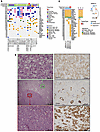
Metastases in renal cell carcinoma (RCC) typically arise from large primary tumors. However, a subset of patients with small renal masses (SRMs; ≤4 cm) can develop metastatic disease. Identifying these tumors is clinically important, as many SRMs are managed with active surveillance, and their study may provide insight into the early acquisition of metastatic competence. It remains unclear whether these tumors acquire distinct metastatic programs or instead show premature activation of the same aggressive programs typically associated with larger tumors. Here, we performed integrated morphological and molecular profiling of a multiinstitutional cohort of metastatic SRMs, including whole-exome sequencing and RNA-Seq, using nonmetastatic primary tumors as controls. Among metastatic, non–clear cell SRMs, we identified NF2-altered tumors, ELOC-mutated RCC, and an mTOR-driven eosinophilic vacuolated tumor. Metastatic clear cell SRMs were enriched by multi-hit aggressive genotypes, including recurrent losses of chromosomes 8p, 9, and 14q, as well as co-occurring driver alterations (≥2 events), including BAP1 and mTOR pathway genes. Transcriptomic analyses revealed enrichment of the non-negative matrix factorization 3 (NMF3) subtype from the IMmotion151 trial-based taxonomy, along with metabolic rewiring and reduced cytotoxic immune effector function. Collectively, these findings identify molecular programs associated with metastatic competence in SRMs, highlight the importance of genomic studies of equivocal non-clear cell SRMs, and provide a biological framework for risk stratification in patients often considered for active surveillance.
Authors
Payal Kapur, Daria Beshnova, Hua Zhong, Ruby Sharma, Pooja Ghatalia, Angela Yoo, Daniel D. Le, Ratna Mukhopadhyay, Alana Christie, Jeffrey Miyata, Shuanzeng Wei, Rana R. McKay, Dinesh Rakheja, Satwik Rajaram, Robert G. Uzzo, A. Ari Hakimi, Zora Modrusan, James Brugarolas
Abstract
Despite advances in treatment approaches for lung cancer, the morbidity and survival of lung cancer patients with malignant pleural effusions (MPE) remain poor. This is in part due to gaps in understanding the role of immune cells in the pleural fluid microenvironment. We performed single cell analysis with flow cytometry validation of CD45+ cells in eight malignant and five benign pleural fluid (BPE) specimens to identify changes in the transcriptomic landscape of immune cells across disease states. We found upregulation of pro-inflammatory signaling pathways, including interferon and TNF signaling, in T cells, B cells, and macrophages in benign compared to malignant pleural effusions. Pro-inflammatory HLA-DR+ macrophages were associated with good survival outcomes while pro-tumorigenic HLA-DR- macrophages with upregulation of angiogenesis, TGFβ, and fibronectin signaling were associated with poor survival outcomes in patients with MPE. We also validated these findings with macrophage cell surface expression markers using flow cytometry in 14 MPE and 7 BPE specimens. Finally, we performed multiplex cytokine analysis which showed enrichment of the type 3 inflammatory cytokine, IL17A, in MPE as a putative mechanism for macrophage reprogramming. These data provide a rich resource for interrogating the immune cell types and states present across the spectrum of pleural disease. They offer not only prognostic value for patient outcomes at the time of pleural fluid collection, but also insights into novel immunotherapy targets.
Authors
Aaditya Khatri, Huimin Wang, Zhicheng Ji, Prekshaben Patel, Smita K. Nair, Javid P. Mohammed, Beth H. Shaz, Andrew B. Nixon, Scott M. Palmer, Kamran Mahmood
Endothelial cell cycle inhibition enables blood vessel maturation to normalize the tumor vasculature
Abstract
Dysfunctional tumor vessels promote disease progression, whereas improved function enhances therapeutic delivery. However, current approaches to normalize tumor vasculature have limited efficacy. In vascular malformations, vessels are similarly dysfunctional, with endothelial cell (EC) hyperproliferation impairing arterial-venous specification. These defects are corrected with palbociclib, a cyclin-dependent kinase 4/6 inhibitor (CDK4/6i) that has beneficial effects on tumor and immune cells, but the effects on tumor vasculature are not well characterized. In our studies, murine mammary tumor ECs (TECs) exhibited disrupted cell cycle and specification, and CDK4/6i promoted TEC cycle control, enabling improved tumor vascular function. To investigate transcriptomic changes, we performed single-cell RNA sequencing (scRNAseq) of treated and untreated tumors, and healthy tissues. CDK4/6i-mediated TEC cycle arrest promoted arterial-venous specification, cellular junctions, and pericyte association, and suppressed glycolytic and immunosuppressive gene expression. These effects were associated with increased vessel perfusion, decreased tumor hypoxia, and a more favorable immune landscape with immunotherapy. In scRNAseq datasets from patients treated long-term with CDK4/6i, TECs exhibited similar transcriptomic changes associated with arterial-venous specification, pericyte recruitment, and immune signaling. Thus, in contrast to current strategies, CDK4/6i-mediated vascular changes may be maintained with continued treatment, highlighting the relevance of modulating TEC cycle to improve vessel maturation/function.
Authors
Shelby R. Cain, Gael Genet, Nafiisha Genet, Jordon W. Aragon, Madeline G. Jackson, Victoria M. Milosek, Mark R. Schwartz, Umadevi Paila, Aleksandra Cwiek, Zaneta Markowska, Nicholas W. Chavkin, Richard J. Price, Andrew C. Dudley, Karen K. Hirschi
Abstract
Wnt signaling drives tumorigenesis in multiple cancers, in part through complex interactions with other oncogenic pathways including the MAPK cascade. In Wnt-addicted cancers, pharmacologic and genetic inhibition of Wnt signaling activates multiple receptor tyrosine kinases (RTKs), increases ERK phosphorylation and induces MAPK target gene expression, but the specific RTKs responsible for this MAPK hyperactivation are not known. Here we performed phosphotyrosine-targeted mass spectrometry, which revealed robust phosphorylation of EPHA2 and EGFR upon Wnt inhibition. Unexpectedly, we find that in xenografts, EPHA2 suppresses EGFR and ERK activation. Most notably, the increased ERK phosphorylation observed in EPHA2 KO tumors is transcriptionally inert, as there is no concomitant increase in MAPK target gene expression until concomitant Wnt inhibition. This suggests a Wnt-activated transcriptional repressor such as GATA3 that gates MAPK signaling in Wnt-high cancers. While Wnt-high KRAS-mutant cancers are resistant to erlotinib alone, adding Wnt inhibitor mitigates this resistance. Additionally, loss of EPHA2 enhances their sensitivity to both erlotinib and Wnt inhibitors. These studies therefore identify therapeutic vulnerabilities in Wnt-high tumors, even within traditionally EGFR inhibitor-resistant, RAS-mutant contexts.
Authors
Shawn R. Wadia, Changyuan Hu, Siddhi Patnaik, Shreya Sridharan, Roger J. Daly, David M. Virshup, Babita Madan
Abstract
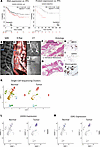
Estrogen can promote aggressive tumor phenotypes in estrogen receptor–positive (ER+) breast cancer; however, ER– cell lines are not widely considered estrogen responsive. Noncanonical estrogen-stimulated pathways such as the membrane-bound G protein–coupled estrogen receptor (GPR30) can mediate migratory and proliferative phenotypes in breast cancer and are postulated to promote resistance to aromatase therapies. Moreover, dysregulation of UDP-glucose 6-dehydrogenase (UGDH), a ubiquitously expressed enzyme critical to the metabolism of UDP-glucuronic acid into extracellular matrix precursors and hormone regulation, is associated with tumorigenesis. Here, we illustrated the impact of estrogen stimulation on tumor phenotypes in ER+ and ER– cell models in vitro and in vivo. We then demonstrated UGDH’s association with metastatic breast cancer via single-cell sequencing of patient specimens. Genetic knockdown of UGDH blunted estrogen-stimulated tumor phenotypes in vitro, ex vivo, and in vivo using both ER+ and ER– breast cancer lines. Finally, we demonstrated that UGDH knockdown blunted noncanonical estrogen stimulation through GPR30. Ultimately, our study validated prior studies demonstrating estrogen-responsive malignant phenotypes in ER– breast cancer and demonstrated that estrogen-stimulated breast cancer progression can be mediated through noncanonical pathways (e.g., UGDH/GPR30), regardless of ER status.
Authors
Meghan J. Price, Annee D. Nguyen, Corinne H. Strawser, Trupti Trivedi, Cesar C.D. Baeta, Catherine Lavau, Jovita K. Byemerwa, Debarati Mukherjee, Suzanne E. Wardell, Sandeep Artham, Vardhman Kumar, Shyni Varghese, C. Rory. Goodwin
No posts were found with this tag.


