
Research ArticleDevelopmentGeneticsMuscle biology
Open Access |  10.1172/jci.insight.198568
Pharmacological PIK3C2B inhibition rescues XLMTM phenotype in mouse models and identifies molecular markers of disease
Andrew Shearer,1 Melissa L. Brooks,1 Maxine M. Chen,1 Thiwanka Samarakoon,1 John Hsieh,1 Gramoz Kondakci,1 Emanuele Perola,1 Jason Brubaker,1 Kristina Fetalvero,1 Stefanie Schalm,1,2 and Joana Caetano-Lopes1
1Blueprint Medicines Corporation, Cambridge, Massachusetts, USA.
2Bayer Research & Innovation Center, Cambridge, Massachusetts, USA.
Address correspondence to: Joana Caetano-Lopes, 45 Sidney St., Cambridge, Massachusetts, 02139, USA. Phone: 503.679.8617; Email: rclopes.j@gmail.com.
Find articles by Shearer, A. in: PubMed | Google Scholar
1Blueprint Medicines Corporation, Cambridge, Massachusetts, USA.
2Bayer Research & Innovation Center, Cambridge, Massachusetts, USA.
Address correspondence to: Joana Caetano-Lopes, 45 Sidney St., Cambridge, Massachusetts, 02139, USA. Phone: 503.679.8617; Email: rclopes.j@gmail.com.
Find articles by Brooks, M. in: PubMed | Google Scholar
1Blueprint Medicines Corporation, Cambridge, Massachusetts, USA.
2Bayer Research & Innovation Center, Cambridge, Massachusetts, USA.
Address correspondence to: Joana Caetano-Lopes, 45 Sidney St., Cambridge, Massachusetts, 02139, USA. Phone: 503.679.8617; Email: rclopes.j@gmail.com.
Find articles by Chen, M. in: PubMed | Google Scholar
1Blueprint Medicines Corporation, Cambridge, Massachusetts, USA.
2Bayer Research & Innovation Center, Cambridge, Massachusetts, USA.
Address correspondence to: Joana Caetano-Lopes, 45 Sidney St., Cambridge, Massachusetts, 02139, USA. Phone: 503.679.8617; Email: rclopes.j@gmail.com.
Find articles by Samarakoon, T. in: PubMed | Google Scholar
1Blueprint Medicines Corporation, Cambridge, Massachusetts, USA.
2Bayer Research & Innovation Center, Cambridge, Massachusetts, USA.
Address correspondence to: Joana Caetano-Lopes, 45 Sidney St., Cambridge, Massachusetts, 02139, USA. Phone: 503.679.8617; Email: rclopes.j@gmail.com.
Find articles by Hsieh, J. in: PubMed | Google Scholar
1Blueprint Medicines Corporation, Cambridge, Massachusetts, USA.
2Bayer Research & Innovation Center, Cambridge, Massachusetts, USA.
Address correspondence to: Joana Caetano-Lopes, 45 Sidney St., Cambridge, Massachusetts, 02139, USA. Phone: 503.679.8617; Email: rclopes.j@gmail.com.
Find articles by Kondakci, G. in: PubMed | Google Scholar
1Blueprint Medicines Corporation, Cambridge, Massachusetts, USA.
2Bayer Research & Innovation Center, Cambridge, Massachusetts, USA.
Address correspondence to: Joana Caetano-Lopes, 45 Sidney St., Cambridge, Massachusetts, 02139, USA. Phone: 503.679.8617; Email: rclopes.j@gmail.com.
Find articles by Perola, E. in: PubMed | Google Scholar
1Blueprint Medicines Corporation, Cambridge, Massachusetts, USA.
2Bayer Research & Innovation Center, Cambridge, Massachusetts, USA.
Address correspondence to: Joana Caetano-Lopes, 45 Sidney St., Cambridge, Massachusetts, 02139, USA. Phone: 503.679.8617; Email: rclopes.j@gmail.com.
Find articles by Brubaker, J. in: PubMed | Google Scholar
1Blueprint Medicines Corporation, Cambridge, Massachusetts, USA.
2Bayer Research & Innovation Center, Cambridge, Massachusetts, USA.
Address correspondence to: Joana Caetano-Lopes, 45 Sidney St., Cambridge, Massachusetts, 02139, USA. Phone: 503.679.8617; Email: rclopes.j@gmail.com.
Find articles by Fetalvero, K. in: PubMed | Google Scholar
1Blueprint Medicines Corporation, Cambridge, Massachusetts, USA.
2Bayer Research & Innovation Center, Cambridge, Massachusetts, USA.
Address correspondence to: Joana Caetano-Lopes, 45 Sidney St., Cambridge, Massachusetts, 02139, USA. Phone: 503.679.8617; Email: rclopes.j@gmail.com.
Find articles by Schalm, S. in: PubMed | Google Scholar
1Blueprint Medicines Corporation, Cambridge, Massachusetts, USA.
2Bayer Research & Innovation Center, Cambridge, Massachusetts, USA.
Address correspondence to: Joana Caetano-Lopes, 45 Sidney St., Cambridge, Massachusetts, 02139, USA. Phone: 503.679.8617; Email: rclopes.j@gmail.com.
Find articles by Caetano-Lopes, J. in: PubMed | Google Scholar
Published April 9, 2026 - More info
JCI Insight. 2026;11(10):e198568. https://doi.org/10.1172/jci.insight.198568.
© 2026 Shearer et al. This work is licensed under the Creative Commons Attribution 4.0 International License. To view a copy of this license, visit http://creativecommons.org/licenses/by/4.0/.
Received: August 6, 2025; Accepted: March 31, 2026

-
Results
BLU3797 is a selective and potent PIK3C2B inhibitor. An internal discovery program targeting inhibition of PIK3C2B led to the synthesis of inhibitors with various degrees of potency and selectivity. Two of these inhibitors, BLU3797 and BLU2720, were extensively characterized in a series of in vitro and in vivo studies.
BLU3797 showed high selectivity for PIK3C2B while sparing other PI3K family members, along with pharmacokinetic properties that would furnish in vivo exposures in mice achieving Ctrough = PIK3C2B IC50 over a 24-hour period utilizing a single orally administered dose. BLU2720 possesses physicochemical properties and selectivity similar to BLU3797 as assessed biochemically (Figure 1B). Further evaluation of BLU3797 (Figure 1C) and BLU2720 (Figure 1D) by NanoBRET revealed levels of selectivity similar to those observed biochemically (Table 1). BLU3797 had low affinity for other kinases in general as assessed by kinome scan (Figure 1E), with an overall S(10) selectivity score of 0.015. Taken together, these data imply that BLU3797 is a potent and highly kinome-sparing inhibitor of PIK3C2B.
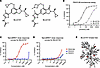 Figure 1
BLU3797 is a selective and potent inhibitor of human PIK3C2B kinase. (A) Chemical structures of BLU3797 and BLU2720. (B) Biochemical analysis of PIK3C2B inhibitory activity of BLU3797 (IC50 = 28 nM) and BLU2720 (IC50 = 1.0 μM) in the presence of 1 mM ATP. (C and D) NanoBRET-based determination of BLU3797 and BLU2720 PI3K engagement. Individual points are mean ± SEM. (E) Kinome tree representing the reactivity of BLU3797 to other kinases as assessed by KINOMEscan (Eurofins). Red dots represent kinases with significant BLU3797 interaction; dot size is proportional affinity. The S(10) of BLU3797 is 0.015, indicating high selectivity.
BLU3797 treatment increases MTM1-null myotube nuclear density. C2C12 cells are a common cell model to evaluate muscle development, and when engineered to lack MTM1 expression, previous publications (35) have shown that they have reduced myogenic potential. Our own generation of a series of MTM1-null clones showed heterogeneity in terms of myogenic identity even as myoblasts (Supplemental Figure 1; supplemental material available online with this article; https://doi.org/10.1172/jci.insight.198568DS1). Control clones that had been transfected with nontargeting sgRNA showed signs of lost myogenic identity (low Pax7 and myogenin protein levels) and showed limited fusion (data not shown) when differentiated.
A single clone exhibiting both acceptable lineage commitment and fusion competence was selected for further analysis. Mass spectrometry of undifferentiated C2C12 cells confirmed that MTM1 was present in WT cells but absent in the MTM1-null cells (Figure 2A). In MTM1-null cells, there was a marked increase in PAX7 expression and more moderate increases in myogenin (MYOG) and myogenic differentiation, findings that were corroborated by Western blot analysis (Figure 2B). Upon differentiation, MYOG levels increased in both WT and MTM1-null cells, and treatment with BLU3797 or BLU2720 did not affect these levels. WT and MTM1-null cells transduced with shRNA targeting Pik3c2b resulted in a 50% reduction in PIK3C2B expression. After 5 days of differentiation, MTM1-null myotubes appeared wider compared with WT cells. Additionally, and in line with previously published data (36), MTM1-null cells showed reduced terminal differentiation, as indicated by an apparent lower number of multinucleated myotubes, a phenotype that was improved by Pik3c2b shRNA (Figure 2C). We then used MTM1-null cells to create an assay that would evaluate whether there was any effect upon fusion or terminal differentiation with a PIK3C2B inhibitor (Figure 3A). Treatment with BLU3797 increased the fusion index, the number of nuclei within sarcomeric myosin-positive objects, in a dose-dependent fashion (Figure 3B). Although there appeared to be an increase in this metric with BLU2720 as well, the change from baseline was not as significant, reflecting the difference in potency of PIK3C2B inhibition between the 2 molecules (Figure 3C). There was also a significant dose-dependent increase in the average number of nuclei per myotube (Figure 3, D and E). Overall, the greatest increase in myotube nuclei was observed at the 188 nM concentration, suggesting that higher doses did not provide additional benefit. In contrast to BLU3797, treatment with BLU2720 did not result in a substantial increase in nuclei per myotube. Intriguingly, the total number of myotubes in the BLU3797-treated conditions decreased in a dose-dependent manner (Figure 3, F and G). This reduction was inversely related to the increase in myonuclear number, a pattern not observed with BLU2720. As expected, these trends were absent in MTM1-null cells with Pik3c2b knockdown (Supplemental Figure 2), suggesting that the observed effects are specifically associated with PIK3C2B inhibition.
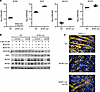 Figure 2
PIK3C2B depletion or inhibition does not negatively affect differentiation of C2C12 cells. (A) Mass spectrometry analysis of C2C12-cell lysates displaying raw-intensity values for selected genes. (B) Western blot of WT or MTM1-null C2C12 lysates, with or without PIK3C2B depletion (shC2B), harvested before or after differentiation (5 days 2% HS); compound treatment (500 nM) occurred during the last 48 hours of differentiation. (C) Example of cultures 5 days after differentiation stained for MYH (experiment conducted twice). Scale bar: 100 μm. PAX7, paired box 7; MYOG, myogenin; MYOD, myogenic differentiation 1; MYH, myosin heavy chain; HS, horse serum.
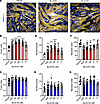 Figure 3
PIK3C2B inhibition promotes myocyte-myotube fusion in C2C12 cells. (A) Example images of MTM1-null C2C12 cells fixed after 5 days of differentiation (2% HS) and 3 μM of BLU3797 or BLU2720 treatment for the final 48 hours (experiment conducted 4 times). Scale bar: 100 μm. (B and C) Representative quantification (3 independent experiments) of the fraction of nuclei in MYH-positive structures (fusion index) from 5 random nonoverlapping fields (n = 10). (D and E) Representative quantification (3 independent experiments) of average nuclei in MYH-positive structures (myotubes) from 5 random nonoverlapping fields (n = 10). (F and G) Representative quantification of the total MYH-positive structures (myotubes) from 5 random nonoverlapping fields (n = 10). Data shown as mean ± SEM. *P ≤ 0.05, **P ≤ 0.01, ***P ≤ 0.001, ****P ≤ 0.0001. Comparisons were done with 1-way ANOVA with Dunnett’s correction for multiple comparisons. MYH, myosin heavy chain; HS, horse serum.
PIK3C2B loss of function rescues the disease phenotype in the MTM1–/– mouse model. We generated a kinase-dead (D1212A) PIK3C2B-expressing mouse to assess the effect of global PIK3C2B activity reduction (Supplemental Figure 3A). As expected, introduction of the D1212A mutation (Supplemental Figure 3B) did not affect PIK3C2B protein expression (Supplemental Figure 3, C–D) and had no impact on mouse survival, gross phenotype, weight (Supplemental Figure 3E), or fertility. This mouse strain was then bred with the MTM1–/y mouse line to better understand the extent of rescue that would be expected from treatment with a PIK3C2B-selective inhibitor. As reported by other groups (31, 33), there was a profound rescue of the disease phenotype with loss of kinase activity. Specifically, loss of functional PIK3C2B in the context of XLMTM led to the restoration of normal growth (Figure 4A) and muscle function as assessed by wire hanging (Figure 4B). Additionally, we observed that the gait of XLMTM animals lacking functional PIK3C2B was restored to resemble that of WT controls (Figure 4C).
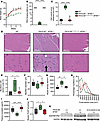 Figure 4
In a mouse model of XLMTM (MTM1–/y), the presence of the PIK3C2B kinase-dead mutation leads to the restoration of muscle function and histology. (A) Comparison of male MTM1–/y, WT, and PIK3C2B kinase-dead (PIK3C2BD1212A/D1212A) MTM1–/y weight gain. (B) Analysis of muscle strength by wire hanging latency. (C) Comparison of mobility and muscle coordination by kinematic gait analysis. (D) Representative images of H&E-stained gastrocnemius muscle (experiment conducted 3 times). Arrow indicates myofiber with central nucleus. Scale bars: 100 μm and 200 μm. (E) Summary of histological analysis comparing percentage of myofibers with centralized nuclei. (F) Summary of histological analysis examining myofiber diameter. (G) Summary of histological analysis of nuclear density within a tissue section. (H) Histogram profile of the cross-sectional area of myofibers. (I) Plasma myostatin level comparison. (J) Muscle PtdIns3P level comparison. (K) Western blot staining of SQSTM1/P62 from muscle lysates. Data shown as mean ± SEM. In box-and-whisker plots, median (line), mean (symbol), 25th–75th quartile range (box), and minimum and maximum (whiskers) are shown. Number of animals per group ranged from 5 (PIK3C2B+/+MTM1–/y) to 10 (WT and PIK3C2B–/–MTM1–/y). *P < 0.05; **P < 0.01; ***P < 0.001; ****P < 0.0001. Comparisons of wire hanging latency, percentage of myofibers with central nuclei, myofiber diameter, plasma myostatin, and myofiber nuclei density were done with Kruskal-Wallis test with Dunn’s correction for multiple comparisons. Comparisons of kinematic gait analyses were done with 1-way ANOVA with Tukey’s correction for multiple comparisons. Comparisons of myofiber diameter and muscle PtdIns3P expression were done with 1-way ANOVA with Holm-Šídák’s correction for multiple comparisons. PtdIns3P, phosphatidylinositol 3-phosphate.
In addition to the improvements in growth and muscle function, there was also a near-complete improvement in the histological phenotypes observed in XLMTM (Figure 4D). The percentage of myofibers with centralized nuclei, a common marker of XLMTM, was elevated in mice deficient for MTM1, and this elevation was fully reduced to WT levels in animals that were also deficient for PIK3C2B activity (Figure 4E). A similar effect was also observed for myofibers, where the diameter was decreased in MTM1-deficient mice compared with WT controls but was increased back to that of WT controls by the lack of PIK3C2B activity (Figure 4F). Because the myofiber diameter was reduced in MTM1–/y mice, there was also an observed increase in the number of nuclei per unit of area, which was fully corrected by the loss of functional PIK3C2B (Figure 4G). The overall cross-sectional area of myofibers was also revealed to be significantly decreased in MTM1–/y mice relative to WT, and this phenotype was largely corrected by loss of functional PIK3C2B (Figure 4H). Both the histological and functional data indicated that loss of functional PIK3C2B corrected the XLMTM-associated muscle phenotype. We then investigated changes in molecular markers of disease to further understand this effect.
Previous work has demonstrated that levels of myostatin, an inhibitor of muscle growth, are decreased in both the plasma and muscle tissue of animal models of centronuclear myopathies, including XLMTM (37). Indeed, MTM1–/y mice showed a decrease in plasma myostatin levels that was restored to WT levels with loss of PIK3C2B activity (Figure 4I). The marker PtdIns3P, which is known to be elevated in MTM1-null muscle, was fully reduced by loss of PIK3C2B activity (Figure 4J). An additional marker commonly seen in MTM1–/y is the accumulation of SQSTM1/P62 owing to stalled autophagy. SQSTM1/p62 is a key selective autophagy receptor that recognizes and binds ubiquitinated protein aggregates and damaged organelles. Its levels also serve as an indicator of autophagic flux, with accumulation reflecting impaired autophagy (38). Indeed, SQSTM1/P62 protein levels were significantly increased in MTM1-null animals but reduced to WT levels with the loss of functional PIK3C2B (Figure 4K).
Loss of PIK3C2B in MTM1–/y animals led to notable alterations in metabolic myogenic proteins. Proteomic and phosphoproteomic analyses using mass spectrometry were performed to uncover additional changes and identify potential disease-relevant markers (Supplemental Figure 4). Both in vitro and in vivo findings suggested that there was an increase in myogenesis or, at least, an accumulation of larger myofiber or myotubular structures after the loss of PIK3C2B activity. Unexpectedly, loss of PIK3C2B activity in MTM1–/y animals led to a noticeable decrease in myogenic markers (Figure 5, A and B), accompanied by an increase in proteins associated with particular types of metabolism. This pattern has also been reported by others (39, 40) and is generally used to distinguish developing or regenerating muscle tissue. In line with these findings, we observed decreased phosphorylation (Figure 5, C and D) of contractile proteins and calcium-mobilizing factors. Similar changes have also been documented in XLMTM diseases models (41) and are thought to reflect maladaptive remodeling of contractile structures. Collectively, these results suggest that loss of PIK3C2B activity in XLMTM muscle promotes normal tissue maturation without affecting lineage commitment.
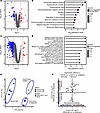 Figure 5
Proteomics and phosphoproteomics reveal decreases in abundance of muscle-related proteins in PIK3C2B kinase-dead MTM1-KO mice compared with PIK3C2B intact MTM1-KO mice. (A) Differential proteome abundance in MTM1–/y/PIK3C2BD1212A/D1212A mice (n = 6) compared with MTM1–/y/PIK3C2B+/+ mice (n = 5). (B) Significantly enriched (adjusted P < 0.05) GO pathways in the proteome of MTM–/y/PIK3C2BD1212A/D1212A mice. (C) Differential phosphoproteome abundance in MTM1–/y/PIK3C2BD1212A/D1212A mice compared with MTM1–/y/PIK3C2B+/+ mice. (D) Significantly enriched (adjusted P < 0.05) GO pathways in the phosphoproteome of MTM –/y /PIK3C2BD1212A/D1212A mice. aTransmembrane receptor protein tyrosine kinase signaling pathway, including FcεRI-mediated Ca2+ mobilization. (E) Principal component analysis of PIK3C3-KO and PIK3C3-WT C2C12 cells that were treated with PIK3C2B inhibitor (1 μM) or not treated (n = 4/group). (F) Congruence between fold-change differences in PIK3C3-KO cells treated with BLU3797 (1 μM) versus PIK3C3-KO cells without treatment and PIK3C3-WT cells treated with PIK3C2B inhibitor (1 μM) versus PIK3C3-WT cells without treatment. Comparison of lipid abundance profiles was done with Bayes moderated 2-tailed t tests. Significance assessed at P < 0.05.
Increased PtdIns3P levels have been used to generally describe the underlying mechanism behind the development of the XLMTM disease phenotype. Additional studies, largely in vitro, have found the nature of PIK3C2B-related PtdIns3P levels to be highly contextual and spatially restricted within the cell (31, 34). Phosphatidylinositol 3-kinase catalytic subunit type 3 (PIK3C3), or VPS34, is a lipid kinase that is involved not only in the synthesis of PtdIns3P but also in endomembrane dynamics, but unlike PIK3C2B, the loss of PIK3C3 results in loss of embryonic viability (31). We performed lipidomic profiling of WT and PIK3C3–/– C2C12 cells with and without PIK3C2B compound treatment and identified 21 lipids in these cell lines, including phospholipids (n = 14), sphingolipids (n = 3), glycerolipids (n = 2), and sterolipids (n = 2). Treatment of WT C2C12 cells with BLU3797 had minimal impact on overall lipid composition, whereas loss of PIK3C3 resulted in a pronounced alteration of the cellular lipid profile (Figure 5E). The addition of BLU3797 further modified the lipid profile, resulting in an intermediate phenotype that clustered between WT and PIK3C3-KO cells without treatment. Comparison of the differential abundance profiles between BLU3797 treatment and no treatment in PIK3C3-KO cells versus PIK3C3-WT cells showed that, unlike the lack of significant treatment effect in the PIK3C3-WT cells, a PIK3C2B inhibitor significantly changed (7/21, 33%) the lipid groups profiled compared with no treatment in PIK3C3-KO cells (Figure 5F).
Selective inhibition of PIK3C2B effectively rescues the MTM1-null phenotype. MTM1–/y mice were backcrossed with C57BL/6 WT mice over several generations, resulting in a genetic background that was 70% C57BL/6 as determined by SNP analysis. This shift led to a marked increase in disease severity and a decrease in animal survival compared with previously published studies (42). Animals began to succumb to disease around the time of weaning (P21), with most requiring humane euthanasia within 2–3 days afterward. This period of mouse development is characterized by marked muscle growth, including myofiber lengthening, physiological hypertrophy, and fiber type maturation occurring nearly simultaneously (43–45). This shift in background created a more pronounced form of the disease, similar to what has been observed in other muscle-related diseases (42, 46). We generated a conditional version of this model, which did not result in loss of viability or the XLMTM disease phenotype. However, it did show a reduction in myofiber diameter and an increase in the fraction of myofibers with centralized nuclei (Supplemental Figure 5).
Given the constraints associated with this model’s survival, we adapted our in vivo studies to begin at P22. Increasing daily doses of BLU3797 (25, 50, 100 mg/kg) all seemed to surpass the NanoBRET-calculated IC50 (Figure 6A) and led to a marked improvement in animal survival through the end of the study (Figure 6B). Animals treated with this compound gained weight and developed in a fashion similar to WT controls, whereas untreated MTM1–/y animals showed a failure to thrive, as evidenced by their inability to gain weight, requiring humane euthanasia (Figure 6C). All treated groups showed improvement in wire hanging latency, with the degree and durability of this effect showing a strong dose dependency (Figure 6D). Analysis of tissue sections also found a dose-dependent decrease in the number of myofibers with centralized nuclei to the level of WT tissue (Figure 6E). Further analysis revealed a modest increase, but not a full rescue, in myofiber diameter (Figure 6F). Compound treatment normalized the level of plasma myostatin (Figure 6G) and the level of muscle SQSTM1/P62, as detected by ELISA (Figure 6H). We further investigated whether daily dosing was needed to rescue the XLMTM phenotype by dosing animals once every 48 hours at 50 or 100 mg/kg. As expected, both groups showed a significant improvement in survival (Figure 6I), which was persistent in the higher-dose group but began to wane in the 50 mg/kg group. By the end of the study, MTM1–/y animals treated with 100 mg/kg of BLU3797 had a 100% survival rate, while those treated with 50 mg/kg had a 20% survival rate.
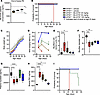 Figure 6
BLU3797 extends the lifespan of MTM1–/y male mice, reinstates muscle function, and improves histological characteristics. (A) A 10-day study of plasma PK of BLU3797 administered orally once daily at 22 days of age. FBS-corrected NanoBRET IC50 and IC90 values are indicated. (B) Kaplan–Meier survival curve. MTM1–/y vehicle control group reached humane endpoints 3 days after the study start date. (C) Body weight. (D) Assessment of muscle strength by wire hanging latency. (E) Summary of histological analysis of muscle samples examining the percentage of myofibers with centralized nuclei and the (F) myofiber diameter. (G) Plasma myostatin levels and (H) muscle SQSTM1/P62 levels (both detected by ELISA). (I) Kaplan–Meier survival curve for an extended 28-day study, where BLU3797 was dosed once every 48 hours. MTM1–/y vehicle control group reached humane endpoints 3 days after the study start date. Arrowheads represent start of the study. Data shown as mean ± SEM. In box-and-whisker plots, median (line), mean (symbol), 25th–75th quartile range (box), and minimum and maximum (whiskers) are shown. The number of animals per group ranged from 5 to 7. *P < 0.05; **P < 0.01; ***P < 0.001; ****P < 0.0001. Comparisons of wire hanging latency, percentage of myofibers with central nuclei, myofiber diameter, plasma myostatin, and myofiber nuclei density were made with a Kruskal-Wallis test with Dunn’s correction for multiple comparisons. PK, pharmacokinetics.
We next considered whether the durability and extent of rescue were not only dose dependent, but also influenced by the timing of treatment initiation. In a small-scale study, animals started on treatment either just after weaning (22 days of age) or at the typical time of euthanasia (25 days of age), receiving twice-daily doses of 75 mg/kg BLU3797 to achieve Ctrough at the NanoBRET-derived IC90. This regimen resulted in rescued viability and improved muscle function (Supplemental Figure 6, A–D). After treatment, animals were withdrawn from the compound and monitored until humane euthanasia was required. The decline in muscle function after the final dose was highly similar between the 2 groups. Myostatin levels in the D25 group were lower than those in the D22 group, yet remained improved compared with the vehicle-treated group (Supplemental Figure 6E). Curiously, even after compound withdrawal, SQSTM1/P62 levels remained significantly reduced at the end of the study (Supplemental Figure 6F). This finding indicates that similar results are achieved whether the animals are dosed preventively or therapeutically.
miRNA analysis of tissues. Our data suggests that there is a critical window during muscle development when PIK3C2B inhibition is effective and fully reversible. Identifying dynamic markers of disease has been challenging, and those currently used are somewhat tangential to the disease phenotype (e.g., SQSTM1/P62). miRNAs have been put forward as potential markers to assess disease severity. Therefore, we examined how the muscle miRNA profile changes under different treatment conditions in the context of the disease phenotype. To accomplish this, we treated WT and XLMTM animals with BLU3797 every 36 hours, starting at day 22 of age, administering either 5 or 3 doses (Figure 7A). Comparisons between WT and XLMTM were complicated by the large number of miRNAs that showed differential expression. Comparing the miRNA profiles of animals that received continuous treatment (5 doses) with those that underwent withdrawal (3 doses) revealed a smaller set (15) of differentially expressed miRNAs (Figure 7B). Of the 15 identified miRNAs, 9 (miRNAs 103, 107, 324-5p, 145, 30a, 1198, 125a-3p, 26a, and 490) were increased in the 5-dose group compared with the 3-dose group. The remaining 6 miRNAs were decreased in the 5-dose group relative to the 3-dose group (miRNAs 802, M55-1, 292-5p, 511 2133, and 1186b). We were particularly interested in 6 miRNAs whose expression levels in the 5-dose group matched those of the WT group but were differentially modulated in the 3-dose group (miRNAs 103, 107, 324-5p, 145, 30a, and 26a). We then focused on those miRNAs for which commercially available quantitative PCR (qPCR) kits were available (Figure 7C). Of the selected miRNAs, 3 have human homologs known to be involved in muscle development and maturation (30a-3p, 30a-5p, and 26a-5p) (47–49), while the other 3 appeared to have a less clearly defined role in muscle development (324-5p, 107, and 145-3p) (50, 51). All 6 miRNAs were found to be increased in the 5-dose group relative to the 3-dose group, confirming our initial screening results.
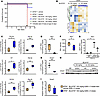 Figure 7
PIK3C2B inhibition alters miRNA expression and decreases muscle SFRP1 protein levels. (A) Survival of MTM1–/y mice treated with BLU3797 at the indicated number of times following a once every 36 hours dosing schedule. Arrowhead represents start of the study. (B) Clustering of treatment groups by differential miRNA expression. (C) Validation of select miRNAs by quantitative real-time PCR (qRT-PCR). All sample values are normalized to Rnu1a1 expression and relative expression in WT mice treated with BLU3797. (D and E) qRT-PCR analysis of Sfrp1 and Smad1 levels normalized to Gapdh and expression in WT mice treated with BLU3797. (F) SFRP1 protein levels from MTM1–/y mouse muscle treated with and without BLU3797. (G) qRT-PCR of Sfrp1 expression in WT C2C12 cells or deficient for MTM1 with BLU3797 treatment (final 48 hours of 5-day protocol); values normalized to Gapdh and WT untreated cells. (H) Western blot of SMAD1 and total actin in lysates from the muscle of MTM1–/y mice. (I) Quantification of SMAD1 levels shown in H; values are normalized to actin and protein levels in WT mice treated with BLU3797. In box-and-whisker plots, median (line), mean (symbol), 25th–75th quartile range (box), and minimum and maximum (whiskers) are shown. *P ≤ 0.05, **P ≤ 0.01, ***P ≤ 0.001. Comparisons of select miRNAs across BLU3797 dosing regimens were done with an unpaired 2-tailed t test. Comparisons of SFRP1 protein levels were made using Dunnett’s correction.
To gain deeper mechanistic insight into how the loss of miRNA expression may contribute to the disease phenotype, we focused on the expression of secreted frizzled-related protein 1 (SFRP1) and SMAD1. SFRP1 has been shown to inhibit myotube formation in both C2C12 cell cultures and primary muscle tissue and is believed to be regulated by miR-30a-3p (52–54). SMAD proteins are known to play a role in muscle development, and the overexpression of SMAD1 has been shown to inhibit muscle cell differentiation (55). Consistent with the reduction in suppressive miRNAs, transcript levels of both genes were significantly elevated in the XLMTM withdrawal group but decreased with continuous BLU3797 treatment (Figure 7, D and E). SFRP1 protein levels in muscle, assessed by ELISA, were reduced in the continuous dosing group relative to the withdrawal group (Figure 7F). Building on these findings, we observed that Sfrp1 transcript levels were increased in our MTM1-null C2C12 cells, and this increase was partially corrected with BLU3797 treatment (Figure 7G). Smad1 mRNA, but not SMAD1 protein, levels were significantly modulated by continuous treatment (Figure 7, H and I). Collectively, these data suggest that the identified miRNAs are part of a broader regulatory mechanism. When dysregulated in XLMTM, this leads to increased expression of factors that can affect terminal differentiation of myoblasts, a process that can be corrected through PIK3C2B inhibition.


