
Research ArticleAgingImmunologyMetabolism
Open Access |  10.1172/jci.insight.207387
AFF3 maintains metabolic quiescence in naive CD8 T cells and prevents premature immune aging
Molly E. Lumnitzer,1,2 Stefanie F. Valbon,3,4 Stephanie A. Condotta,1,2 Allison E. Norlander,2,5,6 Sheng Liu,2,7 Jun Wan,2,7 and Martin J. Richer1,2
1Department of Microbiology and Immunology, IU Cooperative Center of Excellence in Hematology, and
2IU Melvin and Bren Simon Comprehensive Cancer Center, Indiana University School of Medicine (IUSM), Indianapolis, Indiana, USA.
3Département de Microbiologie, Immunologie et Infectiologie, Université de Montréal, Centre de Recherche de l’Hôpital Maisonneuve-Rosemont, Montréal, Quebec, Canada.
4Rosalind and Morris Goodman Cancer Institute, McGill University, Montreal, Quebec, Canada.
5Department of Anatomy, Cell Biology & Physiology,
6Department of Medicine, and
7Department of Medical & Molecular Genetics, IUSM, Indianapolis, Indiana, USA.
Address correspondence to: Martin J. Richer, R2 E366 MCIM Indianapolis, Indiana, USA. Phone: 317.274.7874; Email: richerm@iu.edu.
Authorship note: MEL and SFV contributed equally to this work.
Find articles by Lumnitzer, M. in: PubMed | Google Scholar
1Department of Microbiology and Immunology, IU Cooperative Center of Excellence in Hematology, and
2IU Melvin and Bren Simon Comprehensive Cancer Center, Indiana University School of Medicine (IUSM), Indianapolis, Indiana, USA.
3Département de Microbiologie, Immunologie et Infectiologie, Université de Montréal, Centre de Recherche de l’Hôpital Maisonneuve-Rosemont, Montréal, Quebec, Canada.
4Rosalind and Morris Goodman Cancer Institute, McGill University, Montreal, Quebec, Canada.
5Department of Anatomy, Cell Biology & Physiology,
6Department of Medicine, and
7Department of Medical & Molecular Genetics, IUSM, Indianapolis, Indiana, USA.
Address correspondence to: Martin J. Richer, R2 E366 MCIM Indianapolis, Indiana, USA. Phone: 317.274.7874; Email: richerm@iu.edu.
Authorship note: MEL and SFV contributed equally to this work.
Find articles by Valbon, S. in: PubMed | Google Scholar
1Department of Microbiology and Immunology, IU Cooperative Center of Excellence in Hematology, and
2IU Melvin and Bren Simon Comprehensive Cancer Center, Indiana University School of Medicine (IUSM), Indianapolis, Indiana, USA.
3Département de Microbiologie, Immunologie et Infectiologie, Université de Montréal, Centre de Recherche de l’Hôpital Maisonneuve-Rosemont, Montréal, Quebec, Canada.
4Rosalind and Morris Goodman Cancer Institute, McGill University, Montreal, Quebec, Canada.
5Department of Anatomy, Cell Biology & Physiology,
6Department of Medicine, and
7Department of Medical & Molecular Genetics, IUSM, Indianapolis, Indiana, USA.
Address correspondence to: Martin J. Richer, R2 E366 MCIM Indianapolis, Indiana, USA. Phone: 317.274.7874; Email: richerm@iu.edu.
Authorship note: MEL and SFV contributed equally to this work.
Find articles by Condotta, S. in: PubMed | Google Scholar
1Department of Microbiology and Immunology, IU Cooperative Center of Excellence in Hematology, and
2IU Melvin and Bren Simon Comprehensive Cancer Center, Indiana University School of Medicine (IUSM), Indianapolis, Indiana, USA.
3Département de Microbiologie, Immunologie et Infectiologie, Université de Montréal, Centre de Recherche de l’Hôpital Maisonneuve-Rosemont, Montréal, Quebec, Canada.
4Rosalind and Morris Goodman Cancer Institute, McGill University, Montreal, Quebec, Canada.
5Department of Anatomy, Cell Biology & Physiology,
6Department of Medicine, and
7Department of Medical & Molecular Genetics, IUSM, Indianapolis, Indiana, USA.
Address correspondence to: Martin J. Richer, R2 E366 MCIM Indianapolis, Indiana, USA. Phone: 317.274.7874; Email: richerm@iu.edu.
Authorship note: MEL and SFV contributed equally to this work.
Find articles by
Norlander, A.
in:
PubMed
|
Google Scholar
|

1Department of Microbiology and Immunology, IU Cooperative Center of Excellence in Hematology, and
2IU Melvin and Bren Simon Comprehensive Cancer Center, Indiana University School of Medicine (IUSM), Indianapolis, Indiana, USA.
3Département de Microbiologie, Immunologie et Infectiologie, Université de Montréal, Centre de Recherche de l’Hôpital Maisonneuve-Rosemont, Montréal, Quebec, Canada.
4Rosalind and Morris Goodman Cancer Institute, McGill University, Montreal, Quebec, Canada.
5Department of Anatomy, Cell Biology & Physiology,
6Department of Medicine, and
7Department of Medical & Molecular Genetics, IUSM, Indianapolis, Indiana, USA.
Address correspondence to: Martin J. Richer, R2 E366 MCIM Indianapolis, Indiana, USA. Phone: 317.274.7874; Email: richerm@iu.edu.
Authorship note: MEL and SFV contributed equally to this work.
Find articles by Liu, S. in: PubMed | Google Scholar
1Department of Microbiology and Immunology, IU Cooperative Center of Excellence in Hematology, and
2IU Melvin and Bren Simon Comprehensive Cancer Center, Indiana University School of Medicine (IUSM), Indianapolis, Indiana, USA.
3Département de Microbiologie, Immunologie et Infectiologie, Université de Montréal, Centre de Recherche de l’Hôpital Maisonneuve-Rosemont, Montréal, Quebec, Canada.
4Rosalind and Morris Goodman Cancer Institute, McGill University, Montreal, Quebec, Canada.
5Department of Anatomy, Cell Biology & Physiology,
6Department of Medicine, and
7Department of Medical & Molecular Genetics, IUSM, Indianapolis, Indiana, USA.
Address correspondence to: Martin J. Richer, R2 E366 MCIM Indianapolis, Indiana, USA. Phone: 317.274.7874; Email: richerm@iu.edu.
Authorship note: MEL and SFV contributed equally to this work.
Find articles by
Wan, J.
in:
PubMed
|
Google Scholar
|
1Department of Microbiology and Immunology, IU Cooperative Center of Excellence in Hematology, and
2IU Melvin and Bren Simon Comprehensive Cancer Center, Indiana University School of Medicine (IUSM), Indianapolis, Indiana, USA.
3Département de Microbiologie, Immunologie et Infectiologie, Université de Montréal, Centre de Recherche de l’Hôpital Maisonneuve-Rosemont, Montréal, Quebec, Canada.
4Rosalind and Morris Goodman Cancer Institute, McGill University, Montreal, Quebec, Canada.
5Department of Anatomy, Cell Biology & Physiology,
6Department of Medicine, and
7Department of Medical & Molecular Genetics, IUSM, Indianapolis, Indiana, USA.
Address correspondence to: Martin J. Richer, R2 E366 MCIM Indianapolis, Indiana, USA. Phone: 317.274.7874; Email: richerm@iu.edu.
Authorship note: MEL and SFV contributed equally to this work.
Find articles by Richer, M. in: PubMed | Google Scholar
Published June 23, 2026 - More info
JCI Insight. 2026;11(15):e207387. https://doi.org/10.1172/jci.insight.207387.
© 2026 Lumnitzer et al. This work is licensed under the Creative Commons Attribution 4.0 International License. To view a copy of this license, visit http://creativecommons.org/licenses/by/4.0/.
Received: March 26, 2026; Accepted: June 11, 2026

-
Results
The expression of Aff3 is downregulated in CD8 T cells activated in the presence of inflammatory cytokines. Dynamic changes occur in CD8 T cells when activated in the presence of inflammatory cytokines, including changes in the regulation of their quiescence (19, 20). Changes to quiescent naive cells are critical to regulate the expansion, function, differentiation, trafficking, and metabolism of activated cells (28). To determine genes regulated in activated T cells by inflammatory cytokines, we used a previously described in vivo dendritic cell (DC) immunization approach (29). Mice were adoptively transferred with OT-I CD8 T cells (T cell receptor [TCR] transgenic CD8 T cells specific to ovalbumin [OVA]257-264) and immunized with LPS-matured DCs loaded with OVA257-264 peptide (DC-OVA), or LPS-matured DCs loaded with OVA257-264 peptide and lymphocytic choriomeningitis virus (LCMV) infection (DC-OVA + LCMV). In this approach, LCMV infection provides a source of inflammatory cytokines without providing antigenic stimulation for the OT-I CD8 T cells, which do not respond to LCMV antigens, allowing us to separate the effect of inflammatory cytokines on T cells from the effects of TCR and costimulation. Transcriptomic changes were analyzed using microarray. One of the downregulated genes in the presence of systemic inflammation was Aff3 (Figure 1A). This transcription factor is highly expressed in lymphoid tissues and plays an important role in class switch recombination in B cells (30). Additionally, genome-wide association studies (GWAS) have shown that high expression of AFF3 is a potential risk factor in autoimmune conditions such as Rheumatoid arthritis (31). To date, AFF3 has no defined role in CD8 T cells, despite being expressed by naive CD8 T cells. Microarray results were confirmed via RT-qPCR, which demonstrated that while immunization with DC-OVA (signal 1 and 2 only) led a to reduction in Aff3 expression compared with naive OT-I CD8 T cells, expression was further reduced by inflammatory cytokines induced by infection with LCMV (Figure 1B). Together, these data establish that Aff3 expression is dynamically regulated, downregulated by T cell activation, and further reduced by inflammatory cytokines. This suggests that AFF3 may be a negative regulator of T cell activation and differentiation.
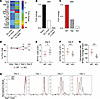 Figure 1
Aff3 is decreased with inflammation and necessary for a robust T cell response to viral infection. (A) Heatmap of the top 15 differentially expressed genes in OT-I CD8 T cells from the spleen of DC-OVA or DC-OVA + LCMV immunized mice on day 5 compared with naive OT-I CD8 T cells identified by microarray. (B) Relative mRNA expression of Aff3 from OT-I CD8 T cells isolated from the spleen of DC-OVA or DC-OVA + LCMV immunized mice by RT-qPCR analysis compared with normalized expression in naive OT-I CD8 T cells. (C) Relative mRNA expression of Aff3 from CD8 T cells isolated from the spleens WT, AFF3 heterozygous (Het), and AFF3 KO mice by RT-qPCR analysis. (D) Frequency of splenic WT or AFF3 KO P14 CD8 T cells at input, or from the spleen 3 dpi, 5 dpi, and 8 dpi with LCMV Arm. (E and F) Number of WT or AFF3 KO P14 CD8 T cells in the spleen at 5 dpi and 8 dpi with LCMV Arm. (G) Expansion ratio of WT and AFF3 KO P14 CD8 T cells from 5 to 8 dpi with LCMV Arm. (H) Representative histogram plots of the dilution of TagIT Violet proliferation dye by splenic WT and AFF3 KO CD8 T cells on days 0–3 of ex vivo culture. (A) Pooled CD8 T cells from 1–3 mice with 3 replicates per condition and representative of at least 2 separate experiments. (B and C) Pooled CD8 T cells from 1–3 mice in each condition. (D–H) Representative of 2 experiments with n = 3–5 mice per experiment. (D–G) Groups compared using paired Student’s t test, *P < 0.05, ***P < 0.001. Data represent mean ± SEM.
To study the role of AFF3 in CD8 T cell responses to viral infection, we generated conditional KO mice by crossing Aff3fl/fl mice with CD4-Cre mice to create Aff3fl/fl CD4-Cre+ (AFF3-KO) mice in which AFF3 is deleted in all T cells, herein referred to as AFF3-KO mice. Loss of Aff3 expression in AFF3-KO mice T cells was confirmed using RT-qPCR (Figure 1C). The deletion of Aff3 in T cells at the double-positive stage via expression of CD4-Cre does not disrupt their thymic development, as seen with deletion of other transcription factors such as TCF-1 (32) (Supplemental Figure 1 and Supplemental Figure 2; supplemental material available online with this article; https://doi.org/10.1172/jci.insight.207387DS1). CD4 and CD8 T cells were present in similar proportions in the thymus and spleen in WT (Aff3wt/wt CD4-Cre+, WT) and AFF3-KO mice (Supplemental Figure 1). At steady state, AFF3-KO T cells remained phenotypically similar to WT cells (Supplemental Figure 1 and Supplemental Figure 2). Importantly, AFF3-KO CD8 T cells remained CD62L+ and CD44lo, establishing that AFF3 deficiency does not lead CD8 T cells to spontaneously acquire an antigen-experienced or activated phenotype (Supplemental Figure 2).
AFF3 is necessary for CD8 T cells to accumulate in response to viral infection. To determine if AFF3 plays a role in CD8 T cell responses to infection, AFF3-KO mice were crossed with P14 mice (TCR transgenic CD8 T cells specific to the LCMV GP33-41 epitope). We performed competitive coadoptive transfers in which 10,000 WT and AFF3-KO P14 CD8 T cells with disparate Thy expression (Thy1.1/1.1 or Thy1.1/1.2) were adoptively transferred at a 1:1 ratio to naive C57BL/6 mice (Thy1.2/1.2). This approach ensured that the adoptively transferred cells experienced the same inflammatory environment during priming and expansion. One day following coadoptive transfer, mice were infected with LCMV Armstrong (Arm, i.p. injection), which causes an acute infection (33–35).
On 5 (early expansion) and 8 (peak expansion) days postinfection (dpi) the frequency, number, and phenotype of the transferred cells was determined (Figure 1, D–G). We observed differences in the relative frequency and number of WT and AFF3-KO P14 CD8 T cells present in the spleen on 5 and 8 dpi (Figure 1D). Despite transferring an equal number of cells, AFF3-KO CD8 T cells were present at a higher frequency and number on 5 dpi (Figure 1, D and E). However, by 8 dpi, WT CD8 T cells were present at a higher frequency and number than the AFF3-KO CD8 T cells (Figure 1, D and F). This reduced accumulation of AFF3-KO P14 CD8 T cells was clearly reflected by the expansion ratio between 5 and 8 dpi. Compared with the number of cells on 5 dpi the WT CD8 T cells expanded on average 120 times by day 8; meanwhile, the AFF3-KO CD8 T cell population only expanded 70 times, on average (Figure 1G). This difference in expansion from 5 to 8 dpi results in nearly 8 × 10⁶ fewer P14 AFF3-KO CD8 T cells per spleen compared with WT CD8 T cells, suggesting AFF3 is required for optimal T cell accumulation. To address whether this represented a proliferation defect, we conducted ex vivo stimulation of WT and AFF3-KO CD8 T cells. P14 CD8 T cells were isolated from WT and AFF3-KO mice and activated ex vivo for 0, 1, 2, or 3 days using GP33-41 peptide, anti-CD28 antibody, and IL-2. AFF3-KO CD8 T cells proliferated more slowly than WT CD8 T cells, as demonstrated by the lower dilution of the cell proliferation dye, Tag-IT violet, suggesting that AFF3-KO CD8 T cells have a proliferative disadvantage compared with WT cells, leading to their reduced accumulation in response to infection (Figure 1H). Despite their defect in accumulation, both WT and AFF3-KO CD8 T cells were equally capable to produce the effector cytokines IFN-γ and TNF-α following restimulation (Supplemental Figure 3). This is in line with a previous study on the role in AFF3 in B cells, where they determined that AFF3 expression was not required for T cells to express effector cytokines (30). Together, these data indicate that Aff3 expression in naive T cells is necessary for CD8 T cells to effectively proliferate and optimally accumulate during acute viral infection but is dispensable for cytokine production.
To dissect the mechanism regulating the accumulation defect observed for AFF3-KO CD8 T cells, we measured expression of important molecules regulating CD8 T cell proliferation and accumulation. CD25 is the high-affinity receptor for IL-2 and is important for maintained proliferation of CD8 T cells (36). AFF3-KO cells expressed less CD25 than WT cells at 5 dpi (Supplemental Figure 4A). By 8 dpi both WT and AFF3-KO T cells had very low expression of CD25, which is typical for T cells during acute infection (Supplemental Figure 4B). While there was a statistically significant difference between the WT and AFF3-KO CD8 T cells, it is unlikely to be of biological relevance due to the low expression of this receptor at this time point (Supplemental Figure 4B). To further investigate the regulation of expression of CD25 by AFF3 in CD8 T cells, we determined the expression of CD25 on CD8 T cells in vivo on days 1, 2, and 3 following infection, and we observed that AFF3-KO CD8 T cells expressed more CD25 on day 2 dpi, suggesting that they express this receptor more rapidly than WT CD8 T cells (Supplemental Figure 4C). This was confirmed via ex vivo activation of WT and AFF3-KO P14 CD8 T cells using GP33-41 peptide, anti-CD28, and IL-2. We observed no differences in CD25 expression on day 0, but AFF3-KO CD8 T cells had higher expression than WT CD8 T cells on days 1 and 2 of activation but not after 3 days of activation (Supplemental Figure 4D). Thus, AFF3-KO CD8 T cells express CD25 earlier than WT CD8 T cells but do not maintain its expression as long as WT CD8 T cells. Sustained expression of CD25 is key to maintain optimal CD8 T cell accumulation (36). Therefore, dysregulated timing of CD25 expression by AFF3-KO CD8 T cells may lead to their inability to optimally accumulate in response to infection.
AFF3-KO CD8 T cells may be receiving signals from IL-2 earlier in infection while lacking the continued signaling required for optimal CD8 T cell accumulation. To determine if changes in the timing of CD25 expression and signaling was responsible for the decreased accumulation of AFF3-KO CD8 T cells at 8 dpi, we took 2 approaches. We either blocked IL-2 using IL-2 antibodies or supplemented IL-2 with an IL-2/antibody complex (bypasses CD25 signaling) to increase IL-2 signaling in the recipient mice during infection, as previously described (36). On 8 dpi following treatment, we determined if accumulation of the AFF3-KO P14 CD8 T cells was restored (Supplemental Figure 4E). Neither blocking IL-2 by antibodies nor increasing IL-2 signaling via IL-2 antibody complex improved the accumulation of CD8 T cells (Supplemental Figure 4F). Therefore, while AFF3 deficiency changes the timing of CD25 expression by CD8 T cells, this change does not alter IL-2 responsiveness in a way that affects CD8 T cell accumulation.
AFF3 expression regulates the transcriptome of naive and activated CD8 T cells. Since differential expression of CD25 was not responsible for the reduced accumulation of AFF3-KO CD8 T cells and our phenotypic analysis did not reveal any other obvious changes that could explain the accumulation defect (Figure 1, D–G, and Supplemental Figure 2), we decided to take an unbiased approach to determine how AFF3 expression affects the transcriptome of CD8 T cells. We used bulk RNA-seq of naive WT and AFF3-KO CD8 T cells, and after T cell activation ex vivo to determine differences in the transcriptome. In AFF3-deficient naive CD8 T cells, there were 986 upregulated and 328 downregulated genes compared with WT CD8 T cells (Figure 2A). These differences suggest that AFF3 primarily acts as a negative regulator of transcription in naive cells, either directly or via other negative regulators. Pathway analysis demonstrated an increase in signaling receptor activity pathways but a decrease in metabolic, biosynthesis, and translation pathways (Figure 2B). When WT and AFF3-KO CD8 T cells were activated with 0.5 nM GP33-41 peptide, anti-CD28 antibody, and IL-2 for 6 hours, there were 1,490 upregulated and 285 downregulated genes in the AFF3-KO CD8 T cells, again highlighting the role of AFF3 as a negative regulator of transcription early during T cell activation (Figure 2C). Pathway analysis denoted an increase in immune response and recognition of a pathogen pathway with a continued decrease in metabolic pathways, which are required for the generation of building blocks that support sustained proliferation (37) (Figure 2D). At 6 hours of activation with 20 nM GP33-41 peptide, anti-CD28, and IL-2, AFF3-KO CD8 T cells had 245 upregulated and 135 downregulated genes (Figure 2, E and F). This different number of genes regulated when cells are stimulated with higher concentration of peptide suggests that AFF3 may have a differential role depending on the strength of TCR stimulation. This is potentially linked to the fact that TCR simulation can partially downregulate Aff3 expression and stronger stimulation may lead to a more profound loss of Aff3, leading to fewer differently expressed genes (DEGs) being observed with AFF3-KO CD8 T cells. After 24 hours of activation with 0.5 nM GP33-41 peptide, AFF3-KO CD8 T cells had 650 upregulated and 881 downregulated genes (Figure 2G). Pathway analysis showed an increase in RNA processing and ribosome biogenesis pathways with a decrease in cell differentiation and developmental processes pathways (Figure 2H). Finally, after 24 hours of activation in 20 nM GP33-41, AFF3-KO CD8 T cells had 270 upregulated and 696 downregulated genes (Figure 2I). Pathway analysis showed that there was a decrease in metabolism of carbohydrates and metalloprotease deubiquitinase enzymes (DUBs) (Figure 2J). DUBs are important during the T cell response because they regulate the signaling downstream of TCR such as NFAT signaling and NF-κB signaling (38). Interestingly, after 24 hours of stimulation, we observed more genes downregulated in AFF3-KO CD8 T cells compared with WT CD8 T cells, suggesting that deletion of AFF3 may negatively affect the expression of genes that are required as the cells become activated and begin differentiating. Together, these data establish that AFF3 plays an important role in regulating cell signaling and metabolic pathways. Interestingly, the data highlight that AFF3 differentially regulates the transcriptome of CD8 T cells depending on the concentration of antigen used for stimulation and the duration of stimulation.
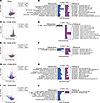 Figure 2
AFF3 deficiency changes the transcriptome of naive and activated CD8 T cells. RNA was isolated from splenic WT and AFF3-KO CD8 T cells from naive, 6-, and 24-hour activated cells with the indicated concentration of GP33-41 peptide, anti-CD28, and IL-2, before being processed for bulk RNA-seq. (A, C, E, G, and I) Volcano plot representing the DEGs in AFF3-KO CD8 T cells compared with WT CD8 T cells with the time point and treatment indicated. (B, D, F, H, and J) Bar chart showing the top changed pathways determined by q value for each time point and treatment. Bars indicate enrichment score for each pathway, and dots indicate q value. CD8 T cells were isolated from at least 3 mice in each condition and processed for sequencing.
One notable transcriptional change at 24 hours of activation was the increase in the gene expression of Fcgr2b and Fcgr3a (Supplemental Figure 5A). Fcgr2b has been previously described to prevent T cell proliferation (39). To confirm that these receptors are upregulated at the protein level, we evaluated their expression using flow cytometry during LCMV infection. We confirmed that expression of CD32 (FCGR2B) but not CD16 (FCGR3A) was increased on AFF3-KO CD8 T cells on 1 and 2 dpi compared with WT CD8 T cells (Supplemental Figure 5, B and C). Next, we asked if blockade of CD32/CD16 would restore the accumulation of the AFF3-KO CD8 T cells. Despite the increased expression of CD32, we found that CD32/CD16 blockade was not sufficient to restore CD8 T cell accumulation (Supplemental Figure 5, D and F). Thus, while AFF3 downregulates the expression of CD32 early in infection, which may play a role in T cell responses at later time points, this change does not regulate the expansion of CD8 T cells.
AFF3 is needed to maintain a quiescent metabolism. Since one of the major changes observed via transcriptional analysis of naive and recently activated CD8 T cells was metabolism pathways, we next profiled the cellular metabolism of WT and AFF3-KO CD8 T cells using Seahorse real-time metabolic analysis. Interestingly, naive AFF3-KO CD8 T cells trended to have higher basal respiration and spare respiratory capacity (SRC) and had significantly higher maximal respiration compared with WT CD8 T cells as determined by mitochondrial stress test (Figure 3, A and B). Naive CD8 T cells use low levels of oxidative phosphorylation (OXPHOS), activated CD8 T cells rely on glycolysis and memory, and virtual memory CD8 T cells use OXPHOS but have a higher SRC and maximal respiration compared with naive cells (40, 41). This increased SRC allows for memory cells to respond more quickly to antigen by rapidly increasing energy generation (41). Therefore, naive AFF3-KO CD8 T cell metabolism was more reminiscent of memory CD8 T cells rather than what is typically observed for naive CD8 T cells (40, 41). This is particularly interesting, as naive AFF3-KO CD8 T cells adopt this change in metabolism without acquiring an antigen-experienced phenotype, suggesting that AFF3 downregulates OXPHOS in CD8 T cells independently of antigen encounter. Additionally, we compared the glycolytic capacity of naive WT and AFF3-KO CD8 T cells, and we found that there were no differences present with neither WT nor AFF3-KO CD8 T cells adopting a glycolytic metabolism, which is to be expected for naive cells (Figure 3, C and D). This suggests that, while metabolic quiescence is disrupted in naive AFF3-KO CD8 T cells, they do not spontaneously switch to a glycolytic metabolism. We determined if the changes in the metabolism in AFF3-KO CD8 T cells were due to changes in mitochondrial health. We tested total cell reactive oxygen species, mitochondrial membrane potential, mitochondrial superoxide levels, and mitochondrial mass. We observed no differences with any of these markers of mitochondrial health between WT and AFF3-KO CD8 T cells (Supplemental Figure 6, A–D). These data suggest that AFF3 regulates T cell metabolism independently of any obvious defect in mitochondria. Together, these data support that AFF3 expression is necessary in naive CD8 T cells to maintain a quiescent metabolism even prior to antigenic encounter.
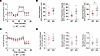 Figure 3
AFF3 is necessary to maintain CD8 T cell metabolic quiescence CD8 T cells. Splenic naive WT and AFF3-KO CD8 T cells were isolated, and metabolism was analyzed using a Seahorse XF analyzer. (A) OCR overindicated time using mitochondrial stress test kit. (B) Basal respiration (first panel), spare respiratory capacity (middle panel), and maximal respiration (last panel) were determined by the OCR in the Seahorse analysis. (C) ECAR over time using the glycolysis stress test. (D) Nonglycolytic acidification (first panel), glycolytic capacity (middle panel), and glycolytic reserved (last panel) determined by the ECAR of Seahorse analysis. (A–D) Representative of 2 experiments with n = 3 mice per group with 3 technical replicates per mouse. (B and D) Groups compared using unpaired Student’s t test, *P <0.05. Data represent mean ± SEM.
AFF3 deficiency changes the expression of key solute carriers and leads to a reduction in glucose metabolism. Since AFF3 was shown to regulate naive CD8 T cells metabolism, we next analyzed our RNA-seq dataset for potential regulators of metabolism that might be dysregulated in AFF3-KO CD8 T cells. One important regulator of metabolic activity is the expression of solute carriers that regulate the availability of key metabolite to fuel cell activation and proliferation (42–44). Our RNA-seq data establish that AFF3-KO CD8 T cells increase the expression Slc2a5, known as GLUT5, which is the selective receptor for fructose transport (45) (Figure 4A). In general, CD8 T cells do not express GLUT5 but rather express GLUT1 or GLUT3 (46, 47). At the same time, naive and activated AFF3-KO CD8 T cells have lower expression of Slc2a1, known as GLUT1, the primary glucose transporter for T cells (Figure 4A). We also observed that AFF3 deficiency resulted in decreased expression of several glycolytic enzymes following activation (Figure 4B). Together, these data suggest that AFF3-KO CD8 T cells may be unable to efficiently metabolize glucose to fuel their proliferation.
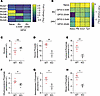 Figure 4
AFF3 deficiency changes the expression of solute carriers and results in decreased glycolysis following activation. (A) Top significantly changed solute carrier genes in naive splenic WT and AFF3-KO CD8 T cells determined by RNA-seq analysis. (B) Heatmap of significantly changed genes in the glycolysis pathway determined by RNA-seq analysis. (C–H) Abundance of the indicated glycolysis or PPP intermediate determined by metabolomics analysis on splenic WT or AFF3-KO CD8 T cells activated ex vivo for 24 hours with anti-CD3 and anti-CD28. (A and B) At least 3 mice per group per conditions. (C–H) 4 mice per group and groups analyzed with unpaired Student’s t test, *P < 0.05, **P < 0.01. Data represent mean ± SEM.
To determine if the switch to glycolysis was affected in AFF3-KO CD8 T cells, we performed metabolomics on WT and AFF3-KO CD8 T cells following anti-CD3 and anti-CD28 activation for 24 hours. Metabolomics profile revealed several changes between WT and AFF3-KO CD8 T cells. While glucose levels were not significantly changed, we observed that several key intermediates in both the glycolysis and the pentose phosphate pathways (PPP) were reduced in AFF3-KO CD8 T cells (Figure 4, C–H). This suggests that they are poorly metabolizing glucose and not switching to glycolysis following activation. In addition, we observed that several amino acids, including the branched amino acids (BCAA) valine, leucine and isoleucine, were upregulated in AFF3-KO CD8 T cells (Figure 5, A–G). This was accompanied by increased succinate and xanthine in AFF3-KO CD8 T cells (Figure 5, H and I). This metabolic profile with reduced glycolysis and PPP intermediates and increased amino acids is reminiscent of cells with disrupted metabolism such as senescent or aging T cells and likely explains the diminished capacity of AFF3-KO CD8 T cells to accumulate following infection (48, 49).
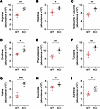 Figure 5
AFF3 deficiency leads to the accumulation of amino acids and other metabolic intermediates following CD8 T cell activation. Splenic WT or AFF3-KO CD8 T cells were isolated and activated ex vivo for 24 hours with anti-CD3 and anti-CD28 and metabolite abundance measured via metabolomics analysis. (A–I) Abundance of the indicated metabolite in WT or AFF3-KO CD8 T cells. Four mice per group were used, and groups were analyzed with unpaired Student’s t test. *P < 0.05, **P < 0.01, ***P < 0.001. Data represent mean ± SEM.
AFF3 is involved in preventing premature immune aging. The differences we observed for AFF3-KO CD8 T cells, such as decreased metabolic quiescence, decreased proliferation, and an altered metabolic profile, are reminiscent of the loss of quiescence that occurs in T cells in aged individuals (5, 49–54). Therefore, we determined if AFF3 is important to prevent immune aging. To start addressing this, we compared the DEGs from our RNA-seq data to published data that compare the DEGs of young and aged CD8 T cells (55). We found that the DEGs changes in the AFF3-KO CD8 T cells were significantly correlated with changes (both upregulated and downregulated genes) from aged CD8 T cells (Figure 6, A and B). This suggests that AFF3-KO CD8 T cells are more transcriptionally similar to aged WT CD8 T cells than their age-matched WT CD8 T cells counterparts. Interestingly, this comparison holds true, even though naive AFF3-KO CD8 T cells do not develop a memory-like phenotype as opposed to what is likely occurring among tissue dwelling CD8 T cells in aging mice. This suggests that AFF3 prevents the development of immune aging independently of T cell activation or acquisition of a memory-like phenotype. To further address if loss of AFF3 is associated with aging in T cells, we compared gene expression of Aff3 in young and aging mice. We found that aging mice (>12 months) had lower expression of Aff3 compared with young WT mice (<5 months), demonstrating that Aff3 declines with age in CD8 T cells (Figure 6C). Since we observed that the AFF3-KO CD8 T cells from the mice share transcriptomic similarities to aged WT CD8 T cells and that Aff3 expression decreases with age in murine T cells, we next asked if this was also observed in naive human CD8 T cells. We tested human PBMC samples from young (22–33 years old) and aged (60–68 years old) donors with equal representation of male and female patients (Supplemental Table 1). We isolated naive CD8 T cells and compared Aff3 expression. We enriched for naive cells instead of total CD8 T cells to control for the fact that humans, as opposed to mice maintained in specific pathogen–free conditions, will accumulate antigen-experienced memory CD8 T cells from their history of infection, and we wanted to compare Aff3 expression in foreign-antigen inexperienced CD8 T cells (53, 56, 57). While we found more variability among patients, we observed a trend for decreased expression of Aff3 in naive CD8 T cells with age (Figure 6D). These data further suggest that the AFF3-deficient CD8 T cells are more similar to aged CD8 T cells and that AFF3 may play a role in restraining immune aging in CD8 T cells in both humans and mice.
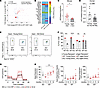 Figure 6
AFF3 expression is decreased with age and is associated with a loss of metabolic quiescence. (A) Graph showing the correlation of DEGs in naive AFF3-KO CD8 T cells versus WT CD8 T cells and aged versus young WT CD8 T cells. (B) Heatmap showing top changed genes in AFF3-KO CD8 T cells and aged WT CD8 T cells compared with young WT controls. (C) Relative gene expression of Aff3 in young (<5 months) and aging (>12 months) splenic WT CD8 T cells determined by RT-qPCR analysis. (D) Relative AFF3 expression in young (22–33 years old) versus aged human (60–68 years old) naive CD44lo CD8 T cells isolated from PBMCs determined by RT-qPCR analysis. (E) Representative flow plots showing the frequency of the cotransfer input of aging CD8 T cells donors or young CD8 T cell donors. (F) Frequency of transferred CD8 T cells in the spleens of young or aged WT recipient mice 8 dpi with LCMV Arm. (G) Metabolic analysis of splenic CD8 T cells. OCR over time using a mitochondrial stress test. (H) Basal respiration (first panel), spare respiratory capacity (middle panel), and maximal respiration (last panel) were determined by the OCR in the Seahorse analysis. (C, E, and F) Representative of 2 experiments, n = 3–5 per group. (D) Representative of 1 experiment, n = 8–9 samples per group. (G and H) Representative of 1 experiment, n = 3–4 per group with 3 technical replicates per mouse, age of mice in each sample indicated in the figure legend. (C) Groups compared using unpaired Student’s t test, *P <0.05. (F) Groups compared using paired Student’s t test, ***P < 0.001, ****P < 0.0001. (H) Groups compared using 1-way ANOVA with post hoc test, **P < 0.01. Data represent mean ± SEM.
To address whether reduced Aff3 expression in aged mice yields similar accumulation defects to what we observed for young AFF3-KO CD8 T cells, we compared the CD8 T cell response to viral infection in AFF3 KO and WT CD8 T cells from aging donor mice greater than 6 months of age. In line with the reduction of Aff3 expression with age, the proliferation advantage of the WT P14 CD8 T cells over the AFF3-KO P14 CD8 T cells was lost when aging donors were used (Figure 6, E and G). This suggests that decreased Aff3 gene expression that occurs naturally in CD8 T cells during aging leads them to respond more similarly to AFF3-KO cells than young WT CD8 T cells that express high levels of Aff3. To determine if this was strictly CD8 T cell intrinsic or if the aged environment also played a role in reducing proliferation and accumulation, we cotransferred AFF3-KO and WT CD8 T cells that were either from young donors (6–12 weeks) or aging donors (>6 months) into naive young (6–8 weeks) and older (>12 months) recipient mice. We found that, with young donor cells, AFF3-KO P14 CD8 T cells accumulated less than the WT donor cells at 8 dpi independently of the age of the recipient mice (Figure 6, E and F). Conversely, the aged donor cells expanded equally at 8 dpi, regardless of their genotype, independently of the age of the recipients (Figure 6, E and F). This suggests that the loss of Aff3 leads to T cell intrinsic immune aging and that the natural loss of Aff3 that occurs in WT mice during aging is a component of the loss of T cell responsiveness in aged individuals, which is independent of other environmental factors in aged mice in the short time frame of our experiments.
Finally, we asked if the changes in the metabolism of aged CD8 T cells were the similar to those observed in young AFF3-KO CD8 T cells via a mitochondrial stress test of WT CD8 T cells from mice of various ages. We observed that WT CD8 T cells became progressively less metabolically quiescent with age, as noted by an increase in OXPHOS activity (Figure 6, G and H). Furthermore, we found that KO CD8 T cells from mice younger than 3-month-old had a similar metabolism to that of WT CD8 T cells from 5-month-old mice (Figure 6, G and H). Conversely, WT CD8 T cells from younger mice were more quiescent metabolically than similarly aged AFF3-KO CD8 T cells (Figure 6, G and H). This suggests that genetic loss of AFF3 accelerates age-associated loss of metabolic quiescence but also suggests that factors beyond loss of AFF3 play a role in the loss of metabolic quiescence. Therefore, our data support a role for AFF3 in maintaining T cell quiescence and responsiveness and suggest that age-related loss of Aff3 expression in CD8 T cells plays a role in their progressive dysfunction.


