
Clinical Research and Public Health
Abstract
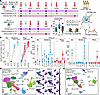
BACKGROUND The SARS-CoV-2 pandemic provided a rare opportunity to study how human immune responses develop to a novel viral antigen delivered through different vaccine platforms. However, to date, no study has directly compared immune responses to all 3 FDA-approved COVID-19 vaccines at single-cell multiomic resolution.METHODS We longitudinally profiled SARS-CoV-2–naive adults (n = 31) vaccinated with BNT162b2, mRNA-1273, or Ad26.COV2.S, integrating plasma cytokines, antibody titers, and single-cell multiomic data (DOGMA-Seq).RESULTS We discovered a distinct, transient IFN program termed ISG-dim, which emerged specifically 1–2 days after the first mRNA dose in approximately 10% of myeloid cells. This state was characterized by ISGF3 complex activation and its target genes (e.g., MX1, MX2, DDX58), with transcriptional and epigenetic profiles distinct from the robust IFN program observed after mRNA boosting or a single Ad26.COV2.S dose (ISG-high). In vitro stimulation of human monocytes showed that IFN-α alone recapitulates ISG-dim, whereas both IFN-α and IFN-γ are required for ISG-high.CONCLUSION These findings define dose-dependent IFN programming in human myeloid cells and highlight mechanistic differences between priming and boosting, with implications for optimizing vaccine platform choice, dose scheduling, and formulation.FUNDING NIH grants AI142086, U19 AI135972, U01 AI165452, U01 AI165452, R01 AI160706, and P30 AG067988.
Authors
Giray Eryilmaz, Yilmaz Yucehan Yazici, Radu Marches, Eleni P. Mimitou, Lisa Kenyon-Pesce, Kim Handrejk, Sonia Jangra, Michael Schotsaert, Adolfo García-Sastre, George A. Kuchel, Jacques Banchereau, Duygu Ucar
Abstract
BACKGROUND. To construct multi-trait polygenic scores (PRS) predicting chronic obstructive pulmonary disease (COPD) and exacerbations, validate their performance in diverse cohorts, and identify PRS-related proteins for potential therapeutic targeting. METHODS. PRSmix+, a multi-trait PRS framework, is used to train a composite PRS (PRSmulti) in COPDGene non-Hispanic white participants (n=6,647). Associations of PRSmulti with COPD status (GOLD 2-4 vs. GOLD 0 or ICD) and exacerbation frequency were tested in COPDGene African American (n=2,466), ECLIPSE (n=1,858), MassGeneral Brigham Biobank (n=15,152), and All of Us (n=118,566). Protein prediction models were applied to GWAS summary statistics from traits contributing to PRSmulti and were validated with proteomic data in COPDGene (n=5,173) and UK Biobank (n=5,012). RESULTS. PRSmix+ selected 7 traits for PRSmulti. In multivariable models, PRSmulti was associated with COPD status (meta-analysis random effects (RE) OR 1.58 [95% CI: 1.28-1.94]) and exacerbation frequency (meta-analysis RE beta 0.21 [95% CI: 0.11-0.31]), with higher effect sizes observed in smoking-enriched cohorts. PRSmulti outperformed traditional single-trait PRS in all tested cohorts. Using protein prediction models, we identified 73 proteins associated with the PRS that were also validated with measured protein levels in COPDGene and UK biobank. Of these proteins, 25 were linked to approved or investigational drugs. Notable targets include RAGE/sRAGE, IL1RL1, and SCARF2, all implicated in COPD pathogenesis and exacerbations. CONCLUSIONS. Multi-trait PRS improves prediction of COPD and exacerbation risk. Integration with proteomic data identifies druggable protein targets, offering a promising avenue for precision medicine in COPD management. TRIAL REGISTRATION. COPDGene: NCT00608764; ECLIPSE: NCT00292552.
Authors
Chengyue Zhang, Iain R. Konigsberg, Yixuan He, Jingzhou Zhang, Tinashe Chikowore, William B. Feldman, Xiaowei Hu, Yi Ding, Bogdan Pasaniuc, Diana Chang, Qingwen Chen, Jessica A. Lasky-Su, Julian Hecker, Martin D. Tobin, Jing Chen, Sean Kalra, Katherine A. Pratte, Hae Kyung Im, Emily S. Wan, Ani Manichaikul, Edwin K. Silverman, Russell P. Bowler, Leslie A. Lange, Victor E. Ortega, Alicia R. Martin, Michael H. Cho, Matthew R. Moll
Abstract
CD4 T cells are essential for immunity to M. tuberculosis (Mtb), and emerging evidence indicates that IL-17-producing Th17 cells contribute to immunity to Mtb. While identifying protective T cell effector functions is important for TB vaccine design, T cell antigen specificity is also likely to be important. To identify antigens that induce protective immunity, we reasoned that, as in other pathogens, effective immune recognition drives sequence diversity in individual Mtb antigens. We previously identified Mtb genes under evolutionary diversifying selection pressure whose products we term Rare Variable Mtb Antigens (RVMA). Here, in two distinct human cohorts with recent exposure to TB, we found that RVMA preferentially induce CD4 T cells that express RoRγt and produce IL-17, in contrast to ‘classical’ Mtb antigens that induce T cells that produce IFNγ. Together with emerging evidence showing human Th17 responses are associated with prevention of progression to TB disease, our results suggest that RVMA can be valuable antigens in vaccines for those already infected with Mtb to amplify existing antigen-specific Th17 responses to prevent TB disease.
Authors
Paul Ogongo, Liya Wassie, Anthony Tran, Devin Columbus, Julia Huffaker, Lisa Sharling, Gregory Ouma, Samuel Gurrion Ouma, Kidist Bobosha, Cecilia S. Lindestam Arlehamn, Neel R. Gandhi, Sara C. Auld, Jyothi Rengarajan, Cheryl L. Day, Artur Queiroz, Mariana Araújo-Pereira, Eduardo Fukutani, Bruno B. Andrade, John D. Altman, Henry M. Blumberg, Joel D. Ernst

Abstract
BACKGROUND After identifying 2 immunomarkers of acute injury, KIM-1 and LCN2, in all kidney biopsies from 31 patients with COVID-19 pneumonia and de novo kidney dysfunction, we investigated whether circulating markers of kidney epithelial injury are common in patients with laboratory-confirmed COVID-19 who require oxygen support but do not have critical illness.METHODS We studied 196 patients admitted to 15 hospitals with moderate to severe pneumonia who were enrolled in 2 independent randomized clinical trials. We measured 41 immune mediators and markers of kidney and endothelial injury in peripheral blood in these patients within 24 hours of randomization.RESULTS We constructed a generalized linear CORIMUNO model combining serum levels of KIM-1, LCN2, IL-10, and age at hospital admission that showed high discrimination for mortality (derivation cohort: AUC = 0.82, 95% CI: 0.73–0.92; validation cohort: AUC = 0.83, 95% CI: 0.74–0.92). An early rise in circulating kidney injury markers, in the absence of acute kidney injury criteria, was markedly associated with the risk of developing a severe form of COVID-19 and death within 3 months.CONCLUSION The CORIMUNO score may be a helpful tool for risk stratification, and for the first time to our knowledge, it identifies the overlooked impact of subclinical kidney injury on pneumonia outcomes.TRIAL REGISTRATION ClinicalTrials.gov NCT04324047, NCT04324073, and NCT04331808.FUNDING This research was funded by the French Ministry of Health, Programme Hospitalier de Recherche Clinique (PHRC COVID-19–20–0151, PHRC COVID-19–20–0029), Fondation de l’Assistance Publique Hôpitaux de Paris (Alliance Tous Unis Contre le Virus), Assistance Publique Hôpitaux de Paris, and grants from the Fondation pour la Recherche Médicale (FRM) (REA202010012514) and Agence Nationale de Recherches sur le Sida and emerging infectious diseases (ANRS) (ANRS0147) from the VINTED sponsorship.
Authors
Olivia Lenoir, Florence Morin, Anouk Walter-Petrich, Léa Resmini, Mohamad Zaidan, Nassim Mahtal, Sophie Ferlicot, Victor G. Puelles, Nicola Wanner, Julien Dang, Thibaut d’Izarny-Gargas, Jana Biermann, Benjamin Izar, Stéphanie Baron, Benjamin Terrier, Ziad A. Massy, Marie Essig, Aymeric Couturier, Olivia May, Xavier Belenfant, David Buob, Isabelle Brocheriou, Hassan Izzedine, Yannis Lombardi, Hélène François, Anissa Moktefi, Vincent Audard, Aurélie Sannier, Eric Daugas, Matthieu Jamme, Guylaine Henry, Isabelle Le Monnier de Gouville, Catherine Marie, Laurence Homyrda, Céline Verstuyft, Sarah Tubiana, Ouifiya Kafif, Valentine Piquard, Maxime Dougados, Tobias B. Huber, Marine Livrozet, Jean-Sébastien Hulot, Cedric Laouénan, Jade Ghosn, France Mentré, Alexandre Karras, Yazdan Yazdanpanah, Raphaël Porcher, Philippe Ravaud, Sophie Caillat-Zucman, Xavier Mariette, Olivier Hermine, Matthieu Resche-Rigon, Pierre-Louis Tharaux, CORIMUNO-19 collaborative group
Abstract
BACKGROUND. Idiopathic pulmonary arterial hypertension (IPAH) alters right ventricular size and function, curtailing life-expectancy. Patients may experience angina and myocardial ischemia. However, the mechanisms underlying these changes are poorly understood. METHODS. A cross-sectional, case-control design of coronary pathophysiology (in vivo and ex vivo) in IPAH. Patients with IPAH (Group-1.1) undergoing clinically indicated right heart catheterization were prospectively enrolled. Participants underwent functional testing during coronary angiography using a dual pressure/temperature-sensitive guidewire. Cardiovascular magnetic resonance measured left and right ventricular mass and function. Autopsy cardiac tissues from end-stage PAH (Group-1) and control individuals were analyzed for right ventricular pathophysiology. RESULTS. Eleven participants with IPAH and 15 control participants completed the protocol (IPAH: 45±15 years, 73% female; controls: 58.3±9.1 years, 73% female). 73% (n=8) of IPAH patients had an elevated index of microcirculatory resistance (IMR >25) and 55% (n=6) had reduced coronary flow reserve (CRF <2.0). The mean IMR was significantly higher in IPAH participants (39.2±27.0 vs. 15.3±5.0, p=0.002) whereas mean CFR was lower (2.8±2.1 vs. 4.0±1.4; p=0.077). Paired right coronary artery/ventricular measurements (n=6) revealed IMR positively correlated with right ventricular mass (r=0.91, p=0.12), and negatively with CFR (r=-0.82, p=0.046). Compared to controls (n=5), PAH participants (n=4) had reduced right ventricular capillary density (111±18 vs. 167±20, p=0.032), increased cardiomyocyte area (383±118μm2 vs. 231±61μm2, p=0.0390), and increased mural area in small pre-capillary arterioles (127±10μm2 vs. 107±20μm2, p=0.041). CONCLUSIONS. Coronary microvascular dysfunction is prevalent in IPAH and correlates with increased right ventricular mass. Histopathology revealed vascular rarefaction and remodeling of pre-capillary arterioles. The clinical significance merits prospective evaluation. Invasive coronary function testing was feasible and safe in IPAH, providing a platform to assess therapeutic impacts on cardiac microvascular function.
Authors
Erin Boland, Michael G. Freeman, David S. Corcoran, Thomas J. Ford, Barry Hennigan, Damien Collison, Aida Llucià-Valldeperas, Frances S. de Man, Kanarath P. Balachandran, Martin Johnson, Colin Church, Colin Berry
Abstract
Background: Sleep is increasingly recognized as essential to human health, yet the adverse health consequences of acute sleep deprivation are unknown. We hypothesized that acute sleep deprivation is associated with health outcomes and modulated by sleep-associated genotypes. Methods: LOESS smoothing was performed on sleep estimates from Fitbit users (N = 14,681) between June 1, 2016 and July 1, 2022. Dates when population minutes slept were less than the 90% confidence interval of the LOESS regression were named acute sleep deprivation events (ASDEs). Phenome-wide disease incidence among the AoU population (N = 287,012) in the 10 days post-ASDE was compared to a preceding reference period by McNemar test. Circadian rhythm and sleep duration-associated SNPs were screened to identify genotypes associated with shorter ASDE sleep duration. Influences of sleep and circadian genotype on post-ASDE influenza risk were modeled using binomial family generalized estimating equations. Results: We identified 32 ASDEs spanning major national events. A phenome-wide screen found increased risk of influenza (OR = 1.54 [1.40, 1.70], P-value = 1.00 x 10⁻¹⁸) following ASDEs. 56 SNPs were associated with decreased sleep duration on ASDEs. Higher quantiles of ASDE-related SNP genotype burden were associated with less ASDE sleep duration and a greater risk of influenza-associated healthcare visits. Conclusion: Major national events are associated with acute sleep deprivation and greater influenza risk which is amplified by sleep genotypes. These findings should inform public health vigilance surrounding major national events.
Authors
Neil J. Kelly, Rahul Chaudhary, Wadih El Khoury, Nishita Kalepalli, Jesse Wang, Priya Patel, Irene Chan, Haris Rahman, Aisha Saiyed, Anisha N. Shah, Colleen A. McClung, Satoshi Okawa, Mehdi Nouraie, Stephen Y. Chan
Abstract
BACKGROUND Icotrokinra is the first and only targeted oral peptide that selectively binds the IL-23 receptor with high affinity to precisely inhibit IL-23 signaling. Icotrokinra demonstrated high rates of complete skin clearance and durable disease control in the phase IIb trial, FRONTIER-1, and its long-term extension, FRONTIER-2, in participants with moderate-to-severe plaque psoriasis. This study evaluated systemic and skin pharmacodynamic response of icotrokinra and its relationship to clinical response in FRONTIER participants.METHODS FRONTIER-1 participants received icotrokinra or placebo for 16 weeks. FRONTIER-2 followed participants for up to 1 year of treatment; placebo participants transitioned to icotrokinra after week 16. Systemic pharmacodynamic changes were assessed in serum through week 52. Skin pharmacodynamic changes were assessed using transcriptomic analysis of skin biopsies and protein quantification in tape-strip samples through week 16.RESULTS Icotrokinra dose-dependently reduced serum levels of the IL-23/IL-17 axis and psoriasis disease biomarkers through week 52, with maximal reductions observed with the highest 100 mg twice-daily dose. Proteomic analyses showed icotrokinra selectively blocked IL-23–driven inflammation without broader impacts on circulating proteins, including serum IL-23 levels. Sixteen weeks of icotrokinra, but not placebo, reduced expression of psoriasis-associated genes in lesional skin. Icotrokinra treatment also reduced psoriasis-relevant proteins in week 16 lesional skin tape-strips to levels comparable to nonlesional samples.CONCLUSION Icotrokinra induced a dose-dependent pharmacodynamic response, with early (week 4) and sustained (week 52) reductions in biomarkers of IL-23 pathway activation and psoriasis disease severity, which correlated with clinical response.TRIAL REGISTRATION ClinicalTrials.gov: NCT05223868, NCT05364554.FUNDING Johnson & Johnson.
Authors
David Strawn, James G. Krueger, Robert Bissonnette, Kilian Eyerich, Laura K. Ferris, Amy S. Paller, Andreas Pinter, Dylan Richards, Elizabeth Y. Chen, Kate Paget, Daniel Horowitz, Roohid Parast, Joshua J. Rusbuldt, Jocelyn Sendecki, Sunita Bhagat, Lynn P. Tomsho, Ching-Heng Chou, Marta E. Polak, Brice E. Keyes, Emily Bozenhardt, Yuan Xiong, Wangda Zhou, Cynthia DeKlotz, Paul Newbold, Dawn M. Waterworth, Megan Miller, Takayuki Ota, Ya-Wen Yang, Monica W.L. Leung, Lloyd S. Miller, Carolyn A. Cuff, Bradford McRae, Darren Ruane, Arun K. Kannan

Abstract
BACKGROUND Platelets are increasingly recognized as active participants in immune signaling and systemic inflammation. Upon activation, platelets form monocyte platelet aggregates (MPA) representing the crossroads of thrombosis and inflammation. We hypothesized that platelet transcriptomics could capture this thromboinflammatory axis and identify individuals at elevated cardiovascular risk.METHODS: MPA levels, defined as CD14+CD61+ cells, were measured using flow cytometry at 2 time points, 4 weeks apart, in healthy individuals Platelets were isolated and sequenced. Individuals were categorized as MPAhi or MPAlo based on consistently high or low MPA levels across time points.RESULTS Among 149 participants (median age 52 years, 57% female, 50% non-White), MPAhi individuals exhibited increased expression of platelet activation markers P-selectin (P < 0.001), PAC-1 (P = 0.021), and CD40L (P < 0.001) and enriched immune signaling pathways. Informed by MPA levels and derived from the platelet transcriptome, we developed a 42-gene thromboinflammation platelet signature (TIPS), which correlated with MPA levels in multiple cohorts and was reproducible over time. TIPS was elevated in patients with COVID-19 (P = 0.0002) and myocardial infarction (Padj = 0.008), and as in predicted future cardiovascular events in patients who underwent lower extremity revascularization after a median follow-up of 18 months (adjusted for age, sex, race, and ethnicity [adjHR] 1.55, P = 0.006). Notably, TIPS was modifiable by ticagrelor (P = 0.002) but not aspirin.CONCLUSION These findings establish MPA as a biomarker of thromboinflammation and introduce TIPS, a platelet RNA signature, that captures thromboinflammation and provides a promising tool for cardiovascular risk stratification and a potential therapeutic target.TRIAL REGISTRATION NCT04369664FUNDING NIH R35HL144993, NIH R01HL139909, and AHA 16SFRN2873002 to JSB, DFG Walter-Benjamin-Programme 537070747 to AB.
Authors
Antonia Beitzen-Heineke, Matthew A. Muller, Yuhe Xia, Elliot Luttrell-Williams, Florencia Schlamp, Deepak Voora, Kelly V. Ruggles, Michael S. Garshick, Tessa J. Barrett, Jeffrey S. Berger
Abstract
BACKGROUND. Chimeric antigen receptor (CAR) T-cells are a leading immunotherapy for refractory B-cell malignancies; however, their impact is limited by toxicity and incomplete efficacy. Daily (circadian) rhythms in immune function may offer a lever to boost therapeutic success; however, their clinical relevance to CAR T-cell therapy remains unknown. METHODS. We retrospectively analyzed CAR T-cell survival and complications based on infusion time at two geographically distinct hospitals in St. Louis, Missouri (n=384), and Portland, Oregon (n=331) between 1/2018 and 3/2025. The primary outcome was 90-day overall survival (OS). Secondary outcomes included event-free survival (EFS), cytokine release syndrome (CRS), immune cell-associated neurotoxicity syndrome (ICANS), ICU admission, shock, respiratory failure, and infection. We quantified the independent relationship between infusion time and outcomes using multivariable mixed-effects logistic regression and time-to-event models, adjusting for patient, oncologic, and treatment characteristics. RESULTS. The therapeutic index of CAR-T cells inversely correlated with administration time, with later infusions associated with lower effectiveness and more adverse outcomes. For each hour that CAR T-cell treatment was delayed, the adjusted odds of 90-day mortality increased by 24% (aOR 0.64-0.88, p=<0.001), severe neurotoxicity by 17% (p=0.023), and mechanical ventilation by 27% (p=0.026). These temporal patterns were most pronounced in patients receiving CD19-targeting CAR T-cell products. In contrast, we did not find an association between infusion time and severe CRS (aOR 0.99, 95% CI 0.75–1.27, p=0.92). CONCLUSION. Time of day is a potent and easily modifiable factor that could optimize CAR T-cell clinical performance. FUNDING. National Institutes of Health.
Authors
Patrick G. Lyons, Emily Gill, Prisha Kumar, Melissa Beasley, Brenna Park-Egan, Zulfiqar A. Lokhandwala, Katie M. Lebold, Brandon Hayes-Lattin, Catherine L. Hough, Nathan Singh, Guy Hazan, Huram Mok, Janice M. Huss, Colleen A. McEvoy, Jeffrey A. Haspel
Abstract
BACKGROUND. WP1066 is an orally bioavailable, small molecule inhibitor of activated p-STAT3 that has demonstrated preclinical efficacy in pediatric brain tumor models. METHODS. In a first-in-child, single-center, single-arm 3+3 design Phase I clinical trial, ten patients were treated with WP1066 twice daily, Monday-Wednesday-Friday, for 14 days of each 28-day cycle to determine the maximum tolerated dose (MTD)/maximum feasible dose (MFD) of WP1066. Compassionate use treatment with WP1066 in three pediatric patients with H3.3 G34R/V-mutant high-grade glioma (HGG) is also described. RESULTS. There was no significant toxicity and the MFD was determined to be 8 mg/kg. Treatment-related adverse events were Grade 1-2 (diarrhea and nausea most common); there were no dose-limiting toxicities. Median progression-free and overall survival were 1.8 months and 4.9 months, respectively. One partial response was observed in a patient with pontine glioma. Among the H3.3 G34R/V-mutant HGG patients not on study, WP1066 was administered after upfront radiation to one patient for 17 months. At all dose levels tested, WP1066 suppressed p-STAT3 expression by peripheral blood mononuclear cells (PBMCs). Single cell RNA-seq analysis of PBMCs demonstrated increased CD4+ and CD8+ T cells, pro-inflammatory TNFA signaling, differentiation activity in myeloid cells, and downregulation of Tregs after WP1066 treatment, consistent with systemically inhibited STAT3 activity. CONCLUSIONS. WP1066 is safe, has minimal toxicity, and induces anti-tumor immune responses in pediatric brain tumor patients. Phase II investigation of WP1066 at the MFD in this patient population is warranted. TRIAL REGISTRATION. ClinicalTrials.gov NCT04334863. FUNDING. CURE Childhood Cancer (TJM) and Peach Bowl, Inc. (TJM)
Authors
Robert C. Castellino, Hope L. Mumme, Andrea T. Franson, Bing Yu, M. Hope Robinson, Kavita Dhodapkar, Dolly Aguilera, Matthew J. Schniederjan, Rohali Keesari, Zhulin He, Manoj Bhasin, Waldemar Priebe, Amy B. Heimberger, Tobey J. MacDonald
No posts were found with this tag.


