
Research ArticleInflammationNephrology
Open Access |  10.1172/jci.insight.189825
Combined single-cell transcriptome and immune repertoire analysis reveals hepatic and renal immune injury by heat stroke
Min Zhang,1,2 Bin Wang,1,2 Ding Sun,1 Xizhao Chen,2 Yena Zhou,2 Jin Yao,2 Liwen Du,3 Zehao Zhang,1 Hao Li,1 Zeyu Qu,1 Lu Chen,2 Qing Luo,1 Jie Zhang,1 Xinye Jin,1 Xiaowei Cheng,1 Jingxue Niu,1 Qinrui Xing,4 Xuezeng Tan,5 Tao Wang,6 Jie Liu,5 Lei Li,7,8,9 Qing Song,5,9 Xiangmei Chen,2 and Yizhi Chen1,2,10,11,12
1Department of Nephrology, Hainan Hospital of Chinese PLA General Hospital, Hainan Province Chen Xiangmei Academician Team Innovation Center for Kidney Diseases Research, Sanya, China.
2Senior Department of Nephrology, Chinese PLA General Hospital, State Key Laboratory of Kidney Diseases, National Clinical Research Center for Kidney Diseases, Beijing, China.
3Department of Emergency, Ningbo No. 2 Hospital, Ningbo, China.
4Department of Cardiology, Hainan Hospital of Chinese PLA General Hospital, Sanya, China.
5Department of Critical Care Medicine, and
6Department of Emergency, Hainan Hospital of Chinese PLA General Hospital, Sanya, China.
7Department of Emergency, Changhai Hospital, Naval Medical University, Shanghai, China.
8Department of Emergency, The Second Naval Hospital of Southern Theater Command of PLA, Sanya, China.
9Heatstroke Treatment and Research Center of PLA, Sanya, China.
10The Second School of Clinical Medicine, Southern Medical University, Guangzhou, China.
11Hainan Medical University, Haikou, China.
12Sanya Nephrology Medical Quality Control Center, Sanya, China.
Address correspondence to: Yizhi Chen, Department of Nephrology, Hainan Hospital of Chinese PLA General Hospital, Sanya, China. Email: yizchen@126.com. Or to: Xiangmei Chen, Senior Department of Nephrology, Chinese PLA General Hospital, Beijing, China. Email: xmchen301@126.com. Or to: Qing Song, Department of Critical Care Medicine, Hainan Hospital of Chinese PLA General Hospital, Sanya, China. Email: songqing3010301@sina.com.
Authorship note: MZ, BW, and DS contributed equally to this work.
Find articles by
Zhang, M.
in:
PubMed
|
Google Scholar
|

1Department of Nephrology, Hainan Hospital of Chinese PLA General Hospital, Hainan Province Chen Xiangmei Academician Team Innovation Center for Kidney Diseases Research, Sanya, China.
2Senior Department of Nephrology, Chinese PLA General Hospital, State Key Laboratory of Kidney Diseases, National Clinical Research Center for Kidney Diseases, Beijing, China.
3Department of Emergency, Ningbo No. 2 Hospital, Ningbo, China.
4Department of Cardiology, Hainan Hospital of Chinese PLA General Hospital, Sanya, China.
5Department of Critical Care Medicine, and
6Department of Emergency, Hainan Hospital of Chinese PLA General Hospital, Sanya, China.
7Department of Emergency, Changhai Hospital, Naval Medical University, Shanghai, China.
8Department of Emergency, The Second Naval Hospital of Southern Theater Command of PLA, Sanya, China.
9Heatstroke Treatment and Research Center of PLA, Sanya, China.
10The Second School of Clinical Medicine, Southern Medical University, Guangzhou, China.
11Hainan Medical University, Haikou, China.
12Sanya Nephrology Medical Quality Control Center, Sanya, China.
Address correspondence to: Yizhi Chen, Department of Nephrology, Hainan Hospital of Chinese PLA General Hospital, Sanya, China. Email: yizchen@126.com. Or to: Xiangmei Chen, Senior Department of Nephrology, Chinese PLA General Hospital, Beijing, China. Email: xmchen301@126.com. Or to: Qing Song, Department of Critical Care Medicine, Hainan Hospital of Chinese PLA General Hospital, Sanya, China. Email: songqing3010301@sina.com.
Authorship note: MZ, BW, and DS contributed equally to this work.
Find articles by Wang, B. in: PubMed | Google Scholar
1Department of Nephrology, Hainan Hospital of Chinese PLA General Hospital, Hainan Province Chen Xiangmei Academician Team Innovation Center for Kidney Diseases Research, Sanya, China.
2Senior Department of Nephrology, Chinese PLA General Hospital, State Key Laboratory of Kidney Diseases, National Clinical Research Center for Kidney Diseases, Beijing, China.
3Department of Emergency, Ningbo No. 2 Hospital, Ningbo, China.
4Department of Cardiology, Hainan Hospital of Chinese PLA General Hospital, Sanya, China.
5Department of Critical Care Medicine, and
6Department of Emergency, Hainan Hospital of Chinese PLA General Hospital, Sanya, China.
7Department of Emergency, Changhai Hospital, Naval Medical University, Shanghai, China.
8Department of Emergency, The Second Naval Hospital of Southern Theater Command of PLA, Sanya, China.
9Heatstroke Treatment and Research Center of PLA, Sanya, China.
10The Second School of Clinical Medicine, Southern Medical University, Guangzhou, China.
11Hainan Medical University, Haikou, China.
12Sanya Nephrology Medical Quality Control Center, Sanya, China.
Address correspondence to: Yizhi Chen, Department of Nephrology, Hainan Hospital of Chinese PLA General Hospital, Sanya, China. Email: yizchen@126.com. Or to: Xiangmei Chen, Senior Department of Nephrology, Chinese PLA General Hospital, Beijing, China. Email: xmchen301@126.com. Or to: Qing Song, Department of Critical Care Medicine, Hainan Hospital of Chinese PLA General Hospital, Sanya, China. Email: songqing3010301@sina.com.
Authorship note: MZ, BW, and DS contributed equally to this work.
Find articles by Sun, D. in: PubMed | Google Scholar
1Department of Nephrology, Hainan Hospital of Chinese PLA General Hospital, Hainan Province Chen Xiangmei Academician Team Innovation Center for Kidney Diseases Research, Sanya, China.
2Senior Department of Nephrology, Chinese PLA General Hospital, State Key Laboratory of Kidney Diseases, National Clinical Research Center for Kidney Diseases, Beijing, China.
3Department of Emergency, Ningbo No. 2 Hospital, Ningbo, China.
4Department of Cardiology, Hainan Hospital of Chinese PLA General Hospital, Sanya, China.
5Department of Critical Care Medicine, and
6Department of Emergency, Hainan Hospital of Chinese PLA General Hospital, Sanya, China.
7Department of Emergency, Changhai Hospital, Naval Medical University, Shanghai, China.
8Department of Emergency, The Second Naval Hospital of Southern Theater Command of PLA, Sanya, China.
9Heatstroke Treatment and Research Center of PLA, Sanya, China.
10The Second School of Clinical Medicine, Southern Medical University, Guangzhou, China.
11Hainan Medical University, Haikou, China.
12Sanya Nephrology Medical Quality Control Center, Sanya, China.
Address correspondence to: Yizhi Chen, Department of Nephrology, Hainan Hospital of Chinese PLA General Hospital, Sanya, China. Email: yizchen@126.com. Or to: Xiangmei Chen, Senior Department of Nephrology, Chinese PLA General Hospital, Beijing, China. Email: xmchen301@126.com. Or to: Qing Song, Department of Critical Care Medicine, Hainan Hospital of Chinese PLA General Hospital, Sanya, China. Email: songqing3010301@sina.com.
Authorship note: MZ, BW, and DS contributed equally to this work.
Find articles by Chen, X. in: PubMed | Google Scholar
1Department of Nephrology, Hainan Hospital of Chinese PLA General Hospital, Hainan Province Chen Xiangmei Academician Team Innovation Center for Kidney Diseases Research, Sanya, China.
2Senior Department of Nephrology, Chinese PLA General Hospital, State Key Laboratory of Kidney Diseases, National Clinical Research Center for Kidney Diseases, Beijing, China.
3Department of Emergency, Ningbo No. 2 Hospital, Ningbo, China.
4Department of Cardiology, Hainan Hospital of Chinese PLA General Hospital, Sanya, China.
5Department of Critical Care Medicine, and
6Department of Emergency, Hainan Hospital of Chinese PLA General Hospital, Sanya, China.
7Department of Emergency, Changhai Hospital, Naval Medical University, Shanghai, China.
8Department of Emergency, The Second Naval Hospital of Southern Theater Command of PLA, Sanya, China.
9Heatstroke Treatment and Research Center of PLA, Sanya, China.
10The Second School of Clinical Medicine, Southern Medical University, Guangzhou, China.
11Hainan Medical University, Haikou, China.
12Sanya Nephrology Medical Quality Control Center, Sanya, China.
Address correspondence to: Yizhi Chen, Department of Nephrology, Hainan Hospital of Chinese PLA General Hospital, Sanya, China. Email: yizchen@126.com. Or to: Xiangmei Chen, Senior Department of Nephrology, Chinese PLA General Hospital, Beijing, China. Email: xmchen301@126.com. Or to: Qing Song, Department of Critical Care Medicine, Hainan Hospital of Chinese PLA General Hospital, Sanya, China. Email: songqing3010301@sina.com.
Authorship note: MZ, BW, and DS contributed equally to this work.
Find articles by Zhou, Y. in: PubMed | Google Scholar
1Department of Nephrology, Hainan Hospital of Chinese PLA General Hospital, Hainan Province Chen Xiangmei Academician Team Innovation Center for Kidney Diseases Research, Sanya, China.
2Senior Department of Nephrology, Chinese PLA General Hospital, State Key Laboratory of Kidney Diseases, National Clinical Research Center for Kidney Diseases, Beijing, China.
3Department of Emergency, Ningbo No. 2 Hospital, Ningbo, China.
4Department of Cardiology, Hainan Hospital of Chinese PLA General Hospital, Sanya, China.
5Department of Critical Care Medicine, and
6Department of Emergency, Hainan Hospital of Chinese PLA General Hospital, Sanya, China.
7Department of Emergency, Changhai Hospital, Naval Medical University, Shanghai, China.
8Department of Emergency, The Second Naval Hospital of Southern Theater Command of PLA, Sanya, China.
9Heatstroke Treatment and Research Center of PLA, Sanya, China.
10The Second School of Clinical Medicine, Southern Medical University, Guangzhou, China.
11Hainan Medical University, Haikou, China.
12Sanya Nephrology Medical Quality Control Center, Sanya, China.
Address correspondence to: Yizhi Chen, Department of Nephrology, Hainan Hospital of Chinese PLA General Hospital, Sanya, China. Email: yizchen@126.com. Or to: Xiangmei Chen, Senior Department of Nephrology, Chinese PLA General Hospital, Beijing, China. Email: xmchen301@126.com. Or to: Qing Song, Department of Critical Care Medicine, Hainan Hospital of Chinese PLA General Hospital, Sanya, China. Email: songqing3010301@sina.com.
Authorship note: MZ, BW, and DS contributed equally to this work.
Find articles by Yao, J. in: PubMed | Google Scholar
1Department of Nephrology, Hainan Hospital of Chinese PLA General Hospital, Hainan Province Chen Xiangmei Academician Team Innovation Center for Kidney Diseases Research, Sanya, China.
2Senior Department of Nephrology, Chinese PLA General Hospital, State Key Laboratory of Kidney Diseases, National Clinical Research Center for Kidney Diseases, Beijing, China.
3Department of Emergency, Ningbo No. 2 Hospital, Ningbo, China.
4Department of Cardiology, Hainan Hospital of Chinese PLA General Hospital, Sanya, China.
5Department of Critical Care Medicine, and
6Department of Emergency, Hainan Hospital of Chinese PLA General Hospital, Sanya, China.
7Department of Emergency, Changhai Hospital, Naval Medical University, Shanghai, China.
8Department of Emergency, The Second Naval Hospital of Southern Theater Command of PLA, Sanya, China.
9Heatstroke Treatment and Research Center of PLA, Sanya, China.
10The Second School of Clinical Medicine, Southern Medical University, Guangzhou, China.
11Hainan Medical University, Haikou, China.
12Sanya Nephrology Medical Quality Control Center, Sanya, China.
Address correspondence to: Yizhi Chen, Department of Nephrology, Hainan Hospital of Chinese PLA General Hospital, Sanya, China. Email: yizchen@126.com. Or to: Xiangmei Chen, Senior Department of Nephrology, Chinese PLA General Hospital, Beijing, China. Email: xmchen301@126.com. Or to: Qing Song, Department of Critical Care Medicine, Hainan Hospital of Chinese PLA General Hospital, Sanya, China. Email: songqing3010301@sina.com.
Authorship note: MZ, BW, and DS contributed equally to this work.
Find articles by Du, L. in: PubMed | Google Scholar
1Department of Nephrology, Hainan Hospital of Chinese PLA General Hospital, Hainan Province Chen Xiangmei Academician Team Innovation Center for Kidney Diseases Research, Sanya, China.
2Senior Department of Nephrology, Chinese PLA General Hospital, State Key Laboratory of Kidney Diseases, National Clinical Research Center for Kidney Diseases, Beijing, China.
3Department of Emergency, Ningbo No. 2 Hospital, Ningbo, China.
4Department of Cardiology, Hainan Hospital of Chinese PLA General Hospital, Sanya, China.
5Department of Critical Care Medicine, and
6Department of Emergency, Hainan Hospital of Chinese PLA General Hospital, Sanya, China.
7Department of Emergency, Changhai Hospital, Naval Medical University, Shanghai, China.
8Department of Emergency, The Second Naval Hospital of Southern Theater Command of PLA, Sanya, China.
9Heatstroke Treatment and Research Center of PLA, Sanya, China.
10The Second School of Clinical Medicine, Southern Medical University, Guangzhou, China.
11Hainan Medical University, Haikou, China.
12Sanya Nephrology Medical Quality Control Center, Sanya, China.
Address correspondence to: Yizhi Chen, Department of Nephrology, Hainan Hospital of Chinese PLA General Hospital, Sanya, China. Email: yizchen@126.com. Or to: Xiangmei Chen, Senior Department of Nephrology, Chinese PLA General Hospital, Beijing, China. Email: xmchen301@126.com. Or to: Qing Song, Department of Critical Care Medicine, Hainan Hospital of Chinese PLA General Hospital, Sanya, China. Email: songqing3010301@sina.com.
Authorship note: MZ, BW, and DS contributed equally to this work.
Find articles by Zhang, Z. in: PubMed | Google Scholar
1Department of Nephrology, Hainan Hospital of Chinese PLA General Hospital, Hainan Province Chen Xiangmei Academician Team Innovation Center for Kidney Diseases Research, Sanya, China.
2Senior Department of Nephrology, Chinese PLA General Hospital, State Key Laboratory of Kidney Diseases, National Clinical Research Center for Kidney Diseases, Beijing, China.
3Department of Emergency, Ningbo No. 2 Hospital, Ningbo, China.
4Department of Cardiology, Hainan Hospital of Chinese PLA General Hospital, Sanya, China.
5Department of Critical Care Medicine, and
6Department of Emergency, Hainan Hospital of Chinese PLA General Hospital, Sanya, China.
7Department of Emergency, Changhai Hospital, Naval Medical University, Shanghai, China.
8Department of Emergency, The Second Naval Hospital of Southern Theater Command of PLA, Sanya, China.
9Heatstroke Treatment and Research Center of PLA, Sanya, China.
10The Second School of Clinical Medicine, Southern Medical University, Guangzhou, China.
11Hainan Medical University, Haikou, China.
12Sanya Nephrology Medical Quality Control Center, Sanya, China.
Address correspondence to: Yizhi Chen, Department of Nephrology, Hainan Hospital of Chinese PLA General Hospital, Sanya, China. Email: yizchen@126.com. Or to: Xiangmei Chen, Senior Department of Nephrology, Chinese PLA General Hospital, Beijing, China. Email: xmchen301@126.com. Or to: Qing Song, Department of Critical Care Medicine, Hainan Hospital of Chinese PLA General Hospital, Sanya, China. Email: songqing3010301@sina.com.
Authorship note: MZ, BW, and DS contributed equally to this work.
Find articles by Li, H. in: PubMed | Google Scholar
1Department of Nephrology, Hainan Hospital of Chinese PLA General Hospital, Hainan Province Chen Xiangmei Academician Team Innovation Center for Kidney Diseases Research, Sanya, China.
2Senior Department of Nephrology, Chinese PLA General Hospital, State Key Laboratory of Kidney Diseases, National Clinical Research Center for Kidney Diseases, Beijing, China.
3Department of Emergency, Ningbo No. 2 Hospital, Ningbo, China.
4Department of Cardiology, Hainan Hospital of Chinese PLA General Hospital, Sanya, China.
5Department of Critical Care Medicine, and
6Department of Emergency, Hainan Hospital of Chinese PLA General Hospital, Sanya, China.
7Department of Emergency, Changhai Hospital, Naval Medical University, Shanghai, China.
8Department of Emergency, The Second Naval Hospital of Southern Theater Command of PLA, Sanya, China.
9Heatstroke Treatment and Research Center of PLA, Sanya, China.
10The Second School of Clinical Medicine, Southern Medical University, Guangzhou, China.
11Hainan Medical University, Haikou, China.
12Sanya Nephrology Medical Quality Control Center, Sanya, China.
Address correspondence to: Yizhi Chen, Department of Nephrology, Hainan Hospital of Chinese PLA General Hospital, Sanya, China. Email: yizchen@126.com. Or to: Xiangmei Chen, Senior Department of Nephrology, Chinese PLA General Hospital, Beijing, China. Email: xmchen301@126.com. Or to: Qing Song, Department of Critical Care Medicine, Hainan Hospital of Chinese PLA General Hospital, Sanya, China. Email: songqing3010301@sina.com.
Authorship note: MZ, BW, and DS contributed equally to this work.
Find articles by Qu, Z. in: PubMed | Google Scholar
1Department of Nephrology, Hainan Hospital of Chinese PLA General Hospital, Hainan Province Chen Xiangmei Academician Team Innovation Center for Kidney Diseases Research, Sanya, China.
2Senior Department of Nephrology, Chinese PLA General Hospital, State Key Laboratory of Kidney Diseases, National Clinical Research Center for Kidney Diseases, Beijing, China.
3Department of Emergency, Ningbo No. 2 Hospital, Ningbo, China.
4Department of Cardiology, Hainan Hospital of Chinese PLA General Hospital, Sanya, China.
5Department of Critical Care Medicine, and
6Department of Emergency, Hainan Hospital of Chinese PLA General Hospital, Sanya, China.
7Department of Emergency, Changhai Hospital, Naval Medical University, Shanghai, China.
8Department of Emergency, The Second Naval Hospital of Southern Theater Command of PLA, Sanya, China.
9Heatstroke Treatment and Research Center of PLA, Sanya, China.
10The Second School of Clinical Medicine, Southern Medical University, Guangzhou, China.
11Hainan Medical University, Haikou, China.
12Sanya Nephrology Medical Quality Control Center, Sanya, China.
Address correspondence to: Yizhi Chen, Department of Nephrology, Hainan Hospital of Chinese PLA General Hospital, Sanya, China. Email: yizchen@126.com. Or to: Xiangmei Chen, Senior Department of Nephrology, Chinese PLA General Hospital, Beijing, China. Email: xmchen301@126.com. Or to: Qing Song, Department of Critical Care Medicine, Hainan Hospital of Chinese PLA General Hospital, Sanya, China. Email: songqing3010301@sina.com.
Authorship note: MZ, BW, and DS contributed equally to this work.
Find articles by Chen, L. in: PubMed | Google Scholar
1Department of Nephrology, Hainan Hospital of Chinese PLA General Hospital, Hainan Province Chen Xiangmei Academician Team Innovation Center for Kidney Diseases Research, Sanya, China.
2Senior Department of Nephrology, Chinese PLA General Hospital, State Key Laboratory of Kidney Diseases, National Clinical Research Center for Kidney Diseases, Beijing, China.
3Department of Emergency, Ningbo No. 2 Hospital, Ningbo, China.
4Department of Cardiology, Hainan Hospital of Chinese PLA General Hospital, Sanya, China.
5Department of Critical Care Medicine, and
6Department of Emergency, Hainan Hospital of Chinese PLA General Hospital, Sanya, China.
7Department of Emergency, Changhai Hospital, Naval Medical University, Shanghai, China.
8Department of Emergency, The Second Naval Hospital of Southern Theater Command of PLA, Sanya, China.
9Heatstroke Treatment and Research Center of PLA, Sanya, China.
10The Second School of Clinical Medicine, Southern Medical University, Guangzhou, China.
11Hainan Medical University, Haikou, China.
12Sanya Nephrology Medical Quality Control Center, Sanya, China.
Address correspondence to: Yizhi Chen, Department of Nephrology, Hainan Hospital of Chinese PLA General Hospital, Sanya, China. Email: yizchen@126.com. Or to: Xiangmei Chen, Senior Department of Nephrology, Chinese PLA General Hospital, Beijing, China. Email: xmchen301@126.com. Or to: Qing Song, Department of Critical Care Medicine, Hainan Hospital of Chinese PLA General Hospital, Sanya, China. Email: songqing3010301@sina.com.
Authorship note: MZ, BW, and DS contributed equally to this work.
Find articles by Luo, Q. in: PubMed | Google Scholar
1Department of Nephrology, Hainan Hospital of Chinese PLA General Hospital, Hainan Province Chen Xiangmei Academician Team Innovation Center for Kidney Diseases Research, Sanya, China.
2Senior Department of Nephrology, Chinese PLA General Hospital, State Key Laboratory of Kidney Diseases, National Clinical Research Center for Kidney Diseases, Beijing, China.
3Department of Emergency, Ningbo No. 2 Hospital, Ningbo, China.
4Department of Cardiology, Hainan Hospital of Chinese PLA General Hospital, Sanya, China.
5Department of Critical Care Medicine, and
6Department of Emergency, Hainan Hospital of Chinese PLA General Hospital, Sanya, China.
7Department of Emergency, Changhai Hospital, Naval Medical University, Shanghai, China.
8Department of Emergency, The Second Naval Hospital of Southern Theater Command of PLA, Sanya, China.
9Heatstroke Treatment and Research Center of PLA, Sanya, China.
10The Second School of Clinical Medicine, Southern Medical University, Guangzhou, China.
11Hainan Medical University, Haikou, China.
12Sanya Nephrology Medical Quality Control Center, Sanya, China.
Address correspondence to: Yizhi Chen, Department of Nephrology, Hainan Hospital of Chinese PLA General Hospital, Sanya, China. Email: yizchen@126.com. Or to: Xiangmei Chen, Senior Department of Nephrology, Chinese PLA General Hospital, Beijing, China. Email: xmchen301@126.com. Or to: Qing Song, Department of Critical Care Medicine, Hainan Hospital of Chinese PLA General Hospital, Sanya, China. Email: songqing3010301@sina.com.
Authorship note: MZ, BW, and DS contributed equally to this work.
Find articles by Zhang, J. in: PubMed | Google Scholar
1Department of Nephrology, Hainan Hospital of Chinese PLA General Hospital, Hainan Province Chen Xiangmei Academician Team Innovation Center for Kidney Diseases Research, Sanya, China.
2Senior Department of Nephrology, Chinese PLA General Hospital, State Key Laboratory of Kidney Diseases, National Clinical Research Center for Kidney Diseases, Beijing, China.
3Department of Emergency, Ningbo No. 2 Hospital, Ningbo, China.
4Department of Cardiology, Hainan Hospital of Chinese PLA General Hospital, Sanya, China.
5Department of Critical Care Medicine, and
6Department of Emergency, Hainan Hospital of Chinese PLA General Hospital, Sanya, China.
7Department of Emergency, Changhai Hospital, Naval Medical University, Shanghai, China.
8Department of Emergency, The Second Naval Hospital of Southern Theater Command of PLA, Sanya, China.
9Heatstroke Treatment and Research Center of PLA, Sanya, China.
10The Second School of Clinical Medicine, Southern Medical University, Guangzhou, China.
11Hainan Medical University, Haikou, China.
12Sanya Nephrology Medical Quality Control Center, Sanya, China.
Address correspondence to: Yizhi Chen, Department of Nephrology, Hainan Hospital of Chinese PLA General Hospital, Sanya, China. Email: yizchen@126.com. Or to: Xiangmei Chen, Senior Department of Nephrology, Chinese PLA General Hospital, Beijing, China. Email: xmchen301@126.com. Or to: Qing Song, Department of Critical Care Medicine, Hainan Hospital of Chinese PLA General Hospital, Sanya, China. Email: songqing3010301@sina.com.
Authorship note: MZ, BW, and DS contributed equally to this work.
Find articles by Jin, X. in: PubMed | Google Scholar
1Department of Nephrology, Hainan Hospital of Chinese PLA General Hospital, Hainan Province Chen Xiangmei Academician Team Innovation Center for Kidney Diseases Research, Sanya, China.
2Senior Department of Nephrology, Chinese PLA General Hospital, State Key Laboratory of Kidney Diseases, National Clinical Research Center for Kidney Diseases, Beijing, China.
3Department of Emergency, Ningbo No. 2 Hospital, Ningbo, China.
4Department of Cardiology, Hainan Hospital of Chinese PLA General Hospital, Sanya, China.
5Department of Critical Care Medicine, and
6Department of Emergency, Hainan Hospital of Chinese PLA General Hospital, Sanya, China.
7Department of Emergency, Changhai Hospital, Naval Medical University, Shanghai, China.
8Department of Emergency, The Second Naval Hospital of Southern Theater Command of PLA, Sanya, China.
9Heatstroke Treatment and Research Center of PLA, Sanya, China.
10The Second School of Clinical Medicine, Southern Medical University, Guangzhou, China.
11Hainan Medical University, Haikou, China.
12Sanya Nephrology Medical Quality Control Center, Sanya, China.
Address correspondence to: Yizhi Chen, Department of Nephrology, Hainan Hospital of Chinese PLA General Hospital, Sanya, China. Email: yizchen@126.com. Or to: Xiangmei Chen, Senior Department of Nephrology, Chinese PLA General Hospital, Beijing, China. Email: xmchen301@126.com. Or to: Qing Song, Department of Critical Care Medicine, Hainan Hospital of Chinese PLA General Hospital, Sanya, China. Email: songqing3010301@sina.com.
Authorship note: MZ, BW, and DS contributed equally to this work.
Find articles by Cheng, X. in: PubMed | Google Scholar
1Department of Nephrology, Hainan Hospital of Chinese PLA General Hospital, Hainan Province Chen Xiangmei Academician Team Innovation Center for Kidney Diseases Research, Sanya, China.
2Senior Department of Nephrology, Chinese PLA General Hospital, State Key Laboratory of Kidney Diseases, National Clinical Research Center for Kidney Diseases, Beijing, China.
3Department of Emergency, Ningbo No. 2 Hospital, Ningbo, China.
4Department of Cardiology, Hainan Hospital of Chinese PLA General Hospital, Sanya, China.
5Department of Critical Care Medicine, and
6Department of Emergency, Hainan Hospital of Chinese PLA General Hospital, Sanya, China.
7Department of Emergency, Changhai Hospital, Naval Medical University, Shanghai, China.
8Department of Emergency, The Second Naval Hospital of Southern Theater Command of PLA, Sanya, China.
9Heatstroke Treatment and Research Center of PLA, Sanya, China.
10The Second School of Clinical Medicine, Southern Medical University, Guangzhou, China.
11Hainan Medical University, Haikou, China.
12Sanya Nephrology Medical Quality Control Center, Sanya, China.
Address correspondence to: Yizhi Chen, Department of Nephrology, Hainan Hospital of Chinese PLA General Hospital, Sanya, China. Email: yizchen@126.com. Or to: Xiangmei Chen, Senior Department of Nephrology, Chinese PLA General Hospital, Beijing, China. Email: xmchen301@126.com. Or to: Qing Song, Department of Critical Care Medicine, Hainan Hospital of Chinese PLA General Hospital, Sanya, China. Email: songqing3010301@sina.com.
Authorship note: MZ, BW, and DS contributed equally to this work.
Find articles by Niu, J. in: PubMed | Google Scholar
1Department of Nephrology, Hainan Hospital of Chinese PLA General Hospital, Hainan Province Chen Xiangmei Academician Team Innovation Center for Kidney Diseases Research, Sanya, China.
2Senior Department of Nephrology, Chinese PLA General Hospital, State Key Laboratory of Kidney Diseases, National Clinical Research Center for Kidney Diseases, Beijing, China.
3Department of Emergency, Ningbo No. 2 Hospital, Ningbo, China.
4Department of Cardiology, Hainan Hospital of Chinese PLA General Hospital, Sanya, China.
5Department of Critical Care Medicine, and
6Department of Emergency, Hainan Hospital of Chinese PLA General Hospital, Sanya, China.
7Department of Emergency, Changhai Hospital, Naval Medical University, Shanghai, China.
8Department of Emergency, The Second Naval Hospital of Southern Theater Command of PLA, Sanya, China.
9Heatstroke Treatment and Research Center of PLA, Sanya, China.
10The Second School of Clinical Medicine, Southern Medical University, Guangzhou, China.
11Hainan Medical University, Haikou, China.
12Sanya Nephrology Medical Quality Control Center, Sanya, China.
Address correspondence to: Yizhi Chen, Department of Nephrology, Hainan Hospital of Chinese PLA General Hospital, Sanya, China. Email: yizchen@126.com. Or to: Xiangmei Chen, Senior Department of Nephrology, Chinese PLA General Hospital, Beijing, China. Email: xmchen301@126.com. Or to: Qing Song, Department of Critical Care Medicine, Hainan Hospital of Chinese PLA General Hospital, Sanya, China. Email: songqing3010301@sina.com.
Authorship note: MZ, BW, and DS contributed equally to this work.
Find articles by Xing, Q. in: PubMed | Google Scholar
1Department of Nephrology, Hainan Hospital of Chinese PLA General Hospital, Hainan Province Chen Xiangmei Academician Team Innovation Center for Kidney Diseases Research, Sanya, China.
2Senior Department of Nephrology, Chinese PLA General Hospital, State Key Laboratory of Kidney Diseases, National Clinical Research Center for Kidney Diseases, Beijing, China.
3Department of Emergency, Ningbo No. 2 Hospital, Ningbo, China.
4Department of Cardiology, Hainan Hospital of Chinese PLA General Hospital, Sanya, China.
5Department of Critical Care Medicine, and
6Department of Emergency, Hainan Hospital of Chinese PLA General Hospital, Sanya, China.
7Department of Emergency, Changhai Hospital, Naval Medical University, Shanghai, China.
8Department of Emergency, The Second Naval Hospital of Southern Theater Command of PLA, Sanya, China.
9Heatstroke Treatment and Research Center of PLA, Sanya, China.
10The Second School of Clinical Medicine, Southern Medical University, Guangzhou, China.
11Hainan Medical University, Haikou, China.
12Sanya Nephrology Medical Quality Control Center, Sanya, China.
Address correspondence to: Yizhi Chen, Department of Nephrology, Hainan Hospital of Chinese PLA General Hospital, Sanya, China. Email: yizchen@126.com. Or to: Xiangmei Chen, Senior Department of Nephrology, Chinese PLA General Hospital, Beijing, China. Email: xmchen301@126.com. Or to: Qing Song, Department of Critical Care Medicine, Hainan Hospital of Chinese PLA General Hospital, Sanya, China. Email: songqing3010301@sina.com.
Authorship note: MZ, BW, and DS contributed equally to this work.
Find articles by Tan, X. in: PubMed | Google Scholar
1Department of Nephrology, Hainan Hospital of Chinese PLA General Hospital, Hainan Province Chen Xiangmei Academician Team Innovation Center for Kidney Diseases Research, Sanya, China.
2Senior Department of Nephrology, Chinese PLA General Hospital, State Key Laboratory of Kidney Diseases, National Clinical Research Center for Kidney Diseases, Beijing, China.
3Department of Emergency, Ningbo No. 2 Hospital, Ningbo, China.
4Department of Cardiology, Hainan Hospital of Chinese PLA General Hospital, Sanya, China.
5Department of Critical Care Medicine, and
6Department of Emergency, Hainan Hospital of Chinese PLA General Hospital, Sanya, China.
7Department of Emergency, Changhai Hospital, Naval Medical University, Shanghai, China.
8Department of Emergency, The Second Naval Hospital of Southern Theater Command of PLA, Sanya, China.
9Heatstroke Treatment and Research Center of PLA, Sanya, China.
10The Second School of Clinical Medicine, Southern Medical University, Guangzhou, China.
11Hainan Medical University, Haikou, China.
12Sanya Nephrology Medical Quality Control Center, Sanya, China.
Address correspondence to: Yizhi Chen, Department of Nephrology, Hainan Hospital of Chinese PLA General Hospital, Sanya, China. Email: yizchen@126.com. Or to: Xiangmei Chen, Senior Department of Nephrology, Chinese PLA General Hospital, Beijing, China. Email: xmchen301@126.com. Or to: Qing Song, Department of Critical Care Medicine, Hainan Hospital of Chinese PLA General Hospital, Sanya, China. Email: songqing3010301@sina.com.
Authorship note: MZ, BW, and DS contributed equally to this work.
Find articles by Wang, T. in: PubMed | Google Scholar
1Department of Nephrology, Hainan Hospital of Chinese PLA General Hospital, Hainan Province Chen Xiangmei Academician Team Innovation Center for Kidney Diseases Research, Sanya, China.
2Senior Department of Nephrology, Chinese PLA General Hospital, State Key Laboratory of Kidney Diseases, National Clinical Research Center for Kidney Diseases, Beijing, China.
3Department of Emergency, Ningbo No. 2 Hospital, Ningbo, China.
4Department of Cardiology, Hainan Hospital of Chinese PLA General Hospital, Sanya, China.
5Department of Critical Care Medicine, and
6Department of Emergency, Hainan Hospital of Chinese PLA General Hospital, Sanya, China.
7Department of Emergency, Changhai Hospital, Naval Medical University, Shanghai, China.
8Department of Emergency, The Second Naval Hospital of Southern Theater Command of PLA, Sanya, China.
9Heatstroke Treatment and Research Center of PLA, Sanya, China.
10The Second School of Clinical Medicine, Southern Medical University, Guangzhou, China.
11Hainan Medical University, Haikou, China.
12Sanya Nephrology Medical Quality Control Center, Sanya, China.
Address correspondence to: Yizhi Chen, Department of Nephrology, Hainan Hospital of Chinese PLA General Hospital, Sanya, China. Email: yizchen@126.com. Or to: Xiangmei Chen, Senior Department of Nephrology, Chinese PLA General Hospital, Beijing, China. Email: xmchen301@126.com. Or to: Qing Song, Department of Critical Care Medicine, Hainan Hospital of Chinese PLA General Hospital, Sanya, China. Email: songqing3010301@sina.com.
Authorship note: MZ, BW, and DS contributed equally to this work.
Find articles by Liu, J. in: PubMed | Google Scholar
1Department of Nephrology, Hainan Hospital of Chinese PLA General Hospital, Hainan Province Chen Xiangmei Academician Team Innovation Center for Kidney Diseases Research, Sanya, China.
2Senior Department of Nephrology, Chinese PLA General Hospital, State Key Laboratory of Kidney Diseases, National Clinical Research Center for Kidney Diseases, Beijing, China.
3Department of Emergency, Ningbo No. 2 Hospital, Ningbo, China.
4Department of Cardiology, Hainan Hospital of Chinese PLA General Hospital, Sanya, China.
5Department of Critical Care Medicine, and
6Department of Emergency, Hainan Hospital of Chinese PLA General Hospital, Sanya, China.
7Department of Emergency, Changhai Hospital, Naval Medical University, Shanghai, China.
8Department of Emergency, The Second Naval Hospital of Southern Theater Command of PLA, Sanya, China.
9Heatstroke Treatment and Research Center of PLA, Sanya, China.
10The Second School of Clinical Medicine, Southern Medical University, Guangzhou, China.
11Hainan Medical University, Haikou, China.
12Sanya Nephrology Medical Quality Control Center, Sanya, China.
Address correspondence to: Yizhi Chen, Department of Nephrology, Hainan Hospital of Chinese PLA General Hospital, Sanya, China. Email: yizchen@126.com. Or to: Xiangmei Chen, Senior Department of Nephrology, Chinese PLA General Hospital, Beijing, China. Email: xmchen301@126.com. Or to: Qing Song, Department of Critical Care Medicine, Hainan Hospital of Chinese PLA General Hospital, Sanya, China. Email: songqing3010301@sina.com.
Authorship note: MZ, BW, and DS contributed equally to this work.
Find articles by Li, L. in: PubMed | Google Scholar
1Department of Nephrology, Hainan Hospital of Chinese PLA General Hospital, Hainan Province Chen Xiangmei Academician Team Innovation Center for Kidney Diseases Research, Sanya, China.
2Senior Department of Nephrology, Chinese PLA General Hospital, State Key Laboratory of Kidney Diseases, National Clinical Research Center for Kidney Diseases, Beijing, China.
3Department of Emergency, Ningbo No. 2 Hospital, Ningbo, China.
4Department of Cardiology, Hainan Hospital of Chinese PLA General Hospital, Sanya, China.
5Department of Critical Care Medicine, and
6Department of Emergency, Hainan Hospital of Chinese PLA General Hospital, Sanya, China.
7Department of Emergency, Changhai Hospital, Naval Medical University, Shanghai, China.
8Department of Emergency, The Second Naval Hospital of Southern Theater Command of PLA, Sanya, China.
9Heatstroke Treatment and Research Center of PLA, Sanya, China.
10The Second School of Clinical Medicine, Southern Medical University, Guangzhou, China.
11Hainan Medical University, Haikou, China.
12Sanya Nephrology Medical Quality Control Center, Sanya, China.
Address correspondence to: Yizhi Chen, Department of Nephrology, Hainan Hospital of Chinese PLA General Hospital, Sanya, China. Email: yizchen@126.com. Or to: Xiangmei Chen, Senior Department of Nephrology, Chinese PLA General Hospital, Beijing, China. Email: xmchen301@126.com. Or to: Qing Song, Department of Critical Care Medicine, Hainan Hospital of Chinese PLA General Hospital, Sanya, China. Email: songqing3010301@sina.com.
Authorship note: MZ, BW, and DS contributed equally to this work.
Find articles by Song, Q. in: PubMed | Google Scholar
1Department of Nephrology, Hainan Hospital of Chinese PLA General Hospital, Hainan Province Chen Xiangmei Academician Team Innovation Center for Kidney Diseases Research, Sanya, China.
2Senior Department of Nephrology, Chinese PLA General Hospital, State Key Laboratory of Kidney Diseases, National Clinical Research Center for Kidney Diseases, Beijing, China.
3Department of Emergency, Ningbo No. 2 Hospital, Ningbo, China.
4Department of Cardiology, Hainan Hospital of Chinese PLA General Hospital, Sanya, China.
5Department of Critical Care Medicine, and
6Department of Emergency, Hainan Hospital of Chinese PLA General Hospital, Sanya, China.
7Department of Emergency, Changhai Hospital, Naval Medical University, Shanghai, China.
8Department of Emergency, The Second Naval Hospital of Southern Theater Command of PLA, Sanya, China.
9Heatstroke Treatment and Research Center of PLA, Sanya, China.
10The Second School of Clinical Medicine, Southern Medical University, Guangzhou, China.
11Hainan Medical University, Haikou, China.
12Sanya Nephrology Medical Quality Control Center, Sanya, China.
Address correspondence to: Yizhi Chen, Department of Nephrology, Hainan Hospital of Chinese PLA General Hospital, Sanya, China. Email: yizchen@126.com. Or to: Xiangmei Chen, Senior Department of Nephrology, Chinese PLA General Hospital, Beijing, China. Email: xmchen301@126.com. Or to: Qing Song, Department of Critical Care Medicine, Hainan Hospital of Chinese PLA General Hospital, Sanya, China. Email: songqing3010301@sina.com.
Authorship note: MZ, BW, and DS contributed equally to this work.
Find articles by Chen, X. in: PubMed | Google Scholar
1Department of Nephrology, Hainan Hospital of Chinese PLA General Hospital, Hainan Province Chen Xiangmei Academician Team Innovation Center for Kidney Diseases Research, Sanya, China.
2Senior Department of Nephrology, Chinese PLA General Hospital, State Key Laboratory of Kidney Diseases, National Clinical Research Center for Kidney Diseases, Beijing, China.
3Department of Emergency, Ningbo No. 2 Hospital, Ningbo, China.
4Department of Cardiology, Hainan Hospital of Chinese PLA General Hospital, Sanya, China.
5Department of Critical Care Medicine, and
6Department of Emergency, Hainan Hospital of Chinese PLA General Hospital, Sanya, China.
7Department of Emergency, Changhai Hospital, Naval Medical University, Shanghai, China.
8Department of Emergency, The Second Naval Hospital of Southern Theater Command of PLA, Sanya, China.
9Heatstroke Treatment and Research Center of PLA, Sanya, China.
10The Second School of Clinical Medicine, Southern Medical University, Guangzhou, China.
11Hainan Medical University, Haikou, China.
12Sanya Nephrology Medical Quality Control Center, Sanya, China.
Address correspondence to: Yizhi Chen, Department of Nephrology, Hainan Hospital of Chinese PLA General Hospital, Sanya, China. Email: yizchen@126.com. Or to: Xiangmei Chen, Senior Department of Nephrology, Chinese PLA General Hospital, Beijing, China. Email: xmchen301@126.com. Or to: Qing Song, Department of Critical Care Medicine, Hainan Hospital of Chinese PLA General Hospital, Sanya, China. Email: songqing3010301@sina.com.
Authorship note: MZ, BW, and DS contributed equally to this work.
Find articles by Chen, Y. in: PubMed | Google Scholar
Published March 23, 2026 - More info
JCI Insight. 2026;11(6):e189825. https://doi.org/10.1172/jci.insight.189825.
© 2026 Zhang et al. This work is licensed under the Creative Commons Attribution 4.0 International License. To view a copy of this license, visit http://creativecommons.org/licenses/by/4.0/.
Received: December 3, 2024; Accepted: February 2, 2026


-
Results
Global analysis of immune cell populations in PBMCs from patients with HS-induced hepatic and renal injury. To better understand the initiation and progression of HS, we conducted in-depth cellular and molecular analyses of immune cell populations in PBMCs collected from 9 healthy control participants (HCs), 9 patients with HE, and 9 patients with HS (Figure 1A and Table 1). There were no significant differences in the age or sex of patients. Notably, there were 2 fatalities among patients with HS despite comprehensive treatment. Patients with HS showed significantly increased disease durations (compared with HE patients, P = 0.002), higher incidences of persistent CNS symptoms (P < 0.001), hepatic injury (P = 0.009), renal injury (P = 0.002), symptoms of rhabdomyolysis (P = 0.015), and gastrointestinal manifestations (P = 0.015). All recruited patients with HS underwent mechanical ventilation treatment (P < 0.001). Key clinical tests revealed that patients with HS had increased percentages of neutrophils (P < 0.05), decreased percentages of lymphocytes (P < 0.05), lower platelet counts and fibrinogen levels, but increased levels of coagulation (D-dimer, prothrombin time [PT], activated partial thromboplastin time [APTT], and international normalized ratio [INR]), hepatic injury (alanine aminotransferase [ALT], aspartate aminotransferase [AST], lactate dehydrogenase [LDH], and total and direct bilirubin), renal injury (serum creatinine), and rhabdomyolysis (creatine kinase and myoglobin) markers compared with patients with HE (Table 1).
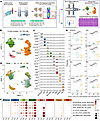 Figure 1
Global analysis of immune cell populations in PBMCs from patients with HS. (A) Overview of the workflow for PBMC sample collection, processing into single-cell suspensions for scRNA-seq, scTCR-seq, and flow cytometry, followed by functional experiment validation. (B) Unbiased clustering identified 8 main cell types from 161,753 high-quality PBMCs. (C) Violin plots showing the expression of representative marker genes of the 8 main cell types. (D) UMAP plot displaying the distribution of the 161,753 high-quality PBMCs, colored by sample groups. (E) Box-and-whisker plots showing the percentage contribution of annotated cell types across different sample groups. P values were obtained using the 1-way Kruskal-Wallis test with post hoc Dunn’s test. (F) Dot plot showing the expression of inflammation signaling pathways across the 8 main cell types in different sample groups.
Our study design allowed us to distinguish the key cellular players, molecular pathways, and effector programs associated with the initiation and progression of HS. Peripheral blood samples were processed by gradient density centrifugation to generate single-cell suspensions, which were then subjected to fluorescence-activated cell sorting (FACS) to remove dead cells, ensuring the acquisition of high-quality cells for scRNA-seq. After rigorous data quality control and filtering, we obtained scRNA-seq profiles for 161,753 cells, with median gene and unique molecular identifier (UMI) counts of 1,490 and 3,921, respectively (Supplemental Figure 1, A–C; supplemental material available online with this article; https://doi.org/10.1172/jci.insight.189825DS1). Analysis revealed 8 major cell populations, identified by their expression of known lineage markers (Figure 1, B and C) and the top 5 differentially expressed genes (DEGs). These populations included 83,834 T/NK cells (CD7 and CD247), 4,463 B/plasma cells (MS4A1 and MZB1), 46,077 monocytes/macrophages (Monos/Macs; VCAN and FCN1), 15,168 neutrophils (Neus; CXCR2 and CD177), 1,824 classical dendritic cells (cDCs; CD1C), 945 plasmacytoid dendritic cells (pDCs; GZMB and LILRA4), 204 red blood cells (RBCs; HBA1 and HBD), and 1,054 platelets (PPBP and PF4) (Supplemental Table 1). The distribution of these 8 major cell types across the 15 samples and 3 participant groups is detailed in Figure 1D and Supplemental Figure 1D. Notably, the percentages of each cell type varied significantly among the groups, with an increase in the frequency of Neus and Monos/Macs and a decrease in T/NK cells in the HE groups compared with HC (Figure 1E). These cellular distributions were validated through metacluster analysis, and odds ratios were calculated using the STARTRAC-dist index (Ro/e) method (Supplemental Figure 1E). Given that HS is a syndrome driven by an inflammatory cytokine storm causing tissue damage and impaired organ function, we also noted that inflammatory signaling pathways such as IL-2, IL-6, TNF-α, and the IFN response were activated in Neus and Monos/Macs, with higher expression levels observed in cells from patients with HS compared with those from the HC and HE groups (Figure 1F). These findings suggest that HS is characterized by dysregulation of the immune microenvironment and abnormal activation of the inflammatory response.
Characteristics and dynamics of T/NK cells in PBMCs from patients with HS-induced hepatic and renal injury. Analysis of the single-cell transcriptomes from 83,834 T/NK cells identified 14 main subclusters: 3 CD4+ T cell subclusters, 7 CD8+ T cell subclusters, 3 NK cell subclusters, and 1 γδ T cell subcluster (Supplemental Figure 2, A and B, and Supplemental Table 2). Notably, GZMB+CD8+, GZMB+ NK, IFIT1+ NK, and proliferative MKI67+CD8+ subclusters exhibited higher cytotoxic effector and inflammation scores but lower naivety resident scores (Supplemental Figure 2C). We also generated corresponding TCR sequences (Supplemental Figure 2D), revealing that GZMK+CD8+, GZMB+CD8+, IFIT1+CD8+, and MKI67+CD8+ subclusters showed more clonal expansion (Supplemental Figure 2E). Cell type abundance analysis indicated that HS samples were enriched with T/NK subclusters showing high cytotoxicity and clonal expansion, such as GZMB+CD8+, IFIT1+CD8+, and MKI67+CD8+ T cells. In contrast, T/NK subclusters with lower cytotoxicity but higher naivety scores, such as IL-7R+ NK, KLRB1+CD8+, JUN+CD8+, and ANXA1+CD4+, were decreased in HE compared with HC (Supplemental Figure 2, F and G). Upregulated DEGs in the T/NK subclusters enriched in HE/HS, compared with those in HC, were predominantly associated with cytotoxic effector and IFN-related programs, including genes such as NKG7, GNLY, GZMB, GZMH, and IFIT2 (Supplemental Figure 2H). Pathway enrichment analysis revealed that gene sets associated with IFN-γ response, leukocyte-mediated cytotoxicity cytokine production, and NK cell–mediated cytotoxicity signaling were significantly upregulated in T/NK cells from HS/HE compared with HC (Supplemental Figure 2I).
CD8+ T cell cytotoxicity and clonal expansion programs in PBMCs from patients with HS-induced hepatic and renal injury. Next, we performed a detailed analysis of CD8+ T cells, identifying a total of 6 CD8+ T subtypes based on the expression of functional genes, the top 10 DEGs, and the top 10 transcription factors (TFs): IL-7R+CD8+ (CD8_IL7R, naive CD8+), EGR1+CD8+ (CD8_EGR1), GZMK+CD8+ (CD8_GZMK, memory CD8+, CD8+ Tmem1), GZMB+CD8+ (CD8_GZMB, cytotoxic effector CD8+, CD8+ Teff), IFIT1+CD8+ (CD8_IFIT1, memory CD8+, CD8+ Tmem2), and KLRB1+CD8+ (CD8_KLRB1, transitional CD8+) (Figure 2, A and B, Supplemental Figure 3, A and B, and Supplemental Table 3). Functional signature score analysis revealed that GZMB+CD8+ and IFIT1+CD8+ subtypes exhibited higher cytotoxic effector and inflammation scores but lower naivety scores, while IL-7R+CD8+ and KLRB1+CD8+ showed intermediate cytotoxic effector and naivety scores, suggesting their transitional status (Supplemental Figure 3, C–E). The distribution of CD8+ T cell subtypes revealed differences among the HE, HS, and HC groups (Figure 2C): GZMB+CD8+ and IFIT1+CD8+ were more prevalent in HS, whereas KLRB1+ (encoding CD161) CD8+ were predominantly found in the HE and HC groups (Figure 2, C and D). Flow cytometric analysis confirmed an increase in the number of GZMB+CD8+ T cells and a decrease in the number of CD161+CD8+ T cells relative to CD8+ T cells in HS compared with HC at the protein level (Figure 2E). Additionally, the expression of cytotoxic effector genes (GZMB, GZMH, PRF1, and GNLY) was higher in GZMB+CD8+ T cells of the HS group compared with HC (Figure 2F).
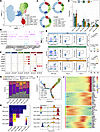 Figure 2
Characterization of HS-associated CD8+ T cells with high cytotoxic effector features and clonal expansion programs. (A) The subclustering of CD8+ T cells identified 6 cell subclusters. (B) Dot plot illustrating the scaled expression of representative marker genes across the 6 CD8+ T cell subclusters. (C) Pie diagrams displaying the proportion of sample group contributions per annotated CD8+ T cell subclusters. (D) Relative contribution of the 6 CD8+ cell subclusters in different sample groups. P values were obtained using the 1-way Kruskal-Wallis test with post hoc Dunn’s test. (E) Frequencies of HS-associated CD8+ T cells as determined by flow cytometry. P values were obtained using the 1-way Kruskal-Wallis test with post hoc Dunn’s test. (F) Dot plot showing the expression of cytotoxic effector features in CD8+ T cell subtypes derived from the HC, HE, and HS groups. (G) Bar plot showing the percentage distribution of TCR clonality types among CD8+ T cell subsets. (H) Heatmap illustrating the overlap of TCR clonality types among CD8+ T cell subsets. (I) Schematic showing the differentiation trajectory among each CD8+ T cell subset. (J) Heatmap displaying dynamic changes in gene expression along the pseudotime of CD8+ T cell differentiation trajectory.
Recognizing the significance of GZMB+CD8+, we performed trajectory and TCR clone expansion analyses to trace the origin of GZMB+CD8+. The corresponding scTCR-seq revealed that cytotoxic GZMB+CD8+, GZMK+CD8+, and IFIT1+CD8+ displayed a higher prevalence of hyperexpanded TCR clonotypes. Notably, GZMB+CD8+ shared a greater number of expanded TCR clonotypes with IFIT1+CD8+ and GZMK+CD8+ (Figure 2, G and H), whereas the naive IL-7R+CD8+ and KLRB1+CD8+ exhibited few hyperexpanded TCR clonotypes. Transcriptome similarity analysis revealed distinct expression profiles between IL-7R+CD8+ and KLRB1+CD8+ compared with GZMB+CD8+, GZMK+CD8+, and IFIT1+CD8+ cells (Supplemental Figure 3F), with higher expression levels of human leukocyte antigen I (HLA-I) and HLA-II signatures in GZMB+CD8+ compared with IL-7R+CD8+ and KLRB1+CD8+ (Figure 2B), suggesting lower immunogenicity and a more naive status of IL-7R+CD8+ and KLRB1+CD8+. Trajectory analyses using both the Monocle and Slingshot methods showed that CD8+ T cells in patients with HS underwent significant clonal expansion following TCR activation compared with HCs. These analyses also demonstrated a potential differentiation trajectory from naive IL-7R+CD8+ to KLRB1+CD8+ cells, which were characterized by low immunogenicity, and then to GZMB+CD8+ cells, which exhibited high immunogenicity and cytotoxic features (Figure 2, I and J, and Supplemental Figure 3G). Collectively, our results highlight the imbalance in the proportion of naive and cytotoxic CD8+ T cells, distinct gene expression profiles along developmental trajectories, and clonal expansion dynamics of CD8+ T cell subtypes between patients with HS and HCs.
Characteristics and dynamics of CD4+ T cells in PBMCs from patients with HS-induced hepatic and renal injury. Subclustering of total CD4+ T cells identified 6 CD4+ T subtypes based on the expression of functional genes, the top 10 DEGs, and the top 10 TFs: IL-7R+CD4+ (CD4_IL7R, naive CD4+), MT1E+CD4+ (CD4_MT1E), GZMA+CD4+ (CD4_GZMA, cytotoxic effector CD4+, CD4+ Teff), FOXP3+CD4+ (CD4_FOXP3, regulatory T cells, Treg), IFIT1+CD4+ (CD4_IFIT1), and KLRB1+CD4+ (CD4_KLRB1, transitional CD4+) (Figure 3, A and B, Supplemental Figure 4, A and B, and Supplemental Table 4). Functional signature score analysis showed that GZMA+CD4+ had a higher cytotoxic effector score and a lower naivety score compared with IL-7R+CD4+, while KLRB1+CD4+ displayed intermediate scores for both cytotoxic effector and naivety, suggesting their transitional status (Figure 3, C and D). The composition of the CD4+ T cell compartment varied significantly among the HS, HE, and HC groups; GZMA+CD4+, MT1E+CD4+, and IFIT1+CD4+ were more prevalent in HS, whereas KLRB1+CD4+ and IL-7R+CD4+ were predominantly observed in the HE and HC groups (Figure 3E). Flow cytometric analysis confirmed an increase in the frequency of GZMA+CD4+ T cells and a decrease in the frequency of CD161+CD4+ T cells relative to CD4+ T cells in HS compared with HC at the protein level (Figure 3F). GZMA+CD4+ showed higher expression levels of HLA-I and HLA-II compared with IL-7R+CD4+ and KLRB1+CD4+ (Figure 3B), and scTCR-seq revealed more hyperexpanded TCR clonotypes in cytotoxic GZMA+CD4+ compared with naive IL-7R+CD4+ and KLRB1+CD4+ (Supplemental Figure 4C). These findings indicate that HS-enriched CD4+ T cells are characterized by high immunogenicity and cytotoxic effector features. Trajectory analysis using the Slingshot method demonstrated that CD4+ T cells in patients with HS underwent significant clonal expansion following TCR activation, with a potential differentiation trajectory from naive IL-7R+CD4+ to transitional low-immunogenicity KLRB1+CD4+ and then to high-immunogenicity and cytotoxic GZMB+CD4+ (Figure 3G). Upregulated DEGs in the HE-enriched CD4+ T cluster compared with the HC-enriched CD4+ T cluster included cytotoxic effector and IFN-associated program genes, such as TNFAIP3, NKG7, GZMA, GZMK, NFKBIA, and IFIT1 (Figure 3H). Pathway enrichment analysis also showed that gene sets associated with IFN-γ response, Toll-like receptor (TLR) signaling, and TNF-α signaling via NF-κB were upregulated in CD4+ T cells in HS compared with HCs (Figure 3I). Collectively, our results highlight an imbalance in the percentages of naive and cytotoxic CD4+ T cells, along with distinct gene expression profiles and clonal expansion dynamics of CD4+ T cell subclusters between patients with HS and HCs.
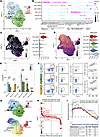 Figure 3
Characterization of HS-associated CD4+ T cells with cytotoxic effector features and differentiation trajectory. (A) The subclustering of CD4+ T cells identified 6 cell subclusters. (B) Dot plot illustrating the scaled expression of representative marker genes across the 6 CD4+ T cell subclusters. (C) UMAP plot (left) and violin plot (right) showing the expression of cytotoxic effector feature scores across each CD4+ T cell subtype. (D) UMAP plot (left) and violin plot (right) showing the expression of naivety feature scores in each CD4+ T cell subtype. (E) Bar plot displaying the relative contribution of the 6 CD4+ T cell subclusters in different sample groups. P values were obtained using the 1-way Kruskal-Wallis test with post hoc Dunn’s test. (F) Frequencies of HS-associated CD4+ T cells, as determined by flow cytometry. P values were obtained using the 1-way Kruskal-Wallis test with post hoc Dunn’s test. (G) Slingshot plot depicting the differentiation trajectory among each CD4+ T cell subset. (H) Ranking of significantly differentially expressed genes between HS-enriched and HC-enriched CD4+ T cells. (I) GSEA plot illustrating pathways enriched in HS-associated CD4+ T cell clusters compared with HC-associated clusters. NES, normalized enrichment score.
Characteristics and dynamics of NK cells in PBMCs from patients with HS-induced hepatic and renal injury. Next, subclustering of total NK cells identified 5 NK subtypes based on the expression of functional genes, the top 15 DEGs, and the top 15 TFs: IL-7R+ NK (NK_IL7R, naive NK), AREG+ NK (NK_AREG, regulatory NK), IFIT1+ NK (NK_IFIT1, interferon NK), KLRB1+ NK (NK_KLRB1, transitional NK), and GZMB+ NK (NK_GZMB, CD16+CD56dim NK) (Figure 4, A–C, Supplemental Figure 5, A and B, and Supplemental Table 5). CD16+CD56dim NK demonstrated a higher expression of the HLA-II signature and CCL5 compared with IL-7R+ NK and KLRB1+ NK (Figure 4C). Functional signature score analysis showed that the CD16+CD56dim NK subtype had a higher cytotoxic effector score and a lower naivety score compared with IL-7R+ NK, while KLRB1+ NK displayed intermediate cytotoxic effector and naive scores, suggesting their transitional status (Figure 4D). The overall distribution of NK cell subtypes revealed differences among the HS, HE, and HC groups: CD16+CD56dim NK and IFIT1+ NK were more prevalent in HS, while KLRB1+ NK and IL-7R+ NK were more prevalent in HE and HC groups (Figure 4E). Flow cytometric analysis confirmed an increase in the frequency of CD16+CD56dim NK cells relative to the frequency of NK cells in HS compared with HC at the protein level (Figure 4F). Trajectory analysis using the Slingshot method delineated a potential differentiation trajectory from naive IL-7R+ NK to transitional KLRB1+ NK and then to the cytotoxic CD16+CD56dim NK (Figure 4G). The DEGs upregulated in the NK cluster enriched in HS, compared with the HC-enriched NK cluster, included cytokine, cytotoxic effector, and IFN-associated program genes such as CCL4, CCL5, GZMH, FGFBP2, NFKBIA, and IFIT1 (Figure 4H). Pathway enrichment analysis further demonstrated that gene sets associated with IFN-γ response, NK cell–mediated cytotoxicity, cytokine production, and leukocyte-mediated cytotoxicity signaling were upregulated in NK T cells in HS compared with HCs (Figure 4I). Collectively, these results underscore the imbalance in the percentages of naive and cytotoxic NK cells, and the dynamic gene expression profiles along their differentiation trajectories of NK cell subclusters between patients with HS and HCs.
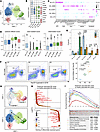 Figure 4
Characterization of HS-associated NK cells with cytotoxic effector features and differentiation trajectory. (A) The subclustering of NK cells identified 5 cell subclusters. (B) Stacked violin plot showing the expression of representative marker genes in each NK cell subcluster. (C) Dot plot illustrating the scaled expression of functional marker genes across each NK cell subcluster. (D) Functional GSEA in each NK cell subcluster. (E) Bar plot indicating the relative contribution of the 5 NK cell subclusters in distinct sample groups. P values were obtained using the 1-way Kruskal-Wallis test with post hoc Dunn’s test. (F) Frequencies of HS-associated NK cells, as determined by flow cytometry. P values were obtained using the 1-way Kruskal-Wallis test with post hoc Dunn’s test. (G) Slingshot plot depicting the differentiation trajectory among each NK cell subset. (H) Ranking of significantly differentially expressed genes between HS-enriched and HC-enriched NK cells. (I) GSEA plot showing pathways enriched in HS-associated compared with HC-associated NK cell subclusters. NES, normalized enrichment score.
Characteristics of myeloid cells and interaction with T/NK in PBMCs from patients with HS-induced hepatic and renal injury. Based on the expression of functional genes, the top 10 DEGs, and the top 10 TFs, myeloid cells can be classified into 11 subtypes: 3 neutrophil subtypes, including IFIT1+ Neu (Neu_IFIT1, immature Neu), CD177+ Neu (Neu_CD177, transitional Neu), and OLFM4+ Neu (Neu_OLFM4, mature Neu); 3 classical monocyte (CM) subtypes, including VCAN+ Mono (Mono_VCAN, CM1), CCL2+ Mono (Mono_CCL, CM2), and HLA+ Mono (Mono_HLA, CM3); 2 nonclassical monocyte (NCM) subtypes: IL-1B+ Mono (Mono_IL1B, NCM1) and CSF1R+ Mono (Mono_CSF1R, NCM2); 1 intermediate monocyte (IM) subtype: CX3CR1+ Mono (Mono_CX3CR1); and 2 DC subtypes, CD1C+ cDC (cDC_CD1C) and LILRA4+ pDC (pDC_LILRA4) (Figure 5, A and B, Supplemental Figure 6, A–C, and Supplemental Table 6). Among them, IL-1B+ Mono and CCL2+ Mono were notably characterized by their expression of cytokines and chemokines. Functional signature score analysis revealed that these subtypes exhibited higher scores for the NOD-like receptor family pyrin domain–containing 3 (NLRP3) inflammasome signaling pathway, inflammation, and pyroptosis (Figure 5, C and D, and Supplemental Figure 6D). Additionally, cells from the HS group within the IL-1B+ Mono and CCL2+ Mono subtypes demonstrated elevated expression of inflammatory signaling pathways, including TNF-α signaling via NF-κB, IL-6/JAK/STAT3 signaling, IL-2/STAT5 signaling, IFN response, inflammatory response, and complement activation (Supplemental Figure 7), compared with those from the HE and HC groups. The overall distribution of myeloid cells showed pronounced differences among the HS, HE, and HC groups, with IFIT1+ Neu, CD177+ Neu, OLFM4+ Neu, IL-1B+ Mono, and CCL2+ Mono almost exclusively found in the HS groups (Figure 5E and Supplemental Figure 6E). Notably, IL-1B+ Mono and CCL2+ Mono cells from the HS group showed higher expression level of NLRP3 inflammasome signaling pathway components (NLRP3, PYCARD, IL18, IL1B, IL6, TNF, CCL2, CCL3, and CCL4) and pyroptosis markers (TLR4, GSDMD, CASP1, and CASP4) compared with the HE and HC groups. The DEGs upregulated in the HS-enriched myeloid cells cluster compared with the HC-enriched cluster included NLRP3 inflammatory cytokines, chemokines, and NF-κB program genes (Figure 5, F and G). Pathway enrichment analysis also showed that gene sets associated with IL-6/JAK/STAT3 signaling, myeloid leukocyte activation, cytokine receptor interaction, and TNF-α signaling via NF-κB signaling were upregulated in myeloid cells in HS compared with HCs (Figure 5H).
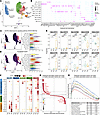 Figure 5
Characterization of HS-associated myeloid cells with prominent inflammasome and pyroptosis features. (A) Subclustering of myeloid cells identified 11 cell subclusters. (B) Dot plot illustrating the scaled expression of functional marker genes across each myeloid cell subcluster. (C) UMAP plot (left) and violin plot (right) displaying the expression of NLRP3 inflammasome feature scores in each myeloid cell subcluster. (D) UMAP plot (left) and violin plot (right) showing the expression of pyroptosis feature scores in each myeloid cell subcluster. (E) Bar plot illustrating the relative contribution of each of the 10 myeloid cell subclusters in different sample groups. P values were obtained using the 1-way Kruskal-Wallis test with post hoc Dunn’s test. (F) Dot plot showing the expression of inflammasome and pyroptosis features in myeloid cell subtypes derived from the HC, HE, and HS groups. (G) Ranking of significantly differentially expressed genes between HS-enriched and HC-enriched myeloid cells. (H) GSEA plot illustrating pathways enriched in HS-associated myeloid cell clusters compared with HC-associated clusters. NES, normalized enrichment score.
Subsequent analyses sought to elucidate the cellular interactions of immune cell populations responding to T and NK cell effector programs in HS. Intercellular crosstalk analysis identified significant interactions between inflammatory IL-1B+ Mono and CCL2+ Mono with cytotoxic T/NK cells, with the IL-1, TNF, ICAM, CCL, and CXCL families showing the most frequently activated ligand-receptor interactions (Figure 6, A–C). Specifically, IL-1B+ Mono and CCL2+ Mono released TNF, IL-1B, IL-6, IL-18, and CXCL2/3/8, which promoted the recruitment and activation of neutrophils and cytotoxic T/NK cells through interactions with corresponding receptors TNFRSF1A/B, IL-1R2, IL-6ST, IL-18R1, and CXCR1/2, respectively (Supplemental Figure 8). Our results underscore that IL-1B+ Mono and CCL2+ Mono serve as key sources of inflammatory cytokines and chemokines, triggering activation of the NLRP3 inflammasome signaling and pyroptosis pathways.
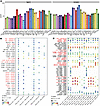 Figure 6
Cellular interactions and potential therapeutic targets in HS. (A) Bar plot showing the numbers of putative ligand-receptor pairs between myeloid cells and other indicated cell types, based on scRNA-seq data. (B) Bubble plot displaying the ligand-receptor pairs involved in interactions between different neutrophil cell subsets and myeloid cells. (C) Bubble plot displaying the ligand-receptor pairs involved in interactions between various T cell subsets and myeloid cells.
Pretreatment inhibition of the NLRP3 inflammasome pathway ameliorates HS-induced hepatic and renal injury in mice. To further characterize the role of the NLRP3 inflammasome pathway in the pathogenesis of HS, an HS model was established after pretreatment with the NLRP3 inflammasome inhibitor CY-09 or the TNF-α inhibitor QNZ for 7 consecutive days (Figure 7A). Inhibition of either the NLRP3 or TNF-α pathway partially ameliorated HS-induced morphological damage to hepatic and renal tissues, as observed in hematoxylin and eosin (H&E) staining (Figure 7B, indicated by the arrows). This phenomenon was accompanied by improved biochemical markers of hepatic function (ALT and AST), renal function (serum urea and creatinine), and rhabdomyolysis (creatine kinase) (Figure 7C). Moreover, ELISA measurements of plasma cytokine and chemokine profiles in these mice revealed elevated levels of plasma IL-1β, IL-18, IL-6, TNF-α, CCL2, CCL3, and CCL4, indicating a pronounced activation of inflammatory responses, particularly within the inflammasome pathway. Inhibition of NLRP3 or TNF-α significantly reduced the enhanced inflammatory and chemotactic responses observed at the onset of HS, resulting in decreased levels of these cytokines (Figure 7D). Furthermore, we analyzed the expression patterns of key proteins in the inflammasome/pyroptosis pathway in hepatic and renal tissues via Western blotting. Upon HS induction, there was an upregulation of NLRP3, TLR4, and ASC, accompanied by increased cleavage of caspase 1 and caspase 11. Additionally, mature forms of inflammatory cytokines (IL-1β, IL-18, IL-6, TNF-α, and MCP-1) were detected after HS induction. Inhibition of either NLRP3 or TNF-α signaling attenuated these upregulated expression profiles, leading to decreased levels of inflammatory cytokines in both hepatic (Figure 7, E and F) and renal tissues (Supplemental Figure 9, A and B). Moreover, the expression patterns of gasdermin D (GSDMD) and Z-DNA–binding protein 1 (ZBP1) were also measured. HS induction significantly upregulated the expression level of N-terminal GSDMD (GSDMD-N), with NLRP3 inhibition by CY-09 significantly decreasing GSDMD-N expression levels in both liver and kidney tissues (Figure 7, E and F, and Supplemental Figure 9, A and B). As to the expression levels of ZBP1, HS induction significantly enhanced the expression levels of ZBP1, while intervention by CY-09 or QNZ did not significantly suppress the expression in both liver and kidney tissues (Supplemental Figure 10, A–C). Notably, NLRP3 inhibition demonstrated a more pronounced reduction in inflammatory cytokines compared with TNF-α blockade. Furthermore, NLRP3 inhibition after HS induction did not significantly rescue the biochemical parameters and the pathological changes in both liver and kidney tissues (Supplemental Figure 11, A–D). Thus, inhibiting the NLRP3 inflammasome or TNF-α signaling pathways ameliorates the pathological and biochemical indices as well as key inflammatory responses upon HS onset.
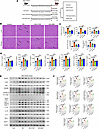 Figure 7
The effect of pretreatment with NLRP3 inflammasome or TNF-α blockade on the clinical prognosis of HS mice. (A) Diagram of intervention procedures for HS induction in 4 groups. The third and fourth groups were intraperitoneally injected with the NLRP3 inhibitor CY-09 (3 mg/kg/day) or the TNF-α inhibitor QNZ (0.1 mg/kg/day) for 7 consecutive days before HS induction (n = 10 per group). The other 2 groups received PBS as vehicle control. Mice were euthanized 2 hours after HS onset for sample collection. Serum samples were used for cytokine and biological function measurements. Hepatic and renal tissues were used for pathology staining and Western blotting. (B) Representative images of H&E-stained hepatic and renal tissues from the experimental groups. Original magnification, ×400. Scale bars: 50 μm. n = 3 repeats per group. (C) Clinical parameters measured include markers for hepatic function (ALT, AST), renal function (serum urea, creatinine), and rhabdomyolysis (creatine kinase); n = 9 repeats per group. Comparisons were conducted using the 1-way ANOVA followed by Tukey’s multiple-comparison test. (D) Key plasma cytokines (IL-6, IL-1β, IL-18, TNF-α) and chemokines (CCL2, CCL3, CCL4) quantified by ELISA; n = 9 repeats per group. Comparisons were conducted using 1-way ANOVA followed by Tukey’s multiple-comparison test. (E and F) Western blots and bar graphs displaying expression profiles of inflammasome- and pyroptosis-related proteins (NLRP3, TLR4, ASC, GSDMD, caspase 1, caspase 11) and inflammatory cytokines (IL-6, IL-1β, IL-18, TNF-α, MCP-1) in hepatic tissues, with β-actin as loading control; n = 3 repeats per group. Comparisons were conducted using 1-way ANOVA followed by Tukey’s multiple-comparison test. *P < 0.05; **P < 0.01; ***P < 0.001.


