
Physician-Scientist Development
Open Access |  10.1172/jci.insight.195683
Navigating physician-scientist careers: insights from American Board of Internal Medicine Research Pathway graduates
Emily J. Gallagher,1 Barbara I. Kazmierczak,2 Michael Kisielewski,3 Nathan Schoettler,4 Clifford J. Steer,5 Robert A. Baiocchi,6 Jatin M. Vyas,7 Kyu Y. Rhee,8 Patrick J. Hu,9 Carlos M. Isales,10 Paul R. Conlin,11 Christopher D. Kontos,12 Michael Melfe,13 Furman S. McDonald,13,14 Don C. Rockey,15 and Christopher S. Williams16,17,18
1Division of Endocrinology, Diabetes and Bone Disease, Department of Medicine, Icahn School of Medicine at Mount Sinai, New York, New York, USA.
2Department of Microbial Pathogenesis, Department of Medicine (Infectious Diseases), Yale University School of Medicine, New Haven, Connecticut, USA.
3Alliance for Academic Internal Medicine, Alexandria, Virginia, USA.
4Section of Pulmonary and Critical Care Medicine, Department of Medicine, University of Chicago, Chicago, Illinois, USA.
5Department of Medicine, University of Minnesota Medical School, Minneapolis, Minnesota, USA.
6Division of Hematology, Department of Internal Medicine, Comprehensive Cancer Center, The Ohio State University, Columbus, Ohio, USA.
7Division of Infectious Disease, Department of Medicine, Columbia University, Vagelos College of Physicians and Surgeons, New York, New York, USA.
8Division of Infectious Diseases, Department of Medicine, Weill Cornell Medicine, New York, New York, USA.
9Departments of Medicine and Cell and Developmental Biology, Vanderbilt University Medical Center, Nashville, Tennessee, USA.
10Departments of Medicine, Neuroscience and Regenerative Medicine, Medical College of Georgia at Augusta University, Augusta, Georgia, USA.
11VA Boston Healthcare System and Harvard Medical School, Boston, Massachusetts, USA.
12Department of Medicine, Duke University Medical Center, Durham, North Carolina, USA.
13American Board of Internal Medicine, Philadelphia, Pennsylvania, USA.
14J. Edwin Wood Clinic of Pennsylvania Hospital, Philadelphia, Pennsylvania, USA.
15Division of Gastroenterology and Hepatology and Digestive Disease Research Center, Medical University of South Carolina, Charleston, South Carolina, USA.
16Department of Medicine, Division of Gastroenterology, Vanderbilt University Medical Center, Nashville, Tennessee, USA.
17Veterans Affairs Tennessee Valley Health Care System, Nashville, Tennessee, USA.
18Vanderbilt Ingram Cancer Center, Nashville, Tennessee, USA.
Address correspondence to: Emily J. Gallagher, Division of Endocrinology, Diabetes and Bone Disease, Department of Medicine, Icahn School of Medicine at Mount Sinai, One Gustave L. Levy Place, Box 1055, New York, New York 10029, USA. Email: Emily.Gallagher@mssm.edu.
Find articles by Gallagher, E. in: PubMed | Google Scholar
1Division of Endocrinology, Diabetes and Bone Disease, Department of Medicine, Icahn School of Medicine at Mount Sinai, New York, New York, USA.
2Department of Microbial Pathogenesis, Department of Medicine (Infectious Diseases), Yale University School of Medicine, New Haven, Connecticut, USA.
3Alliance for Academic Internal Medicine, Alexandria, Virginia, USA.
4Section of Pulmonary and Critical Care Medicine, Department of Medicine, University of Chicago, Chicago, Illinois, USA.
5Department of Medicine, University of Minnesota Medical School, Minneapolis, Minnesota, USA.
6Division of Hematology, Department of Internal Medicine, Comprehensive Cancer Center, The Ohio State University, Columbus, Ohio, USA.
7Division of Infectious Disease, Department of Medicine, Columbia University, Vagelos College of Physicians and Surgeons, New York, New York, USA.
8Division of Infectious Diseases, Department of Medicine, Weill Cornell Medicine, New York, New York, USA.
9Departments of Medicine and Cell and Developmental Biology, Vanderbilt University Medical Center, Nashville, Tennessee, USA.
10Departments of Medicine, Neuroscience and Regenerative Medicine, Medical College of Georgia at Augusta University, Augusta, Georgia, USA.
11VA Boston Healthcare System and Harvard Medical School, Boston, Massachusetts, USA.
12Department of Medicine, Duke University Medical Center, Durham, North Carolina, USA.
13American Board of Internal Medicine, Philadelphia, Pennsylvania, USA.
14J. Edwin Wood Clinic of Pennsylvania Hospital, Philadelphia, Pennsylvania, USA.
15Division of Gastroenterology and Hepatology and Digestive Disease Research Center, Medical University of South Carolina, Charleston, South Carolina, USA.
16Department of Medicine, Division of Gastroenterology, Vanderbilt University Medical Center, Nashville, Tennessee, USA.
17Veterans Affairs Tennessee Valley Health Care System, Nashville, Tennessee, USA.
18Vanderbilt Ingram Cancer Center, Nashville, Tennessee, USA.
Address correspondence to: Emily J. Gallagher, Division of Endocrinology, Diabetes and Bone Disease, Department of Medicine, Icahn School of Medicine at Mount Sinai, One Gustave L. Levy Place, Box 1055, New York, New York 10029, USA. Email: Emily.Gallagher@mssm.edu.
Find articles by
Kazmierczak, B.
in:
PubMed
|
Google Scholar
|

1Division of Endocrinology, Diabetes and Bone Disease, Department of Medicine, Icahn School of Medicine at Mount Sinai, New York, New York, USA.
2Department of Microbial Pathogenesis, Department of Medicine (Infectious Diseases), Yale University School of Medicine, New Haven, Connecticut, USA.
3Alliance for Academic Internal Medicine, Alexandria, Virginia, USA.
4Section of Pulmonary and Critical Care Medicine, Department of Medicine, University of Chicago, Chicago, Illinois, USA.
5Department of Medicine, University of Minnesota Medical School, Minneapolis, Minnesota, USA.
6Division of Hematology, Department of Internal Medicine, Comprehensive Cancer Center, The Ohio State University, Columbus, Ohio, USA.
7Division of Infectious Disease, Department of Medicine, Columbia University, Vagelos College of Physicians and Surgeons, New York, New York, USA.
8Division of Infectious Diseases, Department of Medicine, Weill Cornell Medicine, New York, New York, USA.
9Departments of Medicine and Cell and Developmental Biology, Vanderbilt University Medical Center, Nashville, Tennessee, USA.
10Departments of Medicine, Neuroscience and Regenerative Medicine, Medical College of Georgia at Augusta University, Augusta, Georgia, USA.
11VA Boston Healthcare System and Harvard Medical School, Boston, Massachusetts, USA.
12Department of Medicine, Duke University Medical Center, Durham, North Carolina, USA.
13American Board of Internal Medicine, Philadelphia, Pennsylvania, USA.
14J. Edwin Wood Clinic of Pennsylvania Hospital, Philadelphia, Pennsylvania, USA.
15Division of Gastroenterology and Hepatology and Digestive Disease Research Center, Medical University of South Carolina, Charleston, South Carolina, USA.
16Department of Medicine, Division of Gastroenterology, Vanderbilt University Medical Center, Nashville, Tennessee, USA.
17Veterans Affairs Tennessee Valley Health Care System, Nashville, Tennessee, USA.
18Vanderbilt Ingram Cancer Center, Nashville, Tennessee, USA.
Address correspondence to: Emily J. Gallagher, Division of Endocrinology, Diabetes and Bone Disease, Department of Medicine, Icahn School of Medicine at Mount Sinai, One Gustave L. Levy Place, Box 1055, New York, New York 10029, USA. Email: Emily.Gallagher@mssm.edu.
Find articles by Kisielewski, M. in: PubMed | Google Scholar
1Division of Endocrinology, Diabetes and Bone Disease, Department of Medicine, Icahn School of Medicine at Mount Sinai, New York, New York, USA.
2Department of Microbial Pathogenesis, Department of Medicine (Infectious Diseases), Yale University School of Medicine, New Haven, Connecticut, USA.
3Alliance for Academic Internal Medicine, Alexandria, Virginia, USA.
4Section of Pulmonary and Critical Care Medicine, Department of Medicine, University of Chicago, Chicago, Illinois, USA.
5Department of Medicine, University of Minnesota Medical School, Minneapolis, Minnesota, USA.
6Division of Hematology, Department of Internal Medicine, Comprehensive Cancer Center, The Ohio State University, Columbus, Ohio, USA.
7Division of Infectious Disease, Department of Medicine, Columbia University, Vagelos College of Physicians and Surgeons, New York, New York, USA.
8Division of Infectious Diseases, Department of Medicine, Weill Cornell Medicine, New York, New York, USA.
9Departments of Medicine and Cell and Developmental Biology, Vanderbilt University Medical Center, Nashville, Tennessee, USA.
10Departments of Medicine, Neuroscience and Regenerative Medicine, Medical College of Georgia at Augusta University, Augusta, Georgia, USA.
11VA Boston Healthcare System and Harvard Medical School, Boston, Massachusetts, USA.
12Department of Medicine, Duke University Medical Center, Durham, North Carolina, USA.
13American Board of Internal Medicine, Philadelphia, Pennsylvania, USA.
14J. Edwin Wood Clinic of Pennsylvania Hospital, Philadelphia, Pennsylvania, USA.
15Division of Gastroenterology and Hepatology and Digestive Disease Research Center, Medical University of South Carolina, Charleston, South Carolina, USA.
16Department of Medicine, Division of Gastroenterology, Vanderbilt University Medical Center, Nashville, Tennessee, USA.
17Veterans Affairs Tennessee Valley Health Care System, Nashville, Tennessee, USA.
18Vanderbilt Ingram Cancer Center, Nashville, Tennessee, USA.
Address correspondence to: Emily J. Gallagher, Division of Endocrinology, Diabetes and Bone Disease, Department of Medicine, Icahn School of Medicine at Mount Sinai, One Gustave L. Levy Place, Box 1055, New York, New York 10029, USA. Email: Emily.Gallagher@mssm.edu.
Find articles by Schoettler, N. in: PubMed | Google Scholar
1Division of Endocrinology, Diabetes and Bone Disease, Department of Medicine, Icahn School of Medicine at Mount Sinai, New York, New York, USA.
2Department of Microbial Pathogenesis, Department of Medicine (Infectious Diseases), Yale University School of Medicine, New Haven, Connecticut, USA.
3Alliance for Academic Internal Medicine, Alexandria, Virginia, USA.
4Section of Pulmonary and Critical Care Medicine, Department of Medicine, University of Chicago, Chicago, Illinois, USA.
5Department of Medicine, University of Minnesota Medical School, Minneapolis, Minnesota, USA.
6Division of Hematology, Department of Internal Medicine, Comprehensive Cancer Center, The Ohio State University, Columbus, Ohio, USA.
7Division of Infectious Disease, Department of Medicine, Columbia University, Vagelos College of Physicians and Surgeons, New York, New York, USA.
8Division of Infectious Diseases, Department of Medicine, Weill Cornell Medicine, New York, New York, USA.
9Departments of Medicine and Cell and Developmental Biology, Vanderbilt University Medical Center, Nashville, Tennessee, USA.
10Departments of Medicine, Neuroscience and Regenerative Medicine, Medical College of Georgia at Augusta University, Augusta, Georgia, USA.
11VA Boston Healthcare System and Harvard Medical School, Boston, Massachusetts, USA.
12Department of Medicine, Duke University Medical Center, Durham, North Carolina, USA.
13American Board of Internal Medicine, Philadelphia, Pennsylvania, USA.
14J. Edwin Wood Clinic of Pennsylvania Hospital, Philadelphia, Pennsylvania, USA.
15Division of Gastroenterology and Hepatology and Digestive Disease Research Center, Medical University of South Carolina, Charleston, South Carolina, USA.
16Department of Medicine, Division of Gastroenterology, Vanderbilt University Medical Center, Nashville, Tennessee, USA.
17Veterans Affairs Tennessee Valley Health Care System, Nashville, Tennessee, USA.
18Vanderbilt Ingram Cancer Center, Nashville, Tennessee, USA.
Address correspondence to: Emily J. Gallagher, Division of Endocrinology, Diabetes and Bone Disease, Department of Medicine, Icahn School of Medicine at Mount Sinai, One Gustave L. Levy Place, Box 1055, New York, New York 10029, USA. Email: Emily.Gallagher@mssm.edu.
Find articles by Steer, C. in: PubMed | Google Scholar
1Division of Endocrinology, Diabetes and Bone Disease, Department of Medicine, Icahn School of Medicine at Mount Sinai, New York, New York, USA.
2Department of Microbial Pathogenesis, Department of Medicine (Infectious Diseases), Yale University School of Medicine, New Haven, Connecticut, USA.
3Alliance for Academic Internal Medicine, Alexandria, Virginia, USA.
4Section of Pulmonary and Critical Care Medicine, Department of Medicine, University of Chicago, Chicago, Illinois, USA.
5Department of Medicine, University of Minnesota Medical School, Minneapolis, Minnesota, USA.
6Division of Hematology, Department of Internal Medicine, Comprehensive Cancer Center, The Ohio State University, Columbus, Ohio, USA.
7Division of Infectious Disease, Department of Medicine, Columbia University, Vagelos College of Physicians and Surgeons, New York, New York, USA.
8Division of Infectious Diseases, Department of Medicine, Weill Cornell Medicine, New York, New York, USA.
9Departments of Medicine and Cell and Developmental Biology, Vanderbilt University Medical Center, Nashville, Tennessee, USA.
10Departments of Medicine, Neuroscience and Regenerative Medicine, Medical College of Georgia at Augusta University, Augusta, Georgia, USA.
11VA Boston Healthcare System and Harvard Medical School, Boston, Massachusetts, USA.
12Department of Medicine, Duke University Medical Center, Durham, North Carolina, USA.
13American Board of Internal Medicine, Philadelphia, Pennsylvania, USA.
14J. Edwin Wood Clinic of Pennsylvania Hospital, Philadelphia, Pennsylvania, USA.
15Division of Gastroenterology and Hepatology and Digestive Disease Research Center, Medical University of South Carolina, Charleston, South Carolina, USA.
16Department of Medicine, Division of Gastroenterology, Vanderbilt University Medical Center, Nashville, Tennessee, USA.
17Veterans Affairs Tennessee Valley Health Care System, Nashville, Tennessee, USA.
18Vanderbilt Ingram Cancer Center, Nashville, Tennessee, USA.
Address correspondence to: Emily J. Gallagher, Division of Endocrinology, Diabetes and Bone Disease, Department of Medicine, Icahn School of Medicine at Mount Sinai, One Gustave L. Levy Place, Box 1055, New York, New York 10029, USA. Email: Emily.Gallagher@mssm.edu.
Find articles by Baiocchi, R. in: PubMed | Google Scholar
1Division of Endocrinology, Diabetes and Bone Disease, Department of Medicine, Icahn School of Medicine at Mount Sinai, New York, New York, USA.
2Department of Microbial Pathogenesis, Department of Medicine (Infectious Diseases), Yale University School of Medicine, New Haven, Connecticut, USA.
3Alliance for Academic Internal Medicine, Alexandria, Virginia, USA.
4Section of Pulmonary and Critical Care Medicine, Department of Medicine, University of Chicago, Chicago, Illinois, USA.
5Department of Medicine, University of Minnesota Medical School, Minneapolis, Minnesota, USA.
6Division of Hematology, Department of Internal Medicine, Comprehensive Cancer Center, The Ohio State University, Columbus, Ohio, USA.
7Division of Infectious Disease, Department of Medicine, Columbia University, Vagelos College of Physicians and Surgeons, New York, New York, USA.
8Division of Infectious Diseases, Department of Medicine, Weill Cornell Medicine, New York, New York, USA.
9Departments of Medicine and Cell and Developmental Biology, Vanderbilt University Medical Center, Nashville, Tennessee, USA.
10Departments of Medicine, Neuroscience and Regenerative Medicine, Medical College of Georgia at Augusta University, Augusta, Georgia, USA.
11VA Boston Healthcare System and Harvard Medical School, Boston, Massachusetts, USA.
12Department of Medicine, Duke University Medical Center, Durham, North Carolina, USA.
13American Board of Internal Medicine, Philadelphia, Pennsylvania, USA.
14J. Edwin Wood Clinic of Pennsylvania Hospital, Philadelphia, Pennsylvania, USA.
15Division of Gastroenterology and Hepatology and Digestive Disease Research Center, Medical University of South Carolina, Charleston, South Carolina, USA.
16Department of Medicine, Division of Gastroenterology, Vanderbilt University Medical Center, Nashville, Tennessee, USA.
17Veterans Affairs Tennessee Valley Health Care System, Nashville, Tennessee, USA.
18Vanderbilt Ingram Cancer Center, Nashville, Tennessee, USA.
Address correspondence to: Emily J. Gallagher, Division of Endocrinology, Diabetes and Bone Disease, Department of Medicine, Icahn School of Medicine at Mount Sinai, One Gustave L. Levy Place, Box 1055, New York, New York 10029, USA. Email: Emily.Gallagher@mssm.edu.
Find articles by
Vyas, J.
in:
PubMed
|
Google Scholar
|
1Division of Endocrinology, Diabetes and Bone Disease, Department of Medicine, Icahn School of Medicine at Mount Sinai, New York, New York, USA.
2Department of Microbial Pathogenesis, Department of Medicine (Infectious Diseases), Yale University School of Medicine, New Haven, Connecticut, USA.
3Alliance for Academic Internal Medicine, Alexandria, Virginia, USA.
4Section of Pulmonary and Critical Care Medicine, Department of Medicine, University of Chicago, Chicago, Illinois, USA.
5Department of Medicine, University of Minnesota Medical School, Minneapolis, Minnesota, USA.
6Division of Hematology, Department of Internal Medicine, Comprehensive Cancer Center, The Ohio State University, Columbus, Ohio, USA.
7Division of Infectious Disease, Department of Medicine, Columbia University, Vagelos College of Physicians and Surgeons, New York, New York, USA.
8Division of Infectious Diseases, Department of Medicine, Weill Cornell Medicine, New York, New York, USA.
9Departments of Medicine and Cell and Developmental Biology, Vanderbilt University Medical Center, Nashville, Tennessee, USA.
10Departments of Medicine, Neuroscience and Regenerative Medicine, Medical College of Georgia at Augusta University, Augusta, Georgia, USA.
11VA Boston Healthcare System and Harvard Medical School, Boston, Massachusetts, USA.
12Department of Medicine, Duke University Medical Center, Durham, North Carolina, USA.
13American Board of Internal Medicine, Philadelphia, Pennsylvania, USA.
14J. Edwin Wood Clinic of Pennsylvania Hospital, Philadelphia, Pennsylvania, USA.
15Division of Gastroenterology and Hepatology and Digestive Disease Research Center, Medical University of South Carolina, Charleston, South Carolina, USA.
16Department of Medicine, Division of Gastroenterology, Vanderbilt University Medical Center, Nashville, Tennessee, USA.
17Veterans Affairs Tennessee Valley Health Care System, Nashville, Tennessee, USA.
18Vanderbilt Ingram Cancer Center, Nashville, Tennessee, USA.
Address correspondence to: Emily J. Gallagher, Division of Endocrinology, Diabetes and Bone Disease, Department of Medicine, Icahn School of Medicine at Mount Sinai, One Gustave L. Levy Place, Box 1055, New York, New York 10029, USA. Email: Emily.Gallagher@mssm.edu.
Find articles by Rhee, K. in: PubMed | Google Scholar
1Division of Endocrinology, Diabetes and Bone Disease, Department of Medicine, Icahn School of Medicine at Mount Sinai, New York, New York, USA.
2Department of Microbial Pathogenesis, Department of Medicine (Infectious Diseases), Yale University School of Medicine, New Haven, Connecticut, USA.
3Alliance for Academic Internal Medicine, Alexandria, Virginia, USA.
4Section of Pulmonary and Critical Care Medicine, Department of Medicine, University of Chicago, Chicago, Illinois, USA.
5Department of Medicine, University of Minnesota Medical School, Minneapolis, Minnesota, USA.
6Division of Hematology, Department of Internal Medicine, Comprehensive Cancer Center, The Ohio State University, Columbus, Ohio, USA.
7Division of Infectious Disease, Department of Medicine, Columbia University, Vagelos College of Physicians and Surgeons, New York, New York, USA.
8Division of Infectious Diseases, Department of Medicine, Weill Cornell Medicine, New York, New York, USA.
9Departments of Medicine and Cell and Developmental Biology, Vanderbilt University Medical Center, Nashville, Tennessee, USA.
10Departments of Medicine, Neuroscience and Regenerative Medicine, Medical College of Georgia at Augusta University, Augusta, Georgia, USA.
11VA Boston Healthcare System and Harvard Medical School, Boston, Massachusetts, USA.
12Department of Medicine, Duke University Medical Center, Durham, North Carolina, USA.
13American Board of Internal Medicine, Philadelphia, Pennsylvania, USA.
14J. Edwin Wood Clinic of Pennsylvania Hospital, Philadelphia, Pennsylvania, USA.
15Division of Gastroenterology and Hepatology and Digestive Disease Research Center, Medical University of South Carolina, Charleston, South Carolina, USA.
16Department of Medicine, Division of Gastroenterology, Vanderbilt University Medical Center, Nashville, Tennessee, USA.
17Veterans Affairs Tennessee Valley Health Care System, Nashville, Tennessee, USA.
18Vanderbilt Ingram Cancer Center, Nashville, Tennessee, USA.
Address correspondence to: Emily J. Gallagher, Division of Endocrinology, Diabetes and Bone Disease, Department of Medicine, Icahn School of Medicine at Mount Sinai, One Gustave L. Levy Place, Box 1055, New York, New York 10029, USA. Email: Emily.Gallagher@mssm.edu.
Find articles by
Hu, P.
in:
PubMed
|
Google Scholar
|
1Division of Endocrinology, Diabetes and Bone Disease, Department of Medicine, Icahn School of Medicine at Mount Sinai, New York, New York, USA.
2Department of Microbial Pathogenesis, Department of Medicine (Infectious Diseases), Yale University School of Medicine, New Haven, Connecticut, USA.
3Alliance for Academic Internal Medicine, Alexandria, Virginia, USA.
4Section of Pulmonary and Critical Care Medicine, Department of Medicine, University of Chicago, Chicago, Illinois, USA.
5Department of Medicine, University of Minnesota Medical School, Minneapolis, Minnesota, USA.
6Division of Hematology, Department of Internal Medicine, Comprehensive Cancer Center, The Ohio State University, Columbus, Ohio, USA.
7Division of Infectious Disease, Department of Medicine, Columbia University, Vagelos College of Physicians and Surgeons, New York, New York, USA.
8Division of Infectious Diseases, Department of Medicine, Weill Cornell Medicine, New York, New York, USA.
9Departments of Medicine and Cell and Developmental Biology, Vanderbilt University Medical Center, Nashville, Tennessee, USA.
10Departments of Medicine, Neuroscience and Regenerative Medicine, Medical College of Georgia at Augusta University, Augusta, Georgia, USA.
11VA Boston Healthcare System and Harvard Medical School, Boston, Massachusetts, USA.
12Department of Medicine, Duke University Medical Center, Durham, North Carolina, USA.
13American Board of Internal Medicine, Philadelphia, Pennsylvania, USA.
14J. Edwin Wood Clinic of Pennsylvania Hospital, Philadelphia, Pennsylvania, USA.
15Division of Gastroenterology and Hepatology and Digestive Disease Research Center, Medical University of South Carolina, Charleston, South Carolina, USA.
16Department of Medicine, Division of Gastroenterology, Vanderbilt University Medical Center, Nashville, Tennessee, USA.
17Veterans Affairs Tennessee Valley Health Care System, Nashville, Tennessee, USA.
18Vanderbilt Ingram Cancer Center, Nashville, Tennessee, USA.
Address correspondence to: Emily J. Gallagher, Division of Endocrinology, Diabetes and Bone Disease, Department of Medicine, Icahn School of Medicine at Mount Sinai, One Gustave L. Levy Place, Box 1055, New York, New York 10029, USA. Email: Emily.Gallagher@mssm.edu.
Find articles by
Isales, C.
in:
PubMed
|
Google Scholar
|
1Division of Endocrinology, Diabetes and Bone Disease, Department of Medicine, Icahn School of Medicine at Mount Sinai, New York, New York, USA.
2Department of Microbial Pathogenesis, Department of Medicine (Infectious Diseases), Yale University School of Medicine, New Haven, Connecticut, USA.
3Alliance for Academic Internal Medicine, Alexandria, Virginia, USA.
4Section of Pulmonary and Critical Care Medicine, Department of Medicine, University of Chicago, Chicago, Illinois, USA.
5Department of Medicine, University of Minnesota Medical School, Minneapolis, Minnesota, USA.
6Division of Hematology, Department of Internal Medicine, Comprehensive Cancer Center, The Ohio State University, Columbus, Ohio, USA.
7Division of Infectious Disease, Department of Medicine, Columbia University, Vagelos College of Physicians and Surgeons, New York, New York, USA.
8Division of Infectious Diseases, Department of Medicine, Weill Cornell Medicine, New York, New York, USA.
9Departments of Medicine and Cell and Developmental Biology, Vanderbilt University Medical Center, Nashville, Tennessee, USA.
10Departments of Medicine, Neuroscience and Regenerative Medicine, Medical College of Georgia at Augusta University, Augusta, Georgia, USA.
11VA Boston Healthcare System and Harvard Medical School, Boston, Massachusetts, USA.
12Department of Medicine, Duke University Medical Center, Durham, North Carolina, USA.
13American Board of Internal Medicine, Philadelphia, Pennsylvania, USA.
14J. Edwin Wood Clinic of Pennsylvania Hospital, Philadelphia, Pennsylvania, USA.
15Division of Gastroenterology and Hepatology and Digestive Disease Research Center, Medical University of South Carolina, Charleston, South Carolina, USA.
16Department of Medicine, Division of Gastroenterology, Vanderbilt University Medical Center, Nashville, Tennessee, USA.
17Veterans Affairs Tennessee Valley Health Care System, Nashville, Tennessee, USA.
18Vanderbilt Ingram Cancer Center, Nashville, Tennessee, USA.
Address correspondence to: Emily J. Gallagher, Division of Endocrinology, Diabetes and Bone Disease, Department of Medicine, Icahn School of Medicine at Mount Sinai, One Gustave L. Levy Place, Box 1055, New York, New York 10029, USA. Email: Emily.Gallagher@mssm.edu.
Find articles by
Conlin, P.
in:
PubMed
|
Google Scholar
|
1Division of Endocrinology, Diabetes and Bone Disease, Department of Medicine, Icahn School of Medicine at Mount Sinai, New York, New York, USA.
2Department of Microbial Pathogenesis, Department of Medicine (Infectious Diseases), Yale University School of Medicine, New Haven, Connecticut, USA.
3Alliance for Academic Internal Medicine, Alexandria, Virginia, USA.
4Section of Pulmonary and Critical Care Medicine, Department of Medicine, University of Chicago, Chicago, Illinois, USA.
5Department of Medicine, University of Minnesota Medical School, Minneapolis, Minnesota, USA.
6Division of Hematology, Department of Internal Medicine, Comprehensive Cancer Center, The Ohio State University, Columbus, Ohio, USA.
7Division of Infectious Disease, Department of Medicine, Columbia University, Vagelos College of Physicians and Surgeons, New York, New York, USA.
8Division of Infectious Diseases, Department of Medicine, Weill Cornell Medicine, New York, New York, USA.
9Departments of Medicine and Cell and Developmental Biology, Vanderbilt University Medical Center, Nashville, Tennessee, USA.
10Departments of Medicine, Neuroscience and Regenerative Medicine, Medical College of Georgia at Augusta University, Augusta, Georgia, USA.
11VA Boston Healthcare System and Harvard Medical School, Boston, Massachusetts, USA.
12Department of Medicine, Duke University Medical Center, Durham, North Carolina, USA.
13American Board of Internal Medicine, Philadelphia, Pennsylvania, USA.
14J. Edwin Wood Clinic of Pennsylvania Hospital, Philadelphia, Pennsylvania, USA.
15Division of Gastroenterology and Hepatology and Digestive Disease Research Center, Medical University of South Carolina, Charleston, South Carolina, USA.
16Department of Medicine, Division of Gastroenterology, Vanderbilt University Medical Center, Nashville, Tennessee, USA.
17Veterans Affairs Tennessee Valley Health Care System, Nashville, Tennessee, USA.
18Vanderbilt Ingram Cancer Center, Nashville, Tennessee, USA.
Address correspondence to: Emily J. Gallagher, Division of Endocrinology, Diabetes and Bone Disease, Department of Medicine, Icahn School of Medicine at Mount Sinai, One Gustave L. Levy Place, Box 1055, New York, New York 10029, USA. Email: Emily.Gallagher@mssm.edu.
Find articles by
Kontos, C.
in:
PubMed
|
Google Scholar
|
1Division of Endocrinology, Diabetes and Bone Disease, Department of Medicine, Icahn School of Medicine at Mount Sinai, New York, New York, USA.
2Department of Microbial Pathogenesis, Department of Medicine (Infectious Diseases), Yale University School of Medicine, New Haven, Connecticut, USA.
3Alliance for Academic Internal Medicine, Alexandria, Virginia, USA.
4Section of Pulmonary and Critical Care Medicine, Department of Medicine, University of Chicago, Chicago, Illinois, USA.
5Department of Medicine, University of Minnesota Medical School, Minneapolis, Minnesota, USA.
6Division of Hematology, Department of Internal Medicine, Comprehensive Cancer Center, The Ohio State University, Columbus, Ohio, USA.
7Division of Infectious Disease, Department of Medicine, Columbia University, Vagelos College of Physicians and Surgeons, New York, New York, USA.
8Division of Infectious Diseases, Department of Medicine, Weill Cornell Medicine, New York, New York, USA.
9Departments of Medicine and Cell and Developmental Biology, Vanderbilt University Medical Center, Nashville, Tennessee, USA.
10Departments of Medicine, Neuroscience and Regenerative Medicine, Medical College of Georgia at Augusta University, Augusta, Georgia, USA.
11VA Boston Healthcare System and Harvard Medical School, Boston, Massachusetts, USA.
12Department of Medicine, Duke University Medical Center, Durham, North Carolina, USA.
13American Board of Internal Medicine, Philadelphia, Pennsylvania, USA.
14J. Edwin Wood Clinic of Pennsylvania Hospital, Philadelphia, Pennsylvania, USA.
15Division of Gastroenterology and Hepatology and Digestive Disease Research Center, Medical University of South Carolina, Charleston, South Carolina, USA.
16Department of Medicine, Division of Gastroenterology, Vanderbilt University Medical Center, Nashville, Tennessee, USA.
17Veterans Affairs Tennessee Valley Health Care System, Nashville, Tennessee, USA.
18Vanderbilt Ingram Cancer Center, Nashville, Tennessee, USA.
Address correspondence to: Emily J. Gallagher, Division of Endocrinology, Diabetes and Bone Disease, Department of Medicine, Icahn School of Medicine at Mount Sinai, One Gustave L. Levy Place, Box 1055, New York, New York 10029, USA. Email: Emily.Gallagher@mssm.edu.
Find articles by Melfe, M. in: PubMed | Google Scholar
1Division of Endocrinology, Diabetes and Bone Disease, Department of Medicine, Icahn School of Medicine at Mount Sinai, New York, New York, USA.
2Department of Microbial Pathogenesis, Department of Medicine (Infectious Diseases), Yale University School of Medicine, New Haven, Connecticut, USA.
3Alliance for Academic Internal Medicine, Alexandria, Virginia, USA.
4Section of Pulmonary and Critical Care Medicine, Department of Medicine, University of Chicago, Chicago, Illinois, USA.
5Department of Medicine, University of Minnesota Medical School, Minneapolis, Minnesota, USA.
6Division of Hematology, Department of Internal Medicine, Comprehensive Cancer Center, The Ohio State University, Columbus, Ohio, USA.
7Division of Infectious Disease, Department of Medicine, Columbia University, Vagelos College of Physicians and Surgeons, New York, New York, USA.
8Division of Infectious Diseases, Department of Medicine, Weill Cornell Medicine, New York, New York, USA.
9Departments of Medicine and Cell and Developmental Biology, Vanderbilt University Medical Center, Nashville, Tennessee, USA.
10Departments of Medicine, Neuroscience and Regenerative Medicine, Medical College of Georgia at Augusta University, Augusta, Georgia, USA.
11VA Boston Healthcare System and Harvard Medical School, Boston, Massachusetts, USA.
12Department of Medicine, Duke University Medical Center, Durham, North Carolina, USA.
13American Board of Internal Medicine, Philadelphia, Pennsylvania, USA.
14J. Edwin Wood Clinic of Pennsylvania Hospital, Philadelphia, Pennsylvania, USA.
15Division of Gastroenterology and Hepatology and Digestive Disease Research Center, Medical University of South Carolina, Charleston, South Carolina, USA.
16Department of Medicine, Division of Gastroenterology, Vanderbilt University Medical Center, Nashville, Tennessee, USA.
17Veterans Affairs Tennessee Valley Health Care System, Nashville, Tennessee, USA.
18Vanderbilt Ingram Cancer Center, Nashville, Tennessee, USA.
Address correspondence to: Emily J. Gallagher, Division of Endocrinology, Diabetes and Bone Disease, Department of Medicine, Icahn School of Medicine at Mount Sinai, One Gustave L. Levy Place, Box 1055, New York, New York 10029, USA. Email: Emily.Gallagher@mssm.edu.
Find articles by McDonald, F. in: PubMed | Google Scholar
1Division of Endocrinology, Diabetes and Bone Disease, Department of Medicine, Icahn School of Medicine at Mount Sinai, New York, New York, USA.
2Department of Microbial Pathogenesis, Department of Medicine (Infectious Diseases), Yale University School of Medicine, New Haven, Connecticut, USA.
3Alliance for Academic Internal Medicine, Alexandria, Virginia, USA.
4Section of Pulmonary and Critical Care Medicine, Department of Medicine, University of Chicago, Chicago, Illinois, USA.
5Department of Medicine, University of Minnesota Medical School, Minneapolis, Minnesota, USA.
6Division of Hematology, Department of Internal Medicine, Comprehensive Cancer Center, The Ohio State University, Columbus, Ohio, USA.
7Division of Infectious Disease, Department of Medicine, Columbia University, Vagelos College of Physicians and Surgeons, New York, New York, USA.
8Division of Infectious Diseases, Department of Medicine, Weill Cornell Medicine, New York, New York, USA.
9Departments of Medicine and Cell and Developmental Biology, Vanderbilt University Medical Center, Nashville, Tennessee, USA.
10Departments of Medicine, Neuroscience and Regenerative Medicine, Medical College of Georgia at Augusta University, Augusta, Georgia, USA.
11VA Boston Healthcare System and Harvard Medical School, Boston, Massachusetts, USA.
12Department of Medicine, Duke University Medical Center, Durham, North Carolina, USA.
13American Board of Internal Medicine, Philadelphia, Pennsylvania, USA.
14J. Edwin Wood Clinic of Pennsylvania Hospital, Philadelphia, Pennsylvania, USA.
15Division of Gastroenterology and Hepatology and Digestive Disease Research Center, Medical University of South Carolina, Charleston, South Carolina, USA.
16Department of Medicine, Division of Gastroenterology, Vanderbilt University Medical Center, Nashville, Tennessee, USA.
17Veterans Affairs Tennessee Valley Health Care System, Nashville, Tennessee, USA.
18Vanderbilt Ingram Cancer Center, Nashville, Tennessee, USA.
Address correspondence to: Emily J. Gallagher, Division of Endocrinology, Diabetes and Bone Disease, Department of Medicine, Icahn School of Medicine at Mount Sinai, One Gustave L. Levy Place, Box 1055, New York, New York 10029, USA. Email: Emily.Gallagher@mssm.edu.
Find articles by
Rockey, D.
in:
PubMed
|
Google Scholar
|
1Division of Endocrinology, Diabetes and Bone Disease, Department of Medicine, Icahn School of Medicine at Mount Sinai, New York, New York, USA.
2Department of Microbial Pathogenesis, Department of Medicine (Infectious Diseases), Yale University School of Medicine, New Haven, Connecticut, USA.
3Alliance for Academic Internal Medicine, Alexandria, Virginia, USA.
4Section of Pulmonary and Critical Care Medicine, Department of Medicine, University of Chicago, Chicago, Illinois, USA.
5Department of Medicine, University of Minnesota Medical School, Minneapolis, Minnesota, USA.
6Division of Hematology, Department of Internal Medicine, Comprehensive Cancer Center, The Ohio State University, Columbus, Ohio, USA.
7Division of Infectious Disease, Department of Medicine, Columbia University, Vagelos College of Physicians and Surgeons, New York, New York, USA.
8Division of Infectious Diseases, Department of Medicine, Weill Cornell Medicine, New York, New York, USA.
9Departments of Medicine and Cell and Developmental Biology, Vanderbilt University Medical Center, Nashville, Tennessee, USA.
10Departments of Medicine, Neuroscience and Regenerative Medicine, Medical College of Georgia at Augusta University, Augusta, Georgia, USA.
11VA Boston Healthcare System and Harvard Medical School, Boston, Massachusetts, USA.
12Department of Medicine, Duke University Medical Center, Durham, North Carolina, USA.
13American Board of Internal Medicine, Philadelphia, Pennsylvania, USA.
14J. Edwin Wood Clinic of Pennsylvania Hospital, Philadelphia, Pennsylvania, USA.
15Division of Gastroenterology and Hepatology and Digestive Disease Research Center, Medical University of South Carolina, Charleston, South Carolina, USA.
16Department of Medicine, Division of Gastroenterology, Vanderbilt University Medical Center, Nashville, Tennessee, USA.
17Veterans Affairs Tennessee Valley Health Care System, Nashville, Tennessee, USA.
18Vanderbilt Ingram Cancer Center, Nashville, Tennessee, USA.
Address correspondence to: Emily J. Gallagher, Division of Endocrinology, Diabetes and Bone Disease, Department of Medicine, Icahn School of Medicine at Mount Sinai, One Gustave L. Levy Place, Box 1055, New York, New York 10029, USA. Email: Emily.Gallagher@mssm.edu.
Find articles by
Williams, C.
in:
PubMed
|
Google Scholar
|
Published August 24, 2026 - More info
JCI Insight. 2026;11(16):e195683. https://doi.org/10.1172/jci.insight.195683.
© 2026 Gallagher et al. This work is licensed under the Creative Commons Attribution 4.0 International License. To view a copy of this license, visit http://creativecommons.org/licenses/by/4.0/.

-
Results
Cohort demographics. There were 105 survey respondents, which included 8 (8%) current internal medicine residents or fellows in training and 97 (92%) graduates from the ABIM Research Pathway. Due to the small number of current trainees, the results presented here include only the 97 graduates of the ABIM Research Pathway. Thirty-four respondents (34%) self-identified as women, 59 (61%) were self-identified men, and 4 (4%) preferred not to state their gender. Survey respondents could select one or more race and ethnicity categories; therefore, percentages are not mutually exclusive and do not sum to 100%. A majority of respondents self-identified as White (n = 64, 66%), followed by East Asian (n = 10, 10%), Hispanic, Latino, or of Spanish origin (n = 8, 8%), and South Asian (n = 8, 8%). Other race and ethnicity categories represented in the survey included American Indian or Alaska Native, Black or African American, Southeast Asian, and Middle Eastern or North African. Eight respondents (8%) preferred not to answer. The average age at completion of Research Pathway residency training for all survey respondents was 33 (±3 SD) years.
Training prior to starting the Research Pathway. The majority of survey respondents (n = 78/97, 80%) reported having an MD-PhD (or international equivalent degree); 12 respondents with MD-PhDs also reported having Master’s degrees (Figure 1A). Of those with PhD degrees (Figure 1B), 56 of 78 (72%) obtained their MD-PhD through an NIH-sponsored MSTP, 9 (13%) received their MD-PhD through a non-NIH funded program, 7 (10%) received their PhD prior to medical school matriculation, and 6 (8%) received their PhD after graduating from medical school. Twelve respondents (12%) had MD degrees without an additional degree, and 7 (7%) had an MD with Master’s degrees (MA, MBA, MS, MPH) (Figure 1A). None of the respondents held DO degrees. For those who completed combined MD-PhD training in MSTP or non-NIH funded dual-degree programs (n = 64), the average time spent in undergraduate medical school training was 8 (±0.7 SD) years (Figure 1C).
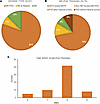 Figure 1
Degree types and MD–PhD training characteristics of survey respondents. (A) Degree types for all survey respondents (n = 97). (B) Type of training for survey respondents who reported having MD and PhD degrees (n = 78). (C) Number of years in MD-PhD training for those who completed combined MD-PhD degrees.
Subspecialty training of Research Pathway graduates. All of the 97 individuals who completed postgraduate Research Pathway training reported pursuing subspecialty training. Of those who graduated from subspecialty training programs, the most commonly reported subspecialties were cardiology (n = 20/97, 21%) and hematology/oncology (n = 20, 21%), with the least common being nephrology (n = 3, 3%) and geriatric medicine (n = 2, 2%) (Figure 2A). The most common field of subspecialty training for men was cardiology (n = 16/59 men, 27%) and that for women was hematology/oncology (n = 8/34 women, 24%), with a statistically significant difference in subspecialty distribution between men and women (P = 0.022) (Figure 2, B and C). There were no statistically significant differences in subspecialty choices between MSTP graduates and non-MSTP graduates.
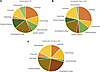 Figure 2
Subspecialty training for all graduates of the American Board of Internal Medicine Research Pathway. (A) Subspecialty training among all graduates (n = 97).(B) Subspecialty training among male graduates. (C) Subspecialty training among female graduates.
Professional activities of Research Pathway graduates. The median year of completing all postgraduate training was 2017 (IQR, 6 years); and, therefore, a median of 7 years had passed between training and completion of the survey. Seventy-seven of the 97 graduates (79%) reported that their primary workplace setting was in academia, with 59 of 97 (61%) reporting academic appointments with 50% or more of their time spent in research (research-dominant); and 18 (19%) reporting academic appointments with more than 50% clinical activities (clinical-dominant). Among those not in an academic setting, 9 (9%) reported their primary workplace as industry, and 10 (10%) reported their primary workplace being in private practice (Figure 3A). There were no associations in the distribution of primary workplace between those who had graduated prior to 2017 and those who graduated in or after 2017 or between men and women. However, MSTP graduates reported research-dominant positions in academia to a greater extent (41/56, 73%) than non-MSTP graduates (18/41, 44%, P = 0.012, Figure 3, B and C). With respect to what best described their primary research activity, 55 of 97 (67%) of the Research Pathway graduates reported pursuing basic or translational research; 20 (19%) described working in clinical, implementation, or outcomes research; and 12 (12%) reported no current research activities. Of MSTP graduates, 45 of 56 (80%) reported doing basic or translational research, whereas 20 of 41 (48%) non-MSTP graduates reported doing basic or translational research. Fewer MSTP graduates (8/56, 14%) were involved in clinical, implementation, or outcomes research than non-MSTP graduates (12/41, 28%), and fewer MSTP graduates reported not currently doing research (3/56, 5%) than non-MSTP graduates (9/41, 22%, P = 0.010; Figure 3, D and E).
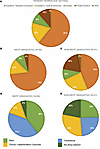 Figure 3
Workplace settings and research activities of ABIM Research Pathway graduates. (A) Distribution of primary workplace setting for survey respondents who were graduates of the ABIM Research Pathway (n = 97) and for (B) graduates of MSTP and (C) non-MSTP (C) programs. Reported type of research being performed by (D) MSTP and (E) non-MSTP graduates of the ABIM Research Pathway.
Confidence of succeeding in a career as a physician-scientist. When asked how confident graduates were in their research capabilities, 79 of 97 (81%) reported being somewhat or very confident. When asked about their confidence in their clinical abilities, 92 of 97 (95%) reported being somewhat or very confident (Figure 4A). However, when asked about their confidence in their ability to succeed in careers as physician-scientists, almost equal percentages were somewhat or very confident 40 of 97 (41%) as were somewhat or very unconfident 38 of 97 (39%) (Figure 4B). There was no statistically significant difference in confidence between those who graduated prior to 2017 and those who graduated in or after 2017. We did not specifically ask about K or R grants obtained or academic rank. Based on reported year of completion of training, 14 (14%) were 2–3 years after training and were likely instructors or early assistant professors; 28 (29%) were 4–6 years after training and were likely early-to-mid assistant professors; 20 (21%) were 7–9 years after training and were likely assistant professors or associate professors; and 35 (36%) were 10–13 years after training and were likely at the associate professor rank. These academic rank estimates are based on the Prospective Study of Promotion in Academia (8).
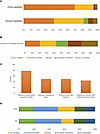 Figure 4
Confidence in physician-scientist careers and perceived institutional support among ABIM Research Pathway graduates. Distribution of responses to Likert scale questions asking ABIM Research Pathway graduates (n = 97) (A) about their confidence in their clinical and research capabilities and (B) ability to succeed in a physician-scientist career. (C) The concerns reported by those that said they were somewhat or very unconfident in their ability to succeed in a career as a physician-scientist. (D) Levels of satisfaction or dissatisfaction that survey respondents (n = 105) had with their program director (PD) or chair’s understanding of the challenges faced by trainees in the American Board of Internal Medicine Research Pathway.
Of those who reported being somewhat or very unconfident, the commonly reported concerns were being able to obtain independent research funding (n = 30/38, 79%), followed by having a satisfactory salary (n = 19/38, 50%), achieving a work-life balance (n = 19, 50%), and having sufficient protected research time (n = 17, 45%, Figure 4C). Of those who responded “Other,” the comments included finding satisfaction in an alternative career path and lack of institutional support.
When asked how satisfied they were with their program director’s understanding of the challenges faced by residents and fellows in the Research Pathway, 61 of 105 (58%) reported being somewhat or very satisfied. When the same question was asked in relation to their department chair, 56 of 104 (54%) reported being somewhat or very satisfied (Figure 4D). When asked how satisfied they were with pursuing a research career similar to their mentors, 58 of 105 (55%) reported being somewhat or very satisfied.
Perceptions on why individuals leave the academic physician-scientist career path. In response to a question that asked what they believed were the greatest reasons for individuals to leave physician-scientist career paths, 78 of the 97 graduates (80%) entered free-text responses. The commonly reported reasons for individuals to leave the physician-scientist career path were (a) lack of research funding/instability of research funding (n = 43/78, 55%); (b) lack of financial stability/better paid alternative careers (n = 39/78, 50%); (c) increased clinical or administrative responsibilities and lack of protected research time (n = 25/78, 32%); (d) burnout, stress, feeling undervalued, and finding the career unfulfilling (n = 24/78, 31%); and (e) lack of institutional support (n = 24/78, 31%). Other reasons cited less frequently included caregiver/family responsibilities (n = 13, 17%), long duration of training (n = 12, 15%), lack of career advancement n = 7, 9%), work/life balance (n = 8, 10%), poor mentorship (n = 4, 5%), interest in something other than research (n = 4, 5%), and unhealthy work culture/environment (n = 3, 4%). A majority of those in research-dominant careers (n = 33/49, 67%) thought lack of research funding was a common reason why individuals leave research careers, and, of those in private practice, 5 of 7 (71%) believed compensation and financial stability were common causes. For those in clinical-dominant academic roles, compensation, financial stability (n = 6/13, 46%), and increased clinical or administrative responsibilities/lack of protected research time (n = 6/13, 46%) were the most common reasons. Among survey respondents in industry, 3 of 8 (38%) cited the duration of training, financial stability/compensation, and protected time as the most common reasons people leave the physician-scientist career path.
Article tools
- Download citation information
- Send a comment
- Terms of use
- Standard abbreviations
- Need help? Email the journal
Related Collection:
Article
-
The national MD-PhD program outcomes study: Relationships between medical specialty, training duration, research effort, and career paths
-
The national MD-PhD program outcomes study: Outcomes variation by sex, race, and ethnicity
-
Mind the gap: Expediting gender parity in MD-PhD admissions
-
Trends in NIH-supported career development funding: implications for institutions, trainees, and the future research workforce
-
Pearls of wisdom for aspiring physician-scientist residency applicants and program directors
-
New insights into an old question: can the MD-PhD physician-scientist pipeline be improved?
-
Gaps between college and starting an MD-PhD program are adding years to physician-scientist training time
-
Predoctoral MD-PhD grants as indicators of future NIH funding success
-
Sociodemographic factors and research experience impact MD-PhD program acceptance
-
Interventions to support fellowship application success among predoctoral physician-scientists
-
Training the physician-scientist: views from program directors and aspiring young investigators
-
The National MD-PhD Program Outcomes Study: career paths followed by Black and Hispanic graduates
-
Is it time to reduce the length of postgraduate training for physician-scientists in internal medicine?
-
Dispelling the myth: comparable duration and impact of research training for MD-PhD and PhD graduates
-
More women than ever are entering MD-PhD programs. What lies ahead for them?
-
The financial impact of MD-PhD training compared with MD training for academic physicians
-
Science: our past, our present, and always our future
-
The physician-scientist: looking back, looking forward
-
Paving the physician-scientist career path: from grassroots gathering to national forum
-
A study of MD-PhD pre-health advising identifies challenges to building a robust MD-PhD applicant pool
-
Admissions to MD-PhD programs: how well do application metrics predict short- or long-term physician-scientist outcomes?
-
Development and evaluation of a symposium model for building physician-scientist skills, connections, and persistence
-
An insider’s guide to understanding and obtaining an NIH K career development award
-
Dual-degree pathways in the residency match: a comparative analysis of application behaviors and outcomes
-
Comparing MD-PhD trainee experiences by disciplinary background
-
From improvised to intentional: re-imagining the physician-scientist career path
-
Residency matches of MD-PhD versus MD-only students: compatibility with continued research momentum
-
Stabilizing and strengthening the US physician-scientist faculty workforce in academic medicine: a proposed institutional framework
-
Predoctoral grant writing among physician-scientist trainees: a national survey of barriers and facilitators of success


