Issue published August 24, 2026 Previous issue | Next issue

- Volume 11, Issue 16
On the cover:
A large animal model of heritable pulmonary arterial hypertension using BMPR2 gene–edited sheep
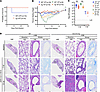
Datar et al. report the generation of a large animal model of heritable pulmonary arterial hypertension, allowing for human-scale assessment of cardiopulmonary physiology and testing of promising new treatments. The cover image is lung histopathology from a BMPR2+/– female lamb that shows arterial pathology consistent with pulmonary arterial hypertension. Image credit: Gail H. Deutsch, MD.
Datar et al. report the generation of a large animal model of heritable pulmonary arterial hypertension, allowing for human-scale assessment of cardiopulmonary physiology and testing of promising new treatments. The cover image is lung histopathology from a BMPR2+/– female lamb that shows arterial pathology consistent with pulmonary arterial hypertension. Image credit: Gail H. Deutsch, MD.
Go to section:
-
Research Letters
×
Abstract
Authors
Tara L. Hogenson, William J. Phillips, Merih D. Toruner, Zachry S. Poshusta, Luciana L. Almada, Hao Xie, Ryan M. Carr, Jenny J. Li, David L. Marks, Renzo E. Vera, Erik Jessen, Michael T. Barrett, Joleen M. Hubbard, Travis E. Grotz, Martin E. Fernandez-Zapico
×Abstract
Authors
Lori Asarian, Jianlong Jia, Dmytro Sirokha, Lara Paulini, Daniela Dietel, Mircea Gabriel Stoleriu, Marion Frankenberger, Ali Önder Yildirim, Katharina S. Götze, Juergen Behr, Gary M. Hunninghake, Isis E. Fernandez
×Abstract
Authors
Sarah W. Robison, Jindong Li, Kristopher R. Genschmer, Liliana Viera, Jeremy B. Foote, Landon Wilson, W. Edward Swords, J. Edwin Blalock, Amit Gaggar, Xin Xu
×Abstract
Authors
Muhammad Atif Rauf, Sanskriti Agarwal, Rebecca R. Baker, Jennifer Steeden, Alfredo Petrosino, Maria Kiliaris, Robert Unwin, Keith Siew, Alan D. Salama, Rhys D.R. Evans
×Abstract
Authors
Enrique Gonzalez Saez-Diez, Xutong Xue, Amy Tam, Hyo-Min Kim, Siofra Carty, Joshua Rong, Monica Ferrer-Socorro, Kathryn Yang, Darius Ebrahimi-Fakhari
×Abstract
Authors
Xiao Yang, Sameen Fatima, Salvador Sampere-Birlanga, Akshay Ware, Mariana Shumliakivska, Lukas Zanders, Srisurekha Radhakrishnan, Guillermo Luxán, David John, Stefan Günther, Silvia Mas-Peiro, Stefanie Dimmeler, Andreas M. Zeiher, Wesley T. Abplanalp


-
Physician-Scientist Development
×
Abstract
The American Board of Internal Medicine Research Pathway (ABIM RP) is designed to train physician-scientists by shortening postgraduate clinical training and increasing research time. We surveyed ABIM RP graduates to understand career trajectories, research engagement, and barriers to physician-scientist retention in academic research careers. We performed an anonymous, structured, web-based survey of 700 ABIM RP current and former trainees (2011–2022). We received 105 survey responses (97 RP graduates). The survey queried about demographics, training background, career outcomes, research involvement, and perceived barriers to retention in physician-scientist careers. Responses were stratified by trainee status, gender, and Medical Scientist Training Program (MSTP) participation, and select results were compared to test for statistical associations. Most respondents (79%) remained in academia, with 61% engaged in research-dominant roles. More MSTP graduates held research-focused academic positions than non-MSTP graduates. The most commonly reported barriers to sustaining research careers were funding instability, financial concerns, and lack of protected research time. Although many of the trainees in the ABIM RP who completed the survey remained in academia, systemic barriers such as funding instability and gaps in institutional support persist. Strategies to enhance financial stability, protected research time, and mentorship appear to be necessary to enhance physician-scientist career retention.
Authors
Emily J. Gallagher, Barbara I. Kazmierczak, Michael Kisielewski, Nathan Schoettler, Clifford J. Steer, Robert A. Baiocchi, Jatin M. Vyas, Kyu Y. Rhee, Patrick J. Hu, Carlos M. Isales, Paul R. Conlin, Christopher D. Kontos, Michael Melfe, Furman S. McDonald, Don C. Rockey, Christopher S. Williams
-
Research Articles
×
Abstract
Undifferentiated pleomorphic sarcoma (UPS) is one of the most common adult soft-tissue sarcomas (STSs), yet therapeutic progress remains limited because of the absence of recurrent oncogenic driver mutations. To identify tumor suppressors contributing to UPS pathogenesis, we performed a customized in vivo CRISPR/Cas9 screen in mice. This approach identified BRCA1-associated protein 1 (BAP1) as a potent tumor suppressor in STS. Integrative analyses using RNA sequencing, multiplex immunohistochemistry, and flow cytometry revealed that Bap1-deficient sarcomas exhibited a markedly immunosuppressive tumor microenvironment. Consistent with these findings, BAP1 protein expression was reduced in human UPS, whereas polo-like kinase 1 (PLK1) expression was elevated. Functional studies demonstrated that PLK1 was required for the growth and survival of Bap1-deficient sarcomas. Pharmacologic inhibition of PLK1 with volasertib significantly suppressed tumor growth in both syngeneic and autochthonous mouse models. Moreover, combining PLK1 inhibition with anti–PD-1 therapy enhanced tumor control and improved survival compared with either treatment alone. Together, these results identify PLK1 as a potential therapeutic vulnerability in BAP1-deficient sarcomas and support further evaluation of combined PLK1 inhibition and immune checkpoint blockade as a treatment strategy for a subset of STSs.
Authors
Jianguo Huang, Xingliang Liu, Warren Floyd, William Haugh, Zhaoyu Sun, Melissa J. Kasiewicz, Yaping Wu, Brian Piening, John T. Welle, Wesley K. Rosales, Venkatesh Rajamanickam, So Young Kim, Eric S. Xu, Lixia Luo, Yan Ma, Rutulkumar Patel, Ziqiang Zhang, Brady Bernard, William L. Redmond, Walter J. Urba, R. Bryan Bell, David G. Kirsch
×Abstract
Systemic sclerosis (SSc) is a rare autoimmune disease characterized by vasculopathy and fibrosis of the skin and internal organs. Individuals with SSc often suffer from chronic acid reflux and dysphagia due to loss of esophageal motility. To determine whether distinct changes in esophageal epithelial cells contribute to esophageal involvement in SSc, we investigated the stratified squamous esophageal epithelium from proximal and distal biopsies using single-cell RNA sequencing in individuals with SSc compared with those with gastroesophageal reflux disease (GERD) and healthy controls. Cellular and molecular changes in SSc were highly correlated with those seen in GERD, indicating they were secondary to reflux; however, their magnitudes were more pronounced in the proximal esophagus, suggesting that esophageal dysmotility leads to greater proximal acid exposure, which may contribute to aspiration. SSc-specific gene dysregulation implicated immunoregulatory pathways likely pertinent to pathogenic mechanisms. Ligand-receptor interaction analysis revealed enhanced profibrotic signaling between fibroblasts and epithelial cells in SSc. Cell type localization and SSc-specific changes were confirmed by spatial molecular imaging. By offering a comprehensive view of transcriptional dysregulation at single-cell resolution in human esophageal epithelial cells in SSc compared with GERD and healthy tissue, this work clarifies the state of epithelial cells in SSc-induced esophageal dysfunction.
Authors
Matthew Dapas, Margarette H. Clevenger, Hadijat-Kubura M. Makinde, Tyler Therron, Dustin A. Carlson, Mary Carns, Kathleen Aren, Cenfu Wei, Kainat Mian, Lutfiyya N. Muhammad, Carrie Richardson, Parambir S. Dulai, Monique Hinchcliff, John Pandolfino, Harris Perlman, Deborah R. Winter, Marie-Pier Tetreault
×Abstract
Atrial fibrillation (AF) contributes to cardiovascular morbidity and mortality. Ubiquitin-specific peptidase 10 (USP10) plays a crucial role in numerous cellular processes; however, its particular role in AF remains largely unexplored. In the present study, USP10 expression was assessed in human atrial samples and angiotensin II–treated (Ang II–treated) mouse atrial tissues. An Ang II–induced AF mouse model was employed to investigate the effects of USP10 on atrial remodeling and AF susceptibility. Calcium imaging and patch clamp techniques were used to evaluate USP10’s influence on calcium handling and triggered activity. Additionally, RNA sequencing, coimmunoprecipitation, and ubiquitination assays were performed to explore the regulatory interactions between USP10 and NADH:ubiquinone oxidoreductase subunit S1 (NDUFS1). Our findings demonstrate that USP10 is downregulated in atrial tissues from mouse models and patients with AF. USP10 overexpression counteracts Ang II–induced atrial remodeling and reduces AF susceptibility. Furthermore, USP10 contributes to the restoration of mitochondrial function in AF. Mechanistically, USP10 deubiquitinates NDUFS1 at lysine 621, stabilizing NDUFS1 protein levels and mitigating Ang II–induced mitochondrial dysfunction. This study uncovers a critical mechanistic link between USP10 and NDUFS1. Our findings suggest that upregulating USP10 or targeting NDUFS1 degradation could provide an alternative therapeutic strategy to mitigate AF progression and associated cardiovascular risk.
Authors
Wanrong Fu, Xiao-Xu Tian, Jianghua Zhou, Yu-Xu Huang, Huan Li, Zhenya Wang, Tong-You Wade Wei, Li Li, Guo-Jun Zhao
×Abstract
Chronic graft-versus-host disease (cGVHD) remains a major cause of morbidity and mortality after allogeneic hematopoietic transplantation. cGVHD pathophysiology involves cooperation between T follicular helper cells (TFHs) and germinal center B cells (GCBs), allo- and autoantibody depositions in cGVHD tissues, and fibrosis. We evaluated human CD19–directed chimeric antigen receptor (CAR19) T cell therapy in a clinically relevant murine cGVHD model with bronchiolitis obliterans syndrome (BOS). Although CD8+ CAR19 T cells effectively reduced peripheral B cell and GCB frequencies, pulmonary function was unimproved. In contrast, a single infusion of CAR19 CD4+ regulatory T cells (Tregs) mitigated ongoing pulmonary disease and modulated germinal centers (GCs) associated with reduced TFH frequencies compared with control Tregs but without measurable B cell depletion. Compared with EGFR Treg infusion, mice receiving CAR19 Tregs exhibited enhanced suppression of B cell activation and preserved splenic architecture, and CAR19 Treg infusion provided greater opportunities for interaction with CD19+ B cells at the B cell follicle boundary zones. Taken together with the absence of detectable B cell cytolysis, these findings were most consistent with GC suppression rather than B cell depletion as the dominant mechanism. Overall, our findings suggest that CAR19 Tregs represent a promising and safe cGVHD/BOS therapeutic strategy, offering immunosuppressive benefits and improved disease outcomes that may be more limited with CD8+ CAR19 T cell treatment.
Authors
Sujeong Jin, Michael C. Zaiken, Cameron McDonald-Hyman, Christina R. Hartigan, Sara Bolivar-Wagers, Jemma H. Larson, Yiyun Peng, Sophia Hani, Megan Riddle, Asim Saha, Angela Panoskaltsis-Mortari, Eun Ko, Yujie Zhao, Rocio Amaro Marquez, Pooja Shree Marri Baskar, Cindy R. Eide, William J. Murphy, Keli L. Hippen, Geoffrey R. Hill, Jakub Tolar, Peter T. Sage, Christopher A. Pennell, Leslie S. Kean, Bruce R. Blazar
×Abstract
Inflammation driven by the innate immune response plays a crucial role in osteoarthritis (OA) pathogenesis, yet the underlying mechanisms remain incompletely understood. Moreover, current antiinflammatory therapies primarily offer symptomatic relief without altering disease progression. Nucleotide-binding oligomerization domain 2 (NOD2) is an intracellular pattern recognition receptor that detects a broad range of microbial and damage-associated stimuli and has been implicated in several inflammatory conditions. In this study, we investigated the role of NOD2 in OA-associated inflammation and cartilage degradation. Elevated NOD2 expression was observed in both human and mouse osteoarthritic cartilage. Conditional KO of Nod2 in chondrocytes suppressed inflammation-induced catabolic responses in vitro and protected against cartilage degradation in mouse OA models. Mechanistically, we identified tumor necrosis factor receptor–associated factor 6 (TRAF6) as a key downstream mediator through which NOD2 promotes chondrocyte catabolism. Furthermore, we showed that pharmacological inhibition of NOD2 using 2 independent small-molecule inhibitors significantly attenuated OA progression in vivo. Collectively, these findings establish NOD2 as a critical regulator of OA-associated inflammation and cartilage degradation, and they highlight its potential as a therapeutic target for disease-modifying OA treatment.
Authors
Yuting Wang, Song Li, Yonghui Dong, Jiaming Zhang, Jian Liu, Zhenggang Wang, Shuang Liang, Nathan R. Martinez, Hongxu Pu, Peng Cheng, Anmin Chen, Qing Yang, Charles K.F. Chan, Wen Jiang, Jun Xiao, Fengjing Guo, Liming Zhao
×Abstract
Renin cells are essential for survival and serve as key regulators of blood pressure and fluid-electrolyte homeostasis. Their function and identity are dependent on signals from their local microenvironment afforded by neighboring cells and nerves. Whether and how renin cells contribute to the development and maintenance of this microenvironment remains unclear. Because renin cells are rare — 0.01 % of kidney cells — conventional histological approaches cannot capture their interaction with nerve fibers and surrounding cells within the nephron and its vasculature. Using high-resolution 3D imaging, cell-specific multicolor reporter mice, single-cell RNA-seq, and conditional gene deletions, we mapped how renin cells assemble within arterioles and communicate with axon fibers to organize the growth and orientation of the kidney arterioles during development and disease. This coinductive process is mediated by Ngf produced by renin cell precursors and is necessary for renin cell survival and innervation. Interestingly, renin enzymatic insufficiency elevates Ngf and drives arteriolar hypertrophy with aberrant axon sprouting and hyperinnervation. These findings indicate that renin cells regulate kidney neurovascular development, revealing them as active organizers of their local neuroregulatory microenvironment in health and disease.
Authors
Manako Yamaguchi, Georgina Gyarmati, Liam McLaughlin, Hiroki Yamaguchi, Jason P. Smith, Lucas Ferreira de Almeida, Daisuke Matsuoka, Alexandre G. Martini, Sara M. Wilmsen, Sijie Hao, Kazuki Tainaka, Silvia Medrano, Sanjay Jain, Janos Peti-Peterdi, Maria Luisa S. Sequeira-Lopez, R. Ariel Gomez
×Abstract
BACKGROUND Elucidating immune signals through well-defined cohorts of pediatric acute pancreatitis (AP) and chronic pancreatitis (CP) patients is critical. This study aimed to evaluate plasma chemokine and cytokine levels in pediatric participants with CP, compared with AP and healthy controls (HCs), to identify unique biomarkers of CP.METHODS Individuals were identified from a prospectively collected pediatric cohort (n = 146). Immunoproteins (n = 247) were measured using the NULISAseq platform on samples from individuals with CP (n = 71), AP (n = 55), and HCs (n = 20).RESULTS The measured analytes showed separation among the 3 groups (R2 = 0.13, P < 0.001). In the CP group, TRANCE, TWEAK, FLT-1, HGF, and TRAIL were increased when compared with HC and AP patients (FDR-corrected P <0.05). A multivariable logistic regression model including all 5 proteins provided an AUC of 0.94 (0.93–0.96) for differentiating samples from CP versus AP or HC samples. In the AP group, CRP, IL-6, CD3E, ENRAGE, and MIF were elevated compared with HCs, while FGF-2, TAFA-5, IL-33, TRANCE, and CXCL12 were downregulated in the same acute time period (FDR-corrected P < 0.05). In the 21 patients with AP for whom follow-up samples were obtained, there was a notable decrease in sequential expression of IL-6 and CRP over 12 months and increased expression of CCL25, TAFA-5, and TRANCE proteins. Additionally, TRANCE was expressed on CP pancreatic tissue.CONCLUSIONS TRANCE was increased in pediatric patients with CP and decreased in those with AP during a flare. Future studies are needed to investigate the role of TRANCE and other analytes in the pathogenesis of CP.
Authors
Peter R. Farrell, Bomi Lee, Faizan Ahmed, Maria E. Moreno-Fernandez, Ajay Dixit, Juan Pablo Gurria, Nicholas J. Ollberding, Qing Duan, Vineet Garlapally, Phoebe Christian, Sohail Z. Husain, Maisam Abu-El-Haija
×Abstract
Charcot-Marie-Tooth disease (CMT) is a group of inherited progressive conditions affecting distal motor and sensory neurons, leading to muscle weakness, pain, and loss of sensation in limbs. CMT type 2A (CMT2A) is the most common form of axonal CMT and is associated with a more severe clinical manifestation. However, there are no treatments currently available. To investigate disease mechanisms and facilitate treatment discovery, we developed an in vitro model for CMT2A by introducing the patient-specific MFN2R94Q/+ variant into human embryonic stem cells (hESCs). Isogenic variant and wild-type hESCs differentiated into spinal motor neurons with similar efficiency and gave rise to functional motor neurons in vitro. However, MFN2R94Q/+ spinal motor neurons displayed impaired mitochondrial trafficking, resulting in altered distribution of mitochondria in axons. Unbiased quantitative proteomic profiling of the endogenous MFN2 interactome revealed dose-dependent remodelling by the R94Q variant across 412 proteins, highlighting candidate mechanisms in disease pathology. Importantly, we showed that mitochondrial trafficking defects could be alleviated by treatment with an HDAC6 inhibitor. Chemical inhibition of HDAC6 also rescued the motor phenotype in a zebrafish CMT2A model. Taken together, our study reveals a variant-specific insight into CMT2A disease mechanisms and confirms HDAC6 as a promising target for further therapeutic development.
Authors
Lydia H. Jestice, Larissa Butler, Rebecca A. Lea, Kathryn I. Adamson, Jonas Van Lent, Stuart L. Johnson, Hollie Weedon, Eldriena D’Silva, Gabriele Gelezauskaite, Bob Asselbergh, Eloise Brown, Owen Laing, Christopher J. Price, Dylan Stavish, Anestis Tsakiridis, Mark O. Collins, Vincent Timmerman, Kurt J. De Vos, Alison E. Twelvetrees, Andrew J. Grierson, Ivana Barbaric
×Abstract
Extracellular vesicle–mediated interorgan communication represents a promising frontier in transplant immunology; however, its role in cardiac allograft rejection remains poorly characterized. We performed proteomic profiling of plasma-derived extracellular vesicles in a rat heterotopic heart transplantation model and identified a distinct liver-predominant protein signature during acute rejection, with antithrombin III (ATIII) emerging as a top candidate. Functional validation revealed that pharmacological extracellular vesicle inhibition intensified systemic and intragraft inflammation, whereas adeno-associated virus–mediated silencing of hepatic ATIII directly accelerated allograft rejection. Conversely, adeno-associated virus–mediated hepatocyte-specific ATIII overexpression attenuated rejection pathology, reduced immune cell recruitment, and markedly prolonged median graft survival. This protective effect was achieved without evidence of coagulopathic complications, indicating an immunomodulatory mechanism beyond ATIII’s canonical anticoagulant function. Mechanistically, ATIII overexpression was associated with upregulation of heme oxygenase-1 (HO-1) in the liver and suppression of proinflammatory cytokine expression in the graft. These findings highlight hepatocyte-derived extracellular vesicles as important mediators of a liver-heart signaling axis in transplant rejection and further implicate the protein ATIII as a contributor to this axis. Our study reveals a therapeutically targetable liver-heart signaling axis in transplant rejection, whereby enhancing liver-derived ATIII or its downstream pathways (such as HO-1) could attenuate acute cardiac allograft rejection.
Authors
Shiyu Dai, Wei Zhou, Fangyu Chen, Huanyu Zhang, Zhenchun Ji, Xuejing Zong, Wanruo Zhang, Jie Hu, Shumin Jiang, Fei Wang, Zhenya Shen
×Abstract
Vaccine development for tuberculosis (TB) is a global priority. Our studies using Collaborative Cross (CC) mice show that genetic diversity influences the efficacy of BCG, the most widely used TB vaccine. BCG vaccination of CC042 mice reduced their lung bacillary burden and increased their survival following low-dose aerosol Mycobacterium tuberculosis infection (MTBI), despite impaired T cell trafficking due to a defective Itgal gene. BCG vaccination conferred early bacillary control that appeared to be independent of B cell or T cell recall responses following MTBI. In contrast, long-term survival of BCG-vaccinated CC042 mice after MTBI required T cells. Thus, CC042 mice reveal two phases of immunity induced by BCG: an early phase mediated by innate immunity or innate-like T cells and a later phase mediated by conventional memory CD4+ and/or CD8+ T cells. Although measurement of vaccine-induced protection 30 days after MTBI is a standard measure of vaccine efficacy in the TB model, this time point might be independent of memory T cells in CC042 mice. Our results suggest that vaccine-elicited innate/innate-like responses could have a larger role in protection than previously considered. The concordance between lung CFU, pathology, and survival makes CC042 mice useful for mechanistic studies on vaccine-induced immunity.
Authors
Abiola F. Ogunsola, Rocky Lai, Kelly Cavallo, Anthony V. Tran, Gillian L. Beamer, Samuel M. Behar
×Abstract
Alcohol-associated liver disease (ALD) is a growing global health concern, with alcohol-associated hepatitis (AH) leading to the highest morbidity and mortality. Available therapies are limited and often inadequate. Platelets contribute in a variety of ways to liver disease pathogenesis, but their role in AH remains largely unexplored. In this study, we addressed the hypothesis that platelets contribute to pathological inflammation in AH. Using patient samples and a multiomics approach, we found that platelets undergo proinflammatory transcriptomic and proteomic changes in AH, with 2 alarmins, S100A8 and S100A9, being among the top upregulated genes/proteins. Additionally, the abundance of platelet-derived microparticles containing S100A8 and S100A9 in AH patient plasma was increased and correlated with disease severity (assessed by model for end-stage liver disease sodium [MELD-Na]) and endotheliopathy (assessed by ICAM1, CXCL8, and vWF). We mechanistically linked S100A9 with endotheliopathy via crosstalk between primary human liver sinusoidal endothelial cells and primary human monocytes. We also demonstrated that IL-6 upregulates S100A9 in megakaryocytic cells in a JAK/STAT-dependent manner, modeling changes occurring in the bone marrow in patients with AH. Our studies establish proinflammatory platelets as important contributors to AH pathology. Moreover, antiplatelet agents — or, more specifically, S100A9 targeted drugs — are potential therapeutic strategies in AH.
Authors
Fallyn Kirlin, Nima Fattahi, Rolando Garcia-Milian, Florine Collin, Weiwei Wang, Yohan Kim, Fabrice Lucien, Zhaoli Sun, TuKiet T. Lam, John Hwa, Yasuko Iwakiri, Matthew J. McConnell
×Abstract
Chronic, non-healing wounds are a severe diabetic complication. The underlying mechanisms are not fully understood, and the role of ATF7 in this context has not been well characterized. In our study, we utilized db/db diabetic mice and AAV-mediated keratinocyte-specific Atf7 overexpression in vivo. HaCaT keratinocyte/THP-1 macrophage cocultures under high glucose were used in vitro. Our results showed that ATF7 was upregulated in diabetic wounds. Keratinocyte-specific Atf7 overexpression accelerated diabetic wound closure, enhanced re-epithelialization, granulation tissue formation, and keratinocyte proliferation, while suppressing macrophage M1 polarization and inflammation. Multiomics screening identified NOTCH1 as a key ATF7 target. ATF7 transcriptionally repressed NOTCH1 by recruiting Suv39h1, increasing H3K9me3 at the NOTCH1 promoter. This reduced NOTCH1 protein and its active intracellular domain (N1ICD) within keratinocyte-derived exosomes. ATF7-overexpressing keratinocyte exosomes carried less N1ICD, leading to decreased N1ICD transfer to macrophages and subsequent inhibition of M1 polarization. Notably, local injection of exosomes from ATF7-overexpressing keratinocytes accelerated wound healing in db/db mice. In summary, ATF7 promotes diabetic wound healing by repressing NOTCH1 transcription via H3K9me3, thereby reducing exosomal N1ICD secretion from keratinocytes and inhibiting macrophage M1 polarization. This identifies the ATF7/NOTCH1/exosome axis as a therapeutic target.
Authors
Pengcheng Xu, Yuan Xue, Linlin Feng, Jingwen Kuang, Xiaochen Hu, Huiyi Tang, Biao Cheng, Limin Wei
×Abstract
Type 2 (T2) immune cells dominate the airways of patients with mild-moderate asthma (MMA) with a more complex type 1 (T1)-T2 mixed immune response evident in treatment-refractory severe asthma (SA). We hypothesized that comparing the transcriptomes of the airway epithelium of patients with SA and MMA would reveal molecular signatures associated with more severe disease in the context of a complex immune response. Using our interpretable machine learning tool, SLIDE, meaningful latent factors (context-specific gene co-expression networks) were revealed that distinguished SA from MMA. Unexpectedly, an aberrant high expression of normally host-protective, membrane-tethered, and IFN-inducible mucins, MUC1 and MUC4, was identified in SA. Gene networks in the significant latent factors discriminating SA from MMA corresponded to enrichment of a keratinization program in SA airways. Keratinization was marked by increased expression of the stress keratin KRT16, signifying squamous metaplasia suggesting adaptive reprogramming of the airway epithelium in response to chronic stress. These mucins and KRT16 were inversely associated with lung function in 2 separate asthma cohorts. Imaging of endobronchial biopsies revealed significantly higher KRT16 protein expression in SA compared with MMA that strongly correlated with MUC1 protein expression. Our study identifies dysregulated host-protective and maladaptive repair responses in SA distinguishing from MMA.
Authors
Sagar L. Kale, Augusta Vincent, Mark A. Ross, Isha Mehta, Michael J. Calderon, Richard P. Ramonell, Himanshu Setya, Jessica C. McCreary-Partyka, Huijuan Yuan, Stephanie A. Christenson, Prescott G. Woodruff, Mario Castro, Kaharu Sumino, Nizar N. Jarjour, Loren C. Denlinger, Benjamin Gaston, Eugene R. Bleecker, Deborah A. Meyers, Wendy C. Moore, Elliot Israel, Bruce D. Levy, David Mauger, Serpil Erzurum, Anthony Newbrough, Taylor J. Nee, Prabir Ray, Claudette M. St. Croix, Sally E. Wenzel, Jishnu Das, Anuradha Ray, Marc C. Gauthier
×Abstract
Myeloid-derived suppressor cells (MDSCs) represent a heterogeneous population of immature myeloid cells with potent immunosuppressive capabilities that contribute to viral persistence in chronic infections. However, their direct effect on the latent HIV reservoir remains poorly understood. Here, we report that people with HIV (PWH) exhibit elevated levels of MDSCs with notable immunosuppressive activity. Both granulocytic (G-MDSCs) and monocytic (M-MDSCs) subsets expressing arginase 1 (ARG1) or indoleamine 2,3-dioxygenase (IDO) are increased during treated infection, with low-level viral transcription preferentially associated with the expansion of highly suppressive G-MDSCs. Functional assays revealed that G-MDSCs robustly inhibit HIV reactivation from latent reservoirs. Mechanistically, G-MDSCs mediate this inhibition through a contact-independent mechanism, primarily involving ARG1 activity. Our findings demonstrate the capacity of G-MDSCs to sustain HIV reservoirs, suggesting that targeting these cells could potentiate therapeutic strategies aimed at eliminating HIV reservoirs through viral reactivation.
Authors
Ana Gallego-Cortés, Judith Grau-Expósito, Irene Mota-Gómez, Aleix Benitez-Martinez, Josep Castellvi, Jordi Navarro, Adrian Curran, Joaquin Burgos, Paula Suanzes, Vicenç Falcó, Meritxell Genescà, Maria J. Buzon
×Abstract
Significant loss of pigmentation can increase visual disability, skin cancer risk, and psychosocial stress. Tyrosinase (TYR) catalyzes the first and rate-limiting step of melanin synthesis. Inhibitors of TYR are well established and are currently used in clinical settings; however, there is a dearth of direct activators of TYR. Here, using a human TYR construct, we developed high-throughput screening methods, in cell confirmatory assays employing 13C-tyrosine tracing, and computational analysis techniques, and identified ampyrone (4-aminoantipyrine) as a TYR activator. Ampyrone increased the in vitro catalytic activity of the human recombinant intramelanosomal domain of TYR (hTYR) and its hypomorphic variant, Pro406Leu (P406L), a cause of oculocutaneous albinism type 1B (OCA1B). Moreover, ampyrone induced melanin synthesis in both WT and OCA1B human melanocytes, mouse OCA2 melanocytes, as well as 3-dimensional (3D) human skin cultures. Computational studies provided additional insight into the effects of direct TYR agonists on enzyme activity. Our results identify ampyrone as a lead candidate for TYR activation, potentially supporting the development of therapies for patients with genetic and acquired diseases of hypopigmentation.
Authors
Monika B. Dolinska, Yuhong Wang, Nathan P. Coussens, Vijay K. Kalaskar, Zuhal Eraslan, Samuel J. Grondin, Joseph Bonica, Sarah Toay, Matthew D. Hall, Min Shen, Matthew Boxer, Qiuying Chen, Steven S. Gross, Nabeel Attarwala, Yingyos Jittayasothorn, Ramakrishna P. Alur, Dhyanam Shukla, Robin Kee, Charles DeYoung, Cuilee Sha, David R. Adams, Stacie K. Loftus, Tiziana Cogliati, Yuri V. Sergeev, Jonathan H. Zippin, Brian P. Brooks
×Abstract
Post-acute sequelae of SARS-CoV-2 (PASC) occurs in subsets of individuals, including those with preexisting lung disease. To investigate PASC pathogenesis and therapeutics in a chronic bronchitis mouse model (Scnn1b-Tg), Scnn1b-Tg and WT mice were inoculated with a mouse-adapted SARS-CoV-2 virus (SARS-CoV-2 MA10) and followed for 60 days. Viral titer, histology, immunohistochemistry, single-cell RNA sequencing, RNA in situ hybridization, and spatial transcriptomic profiling characterized disease pathologies. Scnn1b-Tg mice inoculated with SARS-CoV-2 MA10 exhibited lower viral titers and less weight loss than WT mice. Airway epithelia of Scnn1b-Tg mice were less infected than epithelia of WT mice, reflecting increased airway mucus and enhanced epithelial antiviral activities in Scnn1b-Tg mice. However, Scnn1b-Tg mice subsequently exhibited heterogeneous airway and parenchymal disease with elevated Il33 expression characteristic of human eosinophilic pneumonia. Cohorts of infected mice were given a monoclonal antibody targeting the IL-33 receptor (ST2) or enteral prednisone. Administration of an anti-ST2 monoclonal antibody mitigated development of eosinophilic pneumonia, while enteral prednisone suppressed IL-33 expression and disease. The eosinophilic pneumonia in Scnn1b-Tg mice after SARS-CoV-2 MA10 infection mimics reports of eosinophilic pneumonia in humans after SARS-CoV-2, suggesting that targeting of IL-33 may be beneficial in treating post-viral eosinophilic pneumonia in humans.
Authors
Padraig E. Hawkins, Sarah R. Leist, Hong Dang, Minako Saito, Lisa C. Morton, Jesse B. Hines, Rodney C. Gilmore, Stephen A. Schworer, Ella F. Burns, Jason R. Rock, Robert S. Hagan, James J. Pestka, Alexandra Schäfer, Kenichi Okuda, Lauren K. Heine, Jack R. Harkema, Wanda K. O’Neal, Alessandra Livraghi-Butrico, Raymond J. Pickles, Ralph S. Baric, Richard C. Boucher
×Abstract
The distal nephron segments play a critical role in maintaining electrolyte balance, yet the mechanisms that preserve epithelial identity and segmental organization within this region remain poorly defined. Yes-associated protein (YAP), a key effector of Hippo signaling, is essential for kidney development, but its function in distal nephron epithelia is unknown. Using a genetic gain-of-function approach to activate YAP selectively in distal nephron segments, we found that sustained YAP activity profoundly disrupts epithelial organization and nephron patterning. Lineage tracing revealed that both distal convoluted tubule and connecting tubule cells originate from Slc12a3-expressing cells, and YAP activation in these segments led to increased proliferation, displacement of lineage-labeled cells beyond expected segment boundaries, and loss of segment-specific gene expression. These changes were accompanied by defects in apicobasal polarity and junctional integrity, consistent with epithelial plasticity. Unexpectedly, YAP activation in distal nephron segments also suppressed proximal tubule gene expression, indicating non-cell-autonomous effects on nephron differentiation. Together, these findings identify YAP as a critical regulator of epithelial identity in the distal nephron segments and reveal a role for Hippo signaling in coordinating intersegmental organization during kidney development.
Authors
Zeinab Dehghani-Ghobadi, Eunah Chung, Mohammed Sayed, Christopher Ahn, Hyojin Alex Choi, Annissa Aamoum, Benjamin R. Thomson, Yueh-Chiang Hu, Hee-Woong Lim, Joo-Seop Park
×Microbiome-derived metabolites shape CD4+ T cell differentiation and immune aging in HIV-1 infection
Abstract
The role of aromatic gut-derived bacterial metabolites (GDBMs) in shaping immune cell metabolism and function remains poorly explored. Using ex vivo metabolomic profiling of paired plasma and CD4+ T cells from people living with HIV-1 (PLWH), we identified a network of aromatic GDBMs whose cell-associated abundance, rather than systemic levels, was linked to broad alterations in CD4+ T cell metabolic and functional states. Among these, p-cresol sulfate (PCS) emerged as a mechanistic prototype. Ex vivo flow cytometry and scRNA-seq of CD4+ T cells stratified by cell-associated PCS levels revealed dose-dependent enrichment of transcriptional programs associated with impaired differentiation, regulatory-like identity, and cellular senescence. In vitro transcriptomic and proteomic analyses of PCS-exposed CD4+ T cells demonstrated induction of cell-cycle arrest, mitochondrial dysfunction, and senescence-associated programs, including upregulation of p16 and p21. Integration of these immunometabolic findings with HIV-1 reservoir measurements revealed that CD4+ T cell states defined by cell-associated GDBMs track with intact proviral DNA levels in vivo. These findings define a microbiome-derived axis that reshapes CD4+ T cell metabolism and fate, promotes immune aging in PLWH, and may foster immunometabolic states linked to long-term HIV-1 reservoir persistence.
Authors
Amanda Cabral Da Silva, Luke Flantzer, Jaclyn Weinberg, Shuya Kyu, Lisa P. Daley-Bauer, Anyce Godoy, Ana Carolina Santana, Aarthi Talla, Amber Lynn Rittgers, Sarah Welbourn, David Ezra Gordon, Jeffery Alan Tomalka, Vincent C. Marconi, Dean P. Jones, Souheil-Antoine Younes
×Abstract
BACKGROUND Adults with type 2 diabetes mellitus (T2DM) are at increased risk for stroke, myocardial infarction, and cardiovascular death, yet individual risk is heterogeneous and incompletely captured by clinical models.METHODS In the Exenatide Study of Cardiovascular Event Lowering (EXSCEL), adults with T2DM were randomized to a GLP-1 RA (exenatide) or a placebo and followed longitudinally for major adverse cardiovascular events (MACE). High-throughput discovery proteomics was done in plasma collected at baseline and 12 months. Proteins associated with time to MACE were identified using multivariable regression and incorporated into supervised machine learning models. A multi-protein score was developed and externally validated in 2 independent population-based and trial cohorts.RESULTS The proteomic score showed incremental improvement in cardiovascular risk discrimination beyond clinical factors alone, and several proteins were consistently prioritized across modeling approaches. The protein score and a top-ranked protein, tetranectin, were modified by GLP-1 RA treatment, and a decrease in protein score was associated with improved outcomes, supporting modifiability of MACE risk.CONCLUSION External validation confirmed generalizability across cohorts with and without diabetes. Together, these findings demonstrate that plasma proteomic signatures can enhance cardiovascular risk stratification and identify treatment-responsive biomarkers in T2DM, supporting their potential role in precision prevention strategiesFUNDING The EXSCEL study was funded by Amylin Pharmaceuticals. This research was supported by contracts HHSN268201200036C, HHSN268200800007C, HHSN268201800001C, N01HC55222, N01HC85079, N01HC85080, N01HC85081, N01HC85082, N01HC85083, N01HC85086, 75N92021D00006, and grants R01HL146145, U01HL080295, U01HL130114, R01HL172803, and R01HL144483 from the National Heart, Lung, and Blood Institute, with additional contribution from the National Institute of Neurological Disorders and Stroke. Additional support was provided by R01AG023629 from the National Institute on Aging.
Authors
Kristin M. Corey, Maggie Nguyen, Michael Y. Mi, Megan E. Ramaker, Ilya Zhbannikov, Harald Sourij, G. Michael Felker, Naveed Sattar, Jennifer B. Green, Pamela S. Douglas, Robert E. Gerszten, Robert J. Mentz, Adrian F. Hernandez, Rury R. Holman, Bruce M. Psaty, James S. Floyd, Svati H. Shah
×Abstract
Single-cell RNA sequencing (scRNA-seq) of peripheral blood mononuclear cells (PBMCs) has enhanced our understanding of host immune mechanisms in small cohorts, particularly in diseases with complex and heterogeneous immune responses such as sepsis. However, standard PBMC isolation from blood requires technical expertise and over 2 hours of on-site processing using Ficoll density gradient separation (“Ficoll”) for scRNA-seq compatibility, precluding large-scale sample collection at most clinical sites. To minimize on-site processing, we developed cryopreservation with PBMC recovery offsite (Cryo-PRO), a method of immediate on-site whole-blood cryopreservation and subsequent batched PBMC isolation in a central laboratory prior to sequencing. We compared multimodal single-cell immune profiling results from samples processed using Cryo-PRO versus standard on-site Ficoll separation in 23 patients with sepsis. Key outputs, including cell substate fractions, marker genes, and surface protein expression were similar for each method across multiple cell types and substates, including an important monocyte substate enriched in patients with sepsis. Capture of T cell receptor transcripts was also comparable across both methods. Cryo-PRO reduced on-site sample processing time from more than 2 hours to less than 15 minutes and was reproducible across 2 enrollment sites, thus demonstrating potential for expanding multimodal single-cell analyses in multicenter studies of sepsis and other diseases.
Authors
Alyssa K. DuBois, Pierre O. Ankomah, Alexis C. Campbell, Renee Hua, Olivia K. Nelson, Christopher A. Zeuthen, M. Kartik Das, Shira Mann, Abigail Mauermann, Blair A. Parry, Nathan I. Shapiro, Michael R. Filbin, Roby P. Bhattacharyya
×Abstract
The dysferlinopathies are a spectrum of autosomal recessive muscle diseases caused by mutations in the dysferlin gene (DYSF). Clinical manifestations vary from asymptomatic hyperCKemia to severe muscle pathology and loss of muscle function. These are designated as limb-girdle muscular dystrophy type 2R (LGMDR2; formerly LGMD2B or Miyoshi myopathy). Among other functions, dysferlin is crucial for plasma membrane repair and maintenance of intracellular calcium homeostasis. In previous studies, we identified 2 independent point mutations deep within introns that cause aberrant DYSF mRNA splicing and the inclusion of pseudoexons within transcripts that diminish protein expression. In this study, we generated and characterized a mouse model for 1 of these mutations (within DYSF intron 44). In these mice, a segment of human DYSF DNA containing the mutant intronic sequence flanked by surrounding human exon sequences replaced the normal homologous mouse DNA. These mice exhibited aberrant Dysf pre-mRNA splicing, pseudoexon inclusion, loss of DYSF protein expression, and muscle pathology similar to that observed in patients. Using this model, we identified antisense oligonucleotides and a peptide-phosphorodiamidate morpholino oligomer that blocks the mouse Dysf pre-mRNA splicing complexes from binding the mutant pre-mRNA, thereby restoring nearly normal muscle pathology and function.
Authors
James E. Gooding, Gyeongsu Park, Atish Wagh, Jonathan K. Watts, Janice A. Dominov, Robert H. Brown Jr
×Abstract
Pulmonary arterial hypertension (PAH) is a rare vascular disorder characterized by elevated pressure in pulmonary arteries, eventually leading to right ventricular failure. Approximately 50% of pediatric disease and 20% of adult disease can be linked to a genetic mutation, with nearly 70% of these cases involving mutations in the bone morphogenetic protein receptor type 2 (BMPR2) locus. Investigations using rodent models have made substantial advances in our understanding of BMPR2 signaling; however, limited data exist regarding the onset and course of PAH, and etiologies for phenotypic expression in these patients remain unknown. In this work, we describe the development of an ovine model of heritable PAH. Because homozygous disruption of BMPR2 is embryonic lethal, we developed heterozygous BMPR2-edited (BMPR2+/–) sheep by using a PAM-disrupting synonymous single-stranded oligodeoxyribonucleotide alongside a single guide RNA and Cas9-mediated gene editing strategy. The resulting BMPR2+/– lambs demonstrated cardiac and pulmonary vascular pathology that are consistent with BMPR2 mutation–driven PAH observed in humans. Given the genetic and physiological similarities of BMPR2+/– sheep to humans with heritable PAH, this large animal model will serve as a vital platform for mechanistic molecular studies and will provide a much-needed preclinical model for extensive treatment evaluations.
Authors
Sanjeev A. Datar, Nicholas Werry, Austin R. Brown, Devon S. Fitzpatrick, Oluwafemi Falade, Josephine F. Trott, Rachel Hutchings, Elena K. Amin, Jessica M. Morgan, Hythem Nawaytou, Gail H. Deutsch, Eric G. Johnson, Omar A. Gonzales Viera, Thomas F. Bishop, Tara Urbano Beach, Bret R. McNabb, Eric D. Austin, Jeffery R. Fineman, Alison L. Van Eenennaam
×Abstract
Selecting appropriate preclinical models is fundamental for translational oncology, yet a large-scale, multi-omic quantitative comparison of their similarity to primary human tumors is lacking. To address this, we integrated transcriptomic, proteomic, and genomic profiles from over 10,000 primary tumors from The Cancer Genome Atlas (TCGA) and the Clinical Proteomic Tumor Analysis Consortium (CPTAC), alongside 4,000 preclinical models. Using a robust computational framework, we revealed a clear hierarchy of transcriptomic and proteomic similarity to patient tumors: with patient-dervied xenografts (PDXs) having greater transcriptomic and proteomic similarity to patient tumors (>) compared with patient-derived organoids (PDOs), which are equal in hierarchy to that of PDX-dervied organoids (PDXOs) > cell lines. We also quantified high molecular conservation (Pearson correlation coefficient = 0.96) across paired in vitro to in vivo platform (organoids to PDX) transitions. Furthermore, genomic analysis demonstrated that whole-exome sequencing (WES) outperforms RNA-seq in detecting DNA variants, and it identified a clonal complexity hierarchy (cell lines > PDXOs > PDXs > PDOs) reflecting the effect of passaging history on intratumor heterogeneity. Ultimately, this study delivers a comprehensive quantitative benchmark, establishing a population-level hierarchy of molecular similarity between preclinical models and primary tumors and providing a data-driven reference for model selection. These findings offer a data-driven framework for selecting models that balance biological representativeness with experimental practicality.
Authors
Zixuan Xie, Jia Xue, Binchen Mao, Hengyuan Liu, Wubin Qian, Jingjing Wang, Xiaobo Chen, Sheng Guo
×Abstract
Haploinsufficiency of TBX1, which occurs in 22q11.2 deletion syndrome (22q11.2DS), leads to a heterogeneous spectrum of clinical manifestations, including craniofacial anomalies, immunodeficiency, and congenital heart defects. The variability in syndromic presentation between patients may be partially explained by variants in chromatin regulatory genes that act to further modify TBX1 function. To investigate this relationship, we selected KMT2D as a candidate gene because of its role in the etiology of Kabuki syndrome, which shares overlapping features with 22q11.2DS. We demonstrate that conditional inactivation of Kmt2d in the Tbx1 lineage in Tbx1-heterozygous mice leads to fully penetrant perinatal lethality and increased incidence of craniofacial dysmorphism, thymus and parathyroid gland hypoplasia, and aortic arch anomalies. At early stages, mutant embryos were found to have defects of the caudal pharyngeal apparatus, including abnormal patterning of the third pouch endoderm, hypoplastic fourth arches, and defective fourth arch arteries. Finally, analysis of single-cell RNA sequencing revealed dysregulation, and largely downregulation, of genes involved in basic cellular functions, suggesting that Tbx1 and Kmt2d developmentally converge upon essential biological processes. Overall, these results indicate that reduced dosage of Kmt2d perturbs the developmental landscape of the Tbx1 heterozygote, eliciting phenotypes that are shared between 22q11.2DS and Kabuki syndrome.
Authors
Daniella Miller, Kevyn Jackson, Timothy C. Cox, Bernice E. Morrow