
Research ArticleDevelopmentVascular biology
Open Access |  10.1172/jci.insight.198032
β-Arrestin1/2 are essential for embryonic lymphatic vessel development
Yanna Tian, D. Stephen Serafin, Monserrat Avila-Zozaya, Alyssa M. Tauro, Natalie M. Torres-Valle, Bryan M. Kistner, Danielle M. Dy, Elizabeth S. Douglas, and Kathleen M. Caron
Department of Cell Biology and Physiology, the University of North Carolina at Chapel Hill, Chapel Hill, North Carolina, USA.
Address correspondence to: Kathleen M. Caron, 111 Mason Farm Road, MBRB, CB 7545, The University of North Carolina at Chapel Hill, Chapel Hill, North Carolina, 27599, USA. Phone: 919.966.5215; Email: kathleen_caron@med.unc.edu.
Find articles by Tian, Y. in: PubMed | Google Scholar
Department of Cell Biology and Physiology, the University of North Carolina at Chapel Hill, Chapel Hill, North Carolina, USA.
Address correspondence to: Kathleen M. Caron, 111 Mason Farm Road, MBRB, CB 7545, The University of North Carolina at Chapel Hill, Chapel Hill, North Carolina, 27599, USA. Phone: 919.966.5215; Email: kathleen_caron@med.unc.edu.
Find articles by Serafin, D. in: PubMed | Google Scholar
Department of Cell Biology and Physiology, the University of North Carolina at Chapel Hill, Chapel Hill, North Carolina, USA.
Address correspondence to: Kathleen M. Caron, 111 Mason Farm Road, MBRB, CB 7545, The University of North Carolina at Chapel Hill, Chapel Hill, North Carolina, 27599, USA. Phone: 919.966.5215; Email: kathleen_caron@med.unc.edu.
Find articles by Avila-Zozaya, M. in: PubMed | Google Scholar
Department of Cell Biology and Physiology, the University of North Carolina at Chapel Hill, Chapel Hill, North Carolina, USA.
Address correspondence to: Kathleen M. Caron, 111 Mason Farm Road, MBRB, CB 7545, The University of North Carolina at Chapel Hill, Chapel Hill, North Carolina, 27599, USA. Phone: 919.966.5215; Email: kathleen_caron@med.unc.edu.
Find articles by Tauro, A. in: PubMed | Google Scholar
Department of Cell Biology and Physiology, the University of North Carolina at Chapel Hill, Chapel Hill, North Carolina, USA.
Address correspondence to: Kathleen M. Caron, 111 Mason Farm Road, MBRB, CB 7545, The University of North Carolina at Chapel Hill, Chapel Hill, North Carolina, 27599, USA. Phone: 919.966.5215; Email: kathleen_caron@med.unc.edu.
Find articles by Torres-Valle, N. in: PubMed | Google Scholar
Department of Cell Biology and Physiology, the University of North Carolina at Chapel Hill, Chapel Hill, North Carolina, USA.
Address correspondence to: Kathleen M. Caron, 111 Mason Farm Road, MBRB, CB 7545, The University of North Carolina at Chapel Hill, Chapel Hill, North Carolina, 27599, USA. Phone: 919.966.5215; Email: kathleen_caron@med.unc.edu.
Find articles by Kistner, B. in: PubMed | Google Scholar
Department of Cell Biology and Physiology, the University of North Carolina at Chapel Hill, Chapel Hill, North Carolina, USA.
Address correspondence to: Kathleen M. Caron, 111 Mason Farm Road, MBRB, CB 7545, The University of North Carolina at Chapel Hill, Chapel Hill, North Carolina, 27599, USA. Phone: 919.966.5215; Email: kathleen_caron@med.unc.edu.
Find articles by Dy, D. in: PubMed | Google Scholar
Department of Cell Biology and Physiology, the University of North Carolina at Chapel Hill, Chapel Hill, North Carolina, USA.
Address correspondence to: Kathleen M. Caron, 111 Mason Farm Road, MBRB, CB 7545, The University of North Carolina at Chapel Hill, Chapel Hill, North Carolina, 27599, USA. Phone: 919.966.5215; Email: kathleen_caron@med.unc.edu.
Find articles by
Douglas, E.
in:
PubMed
|
Google Scholar
|

Department of Cell Biology and Physiology, the University of North Carolina at Chapel Hill, Chapel Hill, North Carolina, USA.
Address correspondence to: Kathleen M. Caron, 111 Mason Farm Road, MBRB, CB 7545, The University of North Carolina at Chapel Hill, Chapel Hill, North Carolina, 27599, USA. Phone: 919.966.5215; Email: kathleen_caron@med.unc.edu.
Find articles by Caron, K. in: PubMed | Google Scholar
Published March 26, 2026 - More info
JCI Insight. 2026;11(10):e198032. https://doi.org/10.1172/jci.insight.198032.
© 2026 Tian et al. This work is licensed under the Creative Commons Attribution 4.0 International License. To view a copy of this license, visit http://creativecommons.org/licenses/by/4.0/.
Received: September 15, 2025; Accepted: March 18, 2026

-
Results
Arrb1/2ΔiLEC embryos exhibit hydrops fetalis, increased lethality, and growth restriction. β-Arrestins are ubiquitously expressed throughout the body, including within human dermal LECs, which interestingly exhibited substantially higher levels of protein expression compared with blood endothelial cells (Figure 1A). In addition, single-cell RNA-Seq data of murine lymphatics confirmed expression of β-arrestins in both initial and collecting lymphatics (40). Therefore, to test the role of β-arrestins in embryonic lymphatic development, we generated double β-arrestin1 and β-arrestin2 KO mice using an inducible lymphatic-Cre driver. Mice homozygous for floxed alleles of Arrb1/β-arrestin1 and Arrb2/β-arrestin2 (14, 15) were crossed to transgenic mice expressing an inducible CreERT2 under the lymphatic Prox1 promoter (41). To induce embryonic deletion of both β-arrestin1 and -2, pregnant female dams were administered tamoxifen by oral gavage at E10.5 and E12.5, which are critical time points for lymphatic vascular development (Figure 1B). Lymphatic loss of β-arrestin1 and β-arrestin2 protein expression was confirmed by IHC, revealing markedly reduced to undetectable levels in jugular LECs of Arrb1/2fl/fl Prox1CreERT2 (Arrb1/2ΔiLEC) embryos compared with control Arrb1/2fl/fl embryos (Figure 1C).
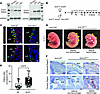 Figure 1
Hydrops fetalis in Arrb1/2ΔiLEC embryos compared with Arrb1/2fl/fl. (A) Western blots show expression of β-arrestin1 and β-arrestin2 in HUVECs and LECs. (B) Schematic images show the generation of Arrb1/2ΔiLEC embryos by timed mating of Arrb1/2fl/fl female mice and Arrb1/2fl/fl Prox1CreERT2 male mice. (C) Immunostaining of jugular lymphatic sacs (JLSs) shows decreased β-arrestin1 (yellow arrowheads) and β-arrestin2 (white arrows) expression in the Arrb1/2ΔiLEC and Arrb1/2fl/fl embryos at E15.5. Scale bar: 20 μm. (D) Representative images of Arrb1/2fl/fl and Arrb1/2ΔiLEC embryos at E15.5. Yellow asterisks indicate edema areas; white arrowheads indicate hemorrhagic spots. Scale bar: 5 mm. (E) Quantification of edema index normalized to crown rump length (CRL); n = 16–20 embryos per group. Gray circles represent Arrb1/2fl/fl embryos, white squares represent edematous Arrb1/2ΔiLEC embryos, and gray squares represent non-edematous Arrb1/2ΔiLEC embryos. Unpaired 2-tailed Student’s t test. P values are indicated on the graphs. (F) H&E staining shows enlarged and blood-filled JLS of Arrb1/2ΔiLEC embryo at E15.5. CA, carotid artery; eJV: external jugular vein; Scale bar: 100 μm.
Gross examination of E15.5 Arrb1/2ΔiLEC embryos showed profound hydrops fetalis (Figure 1D, yellow asterisks), with a high volume of edema in the peripheral dorsal region compared with Arrb1/2fl/fl embryos. Moreover, some Arrb1/2ΔiLEC embryos displayed bursts of hemorrhage within the peripheral edematous regions (Figure 1D, white arrows). Quantitative analysis of edema, as normalized to crown rump length (CRL), showed that approximately half of the Arrb1/2ΔiLEC embryos (Figure 1E, white squares) exhibited approximately 4 times higher edema indices compared with non-edematous Arrb1/2ΔiLEC embryos (Figure 1E, gray squares) and Arrb1/2fl/fl controls, driving a statistically significant increase in edema index between genotypes. Histological analysis of the peripheral regions substantiated the presence of interstitial edema in Arrb1/2ΔiLEC embryos compared with controls (Figure 1F, red asterisks). Transverse sections through the thoracic region identified the typical anatomy of the carotid artery directly adjacent to the exterior jugular vein and juxtaposed to the peripheral jugular lymph sac in embryos of both genotypes. However, in edematous Arrb1/2ΔiLEC embryos, the jugular lymphatic sac was markedly enlarged and dilated, indicative of the pathophysiological consequence of edema. In addition, the jugular lymphatic sacs of Arrb1/2ΔiLEC embryos with hemorrhage were also enlarged and abnormally filled with red blood cells, likely resulting from the clearance of hemorrhagic interstitial fluid.
Interestingly, the embryonic hydrops fetalis phenotype was no longer observed at E16.5 or later gestational time points, suggesting either resolution of edema or demise of affected embryos. Genotyping of embryos from E14.5 to E17.5 showed a precipitous decline in the number of Arrb1/2ΔiLEC embryos compared with Arrb1/2fl/fl embryos, skewing away from the expected 50% Mendelian ratio between genotypes (Figure 2A). Indeed, the loss of Arrb1/2ΔiLEC embryos was also accompanied by an increase in the total number of resorbed embryos during this gestational time period (Figure 2A), indicating that lymphatic-specific loss of β-arrestin1 and β-arrestin2 causes increased midgestational mortality. In support of gestational demise, the weight of edematous Arrb1/2ΔiLEC embryos was significantly decreased compared with Arrb1/2fl/fl embryos at E15.5, further indicative of growth arrest and demise due to lymphatic β-arrestin1/2 deficiency (Figure 2B).
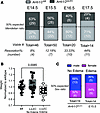 Figure 2
Increased lethality and growth restriction in the Arrb1/2ΔiLEC embryos compared with Arrb1/2fl/fl. (A) As shown by non-Mendelian ratio, increased resorption embryo number and decreased viable Arrb1/2ΔiLEC embryos between E14.5 and E17.5 compared with Arrb1/2fl/fl. (B) Quantification of weight of Arrb1/2fl/fl, non-edematous Arrb1/2ΔiLEC, and edematous Arrb1/2ΔiLEC embryos at E15.5. Weight of embryos was normalized to the Arrb1/2fl/fl embryos from same litter; n = 12–50 embryos per group. One-way ANOVA. P value is indicated on the graph. (C) Sex ratio in non-edematous and edematous Arrb1/2ΔiLEC embryos at E15.5.
Primary lymphedema is sex-dependent and is 3 times more prevalent in women compared with men (42, 43). To determine whether the hydrops fetalis in the Arrb1/2ΔiLEC embryos exhibited sex-dependent penetrance, we performed SRY sex chromosome genotyping. Interestingly, at E15.5, in the non-edematous Arrb1/2ΔiLEC embryos, 68% of embryos were male and 32% were female; in the edematous embryos, 36% of embryos were male and 64% were female (Figure 2C), indicating a sex-dependent prevalence of hydrops fetalis caused by lymphatic β-arrestin1/2 deficiency.
Although Prox1CreERT2 mice are a widely used research tool for Cre-mediated excision of floxed genes in lymphatics, cardiomyocytes also express Prox1 (44). Therefore, we evaluated the anatomy of the embryonic heart at day E15.5 by H&E and found no differences in heart size or structure between the Arrb1/2ΔiLEC and control embryos (Supplemental Figure 1; supplemental material available online with this article; https://doi.org/10.1172/jci.insight.198032DS1). Cardiac atria, ventricles, valves, and septum appeared normal in all animals evaluated. We also found no evidence of pericardial effusion, even among Arrb1/2ΔiLEC embryos with edema. Collectively, these data support the conclusion that lymphatic loss of β-arrestin1 and -2 causes increased incidence of edematous hydrops fetalis with occasional interstitial hemorrhage, which is associated with midgestational growth arrest and embryonic demise.
Loss of β-arrestin1 and -2 decreases lymphatic proliferation in vivo and in vitro through distinct signaling pathways. To determine whether double KO of β-arrestin1 and β-arrestin2 affected embryonic LEC proliferation, we utilized an EdU proliferation assay. Briefly, EdU was administered by oral gavage to pregnant dams, and embryos were dissected 4 hours later, followed by fixation, sectioning, and quantification of EdU incorporation. At E15.5, edematous Arrb1/2ΔiLEC embryos exhibited a significant decrease in the number of EdU+Lyve1+ LECs in the jugular lymphatic sac compared with Arrb1/2fl/fl controls and non-edematous Arrb1/2ΔiLEC embryos (Figure 3, A and B). These results indicate that loss of β-arrestin1 and -2 decreases LEC proliferation in vivo within edematous mice.
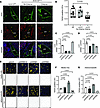 Figure 3
Lymphatic loss of Arrb1/2 causes decreased proliferation of the jugular lymphatic vessels. (A and B) Representative images (A) and quantification (B) of EdU proliferation assay and immunostaining in the JLS sections of Arrb1/2fl/fl and Arrb1/2ΔiLEC embryos at E15.5. Yellow arrows: EdU-positive LECs. n = 6–10 embryos per group. One-way ANOVA. (C and D) Quantification of ARRB1 (C) and ARRB2 (D) mRNA expression in LECs transfected with scramble, ARRB1, ARRB2, or ARRB1/2 siRNAs. (E–G) Representative images (E) and quantification (G) of EdU-positive proliferation of LECs transfected with scramble siRNA (siSCR), ARRB1/2, ARRB1, ARRB2, and siRNAs and stimulated without (F) or with adrenomedullin (G). Scale bar: 20 μm. One-way ANOVA. P values are indicated on the graphs.
To delineate the individual and/or combined effects of β-arrestin1 and β-arrestin2 on LEC proliferation, siRNA transfection in human dermal LECs was utilized to efficiently knockdown β-arrestin1 (siARRB1), β-arrestin2 (siARRB2), or both (siARRB1/2) in combination (Figure 3, C and D). EdU incorporation was then measured in cells grown under media-only conditions or under a proliferative stimulus. LEC proliferation was stimulated with AM, a mitogenic peptide hormone that promotes LEC proliferation through the GPCR CALCRL and CLR (protein), via ERK/CREB pathways (45, 46) (Supplemental Figure 2A). Interestingly, knockdown of β-arrestin1 significantly increased the number of EdU-positive cells grown under media conditions and under AM stimulation compared with control cells (siScramble, siSCR) (Figure 3, E–G). Knockdown of β-arrestin2 or double knockdown of β-arrestin1/2 (siARRB1/2) did not show significant differences in EdU incorporation (Figure 3, E and F) compared to control LECs under media conditions. However, knockdown of β-arrestin2 in LECs resulted in a significant decrease in LEC proliferation after AM stimulation (Figure 3, E and G). Together, the opposing effects of β-arrestin1 versus -2 knockdown on LEC proliferation imply differential downstream signaling effects.
In support of this notion, downstream signaling assays showed that knockdown of β-arrestin1 alone resulted in a significant increase in AKT phosphorylation at Ser473 under media conditions compared with control cells (siSCR) (Figure 4, A and B), which correlates with the increased proliferation observed upon loss of β-arrestin1 (Figure 3, E and F). In contrast, knockdown of β-arrestin1 or double knockdown of β-arrestin1/2 did not significantly alter AM-induced ERK or CREB phosphorylation compared with similarly treated control cells (siSCR). Consistent with the documented role of p-ERK and p-CREB in governing AM-mediated LEC proliferation, knockdown of β-arrestin2 in LECs resulted in a significant decrease in AM-induced phosphorylation of ERK (Thr202/Tyr204) and CREB (Ser133) compared with similarly treated control cells (siSCR) (Figure 4, C–E). Taken together, these data support essential functions for both β-arrestin1 and -2 in governing LEC proliferation, each exploiting different downstream signaling pathways under basal or mitogen-induced conditions.
 Figure 4
Signaling changes in LECs caused by deficiency of combined or individual β-arrestins. (A) Representative Western blot images showing AKT phosphorylation at Ser473 and total AKT levels in LECs transfected with scramble control, ARRB1, ARRB2, or ARRB1/2 siRNAs. (B) Quantification of p-AKT to total AKT in LECs transfected with scramble, ARRB1, ARRB2, or ARRB1/2 siRNAs. Each dot represents 1 biological replicate. One-way ANOVA. (C) Representative Western blot images show phosphorylation of ERK1/2 at Thr202/Tyr204, total ERK, phosphorylation of CREB at Ser133, total CREB level in LECs transfected with scramble, ARRB1, ARRB2, or ARRB1/2 siRNAs after AM stimulation. (D and E) Quantification of p-ERK to total ERK, p-CREB to total CREB in LECs transfected with scramble, ARRB1, ARRB2, or ARRB1/2 siRNAs. Each dot represents 1 biological replicate. One-way ANOVA. P values are indicated on the graphs.
Loss of β-arrestin1 and -2 alters expression of some lymphatic GPCRs in vitro. Depending on ligand bias and the relative affinity of β-arrestin1 or -2 to individual GPCRs, β-arrestins can influence receptor expression. To delineate the individual and/or combined effects of β-arrestin1 and β-arrestin2 knockdown on GPCR expression in human dermal LECs, we transfected LECs with siRNAs to knock down β-arrestin1 (siARRB1), β-arrestin2 (siARRB2), or both (siARRB1/2) in combination (Figure 3, C and D). Then, the expression of several GPCRs, including CALCRL, ACKR3, APLNR, and GPRC5B, was determined by qRT-PCR. Interestingly, the mRNA expression of ACKR3 and GPRC5B was decreased by knockdown of β-arrestin1 and increased by knockdown of β-arrestin2, whereas no changes were found in the LECs with combined β-arrestin1 and -2 knockdown (Supplemental Figure 3, A and B). Conversely, the mRNA expression of CALCRL and APLNR was not changed by single nor combined knockdown of β-arrestin1 and/or -2 (Supplemental Figure 3, C and D). These results indicate district roles of β-arrestin1 and -2 in regulating the expression of GPCRs in LECs, potentially reflecting differential preferences for G-protein–biased or β-arrestin–biased signaling.
Edematous Arrb1/2ΔiLEC embryos exhibit dilated lymphatic vessels and dysregulated VE-cadherin adherens junction morphology. During lymphatic expansion, proximal dermal vessels migrate toward the dorsal midline. Whole-mount staining of the dorsal skin with the lymphatic marker Lyve-1 revealed a complex meshwork of lymphangiogenesis extending toward the midline in both control Arrb1/2fl/fl and Arrb1/2ΔiLEC embryos, regardless of the presence of edema (Figure 5A). Quantification confirmed no significant differences in the vessel length, number of branches, or distance between vessel migrating fronts between edematous Arrb1/2ΔiLEC, non-edematous Arrb1/2ΔiLEC, and Arrb1/2fl/fl control embryos (Figure 5, A, B, D, and E). However, edematous Arrb1/2ΔiLEC embryos showed statistically significant increases in lymphatic vessel width compared with control Arrb1/2fl/fl embryos and non-edematous Arrb1/2ΔiLEC embryos (Figure 5, A and C). Thus, dilation of the lymphatic vasculature in edematous Arrb1/2ΔiLEC is consistent with the pathological presence of edema and suggests that lymphatic loss of β-arrestin1/2 functionally impairs the ability of lymphatics to maintain fluid homeostasis.
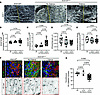 Figure 5
Dorsal dermal lymphatic vessels are dilated in Arrb1/2ΔiLEC embryos. (A) Representative images of whole-mount immunostaining with Lyve-1 antibody of dorsal skin from Arrb1/2fl/fl, non-edematous Arrb1/2ΔiLEC, and edematous Arrb1/2ΔiLEC embryos at E15.5. Yellow line indicates dorsal midline. Scale bar: 100 μm. (B–E) The width (C) of the lymphatic vessel in the edematous Arrb1/2ΔiLEC embryos was increased compared with control Arrb1/2fl/fl embryos at E15.5. No differences were observed in the vessel length (B), branches (D), and distance between fronts (E) between 3 groups. n = 6–11 embryos per group. One-way ANOVA. (F and G) Representative images (F) and continuous VE-cadherin junction quantification (G) of whole-mount immunostaining with VE-cadherin and Lyve-1 antibodies of lymphatic vessel in embryonic dorsal skin. Black arrows, continuous junctions; open arrows, discontinuous junctions. Scale bar: 20 μm. n = 2–7 embryos per group. One-way ANOVA. P values are indicated on the graphs.
VE-cadherin is the principal adherens junction protein of lymphatics, regulating endothelial barrier function and permeability. Previous studies have shown that β-arrestins directly interact with VE-cadherin to regulate its internalization and increase vessel permeability (18–20). Thus, loss of β-arrestins in LECs could destabilize VE-cadherin junctions, thereby disrupting lymphatic vessel permeability and function. To test this hypothesis, we co-stained the embryonic dorsal skin with both VE-cadherin and Lyve1 and scored the number of continuous (black arrows) and noncontinuous (open arrows) VE-cadherin cell-cell junctions (Figure 5F). Consistent with the pathological findings, we found that edematous Arrb1/2ΔiLEC embryos displayed a significant reduction in continuous, zipper-like VE-cadherin adherens junctions compared with control Arrb1/2fl/fl and non-edematous Arrb1/2ΔiLEC embryos (Figure 5, F and G).
β-Arrestin2 primarily drives VE-cadherin membrane assembly under basal conditions in vitro. To further distinguish the roles of β-arrestin1 and β-arrestin2 in regulating VE-cadherin adherens junctions, we knocked down β-arrestin1/2 by siRNA in cultured primary human LECs and evaluated the structure and function of cell-cell junctions. First, we noted a statistically significant increase in cell size with single and double β-arrestin knockdown in LECs compared with LECs transfected with siSCR, indicated by decreased cell nuclei numbers per square millimeter (Figure 6, A and B). Next, we noted that under basal growth conditions, VE-cadherin staining intensity at cellular junctions was markedly decreased in single and double β-arrestin1/2 knockdown cells compared with siSCR-treated cells (Figure 6A). Although knockdown of β-arrestin1/2 did not change total VE-cadherin protein levels (Supplemental Figure 4), we identified changes in its subcellular localization. Specifically, image intensity measurements of VE-cadherin showed no significant changes in perinuclear levels across all conditions (Figure 6C) but statistically significant reductions in membrane VE-cadherin levels with loss of β-arrestin2 and a combination of β-arrestin1/2 (Figure 6D). To further confirm these results, membrane proteins were enriched from control LECs (siSCR) and LECs with knockdown of β-arrestin1 (siARRB1) and/or β-arrestin2 (siARRB2) and probed for membrane expression of β-catenin, a direct membrane VE-cadherin protein interactor. We found that LECs with β-arrestin2 knockdown exhibited a significant reduction in membrane β-catenin levels compared with siSCR-treated controls (Figure 6, E and F).
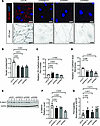 Figure 6
Diminished VE-cadherin adherens junctions in the membrane of LECs cause loss of β-arrestin1 or β-arrestin2. (A) Representative images of VE-cadherin antibody staining in LECs transfected with scramble siRNA (siSCR), ARRB1/2, ARRB1, and ARRB2 siRNA. Scale bar: 20 μm. (B) Nuclei number per square millimeter of LECs transfected with scramble siRNA (siSCR), ARRB1/2, ARRB1, and ARRB2 siRNA. n = 3 biological replicates per group. One-way ANOVA. (C and D) Quantification of perinuclear (C) and membrane (D) localized VE-cadherin intensity in LECs transfected with scramble siRNA (siSCR), ARRB1/2, ARRB1, and ARRB2 siRNA. n = 3 biological replicates per condition. One-way ANOVA. P ≤ 0.05 compared with siSCR. (E and F) Western blot images (E) and quantification (to GAPDH) show β-catenin protein levels in cell membranes enriched from LECs transfected with scramble, ARRB1, ARRB2, or ARRB1/2 siRNAs. n = 3 biological replicates per group. One-way ANOVA. (G) Relative permeability coefficient of 2,000 kDa FITC-dextran of LECs transfected with scramble siRNA (siSCR), ARRB1/2, ARRB1, and ARRB2 siRNA. n = 6 biological replicates per group. One-way ANOVA. P values are indicated on the graphs.
To determine functional changes due to β-arrestin1/2 deficiency in LECs, we assessed the permeability of LECs transfected with control siRNA (siSCR), β-arrestin1 (siARRB1), and/or β-arrestin2 (siARRB2) and treated with 2,000 kDa FITC-dextran. Knockdown of β-arrestin2 (siARRB2) significantly increased LEC permeability compared with siSCR-treated LECs (Figure 6G). Taken together, these data support that under basal conditions in vitro, β-arrestin1/2 regulate LEC cell size, VE-cadherin membrane expression and subcellular localization, and LEC permeability, and that this phenotype is primarily driven by β-arrestin2.
β-Arrestins are required for GPCR-mediated organization of VE-cadherin into continuous junctions in vitro. We have previously shown that activation of the GPCR CALCRL by its ligand AM rapidly and potently promotes VE-cadherin adherens junction remodeling by converting discontinuous, button-like junctions into continuous, zipper-like junctions (47–49). To determine whether β-arrestins are required for GPCR-mediated reorganization of VE-cadherin adherens junctions in LECs, we used AM as a tool compound. As expected, treatment of control siSCR cells with AM resulted in linearization of VE-cadherin junctions into a continuous, zipper-like morphology compared with media-only siSCR controls (Figure 7A). Conversely, LECs with knockdown of β-arrestin1/2 (siARRB1/2), β-arrestin1 (siARRB1), and β-arrestin2 (siARRB2) exhibited reduced levels of VE-cadherin membrane expression and prevented AM-induced VE-cadherin adherens junction linearization (Figure 7, A–C), with statistically significant reductions in the percentage of continuous junctions and concomitant significant increases in discontinuous junctions compared with AM-treated siSCR control cells (Figure 7, C and D). Collectively, these data demonstrate that β-arrestins are required for reorganization of VE-cadherin adherens junctions after GPCR stimulation.
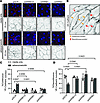 Figure 7
β-Arrestins are required for GPCR-mediated organization of VE-cadherin into continuous junctions in vitro. (A) Representative images of VE-cadherin antibody staining in LECs transfected with scramble siRNA (siSCR), ARRB1/2, ARRB1, and ARRB2 siRNA and cultured in media only or stimulated with adrenomedullin. Scale bar: 20 μm. (B) Representative image to show the criteria of the continuous and discontinuous VE-cadherin adherens junctions. Yellow arrows, continuous junctions; red arrows, discontinuous junctions. Scale bar: 20 μm. (C and D) Quantification of the percentage of continuous (C) and discontinuous (D) VE-cadherin adherens junctions in LECs transfected with scramble siRNA (siSCR), ARRB1/2, ARRB1, and ARRB2 siRNA and cultured in media only or stimulated with adrenomedullin. n = 3 biological samples per group. Two-way ANOVA. P values are indicated on the graphs.

-
Discussion
This study identifies a critical role for β-arrestin1 and β-arrestin2 in lymphatic vessel development and defines an essential role for lymphatic β-arrestin1/2 in embryonic development and survival. Specifically, we found in vivo that loss of β-arrestin1/2 resulted in midgestational hydrops fetalis, growth restriction, and increased embryonic mortality of Arrb1/2ΔiLEC embryos (Figure 8). The observation that a subset of the Arrb1/2ΔiLEC embryos developed edema may be due to variable KO efficiency of β-arrestin1 and β-arrestin2 between individual embryos.
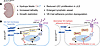 Figure 8
Schematic outlining how β-arrestin1 and β-arrestin2 differentially regulate LEC proliferation and VE-cadherin adherens junctional remodeling. (A) Arrb1/2ΔiLEC embryos display hydrops fetalis, increased lethality, and growth restriction compared with Arrb1/2fl/fl controls. This is accompanied by reduced LEC proliferation within the jugular lymphatic sac, dilated lymphatic vessels, and dysregulated VE-cadherin adherens junction assembly at E15.5. Created with BioRender.com, released under a Creative Commons Attribution-NonCommercial-NoDerivatives 4.0 International license. (B) In human dermal LECs, β-arrestin1 deficiency enhances cell proliferation, potentially through the phosphorylation of AKT at Ser473. Conversely, β-arrestin2 deficiency decreases AM-induced proliferation, potentially due to disruption of AM-mediated ERK and CREB activation. Finally, β-arrestin1/2 are essential for VE-cadherin localization to LEC adherens junctions, whereby β-arrestin2 and β-arrestin1/2 deficiency decreases VE-cadherin membrane localization, and β-arrestin2 deficiency increases LEC permeability. Deficiency of single or double β-arrestin also reduces AM-induced VE-cadherin junction linearization. Black lines with arrow, increased effect; red lines with blunt head, decreased effect; dashed line, prevented effect.
To define the mechanisms by which β-arrestin1 and β-arrestin2 regulate lymphatic signaling, we employed human LECs with β-arrestin1 and/or β-arrestin2 knockdown. We found in vitro that β-arrestin1 deficiency resulted in increased proliferation, increased phosphorylation of AKT, and decreased VE-cadherin membrane localization. In contrast, we found that β-arrestin2 deficiency decreased AM-induced proliferation, decreased AM-induced phosphorylation of ERK and CREB, decreased VE-cadherin membrane localization, and increased LEC permeability. Consistent with these findings, AM failed to linearize cell-cell VE-cadherin adherens junctions in LECs with single or double β-arrestin knockdown (Figure 8). Taken together, these results demonstrate that β-arrestin1 and β-arrestin2 engage distinct signaling modalities to regulate lymphatic function.
Arrb1/2ΔiLEC embryos with edema displayed an enlarged jugular lymphatic sac and dilated dorsal skin lymphatics compared with those of Arrb1/2fl/fl embryos at E15.5. However, edematous Arrb1/2ΔiLEC embryos also exhibited decreased cellular proliferation compared with Arrb1/2fl/fl embryos. These phenotypes may be reconciled due to compensatory cell hypertrophy, which was also evident in the increased cell size of cultured cells with knockdown of β-arrestin1/2 compared with siRNA-treated cells. Another possibility is that the dilated lymphatic vessels arise from defective endothelial cell rearrangement caused by disrupted VE cadherin–mediated adherens junction assembly or remodeling, which is essential for maintaining lymphatic barrier integrity and regulating vessel permeability.
Loss of β-arrestin1/2 resulted in lymphedema in a sex-dependent manner: 64% of edematous Arrb1/2ΔiLEC embryos at E15.5 were female and only 36% were male. Sex-specific gonadal differentiation occurs around E12.5 in the mouse, with male-specific testosterone production commencing between E12 and E13, and female ovarian steroidogenesis delayed until P7. Thus, the underlying hormonal and/or chromosomal mechanisms leading to the observed sex differences in Arrb1/2ΔiLEC embryos may be complex. It has long been demonstrated that hereditary primary lymphedema is 3 times more likely to occur in women compared with men (50, 51). For example, Milroy disease, a form of primary lymphedema caused by VEGFR-3 mutations, has a higher prevalence in women compared with men (52). Furthermore, Turner syndrome, another form of primary lymphedema, is the most common sex chromosome abnormality affecting women (53, 54). Future studies will unravel the contributions of development, hormones, and sex chromosomes to the pathology of lymphatic-associated diseases.
β-Arrestin1/2 regulate cellular proliferation in multiple cellular contexts. For example, recruitment of β-arrestin to nicotinic acetylcholine receptors is essential for nicotine-induced cell proliferation (55). After carotid injury, increased ERK activation and medial smooth muscle cell proliferation have been observed in β-arrestin1 KO mice, and proliferation was decreased in β-arrestin2 KO mice (56). Conversely, in patients with gastric cancer, overexpression of β-arrestin1 is associated with poor prognosis, and its knockdown decreases tumor cell proliferation. Therefore, given the multifunctionality of β-arrestin1/2, it is not surprising that the roles of β-arrestins are complex and context dependent.
In the current study, double KO of β-arrestin1 and β-arrestin2 in LECs decreased proliferation in the jugular lymphatic sac at E15.5. However, although no significant difference in proliferation was observed in the serum-starved or AM-stimulated human dermal LECs after double knockdown of β-arrestin1 and -2, there was a differential effect on proliferation and signaling with knockdown of either β-arrestin1 or -2 alone. Specifically, knockdown of β-arrestin1 in LECs in vitro increased cell proliferation, which coincided with enhanced phosphorylation of AKT at Ser473. These data are aligned with previous reports that have linked β-arrestin1 to AKT signaling, for example, in ghrelin-induced AKT phosphorylation at Ser473 (57) and in G protein β1γ2 subunit interactions to promote AKT signaling and proliferation (58). Conversely, in the context of mouse embryonic fibroblasts, both β-arrestin1 and β-arrestin2 have been reported to inhibit AKT signaling by facilitating PTEN lipid phosphatase activity (59), which further supports that β-arrestin1 and -2 have both cell- and context-dependent functions. Finally, GPCR–β-arrestin scaffolding promotes cytosolic ERK1/2 activation, leading to ERK1/2 nuclear translocation and interaction with nuclear substrates such as CREB to drive proliferation (60–62). In line with these results, we found that knockdown of β-arrestin2, but not β-arrestin1, reduced AM-induced phosphorylation of ERK (Thr202/Tyr204) and CREB (Ser133), suggesting that β-arrestin2 specifically regulates AM-induced MAPK signaling cascades in LECs.
β-Arrestins regulate VE-cadherin adherens junctions via multiple mechanisms (Figure 8). First, β-arrestin2 can directly interact with VE-cadherin at residues Y685 and S665 to modulate its internalization and affect vessel permeability (18–20). Second, β-arrestins participate in VEGFR3-mediated disruption of endothelial barrier function through promoting rapid VE-cadherin endocytosis in blood endothelial cells (17, 18). Third, in blood endothelial cells, β-arrestins interact with activated GPCRs, such as the β2 adrenergic receptor, to promote recruitment of VE-cadherin and β-catenin to the endothelial cell membranes, thereby increasing vascular permeability (17). Fourth, we have previously shown that AM rapidly linearizes VE-cadherin adherens junctions by converting highly permeable, button-like junctions into impermeable, zipper-like junctions. This process depends on β-arrestin recruitment to AM-stimulated CALCRL to promote cellular internalization of the ligand-activated complex (63, 64).
Notably, during lymphangiogenesis between E10.5 and E15.5, the VE-cadherin adherens junctional conformation is exclusively continuous and later transitions to discontinuous button-like junctions around E16.5 in the dermal initial lymphatics to facilitate fluid uptake (25). To this end, we found that edematous Arrb1/2ΔiLEC embryos exhibited a decrease in continuous, zipper-like junctions compared with the Arrb1/2fl/fl controls at E15.5, along with changes in cell shape. These data suggest that lymphatic loss of β-arrestin1/2 increases embryonic fluid accumulation due to dysregulation of VE-cadherin adherens junctions. These results were partially recapitulated in vitro, whereby knockdown of β-arrestin1/2 in human LECs disrupted VE-cadherin membrane assembly. Specifically, we found that knockdown of β-arrestin2 and double knockdown of β-arrestin1/2 decreased VE-cadherin membrane localization, and that knockdown of β-arrestin1/2 prevented AM-induced linearization of VE-cadherin junctions and increased LEC size. Finally, we found that knockdown of β-arrestin2 increased cell permeability. Taken together, these findings highlight the essential and multifaceted functions of β-arrestin1 and 2 in controlling VE-cadherin dynamics in LECs, ultimately influencing cellular signaling and physiological outcomes.


