
Research ArticleDevelopmentGastroenterology
Open Access |  10.1172/jci.insight.200275
Autogenic-regenerated intestinal transplantation improves outcomes in short bowel syndrome
Kentaro Iwaki, Takamichi Ishii, Hidenobu Kojima, Fumiaki Munekage, Hiroshi Horie, Kenta Makino, Takuma Karasuyama, Yusuke Hanabata, Elena Yukie Uebayashi, Satoshi Ogiso, and Etsuro Hatano
Department of Surgery, Graduate School of Medicine, Kyoto University, Kyoto, Japan.
Address correspondence to: Takamichi Ishii, Department of Surgery, Graduate School of Medicine, Kyoto University, 54 Kawahara-cho, Shogoin, Sakyo-ku, Kyoto 606-8507, Japan. Phone: 81.75.751.4323; Email: taishii@kuhp.kyoto-u.ac.jp.
Find articles by Iwaki, K. in: PubMed | Google Scholar
Department of Surgery, Graduate School of Medicine, Kyoto University, Kyoto, Japan.
Address correspondence to: Takamichi Ishii, Department of Surgery, Graduate School of Medicine, Kyoto University, 54 Kawahara-cho, Shogoin, Sakyo-ku, Kyoto 606-8507, Japan. Phone: 81.75.751.4323; Email: taishii@kuhp.kyoto-u.ac.jp.
Find articles by Ishii, T. in: PubMed | Google Scholar
Department of Surgery, Graduate School of Medicine, Kyoto University, Kyoto, Japan.
Address correspondence to: Takamichi Ishii, Department of Surgery, Graduate School of Medicine, Kyoto University, 54 Kawahara-cho, Shogoin, Sakyo-ku, Kyoto 606-8507, Japan. Phone: 81.75.751.4323; Email: taishii@kuhp.kyoto-u.ac.jp.
Find articles by Kojima, H. in: PubMed | Google Scholar
Department of Surgery, Graduate School of Medicine, Kyoto University, Kyoto, Japan.
Address correspondence to: Takamichi Ishii, Department of Surgery, Graduate School of Medicine, Kyoto University, 54 Kawahara-cho, Shogoin, Sakyo-ku, Kyoto 606-8507, Japan. Phone: 81.75.751.4323; Email: taishii@kuhp.kyoto-u.ac.jp.
Find articles by Munekage, F. in: PubMed | Google Scholar
Department of Surgery, Graduate School of Medicine, Kyoto University, Kyoto, Japan.
Address correspondence to: Takamichi Ishii, Department of Surgery, Graduate School of Medicine, Kyoto University, 54 Kawahara-cho, Shogoin, Sakyo-ku, Kyoto 606-8507, Japan. Phone: 81.75.751.4323; Email: taishii@kuhp.kyoto-u.ac.jp.
Find articles by Horie, H. in: PubMed | Google Scholar
Department of Surgery, Graduate School of Medicine, Kyoto University, Kyoto, Japan.
Address correspondence to: Takamichi Ishii, Department of Surgery, Graduate School of Medicine, Kyoto University, 54 Kawahara-cho, Shogoin, Sakyo-ku, Kyoto 606-8507, Japan. Phone: 81.75.751.4323; Email: taishii@kuhp.kyoto-u.ac.jp.
Find articles by Makino, K. in: PubMed | Google Scholar
Department of Surgery, Graduate School of Medicine, Kyoto University, Kyoto, Japan.
Address correspondence to: Takamichi Ishii, Department of Surgery, Graduate School of Medicine, Kyoto University, 54 Kawahara-cho, Shogoin, Sakyo-ku, Kyoto 606-8507, Japan. Phone: 81.75.751.4323; Email: taishii@kuhp.kyoto-u.ac.jp.
Find articles by Karasuyama, T. in: PubMed | Google Scholar
Department of Surgery, Graduate School of Medicine, Kyoto University, Kyoto, Japan.
Address correspondence to: Takamichi Ishii, Department of Surgery, Graduate School of Medicine, Kyoto University, 54 Kawahara-cho, Shogoin, Sakyo-ku, Kyoto 606-8507, Japan. Phone: 81.75.751.4323; Email: taishii@kuhp.kyoto-u.ac.jp.
Find articles by Hanabata, Y. in: PubMed | Google Scholar
Department of Surgery, Graduate School of Medicine, Kyoto University, Kyoto, Japan.
Address correspondence to: Takamichi Ishii, Department of Surgery, Graduate School of Medicine, Kyoto University, 54 Kawahara-cho, Shogoin, Sakyo-ku, Kyoto 606-8507, Japan. Phone: 81.75.751.4323; Email: taishii@kuhp.kyoto-u.ac.jp.
Find articles by Uebayashi, E. in: PubMed | Google Scholar
Department of Surgery, Graduate School of Medicine, Kyoto University, Kyoto, Japan.
Address correspondence to: Takamichi Ishii, Department of Surgery, Graduate School of Medicine, Kyoto University, 54 Kawahara-cho, Shogoin, Sakyo-ku, Kyoto 606-8507, Japan. Phone: 81.75.751.4323; Email: taishii@kuhp.kyoto-u.ac.jp.
Find articles by Ogiso, S. in: PubMed | Google Scholar
Department of Surgery, Graduate School of Medicine, Kyoto University, Kyoto, Japan.
Address correspondence to: Takamichi Ishii, Department of Surgery, Graduate School of Medicine, Kyoto University, 54 Kawahara-cho, Shogoin, Sakyo-ku, Kyoto 606-8507, Japan. Phone: 81.75.751.4323; Email: taishii@kuhp.kyoto-u.ac.jp.
Find articles by
Hatano, E.
in:
PubMed
|
Google Scholar
|

Published June 3, 2026 - More info
JCI Insight. 2026;11(14):e200275. https://doi.org/10.1172/jci.insight.200275.
© 2026 Iwaki et al. This work is licensed under the Creative Commons Attribution 4.0 International License. To view a copy of this license, visit http://creativecommons.org/licenses/by/4.0/.
Received: September 15, 2025; Accepted: May 21, 2026


-
Results
Decellularization of rat small intestine. Decellularization of a rat small intestine was performed as previously described (20, 26–29). After procurement of a whole small intestine, the intestine was frozen at –80°C and thawed overnight at 4°C. Subsequently, decellularization was performed with 0.25 w/v% trypsin and 1 mmol/L ethylenediaminetetraacetic acid (EDTA) solution at 37°C for 1 hour, followed by 0.1% Triton X/0.05% EDTA solution for 24 hours. Histological analysis revealed that the decellularized intestine retained its extracellular matrix (Figure 1A) and was devoid of cells, reducing its DNA (native intestine: 1,943.9 ± 79.2 ng/mg versus decellularized intestine: 1,14.2 ± 11.1 ng/mg, P < 0.001, n = 3) (Figure 1B).
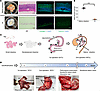 Figure 1
Intestinal decellularization, schematic illustrations of autogenic-regenerated intestinal transplantation and the study timeline. (A) Macroscopic images, H&E staining and immunofluorescence images of the native and decellularized intestines. Scale bar: 200 μm. (B) Quantification of DNA in the native and decellularized intestine. n = 3 for each group. (C) Schematic illustration of autogenic-regenerated intestinal transplantation. In the first operation, DITx, the decellularized intestine was transplanted into the elevated jejunum to promote in vivo organ regeneration. At 4 weeks after DITx, in the second operation of RITx, the regenerated intestine was transplanted into the main alimentary tract to exert its function. Arrows indicate the direction of dietary passage. (D) The study timeline. Student’s t test (B). ***P < 0.001. DI, decellularized intestine; DITx, decellularized intestinal transplantation; H&E, hematoxylin and eosin; RI, regenerated intestine; RITx, regenerated intestinal transplantation.
Evaluations of the intestinal regeneration process. Autogenic-regenerated intestinal transplantation consisted of 2 operations (Figure 1C). After transection of the proximal jejunum, a Roux-en-Y anastomosis was performed. A 3 cm segment of the native small intestine was removed from the elevated jejunum. Then, a 3 cm segment of the decellularized intestine, corresponding to approximately 5% of the rat small intestine, with a silicon tube as an internal stent was anastomosed to the elevated jejunum with 6-0 VICRYL running sutures (decellularized intestinal transplantation, DITx). In the second operation, regenerated intestinal transplantation (RITx) was performed 4 weeks post-DITx. The regenerated intestine was identified by using an internal stent and marked sutures. After isolating the regenerated intestine with its mesentery, it was anastomosed to the jejunum and ileum using 6-0 VICRYL running sutures. Thereafter, the dietary content passed through the regenerated intestine. Both ends of the regenerated intestine were marked with nonabsorbable sutures (Figure 1, C and D, and Supplemental Figure 1; supplemental material available online with this article; https://doi.org/10.1172/jci.insight.200275DS1).
Macroscopic observation of the decellularized intestine 10 days after DITx revealed a mucosal defect (Figure 2A). H&E staining showed that the implanted decellularized intestine and nonregenerated region lacking mucosa and muscular layers were 2.8 cm and 1.2 cm long, respectively (Figure 2B). At the leading edge of the regenerated area, the mucosa, followed by the muscle layer, infiltrated the decellularized intestine, which was filled with fibroblasts, myofibroblasts, and inflammatory cells (Figure 2, C and D). CD31 staining revealed the presence of blood vessels in the leading edge of the regenerated area as well as in the more distal nonregenerated area (Figure 2, D and E). Mature blood vessels identified by CD31+ and αSMA+ vessels were significantly more frequent at the leading edge of the regenerated area than in the nonregenerated area (17.3 ± 4.0 versus 4.3 ± 1.5, P = 0.007, n = 3) (Figure 2F), whereas the nonregenerated area contained significantly more immature blood vessels identified by CD31+ and αSMA– vessels (21.7 ± 3.8 versus 3.7 ± 1.5, P = 0.002, n = 3) (Figure 2G) (30–32). Furthermore, both the leading edge of the regenerated area and the nonregenerated area exhibited high levels of VEGF+ cells (Figure 2, D, E, and H). These findings suggest that the decellularized intestine is initially filled with fibroblasts, myofibroblasts, and inflammatory cells followed by angiogenesis and that mucosal and muscle layer are regenerated from the margins.
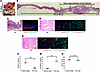 Figure 2
Evaluation of the intestinal regeneration process in 10 days after DITx. (A) Macroscopic images of the regenerated intestine 10 days after DITx. Scale bar: 1 cm. (B) H&E staining of the regenerated intestine 10 days after DITx. (C) H&E staining and immunofluorescence images (αSMA/TUBB3) of the leading edge of the regenerated area. (D) H&E staining and immunofluorescence images (CD31/αSMA and VEGF/αSMA) of the leading edge of the regenerated area. (E) H&E staining and immunofluorescence images (CD31/αSMA and VEGF/αSMA) of the nonregenerated area. Scale bars: 1,000 μm (B), 200 μm (C), and 100 μm (D and E). (F) The number of mature vessels (CD31+ and αSMA+) per high-power field in the leading edge of regenerated area and nonregenerated area. n = 3 for each group. (G) The number of immature vessels (CD31+ and αSMA–) per high-power field in the leading edge of regenerated area and nonregenerated area. n = 3 for each group. (H) The number of VEGF+ cells per high-power field in the leading edge of the regenerated area and nonregenerated area. n = 3 for each group. Student’s t test (F–H). **P < 0.01. αSMA, α-smooth muscle actin; DAPI, 4′,6-diamidino-2-phenylindole; DITx, decellularized intestinal transplantation; Non-reg; nonregenerated area; RI, regenerated intestine; TUBB3, tubulin β 3; VEGF, vascular endothelial growth factor.
Macroscopic observation of the decellularized intestine 4 weeks after DITx revealed angiogenesis from marginal vessels in the adherent mesentery and no mucosal defect (Figure 3A). Luminal stricture was not observed in the decellularized scaffold 4 weeks after DITx. This may be attributed to the use of a stent in the scaffold. Although the mucosal layer in the decellularized intestine was comparatively thin, the mucosa, submucosa, muscular layer, and serosa covered the entire decellularized intestine 4 weeks after DITx (Figure 3, B and C). Immunofluorescence staining of αSMA and TUBB3 revealed that neurons were reconstructed in the submucosal and muscular layers (Figure 3D). The expression of E-cadherin and villin indicated that intercellular adhesion was reconstituted in the regenerated epithelium (Figure 3, E and F). The existence of MUC2+ and chromogranin A+ cells suggested the presence of goblet cells and enteroendocrine cells (Figure 3, G and H). The regenerated intestine exhibited abundant CDX2, Ki67, SOX9, and LGR5, indicating active epithelial regeneration and proliferation (Figure 3, I–L). Mature blood vessels, evidenced by CD31+ and αSMA+, were observed in the submucosal layer of the regenerated intestine (Figure 3, M and N). Fluorescence images were obtained following indocyanine green (ICG) injection to examine the blood flow in the regenerated intestine. The ICG test demonstrated that blood flow was supplied from the adjacent mesentery to the regenerated intestine (Figure 3O and Supplemental Video 1). Blood flow into the regenerated intestine was maintained even after the resection of both ends of the regenerated intestine (Supplemental Video 1). Although the fluorescence intensity of the regenerated intestine was significantly lower than that of the native intestine (P = 0.020) (Figure 3P), the above findings indicate angiogenesis from the mesentery to the regenerated intestine.
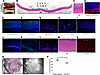 Figure 3
Histological evaluations of the regenerated intestine 4 weeks after DITx. (A) Macroscopic images of the regenerated intestine 4 weeks post-DITx. Scale bar: 1 cm. (B) H&E staining of the regenerated intestine 4 weeks post-DITx. Scale bars: 1000 μm. (C) High-magnification H&E staining. Scale bar: 200 μm. (D–L) Immunofluorescence images showing the expression of (D) αSMA/TUBB3, (E) E-cadherin, (F) villin, (G) MUC2, (H) chromogranin A, (I) CDX2, (J) Ki67, (K) SOX9 and (L) LGR5. (M and N) H&E staining and immunofluorescence images for CD31/αSMA of a submucosal vessel in the regenerated intestine. Scale bars: 200 μm (D–G, I, J, and L), and 100 μm (H, K, M, and N). (O) Intraoperative ICG fluorescence imaging of the regenerated intestine post-DITx. (P) Fluorescence intensity of the native and regenerated intestine. n = 3 for each group. Student’s t test (P). *P < 0.05. αSMA, α-smooth muscle actin; DITx, decellularized intestinal transplantation; ICG, indocyanine green; RI, regenerated intestine; TUBB3, tubulin β 3.
Histological evaluations of the regenerated intestine post-RITx. At 4 weeks after DITx, the regenerated intestine was isolated, along with its mesentery, and transplanted into the main alimentary tract (RITx), enabling the passage of food through the regenerated intestine (Figure 1D and Supplemental Figure 1). The rats survived without any complications after these procedures.
Macroscopic imaging of the regenerated intestine 4 weeks after RITx showed a thick, well-developed mucosa (Figure 4A). H&E staining of the regenerated intestine demonstrated abundant mucosa, submucosa, muscular layer, serosa, and vessels (Figure 4, B and C). Villus length in the regenerated intestine after DITx was significantly shorter than that in the native intestine (314 ± 21.3 μm versus 424 ± 8.9 μm, P = 0.007, n = 5); however, the villus length after RITx was significantly longer than that of the native intestine (723 ± 27.8 μm versus 424 ± 8.9 μm, P < 0.001, n = 5) (Figure 4D). αSMA and vimentin+ cells were detected in the lamina propria of the mucosa, indicating the presence of intestinal subepithelial myofibroblasts (Figure 4E and Supplemental Figure 2), which contribute to epithelial stem cell growth (33, 34). Immunostaining for TUBB3 revealed the nerve plexus in the submucosa and muscular layers (Figure 4E). E-cadherin+ and villin+ epithelia were observed throughout the villi in the regenerated intestine as well as in the native intestine, suggesting the maturation of villi and the presence of intestinal epithelial barrier function (Figure 4E). Goblet and enteroendocrine cells were identified by MUC2 and chromogranin A in the regenerated intestine, indicating the regeneration of the well-developed epithelium (Figure 4E). Expression of CDX2, Ki67, SOX9, and LGR5 was observed in the regenerated intestine after RITx (Figure 4F). The numbers of Ki67+ (22.2 ± 8.3 versus 11.0 ± 1.4, P = 0.014, n = 5) (Figure 4G) and LGR5+ cells (13.6 ± 2.0 versus 7.8 ± 1.9, P = 0.035, n = 5) (Figure 4H) were significantly higher in the regenerated intestine after RITx than in the native intestine. Thus, while the regenerated intestine acquired maturity and maintained homeostasis, the components in the regenerated intestine differentiated and proliferated more actively than those in the native intestine.
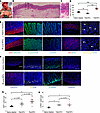 Figure 4
Histological evaluations of the regenerated intestine 4 weeks after RITx. (A) Macroscopic images of the regenerated intestine 4 weeks after RITx. Scale bar: 1 cm. (B and C) H&E staining of the regenerated intestine. Scale bars: 1000 μm (B) and 200 μm (C). (D)Villus length of the native and regenerated intestines. n = 5 for each group. (E) Immunofluorescence images showing the expression of αSMA, TUBB3, E-cadherin, villin, MUC2, and chromogranin A in the native and regenerated intestines. Scale bar: 200 μm (αSMA/TUBB3, E-cadherin, villin, MUC2) and 100 μm (chromogranin A). (F) Immunofluorescence images showing the expression of CDX2, Ki67, SOX9, and LGR5 in the native and regenerated intestines. Scale bars: 200 μm (CDX2, Ki67, LGR5) and 100 μm (SOX9). (G) Ki67+ cell count per crypt. n = 5 for each group. (H) LGR5+ cell count per crypt. n = 5 for each group. One-way ANOVA followed by Tukey’s HSD test (D, G, and H). *P < 0.05. **P < 0.01. ***P < 0.001. αSMA, α-smooth muscle actin; DITx, decellularized intestinal transplantation; RI, regenerated intestine; RITx, regenerated intestinal transplantation; TUBB3, tubulin β 3.
Functional analyses of the regenerated intestine after RITx. Mature blood vessels positive for CD31 and αSMA were observed in the submucosal layer of the regenerated intestine after RITx (Figure 5A). The ICG test confirmed the maintenance of blood flow from the mesentery into the regenerated intestine 4 weeks after RITx (Figure 5B). Although the fluorescence intensity in the regenerated intestine after RITx was still lower than that in the native intestine (P = 0.002) (Figure 5C), the presence of blood flow in the regenerated intestine suggests its potential for nutrient absorption.
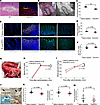 Figure 5
Functional analyses of the regenerated intestine 4 weeks after RITx. (A) H&E and immunofluorescence images (CD31/αSMA) in the regenerated intestine 4 weeks after RITx. (B) Intraoperative ICG fluorescence imaging of the regenerated intestine. (C) Fluorescence intensity of the native and regenerated intestine. n = 3 for each group. (D) Immunofluorescence images showing the expression of LYVE-1, sucrase-isomaltase, SGLT1, and GLUT2 of the native and regenerated intestine. Scale bars: 200 μm (sucrase-isomaltase) and 100 μm (LYVE-1, SGLT1, and GLUT2). (E) The ratio of central lacteal length to villus length per field of view. n = 5 for each group. (F) The number of GLUT2+ cells per 100 μm of villus. n = 5 for each group. (G) The in vivo absorption test. (H) The blood FHA level in the regenerated and native intestines after injection. (I) The blood glucose level in the regenerated and native intestines after injection. (J) The ex vivo absorptive test. (K) The venous flow of the regenerated and native intestines. n = 5 for each group. (L) The FHA levels in the perfusate from the regenerated and native intestines. n = 5 for each group. (M) The glucose levels in the perfusate from the regenerated and native intestines. n = 5 for each group. Student’s t test (C, E, F, and K–M). A linear mixed-effects model with fixed effects of group, time, and their interaction, and a random effect for individual rats with an AR(1) covariance structure for repeated measures. P values were derived from the fixed effects (H and I). **P < 0.01. αSMA, α-smooth muscle actin; FHA, 6-Fluorescein-5(6)-carboxamido hexanoic acid; GLUT2, glucose transporter 2; ICG, indocyanine green; LYVE-1, lymphatic vessel endothelial hyaluronan receptor-1; RI, regenerated intestine; RITx, regenerated intestinal transplantation; SGLT1, sodium-glucose linked transporter 1; SMA, superior mesenteric artery; SMV, superior mesenteric vein.
We then evaluated the absorption ability of regenerated intestines. Central lacteals identified by LYVE-1 staining were similarly developed in the regenerated and native intestine (Figure 5, D and E). Regarding sugar absorption, sucrase-isomaltase, which is involved in the hydrolysis of disaccharides, sodium-glucose linked transporter 1 (SGLT1), and glucose transporter 2 (GLUT2), were expressed in the regenerated intestine (Figure 5D). The number of GLUT2+ cells in the regenerated intestine was equivalent to that in the native intestine (31.6 ± 1.3 versus 29.6 ± 3.6, P = 0.283, n = 5) (Figure 5F).
We conducted in vivo evaluations of the absorption capacity. Both ends of the regenerated intestine 4 weeks after RITx were identified and clamped (Figure 5G). We injected 850 μM fluorescence-labeled medium-chain fatty acids [6-Fluorescein-5(6)-carboxamido hexanoic acid; FHA] and 25% glucose into the regenerated intestinal lumen and evaluated blood levels. FHA was absorbed via passive diffusion from the gastrointestinal tract to the capillaries without passing through the lymph vessels (13, 35). Blood FHA and glucose levels significantly increased in a time-dependent manner after the injection in both the regenerated (P < 0.001 and P < 0.001, respectively) and native intestines (P = 0.006 and P < 0.001, respectively) (Figure 5, H and I). There was no significant difference in the blood levels between the 2 groups (Figure 5, H and I). These results indicate that the regenerated intestine after RITx had absorptive capability similar to that of the native intestine.
In vivo experiments might be affected by circulating blood volume and glucose tolerance in individual rats. Therefore, we conducted ex vivo absorption tests to verify the absorptive capability of the grafts. After removal of regenerated or native intestines with the superior mesenteric artery (SMA) and superior mesenteric vein (SMV), FHA and glucose were injected into the intestinal lumen. Ex vivo perfusion was performed via the SMA and the perfusate was collected from the SMV (Figure 5J). There was no significant difference in the venous flow between the regenerated and native intestines (0.9 ± 0.1 mL/min versus 1.0 ± 0.1 mL/min, P = 0.068, n = 5) (Figure 5K), and almost all perfused liquid was collected, suggesting no major leakage from the removed intestines and vessels. No significant difference was found in the FHA (0.23 ± 0.03 nmol/cm/min versus 0.25 ± 0.05 nmol/cm/min, P = 0.469, n = 5) and glucose levels (1.0 ± 0.9 μmol/cm/min versus 1.6 ± 1.5 μmol/cm/min, P = 0.488, n = 5) between the regenerated and native intestines (Figure 5, L and M). These results show that the absorptive capability of the regenerated intestine post-RITx was comparable with that of the native intestine.
Evaluations of peristalsis. Both ends of the intestines were fixed to connectors, and their peristalsis was recorded. Horizontal movement of the grafts was analyzed to create a time-displacement plot. We confirmed that the native intestine exhibited normal peristalsis and that the decellularized intestine showed no peristalsis (Figure 6, A and B, and Supplemental Video 2). While the regenerated intestine 4 weeks after DITx showed extremely weak peristalsis, the regenerated intestine 4 weeks after RITx exhibited periodic peristaltic waves, similarly to those of the native intestine. We confirmed that the antegrade peristaltic waves propagated from the proximal to the distal side (Figure 6, C and D, and Supplemental Video 2). Thus, the regenerated intestine possesses motility functions, in addition to its absorptive capacity.
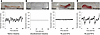 Figure 6
Evaluation of peristalsis. (A–D) Macroscopic images (upper panels) and time-displacement plots (lower panels, x axis: seconds, y axis: horizontal movement of a marked point at the center of the intestine) of intestinal peristalsis. (A) Native intestine. (B) Decellularized intestine. (C) Regenerated intestine 4 weeks after DITx. (D) Regenerated intestine 4 weeks after RITx. n = 3 for each group. The right end represents the proximal side and the left end the distal side. The waveforms were created from a representative example (Supplemental Video 2). The plots depict spatiotemporal displacement of a single tracked point. DI, decellularized intestine; DITx, decellularized intestinal transplantation; RI, regenerated intestine; RITx, regenerated intestinal transplantation.
Nutritional status evaluations after RITx in SBS model rats. To explore the therapeutic effects of autogenic-regenerated intestinal transplantation on intestinal failure, nutritional status was compared among 3 groups in the rat SBS model: the RITx group, in which 3 cm of regenerated intestine 4 weeks after DITx was anastomosed to the duodenum and terminal ileum; the SBS group, in which the entire native intestine was resected; and the control group, in which 3 cm of native intestine was preserved (Figure 7A). One rat in the SBS group died on postoperative day (POD) 18, while the remaining rats survived during the observation period (Supplemental Figure 3). Blood samples were collected on POD 28 to evaluate nutritional markers (Figure 7, B–G). The SBS group exhibited significantly lower levels of total protein (P = 0.004), albumin (P = 0.025), prealbumin (P = 0.008), cholinesterase (P = 0.029), and citrulline (P = 0.015) compared with the control group, indicating compromised nutritional status. The total protein levels in the RITx group were significantly lower than those in the control group (P = 0.037), whereas they were significantly higher than those in the SBS group (P = 0.004) (Figure 7B). Although albumin and prealbumin levels tended to increase in the order of SBS, RITx, and control groups, the differences were not statistically significant (Figure 7, C and D). Choline-esterase and total cholesterol levels also tended to increase in the same order (Figure 7, E and F). Citrulline, which is produced mainly in the small intestine, is considered a crucial marker for the functional size of the small intestine in patients with SBT (36–38). The RITx group exhibited significantly higher citrulline levels than the SBS group (P = 0.043), and the levels were comparable with those in the control group (P = 0.818) (Figure 7G). These findings validated the SBS model, as the SBS group exhibited significantly poorer nutritional status compared with the control group. Furthermore, the RITx group demonstrated improved nutritional parameters compared with the SBS group, indicating the therapeutic potential of regenerated intestinal transplantation.
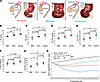 Figure 7
Nutritional status evaluations after RITx in disease models. (A) Schematic illustrations and intraoperative images of the 3 groups. In the RITx group (left), the entire native intestine was resected, and 3 cm of regenerated intestine was anastomosed between the duodenum and terminal ileum. In the SBS group (middle), the entire native intestine was resected, and the duodenum was anastomosed directly to the terminal ileum. In the control group (right), 3 cm of native intestine was preserved, and the remaining intestine was resected. Nutritional markers in blood samples from each group on postoperative day (POD) 28. n = 5 for each group. (B) Total protein. (C) Albumin. (D) Prealbumin. (E) Cholinesterase. (F) Total cholesterol. (G) Citrulline. (H) Changes in the body weight loss rate (body weight/body weight on POD 0). One-way ANOVA followed by Tukey’s (HSD) test (B–G). A linear mixed-effects model with fixed effects of group, time, and their interaction, and a random effect for individual rats with an AR(1) covariance structure was used, followed by Tukey’s HSD test for post hoc pairwise comparisons (H). *P < 0.05, **P < 0.01, ***P < 0.001. Alb, albumin; Ch-E, cholinesterase; POD, postoperative day; Pre Alb, prealbumin; RI, regenerated intestine; RITx, regenerated intestinal transplantation; SBS, short bowel syndrome; T-Cho, total cholesterol; TP, total protein.
Postoperative body weight loss rates were evaluated among the 3 groups. Although all rats experienced postoperative weight loss, the control group began to recover by postoperative week 3, and their weight continued to increase thereafter (Figure 7H). In contrast, the SBS group exhibited progressive weight loss for more than 2 weeks postoperatively, with no signs of recovery (Figure 7H). The SBS group exhibited a significantly greater body weight loss compared with the control group (P < 0.001). Notably, although the weight in the RITx group did not recover to the preoperative level, their weight loss plateaued around POD 7 and the weight continued to increase slowly (Figure 7H). Although the RITx group also tended to have greater weight loss than the control group (P = 0.186), the loss was significantly less than that observed in the SBS group (P = 0.020). These results further validated the SBS model and demonstrated the therapeutic benefit of regenerated intestinal transplantation, as reflected by the degree of weight loss — a key indicator of overall nutritional status.
Long-term outcomes after RITx. Three rats that underwent RITx were observed for 12 weeks to evaluate the long-term outcomes following autogenic-regenerated intestinal transplantation. No complications were observed during the postoperative course of these rats. Body weight continued to increase and was restored to the preoperative weight between 5 and 9 weeks (Figure 8A). The regenerated intestine was well developed, without malignant tumors or other intestinal disorders (Figure 8B). H&E staining of the regenerated intestine at 12 weeks after RITx showed that the villus length was significantly longer than that observed at 4 weeks after RITx (968 ± 26.0 μm versus 730 ± 48.9 μm, P = 0.013, n = 3) (Figure 8, C–E).
 Figure 8
Long-term outcomes in the RITx group. (A) Changes in the body weight loss rate (body weight/POD 0 body weight) in 3 rats with RITx for 12 weeks. (B) Macroscopic findings of the regenerated intestine at 12 weeks after RITx. Scale bar: 1 cm. (C and D) H&E staining of the regenerated intestine. Scale bars: 1000 μm (C) and 200 μm (D). (E) Villus length of regenerated intestine 4 and 12 weeks after RITx. n = 3 for each group. Student’s t test (D). *P < 0.05. POD, postoperative day; RI, regenerated intestine; RITx, regenerated intestinal transplantation.


