
Gastroenterology
Abstract
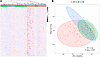
BACKGROUND Elucidating immune signals through well-defined cohorts of pediatric acute pancreatitis (AP) and chronic pancreatitis (CP) patients is critical. This study aimed to evaluate plasma chemokine and cytokine levels in pediatric participants with CP, compared with AP and healthy controls (HCs), to identify unique biomarkers of CP.METHODS Individuals were identified from a prospectively collected pediatric cohort (n = 146). Immunoproteins (n = 247) were measured using the NULISAseq platform on samples from individuals with CP (n = 71), AP (n = 55), and HCs (n = 20).RESULTS The measured analytes showed separation among the 3 groups (R2 = 0.13, P < 0.001). In the CP group, TRANCE, TWEAK, FLT-1, HGF, and TRAIL were increased when compared with HC and AP patients (FDR-corrected P <0.05). A multivariable logistic regression model including all 5 proteins provided an AUC of 0.94 (0.93–0.96) for differentiating samples from CP versus AP or HC samples. In the AP group, CRP, IL-6, CD3E, ENRAGE, and MIF were elevated compared with HCs, while FGF-2, TAFA-5, IL-33, TRANCE, and CXCL12 were downregulated in the same acute time period (FDR-corrected P < 0.05). In the 21 patients with AP for whom follow-up samples were obtained, there was a notable decrease in sequential expression of IL-6 and CRP over 12 months and increased expression of CCL25, TAFA-5, and TRANCE proteins. Additionally, TRANCE was expressed on CP pancreatic tissue.CONCLUSIONS TRANCE was increased in pediatric patients with CP and decreased in those with AP during a flare. Future studies are needed to investigate the role of TRANCE and other analytes in the pathogenesis of CP.
Authors
Peter R. Farrell, Bomi Lee, Faizan Ahmed, Maria E. Moreno-Fernandez, Ajay Dixit, Juan Pablo Gurria, Nicholas J. Ollberding, Qing Duan, Vineet Garlapally, Phoebe Christian, Sohail Z. Husain, Maisam Abu-El-Haija
Abstract
Authors
Ewa A. Ziółkowska, Letitia L. Williams, Elizabeth M. Eultgen, Grace R. Kick, Xukai Ding, Alexander Sorensen, Steven Q. Le, Balraj Doray, Patricia I. Dickson, Robert O. Heuckeroth, Jonathan D. Cooper
Abstract
Systemic sclerosis (SSc) is a rare autoimmune disease characterized by vasculopathy and fibrosis of the skin and internal organs. Individuals with SSc often suffer from chronic acid reflux and dysphagia due to loss of esophageal motility. However, the pathogenesis of esophageal dysmotility in SSc is poorly understood. To determine whether distinct changes in esophageal epithelial cells contribute to esophageal involvement in SSc, we investigated the stratified squamous esophageal epithelium from proximal and distal biopsies using single-cell RNA sequencing (n=306,372 cells) in individuals with SSc compared those with gastroesophageal reflux disease (GERD) and healthy controls. The proportion of epithelial cells in the apical, superficial compartment of the esophageal epithelium was reduced in SSc (9.4% vs 21.6% in HCs). Differential gene expression in SSc was primarily limited to the superficial compartment (3,572 genes vs. 232 in all other compartments, based on pseudobulk analysis), with significant upregulation of extracellular matrix and keratinization genes. These cellular and molecular changes in SSc were highly correlated with those seen in GERD, indicating they were secondary to reflux; however, their magnitudes were more pronounced in the proximal esophagus, suggesting that esophageal dysmotility leads to greater proximal acid exposure, which may contribute to aspiration. SSc-specific gene dysregulation implicated immunoregulatory pathways likely pertinent to pathogenic mechanisms. Ligand-receptor interaction analysis revealed enhanced pro-fibrotic signaling between fibroblasts and epithelial cells in SSc. Cell type localization and SSc-specific changes were confirmed by spatial molecular imaging. By offering a comprehensive view of transcriptional dysregulation at single-cell resolution in human esophageal epithelial cells in SSc compared to GERD and healthy tissue, this work clarifies the state of epithelial cells in SSc-induced esophageal dysfunction.
Authors
Matthew Dapas, Margarette H. Clevenger, Hadijat-Kubura M. Makinde, Tyler Therron, Dustin A. Carlson, Mary Carns, Kathleen Aren, Cenfu Wei, Kainat Mian, Lutfiyya N. Muhammad, Carrie L. Richardson, Parambir S Dulai, Monique Hinchcliff, John E. Pandolfino, Harris R. Perlman, Deborah R. Winter, Marie-Pier Tetreault
Abstract
Authors
Tara L Hogenson, William Phillips, Merih D Toruner, Zachry S. Poshusta, Luciana Almada, Hao Xie, Ryan M. Carr, Jenny J. Li, David L. Marks, Renzo Vera, Erik Jessen, Michael Barrett, Joleen Hubbard, Travis E. Grotz, Martin E. Fernandez-Zapico
Abstract
Inflammatory bowel disease (IBD), encompassing ulcerative colitis (UC) and Crohn’s disease (CD), is marked by chronic intestinal inflammation and dysregulated immunity. Although UC and CD affect different areas of the gastrointestinal tract, both diseases share aberrant CD4+ memory T cell responses, with HLA-DRB1 as a major genetic risk factor. HLA-DRB1 encodes MHC class II molecules that influence the CD4+ T cell receptor (TCR) repertoire, yet how these genotypes shape TCR specificity in IBD remains unclear. Here, we genotyped HLA-DRB1 and profiled 3.13 million TCRb sequences from circulating memory CD4+ T cells in 33 IBD patients (20 UC, 13 CD) and 14 healthy controls. Using the GLIPH2 algorithm, we distilled 468,441 candidates based on CDR3 amino acid motifs into 440 high-confidence TCR specificity groups significantly enriched among individuals sharing HLA-DRB1 alleles. Notably, five specificity groups were IBD-enriched and shared between UC and CD, suggesting common antigen targets in both diseases. We also observed increased frequencies of clonally expanded cytotoxic GZMB+PRF1+ memory CD4+ T cells and KIRs+CD8+ T cells in a subset of risk-allele carriers with IBD. These findings elucidate distinct, HLA-linked TCR specificity groups in IBD and provide mechanistic insights that may advance antigen discovery and personalized medicine.
Authors
Joshua E. Chan, Azam Mohsin, Jens Krijgsman, Ciska Lindelauf, Qinghui Mu, Brianna Cavalla, Xuhuai Ji, Sarah E. Streett, Vincent van Unen, Mark M. Davis
Abstract
Small bowel transplantation (SBT) is the only curative treatment for intestinal failure due to short bowel syndrome (SBS); however, the 10-year graft survival rate after SBT remains below 50%. Therefore, alternative treatments are required. We developed a new therapeutic strategy for intestinal failure involving in vivo intestinal regeneration using a decellularized scaffold in a rat model. A 3-cm segment of decellularized small intestine was anastomosed to the jejunum for in vivo regeneration. After four weeks of regeneration, the entire native intestine was resected to induce SBS, and the regenerated intestine was transplanted into the same rat. Histological analysis revealed regeneration of mucosa, nerves, muscular layer, and crypts, consistent with autologous cell infiltration. An indocyanine green test confirmed blood flow from the adjacent mesentery into the regenerated intestine. The regenerated intestine exhibited absorption of nutrients in vivo, and ex vivo assessments confirmed peristalsis and absorptive capacity comparable to native intestine. Transplantation of the regenerated intestine significantly improved postoperative nutritional status in SBS rats. Our method, autogenic-regenerated intestinal transplantation, showed the therapeutic potential for intestinal failure. This is the first study to demonstrate a functionally integrated regenerated intestine, providing a foundation for future regenerative therapy.
Authors
Kentaro Iwaki, Takamichi Ishii, Hidenobu Kojima, Fumiaki Munekage, Hiroshi Horie, Kenta Makino, Takuma Karasuyama, Yusuke Hanabata, Elena Yukie Uebayashi, Satoshi Ogiso, Etsuro Hatano
Abstract
Antibody production by B cells has emerged as an important factor in regulating anti-tumor immunity with both suppressive and promotive roles in cancer. However, the specific impact of antibody deficiency during development of pancreatic ductal adenocarcinoma (PDAC) has not been explored. To address this question, we crossed the well-established KPC mouse model to mice lacking all circulating immunoglobulin (Ig) due to genetic ablation of both Ig secretion and Ig class switching (KPC-μSAID mice). KPC-μSAID mice exhibited a two-fold acceleration in tumor formation, a two-fold reduction in median survival, and increased liver metastases versus KPC-WT control mice. Immunofluorescence analysis of pancreatic tissues from antibody-sufficient KC- and KPC-WT mice showed that IgG was predominantly localized within extracellular matrix (ECM). Furthermore, in both KC- and KPC-μSAID mice, ECM density and podoplanin+ cancer-associated fibroblasts (CAFs) were significantly reduced. In the KPC-μSAID tumor microenvironment (TME), intratumoral myeloid-derived suppressor cells (MDSC) were also increased, while CD4+ and CD8+ T cells decreased, relative to tumor-bearing KPC-WT mice, with macrophage exhibiting a mixed polarization phenotype. These findings were recapitulated in antibody-subclass-deficient, KPC-AID mice, suggesting a potentially novel function of IgG in suppressing PDAC progression, by directly or indirectly regulating pancreatic fibrosis and the density of the ECM.
Authors
Jeremy B. Foote, Sujith Sarvesh, Sameer Al Diffalha, David K. Crossman, Changde Cheng, Myng-Hee Kim, Cherlene Hardy, Julienne L. Carstens, Kyoko Kojima, Bart J. Rose, Christopher A. Klug
Abstract
BACKGROUND. Asparaginase is essential for curing acute lymphoblastic leukemia (ALL), but its use is limited by asparaginase-associated pancreatitis (AAP), a severe and unpredictable toxicity lacking validated prospective biomarkers. We sought to define early systemic molecular features of susceptibility to AAP. METHODS. We performed longitudinal lipidomic and proteomic profiling in two independent pediatric ALL cohorts (n = 161; 79 AAP cases, 82 controls) using paired blood samples collected before asparaginase exposure and at the end of induction therapy (including a single dose of asparaginase), thereby capturing pre-injury biology rather than consequences of pancreatitis. We applied differential abundance and network-based analyses, and integrated lipid–cytokine associations using proteomics. RESULTS. Across cohorts, we identified a reproducible lysophosphatidylcholine (LPC)–centered signature characterized by attenuated induction therapy-associated LPC responses and disruption of LPC co-regulation at the network level. Proteomic profiling revealed enrichment of cytokine signaling pathways, and integrative analyses demonstrated altered lipid–cytokine coupling, including a flip in association direction for LPC species and interleukin-18 (IL-18) between cases and controls. Although IL-18/LPC ratios do not differ globally, elevated post-induction IL-18/LPC ratios identify AAP risk within a protocol-defined very high-risk ALL subgroup (AUC = 0.81). CONCLUSION. These findings support a systems-level model in which failure of coordinated lipid–immune responses under therapeutic stress confers vulnerability to AAP, providing a framework for validation and mitigation strategies. TRIAL REGISTRATION. NCT00400946; NCT01574274; NCT03020030 (parent trials). FUNDING. Servier Pharmaceuticals (IIT-95014-027-USA); SDRC (P30DK116074); Stanford SPARK; Fonds de Recherche du Québec – Santé; Fondation Charles-Bruneau; The Leukemia & Lymphoma Society of Canada.
Authors
Cheng-Yu Tsai, Na Bo, Thai Hoa Tran, Maisam Abu-El-Haija, Gayathri Swaminathan, Bomi Lee, Sudhir Ghandikota, Li Wen, Yves Théorêt, Steven D. Mittelman, Elena J. Ladas, Anil G. Jegga, Lewis B. Silverman, Ying Ding, Sohail Z. Husain
Abstract
Eosinophilic esophagitis (EoE) is a type 2 allergic disease characterized by esophageal inflammation and epithelial cell dysfunction. The acquired loss of the anti-serine protease of kazal type 7 (SPINK7) in the squamous epithelium of the esophagus has a causal role in EoE pathogenesis. Yet there is a limited understanding of the factors that regulate its expression and responsiveness to inflammatory stimuli. Herein, we have identified the transcription factor, ovo like transcriptional repressor 1 (OVOL1) as an esophageal selective gene product that regulates SPINK7 promoter activity. Overexpression of OVOL1 increased SPINK7 expression, whereas its depletion decreased SPINK7 expression, impaired epithelial barrier and increased production of the pro-atopy cytokine thymic stromal lymphopoietin (TSLP). Stimulation with IL-13 abrogated the nuclear translocation of OVOL1 and promoted enhanced degradation of OVOL1 protein. This effect of IL-13 was dependent on the esophageal specific cysteine protease calpain-14 at least in part. Analysis of human esophageal biopsies demonstrated that the expression of esophageal OVOL1 correlated with SPINK7 transcript expression and was lost as a function of EoE disease activity. In summary, our study identifies key regulatory mechanisms in EoE pathogenesis, demonstrating that OVOL1 promotes SPINK7 transcription, whereas IL-13 suppresses this pathway in EoE.
Authors
Nurit P. Azouz, Andrea M. Klingler, Sierra S. Beach, Kalen A. Rossey, Mark Rochman, Misu Paul, Julie M. Caldwell, Michael Brusilovsky, Alexander T. Dwyer, Xiaoting Chen, Daniel Miller, Carmy Forney, Leah C. Kottyan, Matthew T. Weirauch, Marc E. Rothenberg
Abstract
Inflammatory bowel disease (IBD) is frequently accompanied by intestinal fibrosis, with non-response (NR) to long-term anti-tumor necrosis factor α (anti-TNFα) therapy occurring in approximately 23-46% of patients. Integrated analysis of single-cell and bulk RNA sequencing datasets revealed an expansion of IL11⁺ fibroblasts in inflamed intestine and their significant enrichment in non-responders. We further identified IL11⁺ fibroblasts as a central communication hub that engaged in extensive crosstalk with monocytes and may contribute to inflammatory amplification and fibrotic remodeling. Additionally, we employed machine learning approaches including least absolute shrinkage and selection operator (LASSO), support vector machines (SVM), and random forest (RF) to derive an IL11⁺ fibroblast-related gene signature effectively predicting NR to anti-TNFα in validation and test cohorts. IHC further confirmed the overexpression of IL-11 in non-responders. The signature genes we found are not only associated with immune and inflammatory responses but also with fibrosis, indicating a robust association between fibrosis and anti-TNFα treatment failure. In summary, this study highlights the important role of IL11⁺ fibroblasts in orchestrating both inflammation and fibrosis and provides an applicable model for predicting NR to anti-TNFα in IBD, thereby laying the foundation for precision medicine and targeted therapeutic strategies.
Authors
Wangyue Li, Wei Huang, Jiaxin Wang, Yiwen Tu, Qidi Yang, Yao Zhou, Zile Zhang, Haiming Zhuang, Yubei Gu, Duowu Zou, Yao Zhang
No posts were found with this tag.


