
Research ArticleGastroenterologyGeneticsMetabolism
Open Access |  10.1172/jci.insight.198133
Agnostic polygenic prediction of weight loss after bariatric surgery
Bastien Vallée Marcotte,1,2 Juan de Toro-Martín,1,2 André Tchernof,1,2,3 Louis Pérusse,1,4 Simon Marceau,3,5 and Marie-Claude Vohl1,2
1Centre Nutrition, santé et société (NUTRISS) - Institut sur la nutrition et les aliments fonctionnels (INAF),
2School of Nutrition,
3Quebec Heart and Lung Institute Research Centre,
4Department of Kinesiology, Faculty of Medicine, and
5Department of Surgery, Faculty of Medicine, Université Laval, Quebec City, Quebec, Canada.
Address correspondence to: Marie-Claude Vohl, Centre NUTRISS, 2440 Hochelaga Blvd., Quebec City, Quebec, G1V 0A6, Canada. Phone: 418.656.2131 ext. 404676; Email: marie-claude.vohl@fsaa.ulaval.ca.
Authorship note: BVM and JDTM have been designated as co–first authors.
Find articles by Vallée Marcotte, B. in: PubMed | Google Scholar
1Centre Nutrition, santé et société (NUTRISS) - Institut sur la nutrition et les aliments fonctionnels (INAF),
2School of Nutrition,
3Quebec Heart and Lung Institute Research Centre,
4Department of Kinesiology, Faculty of Medicine, and
5Department of Surgery, Faculty of Medicine, Université Laval, Quebec City, Quebec, Canada.
Address correspondence to: Marie-Claude Vohl, Centre NUTRISS, 2440 Hochelaga Blvd., Quebec City, Quebec, G1V 0A6, Canada. Phone: 418.656.2131 ext. 404676; Email: marie-claude.vohl@fsaa.ulaval.ca.
Authorship note: BVM and JDTM have been designated as co–first authors.
Find articles by de Toro-Martín, J. in: PubMed | Google Scholar
1Centre Nutrition, santé et société (NUTRISS) - Institut sur la nutrition et les aliments fonctionnels (INAF),
2School of Nutrition,
3Quebec Heart and Lung Institute Research Centre,
4Department of Kinesiology, Faculty of Medicine, and
5Department of Surgery, Faculty of Medicine, Université Laval, Quebec City, Quebec, Canada.
Address correspondence to: Marie-Claude Vohl, Centre NUTRISS, 2440 Hochelaga Blvd., Quebec City, Quebec, G1V 0A6, Canada. Phone: 418.656.2131 ext. 404676; Email: marie-claude.vohl@fsaa.ulaval.ca.
Authorship note: BVM and JDTM have been designated as co–first authors.
Find articles by
Tchernof, A.
in:
PubMed
|
Google Scholar
|

1Centre Nutrition, santé et société (NUTRISS) - Institut sur la nutrition et les aliments fonctionnels (INAF),
2School of Nutrition,
3Quebec Heart and Lung Institute Research Centre,
4Department of Kinesiology, Faculty of Medicine, and
5Department of Surgery, Faculty of Medicine, Université Laval, Quebec City, Quebec, Canada.
Address correspondence to: Marie-Claude Vohl, Centre NUTRISS, 2440 Hochelaga Blvd., Quebec City, Quebec, G1V 0A6, Canada. Phone: 418.656.2131 ext. 404676; Email: marie-claude.vohl@fsaa.ulaval.ca.
Authorship note: BVM and JDTM have been designated as co–first authors.
Find articles by
Pérusse, L.
in:
PubMed
|
Google Scholar
|
1Centre Nutrition, santé et société (NUTRISS) - Institut sur la nutrition et les aliments fonctionnels (INAF),
2School of Nutrition,
3Quebec Heart and Lung Institute Research Centre,
4Department of Kinesiology, Faculty of Medicine, and
5Department of Surgery, Faculty of Medicine, Université Laval, Quebec City, Quebec, Canada.
Address correspondence to: Marie-Claude Vohl, Centre NUTRISS, 2440 Hochelaga Blvd., Quebec City, Quebec, G1V 0A6, Canada. Phone: 418.656.2131 ext. 404676; Email: marie-claude.vohl@fsaa.ulaval.ca.
Authorship note: BVM and JDTM have been designated as co–first authors.
Find articles by
Marceau, S.
in:
PubMed
|
Google Scholar
|
1Centre Nutrition, santé et société (NUTRISS) - Institut sur la nutrition et les aliments fonctionnels (INAF),
2School of Nutrition,
3Quebec Heart and Lung Institute Research Centre,
4Department of Kinesiology, Faculty of Medicine, and
5Department of Surgery, Faculty of Medicine, Université Laval, Quebec City, Quebec, Canada.
Address correspondence to: Marie-Claude Vohl, Centre NUTRISS, 2440 Hochelaga Blvd., Quebec City, Quebec, G1V 0A6, Canada. Phone: 418.656.2131 ext. 404676; Email: marie-claude.vohl@fsaa.ulaval.ca.
Authorship note: BVM and JDTM have been designated as co–first authors.
Find articles by
Vohl, M.
in:
PubMed
|
Google Scholar
|
Published March 23, 2026 - More info
JCI Insight. 2026;11(9):e198133. https://doi.org/10.1172/jci.insight.198133.
© 2026 Marcotte et al. This work is licensed under the Creative Commons Attribution 4.0 International License. To view a copy of this license, visit http://creativecommons.org/licenses/by/4.0/.
Received: July 28, 2025; Accepted: March 10, 2026

-
Results
Subject characteristics. The study population before participant exclusion consisted of 565 participants (Supplemental Table 1; supplemental material available online with this article; https://doi.org/10.1172/jci.insight.198133DS1). Baseline characteristics of the 540 participants finally included in the analyses are presented in Table 1. The study population consisted of 150 men and 390 women. The majority of participants (96.1%) had class 3 obesity, with a mean BMI of 50.2 ± 7.1. Follow-up data on %EBWL were available for the majority of participants across multiple postoperative time points, with high data completeness over the 7-year follow-up period. Most of the participants had 5 or more follow-up time points (n = 495; 91.7%).
Weight loss response. Participants showed varying weight loss responses to bariatric surgery, with a mean %EBWL at the end of the follow-up period of 83.5%, ranging from 30.3% to 134.8% (Table 1 and Figure 1A). Three weight loss trajectory clusters were identified in the study population using the R latrend package, with 262 participants (48.5%) being classified as average responders (74.7 ± 6.0 %EBWL), 168 (31.1%) as high responders (91.2 ± 8.9 %EBWL), and 110 (20.4%) as low responders (56.2 ± 6.9 %EBWL), with mean posterior probabilities of 0.96, 0.92, and 0.93, respectively (Figure 1B).
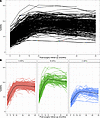 Figure 1
Weight loss trajectories following biliopancreatic diversion with duodenal switch. (A) Longitudinal profile of excess body weight loss (%EBWL) during the postsurgery follow-up period for each of the 540 participants of the study. (B) Subgroups stand for clusters of participants depending on their weight loss trajectories (low, average, and high) based on %EBWL.
A total of 50.2% of the explained variance of %EBWL was attained with the 24 parameters of R traj data (Figure 2A). The mean-over-time %EBWL parameter, hereafter referred to as mean %EBWL, was the measurement better describing the weight loss trajectory clusters (Figure 2A), showing the highest loading weight, and was significantly different among the 3 weight loss trajectory clusters (PANOVA < 0.001) (Figure 2B). Post hoc analysis with Tukey’s honestly significant difference (HSD) test showed significant differences between average and low responders (18.7%, 95% CI = 16.8–20.7, PTukey < 0.001), as well as between the average and high responders (16.6%, 95% CI = 14.9–18.3, PTukey < 0.001). The mean %EBWL difference was greater between low and high responders (35.4%, 95% CI = 33.3–37.5, PTukey < 0.001). The %EBWL at the end of the follow-up period, hereafter referred to as end %EBWL, was also significantly different among the 3 weight loss trajectory clusters (PANOVA < 0.001) (data not shown). These significant differences were observed between the average and the low cluster (23.7%, 95% CI = 20.1–27.4, PTukey < 0.001); between the average and the high cluster (16.7%, 95% CI = 13.2–20.2; PTukey < 0.001), as well as between the low and the high cluster (40.5%, 95% CI = 36.4–44.5, PTukey < 0.001).
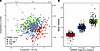 Figure 2
Partial least squares–discriminant analysis (PLS-DA) of excess body weight loss (%EBWL) trajectory parameters. (A) Score plot showing the separation of participants based on the 24 longitudinal trajectory parameters derived from the traj analysis, with the percentage of variance explained by the first 2 components. Points are colored according to %EBWL trajectory clusters (low, average, and high). m2 stands for mean-over-time %EBWL (mean %EBWL). (B) Distribution of mean %EBWL values across the 3 trajectory clusters. Box-and-whisker plots represent the median and interquartile range, with individual data points overlaid.
Figure 2Partial least squares–discriminant analysis (PLS-DA) of excess body weight loss (%EBWL) trajectory parameters. (A) Score plot showing the separation of participants based on the 24 longitudinal trajectory parameters derived from the traj analysis, with the percentage of variance explained by the first 2 components. Points are colored according to %EBWL trajectory clusters (low, average, and high). m2 stands for mean-over-time %EBWL (mean %EBWL). (B) Distribution of mean %EBWL values across the 3 trajectory clusters. Box-and-whisker plots represent the median and interquartile range, with individual data points overlaid.
Model performance. The predictive performance of the null linear model including age, sex, presurgery BMI, type of surgery, and 10 principal components of population structure, but not including PGS, was able to explain 38.5% of mean %EBWL and 18.4% of end %EBWL (data not shown). The inclusion of the PGS constructed in our study population significantly increased the explained variance of mean %EBWL.
First, the inclusion of the PGS constructed in the full cohort and based on the BMI GWAS (PGSBMI) significantly increased the explained variance of the mean %EBWL by 1.06% (P = 0.003), as well as of the end %EBWL by 1.23% (P = 0.030) (Figure 3, A and B). Second, the inclusion of the PGS constructed in the training dataset (PGSTRAIN) also significantly increased the explained variance of mean %EBWL (1.09%; P = 0.034), but not of end %EBWL (1.54%; P = 0.087) (Figure 3, A and B). The PGS, constructed for the entire population using a cross-sectional BMI GWAS from an independent cohort of 322,154 individuals (PGSLOCKE), explained an additional 0.78% of the variance in mean %EBWL (P = 0.01) and 2.23% in end %EBWL (P = 0.003) (Figure 3, A and B). Significant results were also obtained when including in the model a PGS constructed in an independent cohort of longitudinal BMI follow-up from birth to 18 years with the same cross-sectional BMI GWAS summary results (PGSKHERA). A significant increase of 0.61% (P = 00.02) was observed for mean %EBWL and of 1.08% (P = 00.04) for end %EBWL (Figure 3, A and B). No significant increase in mean %EBWL or end %EBWL was observed after the inclusion of PGS constructed with summary results from GWAS on visceral (PGSVAT), subcutaneous (PGSASAT), or gluteofemoral (PGSGFAT) adipose tissue depots (Figure 3, A and B).
 Figure 3
Increase in the explained variance of excess body weight loss (%EBWL) after the inclusion of polygenic risk scores (PGS). (A) Shows the incremental explained variance (ΔR2) for the mean-over-time %EBWL (mean %EBWL), while (B) shows the ΔR2 for %EBWL at the end of follow-up (end %EBWL). Points represent ΔR2 estimates from multivariable models, adjusted by age, sex, type of surgery, presurgery BMI, and 10 principal components of population structure. Vertical lines indicate 95% CIs derived from 1,000 bootstrap resamples. P values correspond to the significance of each PGS when added to the base model.
Figure 3Increase in the explained variance of excess body weight loss (%EBWL) after the inclusion of polygenic risk scores (PGS). (A) Shows the incremental explained variance (ΔR2) for the mean-over-time %EBWL (mean %EBWL), while (B) shows the ΔR2 for %EBWL at the end of follow-up (end %EBWL). Points represent ΔR2 estimates from multivariable models, adjusted by age, sex, type of surgery, presurgery BMI, and 10 principal components of population structure. Vertical lines indicate 95% CIs derived from 1,000 bootstrap resamples. P values correspond to the significance of each PGS when added to the base model.
The linear relationship of the PGS showing a significant impact on %EBWL variance explanation (PGSBMI, PGSTRAIN, PGSLOCKE, and PGSKHERA) were further tested for mean and end %EBWL. As shown in Figure 4, all the analyzed PGS showed a significant and negative association with both mean and end %EBWL, except for PGSTRAIN with end %EBWL (P = 00.085). The relationship was consistently stronger for mean %EBWL (r2 ≈ 0.4) than for last recorded %EBWL (r2 ≈ 0.2), together with a higher degree of data completeness for mean %EBWL (540/540; 100%), as compared with last recorded %EBWL (328/540; 60%).
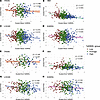 Figure 4
Linear relationship between polygenic risk scores (PGS) and excess body weight loss (%EBWL). (A–D) Associations with mean-over-time %EBWL (mean %EBWL), and (E–H) associations with %EBWL at the end of follow-up (end %EBWL). Panels represent individual PGS: (A and E) PGSTRAIN, (B and F) PGSBMI, (C and G) PGSLOCKE, and (D and H) PGSKHERA. Points represent individual participants and are colored according to %EBWL response group (low, average, and high). Solid lines indicate fitted linear regression models adjusted for age, sex, presurgery BMI, surgery type, and the first 10 principal components of population structure, with shaded areas denoting 95% CIs. Reported r2 and P values correspond to the association between each PGS and %EBWL.
Figure 4Linear relationship between polygenic risk scores (PGS) and excess body weight loss (%EBWL). (A–D) Associations with mean-over-time %EBWL (mean %EBWL), and (E–H) associations with %EBWL at the end of follow-up (end %EBWL). Panels represent individual PGS: (A and E) PGSTRAIN, (B and F) PGSBMI, (C and G) PGSLOCKE, and (D and H) PGSKHERA. Points represent individual participants and are colored according to %EBWL response group (low, average, and high). Solid lines indicate fitted linear regression models adjusted for age, sex, presurgery BMI, surgery type, and the first 10 principal components of population structure, with shaded areas denoting 95% CIs. Reported r2 and P values correspond to the association between each PGS and %EBWL.
Classification accuracy. The ability of a PGS to correctly classify participants according to its expected mean %EBWL subgroup was finally tested with the PGS expressed into quintiles. Among the PGS constructed in our study population, PGSTRAIN did not show a significant association (P = 0.336) (Figure 5A, see also Figure 5B), whereas PGSBMI showed a significant association with mean %EWBL (P = 0.003) (Figure 5C). Participants within the fifth PGSBMI quintile, i.e., with a high risk of low %EBWL response, showed a mean %EBWL decrease as compared with those in the first quintile of around 15% (82.4 ± 15.1 vs. 67.5 ± 13.2 %EBWL) (Figure 5C). The proportion of participants within each response subgroup was significantly different according to the first and fifth PGSBMI quintiles (PFisher = 3.1 × 10⁻¹³), with 80% of participants in the fifth quintile being classified as low responders and 57% as average responders, while only 15% was classified as high responders (Figure 5D). The risk ratio (RR) between low and average subgroups was significantly different (RR = 3.4, 95% CI = 1.5–7.7), as well as between low and high subgroups (RR = 9.7, 95% CI = 4.5–20.7). Similar results were obtained with PGSLOCKE, also developed in our study population but with GWAS data from an independent cohort. A significant association was found with mean %EBWL through the PGSLOCKE quintiles (P = 0.019) (Figure 5E, see also Figure 5F), with a mean decrease between the first and the fifth quintile of around 5% (78.9 ± 14.6 vs. 73.6 ± 12.2 %EBWL). The proportion of participants within the highest PGSLOCKE quintile in low- and average-response subgroups was 57%, while it significantly decreased to 32% in the high-response subgroup (PFisher = 0.025), with a significant RR between low- and high-response subgroups (RR = 1.6, 95% CI = 1.1–2.4). Finally, no association between PGSKHERA and mean %EWBL was found (P = 0.147) (Figure 5G, see also Figure 5H).
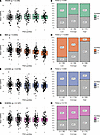 Figure 5
Predictive capacity of polygenic risk scores (PGS) to classify participants according to their excess body weight loss (%EBWL). Left panels show the distribution of mean-over-time %EBWL (mean %EBWL) across quintiles of each PGS, while right panels display the proportion of participants classified into %EBWL response subgroups (low, average, and high) within each PGS quintile category. (A and B) PGSTRAIN. (C and D) PGSBMI. (E and F) PGSLOCKE. (G and H) PGSKHERA. Box-and-whisker plots represent the median and interquartile range, with individual data points overlaid. Stacked bar plots illustrate the percentage of participants within each %EBWL response subgroup. Fisher’s exact test P values assessed differences in response distribution across PGS quintiles.


-
Methods
Sex as a biological variable. This study involved human participants of both sexes. Sex was included as a biological variable in the statistical analyses to account for confounding variables. No sex- or gender-specific analysis or stratification was conducted beyond this adjustment, including during participant selection.
Participant selection. An initial cohort of 565 patients who underwent biliopancreatic diversion with duodenal switch was considered for the present study (11) (Supplemental Table 1). Population structure was assessed by principal component analysis (PCA) using a reference-based approach implemented in bigsnpr, following the previously described bedpca framework (21). Study participants were projected onto principal components derived using external reference populations from the UK Biobank, comprising 21 genetically defined ancestry groups (22). These reference groups were subsequently consolidated into broader ancestry categories corresponding to those observed in the study population (European, South American, East African, and Middle Eastern). The study population was predominantly of European genetic ancestry (558 individuals, 98.7%), with a small number of participants of South American (n = 5, 0.9%), Middle Eastern (n = 1, 0.2%), and East African (n = 1, 0.2%) ancestry (Supplemental Figure 1). To maintain a genetically homogeneous study cohort, participants with non-European ancestry were excluded from further analyses (n = 7). Genetic relatedness was evaluated using the KING-robust kinship estimator implemented in PLINK and applied through the bigsnpr R package. Based on kinship coefficients, 5 pairs of first-degree relatives (kinship coefficient ~0.25) and 1 pair of second-degree relatives (~0.125) were identified, leading to the exclusion of 12 individuals to ensure sample independence. PCA-based outlier detection was subsequently performed using distance and outlierness statistics as described in the bedpca methodology (23) to identify individuals with atypical genetic profiles potentially reflecting genotyping artifacts or population heterogeneity. Six participants exceeding the predefined outlierness threshold were excluded from further analyses (Supplemental Figure 2). After applying relatedness filtering, PCA-based outlier exclusion, and ancestry-based exclusions, a final sample of 540 participants was retained for all statistical analyses (Table 1).
Intervention. The complete intervention was previously described (11). Briefly, all 540 patients presented severe obesity (BMI ≥ 35 kg/m2) and underwent biliopancreatic diversion with duodenal switch between February, 2008 and March, 2015 at the Bariatric Surgery Clinic of the Quebec Heart and Lung Institute. One of the 2 following types of surgery was used for each patient: open surgery or laparoscopy. Fasting blood samples for measurement of metabolic parameters and DNA isolation were taken preoperatively. Height and body weight were measured 1 day prior to surgery. Further body weight measurements were taken during postoperative visits or phone calls for 5 years at time points of 3, 6, 12, 24, 36, 48, and 60 months to track body weight change. %EBWL was then calculated as the ratio between actual weight loss (initial BMI minus time-point BMI) to ideal body weight loss (initial BMI minus ideal BMI, fixed at 25 kg/m2), multiplied by 100. All participants had data for at least 4 of the 7 time points following the surgery. Blood samples for DNA extraction were obtained from the Biobank of the Quebec Heart and Lung Institute according to institutionally approved management modalities.
Clustering. Participants were classified according to their weight loss achievement over 5 years following bariatric surgery. Participant classification into weight loss trajectories was done using a nonparametric trajectory longitudinal k-means (KML) clustering method implemented in the R latrend package (24) and using %EBWL at 6, 12, 18, 24, 36, 48, and 60 months after the bariatric surgery as input parameters. The final number of clusters was chosen based on BIC minimization while keeping mean posterior probabilities over 0.90. The R traj package v1.3.1 (25) was used to calculate 24 measures describing the features of the longitudinal trajectories. A PLS-DA implemented in mixOmics v6.22.0 (26) was used to determine those parameters maximizing the differences between weight loss trajectory clusters to be selected for testing PGS performance.
Genotyping. The Global Diversity Array-8 Kit v1.0 (GDA) BeadChip was used to genotype the study population. The GDA array provides targeted coverage of more than 4,800 key genes across the genome. Approximately 1.8 million markers are included on the BeadChip for high exonic coverage in regions of disease relevance, providing highly accurate copy number variation calls, and an average resolution of 1.5 Mb. The study population was randomly partitioned into training and test datasets in a 1:1 ratio using a stratified sampling approach to preserve the distribution of weight loss trajectory clusters. Genotype quality control was performed separately for the full cohort (n = 540) and the training subset (n = 270) using PLINK v1.9 (https://www.cog-genomics.org/plink/); a total of 1,717,562 SNPs were initially available for GWAS. SNPs were filtered based on missing genotype rate (>10%; --geno 0.1), deviation from Hardy-Weinberg equilibrium (HWE) (P < 1 × 10–50; --hwe 1 × 10–50), and minor allele frequency (MAF < 1%; --maf 0.01). Individuals with more than 10% missing genotypes were excluded (--mind 0.1), although no individuals were removed based on this criterion. For the full cohort, 1,717,562 SNPs were initially available, with an overall genotyping rate of over 99.8%. After quality control, 2,822 SNPs were removed due to missingness, 2 due to HWE, and 907,220 due to low MAF, resulting in 807,518 SNPs retained for GWAS. For the training dataset, 2,940 SNPs were removed due to missingness and 912,467 due to low MAF, with no SNPs excluded for HWE. This resulted in 802,155 SNPs retained for GWAS.
GWAS. Two unadjusted linear GWAS of presurgery BMI were performed using PLINK to generate summary statistics for PGS construction, in both the full cohort and the training dataset. For each GWAS, summary statistics included effect size estimates (β), standard errors, and P values, which were subsequently used for PGS derivation. No variants reached the genome-wide significance threshold in any of the GWAS (Supplemental Figure 3). Genomic inflation was minimal across all GWAS, with genomic control inflation factors (λGC) values of 0.999 in the full cohort and 0.993 in the training dataset, indicating no evidence of systematic inflation of association statistics (Supplemental Figure 3).
PGS construction. The analysis of the massive SNP array was performed with the R package bigsnpr v1.12.6 (27). LDpred-2 was also used to infer genetic architecture parameters with LDpred2-auto (27). PRSice-2 was used for calculating, applying, and evaluating the PGS results (28). We used sex, age, presurgery BMI, surgery type, and 10 principal components of population structure as covariates in the PGS models. The construction of BMI-based PGS was performed using 2 continuous outcomes derived from the trajectory analysis: mean %EBWL, defined as the average percentage of excess body weight loss across all available follow-up time points, and end %EBWL, defined as the percentage of excess body weight loss at the final observed follow-up time point for each participant.
PGS benchmarking. Summary statistics from previous GWAS were used for benchmarking the performance of the different PGS constructed in the present study. After human genome version conversion with the UCSC LiftOver tool (https://genome.ucsc.edu/cgi-bin/hgLiftOver), summary statistics from previous studies were standardized to the following headers: SNP identifier, chromosome and base pair position, common and rare allele, and β value from GWAS and MAF. An overview of studies is presented in Table 2. First, we built PGS models using statistics from Locke et al. (10), a study combining GWAS and Metabochip meta-analysis of BMI in 339,224 individuals. After SNP matching and genome conversion, 2,547,979 SNPs were retained. Second, statistics from 3 GWAS performed by Agrawal et al. (13) on VAT, SAT, and GFAT fat depots were also used to construct respective PGS models. A total of 11,485,690 SNPs in 38,965 individuals were retained. Third, the performance of a previous PGS of BMI constructed by Khera et al. (12) was also tested. This PGS is based on GWAS summary statistics form Locke et al. (10) and included 2,100,301 SNPs in more than 119 951 individuals ranging from middle age to birth.
Statistics. All statistical analyses were performed in R. The latrend package was used for clustering of longitudinal %EBWL trajectories with k-means at 7 time points over 5 years, and features were quantified using the traj package. PLS-DA was performed to identify the trajectory parameters that best discriminated participants according to their %EBWL trajectory clusters (low, average, and high). The analysis was conducted using the 24 parameters derived from the traj modeling, with clustering used as the outcome. Differences in %EBWL trajectory clusters were assessed using 1-way ANOVA, with post hoc comparisons conducted using Tukey’s HSD test. The distribution of mean %EBWL categories across quintiles of PGS was evaluated using Fisher’s exact test, and RRs were calculated from observed proportions. Linear models were adjusted for sex, age, presurgery BMI, surgery type, and 10 principal components of population structure, and 95% CIs were obtained using 1,000 bootstrap resamples. The partition of the study population was performed using the createDataPartition function from the caret R package, with a 50:50 proportion while preserving the distribution of weight loss trajectory clusters across subsets. Statistical significance was set at a P value of less than 0.05.
Study approval. This study was conducted accordingly to the Declaration of Helsinki and received approval from the ethics committees of the Université Laval and the Quebec Heart and Lung Institute. All participants provided oral and written informed consent before they were enrolled in the study.
Data availability. Values for all data points in graphs are reported in the Supporting Data Values file.


