
Research ArticleImmunologyInflammationNephrology
Open Access |  10.1172/jci.insight.200728
The myeloid IL-1 receptor limits IL-27–mediated endothelial type I IFN during nephrotoxic serum nephritis
Yanting Chen,1 Yu Li,2 Jiafa Ren,3 Chia-Chun Wu,1,4 Xiaohan Lu,3 Achintya Inumarty,1 Steven D. Crowley,3,5 and Jamie R. Privratsky1,6
1Department of Anesthesiology, Department of Medicine, Duke University Medical Center, Durham, North Carolina, USA.
2Department of Anesthesiology, Shanxi Province Cancer Hospital/Shanxi Hospital Affiliated to Cancer Hospital, Chinese Academy of Medical Sciences/Cancer Hospital Affiliated to Shanxi Medical University, China.
3Division of Nephrology, Department of Medicine, Duke University Medical Center, Durham, North Carolina, USA.
4Division of Nephrology, Department of Internal Medicine, Chi Mei Medical Center, Tainan, Taiwan.
5Durham VA Medical Center, Durham, North Carolina, USA.
6Department of Pharmacology and Cancer Biology, Duke University Medical Center, Durham, North Carolina, USA.
Address correspondence to: Jamie R. Privratsky, DUMC Box 3094, Department of Anesthesiology, Duke University Medical Center, Durham, North Carolina, 27710, USA. Phone: 919.684.1502; Email: jamie.privratsky@duke.edu.
YL’s present address is: Department of Anesthesiology, Shanxi Province Cancer Hospital/Shanxi Hospital Affiliated to Cancer Hospital, Chinese Academy of Medical Sciences/Cancer Hospital Affiliated to Shanxi Medical University, China. JR’s present address is: Department of Nephrology, First Affiliated Hospital of Nanjing Medical University, Nanjing Medical University, China
Find articles by Chen, Y. in: PubMed | Google Scholar
1Department of Anesthesiology, Department of Medicine, Duke University Medical Center, Durham, North Carolina, USA.
2Department of Anesthesiology, Shanxi Province Cancer Hospital/Shanxi Hospital Affiliated to Cancer Hospital, Chinese Academy of Medical Sciences/Cancer Hospital Affiliated to Shanxi Medical University, China.
3Division of Nephrology, Department of Medicine, Duke University Medical Center, Durham, North Carolina, USA.
4Division of Nephrology, Department of Internal Medicine, Chi Mei Medical Center, Tainan, Taiwan.
5Durham VA Medical Center, Durham, North Carolina, USA.
6Department of Pharmacology and Cancer Biology, Duke University Medical Center, Durham, North Carolina, USA.
Address correspondence to: Jamie R. Privratsky, DUMC Box 3094, Department of Anesthesiology, Duke University Medical Center, Durham, North Carolina, 27710, USA. Phone: 919.684.1502; Email: jamie.privratsky@duke.edu.
YL’s present address is: Department of Anesthesiology, Shanxi Province Cancer Hospital/Shanxi Hospital Affiliated to Cancer Hospital, Chinese Academy of Medical Sciences/Cancer Hospital Affiliated to Shanxi Medical University, China. JR’s present address is: Department of Nephrology, First Affiliated Hospital of Nanjing Medical University, Nanjing Medical University, China
Find articles by Li, Y. in: PubMed | Google Scholar
1Department of Anesthesiology, Department of Medicine, Duke University Medical Center, Durham, North Carolina, USA.
2Department of Anesthesiology, Shanxi Province Cancer Hospital/Shanxi Hospital Affiliated to Cancer Hospital, Chinese Academy of Medical Sciences/Cancer Hospital Affiliated to Shanxi Medical University, China.
3Division of Nephrology, Department of Medicine, Duke University Medical Center, Durham, North Carolina, USA.
4Division of Nephrology, Department of Internal Medicine, Chi Mei Medical Center, Tainan, Taiwan.
5Durham VA Medical Center, Durham, North Carolina, USA.
6Department of Pharmacology and Cancer Biology, Duke University Medical Center, Durham, North Carolina, USA.
Address correspondence to: Jamie R. Privratsky, DUMC Box 3094, Department of Anesthesiology, Duke University Medical Center, Durham, North Carolina, 27710, USA. Phone: 919.684.1502; Email: jamie.privratsky@duke.edu.
YL’s present address is: Department of Anesthesiology, Shanxi Province Cancer Hospital/Shanxi Hospital Affiliated to Cancer Hospital, Chinese Academy of Medical Sciences/Cancer Hospital Affiliated to Shanxi Medical University, China. JR’s present address is: Department of Nephrology, First Affiliated Hospital of Nanjing Medical University, Nanjing Medical University, China
Find articles by Ren, J. in: PubMed | Google Scholar
1Department of Anesthesiology, Department of Medicine, Duke University Medical Center, Durham, North Carolina, USA.
2Department of Anesthesiology, Shanxi Province Cancer Hospital/Shanxi Hospital Affiliated to Cancer Hospital, Chinese Academy of Medical Sciences/Cancer Hospital Affiliated to Shanxi Medical University, China.
3Division of Nephrology, Department of Medicine, Duke University Medical Center, Durham, North Carolina, USA.
4Division of Nephrology, Department of Internal Medicine, Chi Mei Medical Center, Tainan, Taiwan.
5Durham VA Medical Center, Durham, North Carolina, USA.
6Department of Pharmacology and Cancer Biology, Duke University Medical Center, Durham, North Carolina, USA.
Address correspondence to: Jamie R. Privratsky, DUMC Box 3094, Department of Anesthesiology, Duke University Medical Center, Durham, North Carolina, 27710, USA. Phone: 919.684.1502; Email: jamie.privratsky@duke.edu.
YL’s present address is: Department of Anesthesiology, Shanxi Province Cancer Hospital/Shanxi Hospital Affiliated to Cancer Hospital, Chinese Academy of Medical Sciences/Cancer Hospital Affiliated to Shanxi Medical University, China. JR’s present address is: Department of Nephrology, First Affiliated Hospital of Nanjing Medical University, Nanjing Medical University, China
Find articles by Wu, C. in: PubMed | Google Scholar
1Department of Anesthesiology, Department of Medicine, Duke University Medical Center, Durham, North Carolina, USA.
2Department of Anesthesiology, Shanxi Province Cancer Hospital/Shanxi Hospital Affiliated to Cancer Hospital, Chinese Academy of Medical Sciences/Cancer Hospital Affiliated to Shanxi Medical University, China.
3Division of Nephrology, Department of Medicine, Duke University Medical Center, Durham, North Carolina, USA.
4Division of Nephrology, Department of Internal Medicine, Chi Mei Medical Center, Tainan, Taiwan.
5Durham VA Medical Center, Durham, North Carolina, USA.
6Department of Pharmacology and Cancer Biology, Duke University Medical Center, Durham, North Carolina, USA.
Address correspondence to: Jamie R. Privratsky, DUMC Box 3094, Department of Anesthesiology, Duke University Medical Center, Durham, North Carolina, 27710, USA. Phone: 919.684.1502; Email: jamie.privratsky@duke.edu.
YL’s present address is: Department of Anesthesiology, Shanxi Province Cancer Hospital/Shanxi Hospital Affiliated to Cancer Hospital, Chinese Academy of Medical Sciences/Cancer Hospital Affiliated to Shanxi Medical University, China. JR’s present address is: Department of Nephrology, First Affiliated Hospital of Nanjing Medical University, Nanjing Medical University, China
Find articles by
Lu, X.
in:
PubMed
|
Google Scholar
|

1Department of Anesthesiology, Department of Medicine, Duke University Medical Center, Durham, North Carolina, USA.
2Department of Anesthesiology, Shanxi Province Cancer Hospital/Shanxi Hospital Affiliated to Cancer Hospital, Chinese Academy of Medical Sciences/Cancer Hospital Affiliated to Shanxi Medical University, China.
3Division of Nephrology, Department of Medicine, Duke University Medical Center, Durham, North Carolina, USA.
4Division of Nephrology, Department of Internal Medicine, Chi Mei Medical Center, Tainan, Taiwan.
5Durham VA Medical Center, Durham, North Carolina, USA.
6Department of Pharmacology and Cancer Biology, Duke University Medical Center, Durham, North Carolina, USA.
Address correspondence to: Jamie R. Privratsky, DUMC Box 3094, Department of Anesthesiology, Duke University Medical Center, Durham, North Carolina, 27710, USA. Phone: 919.684.1502; Email: jamie.privratsky@duke.edu.
YL’s present address is: Department of Anesthesiology, Shanxi Province Cancer Hospital/Shanxi Hospital Affiliated to Cancer Hospital, Chinese Academy of Medical Sciences/Cancer Hospital Affiliated to Shanxi Medical University, China. JR’s present address is: Department of Nephrology, First Affiliated Hospital of Nanjing Medical University, Nanjing Medical University, China
Find articles by
Inumarty, A.
in:
PubMed
|
Google Scholar
|
1Department of Anesthesiology, Department of Medicine, Duke University Medical Center, Durham, North Carolina, USA.
2Department of Anesthesiology, Shanxi Province Cancer Hospital/Shanxi Hospital Affiliated to Cancer Hospital, Chinese Academy of Medical Sciences/Cancer Hospital Affiliated to Shanxi Medical University, China.
3Division of Nephrology, Department of Medicine, Duke University Medical Center, Durham, North Carolina, USA.
4Division of Nephrology, Department of Internal Medicine, Chi Mei Medical Center, Tainan, Taiwan.
5Durham VA Medical Center, Durham, North Carolina, USA.
6Department of Pharmacology and Cancer Biology, Duke University Medical Center, Durham, North Carolina, USA.
Address correspondence to: Jamie R. Privratsky, DUMC Box 3094, Department of Anesthesiology, Duke University Medical Center, Durham, North Carolina, 27710, USA. Phone: 919.684.1502; Email: jamie.privratsky@duke.edu.
YL’s present address is: Department of Anesthesiology, Shanxi Province Cancer Hospital/Shanxi Hospital Affiliated to Cancer Hospital, Chinese Academy of Medical Sciences/Cancer Hospital Affiliated to Shanxi Medical University, China. JR’s present address is: Department of Nephrology, First Affiliated Hospital of Nanjing Medical University, Nanjing Medical University, China
Find articles by Crowley, S. in: PubMed | Google Scholar
1Department of Anesthesiology, Department of Medicine, Duke University Medical Center, Durham, North Carolina, USA.
2Department of Anesthesiology, Shanxi Province Cancer Hospital/Shanxi Hospital Affiliated to Cancer Hospital, Chinese Academy of Medical Sciences/Cancer Hospital Affiliated to Shanxi Medical University, China.
3Division of Nephrology, Department of Medicine, Duke University Medical Center, Durham, North Carolina, USA.
4Division of Nephrology, Department of Internal Medicine, Chi Mei Medical Center, Tainan, Taiwan.
5Durham VA Medical Center, Durham, North Carolina, USA.
6Department of Pharmacology and Cancer Biology, Duke University Medical Center, Durham, North Carolina, USA.
Address correspondence to: Jamie R. Privratsky, DUMC Box 3094, Department of Anesthesiology, Duke University Medical Center, Durham, North Carolina, 27710, USA. Phone: 919.684.1502; Email: jamie.privratsky@duke.edu.
YL’s present address is: Department of Anesthesiology, Shanxi Province Cancer Hospital/Shanxi Hospital Affiliated to Cancer Hospital, Chinese Academy of Medical Sciences/Cancer Hospital Affiliated to Shanxi Medical University, China. JR’s present address is: Department of Nephrology, First Affiliated Hospital of Nanjing Medical University, Nanjing Medical University, China
Find articles by
Privratsky, J.
in:
PubMed
|
Google Scholar
|
Published September 3, 2026 - More info
JCI Insight. 2026;11(19):e200728. https://doi.org/10.1172/jci.insight.200728.
© 2026 Chen et al. This work is licensed under the Creative Commons Attribution 4.0 International License. To view a copy of this license, visit http://creativecommons.org/licenses/by/4.0/.
Received: September 30, 2025; Accepted: August 21, 2026


-
Results
Deletion of IL-1R1 in LysM+ myeloid cells worsens chronic kidney injury after nephrotoxic serum nephritis. Nephrotoxic serum (NTS) nephritis is a commonly used murine model of immune-mediated kidney injury that utilizes timed injections of sheep IgG and anti-GBM antibody to induce both glomerular and tubular damage, effects that are most pronounced on the 129/SvEv background (40). To determine the role of IL-1R1 in myeloid cells after NTS, we employed a genetic model to delete IL-1R1 from LysM+ cells in mice on the 129/SvEv background (LysMCre+/Il1r1fl/fl, hereafter MKO) (Supplemental Figure 1A; supplemental material available online with this article; https://doi.org/10.1172/jci.insight.200728DS1). We confirmed that, compared with (LysMCre–/Il1r1fl/fl, hereafter MWT) mice, Il1r1 was specifically deleted from peritoneal macrophages in MKO mice, whereas expression was preserved in other tissues (Supplemental Figure 1, B–E). We then subjected MWT and MKO mice to NTS nephritis and harvested tissues 9 days after NTS induction (Figure 1A). Compared with MWT kidneys, we found that MKO kidneys exhibited significantly worsened glomerular injury as evidenced by higher glomerulosclerosis scores (Figure 1, B and C) and urinary albumin excretion (Figure 1D). In addition to glomerular pathology, compared with MWT kidneys, MKO kidneys displayed evidence of increased tubular injury as indicated by elevated Havcr1/kidney injury molecule 1 (KIM-1) and Lcn2/NGAL mRNA expression (Figure 1, E and F). Since we had previously demonstrated that loss of IL-1R1 in CD11c+ myeloid cells worsened ischemic AKI (14), we next tested whether deletion of IL-1R1 in CD11c+ myeloid cells exacerbated NTS nephritis. Mice with deletion of IL-1R1 in CD11c+ myeloid cells did not have worsened NTS nephritis compared with littermate mice (Supplemental Figure 2), suggesting the effect was likely mediated by a CD11clo/CD11b+ myeloid cell. To further characterize the temporal progression of injury during NTS nephritis, we monitored urinary albumin excretion from day 6 to day 8 after NTS induction and found that compared with MWT mice, MKO mice exhibited higher albuminuria starting at day 7 (Supplemental Figure 3). As cross-model validation of susceptibility to chronic kidney damage in MKO mice, we confirmed that myeloid IL-1R1 deletion worsened kidney injury and fibrosis markers in a 28-day chronic ischemia/reperfusion (I/R) model, as evidenced by elevated KIM-1 and TGF-β expression and worsened histological injury scores in MKO kidneys compared with MWT controls (Supplemental Figure 4). Together, our data imply that LysM+ myeloid cell IL-1R1 deletion worsens disease progression in distinct chronic kidney injury models.
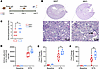 Figure 1
Myeloid IL-1R1 deletion worsens NTS nephritis. (A) MWT and MKO mice were subjected to NTS nephritis, and tissue was harvested at 9 days as shown in the schematic (created with BioRender.com). (B) Representative 40× PAS images from kidney sections (arrowhead represents collapsed glomerulus; scale bar: 50 μm), with (C) glomerulus injury score assessed with a blinded protocol (n = 7 per group; squares indicate individual animals with line at median, *P < 0.05 by Mann-Whitney U test). (D–F) Levels of (D) urinary albumin were measured and normalized to urinary creatinine (n = 3 for baseline groups; n = 5–6 for NTS groups; data represented in box plots, *P < 0.05 by 2-way ANOVA with Bonferroni’s post hoc test). mRNA levels of kidney injury markers (E) KIM-1 (Havcr1) and (F) NGAL/Lcn2. Graphs display box plots with dots indicating individual samples (n = 3 for baseline groups; n = 6–8 for NTS groups; *P < 0.05, **P < 0.01 by 2-way ANOVA with Bonferroni’s multiple-comparison test. Note: sample size differences between urine albumin and KIM-1 and NGAL measurements are due to inability to collect urine in some mice. Circles represent female animals and squares represent male animals.
LysM+ myeloid cell IL-1R1 deletion does not change IL-1Ra expression after NTS nephritis. Previously, we demonstrated that F4/80hi kidney macrophages produce IL-1Ra/Il1rn to limit inflammation 24 hours after septic kidney injury (39). We further showed a protective role for CD11c+ myeloid cell IL-1R1 to induce IL-1Ra generation and limit early ischemic kidney injury in a 24-hour I/R model (14). To determine whether reduced IL-1Ra expression could account for the worsened phenotype of MKO mice in the inflammatory NTS nephritis model, we measured Il1rn expression. At day 9 after NTS nephritis, myeloid IL-1R1 deletion did not differentially modulate Il1rn expression in the whole kidney (Supplemental Figure 5A), nor did it differentially affect numbers of infiltrating or resident CD11b+ kidney myeloid cells (Supplemental Figure 5, B–E). We further measured Il1rn expression in sorted CD11b+ kidney myeloid cells. Again, we did not find evidence that LysM+ myeloid cell IL-1R1 deletion changed Il1rn expression at day 9 after NTS nephritis (Supplemental Figure 5, F and G). Together, these results indicate that LysM+ myeloid cell deletion of IL-1R1 permits increased glomerular and tubular damage through a mechanism other than through regulation of IL-1Ra expression.
The type I IFN response is important for NTS nephritis pathogenesis, and MKO mice display increased non-myeloid type I IFN expression. To explore additional mechanisms important to the pathogenesis of NTS nephritis, we performed scRNA-seq on kidneys from WT mice either in control animals or at day 9 after induction of NTS nephritis. We clustered and annotated major kidney cell types by known genetic markers (41–43) (Supplemental Figure 6, A–C). We next performed pseudo-bulk analysis grouping all kidney cells by sample to identify global gene expression programs in the kidney after NTS nephritis. We performed differential expression analysis between control and day 9 NTS kidneys and found that of the 20 top differentially upregulated genes in NTS kidneys, 10 were IFN-stimulated genes (Figure 2, A and B). Moreover, many of these IFN-stimulated genes were also upregulated in kidney tubule, fibroblast, endothelial cell, and myeloid cell clusters (Supplemental Figure 6, D–G). Given the important role of type I IFN in autoimmune kidney diseases (27–30), we next examined whether MKO mice showed evidence of increased type I IFN signaling. Compared with kidneys from MWT mice, NTS-injured kidneys from MKO mice displayed increased nuclear levels of IFN regulatory factor 7 (IRF7) (Figure 2, C and D), a primary transcription factor involved in type I IFN expression (44), as well as modest but significantly increased Ifnb1 mRNA expression in the whole kidney (Supplemental Figure 7). To determine whether MKO myeloid cells are the primary source of elevated type I IFNs in MKO-injured kidneys, we sorted CD11b+ myeloid cells from NTS-injured kidneys of MWT and MKO mice. Surprisingly, compared with MWT CD11b+ myeloid cells, we did not find evidence of increased type I IFN expression in MKO myeloid cells (Figure 2E). We next considered whether increased numbers of kidney myeloid cells in MKO kidneys might account for increased type I IFN expression; however, by flow cytometry, myeloid cell populations were similar in MWT and MKO kidneys (Figure 2, F–N). Taken together, these results imply that LysM+ myeloid cell IL-1R1 deletion increases type I IFN expression in the injured kidney, likely from a non-myeloid source.
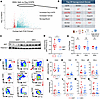 Figure 2
NTS nephritis induces IFN-stimulated genes, and MKO mice display elevated type I IFN signaling. (A and B) Kidneys from vehicle (Veh) or NTS nephritis–injured mice (day 9) were harvested, scRNA-seq was performed on whole kidney digests, and pseudo-bulk analysis was performed grouping all kidney clusters together by sample (Veh or day 9). (A) Volcano plot showing differentially expressed genes between Veh and day 9 kidneys with (B) top 20 significantly upregulated genes in day 9 NTS kidneys (IFN-stimulated genes in red). (C–E) MWT and MKO mice were subjected to NTS nephritis, and kidneys were harvested at day 9 with Western blot (C) and densitometry (D) for nuclear levels of IRF7 displayed in box plot (n = 5–6; *P < 0.05 by unpaired 2-tailed t test). (E) CD11b+ myeloid cells (live/single cell/CD45+Ly6G–CD11b+) were sorted from NTS nephritis–injured MWT and MKO kidneys, RT-PCR was performed, and box plots show mRNA levels of Ifnb1, Ifna4, Ifna5 (n = 6–9; not significant by unpaired 2-tailed t test; schematic created with BioRender.com). (F–N) Flow cytometry was performed on NTS nephritis injured–MWT and MKO whole kidney digests with gating strategy for cell populations shown in pseudocolor plots in F. Dot plots display enumeration for (G) CD45+ (live/single cell), (H) neutrophils (PMN, CD45+CD11b+Ly6G+), (I) Ly6chi monocytes (iMono, CD45+Ly6G–MHCII–CD64+Ly6Chi), (J) Ly6clo monocytes (rMono, CD45+Ly6G–MHCII–CD64+Ly6Clo), (K) conventional DC 1 (cDC1) (CD45+Ly6G–MHCII+CD64–CD11c+CD103hiCD11b–), (L) cDC2 (CD45+Ly6G–MHCII+CD64–CD11c+CD103loCD11b+), (M) CD11bhi macrophages (CD11bhi, CD45+Ly6G–MHCII+CD64+CD11bhiF4/80lo), and (N) F480hi macrophages (F480hi, CD45+Ly6G–MHCII+CD64+CD11bmidF480hi). There were no statistically significant differences between genotypes for any cell population as determined by unpaired 2-tailed t tests (n = 8–10). Squares represent male animals.
LysM+ myeloid cell IL-1R1 deletion increases type I IFN expression in endothelial cells after NTS nephritis. To identify other potential sources of elevated type I IFNs after NTS nephritis, we performed gene ontology (GO) analysis of major kidney cell clusters from WT mice at baseline and day 9 after NTS induction (Figure 3A). Of kidney cell clusters, neutrophils, podocytes, and lymphocytes did not show upregulated GO pathways with a q value threshold less than 0.1. However, we did find upregulated GO pathways highly enriched in the type I IFN response (i.e., “response to virus,” “response to IFN-β”) across other kidney cell clusters including kidney tubules, fibroblasts, and endothelial cells (Figure 3, B–D). Moreover, we found that of kidney cell populations, endothelial cells, myeloid cells, neutrophils, and lymphocytes were the cell populations expressing high levels of Irf7 after NTS nephritis (Figure 3E), indicating that type I IFNs could be generated from these cell types.
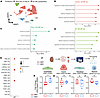 Figure 3
MKO mice have increased endothelial type I IFN generation after NTS nephritis. (A–E) Kidneys from vehicle (Veh) or NTS nephritis injured–mice (day 9) were harvested and scRNA-seq was performed. (A) Uniform manifold approximation and projection (UMAP) plot showing single-cell clusters (TUB: kidney tubules; PODO: podocyte; EC: endothelial cell; FIBRO: fibroblast-mesangial cells; MYELOID: monocytes, myeloid cells, and DCs; PMN: neutrophil; LYMPHO: T or B cell). Differential expression analysis followed by GO analysis was performed on cell clusters between Veh and day 9 NTS samples. Shown in graphs are upregulated GO Biological Processes for (B) TUB, (C) FIBRO, and (D) ENDO (EC) clusters. (E) Dot plot shows expression of Irf7 in kidney cell clusters between Veh and day 9 NTS samples. (F–J) MWT and MKO mice were subjected to NTS nephritis, and individual kidney cell populations were sorted per schematic in F (created with BioRender.com). RT-PCR was performed and box plots show mRNA levels of Ifnb1 in (G) endothelial cells, (H) tubule cells, (I) fibroblasts, and (J) CD11b+ myeloid cells (n = 5; P < 0.05 by unpaired 2-tailed t test). Squares represent male animals.
To ascertain the source of type I IFNs in MKO kidneys, we sorted kidney endothelial cells, fibroblasts, tubule cells, and myeloid cells from NTS-injured MWT and MKO mice (Figure 3F and Supplemental Figure 8A). Among these, only endothelial cells from MKO kidneys exhibited significantly elevated Ifnb1 (Figure 3G) and Ifna4 and Ifna5 expression (Supplemental Figure 8, B and C), whereas type I IFNs were not differentially regulated by myeloid IL-1R1 expression in CD11b+ myeloid cells, fibroblasts, or tubular epithelial cells (Figure 3, H–J, and Supplemental Figure 8, B and C). These findings suggest that LysM+ myeloid cell IL-1R1 deletion selectively augments endothelial cell type I IFN expression after NTS nephritis.
Ebi3/IL-27 increases endothelial cell type I IFN expression, and anti-IL27 ameliorates NTS nephritis in MKO mice. To further evaluate crosstalk between kidney myeloid cells and endothelial cells after NTS nephritis, we performed NicheNet analysis (45) on our scRNA-seq dataset, setting the myeloid cell cluster as sender cells and endothelial cluster as receiving cells. We found that Ebi3 is a highly prioritized ligand secreted from myeloid cells that can induce type I IFN–associated genes (i.e., Irf7, Irf9, Ifit3, Stat1) in endothelial cells (Figure 4A), and Ebi3 is primarily expressed in myeloid cells (blue circle) in the kidney after NTS nephritis (Figure 4B).
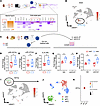 Figure 4
Myeloid IL-1R1 deletion increases type I IFN expression in endothelial cells after NTS nephritis: possible role of Ebi3/IL-27. (A) NicheNet analysis of ligand-target gene interaction with myeloid cluster as sender and endothelial cluster as receiving cells. Callout shows 5 highest prioritized ligands from myeloid cluster that induce target genes in endothelial cluster. Red boxes indicate Ebi3 in myeloid cluster and type I IFN–associated genes in endothelial cluster (created with BioRender.com). (B) Feature plot showing expression of Ebi3 mainly in myeloid cluster (circled). (C–H) MWT and MKO mice were subjected to NTS nephritis, and CD11b+ myeloid cells were sorted as shown in schematic (created with BioRender.com). (D–F) RT-PCR was performed, and box plots show expression of EBI3 binding partners (D) p28 (Il27a), (E) p35 (Il12a), and (F) IL-6 (Il6) (n = 6–9; *P < 0.05 by unpaired 2-tailed t test). (G and H) Myeloid cells were cocultured with brain endothelioma (b.End3) cells in presence or absence of (G) anti–IL-27 or (H) anti–IL-6. Ifnb1 levels were measured in b.End3 cells by RT-PCR and are shown in box plots (n = 4–5; *P < 0.05, **P < 0.01 by unpaired 2-tailed t test). (I) Feature plot showing expression of Il27ra mainly in endothelial cluster (circled). (J) UMAP plot showing endothelial cells subclustered into cortical (cEC), glomerular (gEC), or medullary (mEC) clusters. (K) Dot plot showing expression of Il27ra in EC subclusters. Circles represent female animals and squares represent male animals.
EBI3 is one subunit of multiple heterodimeric cytokines: EBI3 combines with p28 (Il27a) to form IL-27; EBI3 combines with p35 (Il12a) to form IL-35; and EBI3 combines with IL-6 (Il6) to participate in IL-6 trans-signaling. To validate the potential EBI3/type I IFN axis, we analyzed expression of EBI3 binding partners Il27a, Il12a, and Il6. Among these, Il27a and Il6, but not Il12a, were significantly upregulated in MKO myeloid cells compared with MWT controls (Figure 4, C–F). To assess the potential of either IL-27 or IL-6 to regulate endothelial type I IFN expression, we cocultured b.End3 endothelial cells with CD11b+ myeloid cells sorted from NTS-injured kidney of MWT or MKO mice and in the presence or absence of neutralizing antibodies (Figure 4C). Endothelial Ifnb1 expression was significantly higher after stimulation with MKO myeloid cells compared with MWT myeloid cells, and this increase was attenuated only by anti–IL-27 (Figure 4G) but not anti–IL-6 (Figure 4H). Given that NicheNet analysis also identified HMGB1 as a prioritized myeloid-derived ligand capable of targeting endothelial cells to induce type I IFN–associated genes (Supplemental Figure 9A), we additionally tested whether HMGB1 inhibition could attenuate the elevated endothelial type I IFN response. HMGB1 inhibition failed to ameliorate increased endothelial Ifnb1 expression induced by MKO myeloid cells (Supplemental Figure 9B), suggesting that HMGB1 is not a primary mediator of this response. As further support of the detrimental effects of IL-27 during NTS nephritis in MKO mice in vivo, anti–IL-27 therapy was able to abrogate the difference in albuminuria and KIM-1 mRNA expression between MWT and MKO mice (Supplemental Figure 10).
Given that IL-27 has pleiotropic effects on CD4 Th cell differentiation, promoting Th1 and Treg responses and inhibiting Th2 and Th17 responses (18, 46–50), we next assessed T lymphocyte populations by flow cytometry in MWT and MKO mice after NTS nephritis. We found minimal differences between MWT and MKO mice in CD4 and CD8 populations and CD4 Th subsets (Supplemental Figure 11). There was actually a trend toward reduced IFN-γ+ CD4 T cells in MKO mice, which led us to believe the predominant effect of myeloid IL-1R1 deletion was not on lymphocytes.
In support of IL-27 modulating endothelial responses during NTS nephritis, in the scRNA-seq dataset, we found that endothelial cells express high levels of Il27ra, the receptor for IL-27. Moreover, subclustering of endothelial cells revealed that glomerular endothelial cells, a primary target of injury during NTS nephritis, expressed the highest relative levels of Il27ra (Figure 4, I–K); these results were supported in human CKD using the Kidney Precision Medicine Project (KPMP) tissue atlas (Supplemental Figure 12). Together, these findings identify a potential myeloid-to-endothelial crosstalk mechanism in which IL-1R1 suppresses Ebi3/IL-27 generation from myeloid cells, thereby limiting endothelial type I IFN expression after NTS nephritis.
Protective effects of LysM+ myeloid cell IL-1R1 are predominantly from a non-neutrophil myeloid population. Since LysM-Cre also mediates recombination in neutrophils (51), we next sought to determine whether neutrophils in MKO mice contributed to the dysregulated myeloid IL-27/endothelial type I IFN axis. We sorted neutrophils from MWT and MKO mice after NTS nephritis (Supplemental Figure 13A). In contrast with CD11b+Ly6G– myeloid cells sorted from MKO kidneys, which showed elevated Il27a and Il6 expression after NTS nephritis (Figure 4, D–F), Ly6G+ neutrophils isolated from MKO mice showed no difference in Il27a expression and significantly reduced Il6 expression compared with MWT controls (Supplemental Figure 13, B and C). Moreover, compared with coculture with MWT neutrophils, coculture of MKO neutrophils with bEnd.3 endothelial cells actually reduced endothelial Ifnb1 and Ifna5 expression (Supplemental Figure 13, D–F; compare with Figure 4, G and H). To directly test the functional contribution of neutrophils in vivo, we depleted neutrophils using anti-Ly6G antibody during development of NTS nephritis (Supplemental Figure 13, G–I). Anti-Ly6G treatment was not able to ameliorate worsened glomerular and tubule injury in MKO mice (Supplemental Figure 13, J–L). Taken together, these findings suggest that other LysM+ myeloid cells, not neutrophils, are the primary contributor to increased endothelial type I IFNs and worsened NTS nephritis in MKO mice.
Myeloid IL-1R1 deletion enhances ER stress–induced EBI3 expression. We next wanted to further interrogate the potential mechanism whereby LysM+ myeloid IL-1R1 deficiency can lead to increased Ebi3 expression. EBI3 is a resident ER protein whose expression can be increased by ER stress (52). To investigate whether IL-1R1 regulates the myeloid cell ER stress response, we sorted CD11b+ myeloid cells from NTS-injured kidneys and profiled genes associated with ER stress. Compared with MWT myeloid cells, MKO kidney myeloid cells exhibited higher expression of ER stress markers including PKR-like ER kinase (PERK; Eif2ak3), activating transcription factor 4 (ATF4; Atf4), binding immunoglobulin protein (BiP; Hspa5) and C/EBP-homologous protein (CHOP; Ddit3) (Figure 5, A and B). To determine whether IL-1R1 deficiency enhances ER stress in myeloid cells in vitro, we generated BM-derived macrophages (BMDMs) from MWT and MKO mice and stimulated them with the ER stress inducer tunicamycin for 6 hours (Figure 5C). Compared with MWT controls, MKO BMDMs showed significantly increased ER stress markers at both the mRNA (Figure 5, D–G) and protein levels (Figure 5, H–L). To assess whether these changes were also reflected at the whole kidney level, we measured ER stress marker expression in whole kidney lysates. In NTS-injured kidneys, MKO mice showed elevated expression of Hspa5, Ddit3, and Eif2ak3 compared with MWT controls (Supplemental Figure 14A). Similarly, in the chronic I/R model, Ddit3 expression was significantly increased in KO kidneys (Supplemental Figure 14B). Together, our data indicate that LysM+ myeloid cell IL-1R1 deletion increased ER stress both in vivo and in vitro.
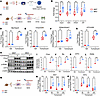 Figure 5
Myeloid IL-1R1 deletion increases ER stress. (A and B) (A) Schematic of the isolation and sorting of CD45+Ly6G-CD11b+ myeloid cells from the kidneys of MWT and MKO mice after NTS nephritis. (B) RT-PCR analysis of mRNA levels of the ER stress genes Hspa5 (BiP), Ddit3 (CHOP), Eif2ak3 (PERK), and Atf4 (ATF4) (n = 6–9; *P < 0.05, **P < 0.01, ***P < 0.001 by unpaired 2-tailed t test). (C–L) Experimental workflow of BMDMs treated with ER stress inducer tunicamycin. RT-PCR was performed, and box plots show mRNA levels of (D) Hspa5, (E) Ddit3, (F) Eif2ak3, and (G) Atf4. (H) Representative Western blot with box plots showing densitometry analysis for (I) CHOP, (J) BiP, (K) ATF4, and (L) phosphorylated PERK (n = 3; *P < 0.05, **P < 0.01 by 2-way ANOVA with Bonferroni’s post hoc test). (M–O) BMDMs from MWT and MKO mice were stimulated with tunicamycin for various time points, and box plots show mRNA levels of (N) Ebi3 and (O) Il27a measured by RT-PCR (n = 6/group, ***P < 0.001, ****P < 0.0001 by 2-way ANOVA with Bonferroni’s posttest). Circles represent female animals and squares represent male animals. Schematics in A, C, and M created with BioRender.com.
We next asked whether ER stress regulates EBI3/IL-27 expression in myeloid cells in an IL-1R1–dependent manner. To this end, BMDMs from MWT and MKO mice were stimulated with the ER stress inducer tunicamycin for 6, 12, and 24 hours. Compared with MWT BMDMs, KO BMDMs displayed heightened expression of Ebi3 and IL27a after ER stress induction (Figure 5, M–O). These results indicate that myeloid ER stress–induced EBI3/IL-27 expression is exaggerated in the absence of IL-1R1.
Anti-IFNAR1 therapy ameliorates NTS nephritis in MKO mice. Finally, to test whether LysM+ myeloid cell IL-1R1 limits autoimmune kidney injury by suppressing type I IFNs, we treated MWT and MKO mice with anti-IFNAR1 during NTS induction (Figure 6A). Anti-IFNAR1 treatment abrogated the differences in KIM-1 (Figure 6B), albuminuria (Figure 6C), and histological glomerular injury (Figure 6, D and E) between MWT and MKO mice. Taken together, these findings suggest that LysM+ myeloid IL-1R1 deletion worsens type I IFN–mediated NTS nephritis (Figure 6F).
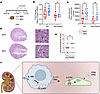 Figure 6
Anti-IFNAR1 therapy abrogates exaggerated albuminuria and kidney injury in MKO mice after NTS nephritis. (A) Schematic of experimental model of MWT and MKO subjected to NTS induction in presence or absence of anti-IFNAR1 treatment (day 5, 500 μg; day 6, 500 μg; day 8, 250 μg). Shown in box plots are (B) mRNA expression of KIM-1 in injured kidneys (n = 13–15 for vehicle groups; n = 6–7 for anti-IFNAR1 groups) and (C) urine albuminuria (urine albumin normalized to urine creatinine) (n = 9–12 for vehicle groups; n = 5–6 for anti-IFNAR1 groups; *P < 0.05, **P < 0.01 by 2-way ANOVA with Bonferroni’s post hoc test). (D) Representative PAS-stained kidney sections and higher magnification images are shown. (E) Glomerular injury was assessed by blinded observer. Each dot represents 1 mouse with line at median (n = 6–7 per group; statistical significance was determined by Mann-Whitney U test). Circles represent female animals and squares represent male animals. (F) Schematic of model where myeloid IL-1R1 constrains ER stress–mediated EBI3/IL27 secretion, thereby attenuating type I IFN expression in kidney endothelial cells and ameliorating autoimmune nephritis (created with BioRender.com).


