
Research ArticleGeneticsNeuroscience
Open Access |  10.1172/jci.insight.207889
LMNB1 reduction is a potential therapeutic strategy in a mouse model of autosomal dominant leukodystrophy
Nathan Herdman,1 Kaveh Moradi,1 Bruce Nmezi,1 Anushe Munir,1 Krizchelle A. Magtoto,1 Fang Liu,1 Mara Sullivan,2 Xuemei Zeng,3,4,5 Thomas K. Karikari,3,4,5 and Quasar S. Padiath1,6
1Department of Human Genetics, School of Public Health,
2Center for Biologic Imaging, and
3Department of Psychiatry, School of Medicine, University of Pittsburgh, Pittsburgh, Pennsylvania, USA.
4Biofluid Biomarker Laboratory, Western Psychiatric Hospital, University of Pittsburgh Medical Center, Pittsburgh, Pennsylvania, USA.
5Alzheimer’s Disease Research Center and
6Department of Neurobiology, School of Medicine, University of Pittsburgh, Pittsburgh, Pennsylvania, USA.
Address correspondence to: Quasar S. Padiath, Department of Human Genetics, University of Pittsburgh, 130 De Soto Street, Pittsburgh, Pennsylvania 15261, USA. Phone: 412.624.7203. Email: qpadiath@pitt.edu.
Find articles by Herdman, N. in: PubMed | Google Scholar
1Department of Human Genetics, School of Public Health,
2Center for Biologic Imaging, and
3Department of Psychiatry, School of Medicine, University of Pittsburgh, Pittsburgh, Pennsylvania, USA.
4Biofluid Biomarker Laboratory, Western Psychiatric Hospital, University of Pittsburgh Medical Center, Pittsburgh, Pennsylvania, USA.
5Alzheimer’s Disease Research Center and
6Department of Neurobiology, School of Medicine, University of Pittsburgh, Pittsburgh, Pennsylvania, USA.
Address correspondence to: Quasar S. Padiath, Department of Human Genetics, University of Pittsburgh, 130 De Soto Street, Pittsburgh, Pennsylvania 15261, USA. Phone: 412.624.7203. Email: qpadiath@pitt.edu.
Find articles by Moradi, K. in: PubMed | Google Scholar
1Department of Human Genetics, School of Public Health,
2Center for Biologic Imaging, and
3Department of Psychiatry, School of Medicine, University of Pittsburgh, Pittsburgh, Pennsylvania, USA.
4Biofluid Biomarker Laboratory, Western Psychiatric Hospital, University of Pittsburgh Medical Center, Pittsburgh, Pennsylvania, USA.
5Alzheimer’s Disease Research Center and
6Department of Neurobiology, School of Medicine, University of Pittsburgh, Pittsburgh, Pennsylvania, USA.
Address correspondence to: Quasar S. Padiath, Department of Human Genetics, University of Pittsburgh, 130 De Soto Street, Pittsburgh, Pennsylvania 15261, USA. Phone: 412.624.7203. Email: qpadiath@pitt.edu.
Find articles by Nmezi, B. in: PubMed | Google Scholar
1Department of Human Genetics, School of Public Health,
2Center for Biologic Imaging, and
3Department of Psychiatry, School of Medicine, University of Pittsburgh, Pittsburgh, Pennsylvania, USA.
4Biofluid Biomarker Laboratory, Western Psychiatric Hospital, University of Pittsburgh Medical Center, Pittsburgh, Pennsylvania, USA.
5Alzheimer’s Disease Research Center and
6Department of Neurobiology, School of Medicine, University of Pittsburgh, Pittsburgh, Pennsylvania, USA.
Address correspondence to: Quasar S. Padiath, Department of Human Genetics, University of Pittsburgh, 130 De Soto Street, Pittsburgh, Pennsylvania 15261, USA. Phone: 412.624.7203. Email: qpadiath@pitt.edu.
Find articles by Munir, A. in: PubMed | Google Scholar
1Department of Human Genetics, School of Public Health,
2Center for Biologic Imaging, and
3Department of Psychiatry, School of Medicine, University of Pittsburgh, Pittsburgh, Pennsylvania, USA.
4Biofluid Biomarker Laboratory, Western Psychiatric Hospital, University of Pittsburgh Medical Center, Pittsburgh, Pennsylvania, USA.
5Alzheimer’s Disease Research Center and
6Department of Neurobiology, School of Medicine, University of Pittsburgh, Pittsburgh, Pennsylvania, USA.
Address correspondence to: Quasar S. Padiath, Department of Human Genetics, University of Pittsburgh, 130 De Soto Street, Pittsburgh, Pennsylvania 15261, USA. Phone: 412.624.7203. Email: qpadiath@pitt.edu.
Find articles by Magtoto, K. in: PubMed | Google Scholar
1Department of Human Genetics, School of Public Health,
2Center for Biologic Imaging, and
3Department of Psychiatry, School of Medicine, University of Pittsburgh, Pittsburgh, Pennsylvania, USA.
4Biofluid Biomarker Laboratory, Western Psychiatric Hospital, University of Pittsburgh Medical Center, Pittsburgh, Pennsylvania, USA.
5Alzheimer’s Disease Research Center and
6Department of Neurobiology, School of Medicine, University of Pittsburgh, Pittsburgh, Pennsylvania, USA.
Address correspondence to: Quasar S. Padiath, Department of Human Genetics, University of Pittsburgh, 130 De Soto Street, Pittsburgh, Pennsylvania 15261, USA. Phone: 412.624.7203. Email: qpadiath@pitt.edu.
Find articles by Liu, F. in: PubMed | Google Scholar
1Department of Human Genetics, School of Public Health,
2Center for Biologic Imaging, and
3Department of Psychiatry, School of Medicine, University of Pittsburgh, Pittsburgh, Pennsylvania, USA.
4Biofluid Biomarker Laboratory, Western Psychiatric Hospital, University of Pittsburgh Medical Center, Pittsburgh, Pennsylvania, USA.
5Alzheimer’s Disease Research Center and
6Department of Neurobiology, School of Medicine, University of Pittsburgh, Pittsburgh, Pennsylvania, USA.
Address correspondence to: Quasar S. Padiath, Department of Human Genetics, University of Pittsburgh, 130 De Soto Street, Pittsburgh, Pennsylvania 15261, USA. Phone: 412.624.7203. Email: qpadiath@pitt.edu.
Find articles by
Sullivan, M.
in:
PubMed
|
Google Scholar
|

1Department of Human Genetics, School of Public Health,
2Center for Biologic Imaging, and
3Department of Psychiatry, School of Medicine, University of Pittsburgh, Pittsburgh, Pennsylvania, USA.
4Biofluid Biomarker Laboratory, Western Psychiatric Hospital, University of Pittsburgh Medical Center, Pittsburgh, Pennsylvania, USA.
5Alzheimer’s Disease Research Center and
6Department of Neurobiology, School of Medicine, University of Pittsburgh, Pittsburgh, Pennsylvania, USA.
Address correspondence to: Quasar S. Padiath, Department of Human Genetics, University of Pittsburgh, 130 De Soto Street, Pittsburgh, Pennsylvania 15261, USA. Phone: 412.624.7203. Email: qpadiath@pitt.edu.
Find articles by Zeng, X. in: PubMed | Google Scholar
1Department of Human Genetics, School of Public Health,
2Center for Biologic Imaging, and
3Department of Psychiatry, School of Medicine, University of Pittsburgh, Pittsburgh, Pennsylvania, USA.
4Biofluid Biomarker Laboratory, Western Psychiatric Hospital, University of Pittsburgh Medical Center, Pittsburgh, Pennsylvania, USA.
5Alzheimer’s Disease Research Center and
6Department of Neurobiology, School of Medicine, University of Pittsburgh, Pittsburgh, Pennsylvania, USA.
Address correspondence to: Quasar S. Padiath, Department of Human Genetics, University of Pittsburgh, 130 De Soto Street, Pittsburgh, Pennsylvania 15261, USA. Phone: 412.624.7203. Email: qpadiath@pitt.edu.
Find articles by Karikari, T. in: PubMed | Google Scholar
1Department of Human Genetics, School of Public Health,
2Center for Biologic Imaging, and
3Department of Psychiatry, School of Medicine, University of Pittsburgh, Pittsburgh, Pennsylvania, USA.
4Biofluid Biomarker Laboratory, Western Psychiatric Hospital, University of Pittsburgh Medical Center, Pittsburgh, Pennsylvania, USA.
5Alzheimer’s Disease Research Center and
6Department of Neurobiology, School of Medicine, University of Pittsburgh, Pittsburgh, Pennsylvania, USA.
Address correspondence to: Quasar S. Padiath, Department of Human Genetics, University of Pittsburgh, 130 De Soto Street, Pittsburgh, Pennsylvania 15261, USA. Phone: 412.624.7203. Email: qpadiath@pitt.edu.
Find articles by
Padiath, Q.
in:
PubMed
|
Google Scholar
|
Published August 11, 2026 - More info
JCI Insight. 2026;11(18):e207889. https://doi.org/10.1172/jci.insight.207889.
© 2026 Herdman et al. This work is licensed under the Creative Commons Attribution 4.0 International License. To view a copy of this license, visit http://creativecommons.org/licenses/by/4.0/.
Received: April 9, 2026; Accepted: August 7, 2026

-
Results
Plp-FLAG-LMNB1-flox mice recapitulate ADLD pathology and are capable of inducible hLMNB1 reduction. Plp-FLAG-LMNB1-flox TG mice were generated carrying loxP sites flanking the hLMNB1 construct driven by the mouse Plp1 promoter (TG-flox) (Supplemental Figure 1A; supplemental material available online with this article; https://doi.org/10.1172/jci.insight.207889DS1). Prior work in the TG mouse model, which used the same cassette but lacked the loxP sites, demonstrated specific overexpression of hLMNB1 in mature oligodendrocytes and recapitulation of the ADLD phenotype (19).
Both the TG and TG-flox lines displayed similar hLMNB1 expression levels (Supplemental Figure 1, B and C). Likewise, they showed similar rotarod performance at 7 months of age, which was significantly impaired compared with WT mice, and a reduced lifespan, with ADLD mice succumbing to the disease by 15 months of age (Figure 1, A and B).
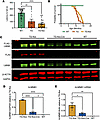 Figure 1
ADLD mouse models are comparable, and tamoxifen-induced reduction of hLMNB1 is possible when crossed with a Plp1-cre/ERT line. (A) Rotarod of ADLD mouse lines at 7 months of age. n ≥ 8 per group. (B) Kaplan-Meier survival curves for ADLD mouse model lines. Survival curves differed significantly by log-rank (Mantel-Cox) test (P < 0.0001). Pairwise log-rank tests with correction for multiple comparisons showed reduced survival in WT vs. TG (adjusted P = 0.0003) and WT vs. TG-flox (adjusted P = 0.0003), but TG and TG-flox did not differ (adjusted P = 0.1872). n ≥ 13 per group. (C and D) Representative Western blot (C) and quantification (D) of spinal cord lysates probed for endogenous LMNB1, exogenous FLAG-tagged human LMNB1 (hLMNB1), β-ACTIN, and GAPDH. hLMNB1 migrates slightly higher than endogenous mouse LMNB1. hLMNB1 levels were normalized to GAPDH and further normalized to Tg-flox. n = 3 per group. (E) Quantification of spinal cord hLMNB1 mRNA. hLMNB1 expression was normalized to β-Actin (Actb) and further normalized to Tg-flox. n = 4 per group. Statistical tests: (A) Kruskal-Wallis test with Dunn’s post-hoc test; (B) log-rank (Mantel-Cox) test with manual multiple comparison corrections when appropriate; and (D and E) 1-way ANOVA test with Tukey’s post hoc test. Data are shown as mean ± SEM. *P < 0.05, **P < 0.01, ****P < 0.0001; nonsignificant comparisons are not shown.
To evaluate the efficiency of Cre-mediated recombination and the resulting reduction of hLMNB1, TG-flox mice were crossed with a Plp1-cre/ERT mouse line that targets recombination to mature oligodendrocytes in the CNS (27). The resulting bitransgenic offspring (TG-flox;Cre) were then injected with tamoxifen (TAM) to induce ablation. TG-flox;Cre mice showed >75% reduction in both hLMNB1 protein and mRNA expression in the spinal cord relative to that of TG-flox mice (Figure 1, C–E). Consistent with this result, PCR of spinal cord gDNA from the TG-flox;Cre mice confirmed excision of the floxed allele (Supplemental Figure 1, A and D). The spinal cord was selected, as our previous work demonstrated that it exhibits the greatest hLMNB1 overexpression and demyelination pathology in the CNS (19).
High-magnification immunofluorescence images of TG-flox spinal cord sections confirmed that mouse LMNB1 and hLMNB1 (FLAG) colocalized along the nuclear periphery of oligodendrocytes (Supplemental Figure 2A). Further spinal cord immunofluorescence staining demonstrated that hLMNB1 (FLAG) expression was restricted specifically to mature oligodendrocytes, with expression absent in both neurons and astrocytes (Supplemental Figure 2, B and C). hLMNB1 (FLAG) expression was then shown to be significantly reduced by Cre-mediated ablation in TG-flox;Cre mice (Supplemental Figure 2, B–D).
These results demonstrate that TG-flox mice recapitulate the previously generated TG mouse model and human ADLD disease phenotype. Additionally, crossing TG-flox mice with the Plp1-cre/ERT line and injecting the offspring with TAM enables a temporally controlled and cell-type-specific ablation of hLMNB1 expression.
Ablation of hLMNB1 overexpression leads to age-dependent improvements in behavioral outcomes and survival. Having established an efficient system of hLMNB1 reduction in TG-flox;Cre mice, we next sought to determine if the loss of hLMNB1 overexpression during adulthood and the timing of this ablation influenced disease progression. TAM injections were administered to 2 cohorts of WT, TG-flox, and TG-flox;Cre mice, with injections occurring before the onset of symptoms at 3 months [TG-flox;Cre (3M)] or after onset of symptoms at 6 months of age. [TG-flox;Cre (6M)].
Cohorts were assessed weekly using a functional observation battery (FOB) score (Supplemental Table 1). TG-flox mice in both cohorts began exhibiting increased FOB scores around 6 months of age, whereas WT mice showed no change. TG-flox;Cre (3M) showed little to no increase in FOB scores, while TG-flox;Cre (6M) mice showed elevated FOB scores compared with those of WT mice, but they were lower than those of TG-flox mice (Figure 2, A and B). At 10 months of age, all groups differed significantly from the TG-flox group by FOB score, with TG-flox;Cre (6M) mice additionally differing from WT mice (Figure 2C). Assessment of weight change from baseline at 10 months of age showed that WT and TG-flox;Cre (3M) mice had similar levels of weight gain, which differed significantly from those of both TG-flox and TG-flox;Cre (6M) mice. TG-flox mice showed weight loss, whereas TG-flox;Cre (6M) mice showed minimal weight gain (Figure 2D).
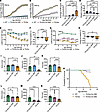 Figure 2
Reduction of hLMNB1 improves motor function in Tg-flox;Cre (3M) and survival in Tg-flox;Cre (3M) and Tg-flox;Cre (6M) mice. (A and B) Functional observational behavior (FOB) scores at 15 months of age for Tg-flox;Cre (3M) (A) and Tg-flox;Cre (6M) (B) cohorts. The time point of tamoxifen (TAM) injections is noted. Higher scores indicate more severe impairment. n ≥ 19 per group (A), n ≥ 28 per group (B). (C) Comparison of FOB scores at 10 months of age among all groups. n ≥ 29 for all groups. (D) Body weight change from baseline to 10 months of age among all groups. n ≥ 17 per group. (E–H) Monthly rotarod performance and change from baseline to 10 months of age for Tg-flox;Cre (3M) (E and F) and Tg-flox;Cre (6M) (G and H) cohorts. The time point of TAM injections is noted. Asterisks depict significance compared with WT in monthly rotarod assessments. n ≥ 14 per group (E), n ≥ 8 per group (F), n ≥ 15 per group (G), n ≥ 13 per group (H). (I–N) Open-field analysis at 10 months of age for Tg-flox;Cre (3M) (I–K) and Tg-flox;Cre (6M) (L–N) cohorts comparing average ambulatory velocity, total distance traveled, and total movement time. n ≥ 13 per group (I–K); n ≥ 23 per group (L–N). (O) Kaplan-Meier survival curves for all groups. Survival curves differed significantly by log-rank (Mantel-Cox) test (P < 0.0001). Pairwise log-rank tests with correction for multiple comparisons showed reduced survival in WT vs. TG-flox (adjusted P = 0.0006), TG-flox;Cre (3M) vs. TG-flox (adjusted P = 0.0006), and TG-flox;Cre (6M) vs. TG-flox (adjusted P = 0.0006). Reduced survival was not found in comparisons between WT vs. TG-flox;Cre (3M) (adjusted P > 0.9999), WT vs. TG-flox;Cre (6M) (adjusted P = 0.0552), and TG-flox;Cre (3M) vs. TG-flox;Cre (6M) (adjusted P = 0.3528). n ≥ 28 per group. Statistical tests: (C, D, J, and L–N) Kruskal-Wallis test with Dunn’s post hoc test; (E and G) mixed effects test with Tukey’s post hoc test; (H) Welch’s ANOVA test with Dunnett’s T3 post hoc test; (F, I, and K) 1-way ANOVA test with Tukey’s post hoc test; and (O) log-rank (Mantel-Cox) test. Data are shown as mean ± SEM. *P < 0.05, **P < 0.01, ***P < 0.001, ***P < 0.0001; nonsignificant comparisons are not shown.
Monthly rotarod testing was used to assess age-dependent motor dysfunction. In the 3-month cohort, all groups began with a similar performance. WT and TG-flox;Cre (3M) mice remained consistently similar for the testing period, while the TG-flox mice had significantly decreased performance beginning at 5 months of age and worsened with each month (Figure 2E). The change in rotarod performance from 3 to 10 months of age, revealed a minimal decline for both WT and TG-flox;Cre (3M) mice, while TG-flox mice exhibited a significantly greater decrease (Figure 2F). In the 6-month cohort, the TG-flox;Cre (6M) and TG-flox mice initially started with a worse performance compared with that of WT mice, and that was maintained throughout testing (Figure 2G). Notably, when assessing change from baseline, TG-flox;Cre (6M) mice were not significantly different from either WT or TG-flox mice, instead falling between the two (Figure 2H).
At 10 months of age, open-field testing revealed that in the 3-month cohort, WT and TG-flox;Cre (3M) mice had similar average ambulatory velocity, total distance traveled, and total movement time. In contrast, TG-flox mice showed significant deficits in all measures (Figure 2, I–K). In the 6-month cohort, the WT group performed significantly better than both the TG-flox;Cre (6M) and TG-flox groups, which were comparable in average ambulatory velocity and total distance traveled but differed significantly in total movement time (Figure 2, L–N).
Cohorts were followed to approximately 15 months of age, corresponding to the lifespan of TG-flox mice, and survival was assessed. By 15 months of age, no deaths of WT or TG-flox;Cre (3M) mice occurred. TG-flox mice began dying at around 8 months of age, and all were deceased by 15 months. Additionally, TG-flox;Cre (6M) mice showed minimal mortality, which began around 10 months. Paired log-rank (Mantel-Cox) tests revealed no significant differences between WT and TG-flox;Cre (3M) or TG-flox;Cre (6M) mice, but all 3 groups differed significantly from TG-flox mice (Figure 2O).
These results demonstrate that hLMNB1 reduction before the onset of symptoms resulted in the greatest improvement in motor function and survival, with TG-flox;Cre (3M) mice being nearly indistinguishable from WT mice. In contrast, ablation after symptom onset improved FOB scores and survival but provided minimal benefit for motor function.
Early hLMNB1 reduction prevents spinal cord pathology, while late intervention shows mixed improvement. We next examined the effects of hLMNB1 reduction on spinal cord morphology and white matter integrity using sections stained with FluoroMyelin or myelin basic protein (MBP) and proteolipid protein (PLP) (Figure 3, A and B). Analysis of overall spinal cord width in FluoroMyelin-stained sections revealed that TG-flox and TG-flox;Cre (6M) spinal cords were significantly smaller than those in both WT and TG-flox;Cre (3M) groups (Figure 3C). When the ratio of white matter width to total spinal cord width was quantified, TG-flox;Cre (3M) mice maintained a width ratio similar to that of WT mice, while both TG-flox;Cre (6M) and TG-flox mice had a marked reduction (Figure 3D). Consistent with this, the staining of the spinal cord myelin with MBP and PLP antibodies revealed increased areas of myelin deficiency in the white matter of TG-flox;Cre (6M) and TG-flox mice but not in TG-flox;Cre (3M) mice, compared with WT mice (Figure 3E).
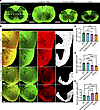 Figure 3
Reduction of hLMNB1 in Tg-flox;Cre (3M) leads to protection from spinal cord shrinkage and white matter deficiency. (A) Representative cervical spinal cord sections stained with FluoroMyelin. W1 indicates the total width of the spinal cord; W2 indicates width of the white matter. Scale bar: 500 μm. (B) Representative immunofluorescence spinal cord staining for MBP (second column), PLP (third column) overlay of MBP and PLP (first column). The masked area or myelinated area (fourth column) was created artificially with ImageJ software and represent regions of MBP and PLP colocalization. MBP and PLP are myelin proteins. Scale bar: 200 μm. (C and D) Quantification of the relative spinal cord width (C) and relative ratio of white matter width to spinal cord width (D), normalized to WT. n ≥ 6 per group. (E) Quantification of the relative percentage of white matter area with myelin deficiency based on the myelinated masked area images shown in B. Group averages were normalized to WT. n ≥ 4 per group. Statistical tests: (C and D) 1-way ANOVA test with Tukey’s post hoc test; (E) Welch’s ANOVA test with Dunnett’s T3 post hoc test. Data are shown as mean ± SEM. *P < 0.05, **P < 0.01, ***P < 0.001, ****P < 0.0001; nonsignificant comparisons are not shown).
To better characterize spinal cord pathology, we performed immunofluorescence staining for astrocytosis and microgliosis. TG-flox mice showed significant signs of inflammation and axonal damage, with elevated GFAP infiltration into the gray matter and increased numbers of APP+ cells, while TG-flox;Cre (3M) and TG-flox;Cre (6M) mice maintained levels comparable to WT mice (Figure 4, A–C). In addition, TG-flox;Cre (6M) and TG-flox mice both showed fewer neurons and more microglia, as indicated by NeuN and IBA1 staining, respectively (Figure 4, D–F).
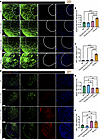 Figure 4
Reduction of hLMNB1 reduces proinflammatory signaling in Tg-flox;Cre (3M) and produces a mixed response in Tg-flox;Cre (6M) mice. (A) Representative cervical spinal cord sections stained with GFAP, APP, and DAPI with the boundary between white and gray matter represented by a dotted line. The schematic indicates the region imaged. GFAP labels astrocytes, and APP labels amyloid precursor proteins. Scale bar: 200 μm. (B and C) Quantification of the ratio of GFAP+ cells in gray to white matter (B) and total APP+ cells (C) relative to WT. Each point represents the average of 2 independent fields per mouse. n ≥ 4 per group. (D) Representative spinal cord sections stained with NeuN, IBA1, and DAPI. The schematic indicates the region imaged. NeuN labels neurons, and IBA1 labels microglia. Scale bar: 200 μm. (E and F) Quantification of total NeuN+ cells (E) and IBA1+ cells (F) relative to WT. Each point represents the average of at least 2 independent fields per mouse. n ≥ 4 per group. Statistical tests: (B, E, and F) 1-way ANOVA test with Tukey’s post hoc test; (C) Welch’s ANOVA test with Dunnett’s T3 post hoc test. Data are shown as mean ± SEM. *P < 0.05, **P < 0.01, ****P < 0.0001; nonsignificant comparisons are not shown.
Overall, TG-flox;Cre (3M) mice exhibited no disease-associated pathology compared with TG-flox mice. TG-flox;Cre (6M) mice displayed a mixed phenotype, resembling that of TG-flox mice across all measures, except for APP+ cell counts and GFAP infiltration into the gray matter, which were similar to those of WT mice.
hLMNB1 reduction leads to a decrease in axon abnormalities. Consistent with the immunofluorescence data, TG-flox mice exhibited pronounced axonal pathology, including loss of axon organization and increased vacuolation, as observed in both toluidine blue staining and TEM (Figure 5A). Relative to WT mice, TG-flox mice displayed significantly higher percentages of degenerated myelin, remyelinated myelin, redundant myelin, degenerated axons, and increased vacuole counts. Both TG-flox;Cre (3M) and TG-flox;Cre (6M) cohorts showed marked improvement. TG-flox;Cre (3M) mice were largely comparable to WT mice, except for a nonsignificant increase in remyelinated myelin, which was similarly increased in TG-flox;Cre (6M) mice. TG-flox;Cre (6M) mice were also generally similar to WT mice, although redundant myelin and vacuole numbers remained closer to levels in TG-flox mice (Figure 5, B–F).
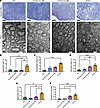 Figure 5
Reduction of hLMNB1 decreases axon abnormalities for both Tg-flox;Cre (3M) and Tg-flox;Cre (6M) mice. (A) Representative spinal cord sections stained with toluidine blue or imaged by transmission electron microscopy (TEM). Symbols indicate examples of axonal or myelin abnormalities: thick arrow = degenerated myelin, 4-point star = remyelinated myelin, thin arrow = redundant myelin, 5-point star = degenerated axon, 7-point star = vacuole. Scale bar: 50 μm (toluidine blue); 2,000 nm (TEM). (B–F) Quantification of the percentage of degenerated myelin (B), remyelinated myelin (C), redundant myelin (D), degenerated axons (E), and the number of vacuoles (F). Each point represents the average of 5 independent fields per mouse. n ≥ 5 per group. Statistical tests: (B and D) 1-way ANOVA test with Tukey’s post hoc test; (C and F) Kruskal-Wallis test with Dunn’s post hoc test; (E) Welch’s ANOVA test with Dunnett’s T3 post hoc test. Data are shown as mean ± SEM. *P < 0.05, **P < 0.01, ***P < 0.001, ***P < 0.0001; nonsignificant comparisons are not shown.
To further characterize axonal differences, we used AxonDeepSeg, a deep learning tool for axon segmentation (28). This revealed that the mean g-ratio, defined as the ratio of the inner axonal diameter to the total outer diameter of the myelinated fiber, was significantly higher in both TG-flox;Cre (6M) and TG-flox mice than in WT mice. TG-flox;Cre (3M) mice exhibited a mean g-ratio comparable to that of WT mice, and both means were significantly lower than TG-flox mice (Supplemental Figure 3A). When plotting g-ratio against axon diameter using total axon counts, TG-flox;Cre (3M), TG-flox;Cre (6M), and TG-flox axons showed a tendency toward higher g-ratios at larger diameters, with visually steeper slopes compared with WT axons, indicating thinner myelin sheaths around larger-diameter axons (Supplemental Figure 3B). Consistent with this observation, comparison of g-ratios across axon diameter bins revealed a statistically significant increase in TG-flox;Cre (3M), TG-flox;Cre (6M), and TG-flox g-ratios compared with WT g-ratios, beginning with axons 1.0–1.5 μm and continuing to >3 μm (Supplemental Figure 3C).
Regardless of the timing of TAM injection, reduction of hLMNB1 improved axonal organization, health, and g-ratio, with TG-flox;Cre (3M) mice showing the greatest improvement toward WT levels. However, further AxonDeepSeg analysis of g-ratio, based on axon diameter bins, revealed a pronounced difference between WT and Tg-flox;Cre (3M) mice that became more evident at larger axon diameters.
Reduction of hLMNB1 overexpression yields mixed improvement of ADLD disease progression biochemical markers. Our prior work with the TG mouse model has demonstrated that reductions in the expression of genes involved in lipid synthesis and increases in proinflammatory cytokine markers were the most characteristic biochemical alterations accompanying disease progression (19). We analyzed the expression of representative lipid-synthesis genes and observed similar reductions, with TG-flox mice showing significant reductions in Cyp51, Hmgcr, Dhcr7, and Lbr expression. TG-flox;Cre (3M) mice remained comparable to WT mice and differed significantly from TG-flox mice. TG-flox;Cre (6M) mice did not differ significantly from TG-flox mice and showed a significant reduction relative to WT mice in Cyp51 and Dhcr7 expression (Figure 6, A–D). Consistent with these findings, immunofluorescent staining and analysis of mature oligodendrocytes, represented by CC1 staining, revealed a significant reduction in FASN intensity in all TG mice relative to WT mice, with the greatest reductions in TG-flox;Cre (6M) and TG-flox groups (Supplemental Figure 4, A and B).
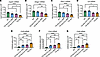 Figure 6
Reduction of hLMNB1 restores lipid synthesis gene expression to WT levels in Tg-flox;Cre (3M) mice and decreases the elevation of cytokine gene expression in both Tg-flox;Cre (3M) and Tg-flox;Cre (6M). Real-time qPCR analysis of lipid synthesis genes, Cyp51 (A), Hmgcr (B), Dhcr7 (C), and Lbr (D), and proinflammatory cytokine genes, Ccl3 (E), Ccl4 (F), Ccl6 (G). mRNA expression levels were normalized to β-actin (Actb) and further normalized to WT. n ≥ 6 per group. Statistical tests: 1-way ANOVA test with Tukey’s post hoc test. Data are shown as mean ± SEM. *P < 0.05, **P < 0.01, ***P < 0.001, ****P < 0.0001; nonsignificant comparisons are not shown).
We next assessed representative cytokine gene expression, which revealed that TG-flox mice demonstrated an approximately 5-fold increase in Ccl3, Ccl4, and Ccl6 compared with WT mice. Unexpectedly, both TG-flox;Cre (3M) and TG-flox;Cre (6M) mice demonstrated similar cytokine expression levels that were intermediate to, and significantly different from, those observed in WT and TG-flox mice (Figure 6, E–G).
Thus, lipid synthesis gene expression improved most in the TG-flox;Cre (3M) mice, and the timing of hLMNB1 overexpression ablation did not alter proinflammatory gene expression. These findings suggest that hLMNB1 overexpression may directly drive a reduction in lipid synthesis but may not independently maintain the increased proinflammatory response.
hLMNB1 reduction normalizes neurodegeneration-associated biomarker levels. We next measured the protein concentrations of pTau181, Aβ40, Aβ42, GFAP, and NFL in mouse spinal cords to determine whether these biomarkers that have been previously shown to track disease progression and severity in other neurodegenerative disorders might also be relevant to ADLD (29–33).
Concentrations of pTau181, Aβ40, and Aβ42 were found to be similar across all groups (Figure 7, A–C), suggesting that these pathogenic proteins are not prominently altered in this model. In contrast, GFAP and NFL concentrations were significantly higher in the TG-flox group compared with the other groups, highlighting the disease’s axonal damage and astrocytic activation. Interestingly, WT, TG-flox;Cre (3M), and TG-flox;Cre (6M) mice exhibited similar GFAP and NFL levels (Figure 7, D and E).
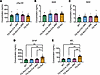 Figure 7
Reduction of hLMNB1 decreases the concentration of neurodegeneration-associated biomarkers in both Tg-flox;Cre (3M) and Tg-flox;Cre (6M) mice. Quantification of neurodegeneration biomarkers in spinal cord lysates: pTau181 (A), Aβ40 (B), Aβ42 (C), GFAP (D), and NFL (E). n ≥ 10 per group. Statistical tests: (A–E) 1-way ANOVA test with Tukey’s post hoc test. Data are shown as mean ± SEM. *P < 0.05, **P < 0.01, ***P < 0.001; nonsignificant comparisons are not shown.
Proinflammatory, but not lipid synthesis, gene expression correlates with hLMNB1 reduction and motor function. We next performed exploratory correlation analyses to examine whether hLMNB1 expression was associated with pathogenic biomolecular changes, including decreased lipid synthesis and increased proinflammatory gene expression. We also tested whether hLMNB1 levels and these biomolecular markers were correlated to rotarod performance at 10 months of age as a measure of disease severity. Analyses were performed on the combined genotype dataset (global), with TG-flox;Cre (3M) and TG-flox;Cre (6M) grouped as TG-flox;Cre.
Globally, hLMNB1 expression was negatively correlated with rotarod performance (Supplemental Figure 5A). Lipid synthesis gene expression (Cyp51, Hmgcr, Dhcr7, and Lbr) decreased as hLMNB1 expression increased across the dataset but was not significantly associated with rotarod performance (Supplemental Figure 5, B and C). Proinflammatory cytokine expression (Ccl3, Ccl4, and Ccl6) was positively associated with hLMNB1 levels and negatively correlated with rotarod performance (Supplemental Figure 5, D and E).
Together, these findings indicate that hLMNB1 expression is associated with key pathogenic molecular changes in the ADLD mouse model, particularly alterations in lipid synthesis and proinflammatory gene expression. In addition, the expression of the proinflammatory cytokines Ccl3, Ccl4, and Ccl6 was strongly associated with both hLMNB1 levels and motor performance, suggesting their potential utility as biomarkers for disease severity and therapeutic response.
Lmnb1 knockout in adult mice does not impact motor function, survival, or gross CNS organization. Having demonstrated the benefits of exogenous hLMNB1 reduction in the ADLD mouse model, we next sought to determine if reducing endogenous LMNB1 had deleterious effects in adult mice. This is a critical consideration for any LMNB1-reducing therapy, which would likely be administered only during adulthood. Previous research has shown that an embryonic knockout of Lmnb1 in the forebrain is lethal, with mice dying soon after birth with a reduced brain size and abnormal cortical neuron layering (Supplemental Figure 6, A and B) (16).
To determine if adult knockout of Lmnb1 carries detrimental effects, we crossed Lmnb1-flox/flox mice with a UBC-Cre-ERT2 strain (34). Resulting Lmnb1-flox/flox (Lb1-flox) and Lmnb1-flox/flox; UBC-Cre-ERT2 (Lb1 cKO) mice were injected with TAM at 3 months of age to induce ubiquitous Lmnb1 knockout. Lb1 cKO mice demonstrated an almost complete loss of LMNB1 protein and Lmnb1 mRNA expression in the forebrain and spinal cord (Figure 8, A–C). At 10 months of age, Lb1 cKO mice showed no impairment in motor function, as assessed by rotarod and open field measurements (average velocity, total distance traveled, and total movement time) (Figure 8, D–G). At 12 months of age, Lb1 cKO body weight and survival were similar to those in Lb1-flox mice (Figure 8, H and I). Additionally, no alteration in brain size was observed in Lb1 cKO mice, and cortical neuron layering, as assessed by NeuN, CUX1, and CTIP2 staining, remained normal despite a near absence of LMNB1 in neurons (Figure 8, J–L, and Supplemental Figure 6, C and D).
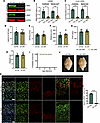 Figure 8
Ubiquitous knockout of Lmnb1 in adult mice does not impair motor function, survival, or cortical neuron layering. (A and B) Representative Western blot (A) and quantification (B) of forebrain and spinal cord lysates probed for endogenous murine LMNB1 and GAPDH. LMNB1 levels were normalized to GAPDH and further normalized to Lb1-flox. n = 3 per group. (C) Quantification of forebrain and spinal cord Lmnb1 mRNA expression. Lmnb1 levels were normalized to β-actin (Actb) and further normalized to Lb1-flox. n = 4 per group. (D) Rotarod performance at 10 months of age. n ≥ 10 per group. (E–G) Open-field analysis at 10 months of age comparing average ambulatory velocity (E), total distance traveled (F), and total movement time (G). n = 10 per group. (H) Body weight at 12 months of age. n = 8 per group. (I) Kaplan-Meier survival curves to 12 months of age. n = 8 per group. No significance by log-rank (Mantel-Cox) test (P > 0.9999). (J) Representative forebrain images taken at 12 months of age. (K) Representative cortical sections stained with a combination of NeuN, CUX1, DAPI, CTIP2, or LMNB1 antibodies. NeuN labels neurons, CUX1 labels layers II to upper IV, and CTIP2 labels lower IV to VI. Cortical neuron layers are labeled by roman numerals in Lb1-flox images. Scale bar: 50 μm. (L) Quantification of the percentage of NeuN+ cells that were also LMNB1+. n = 3 per group. Each point represents 1 independent field per mouse. Statistical tests: (B–H and L) Welch’s t test; (I) log-rank (Mantel-Cox) test. Data are shown as mean ± SEM. *P < 0.05, **P < 0.01, ***P < 0.001, ****P < 0.0001 nonsignificant comparisons are not shown.
The results indicate that a ubiquitous knockout of Lmnb1 in adult mice does not cause any overt CNS phenotype. While we cannot rule out more subtle alterations in the CNS and other systems, Lb1 cKO mice were indistinguishable from Lb1-flox mice across all measures analyzed, suggesting that Lmnb1 is not essential for survival in the adult mouse or that compensatory mechanisms after development can maintain function. Importantly, these findings can address potential safety issues associated with targeting LMNB1 reduction in adults using gene therapy or other approaches.


