
Cell biology

Abstract
Genome-targeting strategies to address NaV1.7-mediated signaling in nociceptive afferents are of great clinical interest given its high selectivity and persistent analgesic outcomes. In the present work, we analyze concentration-dependent effects of suppressing primary afferent NaV1.7 using the intrathecal delivery of an antisense oligonucleotide (ASO) on pain behaviors and demonstrate that NaV1.7 ASOs are likely to modulate pain traffic by blocking afferent signaling at the dorsal root ganglion (DRG) level. Intrathecal NaV1.7 ASOs induced a concentration-dependent gradient of knockdown in DRGs (lumbar to cervical) of Scn9a mRNA and ATTO488-ProTx-II binding in small DRG neurons, and a suppression of pain behaviors initiated by mechanical compression, inflammation, and the NaV1.7 agonist OD-1. The rostro-caudal reduction in mRNA correlated with ASO distribution, with implications for dose-related analgesic profiles. Marked reduction in DRG NaV1.7 binding was seen after intrathecal delivery of an ASO optimal dose, with high selectivity for small DRG neurons. Changes in sciatic nerve NaV1.7 binding were not detected, indicating a pain traffic modulation likely happening due to a block of afferent signaling at the DRG level.
Authors
Kaue Malange, Julia Borges Paes Lemes, Briana Noble, Yuvicza Anchondo, Carlos E. Morado-Urbina, Saee Jadhav, Saurabh Yadav, Jingrui Ma, Vineet Augustine, Sara A. Dochnal, Chiraag Kambalimath, Marie Duong, Pedro Alvarez, Bethany Fitzsimmons, Curt Mazur, Holly B. Kordasiewicz, Kim Dore, Hien T. Zhao, Tony Yaksh
Abstract
Matrix stiffness is a hallmark of aggressive solid tumors and strongly associated with therapeutic resistance and poor prognosis. This mechanical barrier represents a major unmet challenge in oncology, as current strategies rarely address how matrix mechanics themselves drive treatment resistance. Here, we identified ferroptosis, an iron-dependent form of cell death, as a potential long-sought vulnerability that can be exploited to eliminate mechanically resistant tumors. Using genetic and chemical approaches, we investigated how matrix stiffness sensitizes cancer cells to ferroptosis and whether this vulnerability can be therapeutically targeted. We found that cancer cells cultured on stiff matrices were more sensitive to ferroptosis than those on soft matrices, as evidenced by reduced cell viability and elevated lipid peroxidation. Furthermore, we found that matrix stiffness induced YAP activation, which upregulated its target gene SKP2, a key mediator required for the heightened ferroptosis sensitivity observed under stiff conditions. Finally, using an injectable hydrogel system, we demonstrated that stiffened tumors were resistant to chemotherapy but remained highly susceptible to ferroptosis induction, resulting in markedly reduced tumor volume and weight. Our findings established ferroptosis as a stiffness-dependent vulnerability mediated by a YAP-SKP2 signaling axis, revealing a mechanotransductive pathway that may be leveraged to target treatment-refractory tumors.
Authors
Emma Villares, Nico Taber, Shao-Chin Wu, Connor Amelung, Jianli Wu, Chao-Chieh Lin, Jen-Tsan Chi, Sharon Gerecht
Abstract
Differentiating keratinocytes break down their organelles and nuclei to become the compacted cornified layers of the epidermal barrier in a poorly understood catabolic process. Live confocal imaging of stratified human organotypic epidermis revealed endoplasmic reticulum (ER) fragmentation and lysosomal engulfment in the cornifying layers, where we found up-regulation of TEX264, a receptor that mediates selective autophagy of the ER (reticulophagy). TEX264 expression was increased by ER stress, which caused precocious cornification of organotypic epidermis. In undifferentiated keratinocytes, ectopic TEX264 was sufficient to induce ER fragments, while in highly differentiated keratinocytes, it accelerated ER elimination and nuclear shrinkage; these effects were abolished by mutating the LC3 interacting region required for its autophagic function. Knockout of TEX264 or inhibiting its activation disrupted the maturation of organotypic cultures, pointing to a critical role for reticulophagy in cornification. Finally, in patient biopsies and an organotypic model of Darier disease, a genetic cornification disorder linked to ER dysfunction, we found increased TEX264 in areas of premature cornification (dyskeratosis). Our results identified TEX264 as a key driver of late-stage epidermal differentiation and led us to propose a model of cornification in which keratinocytes activate selective autophagy receptors to orchestrate orderly organelle elimination during cutaneous barrier formation.
Authors
Christopher J. Johnson, Afua Tiwaa, Arti Parihar, Edwin Antonio, Brooke D. Lorenz, Reeteka Kudallur, Aaron Ramonett, Anthony Coon, Mrinal K. Sarkar, Johann Gudjonsson, Cory L. Simpson
Abstract
Bone morphogenetic protein-2 (BMP2) is used clinically to promote bone regeneration, but dose-limiting side effects restrict its clinical utility. Canonical Wnt signaling is essential for bone formation, and R-spondin-2 (RSPO2) is a secreted Wnt agonist highly expressed by osteoprogenitors. We found that BMP2 strongly induced RSPO2 during early human mesenchymal stem cell (hMSC) osteoblast differentiation. Recombinant RSPO2 synergized with BMP2 in both hMSCs and MC3T3-E1 preosteoblasts, whereas RSPO2 silencing impaired BMP2-driven osteogenic responses. In a murine critical-size calvarial defect model, co-delivery of RSPO2 and a suboptimal dose of BMP2 yielded significantly more new bone than BMP2 alone, while RSPO2 alone was ineffective. Enhanced canonical Wnt activation with BMP2-RSPO2 co-treatment was shown with an in vivo Wnt reporter mouse. Bulk RNA sequencing of MC3T3-E1 cells revealed that BMP2-RSPO2 co-treatment differentially activated osteogenesis-related genes and pathways compared to BMP2 alone. The guanine exchange factor (GEF), Prex1, was selectively upregulated by BMP2-RSPO2 co-treatment, and was required for RSPO2-mediated enhancement of BMP2-induced osteoblastogenesis. These findings identify RSPO2 as an enhancer of BMP2-driven osteogenesis, amplifying Wnt activation and involving PREX1-dependent signaling. RSPO2 or PREX1 activation may represent a co-therapy that could enhance BMP2 efficacy while mitigating the adverse effects of high-dose BMP2.
Authors
Buchan Jiang, Erin B. Meymarian, Shije Shahin, Jack T. Wilkening, Alexander J. Knights, Archana Sanjay, Tristan Maerz, Yadav Wagley, Kurt D. Hankenson
Abstract
Chronic liver disease affects over a billion people worldwide. Despite diverse etiologies, a unifying feature of chronic liver disease is the liver’s impaired ability to regenerate during progression to cirrhosis, but no common molecular mechanism has been identified. Hepatocyte proliferation and liver regeneration depend on nucleoplasmic calcium (Ca2+) signals, and Ca2+ signals in hepatocytes depend on the type 2 inositol trisphosphate receptor (ITPR2) calcium release channel. Here, we found that ITPR2 was localized in part to the hepatocyte nucleus, and this localization depended on the presence of nucleoporin 62 (NUP62). Loss of either ITPR2 or NUP62 disrupted nuclear Ca2+ signaling, and impaired Ca2+ signals in the nucleus blunted nuclear entry of β-catenin. Remarkably, both ITPR2 and NUP62 are progressively lost from hepatocytes in patients with the four most common types of chronic liver disease. These findings identify a microdomain regulating Ca2+ signaling in the hepatocyte nucleus that becomes progressively disrupted as liver disease progresses. Preservation of this nuclear microdomain may be a novel approach to maintain liver regeneration and slow the progression to cirrhosis in chronic liver disease.
Authors
Jittima Weerachayaphorn, Mateus T. Guerra, Naotaka Kugiyama, Emma Kruglov, Dejian Zhao, Piyachat Chansela, Vitoon Saengsirisuwan, Marie E. Robert, Teruo Utsumi, Yasuko Iwakiri, Michael H. Nathanson
Anti-Notch plus endocrine therapy in ER+ breast cancer inhibits cancer stem cells by increasing DAXX
Abstract
Resistance to endocrine therapy (ET) in ER+ breast cancer is mediated by Notch signaling, but the clinical application of anti-Notch therapy has been limited by the lack of predictive biomarkers. To identify Notch-regulated biomarkers, we conducted a pre-surgical window study evaluating ET combined with the γ-secretase inhibitor (GSI) MK-0752. RNA expressions in tumors were measured using an Affymetrix array and by real-time PCR. ET plus GSI showed more genes were decreased than ET alone. Specifically, DAXX, NOXA, and LFNG RNAs were increased, while fifteen additional transcripts were decreased. Mechanistically, GSI reduced Notch1 occupancy at CSL-binding elements within HES1, HEY2, HEYL, CCND1, MKI67, and DAXX genes, and inhibited cancer stem cells (CSCs) by 90% to 100%. This anti-CSC effect required DAXX, while GSI treatment or Notch1/4 knockdown increased DAXX expression, suggesting transcriptional repression by Notch. Using mouse tumor xenograft studies, ET plus MK-0752 resulted in complete regression of MCF-7 tumors, with DAXX-high tumors showing greater treatment sensitivity. Clinically, high DAXX expression was associated with improved recurrence-free and overall survival. This study found that anti-Notch plus ET in ER+ breast cancer inhibits cancer stem cells by increasing DAXX, a promising predictive biomarker. These findings support clinical evaluation of therapies that increase DAXX expression.
Authors
Kathy S. Albain, Debra Wyatt, Andrei Zlobin, Susan G. Hilsenbeck, Cheryl M. Czerlanis, Daniel S. Peiffer, Kyle R. Convington, Constantine Godellas, Shelly S. Lo, Patricia A. Robinson, Kathy Czaplicki, Barbara Busby, Davide Bova, Ping Tang, Patrick J. Stiff, Suzanne A.W. Fuqua, Lucio Miele, Clodia Osipo
Abstract
ADAMTS9 mutations cause the ciliopathies nephronophthisis and Joubert syndrome. Here we demonstrated that deletion of ADAMTS9 in the proximal nephron led to polycystic kidney development in mice. In males, Adamts9 deletion caused kidneys to become highly cystic while remaining small without undergoing enlargement. In contrast, female mice developed cystic kidneys at a slower rate. ADAMTS9 deletion disrupted ciliogenesis through the loss of cleavage of the ciliary transition zone (TZ) protein TMEM67, which led to loss of the MKS/B9 module – a key component of the ciliary gate. Functional analysis of all eight ciliopathy patient variants of ADAMTS9 identified to date showed TMEM67 C-terminus failed to localize to the TZ, thus disrupting a key regulatory mechanism in patient renal ciliogenesis. Modeling ADAMTS9-mediated TMEM67 cleavage utilizing TMEM67-cleavage deficient mice revealed loss of TZ formation, but not elevated canonical Wnt signaling as the underlying mechanism driving cystogenesis. Adamts9 deletion led to comparatively intense interstitial collagen deposition, which likely restricted kidney enlargement and resulted in the characteristically small kidney phenotype seen in nephronophthisis. By comparative analysis of four interconnected polycystic kidney models, in addition to Pkd1 and Pkd2 deleted kidneys, we identified differential collagen homeostasis as a principle factor determining cystic kidney size and type.
Authors
Sydney Fischer, Karyn L. Robert, Manu Ahmed, Griffin I. Kane, Matthew A. Kavanaugh, Wei Wang, Pamela V. Tran, Prabhani U. Atukorale, Sumeda Nandadasa
Abstract
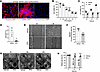
Autosomal dominant polycystic kidney disease (ADPKD) is a leading genetic cause of kidney failure, characterized by progressive cyst growth, inflammation, and interstitial fibrosis. Renal fibrosis, driven by myofibroblast activation and excessive extracellular matrix (ECM) deposition, is increasingly recognized as a key contributor to disease progression, yet targeted antifibrotic therapies remain limited. Here, we evaluated the therapeutic potential of pirfenidone to suppress fibrosis and disease progression in ADPKD. Single-nucleus RNA sequencing of human ADPKD kidneys identified fibroblasts as the predominant source of fibrous and adhesive ECM, with higher ECM-associated gene expression compared with that in normal kidney fibroblasts. In vitro, primary human ADPKD renal myofibroblasts displayed a similar profibrotic gene expression profile, and pirfenidone treatment suppressed ECM gene expression, cell proliferation, migration, and contractility. In the Pkd1RC/RC mouse model of ADPKD, pirfenidone reduced renal fibrosis, myofibroblast accumulation, ECM deposition, profibrotic gene expression, and associated signaling pathways and improved kidney function. Pirfenidone also reduced kidney enlargement but reduced cyst burden only in female mice. Collectively, these findings demonstrate that pirfenidone attenuates renal fibrosis and improves kidney function in ADPKD by suppressing myofibroblast activation and ECM production, supporting fibrosis as a therapeutic target and highlighting pirfenidone as a potential adjunct to cyst-directed therapies.
Authors
Viji Remadevi, Abeda Jamadar, Meekha M. Varghese, Haichun Yang, Sumedha Gunewardena, Darren P. Wallace, Reena Rao
Abstract
The adult mammalian heart has a limited ability to regenerate lost myocardium following myocardial infarction (MI), largely due to the poor proliferative capacity of cardiomyocytes (CMs). Dual-specificity tyrosine phosphorylation-regulated kinase 1A (DYRK1A) is a known regulator of cell quiescence, though the mechanisms underlying its function remain unclear. Previous studies have shown that pharmacological inhibition of DYRK1A using harmine induces CM cell cycle re-entry after ischemia/reperfusion (I/R) MI. Here, we developed a computational network model of DYRK1A-mediated regulation of the cell cycle, which predicts how DYRK1A inhibition promotes CM re-entry. To validate these predictions, we tested selective DYRK1A inhibitors and observed robust induction of cell cycle activity in neonatal rat cardiomyocytes (NRCMs). Integrating our network model with bulk RNA-sequencing data from DYRK1A inhibitor-treated NRCMs, we identified E2F1 as a key transcriptional driver of cell cycle gene expression. Finally, we demonstrate that both pharmacological and post-developmental inhibition of DYRK1A enhances heart function and increases CM cycling following I/R MI. Our findings suggest that functional recovery induced by small molecule inhibitor of DYRK1A is mediated by the induction of cycling CMs.
Authors
Bryce C. Murillo, Alexander Young, Kaitlyn L. Wintruba, Alexander J. Eichert, Klara Siejda, Dennon Hoernig, Leigh A. Bradley, Bryana N. Harris, Catherine Zhao, MIchelle Wu, Emmanuel Deau, Mattias F. Lindberg, Laurent Meijer, Jeffrey J. Saucerman, Matthew J. Wolf
Abstract
Cell metabolic rewiring is associated with resistance to venetoclax-azacitidine (Ven-Aza) combination therapy and relapse in acute myeloid leukemia (AML) patients. Drug-resistant cells exhibit an enhanced reliance on oxidative phosphorylation (OXPHOS) for energy production. Therefore, impairing mitochondrial metabolism represents an exciting strategy to face this unmet clinical need. We recently demonstrated that the specific activation of the phosphatase PP2A-B56α enhances the pro-apoptotic efficacy of venetoclax in AML. Here, through leveraging unbiased multi-omics-based approaches and using both genetic and pharmacological tools, we define key roles for the tumor suppressor PP2A-B56α complex in OXPHOS regulation and treatment response in disease-relevant AML models. From a translational perspective, the specific stabilization of PP2A-B56α heterocomplex with the novel PP2A molecular glue activator, RPT04402, reduces OXPHOS levels in treatment-resistant AML cells and improves treatment response in both Ven-Aza-sensitive and -resistant AML cell lines, primary cells, and in vivo models. Together, our work supports further research on targeted combination therapy approaches based on PP2A-B56α stabilization to counteract OXPHOS-related treatment resistance and improve AML responses in a patient population with historically poor outcomes.
Authors
Silvia Romero-Murillo, Irene Peris, Anna Maria Lucianò, Nerea Marcotegui, Carmen Vicente, Brian Tran, Kelsey Barrie, Caitlin M. O'Connor, Andrea Torres-López, Maria C. Mateos, Maria L. Cayuela, Victoriano Mulero, Joaquín Fernández-Irigoyen, Enrique Santamaría, Maria D. Odero, Goutham Narla
No posts were found with this tag.


