
Dermatology
Abstract
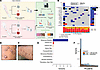
Prurigo nodularis (PN) is a chronic inflammatory skin disease characterized by pruritic skin nodules of unknown etiology. Little is known about genetic changes in PN pathogenesis, particularly somatic events, which are often implicated in inflammatory conditions. We thus performed whole-exome sequencing on 54 lesional and nonlesional skin biopsies from 17 patients with PN and 10 patients with atopic dermatitis (AD) for comparison. Somatic mutational analysis revealed that PN lesional skin harbors recurrent somatic mutations in fibrotic, neurotropic, and cancer-associated genes that are absent in adjacent PN nonlesional skin. Nonsynonymous mutations were most frequently present in NOTCH1 and the Notch signaling pathway, a key regulator of cellular proliferation and tissue fibrosis. In contrast, NOTCH1 mutations were absent in AD. Somatic copy-number analysis, combined with expression data, identified recurrently deleted and downregulated genes in PN lesional skin, which are associated with axonal guidance and extension. Follow-up immunofluorescence validation demonstrated increased NOTCH1 expression in PN lesional skin fibroblasts and increased Notch signaling in PN lesional dermis. Finally, a multicenter analysis revealed increased risk of NOTCH1-associated diseases in patients with PN. In characterizing the somatic landscape of PN, this study highlights the potential role of Notch pathway dysregulation in PN pathogenesis and fibrosis.
Authors
Ahmad Rajeh, Shahin Shahsavari, Hannah Cornman, Alexander Kollhoff, Anuj Gupta, Mindy D. Szeto, Anusha Kambala, Olusola O. Oladipo, Varsha Parthasarathy, Junwen Deng, Melika Marani, Shirin Shahsavari, Selina M. Yossef, Vedha Vaddaraju, Waleed Adawi, Yagiz M. Akiska, Davies M. Gage, Sarah Wheelan, Thomas Pritchard, Madan M. Kwatra, Yevgeniy R. Semenov, Alexander Gusev, Won Jin Ho, Srinivasan Yegnasubramanian, Shawn G. Kwatra

Abstract
Authors
Xiangmei Hua, Pranali N. Shah, Gustavo A. Velasquez, Lillian Sidky, George A. Romar, Lydia W. Boer, Natalie Hickerson, Tracy Qiying Cui, Federico Repetto, Abigail Waldman, Marilyn G. Liang, J. Paul Marcoux, MacLean Sellars, Victor Barrera, Birgitta A.R. Schmidt, Arash Mostaghimi, Ruth K. Foreman, Christine G. Lian, Sherrie J. Divito
Abstract
Authors
William J. Crisler, Noor Sohail, Samuel J. Steuart, Maria Vazquez-Machado, Arjun Mahajan, Maureen Whittelsey, Alex Pickering, Michael J. Martinez, Theresa Hutchins, Jessica E. Teague, Qian Zhan, Shannan Ho Sui, Ruth Ann Vleugels, Kathryn S. Torok, Heidi Jacobe, Rachael A. Clark, Avery LaChance
Abstract
Cutaneous radiation injury is an unintended consequence of radiotherapy for many common cancers and can progress to debilitating radiation-induced skin fibrosis (RISF). Existing radiation injury models do not fully capture the skin toxicities observed in patients, contributing to the lack of efficacious therapies to mitigate RISF. To address this, we developed an ex vivo human skin model that recapitulates the temporal radiation injury and RISF response. Human skin explants (N=12) subjected to ionizing radiation demonstrated DNA double-strand breaks and robust p53-driven transcriptional programming of cell cycle arrest, apoptosis, and senescence compared to non-irradiated controls. Irradiated skin also exhibited induction of pro-inflammatory cytokines, epithelial-mesenchymal transition, pro-fibrotic TGF-beta1 (TGFB1)-mediated signaling, and thickened collagen over time. P53 regulators murine double minute 2 (MDM2) and microRNA (miR)-34a were induced post-irradiation and may be leveraged to modulate injury response. Notably, RNA-sequencing of breast skin from mastectomy patients post-radiotherapy showed similar p53, inflammatory, and TGFB1 signatures as the ex vivo model, supporting its translational relevance. Together, this model provides a platform for identifying biomarkers and testing therapies to prevent or mitigate cutaneous radiation toxicities. Targeting the dynamic p53-driven pro-fibrotic radiation response represents a new therapeutic avenue to improve post-radiotherapy quality of life for cancer survivors.
Authors
Caroline Dodson, Sophie M. Bilik, Gabrielle DiBartolomeo, Hannah Pachalis, Lindsey G. Siegfried, Jordan A. K. Johnson, Seth R. Thaller, Irena Pastar, Marjana Tomic-Canic, Anthony J. Griswold, Rivka C. Stone
Abstract
This study provides a comprehensive evaluation of the cutaneous adipose tissue (CAT) transcriptome in psoriasis patients and investigates the effects of IL-17 blockade on CAT inflammation through a randomized placebo-controlled trial using secukinumab (ObePso-S study, NCT03055494). RNA sequencing analysis of CAT biopsies from 82 psoriasis patients revealed 2132 differentially expressed transcripts compared to healthy controls. Notably, significant gene dysregulation was observed in both lesional skin (LS)- and non-lesional (NL)-CAT, including activation of IL-17-driven pathways, antimicrobial peptide-related, and neutrophil degranulation signatures. Stratification by obesity demonstrated that obese psoriatic CAT exhibited more than 2-fold higher number of differentially expressed genes than non-obese counterparts, suggesting a synergistic interaction between psoriasis and obesity in driving CAT inflammation. Treatment with secukinumab markedly improved inflammatory signatures in psoriatic CAT, with greater improvements observed in obese patients. These findings reveal a pronounced and partially dependent on IL-17-dependent inflammatory phenotype in psoriatic CAT, challenge the conventional concept of psoriasis as a solely superficial skin disease, and highlight CAT as an important contributor to systemic inflammation in psoriasis.
Authors
Naomi Shishido-Takahashi, Sandra Garcet, Inna Cueto, Hong Beom Hur, Elisa F. Muscianisi, Jennifer Steadman, Andrew Blauvelt, James G. Krueger
Abstract
Dermal fibrosis is a cardinal feature of systemic sclerosis (SSc) for which there are limited Systemic sclerosis (SSc) is characterized by dermal fibrosis accompanied by loss of dermal white adipose tissue (DWAT), yet the mechanisms linking adipocyte depletion to fibroblast activation remain unclear. Here we identify the transcription factor SIX1 as a central regulator coupling adipogenic repression with profibrotic signaling. SIX1 expression was increased in skin biopsies from two independent SSc cohorts and localized to fibroblast and perivascular stromal cells. In mice, ubiquitous or adipocyte-specific deletion of Six1 preserved DWAT, reduced collagen accumulation, and selectively decreased pro-fibrotic mediators. In cultured fibroblasts, CRISPR/Cas9-mediated Six1 loss enhanced adipogenic markers while reducing profibrotic mediators and directly suppressed PAI-1 (SERPINE1) promoter activity. Together, these data position SIX1 as a transcriptional switch that promotes adipocyte reprogramming and fibrotic progression, and highlight SIX1 inhibition as a potential therapeutic strategy to preserve adipocyte identity and limit dermal fibrosis.
Authors
Nancy Wareing, Tingting W. Mills, Scott Collum, Minghua Wu, Lucy Revercomb, René Girard, Hui Liu, Alexes Daquinag, Mikhail Kolonin, Marka Lyons, Brian Skaug, Weizhen Bi, Meer A. Ali, Haniyeh Koochak, Anthony R. Flores, Yuntao Yang, W. Jim Zheng, William R. Swindell, Shervin Assassi, Harry Karmouty-Quintana
Abstract
Nicotinamide adenine dinucleotide (NAD⁺) is essential for cellular metabolism, DNA repair, and stress responses. NAD+ is synthesized from nicotinamide, nicotinic acid (collectively termed niacin), and tryptophan. In humans, deficiencies in these nutrients result in pellagra, marked by dermatitis, diarrhea, and dementia. The dermatitis associated with pellagra typically manifests as photodermatosis in sun-exposed areas. This study examined the effects of NAD+ deficiency on skin homeostasis using epidermis-specific Nampt conditional knockout (cKO) mice. These mice displayed substantial NAD⁺ depletion, reduced poly(ADP-ribose) polymerase (PARP) activity, and increased DNA damage. Consequently, Nampt cKO mice developed spontaneous skin inflammation and epidermal hyperplasia. RNA sequencing and immunohistochemical analyses demonstrated increased interleukin-36 (IL-36) cytokine expression, suggesting that DNA repair-related genomic stress triggers keratinocyte-driven IL-36 production, which promotes inflammation. Furthermore, reduced collagen17A1 expression and elevated thymic stromal lymphopoietin (TSLP) levels were observed. NAD+ repletion by transdermal supplementation of nicotinamide mononucleotide (NMN) suppressed the rise of IL-36 levels and skin inflammation. These findings underscore the importance of Nampt-mediated NAD⁺ metabolism for epidermal stability and indicate that NAD⁺ depletion may contribute to IL-36-mediated skin inflammation, offering insights for therapeutic strategies in inflammatory skin disorders.
Authors
Taiki Seki, Jun-Dal Kim, Yasuhito Yahara, Hitoshi Uchida, Keisuke Yaku, Mariam Karim, Teruhiko Makino, Tadamichi Shimizu, Takashi Nakagawa
Abstract
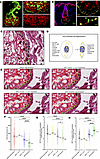
Acne vulgaris is a common skin condition involving complex interactions among lipid-secreting sebaceous glands, keratinocytes, immune cells, and microbiota. While retinoids are effective for treating acne, disease pathogenesis remains poorly understood. In particular, it remains unclear how different subtypes of acne, including inflammatory (pustular) and noninflammatory (comedonal) lesions, vary in gene expression, signaling, and sebaceous gland involvement. Here, we performed spatial transcriptomics on healthy, nonlesional, comedonal, and pustular acne skin using a custom panel targeting sebaceous differentiation, lipid metabolism, and retinoid signaling pathways. We also designed a specialized segmentation pipeline to improve transcript assignment in the spatially complex sebaceous gland. Our analyses identified a PPARG+ transitional basal cell state in sebocytes and revealed that comedonal skin upregulates sebogenesis genes, whereas pustular skin downregulates sebogenesis. Both lesion types exhibited increased AP-1 transcription factors and elevated FABP5, a chaperone that blunts retinoic acid receptor signaling. Finally, we demonstrated that an AP-1 inhibitor, T-5224, downregulates FABP5 in human keratinocytes and reduces pustule formation in a mouse model of high-fat diet–induced folliculitis. Altogether, these findings indicate that altered lipogenesis, retinoid signaling, and keratinocyte differentiation are key features of acne, and nominate AP-1 and FABP5 as potential therapeutic targets.
Authors
Joseph S. Durgin, Natalia A. Veniaminova, Thomas J. Huyge, Shih-Ying Tsai, Jennifer Fox, Yuli Cai, Mrinal K. Sarkar, Lam C. Tsoi, Johann E. Gudjonsson, Sunny Y. Wong
Abstract
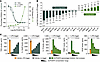
Adaptive immune responses are widely considered the primary drivers of chronic inflammation in autoimmune disease, yet increasing evidence suggests that dysregulated myeloid cells play a central role in sustaining tissue damage. Salt-inducible kinases (SIKs) regulate immune cell activation, and their pharmacological inhibition can promote a shift from proinflammatory toward an immunoregulatory phenotype. We investigated whether selective inhibition of SIK2 and SIK3 with GLPG3970 could reprogram monocytes, macrophages, and dendritic cells, and we assessed pharmacological effects on activated T and B cells. Preclinical studies in mouse models of colitis, psoriasis, and arthritis demonstrated that SIK2/SIK3 inhibition reduced inflammatory activity and promoted immunoregulatory and tolerogenic-associated pathways. Clinical signal-detection studies in ulcerative colitis, psoriasis, and rheumatoid arthritis revealed signs of clinical and biological activity in ulcerative colitis and psoriasis. These findings suggest that myeloid cell dysfunction and impaired myeloid phenotype switching contribute to chronic inflammation in autoimmune diseases and that therapeutic targeting of SIK2/SIK3 holds the potential to restore immune balance by converting proinflammatory into regulatory pathways. Collectively, this work supports SIK2/SIK3 inhibition as a potential treatment strategy for myeloid cell–driven chronic inflammatory conditions.
Authors
Steve De Vos, Nicolas Desroy, Susan J. Bellaire, Anna Pereira Fernandes, Stéphanie Lavazais, Didier Merciris, Carole Delachaume, Catherine Robin-Jagerschmidt, Adrien Cosson, Angela Lazaryan, Nancy Van Osselaer, David Amantini, Christophe Peixoto, Maikel L. Colli, Thomas Van Eeckhoutte, Tiina Hakonen, Magali Constant, Alberto Garcia-Hernandez, Rahul Barron, Geert D’Haens, Wulf O. Böcher
Abstract
Chronic hyperglycemia changes the expression of various transcription factors and mRNA transcripts, which impair the cellular functionality and delayed wound healing. ZEB2 (zinc finger E-box binding homeobox 2), a key transcription factor maintains the tissue specific macrophage identities, however, its role in regulating macrophage polarization during wound healing under hyperglycemic conditions remains unclear. Here, we have found that persistent hyperglycemia increases ZEB2 expression in wound macrophages via histone acetylation, contributing to chronic inflammation, and delayed wound healing. Exposure to high glucose levels activates P300/CBP, a transcriptional coactivator involved in histone acetylation, enhances ZEB2 expression in wound macrophages. The forced expression of ZEB2 shifts macrophage polarity toward a pro-inflammatory state by upregulating myeloid lineage directed transcription factors (MLDTFs). Conversely, silencing Zeb2 at the wound site reduced hyperglycemia induced macrophage inflammation. Topical application of C646, an inhibitor of P300, at the wound edges of streptozotocin induced high-fat diet fed diabetic mice significantly decreased ZEB2 expression, reduced inflammation and accelerated wound healing. Therefore, targeted inhibition of P300 represents a promising therapeutic strategy for improving diabetic wound healing by modulating ZEB2 driven inflammation in wound macrophages.
Authors
Soumyajit Roy, Debarun Patra, Palla Ramprasad, Shivam Sharma, Parul Katiyar, Ashvind Bawa, Kanhaiya Singh, Kulbhushan Tikoo, Suman Dasgupta, Chandan K. Sen, Durba Pal
No posts were found with this tag.


