
Research ArticleCell biologyDermatology
Open Access |  10.1172/jci.insight.181427
Adipocyte-specific deletion of sine oculis homeobox homolog 1 inhibits lipolysis and reduces skin fibrosis
Nancy Wareing,1,2 Tingting W. Mills,1 Scott Collum,1 Minghua Wu,2 Lucy Revercomb,3 René A. Girard,1 Hui Liu,1 Alexes Daquinag,4 Mikhail Kolonin,4 Marka Lyons,2 Brian Skaug,2 Weizhen Bi,1 Meer A. Ali,5 Haniyeh Koochak,6 Anthony R. Flores,6 Yuntao Yang,5 W. Jim Zheng,5 William R. Swindell,7 Shervin Assassi,2 and Harry Karmouty-Quintana1,8
1Department of Biochemistry and Molecular Biology, McGovern Medical School, University of Texas Health Science Center at Houston (UTHealth Houston), Texas, USA.
2Division of Rheumatology, Department of Internal Medicine, McGovern Medical School, UTHealth Houston, Houston, Texas, USA.
3Rice University, Houston, Texas, USA.
4Center for Metabolic and Degenerative Diseases, Institute of Molecular Medicine, UTHealth Houston, Houston, Texas, USA.
5D Bradley McWilliams School of Biomedical Informatics, Department of Internal Medicine, and
6Department of Pediatrics, McGovern Medical School, UTHealth Houston, Houston, Texas, USA.
7Department of Internal Medicine, University of Texas Southwestern Medical Center, Dallas, Texas, USA.
8Division of Pulmonary, Critical Care, and Sleep Medicine, Department of Internal Medicine, McGovern Medical School, UTHealth Houston, Houston, Texas, USA.
Address correspondence to: Shervin Assassi, 6431 Fannin St., Suite 5.260, Houston, Texas 77030, USA. Phone: 713.500.6888; Email: Shervin.Assassi@uth.tmc.edu. Or to: Harry Karmouty-Quintana, 6431 Fannin St., Suite 6.214, Houston, Texas 77030, USA. Phone: 713.500.5331; Email: Harry.Karmouty@uth.tmc.edu. NW’s present address is: Emory University, Atlanta, Georgia, USA. LR’s present address is: Rutgers University, New Brunswick, New Jersey, USA. ARF’s present address is: Vanderbilt University, Nashville, Tennessee, USA.
Find articles by Wareing, N. in: PubMed | Google Scholar
1Department of Biochemistry and Molecular Biology, McGovern Medical School, University of Texas Health Science Center at Houston (UTHealth Houston), Texas, USA.
2Division of Rheumatology, Department of Internal Medicine, McGovern Medical School, UTHealth Houston, Houston, Texas, USA.
3Rice University, Houston, Texas, USA.
4Center for Metabolic and Degenerative Diseases, Institute of Molecular Medicine, UTHealth Houston, Houston, Texas, USA.
5D Bradley McWilliams School of Biomedical Informatics, Department of Internal Medicine, and
6Department of Pediatrics, McGovern Medical School, UTHealth Houston, Houston, Texas, USA.
7Department of Internal Medicine, University of Texas Southwestern Medical Center, Dallas, Texas, USA.
8Division of Pulmonary, Critical Care, and Sleep Medicine, Department of Internal Medicine, McGovern Medical School, UTHealth Houston, Houston, Texas, USA.
Address correspondence to: Shervin Assassi, 6431 Fannin St., Suite 5.260, Houston, Texas 77030, USA. Phone: 713.500.6888; Email: Shervin.Assassi@uth.tmc.edu. Or to: Harry Karmouty-Quintana, 6431 Fannin St., Suite 6.214, Houston, Texas 77030, USA. Phone: 713.500.5331; Email: Harry.Karmouty@uth.tmc.edu. NW’s present address is: Emory University, Atlanta, Georgia, USA. LR’s present address is: Rutgers University, New Brunswick, New Jersey, USA. ARF’s present address is: Vanderbilt University, Nashville, Tennessee, USA.
Find articles by
Mills, T.
in:
PubMed
|
Google Scholar
|

1Department of Biochemistry and Molecular Biology, McGovern Medical School, University of Texas Health Science Center at Houston (UTHealth Houston), Texas, USA.
2Division of Rheumatology, Department of Internal Medicine, McGovern Medical School, UTHealth Houston, Houston, Texas, USA.
3Rice University, Houston, Texas, USA.
4Center for Metabolic and Degenerative Diseases, Institute of Molecular Medicine, UTHealth Houston, Houston, Texas, USA.
5D Bradley McWilliams School of Biomedical Informatics, Department of Internal Medicine, and
6Department of Pediatrics, McGovern Medical School, UTHealth Houston, Houston, Texas, USA.
7Department of Internal Medicine, University of Texas Southwestern Medical Center, Dallas, Texas, USA.
8Division of Pulmonary, Critical Care, and Sleep Medicine, Department of Internal Medicine, McGovern Medical School, UTHealth Houston, Houston, Texas, USA.
Address correspondence to: Shervin Assassi, 6431 Fannin St., Suite 5.260, Houston, Texas 77030, USA. Phone: 713.500.6888; Email: Shervin.Assassi@uth.tmc.edu. Or to: Harry Karmouty-Quintana, 6431 Fannin St., Suite 6.214, Houston, Texas 77030, USA. Phone: 713.500.5331; Email: Harry.Karmouty@uth.tmc.edu. NW’s present address is: Emory University, Atlanta, Georgia, USA. LR’s present address is: Rutgers University, New Brunswick, New Jersey, USA. ARF’s present address is: Vanderbilt University, Nashville, Tennessee, USA.
Find articles by Collum, S. in: PubMed | Google Scholar
1Department of Biochemistry and Molecular Biology, McGovern Medical School, University of Texas Health Science Center at Houston (UTHealth Houston), Texas, USA.
2Division of Rheumatology, Department of Internal Medicine, McGovern Medical School, UTHealth Houston, Houston, Texas, USA.
3Rice University, Houston, Texas, USA.
4Center for Metabolic and Degenerative Diseases, Institute of Molecular Medicine, UTHealth Houston, Houston, Texas, USA.
5D Bradley McWilliams School of Biomedical Informatics, Department of Internal Medicine, and
6Department of Pediatrics, McGovern Medical School, UTHealth Houston, Houston, Texas, USA.
7Department of Internal Medicine, University of Texas Southwestern Medical Center, Dallas, Texas, USA.
8Division of Pulmonary, Critical Care, and Sleep Medicine, Department of Internal Medicine, McGovern Medical School, UTHealth Houston, Houston, Texas, USA.
Address correspondence to: Shervin Assassi, 6431 Fannin St., Suite 5.260, Houston, Texas 77030, USA. Phone: 713.500.6888; Email: Shervin.Assassi@uth.tmc.edu. Or to: Harry Karmouty-Quintana, 6431 Fannin St., Suite 6.214, Houston, Texas 77030, USA. Phone: 713.500.5331; Email: Harry.Karmouty@uth.tmc.edu. NW’s present address is: Emory University, Atlanta, Georgia, USA. LR’s present address is: Rutgers University, New Brunswick, New Jersey, USA. ARF’s present address is: Vanderbilt University, Nashville, Tennessee, USA.
Find articles by Wu, M. in: PubMed | Google Scholar
1Department of Biochemistry and Molecular Biology, McGovern Medical School, University of Texas Health Science Center at Houston (UTHealth Houston), Texas, USA.
2Division of Rheumatology, Department of Internal Medicine, McGovern Medical School, UTHealth Houston, Houston, Texas, USA.
3Rice University, Houston, Texas, USA.
4Center for Metabolic and Degenerative Diseases, Institute of Molecular Medicine, UTHealth Houston, Houston, Texas, USA.
5D Bradley McWilliams School of Biomedical Informatics, Department of Internal Medicine, and
6Department of Pediatrics, McGovern Medical School, UTHealth Houston, Houston, Texas, USA.
7Department of Internal Medicine, University of Texas Southwestern Medical Center, Dallas, Texas, USA.
8Division of Pulmonary, Critical Care, and Sleep Medicine, Department of Internal Medicine, McGovern Medical School, UTHealth Houston, Houston, Texas, USA.
Address correspondence to: Shervin Assassi, 6431 Fannin St., Suite 5.260, Houston, Texas 77030, USA. Phone: 713.500.6888; Email: Shervin.Assassi@uth.tmc.edu. Or to: Harry Karmouty-Quintana, 6431 Fannin St., Suite 6.214, Houston, Texas 77030, USA. Phone: 713.500.5331; Email: Harry.Karmouty@uth.tmc.edu. NW’s present address is: Emory University, Atlanta, Georgia, USA. LR’s present address is: Rutgers University, New Brunswick, New Jersey, USA. ARF’s present address is: Vanderbilt University, Nashville, Tennessee, USA.
Find articles by Revercomb, L. in: PubMed | Google Scholar
1Department of Biochemistry and Molecular Biology, McGovern Medical School, University of Texas Health Science Center at Houston (UTHealth Houston), Texas, USA.
2Division of Rheumatology, Department of Internal Medicine, McGovern Medical School, UTHealth Houston, Houston, Texas, USA.
3Rice University, Houston, Texas, USA.
4Center for Metabolic and Degenerative Diseases, Institute of Molecular Medicine, UTHealth Houston, Houston, Texas, USA.
5D Bradley McWilliams School of Biomedical Informatics, Department of Internal Medicine, and
6Department of Pediatrics, McGovern Medical School, UTHealth Houston, Houston, Texas, USA.
7Department of Internal Medicine, University of Texas Southwestern Medical Center, Dallas, Texas, USA.
8Division of Pulmonary, Critical Care, and Sleep Medicine, Department of Internal Medicine, McGovern Medical School, UTHealth Houston, Houston, Texas, USA.
Address correspondence to: Shervin Assassi, 6431 Fannin St., Suite 5.260, Houston, Texas 77030, USA. Phone: 713.500.6888; Email: Shervin.Assassi@uth.tmc.edu. Or to: Harry Karmouty-Quintana, 6431 Fannin St., Suite 6.214, Houston, Texas 77030, USA. Phone: 713.500.5331; Email: Harry.Karmouty@uth.tmc.edu. NW’s present address is: Emory University, Atlanta, Georgia, USA. LR’s present address is: Rutgers University, New Brunswick, New Jersey, USA. ARF’s present address is: Vanderbilt University, Nashville, Tennessee, USA.
Find articles by Girard, R. in: PubMed | Google Scholar
1Department of Biochemistry and Molecular Biology, McGovern Medical School, University of Texas Health Science Center at Houston (UTHealth Houston), Texas, USA.
2Division of Rheumatology, Department of Internal Medicine, McGovern Medical School, UTHealth Houston, Houston, Texas, USA.
3Rice University, Houston, Texas, USA.
4Center for Metabolic and Degenerative Diseases, Institute of Molecular Medicine, UTHealth Houston, Houston, Texas, USA.
5D Bradley McWilliams School of Biomedical Informatics, Department of Internal Medicine, and
6Department of Pediatrics, McGovern Medical School, UTHealth Houston, Houston, Texas, USA.
7Department of Internal Medicine, University of Texas Southwestern Medical Center, Dallas, Texas, USA.
8Division of Pulmonary, Critical Care, and Sleep Medicine, Department of Internal Medicine, McGovern Medical School, UTHealth Houston, Houston, Texas, USA.
Address correspondence to: Shervin Assassi, 6431 Fannin St., Suite 5.260, Houston, Texas 77030, USA. Phone: 713.500.6888; Email: Shervin.Assassi@uth.tmc.edu. Or to: Harry Karmouty-Quintana, 6431 Fannin St., Suite 6.214, Houston, Texas 77030, USA. Phone: 713.500.5331; Email: Harry.Karmouty@uth.tmc.edu. NW’s present address is: Emory University, Atlanta, Georgia, USA. LR’s present address is: Rutgers University, New Brunswick, New Jersey, USA. ARF’s present address is: Vanderbilt University, Nashville, Tennessee, USA.
Find articles by Liu, H. in: PubMed | Google Scholar
1Department of Biochemistry and Molecular Biology, McGovern Medical School, University of Texas Health Science Center at Houston (UTHealth Houston), Texas, USA.
2Division of Rheumatology, Department of Internal Medicine, McGovern Medical School, UTHealth Houston, Houston, Texas, USA.
3Rice University, Houston, Texas, USA.
4Center for Metabolic and Degenerative Diseases, Institute of Molecular Medicine, UTHealth Houston, Houston, Texas, USA.
5D Bradley McWilliams School of Biomedical Informatics, Department of Internal Medicine, and
6Department of Pediatrics, McGovern Medical School, UTHealth Houston, Houston, Texas, USA.
7Department of Internal Medicine, University of Texas Southwestern Medical Center, Dallas, Texas, USA.
8Division of Pulmonary, Critical Care, and Sleep Medicine, Department of Internal Medicine, McGovern Medical School, UTHealth Houston, Houston, Texas, USA.
Address correspondence to: Shervin Assassi, 6431 Fannin St., Suite 5.260, Houston, Texas 77030, USA. Phone: 713.500.6888; Email: Shervin.Assassi@uth.tmc.edu. Or to: Harry Karmouty-Quintana, 6431 Fannin St., Suite 6.214, Houston, Texas 77030, USA. Phone: 713.500.5331; Email: Harry.Karmouty@uth.tmc.edu. NW’s present address is: Emory University, Atlanta, Georgia, USA. LR’s present address is: Rutgers University, New Brunswick, New Jersey, USA. ARF’s present address is: Vanderbilt University, Nashville, Tennessee, USA.
Find articles by
Daquinag, A.
in:
PubMed
|
Google Scholar
|
1Department of Biochemistry and Molecular Biology, McGovern Medical School, University of Texas Health Science Center at Houston (UTHealth Houston), Texas, USA.
2Division of Rheumatology, Department of Internal Medicine, McGovern Medical School, UTHealth Houston, Houston, Texas, USA.
3Rice University, Houston, Texas, USA.
4Center for Metabolic and Degenerative Diseases, Institute of Molecular Medicine, UTHealth Houston, Houston, Texas, USA.
5D Bradley McWilliams School of Biomedical Informatics, Department of Internal Medicine, and
6Department of Pediatrics, McGovern Medical School, UTHealth Houston, Houston, Texas, USA.
7Department of Internal Medicine, University of Texas Southwestern Medical Center, Dallas, Texas, USA.
8Division of Pulmonary, Critical Care, and Sleep Medicine, Department of Internal Medicine, McGovern Medical School, UTHealth Houston, Houston, Texas, USA.
Address correspondence to: Shervin Assassi, 6431 Fannin St., Suite 5.260, Houston, Texas 77030, USA. Phone: 713.500.6888; Email: Shervin.Assassi@uth.tmc.edu. Or to: Harry Karmouty-Quintana, 6431 Fannin St., Suite 6.214, Houston, Texas 77030, USA. Phone: 713.500.5331; Email: Harry.Karmouty@uth.tmc.edu. NW’s present address is: Emory University, Atlanta, Georgia, USA. LR’s present address is: Rutgers University, New Brunswick, New Jersey, USA. ARF’s present address is: Vanderbilt University, Nashville, Tennessee, USA.
Find articles by
Kolonin, M.
in:
PubMed
|
Google Scholar
|
1Department of Biochemistry and Molecular Biology, McGovern Medical School, University of Texas Health Science Center at Houston (UTHealth Houston), Texas, USA.
2Division of Rheumatology, Department of Internal Medicine, McGovern Medical School, UTHealth Houston, Houston, Texas, USA.
3Rice University, Houston, Texas, USA.
4Center for Metabolic and Degenerative Diseases, Institute of Molecular Medicine, UTHealth Houston, Houston, Texas, USA.
5D Bradley McWilliams School of Biomedical Informatics, Department of Internal Medicine, and
6Department of Pediatrics, McGovern Medical School, UTHealth Houston, Houston, Texas, USA.
7Department of Internal Medicine, University of Texas Southwestern Medical Center, Dallas, Texas, USA.
8Division of Pulmonary, Critical Care, and Sleep Medicine, Department of Internal Medicine, McGovern Medical School, UTHealth Houston, Houston, Texas, USA.
Address correspondence to: Shervin Assassi, 6431 Fannin St., Suite 5.260, Houston, Texas 77030, USA. Phone: 713.500.6888; Email: Shervin.Assassi@uth.tmc.edu. Or to: Harry Karmouty-Quintana, 6431 Fannin St., Suite 6.214, Houston, Texas 77030, USA. Phone: 713.500.5331; Email: Harry.Karmouty@uth.tmc.edu. NW’s present address is: Emory University, Atlanta, Georgia, USA. LR’s present address is: Rutgers University, New Brunswick, New Jersey, USA. ARF’s present address is: Vanderbilt University, Nashville, Tennessee, USA.
Find articles by Lyons, M. in: PubMed | Google Scholar
1Department of Biochemistry and Molecular Biology, McGovern Medical School, University of Texas Health Science Center at Houston (UTHealth Houston), Texas, USA.
2Division of Rheumatology, Department of Internal Medicine, McGovern Medical School, UTHealth Houston, Houston, Texas, USA.
3Rice University, Houston, Texas, USA.
4Center for Metabolic and Degenerative Diseases, Institute of Molecular Medicine, UTHealth Houston, Houston, Texas, USA.
5D Bradley McWilliams School of Biomedical Informatics, Department of Internal Medicine, and
6Department of Pediatrics, McGovern Medical School, UTHealth Houston, Houston, Texas, USA.
7Department of Internal Medicine, University of Texas Southwestern Medical Center, Dallas, Texas, USA.
8Division of Pulmonary, Critical Care, and Sleep Medicine, Department of Internal Medicine, McGovern Medical School, UTHealth Houston, Houston, Texas, USA.
Address correspondence to: Shervin Assassi, 6431 Fannin St., Suite 5.260, Houston, Texas 77030, USA. Phone: 713.500.6888; Email: Shervin.Assassi@uth.tmc.edu. Or to: Harry Karmouty-Quintana, 6431 Fannin St., Suite 6.214, Houston, Texas 77030, USA. Phone: 713.500.5331; Email: Harry.Karmouty@uth.tmc.edu. NW’s present address is: Emory University, Atlanta, Georgia, USA. LR’s present address is: Rutgers University, New Brunswick, New Jersey, USA. ARF’s present address is: Vanderbilt University, Nashville, Tennessee, USA.
Find articles by
Skaug, B.
in:
PubMed
|
Google Scholar
|
1Department of Biochemistry and Molecular Biology, McGovern Medical School, University of Texas Health Science Center at Houston (UTHealth Houston), Texas, USA.
2Division of Rheumatology, Department of Internal Medicine, McGovern Medical School, UTHealth Houston, Houston, Texas, USA.
3Rice University, Houston, Texas, USA.
4Center for Metabolic and Degenerative Diseases, Institute of Molecular Medicine, UTHealth Houston, Houston, Texas, USA.
5D Bradley McWilliams School of Biomedical Informatics, Department of Internal Medicine, and
6Department of Pediatrics, McGovern Medical School, UTHealth Houston, Houston, Texas, USA.
7Department of Internal Medicine, University of Texas Southwestern Medical Center, Dallas, Texas, USA.
8Division of Pulmonary, Critical Care, and Sleep Medicine, Department of Internal Medicine, McGovern Medical School, UTHealth Houston, Houston, Texas, USA.
Address correspondence to: Shervin Assassi, 6431 Fannin St., Suite 5.260, Houston, Texas 77030, USA. Phone: 713.500.6888; Email: Shervin.Assassi@uth.tmc.edu. Or to: Harry Karmouty-Quintana, 6431 Fannin St., Suite 6.214, Houston, Texas 77030, USA. Phone: 713.500.5331; Email: Harry.Karmouty@uth.tmc.edu. NW’s present address is: Emory University, Atlanta, Georgia, USA. LR’s present address is: Rutgers University, New Brunswick, New Jersey, USA. ARF’s present address is: Vanderbilt University, Nashville, Tennessee, USA.
Find articles by Bi, W. in: PubMed | Google Scholar
1Department of Biochemistry and Molecular Biology, McGovern Medical School, University of Texas Health Science Center at Houston (UTHealth Houston), Texas, USA.
2Division of Rheumatology, Department of Internal Medicine, McGovern Medical School, UTHealth Houston, Houston, Texas, USA.
3Rice University, Houston, Texas, USA.
4Center for Metabolic and Degenerative Diseases, Institute of Molecular Medicine, UTHealth Houston, Houston, Texas, USA.
5D Bradley McWilliams School of Biomedical Informatics, Department of Internal Medicine, and
6Department of Pediatrics, McGovern Medical School, UTHealth Houston, Houston, Texas, USA.
7Department of Internal Medicine, University of Texas Southwestern Medical Center, Dallas, Texas, USA.
8Division of Pulmonary, Critical Care, and Sleep Medicine, Department of Internal Medicine, McGovern Medical School, UTHealth Houston, Houston, Texas, USA.
Address correspondence to: Shervin Assassi, 6431 Fannin St., Suite 5.260, Houston, Texas 77030, USA. Phone: 713.500.6888; Email: Shervin.Assassi@uth.tmc.edu. Or to: Harry Karmouty-Quintana, 6431 Fannin St., Suite 6.214, Houston, Texas 77030, USA. Phone: 713.500.5331; Email: Harry.Karmouty@uth.tmc.edu. NW’s present address is: Emory University, Atlanta, Georgia, USA. LR’s present address is: Rutgers University, New Brunswick, New Jersey, USA. ARF’s present address is: Vanderbilt University, Nashville, Tennessee, USA.
Find articles by Ali, M. in: PubMed | Google Scholar
1Department of Biochemistry and Molecular Biology, McGovern Medical School, University of Texas Health Science Center at Houston (UTHealth Houston), Texas, USA.
2Division of Rheumatology, Department of Internal Medicine, McGovern Medical School, UTHealth Houston, Houston, Texas, USA.
3Rice University, Houston, Texas, USA.
4Center for Metabolic and Degenerative Diseases, Institute of Molecular Medicine, UTHealth Houston, Houston, Texas, USA.
5D Bradley McWilliams School of Biomedical Informatics, Department of Internal Medicine, and
6Department of Pediatrics, McGovern Medical School, UTHealth Houston, Houston, Texas, USA.
7Department of Internal Medicine, University of Texas Southwestern Medical Center, Dallas, Texas, USA.
8Division of Pulmonary, Critical Care, and Sleep Medicine, Department of Internal Medicine, McGovern Medical School, UTHealth Houston, Houston, Texas, USA.
Address correspondence to: Shervin Assassi, 6431 Fannin St., Suite 5.260, Houston, Texas 77030, USA. Phone: 713.500.6888; Email: Shervin.Assassi@uth.tmc.edu. Or to: Harry Karmouty-Quintana, 6431 Fannin St., Suite 6.214, Houston, Texas 77030, USA. Phone: 713.500.5331; Email: Harry.Karmouty@uth.tmc.edu. NW’s present address is: Emory University, Atlanta, Georgia, USA. LR’s present address is: Rutgers University, New Brunswick, New Jersey, USA. ARF’s present address is: Vanderbilt University, Nashville, Tennessee, USA.
Find articles by Koochak, H. in: PubMed | Google Scholar
1Department of Biochemistry and Molecular Biology, McGovern Medical School, University of Texas Health Science Center at Houston (UTHealth Houston), Texas, USA.
2Division of Rheumatology, Department of Internal Medicine, McGovern Medical School, UTHealth Houston, Houston, Texas, USA.
3Rice University, Houston, Texas, USA.
4Center for Metabolic and Degenerative Diseases, Institute of Molecular Medicine, UTHealth Houston, Houston, Texas, USA.
5D Bradley McWilliams School of Biomedical Informatics, Department of Internal Medicine, and
6Department of Pediatrics, McGovern Medical School, UTHealth Houston, Houston, Texas, USA.
7Department of Internal Medicine, University of Texas Southwestern Medical Center, Dallas, Texas, USA.
8Division of Pulmonary, Critical Care, and Sleep Medicine, Department of Internal Medicine, McGovern Medical School, UTHealth Houston, Houston, Texas, USA.
Address correspondence to: Shervin Assassi, 6431 Fannin St., Suite 5.260, Houston, Texas 77030, USA. Phone: 713.500.6888; Email: Shervin.Assassi@uth.tmc.edu. Or to: Harry Karmouty-Quintana, 6431 Fannin St., Suite 6.214, Houston, Texas 77030, USA. Phone: 713.500.5331; Email: Harry.Karmouty@uth.tmc.edu. NW’s present address is: Emory University, Atlanta, Georgia, USA. LR’s present address is: Rutgers University, New Brunswick, New Jersey, USA. ARF’s present address is: Vanderbilt University, Nashville, Tennessee, USA.
Find articles by
Flores, A.
in:
PubMed
|
Google Scholar
|
1Department of Biochemistry and Molecular Biology, McGovern Medical School, University of Texas Health Science Center at Houston (UTHealth Houston), Texas, USA.
2Division of Rheumatology, Department of Internal Medicine, McGovern Medical School, UTHealth Houston, Houston, Texas, USA.
3Rice University, Houston, Texas, USA.
4Center for Metabolic and Degenerative Diseases, Institute of Molecular Medicine, UTHealth Houston, Houston, Texas, USA.
5D Bradley McWilliams School of Biomedical Informatics, Department of Internal Medicine, and
6Department of Pediatrics, McGovern Medical School, UTHealth Houston, Houston, Texas, USA.
7Department of Internal Medicine, University of Texas Southwestern Medical Center, Dallas, Texas, USA.
8Division of Pulmonary, Critical Care, and Sleep Medicine, Department of Internal Medicine, McGovern Medical School, UTHealth Houston, Houston, Texas, USA.
Address correspondence to: Shervin Assassi, 6431 Fannin St., Suite 5.260, Houston, Texas 77030, USA. Phone: 713.500.6888; Email: Shervin.Assassi@uth.tmc.edu. Or to: Harry Karmouty-Quintana, 6431 Fannin St., Suite 6.214, Houston, Texas 77030, USA. Phone: 713.500.5331; Email: Harry.Karmouty@uth.tmc.edu. NW’s present address is: Emory University, Atlanta, Georgia, USA. LR’s present address is: Rutgers University, New Brunswick, New Jersey, USA. ARF’s present address is: Vanderbilt University, Nashville, Tennessee, USA.
Find articles by Yang, Y. in: PubMed | Google Scholar
1Department of Biochemistry and Molecular Biology, McGovern Medical School, University of Texas Health Science Center at Houston (UTHealth Houston), Texas, USA.
2Division of Rheumatology, Department of Internal Medicine, McGovern Medical School, UTHealth Houston, Houston, Texas, USA.
3Rice University, Houston, Texas, USA.
4Center for Metabolic and Degenerative Diseases, Institute of Molecular Medicine, UTHealth Houston, Houston, Texas, USA.
5D Bradley McWilliams School of Biomedical Informatics, Department of Internal Medicine, and
6Department of Pediatrics, McGovern Medical School, UTHealth Houston, Houston, Texas, USA.
7Department of Internal Medicine, University of Texas Southwestern Medical Center, Dallas, Texas, USA.
8Division of Pulmonary, Critical Care, and Sleep Medicine, Department of Internal Medicine, McGovern Medical School, UTHealth Houston, Houston, Texas, USA.
Address correspondence to: Shervin Assassi, 6431 Fannin St., Suite 5.260, Houston, Texas 77030, USA. Phone: 713.500.6888; Email: Shervin.Assassi@uth.tmc.edu. Or to: Harry Karmouty-Quintana, 6431 Fannin St., Suite 6.214, Houston, Texas 77030, USA. Phone: 713.500.5331; Email: Harry.Karmouty@uth.tmc.edu. NW’s present address is: Emory University, Atlanta, Georgia, USA. LR’s present address is: Rutgers University, New Brunswick, New Jersey, USA. ARF’s present address is: Vanderbilt University, Nashville, Tennessee, USA.
Find articles by Zheng, W. in: PubMed | Google Scholar
1Department of Biochemistry and Molecular Biology, McGovern Medical School, University of Texas Health Science Center at Houston (UTHealth Houston), Texas, USA.
2Division of Rheumatology, Department of Internal Medicine, McGovern Medical School, UTHealth Houston, Houston, Texas, USA.
3Rice University, Houston, Texas, USA.
4Center for Metabolic and Degenerative Diseases, Institute of Molecular Medicine, UTHealth Houston, Houston, Texas, USA.
5D Bradley McWilliams School of Biomedical Informatics, Department of Internal Medicine, and
6Department of Pediatrics, McGovern Medical School, UTHealth Houston, Houston, Texas, USA.
7Department of Internal Medicine, University of Texas Southwestern Medical Center, Dallas, Texas, USA.
8Division of Pulmonary, Critical Care, and Sleep Medicine, Department of Internal Medicine, McGovern Medical School, UTHealth Houston, Houston, Texas, USA.
Address correspondence to: Shervin Assassi, 6431 Fannin St., Suite 5.260, Houston, Texas 77030, USA. Phone: 713.500.6888; Email: Shervin.Assassi@uth.tmc.edu. Or to: Harry Karmouty-Quintana, 6431 Fannin St., Suite 6.214, Houston, Texas 77030, USA. Phone: 713.500.5331; Email: Harry.Karmouty@uth.tmc.edu. NW’s present address is: Emory University, Atlanta, Georgia, USA. LR’s present address is: Rutgers University, New Brunswick, New Jersey, USA. ARF’s present address is: Vanderbilt University, Nashville, Tennessee, USA.
Find articles by Swindell, W. in: PubMed | Google Scholar
1Department of Biochemistry and Molecular Biology, McGovern Medical School, University of Texas Health Science Center at Houston (UTHealth Houston), Texas, USA.
2Division of Rheumatology, Department of Internal Medicine, McGovern Medical School, UTHealth Houston, Houston, Texas, USA.
3Rice University, Houston, Texas, USA.
4Center for Metabolic and Degenerative Diseases, Institute of Molecular Medicine, UTHealth Houston, Houston, Texas, USA.
5D Bradley McWilliams School of Biomedical Informatics, Department of Internal Medicine, and
6Department of Pediatrics, McGovern Medical School, UTHealth Houston, Houston, Texas, USA.
7Department of Internal Medicine, University of Texas Southwestern Medical Center, Dallas, Texas, USA.
8Division of Pulmonary, Critical Care, and Sleep Medicine, Department of Internal Medicine, McGovern Medical School, UTHealth Houston, Houston, Texas, USA.
Address correspondence to: Shervin Assassi, 6431 Fannin St., Suite 5.260, Houston, Texas 77030, USA. Phone: 713.500.6888; Email: Shervin.Assassi@uth.tmc.edu. Or to: Harry Karmouty-Quintana, 6431 Fannin St., Suite 6.214, Houston, Texas 77030, USA. Phone: 713.500.5331; Email: Harry.Karmouty@uth.tmc.edu. NW’s present address is: Emory University, Atlanta, Georgia, USA. LR’s present address is: Rutgers University, New Brunswick, New Jersey, USA. ARF’s present address is: Vanderbilt University, Nashville, Tennessee, USA.
Find articles by
Assassi, S.
in:
PubMed
|
Google Scholar
|
1Department of Biochemistry and Molecular Biology, McGovern Medical School, University of Texas Health Science Center at Houston (UTHealth Houston), Texas, USA.
2Division of Rheumatology, Department of Internal Medicine, McGovern Medical School, UTHealth Houston, Houston, Texas, USA.
3Rice University, Houston, Texas, USA.
4Center for Metabolic and Degenerative Diseases, Institute of Molecular Medicine, UTHealth Houston, Houston, Texas, USA.
5D Bradley McWilliams School of Biomedical Informatics, Department of Internal Medicine, and
6Department of Pediatrics, McGovern Medical School, UTHealth Houston, Houston, Texas, USA.
7Department of Internal Medicine, University of Texas Southwestern Medical Center, Dallas, Texas, USA.
8Division of Pulmonary, Critical Care, and Sleep Medicine, Department of Internal Medicine, McGovern Medical School, UTHealth Houston, Houston, Texas, USA.
Address correspondence to: Shervin Assassi, 6431 Fannin St., Suite 5.260, Houston, Texas 77030, USA. Phone: 713.500.6888; Email: Shervin.Assassi@uth.tmc.edu. Or to: Harry Karmouty-Quintana, 6431 Fannin St., Suite 6.214, Houston, Texas 77030, USA. Phone: 713.500.5331; Email: Harry.Karmouty@uth.tmc.edu. NW’s present address is: Emory University, Atlanta, Georgia, USA. LR’s present address is: Rutgers University, New Brunswick, New Jersey, USA. ARF’s present address is: Vanderbilt University, Nashville, Tennessee, USA.
Find articles by
Karmouty-Quintana, H.
in:
PubMed
|
Google Scholar
|
Published February 19, 2026 - More info
JCI Insight. 2026;11(7):e181427. https://doi.org/10.1172/jci.insight.181427.
© 2026 Wareing et al. This work is licensed under the Creative Commons Attribution 4.0 International License. To view a copy of this license, visit http://creativecommons.org/licenses/by/4.0/.
Received: May 14, 2024; Accepted: February 17, 2026

-
Results
Increased SIX1 levels correlate to skin fibrosis in patients with SSc. Previously, our group identified increased SIX1 in lung fibrosis (30), and SIX1 expression has been identified to be present in s.c. adipocytes, particularly in those exhibiting aberrant function (42). Therefore, we aimed to determine whether SIX1 was elevated in skin samples from patients with SSc. To do this, we first determined expression of SIX1 from 2 distinct cohorts: The Genetics versus ENvironment In Scleroderma Outcome Study (GENISOS) cohort, which includes patients with lcSSc and dcSSc at different stages of disease, and the Prospective Registry for Early Systemic Sclerosis (PRESS) cohort, enriched for patients with early-stage dcSSc. SIX1 transcript levels were elevated in SSc skin in limited SSc, diffuse SSc, and in early diffuse SSc compared with control skin in both independent cohorts (Figure 1). In the PRESS cohort, which is enriched for patients with early dcSSc, RNA-seq revealed increased SIX1 signals (Figure 1A). In the GENISOS cohort, which encompasses dcSSc and lcSSc at different stages of disease, SIX1 signal intensity, denoting expression levels, was higher in patients with dcSSc compared with lcSSc (Figure 1B). To determine whether SIX1 is associated with the genomic landscape of a particular cell type, we correlated SIX1 expression levels with cell type–specific signature scores previously utilized by our group (45, 46). The bioinformatic analysis identified genes that are expressed at comparatively higher levels in a specific cell type and created a signature score for each cell type being evaluated. The s.c. adipose signature was the most highly correlated with SIX1 expression in both the GENISOS (r = 0.76) and PRESS cohorts (r = 0.79). This points to SIX1 is an important mediator that is elevated in adipose tissue in SSc (Figure 1C). Higher expression of genes specific to fibroblasts, vascular and lymphatic endothelial cells, significantly correlated with higher expression of SIX1, suggesting that SIX1 may regulate mesodermal derived cells during fibrosis but not the ectodermally derived epithelium. Individual gene correlation analysis revealed that genes associated with adipocyte biology were enriched among those genes most highly correlated with SIX1, specifically in early dcSSc skin (Figure 1D and Supplemental Table 3; supplemental material available online with this article; https://doi.org/10.1172/jci.insight.181427DS1). These included genes encoding proteins required for adipocyte differentiation and triglyceride metabolism, including ADIPOQ and PPARG (47–49). Functional annotation of all differentially expressed genes (DEGs) in the skin of patients with dcSSc in the PRESS cohort compared with healthy controls showed significant enrichment for “regulation of lipolysis in adipocytes” in addition to “ribosome” and “AMPK signaling pathway” (Figure 1E).
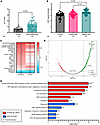 Figure 1
SIX1 is elevated in SSc skin and correlates with adipose-related genes and pathways. (A) SIX1 expression in PRESS SSc skin samples and controls. FPKM, fragments per kilobase million based on a FDR cutoff of 0.05 and fold change cutoff of > 1.5 or < 0.6 (B) SIX1 expression in baseline SSc skin samples and controls in the GENISOS cohort based on Student’s t test. (C) Heatmap showing correlation (r) between skin SIX1 expression and cell type signature scores on Spearman’s rank order correlation. Bolded pathways indicate correlations with P < 0.05 in both cohorts. (D) Volcano plot showing individual gene-SIX1 correlations in PRESS cohort SSc skin samples. PLIN1, perilipin 1; G0S2, G0/G2 switch gene 2; ADIPOQ, adiponectin; HSL, hormone sensitive lipase; FABP4, fatty acid binding protein 4; LEP, leptin; ATGL, adipose triglyceride lipase; PPARG, peroxisome proliferator activated receptor γ based on a Spearman’s rank coefficient analysis. (E) KEGG pathway annotation of all DEGs in SSc skin of PRESS cohort participants using GoStats. Significancy levels refer to a Bonferroni cut-off of 0.5 analysis (A) or a the R Bioconductor package edgeR6 analysis for to identify differentially expressed transcripts between patients with SSc and healthy controls with a FDR cutoff of 0.05 and fold change cutoff of > 1.5 or < 0.67 for B.
Increased adipocyte SIX1 levels correlate with loss of dermal white adipose tissue (DWAT) in SSc. Several studies have shown that the lipoatrophy and loss of DWAT is present in skin fibrosis in SSc (15) and even precedes the fibrotic matrix deposition (50). In addition, AMT (22, 24) and the adipose secretome (26) have been implicated in the pathophysiology of SSc. Thus, we next aimed to determine whether SIX1 levels were increased in the diminishing DWAT layer in the skin. Herein, we assessed tissue samples from the GENISOS cohort that include SSc-affected skin samples with varying disease durations, compared with an age, sex, and ethnicity-matched control sample, demonstrating a progressive loss of DWAT areas as disease progresses (Figure 2A). This is important as DWAT levels are known to reduce as dermal fibrosis develops, thus the GENISOS cohort allows us to temporally assess loss of adipose tissue and SIX1 levels during progression of disease. Demographic and clinical features of these individuals are listed in Supplemental Table 4. Compared with the control biopsy, there was notably less DWAT in the skin of all dcSSc-affected individuals, with the patient with the most established form of disease presenting with no discernible DWAT areas (Figure 2A). Thus, having established a correlation between changes in adipocyte biology, stromal cells, and SIX1 gene expression in SSc skin; we sought out to identify those cell types that produce SIX1 in SSc skin with abnormal dermal fat.
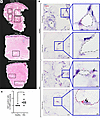 Figure 2
Dermal White Adipose Tissue (DWAT) atrophy and increased adipocyte SIX1 expression in SSc. (A) H&E staining of human skin biopsies from GENISOS cohort participants. Top: control skin. Middle: early SSc-representative image. Bottom: established representative SSc-skin sample. Clinical and demographic features of biopsies individuals are provided in Supplemental Table 4. Boxes contain dermal white adipose tissue. Dotted boxes denote DWAT areas. (B) Representative images of dual in situ hybridization for SIX1 (teal) and FABP4 (pink) in 3 SSc and 1 demographically matched control biopsies. Hematoxylin (purple) costain labels nuclei. “A” marks a dermal adnexal structure. Black arrows point to SIX1 transcript signal. Dash dot outlines denote the interior periphery of adipocytes. (C) Representative morphometric quantification for dual positive FABP4/SIX1 cells in healthy versus SSc tissue. *P ≤ 0.05 using Mann-Whitney U comparisons between healthy (n = 4) versus SSc (n = 8).
We selected 8 patients with SSc who retained dermal fat, most of whom were within 3 years of developing diffuse disease. Additionally, skin biopsies from 4 healthy controls were included. To localize the SIX1 gene in these samples, we employed single-molecule in situ hybridization. DWAT in human skin is localized around adnexal glands and hair follicles, and within and below the deep dermis (51). SIX1 was detected in both periadnexal and deep dermal adipocytes. Mature adipocytes are identifiable by a single large lipid droplet surrounded by a thin ring of cytoplasm and a peripheral nucleus, which expresses Fatty Acid Binding Protein 4 (FABP4) (Figure 2B). Our morphometric quantification revealed increased expression of SIX1 in SSc tissue (Figure 2C). We acknowledge that some fibroblasts also express FABP4; however, the unique morphology of adipocytes as described above makes them easily distinguishable from the small, spindle-shaped fibroblast with a dominant, central nucleus. Although FABP4+ cells are consistent with preadipocytes, it is plausible for a subset of cells to include macrophage- or vascular-associated populations. In addition, based on landmark scRNA-seq studies of SSc skin (52), SIX1 expression is increased in fibroblast and pericyte subtypes, with limited expression in keratinocytes and macrophages and reduced expression in endothelial cells. (Supplemental Table 5). It is important to note that no datasets were present for mature adipocytes. The clinical relevance of these findings was supported by positive correlations between the expression of SIX1 in SSc skin and the extent and severity of SSc skin fibrosis. Spearman’s rank-order correlation analysis showed a positive correlation between whole skin SIX1 expression and modified Rodnan skin score (mRSS) (r = 0.40, P < 0.001), and local skin score (r = 0.38, P < 0.001) near the site of the biopsy. To our knowledge, dermal fat SIX1 has not previously been identified in situ, the significance of which is supported by clinical data linking SIX1 to more severe and extensive SSc skin involvement. Together, these data from 2 SSc study cohorts provided a strong premise for investigating SIX1 in SSc disease mechanisms.
Adipose tissue loss is evident in a bleomycin model of dermal fibrosis. We selected the murine s.c. bleomycin (bleo) model of skin fibrosis (53) as the preclinical model to study the effects of SIX1 on fibrosis and lipoatrophy (11, 54). Unlike human skin, rodent skin DWAT is separated from the SWAT by a thin layer of skeletal muscle (the panniculus carnosus), allowing us to distinguish dermal adipocytes from s.c. adipocytes without the use of additional markers (55, 56). Furthermore, the fibrotic changes that occur over the 28 days of s.c. bleo treatment allow us to study the role and expression of SIX1 during the pathogenesis of dermal fibrosis (22, 50, 57).
We demonstrated that serial injections of s.c. bleo recapitulated lipodystrophy and dermal sclerosis mirroring SSc manifestations (Figure 3A) (22, 49, 56). Using Masson’s trichrome staining, we showed progressive bleo-induced atrophy of the DWAT, increased collagen deposition, and dermal thickening observable at weekly time points up to 28 days (Figure 3B). Attrition of DWAT was appreciable on histology as early as day 7 of bleo treatment, when dermal thickening was less pronounced. Quantification of dermal thickness and DWAT area confirmed these observations. When compared with day 7, dermal thickening was significant after 28 days of bleo (Figure 3C). This change lagged behind the significant decline in DWAT area (Figure 3D). Transcriptomic analysis revealed increased signals for Six1 (Figure 3E), and despite minimal histological changes in the dermis after 7 days of bleo, prominent ECM genes collagen 1a1 (Col1a1), collagen 1a2 (Col1a2), and collagen 6a1 (Col6a1),TGF-β (Tgfb1), and of serine proteinase inhibitor E 1 (Serpine1) were upregulated (Figure 3, F–J). Intriguingly, we did not detect increased expression for peroxisome proliferator-activated receptor γ (Pparg) on day 7 of s.c. bleo (Figure 3K). These results support that a reduction in DWAT and upregulation of fibrotic genes precedes significant dermal expansion following s.c. bleo treatment. Next, we investigated whether adipocyte Six1 expression, as observed in SSc skin, was recapitulated in the s.c. bleo model. Dual in situ hybridization probed for skin Six1 and Adipoq transcript expression after 7 days of s.c. vehicle or bleo injections. Adipoq is highly and specifically expressed in lipid-laden adipocytes (48). Mirroring findings in human SSc skin whereby SIX1 was elevated in early disease, Six1 transcripts levels were upregulated in the dermal adipocytes after 7 days of s.c. bleo treatment (Figure 4, A–C). We also assessed Six1 expression levels in fibroblasts using smooth muscle actin (SMA) as a readout; these studies did not reveal increased Six1 in SMA+ cells. (Figure 4, D and E). Collectively, these data demonstrate that adipocyte loss is evident prior to fibrotic deposition and that SIX1 levels are increased in adipocytes by day 7 of bleo treatment.
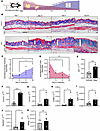 Figure 3
Dermal white adipose loss precedes fibrosis in the murine model of bleomycin induced skin fibrosis. (A) Schematic representation of s.c. bleo model of skin fibrosis in mice (created with BioRender). (B) Representative images of Masson’s trichrome staining of dorsal mouse skin after 7, 14, 21, and 28 days of s.c. vehicle or bleo treatment. White arrows indicate dermal thickness. Scale bar: 200 μm. (C and D) Dermal thickness and area of DWAT at 7, 14, 21, and 28 days reported in a dot plot, as mean ± SD of bleo-injected mice normalized to the average of all vehicle-injected mice at that time point. n = 4–5 for each time point. Transcript expression levels for sine oculis homeobox homolog 1 (Six1, E),collagen 1a1 (Col1a1, F), collagen 1a2 (Col1a2, G), collagen 6a1 (Col6a1, H), TGF-β1 (Tgfb1, I), serpin family E member 1 (Serpine1, J), and peroxisome proliferator activated receptor γ (Pparg, K) in 7-day skin samples by qPCR. Expression was normalized to 18s rRNA. DWAT, dermal white adipose tissue. *P ≤ 0.05, **P ≤ 0.01, ***P ≤ 0.001, and ****P ≤ 0.0001 refer to a simple linear regression for C and D and an unpaired t test for E–K. Each individual plot represents a biological n. n = 3–7.
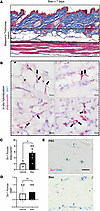 Figure 4
Adipocyte Six1 expression precedes white adipose loss in s.c. bleomycin-treated mice. Representative images of mouse dorsal skin injected with s.c. bleo for 7 days (n = 6). (A) Masson’s trichrome staining. (B) Dual in situ hybridization for Adiponectin (pink) and Six1 (teal). Arrows point to Six1 signal. DWAT, dermal white adipose tissue. (C) Quantification of Six1 puncta in Adiponectin expressing cells from vehicle (PBS, n = 4) or Bleo treated mice (n = 7). (D) Quantification of Six1 puncta in smooth muscle actin (SMA) expressing cells from vehicle-treated (PBS, n = 5) or from Bleo-treated (n = 4) mice. (E) Dual IHC for SMA (blue signals) and RNAScope for Six1, magenta puncta fibroblasts f denote fibroblasts, and v refer to vessels. Scale bar: 50 μm (A), 10 μm (B), and 20 μm (E). *P ≤ 0.05 refers to an un unpaired t test for C and D.
Transgenic Six1 deletion attenuates bleomycin-induced skin fibrosis. We next investigated whether genetic inhibition of Six1 could prevent skin fibrosis. After a 28-day course of s.c. bleo to induce an end-stage fibrosis phenotype, the affected skin of tamoxifen-treated mice with (iUbcCre) and without the Six1 allele (iUbc-Six1–/–) was analyzed by gene expression profiling and histology (Figure 5A). Six1 depletion in iUbc-Six1–/– skin following tamoxifen was confirmed morphometrically using dual FABP4 IHC and RNAscope for Six1 (Figure 5, B and C) and by qPCR (Figure 5D). Expression of profibrotic agents Col1a1, Col1a2, Fn1, elastin, Acta2, Tgfb1, and Serpine1 but not Mif was decreased in the skin of iUbc-Six1–/– compared with iUbcCre mice (Figure 5, E–L). To investigate whether Six1 modulates latent TGF-β complex components, we measured Latent TGF-β Binding Protein (Ltbp) 1–4 transcripts. Only Ltbp4 but not Ltbp1–3 was significantly decreased in iUbc-Six1−/− mice (Figure 5, M–P). These data suggest that Six1 may selectively affect latent TGF-β sequestration/availability through Ltbp4. We did not detect changes in expression of adipocyte markers Adiponectin, Cebpa, or Pparg (Figure 5, Q–S). Masson’s trichrome staining of bleo-affected skin showed maintenance of the DWAT layer in iUbc-Six1–/– mice compared with iUbcCre mice (Figure 6A). Six1-deficient mice had more prominent DWAT with lipid-laden adipocytes (Figure 6B). Perilipin 1 immunostaining was used to specifically detect adipocyte lipid droplets (Figure 6C). Adipocyte droplets in iUbc-Six1–/– were significantly larger compared with iUbcCre mice (Figure 6D). The deposition of collagen 6, which is enriched in adipose tissue, was analyzed using dual immunofluorescence staining with perilipin 1 to identify the DWAT (Figure 6C) (58, 59). iUbc-Six1–/– had lower collagen 6 density in the DWAT compared with iUbcCre mice (Figure 6E). There was no significant difference in collagen 6 deposition in the dermis or in dermal thickening (data not shown). In summary, whole-body depletion of Six1 followed by 28 days of s.c. bleo revealed that Six1 deletion may halt profibrotic gene expression and maintain DWAT in skin fibrosis.
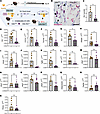 Figure 5
Inducible global deletion of Six1 inhibits fibrotic gene expression in s.c. bleomycin-treated mice. (A) Schematic representation of experimental design (created with BioRender). Following i.p. tamoxifen administration, iUbcCre and iUbc-Six1–/– were given 28 days of s.c. vehicle (PBS) or bleo. (B and C) Representative dual Six1 RNAscope (teal) and adiponectin (magenta) from bleomycin iUbcCre and iUbcSIX1–/– treated mice. Corresponding Six1 puncta quantification. Arrowheads point at Six1 signals. Scale bar: 20 μm. (D–S) Transcript expression levels for sine oculis homeobox homolog 1 (Six1, D),collagen 1a1 (Col1a1, E), collagen 1a2 (Col1a2, F), fibronectin (Fn1, G), elastin (H), actin α 2 (Acta2, I), serpin family E member 1 (Serpine1, J), TGF-β1 (Tgfb1, K), macrophage migration inhibitory factor (Mif, L), latent TGF-β binding protein 1 (Ltbp1, M), Ltbp2 (N), Ltbp3O (O), Ltbp4 (P), adiponectin (Q), CCAAT enhancer binding protein α (Cebpa, R), and peroxisome proliferator activated receptor γ (Pparg, S) at day 28 of bleomycin treatment. Expression was normalized to 18s rRNA. *P ≤ 0.05, **P ≤ 0.01, and ***P ≤ 0.001 refer to an unpaired t test for C–S. Each individual plot represents a biological n. n = 3–8.
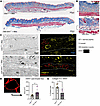 Figure 6
Global Six1 deletion prevents lipolysis and collagen 6 accumulation induced by s.c. bleomycin. (A) Masson’s trichrome staining of skin biopsies from iUbcCre and iUbc-Six1–/– mice treated with 28 days of s.c. bleo. (B) High-magnification Masson’s trichrome images of DWAT area marked by square bracket. (C) Representative brightfield (left panels) and dual immunofluorescence staining for collagen 6 (yellow signals) and perilipin 1 (red signals) in skin from 28-day bleo injected iUbcCre and iUbc-Six1–/– mice (right panels). (D) Quantification of droplet size of perilipin 1-positive adipocytes in the DWAT. Left: High-magnification (100×, zoomed) image of lipid droplet within DWAT stained with perilipin 1. (E) Quantification of collagen 6 as percent positive area in the DWAT. *P ≤ 0.05 refer to an unpaired t test. Each individual plot represents a biological n. n = 4–6. V denotes vessels; SM denotes skeletal muscle; DP denotes dermal papilla. Scale bar: 200 μm (A), 50 μm (B), and 20 μm (C).
To determine whether adipocyte-derived SIX1 contributes to dermal fibrosis, we examined the effect of adipocyte-specific deletion of Six1 in the bleomycin-induced skin injury model. To build on our data demonstrating elevated SIX1 in biopsies from individuals with early SSc and adipose Six1 expression in a mouse model of dermal fibrosis, when DWAT has begun to atrophy, we next investigated the potential role of adipocyte-specific Six1 in early disease. We developed a transgenic mouse model to knock out Six1 in cells with an active Adipoq promoter after tamoxifen treatment, conferring adipocyte-specific Six1 depletion in adult mice (48). We challenged mice with s.c. vehicle or bleo for 14 days, as we found this duration of bleo induced DWAT atrophy before late fibrosis is established. Gene expression and histological analyses were performed to determine the contribution of adipocyte Six1 in early events in skin fibrosis. Masson’s trichrome staining and dermal thickness measurements revealed a thinner dermis in iAdipo-Six1–/– mice after s.c. bleo compared with iAdipoCre mice (Figure 7, A and B), demonstrating how adipocyte-specific Six1 deletion prevented dermal thickening compared with Six1-competent mice. Six1 deletion was assessed morphometrically in dual RNAscope for Six1, and adiponectin revealed reduced Six1 puncta in bleo-treated (Figure 7, C and D) iAdipo-Six1–/– mice. Gene expression analysis revealed reduced Serpine1 but elevated Adiponectin expression on day 14 of bleo exposure in iAdipo-Six1–/– versus control iAdipoCre mice (Figure 7, E and F). Consistent with improved dermal thickness at day 14 of BLEO, we report reduced Col1a1 and Col1a2 following s.c. bleo in iAdipo-Six1–/– versus control iAdipoCre mice (Figure 7, G and H).
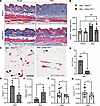 Figure 7
Adipocyte SIX1 deletion prevented bleomycin-induced dermal white adipose atrophy and dermal thickness. (A) Representative images of Masson’s trichrome staining from full-thickness skin biopsies. (B) Quantification of dermal thickness from Masson’s trichrome staining on day 14 of vehicle (PBS) or Bleo s.c. administration from iAdipoCre and iAdipo-Six1–/– mice. (C and D) Representative dual Six1 RNAscope (teal) and adiponectin (magenta) from bleomycin iAdipoCre– and iAdipo-SIX1–/––treated mice and corresponding Six1 puncta quantification. Arrowheads point at Six1 signals. Scale bar: 20 μm. (E–H) Transcript expression levels for Serpine 1 (E), adiponectin (F), collagen 1a1 (Col1a1, G), or collagen 1a2 (Col1a2, H), from s.c. bleo-treated iAdipoCre and iAdipo-Six1–/– mice on day 14 (E and F) or day 28 (G and H). *P ≤ 0.05 and **P ≤ 0.01 refer to a 1-way ANOVA with a Bonferroni correction for B or unpaired t test for D–H. Each individual plot represents a biological n. n = 5–13.
Next, we performed perilipin 1 immunostaining to identify adipocytes in the DWAT and measured intracellular lipid droplet size (Figure 8A). No difference in droplet size was observed in vehicle-treated mice regardless of Six1 expression. However, adipocyte Six1 deletion inhibited the reduction in droplet size induced by bleo that precedes loss of adipose tissue (Figure 8B). These findings suggest that Six1 plays a role in dermal lipid droplet size during the early development of skin fibrosis. To determine whether adipocyte preservation was accompanied by reduced DWAT collagen deposition, we performed immunofluorescence staining to detect collagen 6. While collagens 1, 4, and 6 are abundantly expressed in adipocytes, collagen 6 is the most predominant collagen in fat depots (59); thus, the measurement of such would be expected to have the highest sensitivity for significant changes in the ECM. Deletion of Six1 in adipocytes significantly reduced DWAT collagen 6 deposition after 14 days of bleo (Figure 9, A and B). This is evident in dual IF for perilipin and collagen 6, demonstrating maintenance of perilipin structures and reduced COL6 in s.c. Bleo-treated iAdiponectinCre-Six1–/– versus iAdiponectinCre controls (Figure 9C). Adipocyte lipid droplet shrinkage and increased ECM deposition cause dramatic changes to DWAT architecture and function in skin fibrosis. We have here established adipocyte Six1 as a driver of both lipid droplet size and ECM deposition and as a candidate target for therapeutic intervention.
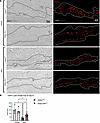 Figure 8
Lipid droplets are preserved in bleomycin-treated adipocyte-Six1–deficient mice treated with bleomycin. (A) Representative images of immunofluorescence staining for perilipin 1 in skin from iAdipocCre and iAdipo-Six1–/– mice treated with 14 days of s.c. vehicle (PBS) or bleo. Left: bright-field image. Right: immunofluorescence for perilipin (red signals) images. (B) Quantification of droplet size of perilipin-positive adipocytes in the DWAT. *P ≤ 0.05 refer to 2-way ANOVA with multiple comparison employing a Holm-Šidák correction for B. Each individual plot represents a biological n. Scale bar: 20 μm.
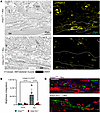 Figure 9
iAdipoCre -Six1 KO mice have decreased collagen 6 deposition in the DWAT after 14 days of s.c. bleomycin. (A) Representative images of immunofluorescence staining for collagen 6 (yellow) in skin samples from iAdipoCre or iAdipo-Six1–/– mice treated with 14 days of s.c. bleo. Left: bright-field image. Right: immunofluorescence for collagen 6 (yellow signals). Area within dotted lines represents DWAT. (B). Quantification of collagen 6 as brightness intensity within the DWAT. P values refer to 2-way ANOVA with multiple comparison, employing a Holm-Šidák correction for B. Each individual plot represents a biological n. n = 5. (C) representative dual immunofluorescence for collagen 6 (red signals) or perilipin (green signals) focusing on the DWAT area of either bleomycin-treated iAdipoCre (upper panel) iAdipoCreSIx1–/– mice (lower panel). V denotes vessels; SM denotes skeletal muscle. Scale bar: 20 μm (A) and 50 μm (B).
Collectively, our data demonstrate that Six1 deletion helps maintain lipid droplet size and ECM deposition in bleo-treated mice. To identify the SIX1 downstream mechanisms, we treated 3T3-L1 fibroblasts with a siSIX1 (or control siRNA) and an adipocyte differentiation cocktail to promote differentiation to adipose cells. Cells were collected on days 0, 2, 4, 6, and 9. These experiments demonstrated a reduction SIX1 knockdown on day 4 and 6 by Western blots (Supplemental Figure 1, A and B).
Next, we performed a gene analysis using the nCounter platform targeting fibrotic gene expression on day 6 (D6) of 3T3-treated fibroblasts with and without siSIX1. These unbiased experiments and subsequent heat maps for ECM synthesis and TGF-β signaling revealed that knockdown of SIX1 reduced levels of serine proteinase inhibitor E 1 (SERPINE1) the gene that encodes plasminogen activator inhibitor 1 (PAI-1) (Supplemental Figure 2, A and B). These results also demonstrated reduced Col4a1, Col4a2, Col5a1, Col5a3, and Col6a3 in addition to Tgfb1. Analysis of the TGF-β signaling pathway revealed reduced downstream mediators following siSix1 such as Tgfbr1, Crebbp, or Furin (Supplemental Figure 2, A and B). Serpine1 was selected for further validation based on a volcano plot demonstrating that it was one of the most significantly downregulated genes following siSix1. (Supplemental Figure 3).
To further investigate the role of Six1 as a regulator of Serpine1, we treated mouse 3T3-L1 fibroblasts with a pLenti-CRISPR/Cas9 Six1 gRNA vector and an adipocyte differentiation cocktail to promote differentiation to adipose cells. Clone 2 was selected for its efficacy at depleting SIX1 levels, consistent with reduced PAI-1 levels (Figure 10A). Cells were collected on D0, D2, D4, D6, D9, and D12, herein Six1 deletion resulted in reduced Serpine1 levels on D2, D4, D6, and D9 (Figure 10B). The reduction in Serpine1 expression levels was consistent with reduced PAI-1 signals in DWAT areas in bleo-treated iAdiponectinCreSix1–/– mice versus control AdiponectinCre mice, assessed morphometrically (Figure 10, C and D). We confirmed SERPINE1 promoter binding by SIX1 using a full-length hSERPINE1 promoter Gaussia Luciferase–expressing plasmid. Luciferase activity was significantly increased in Six1OE within 12 hours indicating a direct activation of the promoter (Figure 10E). Expression of SERPINE1 was also upregulated 11.5-fold and 3.8-fold in the PRESS and GENISOS cohorts, respectively (Table 1). Although the increased expression of SERPINE1 could reflect secondary processes in fibrosis, our findings support the conclusion that SIX1 upregulation directly promotes SERPINE1/PAI-1 expression as a downstream driver of dermal fibrosis.
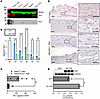 Figure 10
PAI-1 levels are upregulated in bleomycin-induced skin fibrosis and track with SIX1 expression levels. (A and B) Protein levels for β-actin, SIX1 and PAI-1, and from 3T3-L1 cells treated with a differentiation cocktail for adipocytes and transfected with either control plasmic (blue bars, B) or CRISPR/Cas9 Six1 plasmid (green bars, A). (C and D) Quantification of PAI-1 signals in DWAT from IHC for PAI-1 from bleomycin-exposed mouse skin for from 2 independent iAdipoCre or iAdipoSix1–/– mice. PAI-1 signals are shown in magenta. **P ≤ 0.01, ****P ≤ 0.0001 refer to a 2-way ANOVA with multiple comparison employing a Holm-Šidák correction for B. **P ≤ 0.01 refer to an unpaired t test for C. (E) Ratios of Gaussian luciferase/secreted embryonic alkaline phosphatase (G-Luc/SEAP) showing levels of SERPINE1-promoter activity from Six1OE cells compared with GFP controls at 12 hours. **P ≤ 0.01 refer to an unpaired t test for E. n = 3 (B and E) and n = 8 (C). Scale bars represent 20 μm.
Next, to identify whether SIX1 can directly regulate stromal cell fate in dermal fibrosis, we assessed lipid expression levels in mouse 3T3-L1 fibroblasts exposed to adipocyte differentiation cocktail. These studies revealed increased adiponectin and Cebpa expression levels on D6, D9 (Cebpa only) and D12 of CRISPRCas9 deletion of Six1 (Supplemental Figure 4, A and B). Fabp4 and Pparg followed the same trend with reduced expression in SIX1 KD cells of both of these genes on D2 and D9 (Pparg only) and increased expression on D4, D6, and D12 (Supplemental Figure 4, C and D). Fibrogenic gene expression revealed increased Fn1 expression levels on D0 and D2 but reduced expression on D6 and D9 (Supplemental Figure 4E) in SIX1 KD cell. Mif expression levels reduced on D4 and D6 but increased on D12 (Supplemental Figure 4F) following loss of SIX1. Tgfb1 expression levels were reduced on D2, D9, and D12 but elevated on D6, in SIX1-deficient cells (Supplemental Figure 4G). Intriguingly, the downstream mediator of TGFβ, Smad3, did not follow the same trend as Tgfb except for D12, where it was also reduced; instead, it was reduced on D0 and elevated on D2 and D9 (Supplemental Figure 4H). Despite the variation in gene expression, these data point to deletion of SIX1 resulting in increased lipid mediators and reduced profibrotic gene expression by D12. This temporal pattern parallels the in vivo sequence, where adipocyte depletion precedes collagen deposition, suggesting that SIX1 orchestrates early transcriptional events determining stromal fate after injury. This is consistent with IF denoting a more adipocyte-like cell following SIX1 KD compared with control cells stimulated with a differentiation cocktail (Supplemental Figure 4I). These in vitro studies suggest that SIX1 acts to repress adipocyte differentiation and favor a more fibroblast-like, profibrotic transcriptional state when treated with a adipocyte differentiation cocktail in vitro.


