
Research ArticleEndocrinologyMetabolism
Open Access |  10.1172/jci.insight.182135
Proteomic analyses of human islets reveal potential markers of β cell dysfunction during prediabetes
Chiara Maria Assunta Cefalo,1,2 Teresa Mezza,1,2 Giuseppe Quero,1,3 Sergio Alfieri,1,3 Donatella Lucchetti,1,4 Filomena Colella,4 Alessandro Sgambato,1,4 Wei-Jun Qian,5 Andrea Mari,6 Alfredo Pontecorvi,1,2 Andrea Giaccari,1,2 and Rohit N. Kulkarni7
1Dipartimento di Medicina e Chirurgia Traslazionale, Università Cattolica del Sacro Cuore, Rome, Italy.
2Unit of Endocrinology and Diabetology, Fondazione Policlinico Universitario Agostino Gemelli IRCCS, Rome, Italy.
3Pancreatic Surgery Unit, Pancreatic Advanced Research Center (CRMPG).
4Multiplex Spatial Profiling Facility, Fondazione Policlinico Universitario Agostino Gemelli IRCCS, Rome, Italy.
5Biological Sciences Division, Pacific Northwest National Laboratory, Richland, Washington, USA.
6Institute of Neuroscience, National Research Council, Padova, Italy.
7Section on Islet Cell and Regenerative Biology, Joslin Diabetes Center, Department of Medicine, Beth Israel Deaconess Medical Center, Harvard Medical School, Harvard Stem Cell Institute, Boston, Massachusetts, USA.
Address correspondence to: Teresa Mezza, Fondazione Policlinico Universitario A. Gemelli IRCCS, Largo Agostino Gemelli, 8, 00136, Roma, Italy. Phone: 39.3286990369; Email: teresa.mezza@unicatt.it.
CMAC’s present address is: Department of Clinical and Molecular Medicine, Sapienza University of Rome, Rome, Italy.
Authorship note: CMAC and TM contributed equally to this work.
Find articles by Cefalo, C. in: PubMed | Google Scholar
1Dipartimento di Medicina e Chirurgia Traslazionale, Università Cattolica del Sacro Cuore, Rome, Italy.
2Unit of Endocrinology and Diabetology, Fondazione Policlinico Universitario Agostino Gemelli IRCCS, Rome, Italy.
3Pancreatic Surgery Unit, Pancreatic Advanced Research Center (CRMPG).
4Multiplex Spatial Profiling Facility, Fondazione Policlinico Universitario Agostino Gemelli IRCCS, Rome, Italy.
5Biological Sciences Division, Pacific Northwest National Laboratory, Richland, Washington, USA.
6Institute of Neuroscience, National Research Council, Padova, Italy.
7Section on Islet Cell and Regenerative Biology, Joslin Diabetes Center, Department of Medicine, Beth Israel Deaconess Medical Center, Harvard Medical School, Harvard Stem Cell Institute, Boston, Massachusetts, USA.
Address correspondence to: Teresa Mezza, Fondazione Policlinico Universitario A. Gemelli IRCCS, Largo Agostino Gemelli, 8, 00136, Roma, Italy. Phone: 39.3286990369; Email: teresa.mezza@unicatt.it.
CMAC’s present address is: Department of Clinical and Molecular Medicine, Sapienza University of Rome, Rome, Italy.
Authorship note: CMAC and TM contributed equally to this work.
Find articles by Mezza, T. in: PubMed | Google Scholar
1Dipartimento di Medicina e Chirurgia Traslazionale, Università Cattolica del Sacro Cuore, Rome, Italy.
2Unit of Endocrinology and Diabetology, Fondazione Policlinico Universitario Agostino Gemelli IRCCS, Rome, Italy.
3Pancreatic Surgery Unit, Pancreatic Advanced Research Center (CRMPG).
4Multiplex Spatial Profiling Facility, Fondazione Policlinico Universitario Agostino Gemelli IRCCS, Rome, Italy.
5Biological Sciences Division, Pacific Northwest National Laboratory, Richland, Washington, USA.
6Institute of Neuroscience, National Research Council, Padova, Italy.
7Section on Islet Cell and Regenerative Biology, Joslin Diabetes Center, Department of Medicine, Beth Israel Deaconess Medical Center, Harvard Medical School, Harvard Stem Cell Institute, Boston, Massachusetts, USA.
Address correspondence to: Teresa Mezza, Fondazione Policlinico Universitario A. Gemelli IRCCS, Largo Agostino Gemelli, 8, 00136, Roma, Italy. Phone: 39.3286990369; Email: teresa.mezza@unicatt.it.
CMAC’s present address is: Department of Clinical and Molecular Medicine, Sapienza University of Rome, Rome, Italy.
Authorship note: CMAC and TM contributed equally to this work.
Find articles by Quero, G. in: PubMed | Google Scholar
1Dipartimento di Medicina e Chirurgia Traslazionale, Università Cattolica del Sacro Cuore, Rome, Italy.
2Unit of Endocrinology and Diabetology, Fondazione Policlinico Universitario Agostino Gemelli IRCCS, Rome, Italy.
3Pancreatic Surgery Unit, Pancreatic Advanced Research Center (CRMPG).
4Multiplex Spatial Profiling Facility, Fondazione Policlinico Universitario Agostino Gemelli IRCCS, Rome, Italy.
5Biological Sciences Division, Pacific Northwest National Laboratory, Richland, Washington, USA.
6Institute of Neuroscience, National Research Council, Padova, Italy.
7Section on Islet Cell and Regenerative Biology, Joslin Diabetes Center, Department of Medicine, Beth Israel Deaconess Medical Center, Harvard Medical School, Harvard Stem Cell Institute, Boston, Massachusetts, USA.
Address correspondence to: Teresa Mezza, Fondazione Policlinico Universitario A. Gemelli IRCCS, Largo Agostino Gemelli, 8, 00136, Roma, Italy. Phone: 39.3286990369; Email: teresa.mezza@unicatt.it.
CMAC’s present address is: Department of Clinical and Molecular Medicine, Sapienza University of Rome, Rome, Italy.
Authorship note: CMAC and TM contributed equally to this work.
Find articles by Alfieri, S. in: PubMed | Google Scholar
1Dipartimento di Medicina e Chirurgia Traslazionale, Università Cattolica del Sacro Cuore, Rome, Italy.
2Unit of Endocrinology and Diabetology, Fondazione Policlinico Universitario Agostino Gemelli IRCCS, Rome, Italy.
3Pancreatic Surgery Unit, Pancreatic Advanced Research Center (CRMPG).
4Multiplex Spatial Profiling Facility, Fondazione Policlinico Universitario Agostino Gemelli IRCCS, Rome, Italy.
5Biological Sciences Division, Pacific Northwest National Laboratory, Richland, Washington, USA.
6Institute of Neuroscience, National Research Council, Padova, Italy.
7Section on Islet Cell and Regenerative Biology, Joslin Diabetes Center, Department of Medicine, Beth Israel Deaconess Medical Center, Harvard Medical School, Harvard Stem Cell Institute, Boston, Massachusetts, USA.
Address correspondence to: Teresa Mezza, Fondazione Policlinico Universitario A. Gemelli IRCCS, Largo Agostino Gemelli, 8, 00136, Roma, Italy. Phone: 39.3286990369; Email: teresa.mezza@unicatt.it.
CMAC’s present address is: Department of Clinical and Molecular Medicine, Sapienza University of Rome, Rome, Italy.
Authorship note: CMAC and TM contributed equally to this work.
Find articles by Lucchetti, D. in: PubMed | Google Scholar
1Dipartimento di Medicina e Chirurgia Traslazionale, Università Cattolica del Sacro Cuore, Rome, Italy.
2Unit of Endocrinology and Diabetology, Fondazione Policlinico Universitario Agostino Gemelli IRCCS, Rome, Italy.
3Pancreatic Surgery Unit, Pancreatic Advanced Research Center (CRMPG).
4Multiplex Spatial Profiling Facility, Fondazione Policlinico Universitario Agostino Gemelli IRCCS, Rome, Italy.
5Biological Sciences Division, Pacific Northwest National Laboratory, Richland, Washington, USA.
6Institute of Neuroscience, National Research Council, Padova, Italy.
7Section on Islet Cell and Regenerative Biology, Joslin Diabetes Center, Department of Medicine, Beth Israel Deaconess Medical Center, Harvard Medical School, Harvard Stem Cell Institute, Boston, Massachusetts, USA.
Address correspondence to: Teresa Mezza, Fondazione Policlinico Universitario A. Gemelli IRCCS, Largo Agostino Gemelli, 8, 00136, Roma, Italy. Phone: 39.3286990369; Email: teresa.mezza@unicatt.it.
CMAC’s present address is: Department of Clinical and Molecular Medicine, Sapienza University of Rome, Rome, Italy.
Authorship note: CMAC and TM contributed equally to this work.
Find articles by Colella, F. in: PubMed | Google Scholar
1Dipartimento di Medicina e Chirurgia Traslazionale, Università Cattolica del Sacro Cuore, Rome, Italy.
2Unit of Endocrinology and Diabetology, Fondazione Policlinico Universitario Agostino Gemelli IRCCS, Rome, Italy.
3Pancreatic Surgery Unit, Pancreatic Advanced Research Center (CRMPG).
4Multiplex Spatial Profiling Facility, Fondazione Policlinico Universitario Agostino Gemelli IRCCS, Rome, Italy.
5Biological Sciences Division, Pacific Northwest National Laboratory, Richland, Washington, USA.
6Institute of Neuroscience, National Research Council, Padova, Italy.
7Section on Islet Cell and Regenerative Biology, Joslin Diabetes Center, Department of Medicine, Beth Israel Deaconess Medical Center, Harvard Medical School, Harvard Stem Cell Institute, Boston, Massachusetts, USA.
Address correspondence to: Teresa Mezza, Fondazione Policlinico Universitario A. Gemelli IRCCS, Largo Agostino Gemelli, 8, 00136, Roma, Italy. Phone: 39.3286990369; Email: teresa.mezza@unicatt.it.
CMAC’s present address is: Department of Clinical and Molecular Medicine, Sapienza University of Rome, Rome, Italy.
Authorship note: CMAC and TM contributed equally to this work.
Find articles by
Sgambato, A.
in:
PubMed
|
Google Scholar
|

1Dipartimento di Medicina e Chirurgia Traslazionale, Università Cattolica del Sacro Cuore, Rome, Italy.
2Unit of Endocrinology and Diabetology, Fondazione Policlinico Universitario Agostino Gemelli IRCCS, Rome, Italy.
3Pancreatic Surgery Unit, Pancreatic Advanced Research Center (CRMPG).
4Multiplex Spatial Profiling Facility, Fondazione Policlinico Universitario Agostino Gemelli IRCCS, Rome, Italy.
5Biological Sciences Division, Pacific Northwest National Laboratory, Richland, Washington, USA.
6Institute of Neuroscience, National Research Council, Padova, Italy.
7Section on Islet Cell and Regenerative Biology, Joslin Diabetes Center, Department of Medicine, Beth Israel Deaconess Medical Center, Harvard Medical School, Harvard Stem Cell Institute, Boston, Massachusetts, USA.
Address correspondence to: Teresa Mezza, Fondazione Policlinico Universitario A. Gemelli IRCCS, Largo Agostino Gemelli, 8, 00136, Roma, Italy. Phone: 39.3286990369; Email: teresa.mezza@unicatt.it.
CMAC’s present address is: Department of Clinical and Molecular Medicine, Sapienza University of Rome, Rome, Italy.
Authorship note: CMAC and TM contributed equally to this work.
Find articles by Qian, W. in: PubMed | Google Scholar
1Dipartimento di Medicina e Chirurgia Traslazionale, Università Cattolica del Sacro Cuore, Rome, Italy.
2Unit of Endocrinology and Diabetology, Fondazione Policlinico Universitario Agostino Gemelli IRCCS, Rome, Italy.
3Pancreatic Surgery Unit, Pancreatic Advanced Research Center (CRMPG).
4Multiplex Spatial Profiling Facility, Fondazione Policlinico Universitario Agostino Gemelli IRCCS, Rome, Italy.
5Biological Sciences Division, Pacific Northwest National Laboratory, Richland, Washington, USA.
6Institute of Neuroscience, National Research Council, Padova, Italy.
7Section on Islet Cell and Regenerative Biology, Joslin Diabetes Center, Department of Medicine, Beth Israel Deaconess Medical Center, Harvard Medical School, Harvard Stem Cell Institute, Boston, Massachusetts, USA.
Address correspondence to: Teresa Mezza, Fondazione Policlinico Universitario A. Gemelli IRCCS, Largo Agostino Gemelli, 8, 00136, Roma, Italy. Phone: 39.3286990369; Email: teresa.mezza@unicatt.it.
CMAC’s present address is: Department of Clinical and Molecular Medicine, Sapienza University of Rome, Rome, Italy.
Authorship note: CMAC and TM contributed equally to this work.
Find articles by
Mari, A.
in:
PubMed
|
Google Scholar
|
1Dipartimento di Medicina e Chirurgia Traslazionale, Università Cattolica del Sacro Cuore, Rome, Italy.
2Unit of Endocrinology and Diabetology, Fondazione Policlinico Universitario Agostino Gemelli IRCCS, Rome, Italy.
3Pancreatic Surgery Unit, Pancreatic Advanced Research Center (CRMPG).
4Multiplex Spatial Profiling Facility, Fondazione Policlinico Universitario Agostino Gemelli IRCCS, Rome, Italy.
5Biological Sciences Division, Pacific Northwest National Laboratory, Richland, Washington, USA.
6Institute of Neuroscience, National Research Council, Padova, Italy.
7Section on Islet Cell and Regenerative Biology, Joslin Diabetes Center, Department of Medicine, Beth Israel Deaconess Medical Center, Harvard Medical School, Harvard Stem Cell Institute, Boston, Massachusetts, USA.
Address correspondence to: Teresa Mezza, Fondazione Policlinico Universitario A. Gemelli IRCCS, Largo Agostino Gemelli, 8, 00136, Roma, Italy. Phone: 39.3286990369; Email: teresa.mezza@unicatt.it.
CMAC’s present address is: Department of Clinical and Molecular Medicine, Sapienza University of Rome, Rome, Italy.
Authorship note: CMAC and TM contributed equally to this work.
Find articles by Pontecorvi, A. in: PubMed | Google Scholar
1Dipartimento di Medicina e Chirurgia Traslazionale, Università Cattolica del Sacro Cuore, Rome, Italy.
2Unit of Endocrinology and Diabetology, Fondazione Policlinico Universitario Agostino Gemelli IRCCS, Rome, Italy.
3Pancreatic Surgery Unit, Pancreatic Advanced Research Center (CRMPG).
4Multiplex Spatial Profiling Facility, Fondazione Policlinico Universitario Agostino Gemelli IRCCS, Rome, Italy.
5Biological Sciences Division, Pacific Northwest National Laboratory, Richland, Washington, USA.
6Institute of Neuroscience, National Research Council, Padova, Italy.
7Section on Islet Cell and Regenerative Biology, Joslin Diabetes Center, Department of Medicine, Beth Israel Deaconess Medical Center, Harvard Medical School, Harvard Stem Cell Institute, Boston, Massachusetts, USA.
Address correspondence to: Teresa Mezza, Fondazione Policlinico Universitario A. Gemelli IRCCS, Largo Agostino Gemelli, 8, 00136, Roma, Italy. Phone: 39.3286990369; Email: teresa.mezza@unicatt.it.
CMAC’s present address is: Department of Clinical and Molecular Medicine, Sapienza University of Rome, Rome, Italy.
Authorship note: CMAC and TM contributed equally to this work.
Find articles by Giaccari, A. in: PubMed | Google Scholar
1Dipartimento di Medicina e Chirurgia Traslazionale, Università Cattolica del Sacro Cuore, Rome, Italy.
2Unit of Endocrinology and Diabetology, Fondazione Policlinico Universitario Agostino Gemelli IRCCS, Rome, Italy.
3Pancreatic Surgery Unit, Pancreatic Advanced Research Center (CRMPG).
4Multiplex Spatial Profiling Facility, Fondazione Policlinico Universitario Agostino Gemelli IRCCS, Rome, Italy.
5Biological Sciences Division, Pacific Northwest National Laboratory, Richland, Washington, USA.
6Institute of Neuroscience, National Research Council, Padova, Italy.
7Section on Islet Cell and Regenerative Biology, Joslin Diabetes Center, Department of Medicine, Beth Israel Deaconess Medical Center, Harvard Medical School, Harvard Stem Cell Institute, Boston, Massachusetts, USA.
Address correspondence to: Teresa Mezza, Fondazione Policlinico Universitario A. Gemelli IRCCS, Largo Agostino Gemelli, 8, 00136, Roma, Italy. Phone: 39.3286990369; Email: teresa.mezza@unicatt.it.
CMAC’s present address is: Department of Clinical and Molecular Medicine, Sapienza University of Rome, Rome, Italy.
Authorship note: CMAC and TM contributed equally to this work.
Find articles by
Kulkarni, R.
in:
PubMed
|
Google Scholar
|
Published March 19, 2026 - More info
JCI Insight. 2026;11(9):e182135. https://doi.org/10.1172/jci.insight.182135.
© 2026 Cefalo et al. This work is licensed under the Creative Commons Attribution 4.0 International License. To view a copy of this license, visit http://creativecommons.org/licenses/by/4.0/.
Received: April 25, 2024; Accepted: March 10, 2026

-
Results
Study participants. Twelve individuals without diabetes were enrolled, subjected to oral glucose tolerance test (OGTT) before surgery, and classified as NGT (n = 7) or IGT (n = 5). The 2 groups were matched for age and anthropometric characteristics. As expected, the IGT participants showed higher basal insulin values compared with NGT participants (NGT, 3.7 ± 2.1 mUI/mL vs. IGT, 10.1 ± 4.2 mUI/mL; P = 0.003). IGT participants showed a significant reduction in glucose uptake during hyperinsulinemic euglycemic clamp (expressed as M value) compared with NGT participants (NGT; 7.78 ± 0.91 mg·kg–1/min–1 vs. IGT: 5.07 ± 0.43 mg·kg–1/min–1; P = 0.01). Finally, evaluation of βGS during the mixed meal test (MMT) showed a significant decrease in the IGT participants compared with NGT participants (NGT: 204 ± 68.1 pmol·min–1m–2·mM–1 vs. IGT: 61.1 ± 40.7 pmol·min–1m–2·mM–1; P = 0.01). Clinical and metabolic characteristics of study participants classified based on glucose tolerance are summarized in Table 1.
To determine whether changes in the islet proteome would be better reflected by a functional measure of β cells we further classified the individuals based on the mean βGS. Thus, the NGT and IGT populations were subgrouped into (a) HIGH-βGS (n = 5) and (b) LOW-βGS (n = 7). According to the classification by glucose tolerance, 5 individuals in the HIGH-βGS group were determined to be NGT, while among the LOW-βGS group 2 individuals belonged to the NGT group and the others were in the IGT group. Thus, these classifications showed that not all individuals labeled as NGT belonged to the high βGS group, suggesting that glucose-based diagnosis of glucose intolerance does not appropriately reflect β cell functional capacity. Low-βGS individuals exhibited substantial lower mean M values but higher mean HbA1c levels compared with those with high βGS. Clinical and metabolic characteristics of study participants classified based on βGS are summarized in Table 2.
Comparative qualitative proteomic analysis. Proteomic analyses of islets revealed a list of 815 proteins identified with high confidence in our cohort of 12 individuals. A comparison of the proteins with the Islet Gene Atlas (20, 21), as expected, revealed that all individuals expressed pancreas and islet cell–specific proteins with high confidence (e.g., insulin [INS]; glucagon [GCG]; somatostatin [SMS]; regenerating islet-derived 1 α [REG1A]; trypsin-3 [TRY3]; protein disulfide isomerase [PDIA1]; pancreas/duodenum homeobox protein 1 [PDX1]; pancreastatin [CMGA]; secretogranin [CHGB]).
In terms of biological functions, the majority of the proteins identified in both the NGT and IGT groups were involved in metabolic (glucose and lipid metabolism, metabolism of nuclear acids, etc.) and cellular (cell cycle and cell growth, signal transduction, intracellular and intercellular communication, etc.) processes. Interestingly, these proteins were reduced in islets from patients with IGT compared with those with NGT. Moreover, islets from patients with IGT had fewer proteins involved in biological regulation and response to stimulus compared with patients with NGT. Figure 1A shows the protein profile for each group, including the number of genes identified and classified by biological function.
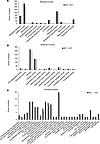 Figure 1
Gene ontology enrichment for differential genes between NGT islets and IGT islets. Categories were determined based on information provided by the online PANTHER classification system resource (https://pantherdb.org/validateHuman.jsp). All proteins were grouped based on biological process (A); molecular function (B); and pathways analysis (C). Data are expressed as the number of genes coding for the proteins identified in each group. NGT islets are represented as black bars, and IGT islets are represented as gray bars. In C, the underlying pathways represent those not expressed in IGT islets compared with NGT islets. NGT, normal glucose tolerant profile; IGT, impaired glucose tolerant profile.
Furthermore, we found that proteins involved in binding and catalytic activity were the most expressed in our cohort, with a reduced expression in IGT islets compared with NGT islets (Figure 1B).
Pathway analysis revealed loss of proteins involved in Toll-like receptors and notch signaling pathways in IGT islets. Moreover, IGT islets displayed a reduced expression of proteins involved in several key pathways, such as PI3 kinase, integrin signaling, G-protein signaling, or cell cycle; while an increased expression of proteins involved in 5-Hydroxytryptamine degradation pathway was detected in islets from patients with IGT compared with those with NGT (Figure 1C).
A striking observation when comparing the proteome of islets between the 2 groups revealed that several key proteins were not identified in islets from the IGT group compared with those from the NGT group, such as STARD10 and CADPS, which are involved in insulin granule biogenesis and secretion (22), or RAP1A, which is involved in glucagon-like peptide-1–linked (GLP-1–linked) regulation of insulin secretion (23). Furthermore, F262 and ALDOB, which participate in glycolysis, and ETFB, ATP5J, and SUCB1, which regulate ATP production through the Krebs’s cycle, were also not detected in the IGT proteome. Finally, ADAM10, a notch signaling pathway protein, regulating both cell fate and cell survival/growth (24) was identified in islets from patients with NGT but not in islets from patients with IGT.
Similar results were observed when comparing the islet proteome of individuals with high-βGS versus that from individuals with low-βGS (Supplemental Figure 1; supplemental material available online with this article; https://doi.org/10.1172/jci.insight.182135DS1).
Pathways analysis of the differentially expressed proteins in islets from individuals with IGT compared with those with NGT. Comparative quantitative analysis of islets, expressed as the log2 ratio of the average intensity of each individual protein, revealed 96 proteins differentially expressed in the IGT group compared with the NGT group (P value interaction between groups < 0.05), among which 51 were hyperexpressed and 45 hypoexpressed. We report all proteins expressed differently between the groups, with log2 of the average intensity and P value, in the Supplemental Table 1). A select group of regulated proteins implicated in different functional categories listed below in the Results were further examined.
Pathway analysis of the differentially expressed proteins in IGT islets compared with NGT islets revealed a decreasing expression of proteins involved in gluconeogenesis (PGK1, G3P); of proteins involved in the tricarboxylic acid cycle pathway, itself part of the carbohydrate metabolism (FUMH) (Figure 2A); and of proteins involved in lipid metabolism pathway (ACBP, ARF1) (Figure 2B). Moreover, there was a reduced expression of proteins involved in the JAK-STAT signaling pathway (STAT3, JAK2) (Figure 2C) which has been extensively related to β cells function in prediabetes conditions (25).
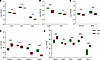 Figure 2
Differentially expressed proteins in IGT islets compared with NGT islets. Proteins involved in the major detected molecular pathways are grouped according to their function: glucose metabolism (A), lipid metabolism (B), intracellular signaling pathways (C), insulin secretion and release (D), or apoptosis and proliferation (E). IGT islets show increased levels of proteins involved in glycolysis (PGK1, G3P) and lower levels of proteins involved in the tricarboxylic acid cycle pathway (FUMH) and lipolysis (ARF1, ACBP) compared with NGT. IGT islets have impaired expression of proteins involved in the intracellular JAK/STAT signaling pathway (STAT3, JAK2). IGT islets have higher expression of proteins inducing insulin consumption (CEL2A) and lower expression of proteins essential for insulin cleavage (ERO1B) and insulin response to glucose (CREB1) and GLP-1 (IQAG1) stimuli compared with NGT islets. IGT islets reveal higher expression of protein with antiapoptotic function (CASPE) and lower expression of those with proapoptotic function (PAK2-SKP1) compared with NGT islets. IGT islets have increased levels of proteins inducing cell proliferation (CKAP4) and transdifferentiation from endocrine precursors (SEL1L) compared with NGT islets. NGT islets are represented as green boxes, and IGT islets are represented as red boxes. *P < 0.05; **P < 0.01; ***P < 0.001. IGT, impaired glucose tolerant (n = 5); NGT, normal glucose tolerant (n = 7).
Proteins involved in insulin processing pathway were more highly expressed in islets from patients with IGT. For instance, CEL2A, an elastase known to stimulate insulin secretion and enhance insulin sensitivity (26), was present at higher levels in these islets (Figure 2D). Protein disulfide isomerases PDIA1 and PDIA4, which participate in converting preproinsulin to active insulin through reoxidation by ERO1B were increased (27), while ERO1B was reduced in IGT islets compared with NGT islets (Figure 2D). Additionally, islets from patients with IGT exhibited significantly lower levels of CREB1 (also known as the cAMP response element–binding protein), which regulates IRS2 gene expression in β cells upon glucose stimulation (28,29) (Figure 2D). Additionally, we observed a reduced expression of some proteins involved in GLP-1 regulates insulin secretion pathways (IQG1, PKA) in islets from patients with IGT compared with islets from patients with NGT (Figure 2D).
Proteins involved in membrane trafficking pathway were less expressed in IGT compared with NGT. The 14-3-3 family proteins, which are essential for GLUT4 translocation to the plasma membrane in response to insulin (30), were reduced in IGT islets compared with NGT islets.
Proteins involved in antiapoptotic function (e.g., CASPE, LMNA, LMNB2) were increased in IGT islets, while PAK2, an essential protein of activated PAK-2p34 by proteasome mediated degradation pathway with proapoptotic function, was reduced compared with NGT islets (Figure 2E). SKP1, an adaptor protein included in the ubiquitin ligase complex SCF (SKP1-CUL1-F-box protein) and known to participate in cell cycle progression, as well as having an important function in cell/cell interaction and communication (31), was significantly decreased in IGT islets compared with NGT islets (Figure 2E). Expression of proteins involved in the insulin growth factor (IGF) signaling pathway, known to mediate proliferation (ENPL, PDIA1, KLK1, CKAP4) (32, 33), was significantly higher in IGT islets (Figure 2E). Furthermore, we observed that expression of SEL-1 homologous protein1 (Sel1L), a component of the ER-associated degradation (ERAD) pathway, which has been previously reported to have a mitogenic action on β cells (34) and to induce differentiation of pancreatic precursors into the endocrine cell lineage (35), was higher in the IGT group compared with the NGT group (Figure 2E).
To ensure that the differential expression of proteins observed between IGT and NGT islets was not influenced by potential acinar contamination, suggested by the detection of proteins typically expressed in pancreatic acinar tissue (i.e., Chymotrypsin-like elastase family member, Pancreatic alpha-amylase, Carboxypeptidase A1) we performed a quantitative comparative analysis of the selected differentially expressed proteins, normalizing their levels to the expression of the acinar marker protein carboxypeptidase A1. As shown in supplemental materials, the differential expression patterns persisted after this correction, supporting the robustness of our findings (Supplemental Figure 2 and Supplemental Tables 2 and 3).
To validate the differential protein expression identified in our proteomic analysis, we performed multiplex spatial imaging of 2 selected proteins, SEL1L and IQGA1, in representative pancreatic islet sections (NGT and IGT). To enable precise identification of islets within the pancreatic tissue, insulin and glucagon were included in the staining panel as specific markers of β and α cells, respectively. Tissue segmentation and quantitative analysis were carried out using HALO software, allowing for the localization and quantification of marker+ cells within both islets and exocrine regions. SEL1L+ cells were more frequently observed in IGT islets (Figure 3, E–H) compared with NGT islets (Figure 3, A–D), in agreement with the proteomic findings. Quantification, expressed as the percentage of SEL1L+ cells among total islet cells across at least 10 islets per individual, confirmed a higher proportion in the IGT group (Figure 3I). Notably, a higher proportion of SEL1L+ cells was detected in the exocrine compartment of the individuals with NGT compared with those with IGT (Figure 3J). In contrast, IQGA1+ was reduced in islets from the individual with IGT (Figure 4, E–H) relative to those from the individual with NGT (Figure 4, A–D), consistent with its downregulation in the proteomic dataset. A lower percentage of IQGA1+ cells within islets was observed in the IGT individual (Figure 4I), and a similar trend was noted in the exocrine tissue, with fewer IQGA1+ cells in the IGT versus the NGT individuals (Figure 4J). These findings independently validate our proteomic data and point to a potential role for SEL1L and IQGA1 in early islet dysfunction associated with prediabetes.
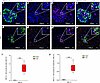 Figure 3
SEL1L expression in pancreatic samples from NGT and IGT individuals. Representative immunofluorescence images of pancreatic section from 1 individual with NGT (A–D) and 1 with IGT (E–H), stained for nuclei DAPI in blue (A–H), insulin in green (A–E), SEL1L in red (B–F), and glucagon in magenta (C–G). Merged images show the localization of SEL1L in relation to insulin- and glucagon+ cells in individuals with NGT (D) and IGT (H), respectively. SEL1L immunoreactivity appears higher in IGT islets compared with NGT islets. Scale bar: 100 μm. Original magnification, ×40; ×80 (insets). I showed the quantification of total SEL1L+ cells within islets, assessed across entire pancreatic sections (at least 10 islets per section) in individuals with NGT (green box) compared with those with IGT (red box). J showed the quantification of total SEL1L+ cells within exocrine cells, as assessed across entire pancreatic sections in individuals with NGT (green box) compared with those with IGT (red box). Data are expressed as mean ± SEM ***P < 0.01.
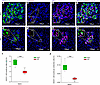 Figure 4
IQGA1 expression in pancreatic islets from patients with NGT and IGT. Representative immunofluorescence images of pancreatic section from 1 patient with NGT (A–D) and 1 with IGT (E–H), stained for nuclei DAPI in blue (A–H), insulin in green (A–E), and IQGA1 in red (B–F), and glucagon in pink (C–G). Merged images show the localization of IQGA1 in relation to insulin+ and glucagon+ cells in individuals with NGT (D) and IGT (H), respectively. IQGA1 immunoreactivity appears higher in IGT islets compared with NGT islets. Scale bar: 100 μm. Original magnification, ×40; ×80 (insets). I showed the quantification of total IQGA1+ cells within islets, assessed across entire pancreatic sections (at least 10 islets per section) in individuals with NGT (green box) compared with those with IGT (red box). J showed the quantification of total IQGA1+ cells within exocrine cells, assessed across entire pancreatic sections in individuals with NGT (green box) compared with those with IGT (red box). Data are expressed as mean ± SEM. ***P < 0.01.
Pathway analysis of differentially expressed proteins in individuals with altered βGS. The comparative quantitative analysis revealed a total of 37 proteins differentially expressed in the islets of LOW-βGS individuals compared with those of HIGH-βGS individuals, among which 18 were hyperexpressed and 19 hypoexpressed. Notably, proteins involved in the IGF1 signaling pathway, such as CKAP4, which mediates cellular proliferation, were more highly expressed in LOW-βGS individuals compared with HIGH-βGS individuals. Moreover, proteins involved in proapoptotic signaling pathways (PAK2 and SKP1) were increased while a protein involved in the antiapoptotic signaling pathway (CASPE) was decreased in the LOW-βGS group compared with the HIGH-βGS group (Figure 5A). Interestingly, SEL1L, a protein of the ERAD pathway, which influences endocrine precursor differentiation under stress conditions, was more highly expressed in LOW-βGS individuals compared with HIGH-βGS individuals (Figure 5A). Furthermore, proteins crucial for insulin maturation (ERO1B) and glucose-stimulated β cell responses (CREB1) were diminished in LOW-βGS individuals (Figure 5B). These observations suggest that the reduction of βGS in individuals defined as NGT according to the commonly used classification leads to initial defects in insulin synthesis and triggers potential compensatory mechanisms to delay diabetes progression. However, alterations in proteins related to impaired glucose metabolism, lipid metabolism, and reduced insulin response to incretin stimulation were observed exclusively in individuals with IGT.
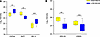 Figure 5
Differentially expressed proteins in the LOW-βGS group compared with HIGH-βGS group. Proteins involved in the major detected molecular pathway are grouped according to their function: apoptosis and proliferation (A) or insulin secretion and release (B). Islets of participants with LOW-βGS show increased levels of proteins involved cell proliferation (CKAP4) and transdifferentiation from endocrine precursors (SEL1L) compared with islets of participants with HIGH-βGS; however islets of individuals with LOW-βGS show reduced levels of proteins involved in apoptosis (SKP1), insulin maturation (ERO1B), and cell response to glucose stimuli (CREB1). The LOW-βGS group is represented as blue boxes, and the HIGH-βGS group is represented as yellow boxes. *P = interaction between HIGH-βGS vs. LOW-βGS. **P < 0.01, ***P < 0.001. βGS, β cell glucose sensitivity.
Correlation between in vivo functional features and protein expression. To identify the potential molecular “triggers” of islet plasticity in prediabetes we investigated correlations between metabolic functional data derived from in vivo studies (e.g., glucose tolerance, insulin resistance, insulin secretion, β cell function) and the expression of proteins of interest in our study cohort.
First, we observed a significant inverse correlation between the glycemic response to oral glucose load, AUC of glucose, and expression of G3P, a protein involved in glucose metabolism (r = –0.63 [95% CI, –0.8842 to –0.08761]; P = 0.02) (Figure 6A). Second, insulin resistance, expressed as an M value during a hyperinsulinemic euglycemic clamp, was directly correlated with expression of both CREB1 (r = 0.6342, [95% CI, 0.09480 to 0.8857]; P = 0.02), a protein involved in insulin release upon glucose stimulus (Figure 6B), and IQGA1 (r = 0.58 [CI, 0.1688 to 0.8677]; P = 0.04), a protein involved in GLP-1–induced insulin production (Figure 6C). Third, we found a strong correlation between expression of 14-3-3T, a protein involved in translocation of GLUT4 to the plasma membrane, and βGS calculated during MMT (r = 0.78 [CI, 0.3784 to 0.9360]; P = 0.002) (Figure 6D). Finally, SEL1L was inversely correlated with βGS (r = –0.82 [CI, –0.9492 to –0.4757]; P = 0.001) while expression of PAK2, a proapoptotic factor, was directly correlated with βGS (r = 0.66 [CI, 0.1496 to 0.8972]; P = 0.01) (Figure 6, E and F). In addition, other proteins that were differentially expressed between NGT and IGT individuals showed marked correlations with derived indices of β cell function, including homeostasis model of β cell function and the disposition index (Supplemental Tables 2 and 3). These data suggest that changes in the expression of proteins involved in islet compensative mechanisms directly reflect in vivo alterations of β cell function, insulin secretory capacity, and the consequent impairment in glycemic control.
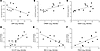 Figure 6
Correlation between expression of selected proteins and metabolic features of individuals with NGT versus those with IGT in vivo. In A, glucose tolerance is inversely correlated to expression of proteins involved in glycolysis (G3P); in B, insulin resistance (measured as M value during a hyperinsulinemic euglycemic clamp) is directly correlated to expression of proteins regulating insulin secretion upon glucose stimulus (CREB1); in C, insulin resistance (express as M value during a hyperinsulinemic euglycemic clamp) is inversely correlated to the expression of proteins involved in GLP-1–induced insulin production (IQGA1); in D, β cell glucose sensitivity is directly correlated to a protein involved in glucose homeostasis in response to insulin stimulus (14-3-3T); and in E, glucose sensitivity is inversely correlated to the expression of a protein increasing endocrine precursors differentiation (SEL1L) and directly correlated to a protein with reducing apoptosis function (PAK2). AUC glycemia, area under the curve of glucose.


