
Research ArticleHematologyInflammation
Open Access |  10.1172/jci.insight.193359
Gene expression profiling identifies potential biomarkers for vaso-occlusive episodes in sickle cell disease
Varsha Bhat,1 Justin J. Yoo,2 Srija Ponna,2 Alka A. Potdar,3 Ashwin P. Patel,2 G. Karen Yu,3 Greg Gibson,1 and Vivien A. Sheehan2
1Center for Integrative Genomics, School of Biological Sciences, Georgia Institute of Technology, Atlanta, Georgia, USA.
2Aflac Cancer and Blood Disorders Center, Children’s Healthcare of Atlanta, Emory University School of Medicine, Atlanta, Georgia, USA.
3Pfizer, South San Francisco, California, USA.
Address correspondence to: Vivien A. Sheehan, 1760 Haygood Dr. Rm E372, Atlanta, Georgia 30322, USA. Phone: 901.833.5435; Email: vivien.sheehan@emory.edu.
Find articles by Bhat, V. in: PubMed | Google Scholar
1Center for Integrative Genomics, School of Biological Sciences, Georgia Institute of Technology, Atlanta, Georgia, USA.
2Aflac Cancer and Blood Disorders Center, Children’s Healthcare of Atlanta, Emory University School of Medicine, Atlanta, Georgia, USA.
3Pfizer, South San Francisco, California, USA.
Address correspondence to: Vivien A. Sheehan, 1760 Haygood Dr. Rm E372, Atlanta, Georgia 30322, USA. Phone: 901.833.5435; Email: vivien.sheehan@emory.edu.
Find articles by Yoo, J. in: PubMed | Google Scholar
1Center for Integrative Genomics, School of Biological Sciences, Georgia Institute of Technology, Atlanta, Georgia, USA.
2Aflac Cancer and Blood Disorders Center, Children’s Healthcare of Atlanta, Emory University School of Medicine, Atlanta, Georgia, USA.
3Pfizer, South San Francisco, California, USA.
Address correspondence to: Vivien A. Sheehan, 1760 Haygood Dr. Rm E372, Atlanta, Georgia 30322, USA. Phone: 901.833.5435; Email: vivien.sheehan@emory.edu.
Find articles by Ponna, S. in: PubMed | Google Scholar
1Center for Integrative Genomics, School of Biological Sciences, Georgia Institute of Technology, Atlanta, Georgia, USA.
2Aflac Cancer and Blood Disorders Center, Children’s Healthcare of Atlanta, Emory University School of Medicine, Atlanta, Georgia, USA.
3Pfizer, South San Francisco, California, USA.
Address correspondence to: Vivien A. Sheehan, 1760 Haygood Dr. Rm E372, Atlanta, Georgia 30322, USA. Phone: 901.833.5435; Email: vivien.sheehan@emory.edu.
Find articles by Potdar, A. in: PubMed | Google Scholar
1Center for Integrative Genomics, School of Biological Sciences, Georgia Institute of Technology, Atlanta, Georgia, USA.
2Aflac Cancer and Blood Disorders Center, Children’s Healthcare of Atlanta, Emory University School of Medicine, Atlanta, Georgia, USA.
3Pfizer, South San Francisco, California, USA.
Address correspondence to: Vivien A. Sheehan, 1760 Haygood Dr. Rm E372, Atlanta, Georgia 30322, USA. Phone: 901.833.5435; Email: vivien.sheehan@emory.edu.
Find articles by Patel, A. in: PubMed | Google Scholar
1Center for Integrative Genomics, School of Biological Sciences, Georgia Institute of Technology, Atlanta, Georgia, USA.
2Aflac Cancer and Blood Disorders Center, Children’s Healthcare of Atlanta, Emory University School of Medicine, Atlanta, Georgia, USA.
3Pfizer, South San Francisco, California, USA.
Address correspondence to: Vivien A. Sheehan, 1760 Haygood Dr. Rm E372, Atlanta, Georgia 30322, USA. Phone: 901.833.5435; Email: vivien.sheehan@emory.edu.
Find articles by Yu, G. in: PubMed | Google Scholar
1Center for Integrative Genomics, School of Biological Sciences, Georgia Institute of Technology, Atlanta, Georgia, USA.
2Aflac Cancer and Blood Disorders Center, Children’s Healthcare of Atlanta, Emory University School of Medicine, Atlanta, Georgia, USA.
3Pfizer, South San Francisco, California, USA.
Address correspondence to: Vivien A. Sheehan, 1760 Haygood Dr. Rm E372, Atlanta, Georgia 30322, USA. Phone: 901.833.5435; Email: vivien.sheehan@emory.edu.
Find articles by
Gibson, G.
in:
PubMed
|
Google Scholar
|

1Center for Integrative Genomics, School of Biological Sciences, Georgia Institute of Technology, Atlanta, Georgia, USA.
2Aflac Cancer and Blood Disorders Center, Children’s Healthcare of Atlanta, Emory University School of Medicine, Atlanta, Georgia, USA.
3Pfizer, South San Francisco, California, USA.
Address correspondence to: Vivien A. Sheehan, 1760 Haygood Dr. Rm E372, Atlanta, Georgia 30322, USA. Phone: 901.833.5435; Email: vivien.sheehan@emory.edu.
Find articles by Sheehan, V. in: PubMed | Google Scholar
Published March 9, 2026 - More info
JCI Insight. 2026;11(5):e193359. https://doi.org/10.1172/jci.insight.193359.
© 2026 Bhat et al. This work is licensed under the Creative Commons Attribution 4.0 International License. To view a copy of this license, visit http://creativecommons.org/licenses/by/4.0/.
Received: March 19, 2025; Accepted: January 16, 2026


-
Results
Impact of VOEs on gene expression in lymphohematopoietic cells. We performed bulk RNA-Seq gene expression profiling of CD45+ cells from a dataset composed of 197 samples, with 155 samples collected at steady state and 42 samples during VOEs. Our first objective was to identify changes in gene expression in leukocytes between steady state and VOEs in patients with SCD. The mean library size for RNA-Seq was approximately 39 million reads per sample. After filtering, 28,005 genes were retained, and normalization was performed using supervised normalization of microarrays (SNM) to control for variation in cell proportions inferred from informative transcripts (see Methods).
We identified 1887 differentially expressed genes between steady state and VOEs in the entire cohort, with and without chronic pain, with Benjamini-Hochberg–adjusted P values of less than 0.05 (Supplemental Table 1; supplemental material available online with this article; https://doi.org/10.1172/jci.insight.193359DS1); 1197 genes were upregulated during VOEs (positive log2[fold change], red points in Figure 1A) and 690 genes were downregulated during VOEs (negative log2[fold change], blue points). Pathway enrichment analysis with fgsea (11) showed that numerous biological pathways associated with inflammatory response, complement activation, coagulation, and oxidative phosphorylation were elevated during VOEs. This result suggests that a vaso-occlusive pain episode is primarily associated with a biological mechanism linked to an exacerbation of inflammation (Figure 1).
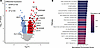 Figure 1
CD45+ cell gene expression and pathway enrichment changes in VOEs. (A) Volcano plot depicting differentially expressed genes in CD45+ cells (n = 197 samples). The genes in red and blue have adjusted P values of less than 0.05 (Benjamini-Hochberg threshold). Genes with log2(fold change) (log2FC) greater than 1.0 or less than –1.0 are labeled with gene names. (B) Pathway enrichment analysis results: Bar plot depicting the pathways upregulated during VOEs when compared with steady state in CD45+ cells of patients with no chronic pain or chronic pain (n = 197 samples), with colors indicating significance adjusted for multiple comparisons. None of the significant pathways were downregulated during VOEs.
We further computed individualized gene set variation analysis (GSVA) scores to examine pathway enrichment at the sample level for the 19 patients with longitudinal data (samples collected at both steady state and VOEs). Figure 2 shows the GSVA scores for the top 6 pathways elevated during VOEs and with the lowest adjusted P values in the gene set enrichment analysis (GSEA) analysis. Although the extent of elevation of these pathways varies between samples, there is remarkable consistency in the 6 GSVA scores within each sample, further confirming the generalized inflammatory nature of the response. The enrichments do not simply reflect the abundance of T cells in the CD45+ population since the analysis was statistically adjusted for inferred proportions of T and B cells.
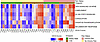 Figure 2
Heatmap of GSVA scores indicates changes in pathway enrichment between steady state and VOEs in patients with SCD with longitudinal data. The columns are sorted by pain status and time point. The numbers below each column indicate the z score for pathway enrichment in each sample, computed using the individual GSVA scores.
To evaluate whether the CD45+ cell transcriptomes of patients without chronic pain change in a similar manner during VOEs, we performed a separate analysis restricted to patients categorized as having no chronic pain in the cohort; samples were collected from 134 patients at steady state and 17 patients during VOEs. We observed 538 differentially expressed genes in patients with no chronic pain; 358 genes were upregulated during VOEs, and 180 genes were downregulated (Supplemental Table 2). All of the pathways except for IFN-α response also appeared in the analysis of all patients in the full cohort. In addition, there was significant downregulation of the allograft rejection pathway.
Similarly, we analyzed the transcriptomic differences between steady state and VOEs in patients categorized as having chronic pain; 15 samples were collected at steady state, and 18 samples were collected during VOEs. Despite the smaller sample size, a total of 313 genes were found to be differentially expressed, with 128 genes upregulated during VOEs, and 185 downregulated during VOEs (Supplemental Table 3). Pathway enrichment analysis revealed the upregulation of 34 pathways during VOEs, with relatively higher enrichment scores compared with the GSEA results from the analysis of all patients (comparing Figure 1 and Figure 3). Almost half of the pathways upregulated during VOEs in patients with chronic pain were also elevated during VOE in the analysis of all patients. Analyses with datasets of small sample sizes are often underpowered, increasing the likelihood of detecting false positives and false negatives and potentially undermining the findings of the study (12). In order to test whether this enhanced enrichment was specific to the chronic pain set rather than an artifact of the smaller sample size, we performed a bootstrap downsampling by creating 30 random subsets of samples from patients without chronic pain and subsequently performed the same GSEA with each subset. The number of enriched pathways during VOEs when compared with steady state ranged from zero to 26, indicating that the total number of pathways observed in the chronic pain analysis is indeed higher than the number of pathways observed in the samples without chronic pain (P = 0.006). Similarly, the mean normalized enrichment score for the chronic pain pathways significant at P less than 0.01 was 1.79, which was greater than that observed in any of the 30 permutations. The mean normalized enrichment score for all pathways significant at P less than 0.05 in patients with chronic pain was 44% higher than the score observed for patients without chronic pain.
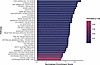 Figure 3
Pathway enrichment results for CD45+ cells from patients with chronic pain. Bar plot depicting the 34 pathways upregulated (none were downregulated) during VOEs when compared with steady state in CD45+ cells of patients with chronic pain (n = 38 samples).
Due to the difference in the magnitude of enrichment between the chronic pain set and the no chronic pain set, we wanted to determine whether the transcriptome of samples collected from patients without chronic pain at steady state varied from that of chronic pain samples collected at steady state; however, we did not find any differentially expressed genes, possibly due to the small number of chronic pain samples.
Effect of VOEs on the transcriptome of erythroid precursors. Transcriptome profiling of CD71+ erythroid precursor cells was conducted on 180 samples obtained from 141 patients, with 138 samples collected at steady state and 42 samples during VOEs. The mean library size was approximately 38 million reads per sample. A total of 19,162 genes were provided as input for differential gene expression (DGE) analysis after quality control and normalization. Since CD71 is also expressed at low levels on the surface of neutrophils (9), we cannot exclude the possibility that the results may be in part due to neutrophil contamination. The gene expression levels of CD45, CD71, and CD15 (a neutrophil marker) for all CD71+ samples are listed in Supplemental Table 4; most samples had relatively low levels of CD15 expression compared with CD45, suggesting minimal neutrophil contamination.
DGE analysis revealed that 511 genes were upregulated and 260 genes were downregulated during VOEs in comparison with steady state (Benjamini-Hochberg–adjusted P < 0.05) (Supplemental Table 5). Pathways altered during VOEs were mostly linked to cell proliferation; the G2M checkpoint, E2F targets, and mTORC1 signaling pathways were upregulated during VOEs (Figure 4), while allograft rejection and IFN-γ signaling were downregulated.
 Figure 4
CD71+ cell gene expression and pathway enrichment changes in VOEs. (A) Volcano plot depicting genes differentially expressed between VOEs and steady state in CD71+ cells (n = 180 samples). The colored genes have adjusted P values of less than 0.05 (Benjamini-Hochberg threshold). Genes with log2(fold change) (log2FC) greater than 1.0 or less than –1.0 are labeled with gene names. (B) Pathway enrichment analysis results: Bar plot depicting the pathways upregulated or downregulated during VOEs when compared with the steady state in CD71+ cells of patients with no chronic pain or chronic pain (n = 180 samples).
We also analyzed the CD71+ cell transcriptome of patients categorized as having no chronic pain, with samples collected from 115 patients during steady state and 17 patients during VOEs. We observed 441 differentially expressed genes; 373 genes were upregulated during VOEs, and 68 genes were downregulated during VOEs (Supplemental Table 6). In addition to the pathways shown in Figure 4, the IL-6/JAK/STAT3 signaling pathway and IFN-α response pathway were elevated during VOEs, suggesting that CD71+ cells may be involved in immunomodulation during VOEs in patients without chronic pain; both of these pathways were also elevated during VOEs in the CD45+ cell transcriptome of patients without chronic pain. Future studies incorporating single-cell approaches will be useful to pinpoint the specific cell subsets that contribute to the enrichment of these pathways. We did not find any differentially expressed genes between steady state and VOEs in patients with chronic pain.
Potential diagnostic markers for VOEs from longitudinal data. To identify biomarkers for VOE diagnosis in an unbiased manner, we compared the expression of several differentially expressed genes between steady state and VOEs in the 19 SCD patients with longitudinal data, namely in this study both steady-state and VOE time points (11 without chronic pain and 8 with). We identified 4 genes that were upregulated during VOEs in more than half of the patients in the RNA-Seq data from their CD45+ cells and that were also associated with pathways elevated during VOEs in the analysis of the complete cohort: FAM20A, SERPINB2, IL1B, and MS4A4A (Figure 5A and Supplemental Figure 1). PC1 scores summarizing the expression of these 4 genes in the VOE group were significantly higher than in the steady-state group, both in our full dataset (P = 8.405 × 10⁻¹⁰) and in an external validation dataset (ref. 13) (P = 0.0192) (Figure 5, B and C), suggesting that these genes could be used as diagnostic biomarkers for VOEs with further independent validation. Two of these genes, SERPINB2 and IL1B, also contribute heavily to the enrichment signal of multiple pathways upregulated during VOEs in the CD45+ cells (Supplemental Figure 2).
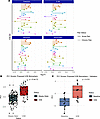 Figure 5
Potential VOE biomarkers. (A) Lollipop plots depicting the expression changes of potential diagnostic VOE biomarkers. Each point shows the log2(fold change) (log2FC) in expression of the indicated gene in each donor with paired steady-state (SS) and VOE samples. The colors denote unique patients in the dataset (n = 63 samples, 19 patients). Multiple VOE samples were collected for 7 patients, and multiple steady-state samples were collected for 1 patient. (B) Box-and-whisker plots depicting PC1 scores of the proposed biomarker genes as a function of time point (VOE/steady state) in our cohort (n = 197 samples). (C) PC1 scores of the proposed biomarker genes as a function of time point (VOE/steady state) in an external validation dataset (n = 22 samples) (13). Significance was determined using a 2-tailed Student’s t test.
In addition to computational external validation, we measured the protein-level expression of these biomarkers in the plasma of 52 patients with SCD and compared their levels between steady state and VOEs (Figure 6). Among the 4 prospective biomarkers studied, IL-1B plasma protein levels were found to be significantly higher during VOEs when compared with steady state (P = 0.0022). MS4A4A and SERPINB2 protein levels were not found to be significantly different between steady state and VOEs in the plasma. We were not able to detect FAM20A protein expression in the collected plasma samples.
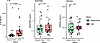 Figure 6
Protein expression of prospective biomarkers. Comparison of protein expression levels of 3 prospective biomarker genes between steady state and VOEs by Wilcoxon’s rank-sum test: IL-1B, MS4A4A, and SERPINB2, measured by S-PLEX and ELISA (n = 62 samples).

-
Methods
Sex as a biological variable. Our study examined male and female participants, and sex was included as a covariate in the analyses.
Study population. The study population comprised 174 patients with sickle cell anemia, either HbSS or HbSβ0 thalassemia, receiving SCD care at Texas Children’s Hospital (TCH). All but 2 individuals in the cohort were at the maximum tolerated dose of HU during steady state, and 10 patients were on metformin treatment in addition to HU. A total of 215 CD45+ cell samples and 199 CD71+ cell samples were collected during steady state, VOEs, or a follow-up visit after the resolution of VOEs. Insufficient yield of RNA from CD71+ cells in some collections prevented analysis. For 19 patients, we collected samples during both steady state and VOEs, as well as during repeated VOE hospitalizations (Table 1). Chronic pain was assessed by chart review of opioid use frequency and clinical notes recorded during a patient’s routine visit detailing pain symptoms and duration. Patients experiencing chronic pain did not exhibit avascular necrosis or other comorbidities that would cause persistent pain. The proportion of patients in the cohort experiencing chronic pain was 8% to 10%, lower than reported at some institutions. This difference may be due to TCH prescribing practices designed to limit opioid use to the acute pain event period and avoid long-term opioid use that might contribute to opioid-induced hyperalgesia and chronic pain. Additional information on cohort demographics and longitudinal data is displayed in Supplemental Tables 7 and 8, respectively.
Gene expression profiling. A total of 3–5 mL of whole blood was collected in EDTA tubes for each patient at steady state at a scheduled outpatient clinic visit, during hospitalization for a VOE, or during a follow-up visit in clinic. The blood samples were incubated with Whole Blood CD45 Microbeads (Miltenyi Biotec), and CD45+ cells were extracted using an AutoMACS machine (Miltenyi Biotec). The CD45– fraction was incubated with CD71 Microbeads (Miltenyi Biotec), and a similar separation was performed using the AutoMACS. RNA was collected from the CD45+ and CD71+ fractions using the Qiagen RNeasy kit. The quality and quantity of RNA was measured by UV spectroscopy. Globin depletion was performed on the CD71+ cell–derived RNA before sequencing (Illumina Globin Zero Gold kit). The quality of RNA was assessed using an Agilent 2100 Bioanalyzer with the Agilent RNA 6000 Nano Kit to generate the ratio of the 18S to 28S ribosomal subunits and to generate RNA integrity number (RIN) values greater than 7 for RNA-Seq analysis. The total RNA was normalized to 12.5 ng/μL. Poly-A selection and cDNA synthesis were performed with the TruSeq Stranded mRNA kit (Illumina). The libraries were sequenced on an Illumina NovaSeq 6000 instrument at the University of Washington Northwest Genomics Center to generate 2 × 101 bp paired-end reads.
We used FastQC (version 0.11.9) (46) to perform quality control of the sequencing libraries. Since the adapter contamination was minimal (<5%), the input reads were not further trimmed. The reads were aligned to the GRCh38 primary assembly and the GENCODE annotation (release 42) with STAR (version 2.7.10b) (47). The number of reads that mapped to each gene was calculated using HTSeq (version 2.0.2) (48) with the GENCODE annotation as reference. We removed genes with zero expression in at least 10% of the samples and normalized the raw read counts for library size with the trimmed mean of M values (TMM) method implemented in edgeR (49). Expression of the sex-linked genes RPS4Y1 and XIST was used to verify the sex of each patient.
The normalized counts were subsequently log-transformed and provided as input to SNM (50) for the adjustment of age, sex, batch effect, pain status (chronic or no chronic pain), and metformin treatment status as fixed effect covariates. The time point was modeled as the biological variable of interest. Age was treated as a categorical variable, with samples being categorized as below 10 years, between 10 to 18 years, and above 18 years of age based on how they clustered during principal component analysis. Since CD45+ cells are primarily composed of T cells and B cells, we calculated the first principal component (PC1) scores of the 10 most representative genes for the T cell and B cell axes identified as blood informative transcripts (51); these scores were used to adjust for cell-type abundances with SNM. The adjusted gene expression matrix from SNM was provided as input for a paired DGE analysis with the limma-trend pipeline (52); the duplicateCorrelation function was used to model subject as a random effect. Genes with Benjamini-Hochberg–adjusted P values of less than 0.05 were considered to be differentially expressed between steady state and VOEs. While multiple VOE samples were collected for a few patients, analysis of these repeat profiles was not additionally informative.
The fgsea R package (11) with the Hallmark gene sets in the MSigDB (53, 54) database as the reference was used for determining enriched gene sets/biological pathways; the product of the negative logarithm of the adjusted P value multiplied by the log(fold change) of each gene was used as the ranking statistic. After ranking the genes, the enrichment score for each gene set was calculated by computing a running-sum statistic that indicates the degree of overrepresentation of a gene set in the ranked list. Pathways with an adjusted P value of less than 0.05 were considered significantly altered. To quantify whether there was a difference in pathway enrichment in patients without chronic pain compared with patients with chronic pain, we created 30 bootstrap subsets with equivalent sample sizes from all samples classified as no chronic pain and chronic pain and repeated the analyses. To compare pathway enrichment at the sample level, we computed the GSVA scores using the R package GSVA (55) with the SNM-transformed counts as input.
For the analysis of longitudinal data, we chose genes that were differentially expressed between steady state and VOEs and were involved in pathways significantly altered during VOEs. Subsequently, we plotted the changes in expression of these genes in patients with matched samples. To determine whether these genes could be proposed as potential biomarkers for VOEs, we calculated the PC1 scores of the genes for all individuals in the dataset. In addition, we validated these results in an external whole-blood transcriptomics dataset from a study by Creary et al. (13), adjusting for the abundance of T cells, B cells, and neutrophils.
Protein expression analysis. To examine the protein levels of the prospective VOE biomarkers, plasma samples were collected from 52 patients with sickle cell anemia; 33 samples were collected at steady state and 29 were collected during VOEs. The levels of IL-1B were measured by S-PLEX (S-PLEX Proinflammatory Panel 1, Mesoscale, K15396S-1), while MS4A4A, FAM20A, and SERPINB2 levels were measured by enzyme-linked immunosorbent assay (ELISA) (MS4A4A: Abbexa, abx531971; FAM20A: Thomas Scientific, CHM01D345; SERPINB2: Lifespan Biosciences, LS-F5568-1).
Statistics. The R package SNM was used to adjust for covariates. We identified differentially expressed genes with Limma (Benjamini-Hochberg P value < 0.05), and enriched pathways with fgsea. The calculation of the PC1 scores was performed using the stats package in R. Protein expression levels at steady state and VOEs were compared using the Wilcoxon rank-sum test (significance was defined as P < 0.05). In the box-and-whisker plots, the box shows the middle 50% of the data, and the upper and lower bounds of the boxes represent the first and third quartiles, respectively. The line in the middle denotes the median, and the whiskers extend to the minimum and maximum values. Outliers are represented with dots.
Study approval. Written informed consent was obtained from all patients prior to study participation. The study protocol was approved by the Baylor College of Medicine Internal Review Board.
Data availability. The bulk RNA-Seq data generated for this study are available in the NCBI GEO under accession number GSE291257. The R script for the DGE analysis is available on our GitHub repository: https://github.com/vtbhat/SCD_Omics_Scripts Values for all data points in graphs are reported in the Supporting Data Values file.


