
Hematology
Abstract
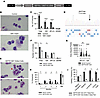
Septins are RAS-like GTP-binding proteins involved in cytoskeletal organization and cellular division. We previously described 2 pediatric patients harboring SEPT6 germline mutations (GM1: SEPT6 c.1282T>C and GM2: SEPT6 c.1282T>A) presenting with congenital neutropenia associated with the development of myelodysplastic syndrome. In one patient, an additional somatic mutation (SM: SEPT6 c.43C>T) was detected at a low allelic fraction in the BM. Here, we describe the consequences of these mutations for hematopoiesis. Transgenic expression or gene editing of GM1 or GM2 in human CD34+ cells led to enlarged, multinucleated cells associated with accelerated exhaustion and premature senescence of hematopoietic stem and progenitor cells (HSPCs). Senescence defects were associated with the upregulation of mTOR phosphorylation, and pharmacologic inhibition of the mTOR pathway resulted in rescue of senescence. In parallel, HSPCs exhibited marked mitochondrial abnormalities, including increased expression of OPA-1, a key regulator of mitochondrial fusion, and enhanced oxygen consumption during mitochondrial respiration. Introduction of the SM in cis with GM1 mitigated all observed defects. Collectively, our findings demonstrate a gain-of-function mechanism underlying marrow failure in patients carrying germline SEPT6 mutations and suggest that acquisition of a secondary somatic SEPT6 variant may confer a compensatory effect within hematopoietic cells.
Authors
Safa F. Mohamad, Meaghan McGuinness, Yu Zhou, Xin Jiang, Gabriele Casirati, Adele Mucci, Sara Canovas Nunes, Akiko Shimamura, Pietro Genovese, David A. Williams
Abstract
Castleman disease (CD) is an inflammatory disorder characterized by lymphadenopathy with distinctive histologic features, yet its pathophysiology remains poorly understood. This delays diagnoses and limits treatments, leading to additional morbidity and mortality. We used single- cell and spatial transcriptomics to characterize lymph nodes from unicentric CD (UCD) compared with non-specific inflammatory lymphadenopathies. While hematopoietic cells showed few compositional or transcriptional differences, lymph node stromal cells exhibited marked alterations in UCD, most notably an increased abundance of vascular smooth muscle cells (VSMCs) and broadly increased stromal signaling activity. A generalized linear model distinguished histologically indeterminate lymph nodes resembling UCD from non-specific inflammation most accurately using stromal rather than hematopoietic cell composition. Immunohistochemical staining for the VSMC marker CD146 (Melanoma Cell Adhesion Molecule, MCAM) further discriminated UCD from other causes of lymphadenopathy. Together, these findings identify increased VSMC abundance as a hallmark of UCD and suggest that this stromal signature can be leveraged to improve pathologic diagnosis and patient stratification.
Authors
Joshua D. Brandstadter, Samuel Meili, Joseph Zinski, Hung-Wei Cheng, Dorottya Laczko, Michael V. Gonzalez, Subin S. George, Megan S Lim, Adam Bagg, Yves Stanossek, Lucas Onder, Mechthild Lϋtge, Angelina De Martin, Bridget Austin, Melanie Mumau, Katherine S. Forsyth, Vinodh Pillai, Antonio Ferreira, Jon C. Aster, Sunita Nasta, Burkhard Ludewig, David C. Fajgenbaum, Ivan Maillard
Abstract
Testosterone is a key determinant of red blood cell (RBC) biology and susceptibility to hemolysis; however, its contribution to donor-dependent variation in RBC quality and transfusion effectiveness remains unclear. Using data from 2,357 male participants in the NHLBI REDS-III RBC-Omics study, we quantified plasma total testosterone, free testosterone (bioavailable form), and androstenedione and evaluated their associations with donor characteristics, RBC hemolysis, and recipient post-transfusion hemoglobin increments, a clinical measure of RBC transfusion effectiveness. Subphysiological testosterone concentrations were common (~35%) and independently associated with increased storage and osmotic hemolysis. Frequent blood donations were independently associated with lower circulating free testosterone concentrations, even after adjustment for demographic and hematologic factors. Genome-wide association analyses identified loci associated with circulating testosterone, including regions near SHBG, TNFSF12, and the long noncoding RNA BALR6. Several testosterone variants were associated with RBC transfusion effectiveness. Specifically, variants associated with lower testosterone (e.g., TNFSF12) corresponded to higher post-transfusion hemoglobin increments (+9%), whereas BALR6 variants associated with higher testosterone were linked to reduced hemoglobin increments (–40%). In contrast, androstenedione-associated variants were not related to hemolysis or transfusion outcomes. Together, these findings demonstrate that genetic and physiologic variation in testosterone contributes to inter-individual variability in RBC quality and transfusion effectiveness.
Authors
Fang Fang, Nareg Roubinian, Xutao Deng, Cassie Kemmler, Jost Klawitter, Jelena Klawitter, Touraj Shokati, Uwe Christians, Grier P. Page, Tamir Kanias

Abstract
Acute myeloid leukemia (AML) is the most common adult leukemia diagnosis. Bone marrow (BM) niche significantly influences the initiation and progression of AML. However, our knowledge about the effect of leukemic niche on leukemia stem cells (LSC) and leukemogenesis is limited. In this study, we identified an extrinsic-regulatory function of latexin (Lxn) in leukemogenesis. Using a MLL-AF9–induced AML mouse model in WT and Lxn-KO (Lxn–/–) recipient mice, we found that Lxn deletion in the BM niche enhanced the survival of AML mice by suppressing LSCs and reducing blood blasts. Single-cell RNA-seq of stromal cells and cell communication analysis uncovered downregulation of the leukemia inhibitory factor receptor (LIFR) signaling pathway in the Lxn–/– niche, particularly within mesenchymal stromal cells (MSCs). Mechanistically, reduced LIFR level in Lxn–/– MSCs upregulated Cxcl9 expression, leading to increased recruitment of CD8 T cells and enhanced cytotoxicity against leukemic cells. Combination of Lxn niche deletion and immune checkpoint inhibitor PD-1 further prolonged survival. The findings have important clinical implications, suggesting that Lxn inhibition could improve the efficacy of AML therapies by targeting the leukemia niche and enhancing immune surveillance.
Authors
Cuiping Zhang, Xia Yao, Pinpin Sui, Liming Hou, Bowen Yan, Larry L. Luchsinger, Gang Huang, Sheng Tong, Youwen Zhang, Bojing Shao, Hong Qian, Hong Zheng, Hui Zhong, Feng-Chun Yang, Ying Liang
Abstract
BACKGROUND. This prospective, single-arm, multicenter phase 1/2 trial evaluated vorinostat added to standard graft-versus-host disease (GVHD) prophylaxis in pediatric, adolescent, and young adult (AYA) patients undergoing allogeneic hematopoietic cell transplantation (HCT) from HLA-matched related, HLA-matched unrelated, and haploidentical donors. METHODS. Patients aged 3–39 years received twice-daily vorinostat with tacrolimus/methotrexate after HLA-matched HCT from day −10 to +30, or with post-transplant cyclophosphamide/tacrolimus/mycophenolate mofetil after haploidentical HCT from day +5 to +30. The primary endpoint was cumulative incidence of grade II–IV acute GVHD by day +100. All outcomes were based on intention-to-treat analysis. RESULTS. Forty-three patients were enrolled; median age was 19 years, with 74% receiving HLA-matched and 26% haploidentical HCT. The recommended phase 2 dose was 60 mg/m² twice daily. No dose-limiting toxicities, unexpected vorinostat-related serious adverse events, or primary graft failures occurred. Median neutrophil and platelet recovery occurred at 14 and 18 days, respectively. Day +100 grade II–IV and III–IV acute GVHD were 14% (95% CI, 5.6, 26) and 4.7% (95% CI, 0.83, 14), respectively. One-year overall survival was 88.4% (95% CI, 79.3, 98.5), relapse 14% (95% CI: 5.6, 26), nonrelapse mortality 4.7% (95% CI: 0.8, 14), and GVHD-free/relapse-free survival 55.8% (95% CI: 42.8, 72.8). Correlative studies demonstrated on-target HDAC activity, with increased histone acetylation and lower proinflammatory cytokines. CONCLUSION. These findings support randomized evaluation of vorinostat-based GVHD prophylaxis in pediatric and AYA HCT. TRIAL REGISTRY. ClinicalTrials.gov, NCT03842696.
Authors
Nicolas Parnell, Xiao Cao, Jan H. Beumer, Thomas M. Braun, Yilei Cui, Gary J. Fisher, Guoqing Hou, Julianne Holleran, Tracey Churay, Michelle Rozwadowski, Luna Heider, Mark T. Vander Lugt, Carrie L. Kitko, April L. Rahrig, Ed Peres, Kirsten M. Williams, Julie-An Talano, Vanessa A. Fabrizio, Ghada Abusin, Gregory A. Yanik, John Magenau, Mary Riwes, Marcus J. Geer, Sarah Anand, Monalisa Ghosh, Attaphol Pawarode, Kristen Votruba, Pavan Reddy, Sung Won Choi
Abstract
Cell metabolic rewiring is associated with resistance to venetoclax-azacitidine (Ven-Aza) combination therapy and relapse in acute myeloid leukemia (AML) patients. Drug-resistant cells exhibit an enhanced reliance on oxidative phosphorylation (OXPHOS) for energy production. Therefore, impairing mitochondrial metabolism represents an exciting strategy to face this unmet clinical need. We recently demonstrated that the specific activation of the phosphatase PP2A-B56α enhances the pro-apoptotic efficacy of venetoclax in AML. Here, through leveraging unbiased multi-omics-based approaches and using both genetic and pharmacological tools, we define key roles for the tumor suppressor PP2A-B56α complex in OXPHOS regulation and treatment response in disease-relevant AML models. From a translational perspective, the specific stabilization of PP2A-B56α heterocomplex with the novel PP2A molecular glue activator, RPT04402, reduces OXPHOS levels in treatment-resistant AML cells and improves treatment response in both Ven-Aza-sensitive and -resistant AML cell lines, primary cells, and in vivo models. Together, our work supports further research on targeted combination therapy approaches based on PP2A-B56α stabilization to counteract OXPHOS-related treatment resistance and improve AML responses in a patient population with historically poor outcomes.
Authors
Silvia Romero-Murillo, Irene Peris, Anna Maria Lucianò, Nerea Marcotegui, Carmen Vicente, Brian Tran, Kelsey Barrie, Caitlin M. O'Connor, Andrea Torres-López, Maria C. Mateos, Maria L. Cayuela, Victoriano Mulero, Joaquín Fernández-Irigoyen, Enrique Santamaría, Maria D. Odero, Goutham Narla

Abstract
Alcohol-associated liver disease (ALD) is a growing global health concern, with alcohol-associated hepatitis (AH) leading to the highest morbidity and mortality. Available therapies are limited and often inadequate. Platelets contribute in a variety of ways to liver disease pathogenesis, but their role in AH remains largely unexplored. In this study, we addressed the hypothesis that platelets contribute to pathological inflammation in AH. Using patient samples and a multiomics approach, we found that platelets undergo proinflammatory transcriptomic and proteomic changes in AH, with 2 alarmins, S100A8 and S100A9, being among the top upregulated genes/proteins. Additionally, the abundance of platelet-derived microparticles containing S100A8 and S100A9 in AH patient plasma was increased and correlated with disease severity (assessed by model for end-stage liver disease sodium [MELD-Na]) and endotheliopathy (assessed by ICAM1, CXCL8, and vWF). We mechanistically linked S100A9 with endotheliopathy via crosstalk between primary human liver sinusoidal endothelial cells and primary human monocytes. We also demonstrated that IL-6 upregulates S100A9 in megakaryocytic cells in a JAK/STAT-dependent manner, modeling changes occurring in the bone marrow in patients with AH. Our studies establish proinflammatory platelets as important contributors to AH pathology. Moreover, antiplatelet agents — or, more specifically, S100A9 targeted drugs — are potential therapeutic strategies in AH.
Authors
Fallyn Kirlin, Nima Fattahi, Rolando Garcia-Milian, Florine Collin, Weiwei Wang, Yohan Kim, Fabrice Lucien, Zhaoli Sun, TuKiet T. Lam, John Hwa, Yasuko Iwakiri, Matthew J. McConnell
Abstract
BACKGROUND. Prior studies identified plasma proteins associated with chronic graft-versus-host disease (cGVHD). The goal of this cross-sectional study was to evaluate whether plasma biomarkers were associated with specific organ manifestations to help guide treatment choice. METHODS. Plasma proteins were measured in patients with cGVHD (n = 695) from Chronic GVHD Consortium studies. Correlations of plasma protein levels with individual organ involvement were tested with p≤0.05 considered significant after Benjamini-Hochberg adjustment and adjustment for five baseline clinical variables. RESULTS. Median time from cGVHD diagnosis to blood draw was 0.9 months (IQR 0.1–9.5). Donors were 50% HLA-matched unrelated, 32% matched related and the remainder were umbilical cord blood, haploidentical or mismatched unrelated donors. Methotrexate and calcineurin inhibitor acute GVHD (aGVHD) prophylaxis was used in 53% of patients. Overall, 326 (47%) had moderate and 244 (35%) had severe cGVHD with the following organ involvement at time of blood draw: skin (67%), mouth (60%), eye (49%), joint (34%), GI (31%), lung (23%), and liver (17%). After adjustment for batch effects and patient and transplant characteristics, fourteen plasma proteins were associated with organ involvement with independent AUCs of 0.7-0.8. All organs except eye were associated with at least one biomarker. However, no combination of plasma proteins improved model fit after adjusting for patient and transplant clinical variables. CONCLUSION. Correlations between plasma proteins and organ involvement were identified but are not actionable. Our future investigations will focus on more granular and immediately proximal determinants of cGVHD biology in both blood and tissue.
Authors
Stephanie J. Lee, Corey Cutler, Ningxin Ma, Timothy W. Randolph, George L. Chen, Joseph Pidala, Betty K. Hamilton, Carrie L. Kitko, Sally Arai, Najla El Jurdi, Lynn Onstad, Motoko Koyama, Catherine J. Lee, Sophie Paczesny, Geoffrey R. Hill

Abstract
Intestinal acute graft-versus-host disease (aGVHD) is a common life-threatening complication of allogeneic hematopoietic stem cell transplantation (allo-HSCT). Although tissue-resident memory T (TRM) cells are thought to play a pathophysiological role in animal models of aGVHD, little is known about the role of distinct subsets of TRM cells in human intestinal aGVHD. Herein, we combined multiplex immunohistochemical staining with single-cell RNA sequencing to elucidate the differentiation trajectory, lineage commitment, clonal expansion, and functional properties of distinct CD8+ TRM cell subsets in human intestinal aGVHD. We identified a predominant GZMK+CD8+ TRM subset, characterized by the GZMK and CD49A markers. Intestinal aGVHD was associated with infiltration of GZMK+CD8+ T cells with TRM features, which showed enhanced clonal expansion, IFN signaling pathway–associated proinflammatory pathway expression, and lineage bifurcation differentiation properties. High GZMK+CD8+ TRM subset infiltration was associated with greater human intestinal aGVHD severity and poor prognosis. Together, our studies highlight the importance of the GZMK+CD8+ TRM subset in human intestinal aGVHD, and interest for designing GZMK+CD8+ TRM cell–targeted therapies.
Authors
Yiming Sun, Yutong Xue, Chenyuyao Song, Xinyu Liu, Ruoyang Shao, Zhiping Fan, Ren Lin, Fen Huang, Na Xu, Li Xuan, Min Dai, Jing Sun, Qifa Liu, Hua Jin
Abstract
Acute lymphoblastic leukemia (ALL) is the most common pediatric cancer, arising from both B- and T-cell lineages. Current therapy exploits ALL cells’ low expression of asparagine synthetase (ASNS) by using L-asparaginase, a bacterial enzyme that depletes circulating asparagine. However, resistance can emerge through induction of ASNS, mediated in part by the amino acid stress sensor GCN2. In this study, we addressed the efficacy of L-asparaginase in combination with genetic or pharmacological inhibition of GCN2 and a novel ASNS inhibitor designated ASX-173. Using a KrasG12D-driven mouse model of T-ALL, we found that GCN2 is dispensable for leukemogenesis. However, genetic inactivation or pharmacologic inhibition of GCN2 sensitized ALL cells to asparagine depletion, correlating with impaired ASNS induction. While GCN2 targeting enhanced sensitivity to asparagine depletion, a subset of Gcn2–/– T-ALL cells retained high ASNS expression and remained resistant to L-asparaginase. Likewise, some human T-ALL cells with elevated ASNS levels were refractory to GCN2 inhibition even under asparagine-depleted conditions. When combined with L-asparaginase, ASX-173 effectively eliminated ASNS-high leukemic cells in vitro and in vivo. These findings suggest that direct targeting of ASNS provides therapeutic benefit in leukemias that express high ASNS and are resistant to GCN2 inhibition under asparagine-depleted conditions.
Authors
Rodney Claude, Sankalp Srivastava, Kirk A. Staschke, Carlos A. Mellado Fritz, Shaoxiong Chen, Lei Liu, Minghua Zhong, Harish Kothandaraman, Nadia A. Lanman, Utpal P. Davé, Sandeep Batra, Jiehao Zhou, Yue Fang, Chi Zhang, Reuben Kapur, Jing Fan, Ronald C. Wek, Ji Zhang
No posts were found with this tag.


