
Abstract
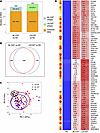
This study provides a comprehensive evaluation of the cutaneous adipose tissue (CAT) transcriptome in patients with psoriasis and investigates the effects of IL-17 blockade on CAT inflammation through a randomized placebo-controlled trial using secukinumab (ObePso-S study, ClinicalTrials.gov NCT03055494). RNA sequencing analysis of CAT biopsies from 82 patients with psoriasis revealed 2132 differentially expressed transcripts compared with healthy controls. Notably, significant gene dysregulation was observed in both lesional skin (LS)-CAT and non-lesional (NL)-CAT, including activation of IL-17–driven pathways, antimicrobial peptide–related, and neutrophil degranulation signatures. Stratification by obesity demonstrated that obese psoriatic CAT exhibited a more than 2-fold higher number of differentially expressed genes than non-obese counterparts, suggesting a synergistic interaction between psoriasis and obesity in driving CAT inflammation. Treatment with secukinumab markedly improved inflammatory signatures in psoriatic CAT, with greater improvements observed in obese patients. These findings reveal a pronounced and partially IL-17–dependent inflammatory phenotype in psoriatic CAT, challenge the conventional concept of psoriasis as a solely superficial skin disease, and highlight CAT as an important contributor to systemic inflammation in psoriasis.
Authors
Naomi Shishido-Takahashi, Sandra Garcet, Inna Cueto, Hong Beom Hur, Elisa Muscianisi, Jennifer Steadman, Andrew Blauvelt, James G. Krueger
This file is in Adobe Acrobat (PDF) format. If you have not installed and configured the Adobe Acrobat Reader on your system.
Having trouble reading a PDF?
PDFs are designed to be printed out and read, but if you prefer to read them online, you may find it easier if you increase the view size to 125%.
Having trouble saving a PDF?
Many versions of the free Acrobat Reader do not allow Save. You must instead save the PDF from the JCI Online page you downloaded it from. PC users: Right-click on the Download link and choose the option that says something like "Save Link As...". Mac users should hold the mouse button down on the link to get these same options.
Having trouble printing a PDF?
- Try printing one page at a time or to a newer printer.
- Try saving the file to disk before printing rather than opening it "on the fly." This requires that you configure your browser to "Save" rather than "Launch Application" for the file type "application/pdf", and can usually be done in the "Helper Applications" options.
- Make sure you are using the latest version of Adobe's Acrobat Reader.


