
Research ArticleGeneticsNeuroscience
Open Access |  10.1172/jci.insight.197028
A dual-reporter mouse for therapeutic discovery in Angelman syndrome
Hanna Vihma,1 Lucas M. James,1 Hannah C. Nourie,1 Audrey L. Smith,1 Siyuan Liang,1 Carlee A. Friar,1 Tasmai Vulli,1 Lei Xing,1 Dale O. Cowley,2,3 Alain C. Burette,1 and Benjamin D. Philpot1,4
1Department of Cell Biology and Physiology, Neuroscience Center,
2Animal Models Core,
3Department of Genetics, and
4Carolina Institute for Developmental Disabilities, University of North Carolina at Chapel Hill, Chapel Hill, North Carolina, USA.
Address correspondence to: Benjamin D. Philpot, 7008C Mary Ellen Jones, 116 Manning Drive, Campus Box 7545, Chapel Hill, North Carolina 27599, USA. Phone: 919.966.0031; Email: bphilpot@med.unc.edu. Or to: Alain C. Burette, 7004 Mary Ellen Jones, 116 Manning Drive, Campus Box 7545, Chapel Hill, North Carolina 27599, USA. Phone: 919.966.0031; Email: alain_burette@med.unc.edu.
Find articles by
Vihma, H.
in:
PubMed
|
Google Scholar
|

1Department of Cell Biology and Physiology, Neuroscience Center,
2Animal Models Core,
3Department of Genetics, and
4Carolina Institute for Developmental Disabilities, University of North Carolina at Chapel Hill, Chapel Hill, North Carolina, USA.
Address correspondence to: Benjamin D. Philpot, 7008C Mary Ellen Jones, 116 Manning Drive, Campus Box 7545, Chapel Hill, North Carolina 27599, USA. Phone: 919.966.0031; Email: bphilpot@med.unc.edu. Or to: Alain C. Burette, 7004 Mary Ellen Jones, 116 Manning Drive, Campus Box 7545, Chapel Hill, North Carolina 27599, USA. Phone: 919.966.0031; Email: alain_burette@med.unc.edu.
Find articles by James, L. in: PubMed | Google Scholar
1Department of Cell Biology and Physiology, Neuroscience Center,
2Animal Models Core,
3Department of Genetics, and
4Carolina Institute for Developmental Disabilities, University of North Carolina at Chapel Hill, Chapel Hill, North Carolina, USA.
Address correspondence to: Benjamin D. Philpot, 7008C Mary Ellen Jones, 116 Manning Drive, Campus Box 7545, Chapel Hill, North Carolina 27599, USA. Phone: 919.966.0031; Email: bphilpot@med.unc.edu. Or to: Alain C. Burette, 7004 Mary Ellen Jones, 116 Manning Drive, Campus Box 7545, Chapel Hill, North Carolina 27599, USA. Phone: 919.966.0031; Email: alain_burette@med.unc.edu.
Find articles by Nourie, H. in: PubMed | Google Scholar
1Department of Cell Biology and Physiology, Neuroscience Center,
2Animal Models Core,
3Department of Genetics, and
4Carolina Institute for Developmental Disabilities, University of North Carolina at Chapel Hill, Chapel Hill, North Carolina, USA.
Address correspondence to: Benjamin D. Philpot, 7008C Mary Ellen Jones, 116 Manning Drive, Campus Box 7545, Chapel Hill, North Carolina 27599, USA. Phone: 919.966.0031; Email: bphilpot@med.unc.edu. Or to: Alain C. Burette, 7004 Mary Ellen Jones, 116 Manning Drive, Campus Box 7545, Chapel Hill, North Carolina 27599, USA. Phone: 919.966.0031; Email: alain_burette@med.unc.edu.
Find articles by Smith, A. in: PubMed | Google Scholar
1Department of Cell Biology and Physiology, Neuroscience Center,
2Animal Models Core,
3Department of Genetics, and
4Carolina Institute for Developmental Disabilities, University of North Carolina at Chapel Hill, Chapel Hill, North Carolina, USA.
Address correspondence to: Benjamin D. Philpot, 7008C Mary Ellen Jones, 116 Manning Drive, Campus Box 7545, Chapel Hill, North Carolina 27599, USA. Phone: 919.966.0031; Email: bphilpot@med.unc.edu. Or to: Alain C. Burette, 7004 Mary Ellen Jones, 116 Manning Drive, Campus Box 7545, Chapel Hill, North Carolina 27599, USA. Phone: 919.966.0031; Email: alain_burette@med.unc.edu.
Find articles by Liang, S. in: PubMed | Google Scholar
1Department of Cell Biology and Physiology, Neuroscience Center,
2Animal Models Core,
3Department of Genetics, and
4Carolina Institute for Developmental Disabilities, University of North Carolina at Chapel Hill, Chapel Hill, North Carolina, USA.
Address correspondence to: Benjamin D. Philpot, 7008C Mary Ellen Jones, 116 Manning Drive, Campus Box 7545, Chapel Hill, North Carolina 27599, USA. Phone: 919.966.0031; Email: bphilpot@med.unc.edu. Or to: Alain C. Burette, 7004 Mary Ellen Jones, 116 Manning Drive, Campus Box 7545, Chapel Hill, North Carolina 27599, USA. Phone: 919.966.0031; Email: alain_burette@med.unc.edu.
Find articles by Friar, C. in: PubMed | Google Scholar
1Department of Cell Biology and Physiology, Neuroscience Center,
2Animal Models Core,
3Department of Genetics, and
4Carolina Institute for Developmental Disabilities, University of North Carolina at Chapel Hill, Chapel Hill, North Carolina, USA.
Address correspondence to: Benjamin D. Philpot, 7008C Mary Ellen Jones, 116 Manning Drive, Campus Box 7545, Chapel Hill, North Carolina 27599, USA. Phone: 919.966.0031; Email: bphilpot@med.unc.edu. Or to: Alain C. Burette, 7004 Mary Ellen Jones, 116 Manning Drive, Campus Box 7545, Chapel Hill, North Carolina 27599, USA. Phone: 919.966.0031; Email: alain_burette@med.unc.edu.
Find articles by Vulli, T. in: PubMed | Google Scholar
1Department of Cell Biology and Physiology, Neuroscience Center,
2Animal Models Core,
3Department of Genetics, and
4Carolina Institute for Developmental Disabilities, University of North Carolina at Chapel Hill, Chapel Hill, North Carolina, USA.
Address correspondence to: Benjamin D. Philpot, 7008C Mary Ellen Jones, 116 Manning Drive, Campus Box 7545, Chapel Hill, North Carolina 27599, USA. Phone: 919.966.0031; Email: bphilpot@med.unc.edu. Or to: Alain C. Burette, 7004 Mary Ellen Jones, 116 Manning Drive, Campus Box 7545, Chapel Hill, North Carolina 27599, USA. Phone: 919.966.0031; Email: alain_burette@med.unc.edu.
Find articles by Xing, L. in: PubMed | Google Scholar
1Department of Cell Biology and Physiology, Neuroscience Center,
2Animal Models Core,
3Department of Genetics, and
4Carolina Institute for Developmental Disabilities, University of North Carolina at Chapel Hill, Chapel Hill, North Carolina, USA.
Address correspondence to: Benjamin D. Philpot, 7008C Mary Ellen Jones, 116 Manning Drive, Campus Box 7545, Chapel Hill, North Carolina 27599, USA. Phone: 919.966.0031; Email: bphilpot@med.unc.edu. Or to: Alain C. Burette, 7004 Mary Ellen Jones, 116 Manning Drive, Campus Box 7545, Chapel Hill, North Carolina 27599, USA. Phone: 919.966.0031; Email: alain_burette@med.unc.edu.
Find articles by Cowley, D. in: PubMed | Google Scholar
1Department of Cell Biology and Physiology, Neuroscience Center,
2Animal Models Core,
3Department of Genetics, and
4Carolina Institute for Developmental Disabilities, University of North Carolina at Chapel Hill, Chapel Hill, North Carolina, USA.
Address correspondence to: Benjamin D. Philpot, 7008C Mary Ellen Jones, 116 Manning Drive, Campus Box 7545, Chapel Hill, North Carolina 27599, USA. Phone: 919.966.0031; Email: bphilpot@med.unc.edu. Or to: Alain C. Burette, 7004 Mary Ellen Jones, 116 Manning Drive, Campus Box 7545, Chapel Hill, North Carolina 27599, USA. Phone: 919.966.0031; Email: alain_burette@med.unc.edu.
Find articles by Burette, A. in: PubMed | Google Scholar
1Department of Cell Biology and Physiology, Neuroscience Center,
2Animal Models Core,
3Department of Genetics, and
4Carolina Institute for Developmental Disabilities, University of North Carolina at Chapel Hill, Chapel Hill, North Carolina, USA.
Address correspondence to: Benjamin D. Philpot, 7008C Mary Ellen Jones, 116 Manning Drive, Campus Box 7545, Chapel Hill, North Carolina 27599, USA. Phone: 919.966.0031; Email: bphilpot@med.unc.edu. Or to: Alain C. Burette, 7004 Mary Ellen Jones, 116 Manning Drive, Campus Box 7545, Chapel Hill, North Carolina 27599, USA. Phone: 919.966.0031; Email: alain_burette@med.unc.edu.
Find articles by
Philpot, B.
in:
PubMed
|
Google Scholar
|
Published February 3, 2026 - More info
JCI Insight. 2026;11(5):e197028. https://doi.org/10.1172/jci.insight.197028.
© 2026 Vihma et al. This work is licensed under the Creative Commons Attribution 4.0 International License. To view a copy of this license, visit http://creativecommons.org/licenses/by/4.0/.

-
Results
Generation of the Ube3a-INSG reporter mice.
To generate the Ube3a-INSG reporter mouse line, we used CRISPR/Cas9–mediated genome editing to insert a 3,566 bp reporter cassette immediately downstream of the Ube3a stop codon located in exon 13 (Figure 1A). The INSG reporter cassette includes an internal ribosomal entry site (IRES), an Nluc coding sequence, a T2A self-cleaving peptide from the Thosea asigna virus, and a Sun1-sfGFP fusion gene. The sfGFP is fused to an N-terminally truncated mouse (Mus musculus) Sun1 sequence, which directs the fusion protein to the nuclear envelope (23). The 2 reporters encoded by the INSG allele provide complementary strategies for monitoring Ube3a expression.
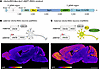 Figure 1
Generation and allele-specific expression of the Ube3a-IRES-Nluc-Sun1-sfGFP (INSG) reporter allele. (A) Schematic of the INSG construct and guide RNAs (gRNAs) used for pronuclear microinjection. The 3,566 bp INSG reporter cassette was inserted downstream of the Ube3a stop codon in exon 13. It includes an internal ribosomal entry site (IRES), nanoluciferase coding sequence (Nluc), 2A self-cleaving peptide from Thosea asigna virus capsid protein (T2A), and Sun1 nuclear envelope localization domain (Sun1) fused to the N-terminus of superfolder GFP (sfGFP). The 5′ and 3′ gRNA target site regions used for the homologous recombination are shown in Ube3a intron 12 and 3′-UTR, respectively. (B) Schematic of the paternal allele expression of the Ube3a-INSG transgene (patINSG), where Ube3a-INSG is paternally inherited and silenced in neurons, resulting in maternal-only UBE3A expression in most mature neurons. The sagittal section from a postnatal day 30 (P30) patINSG brain shows low overall GFP signal, with some residual expression in the olfactory bulb, newborn neurons in the dentate gyrus, and cerebellar cortex. (C) Schematic of the maternal allele expression of the Ube3a-INSG transgene (matINSG), where Ube3a-INSG is maternally inherited, enabling expression of UBE3A, Nluc, and Sun1-sfGFP from the maternal allele. The corresponding sagittal section shows strong GFP labeling in the cerebrum and cerebellum, with lower signal in the brainstem. Scale bars: 2 mm. Fire gradient used for visualization.
Due to epigenetic silencing of the paternal Ube3a allele, mice with the INSG transgene inherited paternally (patINSG) show minimal reporter expression in the brain at postnatal day 30 (P30), an age by which paternal Ube3a is silenced in neurons (Figure 1B) (22). Further, regions undergoing active neurogenesis — the subgranular zone of the dentate gyrus and the subventricular zone — along with areas where postnatal neurogenesis has recently ceased, such as the olfactory bulb and cerebellum, display sfGFP expression, consistent with their maturation status. In contrast, maternal inheritance of the INSG transgene (matINSG) leads to strong coexpression of endogenous UBE3A along with the Nluc and Sun1-sfGFP reporters (Figure 1C). Sagittal brain sections from matINSG mice show widespread GFP labeling that closely matches UBE3A expression, with the highest signals in the cerebrum (including cortex, hippocampus, basal ganglia, and olfactory bulb) and cerebellum, and the lowest in the brainstem (Figure 1B).
INSG insertion preserves UBE3A protein levels and function.
Previous studies have shown that adding YFP or other protein linkers to the C-terminus of UBE3A can interfere with its expression or enzymatic activity, as reported for the Ube3a-YFP mouse model (24–26). In contrast, the INSG design avoids direct modification of the UBE3A protein. Instead, Nluc and Sun1-sfGFP are translated as independent polypeptides from the same transcript, rather than as fusion proteins. To assess whether inserting the INSG cassette downstream of Ube3a affects endogenous expression, we quantified Ube3a mRNA levels using primer sets located in exon 1 and within exons 4–5, 7–8, 11–12, and 12–13 (Figure 2A). These assays showed a progressive decrease in transcript abundance toward the 3′ end of the gene. Similar, but less pronounced, reductions were observed in patINSG and patYFP mice compared with wild-type (WT) mice (Supplemental Figure 1, A and B; supplemental material available online with this article; https://doi.org/10.1172/jci.insight.197028DS1), suggesting that insertion into the 3′-UTR may influence transcript stability or processing. Despite these mRNA changes, Western blot analysis showed that UBE3A protein levels were unchanged across genotypes (Figure 2, B and C), indicating that the insertion of the INSG cassette does not measurably impair UBE3A protein expression in either matINSG or patINSG mice.
 Figure 2
Insertion of INSG reporter cassette into the Ube3a 3′-UTR preserves UBE3A protein levels. Brains from P90 mice were split so that one hemisphere was used for RNA extraction and the opposite hemisphere for protein analysis. Data from both assays were normalized to WT littermate controls. (A) Quantification of Ube3a mRNA normalized to Eif4a2 in WT and matINSG using primer sets targeting the indicated exons (2-way ANOVA with Bonferroni’s post hoc test). (B) Quantification of UBE3A protein levels in WT, matINSG, and patINSG mice normalized to GAPDH (2-tailed t test). (C) Representative Western blots comparing WT versus matINSG and WT versus patINSG. Each data point represents an individual animal (N = 5 per genotype; all males), with data shown as means ± SEM. **P < 0.005, ****P < 0.0001. Detailed statistical comparisons are provided in the Supporting Data Values. Norm., normalized; e, exon.
To confirm whether inserting the INSG reporter cassette into the 3′-UTR of Ube3a affects UBE3A protein function, we performed anatomical and behavioral analyses in Ube3a-INSG mice (Figure 3). Since excessive adult weight gain and microcephaly are well-documented phenotypes in Ube3a maternal deletion AS mouse models (27–29), we evaluated body and brain weights at P90. MatINSG mice had body and brain weights similar to those of their WT littermates (Figure 3, A and B, respectively), indicating that the insertion of the INSG cassette does not disrupt overall growth or neurodevelopment. We then assessed whether the INSG insertion changes neurological function by testing matINSG mice for behavioral deficits commonly observed in AS models (30). Consistent with preserved UBE3A protein levels and function, matINSG mice showed no significant differences from WT littermates in locomotor activity (open field distance, Figure 3C), motor coordination (accelerating rotarod, Figure 3D), or species-typical behaviors (marble burying, Figure 3E, and nest building, Figure 3F).
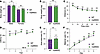 Figure 3
Insertion of INSG reporter cassette into the Ube3a 3′-UTR preserves UBE3A protein function. (A and B) Body weight (A) and brain weight (B) did not differ significantly between WT and matINSG mice (2-tailed t test). (C–F) Behavioral phenotyping shows no significant differences between WT and matINSG mice in distance traveled in the open field (2-way repeated-measures ANOVA, Bonferroni’s post hoc test) (C), latency to fall on an accelerating rotarod (2-way repeated-measures ANOVA, Bonferroni’s post hoc test) (D), percentage of marble area obscured by bedding in a 30-minute test session (2-tailed t test) (E), and nesting material used over a 5-day nest-building assay (2-way repeated-measures ANOVA, Bonferroni’s post hoc test) (F). Body weight and brain weight were measured at P90. Behavioral tests were conducted on the same cohort beginning around P70 (WT, N = 18 [7 males, 11 females]; matINSG, N = 16 [7 males, 9 females]) and performed in the order shown. Each data point represents an individual animal, with data shown as means ± SEM. Detailed statistical comparisons are provided in the Supporting Data Values.
The maintained UBE3A protein levels and lack of anatomical and behavioral deficits in comparison with WT mice strongly support that inserting the INSG cassette does not compromise the functional integrity of UBE3A expressed from the INSG allele.
Sun1-sfGFP enables quantitative cellular analysis of UBE3A imprinting and paternal allele reactivation.
Next, we examined how reliably Sun1-sfGFP reports UBE3A expression. We compared GFP and UBE3A immunolabeling patterns in matINSG and patINSG brains at P30. Our focus was on the hippocampus, where strong GFP labeling in the pyramidal cell layer of matINSG mice was substantially diminished in patINSG mice (Figure 4, A and B, respectively). The GFP signal remained high in the subgranular zone of the dentate gyrus, at the border between the granule cell layer and the hilus (arrows in Figure 4B), consistent with known paternal Ube3a expression in newly formed neurons (22).
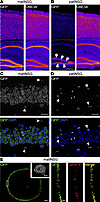 Figure 4
Validation of Sun1-sfGFP as an allele-specific, nuclear envelope–localized reporter of UBE3A expression. (A and B) Hippocampal and cortical regions in P30 matINSG and patINSG mice. (A) In matINSG brain, GFP (left) and UBE3A (right) levels are closely matched. (B) In patINSG brain, GFP (left) is sparser than UBE3A (right), with a strong signal only in immature neurons of the dentate gyrus subgranular zone (arrows). Fire gradient used for visualization. (C and D) High magnification of the hippocampal CA1 region. (C) In matINSG, DAPI (blue, bottom) and GFP staining (gray, top; green, bottom) show expression in pyramidal neurons (asterisks) and smaller cells outside the layer (arrowheads). (D) In patINSG, only scattered small cells, presumably glia, are GFP positive (gray, top; green, bottom) (arrowheads), while pyramidal neurons lack staining (asterisks). In both genotypes, GFP localizes to the nuclear membrane, consistent with Sun1 fusion. (E) STED microscopy of a matINSG neuron showing Sun1-sfGFP localization at the nuclear envelope. GFP from the boxed region (left) is shown at higher magnification to the right, alongside lamin B1 and the merged image, confirming membrane localization. The inset in E shows an overview of the same cell stained for NeuN (gray) and GFP (green). Scale bars: 250 μm (A and B); 25 μm (C and D); 1 μm (E); 5 μm (inset in E); 200 nm (right panel in E).
Higher resolution imaging of the CA1 hippocampal field revealed distinct Sun1-GFP labeling patterns dependent on reporter parent of origin (Figure 4, C and D). In matINSG brains, DAPI counterstaining showed intense GFP signal localized to the nuclear envelope of both pyramidal neurons and scattered smaller cells (Figure 4C). In contrast, the patINSG brain exhibited markedly reduced GFP staining confined to the nuclear membrane of a few smaller cells, presumed to be glial cells, with pyramidal neurons largely devoid of signal (Figure 4D). We used stimulated emission depletion (STED) microscopy to further validate the nuclear membrane localization of the GFP signal. Double labeling for GFP and lamin B1, a canonical nuclear envelope marker (31), revealed that GFP staining was interspersed with lamin B1 (Figure 4E). This pattern confirmed the expected nuclear envelope localization of the Sun1-sfGFP fusion protein (32).
We then directly compared the INSG model with the Ube3a-YFP reporter line by performing a side-by-side comparison of matINSG and matYFP brains at P13, using both native fluorescence and immunodetection (Figure 5). The Sun1-sfGFP reporter produced markedly superior signal resolution, even without signal enhancement (Figure 5A), yielding a sharp, ring-like pattern at the nuclear envelope that offered clear definition (Figure 5). In contrast, native YFP fluorescence was barely detectable in brain tissue (Figure 5A). Following antibody enhancement, the cytoplasmic YFP signal in Ube3a-YFP mice improved but appeared diffuse and poorly resolved in dense brain tissue, making cellular quantification more difficult (Figure 5B). These findings highlight the advantages of the INSG model for high-resolution imaging and accurate, cell-specific quantification of allele-specific UBE3A expression.
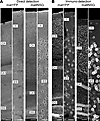 Figure 5
The matINSG Sun1-sfGFP reporter provides superior signal and cellular resolution compared with matYFP. (A) Direct fluorescence detection in matYFP and matINSG mice at P13 showing the neocortex (CX) and hippocampal region (CA1 region and dentate gyrus [DG]). No specific signal is readily visible in matYFP mice beyond background fluorescence, whereas matINSG mice exhibit a weak but clearly detectable nuclear-localized sfGFP signal. (B) Immunodetection using GFP antibody in matYFP and matINSG mice. The INSG reporter demonstrates superior cellular resolution with distinct nuclear labeling, while YFP shows more diffuse cytoplasmic staining. Higher-magnification images of neocortex layers 1 to 3 (right panels in A and B) highlight individual cells and the improved signal-to-background ratio in matINSG mice. Scale bars: 25 μm (left micrographs); 100 μm (right micrographs).
To highlight this utility, we performed quantitative analyses of UBE3A in the densely packed hippocampus. To identify the strongly labeled cells within the subgranular zone (SGZ) of the dentate gyrus, we carried out triple immunolabeling for GFP, UBE3A, and the microtubule-associated protein doublecortin (DCX) (Figure 6). In the adult dentate gyrus, DCX is expressed almost exclusively in developing neurons, serving as a reliable marker of neurogenesis (33). We observed that most SGZ cells with high GFP intensity coexpressed both DCX and UBE3A (Figure 6), consistent with these being immature neurons that biallelically express Ube3a. We then compared the mean GFP and UBE3A fluorescence intensities between DCX-positive SGZ cells and neurons in the surrounding granule cell layer (GCL) (Figure 6, E and F). In patINSG mice, GFP intensity was significantly higher in the SGZ than in the GCL, whereas in matINSG mice, strong GFP signals were present throughout the GCL. These findings support that paternal Ube3a expression is developmentally regulated and persists longer in immature neurons, as shown by sustained reporter expression in DCX-positive cells. Although earlier studies have reported paternal Ube3a expression in immature neurons (22, 34), to our knowledge, this is the first quantitative in vivo analysis of this developmental pattern.
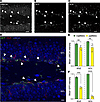 Figure 6
Sun1-sfGFP is expressed in immature neurons in the patINSG hippocampus. (A–C) Triple immunofluorescence staining of the dentate gyrus in P30 patINSG mice for UBE3A (A), Sun1-sfGFP (GFP) (B), and the immature neuron marker doublecortin (DCX) (C). (D) The merged image highlights that, in contrast to the widespread detection of UBE3A, GFP expression is restricted chiefly to DCX-positive immature neurons (arrowheads) located in the subgranular zone. (E and F) Mean intensity of UBE3A (E) and GFP (F) in the subgranular zone (SGZ; defined by DCX staining) and in the granule cell layer (GCL) of the dentate gyrus in matINSG and patINSG mice (N = 3 animals per group). Data are presented as mean ± SEM. One-tailed unpaired t test (***P < 0.001, ****P < 0.0001). Scale bars: 20 μm (A–C); 10 μm (D). PML, polymorphic layer.
To validate that the cellular GFP reporter accurately reflects endogenous UBE3A, we examined expression in specific cell types following quintuple immunolabeling for GFP, UBE3A, and markers for astrocytes (SOX9), neurons (NeuN), and nuclei (DAPI) in the hippocampal CA1 field (Figure 7). In matINSG mice, robust GFP and UBE3A labeling was observed in both astrocytes (NeuN–/SOX9+) and mature neurons (NeuN+/SOX9–) (Figure 7, B and C, respectively). Analysis of 1,572 neurons showed high GFP expression (x = 0.452 ± 0.108; mean ± SD) with a strong linear correlation to UBE3A levels (Pearson’s r = 0.559, Spearman’s ρ = 0.549, P < 0.0001). Astrocytes, which express UBE3A from both alleles, displayed more moderate GFP expression (n = 2,306, x = 0.253 ± 0.075; mean ± SD) with a significant correlation to UBE3A (r = 0.382, ρ = 0.442, P < 0.0001). In patINSG mice, neurons exhibited markedly reduced GFP labeling (n = 2,059, x = 0.078 ± 0.053; mean ± SD), with only a few exceptions, while UBE3A labeling remained consistent (x = 0.354 ± 0.183; mean ± SD) (Figure 7C). Conversely, astrocytes continued to display strong labeling for both UBE3A and GFP, with the strongest correlation between the two (n = 2,222, r = 0.602, ρ = 0.607, P < 0.0001) (Figure 7B). These findings confirm biallelic Ube3a expression in glial cells, consistent with prior studies (21, 22, 35, 36), and extend these observations by providing a quantitative, cell type–specific in vivo readout using a genetically encoded reporter.
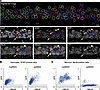 Figure 7
Relationship between UBE3A and Sun1-sfGFP labeling in individual cells in matINSG versus patINSG mice. (A) An illustration of the effectiveness of the deep learning algorithm used to quantify UBE3A and Sun1-sfGFP expression at single-cell resolution, even in densely packed areas like the hippocampal CA1 region. For easier visualization, each cell is outlined with a randomly assigned color to indicate both nuclear and cytoplasmic boundaries. Each of the 6 smaller panels overlays the cell segmentation results with 1 of the 5 input channels (DAPI, SOX9, GFP, NeuN, or UBE3A) used for segmentation, while the bottom right panel shows only the GFP channel without cell segmentations. The arrows point to a likely pyramidal neuron that expresses GFP, UBE3A, and the neuronal marker NeuN but not the astrocyte marker SOX9. The arrowheads indicate a small cell that is GFP, UBE3A, and SOX9 positive, but NeuN negative. The double arrows identify an outlier cell lacking all tested markers. (B and C) Scatterplots depicting the relationship between GFP and UBE3A fluorescence levels in individual cells within the hippocampal CA1 region at P30. (B) In SOX9-positive astrocytes, GFP and UBE3A intensities strongly correlate in matINSG and patINSG mice. (C) In NeuN-positive neurons, there is a strong correlation between GFP and UBE3A intensities in matINSG mice but not patINSG mice, apart from a small subset of cells, as most neurons in patINSG mice display GFP levels at background levels. The gray-shaded area marks the range of background GFP fluorescence observed in UBE3A-positive neurons from patINSG samples (C, right), which lack Sun1-sfGFP expression. This reference range is shown across all plots to facilitate comparison across genotypes and cell types. Scale bars: 10 μm.
Next, we tested the ability of Sun1-sfGFP to report in vivo reactivation of paternal Ube3a using (S)-PHA533533, a small molecule previously shown to unsilence paternal Ube3a after peripheral administration via a currently unidentified mechanism (10, 37). P11 patINSG mice received a single 2 mg/kg dose of (S)-PHA533533, while saline-treated matINSG and patINSG mice served as positive and negative controls, respectively (Figure 8). Analysis of Sun1-GFP expression at P13, 48 hours after treatment, in sagittal brain sections showed baseline GFP expression in patINSG brains compared with widespread signals in matINSG controls (Figure 8, A and B). In contrast, patINSG mice treated with (S)-PHA533533 showed visible partial reactivation of the GFP reporter across the brain (Figure 8C). Confocal imaging suggested that this reactivation happened within neuronal populations. This was especially in regions where neurons are readily distinguished by their size, shape, and location, including in superficial neocortical layers 1–2/3 (Figure 8, D–F), the pyramidal cell layer in the hippocampal CA1 field (Figure 8, G–I), and the dentate gyrus granule cell layer (Figure 8, J–L). This specific partial reactivation of paternal Ube3a by (S)-PHA533533 was further confirmed by costaining with NeuN and SOX9 (Figure 8, M and N). Assessment of GFP intensity in nuclei across all 3 layers of the hippocampal CA1 region showed that SOX9-positive astrocytes maintained consistent GFP levels (Figure 8M) with no significant differences between matINSG and patINSG mice, regardless of treatment. These findings are consistent with biallelic Ube3a expression in glial cells, as previously reported in mice and nonhuman primates (21, 22, 35, 36), as well as (S)-PHA533533 not affecting Ube3a expression in biallelically expressing cell types (10). In contrast, we observed a significant difference in GFP intensity between saline-treated matINSG and patINSG mice in NeuN-positive neurons, reflecting paternal allele silencing (Figure 8N). Treatment of patINSG mice with 2 mg/kg (S)-PHA533533 increased GFP levels in NeuN-positive neurons, indicating partial reactivation of the paternal Ube3a allele (Figure 8N).
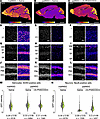 Figure 8
Paternal Ube3a unsilencing effect of (S)-PHA533533 in mouse brain measured using the Sun1-sfGFP reporter system. MatINSG and patINSG mice were treated intraperitoneally at P11 with either saline or (S)-PHA533533 (2 mg/kg), and brains were analyzed at P13. UBE3A expression was assessed via GFP immunostaining. (A–C) Sagittal brain sections visualized using a fire lookup table: saline-treated matINSG (A), saline-treated patINSG (B), and patINSG treated with (S)-PHA533533 (C). (D–L) Double staining for GFP (fire lookup table) and DAPI (white). (D–F) Layers 1 and 2/3 of the neocortex. (G–I) Hippocampal CA1 region highlighting white matter (WM), stratum oriens (SO), stratum pyramidale (SP), and stratum radiatum (SR). (J–L) Dentate gyrus, showing granule cell layer (GCL) and polymorphic layer (PML). (M and N) Violin plots of GFP intensity in CA1 hippocampal cells (N = 3 mice per condition; individual cells shown as n): (M) SOX9-positive astrocytes show similar GFP levels across groups. (N) NeuN-positive neurons show reduced GFP in saline-treated patINSG versus matINSG, with partial rescue after (S)-PHA533533 treatment. Data are mean ± SD. Statistical analysis by 1-way ANOVA with Bonferroni’s post hoc test. *P < 0.05. Scale bars: 2 mm (A–C); 50 μm (D–L).
These data demonstrate that Sun1-sfGFP functions as a highly reliable, allele-specific reporter of UBE3A expression at regional and cellular levels. It accurately reflects Ube3a imprinting biology in the Ube3a-INSG mouse in vivo and sensitively reports pharmacologically induced expression changes, demonstrating its ability to assess the pharmacodynamics of unsilencing approaches. The strict confinement of GFP signal to the nuclear envelope facilitates quantitative single-cell analysis in complex tissues.
INSG reporter enables whole-brain imaging of UBE3A expression.
Assessing brain-wide UBE3A distribution is crucial for evaluating the efficacy of therapeutics aimed at reactivating paternal Ube3a expression. However, direct immunodetection of endogenous UBE3A in tissue-cleared whole brains proved challenging in our hands. Thus, we explored whether Sun1-GFP could overcome this problem by testing whether the Sun1-sfGFP reporter could enable visualization of UBE3A-expressing nuclei in the intact brain using light-sheet fluorescence microscopy (LSFM) (Figure 9). We used the iDISCO clearing protocol with GFP immunolabeling in P30 INSG brains (38). The Sun1-sfGFP reporter provided robust and comprehensive labeling throughout the entire brain, overcoming the limitations of direct UBE3A detection (Figure 9). MatINSG brains exhibited widespread GFP signal faithfully reproducing known UBE3A expression patterns (Figure 9, A–C), while patINSG brains exhibited markedly reduced GFP signal. However, residual GFP labeling in patINSG brains was confined to regions of known persistent UBE3A expression, such as neurogenic zones including the rostral migratory stream, which is difficult to assess thoroughly in individual sections, and the dentate gyrus (Figure 9, B and D, respectively). High-resolution imaging in neocortical regions confirmed that Sun1-sfGFP enables visualization of individual nuclei throughout the brain volume, with its characteristic nuclear envelope localization providing single-cell resolution (Figure 9, E and F).
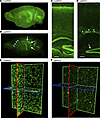 Figure 9
Brain-wide imaging of the Sun1-sfGFP reporter using LSFM. (A and B) Maximum-intensity projections of left hemispheres from P30 matINSG (A) and patINSG (B) brains labeled with GFP using iDISCO and visualized with 3D LSFM. The matINSG brain shows robust, widespread GFP expression, whereas patINSG shows lower overall expression, with the strongest labeling in the rostral migratory stream (arrowheads) and dentate gyrus (arrows). (C and D) Virtual 25 μm slices from A and B. (C) The matINSG brain shows a strong GFP signal across cortical layers and hippocampus, particularly in the pyramidal cell layer and dentate gyrus. (D) In contrast, the patINSG shows markedly reduced labeling, with prominent expression in the subventricular zone (arrowheads) and subgranular zone of the dentate gyrus (arrow). (E and F) Single light-sheet images in XY, XZ, and YZ planes from the neocortex of A and B, showing single-cell resolution. In both matINSG and patINSG brains, individual GFP-positive cells are identifiable, with resolution sufficient to show the nuclear localization of the Sun1-sfGFP reporter. The matINSG neocortex exhibits markedly higher GFP-positive cell density compared with patINSG, with the patINSG neocortex predominantly showing labeling of small nuclei, presumably of glia. Scale bars: 150 μm (C and D).
Dual Nluc and Sun1-GFP reporters enable high-throughput screening and flow cytometry analysis of allele-specific Ube3a expression.
Previous screening efforts to identify compounds that unsilence paternal Ube3a relied on labor-intensive and costly high-content imaging workflows spanning multiple days (9, 10). The Ube3a-INSG reporter mouse was designed to enable robust, high-throughput in vitro screening via quantitative luminescence assays, made possible by the integrated Nluc reporter. To test this capability, we compared pharmacological profiles of the Ube3a unsilencer (S)-PHA533533 in primary neurons derived from patINSG mice using 2 complementary readouts: Nluc luminescence and immunocytochemistry-based (ICC-based) Sun1-sfGFP analysis (Figure 10, A–D). Efficacy measurements (half-maximal effective concentration [EC50]) derived from Nluc luminescence, mean GFP fluorescence, and the percentage of GFP-positive neurons were nearly identical, with overlapping 95% confidence intervals (Figure 10, A and C). Similarly, toxicity assessments (half-maximal cytotoxic concentration [CC50]) based on Nluc readout or by direct neuronal cell counting closely aligned (Figure 10, B and D). As expected, dose-response curves were highly similar across methods (Figure 10, C and D). Statistical comparisons further suggested no differences in potency and toxicity estimates between methods (Figure 10E), with small to medium Cohen’s d effect sizes, a standardized measure of difference between 2 means that accounts for variability in the data (39). Importantly, the EC50 values derived from the INSG model closely matched those previously obtained using ICC in Ube3a-YFP neurons (10), despite the difference in detection method and reporter. Additionally, we sought to validate our Nluc system using another recently reported unsilencer, octanoic acid, a medium-chain fatty acid recently reported to improve behavioral phenotypes in AS mice (40). However, we observed no increase in Nluc signal in patINSG neurons following treatment with octanoic acid (Supplemental Figure 2A), whereas our positive control, (S)-PHA533533, robustly unsilenced paternal Ube3a in the same assay (Supplemental Figure 2B). To confirm that this lack of unsilencing was not due to difference in reporter model, we dosed patYFP neurons with octanoic acid, but were again unable to detect the previously reported unsilencing of paternal Ube3a (Supplemental Figure 2C). Together, these results demonstrate that the Nluc-based assay provides pharmacological data comparable to ICC for screening paternal Ube3a-unsilencing small molecules, while offering substantially higher throughput.
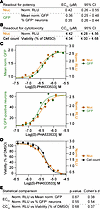 Figure 10
GFP and Nluc reporters provide concordant pharmacological readouts for measuring changes in allele-specific Ube3a expression in mouse primary neurons from patINSG and matINSG mice. (A–D) Pharmacological profiles for paternal Ube3a unsilencing in patINSG neurons treated with (S)-PHA533533 were assessed using luciferase- and immunofluorescence-based readouts. (A) EC50 values from 3 independent readouts — normalized relative light units (RLU), mean GFP fluorescence, and percentage GFP-positive neurons — show nearly identical potencies with overlapping 95% confidence intervals (CIs). (B) CC50 values from RLU and viability (percentage surviving neurons) also show overlapping 95% CIs. (C and D) Representative dose-response curves illustrate close agreement between Nluc and GFP readouts (C) and between Nluc and cell count–based cytotoxicity (D). (E) EC50 and CC50 values between GFP and Nluc assays showed no significant differences. All assays were performed in quadruplicate in 3 independent experiments (N = 3). Statistical analysis by 2-tailed t tests (E).
To further evaluate the utility of the INSG system, we tested whether the Sun1-GFP reporter, which is anchored to the outer nuclear membrane, could be used for flow cytometry–based analysis. Nuclei isolated from WT, matINSG, and patINSG neurons treated with 1 μM (S)-PHA533533 or DMSO for 72 hours were stained with DAPI and analyzed for GFP fluorescence (Figure 11, A and B). As expected, nuclei from matINSG cultures showed strong GFP fluorescence compared with WT controls. Fluorescence distributions from WT and matINSG samples were then used to set gating criteria for patINSG nuclei, which, under DMSO treatment, were largely GFP negative. In contrast, (S)-PHA533533 treatment of patINSG neurons resulted in a clear increase in GFP-positive nuclei, approaching levels seen in untreated matINSG cultures (Figure 11, A and B). To directly compare performance with the Ube3a-YFP model, we performed the same assay using nuclei isolated from patYFP neurons. In this model, (S)-PHA533533 induced a barely detectable shift in fluorescence intensity (Figure 11, C and D), underscoring the limitations of the diffuse YFP signal for nuclear-sorting-based analyses. Together, these results demonstrate that Sun1-GFP provides a robust, allele-specific nuclear signal suitable for flow cytometric detection and sorting, underscoring a key advantage of the Ube3a-INSG reporter over the Ube3a-YFP model.
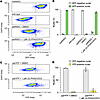 Figure 11
Sun1-GFP reporter enables flow cytometry for detecting paternal Ube3a unsilencing. (A and B) Flow cytometry was performed to assess the relative fluorescence of GFP/YFP in nuclei isolated from cultured neurons. (A) Representative density pseudocolored dot blots from sorted nuclei pools of cultured neurons derived from matINSG, WT, and patINSG mice, with patINSG neurons treated with either DMSO or 1 μM (S)-PHA533533 for 72 hours. The boxes indicate the gating boundaries that delineate the GFP-positive and GFP-negative populations. (B) Quantification of the percentage of GFP-positive and GFP-negative nuclei across samples. (C) Representative density pseudocolored dot blots from sorted nuclei pools of cultured neurons derived from patYFP mice treated with DMSO or 1 μM (S)-PHA533533 for 72 hours. (D) Quantification of the percentage of YFP-positive and YFP-negative nuclei across samples. Data are represented as mean ± SEM, where each data point corresponds to an independent well (10,000 nuclei analyzed per well).
In addition to small-molecule reactivation, we assessed whether the INSG model could report antisense oligonucleotide–mediated (ASO-mediated) unsilencing of paternal Ube3a (Figure 12). To this end, we tested a previously validated ASO (ASO RTR26183) targeting Ube3a-ATS (13). Treatment of patINSG neurons with this ASO resulted in a dose-dependent increase in Nluc signal (Figure 12A), indicating paternal Ube3a unsilencing. This unsilencing was independently confirmed by reverse transcription quantitative PCR (RT-qPCR), which showed decreased Ube3a-ATS RNA together with increased sfGFP mRNA levels (Figure 12, B and C, respectively). These results indicate that INSG reporter fidelity is preserved across distinct assay modalities.
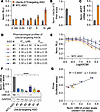 Figure 12
Ube3a-ATS–targeting and Ube3a-targeting ASOs respectively induce paternal Ube3a unsilencing or UBE3A downregulation in INSG neurons. (A–C) Ube3a-ATS–targeting ASO treatment in patINSG neurons showed dose-dependent paternal Ube3a unsilencing compared with non-targeting ASO, measured by luciferase assay (A), and by RT-qPCR at 5 μM ASO for Ube3a-ATS RNA knockdown (B) and sfGFP mRNA upregulation (C) normalized to Eif4a2 (N = 3–4 wells per group). (D and E) Summary of pharmacological profiles (IC50 and Emax) from luciferase-based Ube3a knockdown assays in matINSG neurons by Ube3a-targeting ASOs (D) with representative dose-response curves versus non-targeting control (NTC) ASO (E) (N = 3 runs in quadruplicate). (F) UBE3A protein levels quantified by Western blot in WT neurons treated with 10 μM NTC or Ube3a-targeting ASOs (N = 3). (G) Correlation between Emax values from luciferase assay and UBE3A protein levels for Ube3a-targeting ASOs, with Pearson’s R2 and P value indicated. ASO treatments lasted 72 hours. Data are represented as mean ± SEM. Statistical analysis by 1-way ANOVA with Bonferroni’s post hoc (F) and 2-tailed t tests (G). ****P < 0.0001. Norm., normalized.
To evaluate the utility of the Ube3a-INSG model beyond paternal unsilencing, we applied it to screen therapeutic candidates aimed at downregulating Ube3a. Dup15q syndrome is a neurodevelopmental disorder caused by maternal duplication or triplication of the 15q11.2–q13.1 region, which includes multiple genes, including UBE3A (41). Because maternally inherited duplications lead to more severe phenotypes than paternal duplications (42–44), UBE3A overexpression specifically in neurons is thought to be a major contributor to Dup15q syndrome (45–48). Accordingly, reducing UBE3A levels represents a promising therapeutic strategy. To this end, we screened 6 Ube3a-targeting ASOs in matINSG neurons. ASO treatment resulted in dose-dependent reductions in Nluc signal (Figure 12, D and E). Importantly, maximum effect (Emax) values from the luciferase assay correlated with UBE3A protein knockdown, as measured by Western blot, in WT neurons (Figure 12, F and G), validating the reporter as a proxy for endogenous protein levels. Together, these results highlight the value of the Nluc reporter for efficiently screening therapeutic compounds and ASOs in primary neuron cultures to identify drug/ASO candidates for both AS and Dup15q syndromes.
Nluc reporter enables in vivo bioluminescence imaging.
Finally, we assessed whether the Nluc reporter allows in vivo bioluminescence imaging (BLI) in the INSG system. BLI offers a highly sensitive, noninvasive, and non-terminal method for pharmacodynamic profiling, making it well suited for preclinical therapeutic studies. To evaluate this, 12- to 13-week-old adult female matINSG, patINSG, and WT littermates were injected with the fluorofurimazine substrate and imaged using an IVIS Spectrum system (Figure 13). Consistent with known UBE3A expression in peripheral tissues such as skin, we observed strong Nluc bioluminescent signal from the paws, ears, nose, and tail of matINSG and patINSG mice, whereas WT mice showed no detectable signal (Figure 13A). These regions are naturally free of black fur in C57BL/6J mice, which enhances detection and underscores why albino/nude strains are commonly used for in vivo BLI (49).
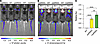 Figure 13
INSG mice enable in vivo quantification of UBE3A levels by bioluminescence imaging. (A) Representative bioluminescence signal from 12- to 13-week-old adult female matINSG, patINSG, and WT mice following systemic administration of the Nluc substrate fluorofurimazine. (B) Representative images from the same animals after scalp hair removal and repeat substrate administration. (C) Quantification of total radiance from matINSG, patINSG, and WT mice, measured as the integrated signal within a standardized head region of interest (ROI) applied uniformly across animals, as indicated. Data were normalized to patINSG mice within the experiment and analyzed by 1-way ANOVA with Bonferroni’s post hoc test. Individual points represent single animals (N = 3–4 per group). Data are shown as mean ± SEM. **P < 0.005, ****P < 0.0001. sr, steradian.
To assess cranial signals, presumably reflecting reporter expression in the brain and overlaying tissues, we chemically removed scalp hair and repeated imaging 1 week later. As expected, signal from the tail and paws persisted, but importantly, bioluminescence from the scalp region became detectable in both matINSG and patINSG mice (Figure 13B). Although patINSG mice showed a robust cranial signal likely arising from non-neuronal sources and complicated by skin UBE3A expression, quantitative analysis revealed a clear increase in cranial signal intensity in matINSG mice, with approximately 50% higher signal in comparison with patINSG animals (Figure 13C). These results demonstrate that the INSG model enables in vivo BLI for noninvasive, quantitative assessment of paternal Ube3a unsilencing, as reflected by higher signals in matINSG compared with patINSG mice.


