
Research ArticleInflammationVascular biology
Open Access |  10.1172/jci.insight.200255
Spatially controlled tenascin-C accumulation contributes to inflammatory disease persistence in giant cell aortitis
Hui Shi,1,2 Ying Tang,1,3 Jing Li,1,4 Ora Gewurz-Singer,5 Bo Yang,1 and Dogukan Mizrak1
1Department of Cardiac Surgery, University of Michigan, Ann Arbor, Michigan, USA.
2Department of Cardiovascular Surgery, Xiangya Hospital, and
3Department of Cardiology, Second Xiangya Hospital, Central South University, Changsha, China.
4Department of Vascular Surgery, Peking University People’s Hospital, Beijing.
5Department of Medicine, University of Michigan, Ann Arbor, Michigan, USA.
Address correspondence to: Dogukan Mizrak, 2800 Plymouth Road, NCRC-26, Room 263S, Ann Arbor, Michigan, 48109, USA. Email: dmizrak@med.umich.edu. Or to: Bo Yang, 1500 E Medical Center Dr., 5144 Frankel Cardiovascular Center, Ann Arbor, Michigan, 48109, USA. Email: boya@med.umich.edu.
Authorship note: HS and YT contributed equally to this work.
Find articles by Shi, H. in: PubMed | Google Scholar
1Department of Cardiac Surgery, University of Michigan, Ann Arbor, Michigan, USA.
2Department of Cardiovascular Surgery, Xiangya Hospital, and
3Department of Cardiology, Second Xiangya Hospital, Central South University, Changsha, China.
4Department of Vascular Surgery, Peking University People’s Hospital, Beijing.
5Department of Medicine, University of Michigan, Ann Arbor, Michigan, USA.
Address correspondence to: Dogukan Mizrak, 2800 Plymouth Road, NCRC-26, Room 263S, Ann Arbor, Michigan, 48109, USA. Email: dmizrak@med.umich.edu. Or to: Bo Yang, 1500 E Medical Center Dr., 5144 Frankel Cardiovascular Center, Ann Arbor, Michigan, 48109, USA. Email: boya@med.umich.edu.
Authorship note: HS and YT contributed equally to this work.
Find articles by Tang, Y. in: PubMed | Google Scholar
1Department of Cardiac Surgery, University of Michigan, Ann Arbor, Michigan, USA.
2Department of Cardiovascular Surgery, Xiangya Hospital, and
3Department of Cardiology, Second Xiangya Hospital, Central South University, Changsha, China.
4Department of Vascular Surgery, Peking University People’s Hospital, Beijing.
5Department of Medicine, University of Michigan, Ann Arbor, Michigan, USA.
Address correspondence to: Dogukan Mizrak, 2800 Plymouth Road, NCRC-26, Room 263S, Ann Arbor, Michigan, 48109, USA. Email: dmizrak@med.umich.edu. Or to: Bo Yang, 1500 E Medical Center Dr., 5144 Frankel Cardiovascular Center, Ann Arbor, Michigan, 48109, USA. Email: boya@med.umich.edu.
Authorship note: HS and YT contributed equally to this work.
Find articles by Li, J. in: PubMed | Google Scholar
1Department of Cardiac Surgery, University of Michigan, Ann Arbor, Michigan, USA.
2Department of Cardiovascular Surgery, Xiangya Hospital, and
3Department of Cardiology, Second Xiangya Hospital, Central South University, Changsha, China.
4Department of Vascular Surgery, Peking University People’s Hospital, Beijing.
5Department of Medicine, University of Michigan, Ann Arbor, Michigan, USA.
Address correspondence to: Dogukan Mizrak, 2800 Plymouth Road, NCRC-26, Room 263S, Ann Arbor, Michigan, 48109, USA. Email: dmizrak@med.umich.edu. Or to: Bo Yang, 1500 E Medical Center Dr., 5144 Frankel Cardiovascular Center, Ann Arbor, Michigan, 48109, USA. Email: boya@med.umich.edu.
Authorship note: HS and YT contributed equally to this work.
Find articles by Gewurz-Singer, O. in: PubMed | Google Scholar
1Department of Cardiac Surgery, University of Michigan, Ann Arbor, Michigan, USA.
2Department of Cardiovascular Surgery, Xiangya Hospital, and
3Department of Cardiology, Second Xiangya Hospital, Central South University, Changsha, China.
4Department of Vascular Surgery, Peking University People’s Hospital, Beijing.
5Department of Medicine, University of Michigan, Ann Arbor, Michigan, USA.
Address correspondence to: Dogukan Mizrak, 2800 Plymouth Road, NCRC-26, Room 263S, Ann Arbor, Michigan, 48109, USA. Email: dmizrak@med.umich.edu. Or to: Bo Yang, 1500 E Medical Center Dr., 5144 Frankel Cardiovascular Center, Ann Arbor, Michigan, 48109, USA. Email: boya@med.umich.edu.
Authorship note: HS and YT contributed equally to this work.
Find articles by
Yang, B.
in:
PubMed
|
Google Scholar
|

1Department of Cardiac Surgery, University of Michigan, Ann Arbor, Michigan, USA.
2Department of Cardiovascular Surgery, Xiangya Hospital, and
3Department of Cardiology, Second Xiangya Hospital, Central South University, Changsha, China.
4Department of Vascular Surgery, Peking University People’s Hospital, Beijing.
5Department of Medicine, University of Michigan, Ann Arbor, Michigan, USA.
Address correspondence to: Dogukan Mizrak, 2800 Plymouth Road, NCRC-26, Room 263S, Ann Arbor, Michigan, 48109, USA. Email: dmizrak@med.umich.edu. Or to: Bo Yang, 1500 E Medical Center Dr., 5144 Frankel Cardiovascular Center, Ann Arbor, Michigan, 48109, USA. Email: boya@med.umich.edu.
Authorship note: HS and YT contributed equally to this work.
Find articles by Mizrak, D. in: PubMed | Google Scholar
Published April 8, 2026 - More info
JCI Insight. 2026;11(7):e200255. https://doi.org/10.1172/jci.insight.200255.
© 2026 Shi et al. This work is licensed under the Creative Commons Attribution 4.0 International License. To view a copy of this license, visit http://creativecommons.org/licenses/by/4.0/.
Received: September 15, 2025; Accepted: February 10, 2026


-
Results
Spatial landscape of vascular remodeling in aortitis vessels. To investigate the aortic wall remodeling in aortitis samples at high resolution, we performed imaging-based spatial gene expression profiling on human ascending aortas collected from 3 female patients with aneurysm diagnosed with GCA showing presence of granulomatous inflammation with giant cells on pathology (denoted as GCA-1, GCA-2, and GCA-3), 2 female nonaneurysmal participants (denoted as Nonaneurysmal-1 and Nonaneurysmal-3), and 1 male nonaneurysmal participant (denoted as Nonaneurysmal-2) (Supplemental Table 1; supplemental material available online with this article; https://doi.org/10.1172/jci.insight.200255DS1). In addition, we performed the ascending aorta spatial profiling on 1 aneurysm patient diagnosed with IgG4-related aortitis (denoted as IgG4) with dense lymphoplasmacytic infiltrates and substantial IgG4+ plasma cell presence on pathology (Supplemental Table 1). The patients with aortitis had aneurysms of more than 5 cm in diameter in the ascending aorta and did not have a family history of aortic aneurysm or dissection (Supplemental Table 1). The patients with aortitis had either aortic insufficiency or no valvular complications, while the nonaneurysmal aortas were resected from patients with aortic stenosis (Supplemental Table 1). The spatial assays were performed using 10X Genomics Xenium Human Multi-tissue panel, which consists of 377 genes. This gene panel includes markers for different cell types, including vascular smooth muscle cells (SMCs), endothelial cells, and fibroblasts as well as diverse immune cells suitable to reveal the cellular complexity in aortitis samples. To confirm the cellular diversity in the GCA aorta, the spatial assay was conducted on 2 tissue sections isolated from neighboring aneurysmal regions (denoted as R1 and R2).
Unsupervised clustering revealed 9 major cell clusters with distinct marker expression: SMC cluster enriched for myosin heavy chain 11 (MYH11); myeloid cell cluster enriched for monocyte/macrophage markers (cluster of differentiation 14; CD14 and Fcγ receptor IIIa; FCGR3A) (32); T lymphocyte cluster enriched for T cell receptor α constant (TRAC); fibroblast cluster enriched for fibulin 1 (FBLN1); endothelial cell cluster enriched for von Willebrand factor (VWF); B lymphocyte cluster enriched for marginal zone B– and B1 cell–specific protein (MZB1); perivascular adipocyte cluster enriched for adiponectin (ADIPOQ); a proliferating myeloid cell cluster enriched for both differentiated myeloid cell markers and cell proliferation markers such as marker of proliferation Ki-67 (MKI67); and Schwann cell cluster enriched for peripheral myelin protein 22 (PMP22) expression (Figure 1A, Supplemental Figure 1A, and Supplemental Dataset 1). The myeloid cell cluster was enriched for multiple myeloid lineage markers, including monocyte and granulocyte markers, suggesting additional heterogeneity (Supplemental Dataset 1). The major cluster markers exhibited pervasive and cluster-specific expression patterns except for the adipocyte cluster that likely contained SMCs showing their marker expression (Figure 1B). The cell clusters showed different distribution among different patient groups (Figure 1C). Relative SMC abundance diminished in the aortitis group, most apparently in the IgG4 aorta (Figure 1C). Immune cell clusters, including myeloid, T cell, and B cell clusters were more prevalent in the aortitis vessels, with myeloid cell cluster being the most abundant immune cell cluster (Figure 1C). Differential gene expression analysis confirmed the enrichment of immune markers and depletion of SMC markers in the aortitis samples (Supplemental Datasets 2 and 3). Next, we visualized the spatial distribution of major cell clusters in different samples (Figure 1D and Supplemental Figure 1B). As expected, the nonaneurysmal aorta walls were primarily comprised of SMCs, while the aortic media was comprised of immune cells and fibroblasts in the IgG4 aorta (Figure 1D). GCA aortas showed variable levels of medial damage, with the highest inflammation in GCA1 (Figure 1D). To better visualize the degree of inflammatory assault in the aortitis samples, we plotted the spatially resolved expression of different immune cluster markers (Figure 1E). CD14, TRAC, and MZB1 expression was clearly visible in the aortic media in GCA1, GCA2, and IgG4 aortas, whereas they appeared more concentrated in the GCA3 adventitia, further confirming both myeloid and lymphoid lineage cell presence, including MZB1+ B cells (Figure 1E).
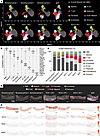 Figure 1
Spatial landscape of vascular remodeling in aortitis vessels. (A) Uniform Manifold Approximation and Projection (UMAP) visualization showing the sample distribution of 9 major clusters identified in 3 nonaneurysmal individuals, 1 IgG4-related aortitis sample, and in 3 patients with giant cell aortitis (GCA). The assay was performed in 2 independent regions (R1 and R2) per GCA patient. (B) Violin plots showing expression levels of significantly enriched markers across different cell clusters. (C) Cell cluster composition in each patient. Two sections were used to calculate cell composition for each GCA patient. The proliferating myeloid population is abbreviated as Prolif.Myeloid. (D) Spatial distribution of cell clusters across samples. Each circle represents an individual cell (centroid view) and is colored based on the cluster identification as in A. Asterisk (*) indicates the lumen. Uneven tissue edges introduced during tissue processing and loose perivascular tissue were trimmed to present the intact tissue segments in the spatial plots. Scale bars: 1 mm. (E) Spatially resolved normalized expression of smooth muscle and immune cell markers in each cell across different samples. Scale bars: 1 mm.
Subclustering analyses reveal proinflammatory vascular smooth muscle and fibroblast populations. Spatial analysis of the major cell clusters in the aortitis vessels demonstrated a spectrum of inflammatory cell presence in the immune-privileged SMC-rich aortic media. We speculated that these immune infiltrates phenotypically modulate tissue-resident stromal cells, including SMCs and fibroblasts, which initiate defective repair mechanisms, compromising aortic structural integrity, ultimately leading to aneurysm formation. To resolve the molecularly distinct SMC subtypes, we performed subclustering analysis, which revealed 4 SMC subclusters, denoted as SMC1 to SMC4 (Figure 2A). The resulting subclusters showed distinct marker expression (Figure 2B and Supplemental Dataset 4). The contractile marker actin α2 (ACTA2) was more diffusively expressed, whereas MYH11 appeared de-enriched in SMC3, suggesting a loss of SMC identity (Figure 2B). The SMC subclusters showed differential distribution among different patient groups (Figure 2C). Particularly, SMC1 enriched for latent TGF-β–binding protein 2 (LTBP2) and SMC4 enriched for desmin (DES) were more abundant in the nonaneurysmal aortas, while the aortitis samples were consistently more populated with SMC3 enriched for TNC (Figure 2C). Among the SMC subcluster markers, SMC4 marker DES showed a spatially distinct expression pattern labeling the SMCs at the media-adventitia junction (Supplemental Figure 1C).
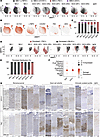 Figure 2
Subclustering analyses reveal proinflammatory vascular smooth muscle and fibroblast populations. (A) UMAP visualization of SMC subcluster sample distribution. NA, nonaneurysmal. (B) Normalized expression of SMC subcluster markers projected on merged UMAP visualization. (C) SMC subcluster composition in each participant. (D) UMAP visualization of Fibroblast subcluster sample distribution. (E) Fibroblast subcluster composition in each participant. (F) Dot plots showing TNC and THY1 expression levels in each major cell cluster. (G) MYH11 and TNC immunohistochemistry in different samples. The detailed patient information is provided in Supplemental Table 2. Asterisk (*) indicates the lumen. Scale bars: 200 μm.
Next, we subclustered fibroblasts, constituting another major cell population of the aorta. Subclustering revealed 2 major fibroblast subclusters (denoted as Fibroblast1 and Fibroblast2) and a small cell population constituting less than 1% of the fibroblasts (Supplemental Dataset 5). We observed the expansion of TNC+ Fibroblast1 in all aortitis vessels, with an enrichment in the GCA1 aorta (Figure 2, D and E). TNC is a large extracellular glycoprotein that participates in tissue inflammation and fibrosis in various organs (33–35). The TNC+ Fibroblast1 population also showed enrichment for aortic aneurysm–associated thrombospondin-2 (THBS2) (36, 37) and Thy-1 cell surface antigen (THY1) (Supplemental Dataset 5), which plays a context-dependent role in tissue fibrosis (38). Both GCA and IgG4 samples showed excessive collagen deposition in intima or adventitia, a common characteristic of fibrotic aortitis vessels (Supplemental Figure 1D) (1). Importantly, TNC and THY1 were most enriched in the Fibroblast cluster among all major cell clusters, suggesting fibroblast phenotypic modulation in the aortitis samples (Figure 2F). However, TNC expression was not exclusive to the stromal cell populations showing expression in immune cells as well (Figure 2F).
We then performed immunohistochemistry for MYH11 and TNC on aortas collected from 6 clinically monitored patients with giant cell arteritis as well as ascending aortas collected from 6 nonaneurysmal participants to validate our findings (Supplemental Table 2). The nonaneurysmal participants in the validation stainings either had no valvular complications or presented with aortic insufficiency, better matching with the valvular phenotypes of the patients with GCA (Supplemental Table 2). In addition to the GCA and IgG4 aortas, we also examined granulomatous aortas collected from 3 clinically monitored male CIA samples to determine the pervasiveness of our findings. We included male nonaneurysmal participants in the validation cohort (Supplemental Table 2). MYH11 staining confirmed localized SMC loss in the GCA, CIA, and IgG4 aortas (Figure 2G and Supplemental Figure 2). TNC showed clear accumulation in the aortitis samples concentrating around lesion areas and was weak in the nonaneurysmal aortas (Figure 2G and Supplemental Figure 2). Taken together, these findings indicate substantial tissue remodeling and phenotypic modulation in stromal cells in the diseased aorta.
TNC accumulates in aortitis lesions. Next, we aimed to determine the molecular and cellular triggers for TNC expression in the GCA and IgG4 aortas. We first examined the spatially resolved expression of TNC, which predominantly labeled cells in the aortitis samples, albeit lacking a distinguishable spatially restricted expression pattern (Figure 3A). We then plotted individual molecule distribution for TNC and THY1 along with SMC marker MYH11, endothelial marker PECAM1, and myeloid cell marker CD14. In the nonaneurysmal aortas, MYH11+ SMCs formed the aortic media, while TNC expression was negligible (Figure 3B). In both GCA and IgG4 aortas, the higher resolution images revealed accumulation of TNC molecules to aortic lesions concentrated around CD14+ and PECAM1+ areas (Figure 3B). The PECAM1+ areas in the aortic media could indicate areas of neovascularization, which provides a gateway for immune cells to enter immune-privileged aortic media supporting chronic inflammation (39).
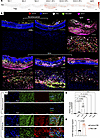 Figure 3
Tenascin-C accumulates in aortitis lesions. (A) Spatially resolved normalized TNC expression in each cell (centroid view) in different samples. NA, nonaneurysmal. Scale bars: 1 mm. (B) Spatial distribution of CD14 (red), MYH11 (blue), TNC (white), PECAM1 (green), and THY1 (magenta) transcripts in the aortic wall. Each enlarged circle represents an individual CD14, MYH11, TNC, PECAM1, or THY1 transcript. Spatial distribution of molecules is plotted in B, while spatial distribution of cells is plotted in Figure 1D on the same sections. White dashed boxes indicate the magnified areas in each sample. Uneven tissue edges introduced during tissue processing and loose perivascular tissue were trimmed to present the intact tissue segments in the spatial plots. Asterisk (*) indicates the lumen. Scale bars: 1 mm. (C) Immunofluorescent staining for TNC, CD45, and α-SMA. Scale bars: 50 μm. (D) Relative TNC expression after the treatment of primary SMCs with various factors (n = 6, Kruskal-Wallis test with multiple comparisons). (E) CD86+ macrophage migration rate following control conditioned media (Control-CM) or TNC conditioned media (TNC-CM) treatment (n = 6, unpaired t test with Welch’s correction).
We then performed immunofluorescent staining and confirmed the expansion of TNC+α-SMA+ phenotypically modulated stromal cells in the GCA aorta (Figure 3C). We observed extracellular TNC accumulation in lesion areas populated with CD45+ immune cells (Figure 3C). As expected, TNC and pan-immune CD45 staining was nearly undetectable in the media of the nonaneurysmal aortas (Figure 3C). The accumulation of TNC molecules in areas of inflammation also implied molecular activation by inflammatory milieu. To inspect the molecular triggers of TNC expression, we stimulated primary SMCs with different proinflammatory and profibrotic cytokines. Recombinant TNF-α and IL-1β supplementation robustly activated TNC expression, while IL-6 and IFN-γ treatments had no effect (Figure 3D). In addition, profibrotic TGF-β1 treatment did not appear to induce TNC expression strongly (Figure 3D). To investigate the relevance of TNC accumulation to immune cell infiltration, we performed a Transwell migration assay on proinflammatory CD86+ human macrophages (Figure 3E). For robust TNC production, we transfected HEK-293 cells with a control or TNC-overexpressing (TNC-OE) plasmid and collected concentrated conditioned media from the HEK-293 cultures, denoted as Control-CM and TNC-CM, respectively (Supplemental Figure 3A). The cells were seeded in the top chamber and the lower chamber contained media supplemented with Control-CM or TNC-CM. TNC-CM induced CD86+ macrophage migration, suggesting a bidirectional interaction between inflammatory milieu and TNC regulation (Figure 3E). Overall, these data suggest that TNC accumulation in aortic lesions is regulated by proinflammatory factors such as TNF-α and IL-1β, which are primarily produced by immune cells, including myeloid lineage cells and lymphocytes (40, 41).
TNC is a local catalyst of inflammation. To assess the functional relevance of TNC, we first transfected primary human aortic SMCs with a TNC-OE or a control plasmid (Supplemental Figure 3B), and performed RT-qPCR 2 days later (Figure 4A). TNC-OE diminished the expression of SMC markers such as MYH11, calponin 1 (CNN1), and smooth muscle 22α (SM22a) while increasing IL6, IL1b, and C-C motif chemokine ligand 2 (CCL2) levels (Figure 4A). To stimulate the cells with extracellular TNC, we treated the primary SMCs with Control-CM or TNC-CM for 2 days, and performed RT-qPCR. TNC-CM significantly reduced SMC marker expression compared with Control-CM while inducing proinflammatory cytokine expression (Figure 4B). TNC signaling contributes to pathological tissue remodeling in various disease settings primarily via Toll-like receptor 4 (TLR4) (42, 43). TLR4 classically signals through the NF-κB complex to activate proinflammatory cytokine expression (44, 45). Immunofluorescent staining of primary SMCs showed increased NF-κB phosphorylation (p-NF-κB) and nuclear localization only 24 hours after TNC-CM treatment (Figure 4C and Supplemental Figure 3C). In the presence of a selective TLR4 inhibitor, TAK-242 (resatorvid) (46), TNC-CM or TNC-OE was unable to increase nuclear p-NF-κB levels, suggesting TNC action on NF-κB through TLR4 signaling (Figure 4C and Supplemental Figure 3, C and D). Interestingly, while immunoblots confirmed that TNC-CM reduces MYH11 and CNN1, TAK-242 was ineffective in restoring SMC marker levels (Figure 4D). To evaluate proinflammatory cytokine changes, we also performed enzyme-linked immunosorbent assays (ELISAs) on conditioned media collected from TNC-CM and Control-CM groups. ELISAs for IL-6, IL-1β and chemokine CCL2 showed their significant induction by TNC-CM (Figure 4E). TAK-242 reduced IL-1β and CCL2 to the baseline level, albeit only modestly suppressing IL-6 levels (Figure 4E).
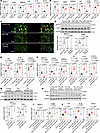 Figure 4
Tenascin-C is a local catalyst of inflammation. (A) Relative expression of SMC and inflammatory markers in primary SMCs overexpressing a control or TNC plasmid (n = 6, unpaired t test, unpaired t test with Welch’s correction, or Mann-Whitney test). (B) Relative expression of SMC and inflammatory markers in primary SMCs treated with Control-CM or TNC-CM (n = 6, unpaired t test or unpaired t test with Welch’s correction). (C) Immunofluorescence for p-NF-κB and α-SMA on primary cells after TNC-CM and TAK-242 (TLR4 inhibitor) treatments. Scale bars: 50 μm. (D) Western blots showing the levels of SMC markers after TNC-CM and TAK-242 treatments and their quantification (n = 3, 1-way ANOVA or Kruskal-Wallis test with multiple comparisons). (E) Quantification of IL-6, IL-1β, and CCL2 ELISAs on the conditioned media after Control-CM, TNC-CM, and TAK-242 treatments (n = 6, Brown-Forsythe and Welch’s ANOVA with multiple comparisons). (F) Relative expression of SMC and proinflammatory cytokines in primary SMCs treated with IL-6, soluble IL-6 receptor (sIL6R), and tocilizumab (TCZ) (n = 6, 1-way ANOVA, Brown-Forsythe and Welch’s ANOVA or Kruskal-Wallis test with multiple comparisons). (G) Quantification of MYH11 and CNN1 immunoblots after IL-6 signaling activation and blockade by TCZ (n = 3, 1-way ANOVA with multiple comparisons). (H) Western blots for MYH11 and CNN1 after Control-CM, TNC-CM, TCZ, and TAK-242 treatments. (I) Quantification of MYH11 and CNN1 Western blots (n = 3, 1-way ANOVA with multiple comparisons). (J) Quantification of IL-6, IL-1β, and CCL2 ELISAs in the conditioned media after Control-CM, TNC-CM, TCZ, and TAK-242 treatments (n = 6, 1-way ANOVA with multiple comparisons).
IL-6 participates in the pathogenic cascade through STAT3 activation and IL-6 levels are elevated in patients with aortic aneurysms (47–50). Importantly, IL-6 signaling is indicated as a key target for vasculitis therapy (51, 52). Given the induction of IL-6 by TNC, we next evaluated the effects of IL-6 and TCZ on primary human SMCs. Treatment of cells with IL-6 and soluble IL-6R induced a proinflammatory phenotype with a significant reduction in SMC marker expression, while IL-6 signaling blockade with TCZ improved SMC marker expression (Figure 4, F and G). p-STAT3, but not p-NF-κB, markedly increased following IL-6 and soluble IL-6R treatments and p-STAT3 activation was suppressed by TCZ (Supplemental Figure 3E). To confirm that STAT3 is a driver of phenotypic changes in response to IL-6 signaling stimulation, we also treated the cells with 1 μM Stattic, a specific small-molecule inhibitor of STAT3 activation as confirmed by p-STAT3 immunoblots (Supplemental Figure 3, F and G) (53). Stattic diminished the effects of IL-6 activation on MYH11 and CNN1 levels in primary SMCs (Supplemental Figure 3, F and G). Notably, STAT3 is known to suppress contractile SMC marker expression by inhibiting the myocardin–serum response factor transcriptional complex (54) and is a transcriptional regulator of IL6 expression in a positive feedback loop (55, 56), as also evidenced by the STAT3 binding peaks (ENCODE Project Consortium) (57) in the IL6 promoter region (Supplemental Figure 3H).
Based on these results, we reasoned that the ineffectiveness of TAK-242 to restore SMC marker expression may be partially due to its weak IL-6 suppression. We next treated TNC-CM– and Control-CM–stimulated cells with TCZ. Immunoblots showed that TCZ treatment improved SMC marker levels in TNC-CM group (Figure 4H). CNN1 levels were improved in cells treated with both TCZ and TAK-242, while the combination treatment failed to rescue MYH11, a late-stage contractile SMC marker, suggesting their stage-specific effects (Figure 4, H and I). In addition, ELISAs showed that TCZ can suppress IL-6 and CCL2 levels, indicating the central role IL-6 signaling plays in aortic cell inflammation (Figure 4J). Treatment of the cells with both TCZ and TAK-242 also restored IL-1β levels showing potential benefits of using TAK-242 (Figure 4J). Collectively, our data imply that TNC broadly induces a proinflammatory loop in primary aortic SMCs and pharmacological blockade of IL-6 signaling is required to restore the contractile phenotype.


