
Research ArticleCell biologyClinical ResearchImmunology
Open Access |  10.1172/jci.insight.201116
An at-home blood collection device for remote immune monitoring by high-parameter flow cytometry
Andrew J. Konecny,1,2 Fang Yun Lim,1 Eva Domenjo-Vila,1 Erika Lovas,1 Rachel L. Blazevic,1 Louise E. Kimball,1 Michael Boeckh,1,3 Alpana Waghmare,1,4,5 and Martin Prlic1,2
1Vaccine and Infectious Disease Division, Fred Hutchinson Cancer Center, Seattle, Washington, USA.
2Department of Immunology,
3Department of Medicine, and
4Department of Pediatrics, University of Washington, Seattle, Washington, USA.
5Seattle Children’s Research Institute, Seattle, Washington, USA.
Address correspondence to: Martin Prlic, Fred Hutchinson Cancer Center, E5-110, 1100 Fairview Ave. N, Seattle, Washington 98109, USA. Phone: 206.667.2216; Email: mprlic@fredhutch.org. Or to: Alpana Waghmare, Fred Hutchinson Cancer Center, E4-100, 1100 Fairview Ave. N, Seattle, Washington 98109, USA. Phone: 206.667.7329; Email: awaghmar@fredhutch.org.
Find articles by Konecny, A. in: PubMed | Google Scholar
1Vaccine and Infectious Disease Division, Fred Hutchinson Cancer Center, Seattle, Washington, USA.
2Department of Immunology,
3Department of Medicine, and
4Department of Pediatrics, University of Washington, Seattle, Washington, USA.
5Seattle Children’s Research Institute, Seattle, Washington, USA.
Address correspondence to: Martin Prlic, Fred Hutchinson Cancer Center, E5-110, 1100 Fairview Ave. N, Seattle, Washington 98109, USA. Phone: 206.667.2216; Email: mprlic@fredhutch.org. Or to: Alpana Waghmare, Fred Hutchinson Cancer Center, E4-100, 1100 Fairview Ave. N, Seattle, Washington 98109, USA. Phone: 206.667.7329; Email: awaghmar@fredhutch.org.
Find articles by
Lim, F.
in:
PubMed
|
Google Scholar
|

1Vaccine and Infectious Disease Division, Fred Hutchinson Cancer Center, Seattle, Washington, USA.
2Department of Immunology,
3Department of Medicine, and
4Department of Pediatrics, University of Washington, Seattle, Washington, USA.
5Seattle Children’s Research Institute, Seattle, Washington, USA.
Address correspondence to: Martin Prlic, Fred Hutchinson Cancer Center, E5-110, 1100 Fairview Ave. N, Seattle, Washington 98109, USA. Phone: 206.667.2216; Email: mprlic@fredhutch.org. Or to: Alpana Waghmare, Fred Hutchinson Cancer Center, E4-100, 1100 Fairview Ave. N, Seattle, Washington 98109, USA. Phone: 206.667.7329; Email: awaghmar@fredhutch.org.
Find articles by Domenjo-Vila, E. in: PubMed | Google Scholar
1Vaccine and Infectious Disease Division, Fred Hutchinson Cancer Center, Seattle, Washington, USA.
2Department of Immunology,
3Department of Medicine, and
4Department of Pediatrics, University of Washington, Seattle, Washington, USA.
5Seattle Children’s Research Institute, Seattle, Washington, USA.
Address correspondence to: Martin Prlic, Fred Hutchinson Cancer Center, E5-110, 1100 Fairview Ave. N, Seattle, Washington 98109, USA. Phone: 206.667.2216; Email: mprlic@fredhutch.org. Or to: Alpana Waghmare, Fred Hutchinson Cancer Center, E4-100, 1100 Fairview Ave. N, Seattle, Washington 98109, USA. Phone: 206.667.7329; Email: awaghmar@fredhutch.org.
Find articles by Lovas, E. in: PubMed | Google Scholar
1Vaccine and Infectious Disease Division, Fred Hutchinson Cancer Center, Seattle, Washington, USA.
2Department of Immunology,
3Department of Medicine, and
4Department of Pediatrics, University of Washington, Seattle, Washington, USA.
5Seattle Children’s Research Institute, Seattle, Washington, USA.
Address correspondence to: Martin Prlic, Fred Hutchinson Cancer Center, E5-110, 1100 Fairview Ave. N, Seattle, Washington 98109, USA. Phone: 206.667.2216; Email: mprlic@fredhutch.org. Or to: Alpana Waghmare, Fred Hutchinson Cancer Center, E4-100, 1100 Fairview Ave. N, Seattle, Washington 98109, USA. Phone: 206.667.7329; Email: awaghmar@fredhutch.org.
Find articles by Blazevic, R. in: PubMed | Google Scholar
1Vaccine and Infectious Disease Division, Fred Hutchinson Cancer Center, Seattle, Washington, USA.
2Department of Immunology,
3Department of Medicine, and
4Department of Pediatrics, University of Washington, Seattle, Washington, USA.
5Seattle Children’s Research Institute, Seattle, Washington, USA.
Address correspondence to: Martin Prlic, Fred Hutchinson Cancer Center, E5-110, 1100 Fairview Ave. N, Seattle, Washington 98109, USA. Phone: 206.667.2216; Email: mprlic@fredhutch.org. Or to: Alpana Waghmare, Fred Hutchinson Cancer Center, E4-100, 1100 Fairview Ave. N, Seattle, Washington 98109, USA. Phone: 206.667.7329; Email: awaghmar@fredhutch.org.
Find articles by Kimball, L. in: PubMed | Google Scholar
1Vaccine and Infectious Disease Division, Fred Hutchinson Cancer Center, Seattle, Washington, USA.
2Department of Immunology,
3Department of Medicine, and
4Department of Pediatrics, University of Washington, Seattle, Washington, USA.
5Seattle Children’s Research Institute, Seattle, Washington, USA.
Address correspondence to: Martin Prlic, Fred Hutchinson Cancer Center, E5-110, 1100 Fairview Ave. N, Seattle, Washington 98109, USA. Phone: 206.667.2216; Email: mprlic@fredhutch.org. Or to: Alpana Waghmare, Fred Hutchinson Cancer Center, E4-100, 1100 Fairview Ave. N, Seattle, Washington 98109, USA. Phone: 206.667.7329; Email: awaghmar@fredhutch.org.
Find articles by Boeckh, M. in: PubMed | Google Scholar
1Vaccine and Infectious Disease Division, Fred Hutchinson Cancer Center, Seattle, Washington, USA.
2Department of Immunology,
3Department of Medicine, and
4Department of Pediatrics, University of Washington, Seattle, Washington, USA.
5Seattle Children’s Research Institute, Seattle, Washington, USA.
Address correspondence to: Martin Prlic, Fred Hutchinson Cancer Center, E5-110, 1100 Fairview Ave. N, Seattle, Washington 98109, USA. Phone: 206.667.2216; Email: mprlic@fredhutch.org. Or to: Alpana Waghmare, Fred Hutchinson Cancer Center, E4-100, 1100 Fairview Ave. N, Seattle, Washington 98109, USA. Phone: 206.667.7329; Email: awaghmar@fredhutch.org.
Find articles by Waghmare, A. in: PubMed | Google Scholar
1Vaccine and Infectious Disease Division, Fred Hutchinson Cancer Center, Seattle, Washington, USA.
2Department of Immunology,
3Department of Medicine, and
4Department of Pediatrics, University of Washington, Seattle, Washington, USA.
5Seattle Children’s Research Institute, Seattle, Washington, USA.
Address correspondence to: Martin Prlic, Fred Hutchinson Cancer Center, E5-110, 1100 Fairview Ave. N, Seattle, Washington 98109, USA. Phone: 206.667.2216; Email: mprlic@fredhutch.org. Or to: Alpana Waghmare, Fred Hutchinson Cancer Center, E4-100, 1100 Fairview Ave. N, Seattle, Washington 98109, USA. Phone: 206.667.7329; Email: awaghmar@fredhutch.org.
Find articles by
Prlic, M.
in:
PubMed
|
Google Scholar
|
Published April 8, 2026 - More info
JCI Insight. 2026;11(7):e201116. https://doi.org/10.1172/jci.insight.201116.
© 2026 Konecny et al. This work is licensed under the Creative Commons Attribution 4.0 International License. To view a copy of this license, visit http://creativecommons.org/licenses/by/4.0/.

-
Results
The immune cell populations in capillary blood closely resemble those collected by venipuncture. We first wanted to determine whether blood from the Tasso+ recapitulates blood collected via venipuncture for immunological profiling of cell subsets by comparing donor- and visit-matched venipuncture and Tasso+ samples collected from healthy volunteers. Most immunological studies use PBMCs, which are generated by running blood obtained via venipuncture over a Ficoll density gradient to deplete RBCs and polymorphonuclear cells. The blood volume that we collected from Tasso+ devices ranged from 100 to 1,000 μL, which is not suitable for processing by a Ficoll gradient. Thus, we tested for 2 variables in 2 sets of experiments: capillary blood (blood collected with Tasso+) versus venipuncture blood, and ACK lysis of RBCs versus Ficoll gradient. First, we compared venipuncture to Tasso+ blood using ACK to lyse RBCs in both samples. Up to 1 mL of blood from either collection method was processed by ACK lysis, then processed for cryopreservation and stored in liquid nitrogen until analysis. For analysis, samples were then split into 2 equal aliquots for staining with 2 high-dimensional flow cytometry panels to assess the antigen-presenting cell (APC) and T cell compartments (Supplemental Table 1; supplemental material available online with this article; https://doi.org/10.1172/jci.insight.201116DS1) (24, 25). Briefly, our APC panel focused on delineating monocyte and conventional DC (cDC) subsets in addition to plasmacytoid DCs (pDCs), basophils, NK cells and their subsets, total B cells, and total T cells (Supplemental Figure 1A). The panel contained 17 additional markers for continued subsetting and to inform APC’s function, trafficking, and costimulatory and inhibitory capacity to activate. The T cell panel further dissected T cells into conventional CD4+ T cells, conventional CD8+ T cells, γδ T (TCRgd T) cells, mucosal-associated invariant T (MAIT) cells, and Treg cells in addition to their memory subsets (Supplemental Figure 1B). B cells in this panel can be further subdivided into memory B cells, naive B cells, and plasmablasts (Supplemental Figure 1C). The T cell panel contained 18 markers to inform activation status, cytotoxicity, residency, and inhibition. We observed no change in the population frequency distribution of the innate immune compartment consisting of monocytes, cDCs, pDCs, basophils, or NK cells when comparing venipuncture with capillary blood. We additionally observed no change in the adaptive immune compartment consisting of T cells and B cells (Figure 1A). Further subsetting of NK cells into those that have high cytokine production (CD56hiCD16–) and those that have higher cytotoxic potential (CD56loCD16+) revealed no difference in the composition of the NK cell pool (Figure 1B). This observation was also true for monocytes when divided into their constituent subsets: classical monocytes (CD14+CD16–), intermediate monocytes (CD14+CD16+), and nonclassical monocytes (CD14loCD16+) (Figure 1C). cDCs can be further divided into the cross-presenting cDC1s (CD141+), cDC2s (CD1c+), and double-negative cDCs (CD141–CD1c–). In our cohort, we did not observe changes in the cDC compartment; however, the low cell numbers of cDC1s obtained with low-volume input samples likely made it difficult to accurately test for a difference between the 2 sampling procedures (Figure 1D). When further subdividing the T cell compartment, we found no differences in the relative frequency of conventional CD4+ T cells, conventional CD8+ T cells, TCRgd T cells, or MAIT cells. We did observe a minimal (0.52%) but statistically significant increase of Treg cells in capillary blood when compared with venous blood (Supplemental Figure 2A). Additionally, subsetting of the B cell compartment did reveal modest yet statistically significant changes in memory B cells, naive B cells, and plasmablasts (Supplemental Figure 2B).
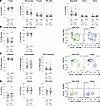 Figure 1
Capillary blood closely resembles venous blood. (A) Quantification of major immune cell subsets as frequencies of CD45+ non-neutrophils, comparing venipuncture-collected ACK-lysed whole blood (Vein ACK) and ACK-lysed whole blood collected by Tasso+ (Tasso) (n = 16). (B–D) Quantification and representative plots of NK cell subsets (B), monocyte subsets (C), and cDC subsets (D) comparing Vein ACK and Tasso samples (n = 16). Data shown are from 2 independent experiments. Statistical analyses were performed using Wilcoxon’s signed-rank test and intraclass correlation coefficient test.
We next assessed the intraclass correlation coefficient (ICC) as a measurement of reproducibility. ICC values between 0 and 0.49 are considered to be poor, 0.5–0.74 are moderate, 0.75–0.89 are good, and 0.9–1 are excellent in terms of agreement (26). Most immune subsets with an insignificant P value for pairwise testing had an ICC value that indicated good to excellent reproducibility (ICC > 0.75) (Figure 1 and Supplemental Figure 2). Together, these data suggest that the immune cell populations obtained from capillary blood using a Tasso+ device are essentially congruent to venipuncture blood when assessed in depth by 2 high-parameter flow cytometry panels.
Composition and phenotype of immune cells vary with different blood-processing protocols. We next asked how comparable ACK lysis, which is routinely used to lyse RBCs in mouse model experiments, is with Ficoll gradient processing aside from the depletion of polymorphonuclear cells. Blood obtained by venipuncture was split into 2 aliquots and processed via Ficoll gradient or ACK lysis. Both samples were then analyzed using our APC and T cell flow cytometry panels. Granulocytes, specifically neutrophils and eosinophils, are depleted when generating PBMCs (27). To correct for potential neutrophil contamination in our ACK-lysed samples, CD16hi and CD45lo cells were removed from the analysis (Supplemental Figure 1A). Despite this correction, we observed changes in the major immune cell composition when comparing ACK-lysed samples to PBMC samples, where B cell frequencies (as a percentage of CD45+ non-neutrophil cells) were doubled in ACK-lysed samples (Figure 2A). Furthermore, for conventional CD4+ T cells, we observed a slight increase in the relative proportion of naive CD4+ T cells (percentage of total conventional CD4+ T cells) between the ACK-lysed and PBMC samples (Figure 2B). In addition to relative immune cell frequencies, we observed differences in staining for phenotyping markers. For memory conventional CD4+ T cells, we found that the frequency of CD161+ and CD25+ cells was higher in PBMC samples (Figure 2, C and D). The frequency of CD11b+ cDCs and CD206+ monocytes was increased in ACK compared with PBMC samples (Figure 2, E and F). Collectively, these data illustrate that the method by which blood is processed introduces bias that appears at both the subset and phenotype level in immune cells when interrogated by flow cytometry. These data highlight the need for highly standardized blood processing in studies to ensure that processing-related changes are not interpreted as biological changes.
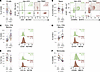 Figure 2
Composition and phenotype of immune cells vary with different blood-processing protocols. (A–F) Blood obtained from the same venipuncture blood draw was split and processed by both ACK lysis to produce a whole sample (Vein ACK) and by Ficoll density gradient to produce a PBMC sample (Vein PBMC). (A) Quantification and representative plot of B cells as a frequency of CD45+ non-neutrophils (n = 16). (B) Quantification and representative plot of naive conventional CD4+ T cells as a frequency of conventional CD4+ T cells (n = 16). (C–F) High-quality samples were used for phenotyping analysis: samples with greater than 70% viability and subsets where there were 20 or more cells. Memory conventional CD4+ T cells (n = 16), cDCs (n = 15), and monocytes (n = 16). (C and D) Quantification and representative plot of CD25 (C) and CD161 (D) on memory conventional CD4+ T cells. (E) Quantification and representative plot of CD11b on cDCs. (F) Quantification and representative plot of CD206 on monocytes. Data shown are from 2 independent experiments. Statistical analyses were performed using Wilcoxon’s signed-rank test.
A Tasso+ drawn blood sample yields a sufficient number of cells for subsetting even after shipping. To test the feasibility of implementing the Tasso+ device in decentralized studies that utilize flow cytometry, participants drew a blood sample with the Tasso+ device in our study clinic under supervision, and then received a second Tasso+ device to take home, collect their own blood without supervision, and then mail back to the clinic via the United States Postal Service (USPS) in a padded envelope. Ice packs or other methods to control the temperature were forgone to minimize cost and keep the workload for participants as minimal as possible (Figure 3A). The Tasso+ collection tubes were coated with a dry EDTA anticoagulant provided by the manufacturer, but no stabilization buffers were added. This approach ensured that there was no possibility of inadvertently exposing participants to buffer via the punctured skin. For each donor, we were able to recover all major immune cell subsets of the peripheral blood in the Tasso+ device sample taken in the clinic: T cells, monocytes, B cells, NK cells, basophils, cDCs, and pDCs. With respect to the 16 Tasso+ samples obtained in the clinic, 2 donors’ cDCs and 2 donors’ pDCs were below our cell number cutoff (≥20 cells) to perform further phenotyping (Figure 3B). These data highlight that even assessment of rare cell populations such as cDCs and pDCs can be feasible for most if not all Tasso+ samples (as highlighted earlier, all of our Tasso+ samples were split in half for analysis with 2 flow cytometry panels), and that abundant populations such as T cells, B cells, NK cells, and monocytes can be reliably interrogated using blood collected with a Tasso+ device. In the shipped Tasso+ samples, we observed a 50% or more decrease in the recovery of monocytes, cDCs, and pDCs when compared with the Tasso+ samples acquired in the clinic. Conversely, T cells, B cells, and NK cells maintained cell counts when shipped. Although present at low cell numbers and derived from the myeloid linage, basophils also showed comparable cell counts in the shipped Tasso+ sample. Therefore, these data suggest by recovery and robust cell numbers that T cells, B cells, and NK cells may be candidate cell subsets that are suitable for remote immune monitoring.
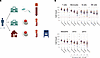 Figure 3
A Tasso+ blood sample yields a sufficient number of cells for subsetting even after shipping. (A) Overview of experimental design. (B) Cell counts of major immune cell subsets from venipuncture-collected ACK-lysed whole blood (Vein ACK, 0.5 mL); ACK-lysed whole blood collected with Tasso+ at the center and processed immediately (Tasso, 1/2 collected volume per panel, up to 0.5 mL per panel); and ACK-lysed whole blood drawn at home with Tasso+ and shipped to the center (Tasso S, 1/2 collected volume per panel, up to 0.5 mL per panel). n = 16. Data shown are from 2 independent experiments. Dotted threshold placed at 20 cells: the cutoff used for including donors for further immune cell phenotyping.
T cell viability and subset distribution remain stable over shipment at ambient temperatures. We next wanted to assess the impact of transit time on cell viability. The majority of the shipped samples were received within 48 hours (median 42.42 hours, range 18.03–135.98 hours) from the time the Tasso+ device was used at home. By retrieving weather information from National Oceanic and Atmospheric Administration (NOAA) stations in the regions the samples traveled through, we were able to determine the average ambient temperature each sample was exposed to during the time of its transit (Supplemental Table 2). As would be expected, samples collected at home with the Tasso+ device and mailed through USPS had a slight decrease in the median viability of gated lymphocytes at 84.05% with increased variability (IQR 11.6%) compared with samples collected in the clinic with Tasso+ and immediately processed (91.65%, IQR 4.225) (Figure 4A). Time in transit showed a significant negative correlation with viability, whereas the average temperature experienced showed no correlation (Figure 4B). It is noteworthy that the ambient temperatures around Seattle, Washington, the location of the clinic and proximal to donors’ home addresses, at that time were similar to room temperature, which we further elaborate on in the Discussion.
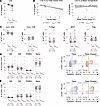 Figure 4
T cell viability and subset distribution remain stable after shipment at ambient temperatures. (A) Quantification of viability comparing ACK-lysed whole blood drawn at the center with Tasso+ and processed immediately (Tasso) and ACK-lysed whole blood drawn at home with Tasso+ and shipped to the center (Tasso S). n = 16. (B) Linear regressions testing the relationship of viability to the length of time in transit during shipment or mean temperature experienced during shipment for Tasso S samples (n = 16). (C) Quantification of T cell subsets as a frequency of total T cells (n = 16). (D and E) Quantification and representative plots of memory subsets for conventional CD4+ T cells (D) and conventional CD8+ T cells (E) (n = 16). Data shown are from 2 independent experiments. Statistical analyses were performed using Wilcoxon’s signed-rank test, intraclass correlation coefficient, and Pearson’s correlation test.
We next assessed whether shipping Tasso+ samples would skew the relative abundances of cell populations. We observed a significant decrease in the frequency of monocytes and pDCs and a concurrent relative increase in the frequency of T cells and B cells (Supplemental Figure 5A). This increase was likely due to the resiliency of T cells and B cells to cell death over the shipment period, as the whole numbers of T cells and B cells had little deviation between the Tasso+ sample collected at the clinic and the Tasso+ sample collected at home and mailed in (Figure 3B). Additionally, we observed large changes in the distribution of subsets and expression of phenotyping markers within the NK cell, cDC, and monocyte compartments (Supplemental Figure 5, B and D–F). In line with the stability of T cells in terms of numbers, the T cell compartment distribution was also relatively stable between the Tasso+ samples with and without shipment. We observed a minor reduction in conventional CD4+ T cells and a small increase in conventional CD8+ T cells, while Treg cells, MAIT cells, and TCRgd T cells remained unchanged (Figure 4C). Additionally, memory subsets of conventional CD4+ T cells and conventional CD8+ T cells remained largely unchanged (Figure 4, D and E). The one statistically significant alteration was a minor increase in central memory conventional CD4+ T cells; regardless, this population also displayed excellent reproducibility (ICC 0.94) (Figure 4D). Memory and naive B cell frequencies were also largely unchanged with shipment (Supplemental Figure 5C). These data highlight that EDTA-coated tubes are not sufficient to maintain viability in myeloid cells when processing is delayed, whereas T cells were stable in regard to subset distribution.
Phenotypic states of T cells are largely congruent with and without shipment. We next further assessed the phenotypic stability of T cells. We observed a large congruency in T cell phenotyping for all T cell subsets when comparing shipped and lab-processed Tasso+ blood for an individual (Figure 5A). These included CD103 as a marker of circulating tissue-resident T cells, CD27 and CD28 as markers informing further effector status and activation, and Granzyme B indicating cytotoxic potential (Figure 5B). Regulatory markers BTLA, PD-1, and TIM3 were also unchanged. CD127, the IL-7 receptor α chain, allows T cells to respond to IL-7 and is important for both their development and maintenance and is found on both memory and naive populations as well as innate and conventional T cells (28). The primary use of CD127 in our panel was to distinguish Treg cells that were CD25+CD127lo. We observed a decrease in CD127+ cells in the MAIT and TCRgd T cell population. However, we did not observe this reduction in memory conventional CD8+ T cells nor memory conventional CD4+ T cells (Figure 5C). Importantly, we did not observe a change in the frequency of Treg cells (Figure 4C), illustrating that reduction in CD127+ cells in the MAIT and TCRgd T cell populations did not affect the use of CD127 as a Treg cell lineage marker within the panel.
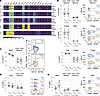 Figure 5
Phenotypic states of T cells are largely congruent with and without shipment. (A–E) High-quality samples were used for phenotyping analysis: samples with greater than 70% viability, samples where the transit time of the shipped Tasso+ sample was less than 48 hours, and T cell subsets where there were 20 or more cells. Memory conventional CD4+ T cells (n = 12), memory conventional CD8+ T cells (n = 12), TCRgd T cells (n = 12), MAIT cells (n = 11), and Treg cells (n = 12). (A) Heatmap reporting the medians of phenotyping markers for T cell subsets from ACK-lysed whole blood drawn at the center with Tasso+ and processed immediately (Tasso) and ACK-lysed whole blood drawn at home with Tasso+ and shipped to the center (Tasso S). (B) Quantification and representative plots of CD103 for memory conventional CD4+ T cells and memory conventional CD8+ T cells, Granzyme B for TCRgd T cells and MAIT cells, and CD27 for Treg cells and TCRgd T cells. (C) Quantification of CD127 for MAIT cells and memory conventional CD4+ T cells and representative plots of Treg gating utilizing CD127. (D) Quantification and representative plots of ICOS for Treg cells and memory conventional CD4+ T cells. (E) Quantification and representative plot of CD69 for MAIT cells, memory conventional CD8+ T cells, and memory conventional CD4+ T cells. Data shown are from 2 independent experiments. Statistical analyses were performed using Wilcoxon’s signed-rank test.
Detection of biomarkers indicating a T cell activation state was minimally decreased (3% decrease or less) on specific T cell subsets for the shipped Tasso+ device samples: CD38 on memory conventional CD4+ T cells and TCRgd T cells; HLA-DR on memory conventional CD4+ T cells, memory conventional CD8+ T cells, and Treg cells; and ICOS on Treg cells. However, memory conventional CD4+ T cells maintained similar expression of ICOS when shipped (Figure 5D). CD69 expression increased within certain T cell subsets when shipped. CD69 is often used to denote T cells that have undergone recent activation by either TCR engagement or in response to soluble inflammatory factors (29). The frequency of CD69+ cells increased substantially in MAIT cells and TCRgd T cells, but only modestly in conventional CD4+ T cells and conventional CD8+ T cells (Figure 5E). Together, these data illustrate that T cell phenotypes under the parameters we tested are minimally altered by shipment.
Cytometry control allows for reproducible assessment over longitudinal studies. For many clinical studies, blood samples can be cryopreserved and later analyzed in batches to minimize technical variability that can occur between experiments. Analysis for longitudinal studies or immune monitoring may need to occur in an ongoing manner but must be able to discern biological changes from technical variation across experiments. Multiple sources of variation exist for flow cytometry that can make longitudinal studies difficult (30). Cytometry controls (Figure 6A) allow for the optimization of machine settings, daily standardization to return to optimal machine settings, and the ability to pinpoint whether reagents or staining procedures are the source of variation between batches (31). To assess the stability of our high-dimensional flow cytometry panels on an instrument over time, we analyzed an aliquot of the same biological replicate on 9 days over the span of 1.5 years. The sample was stained with our APC panel and acquired over 8 acquisition days (Supplemental Table 3). First, as has been previously described, we optimized the voltage gain for each detector by a modified voltage titration on cells (32) (example given in Supplemental Figure 6) and calibrated the optimized setting to 6-peak Ultra Rainbow Calibration Particles, which emit light across all detectors for a given cytometer (33). We found that consistent machine settings can be returned to each of the acquisition days by setting detector gains to reach a target MFI of the calibrated calibration particle (Figure 6, B and C). We also acquired multiple experiments on the same day to tease apart when variation is due to the performance of the assay or the machine settings (Figure 6D). Because assay performance is consistent, we demonstrated that standardized gates and thresholds for batches collected longitudinally can be used for both antigens that appear bimodal, such as lineage markers (Figure 6, D and E), and antigens with continuous profiles, like those seen in many phenotyping markers (Figure 6, F and G), with limited variation. Given that longitudinal or immune surveillance studies may take place across multiple acquisition days that may span years, our data demonstrate that it is technically feasible to acquire highly consistent data over long periods of time. These data also highlight the benefit of running a technical control (such as PBMCs from a leukapheresis donor) with every experiment staining procedure (31).
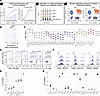 Figure 6
Cytometry controls allow for reproducible assessment for long-term longitudinal studies. (A) Overview of cytometry controls used to determine optimization and standardization of machine settings, and reagent or assay performance. (B and C) Representative plot of 6-peak Ultra Rainbow Calibration Particle raw fluorescence in the PE detector (B) and quantification of raw fluorescence of peaks 4, 5, and 6 across all detectors (C). Acquisitions took place across 2 years (reference in black and 8 subsequent acquisitions on separate days in color, n = 9). (D and E) Representative plot of T cell and B cell gating with frequencies of CD45+ non-neutrophils (D) and quantification of all major immune cell lineage frequencies among CD45+ non-neutrophils in the same biological replicate PBMC (E) (biological replicate stained on 10 separate days and acquired on 8 separate days, n = 10). (F) Representative plot of CD32, CD86, and SIRPα on cDCs. Color coding in F matches dates of staining in D. T cells included in F from September 11, 2023 with staining in gray for histograms as a negative cell population control. (G) Quantification of all phenotyping markers on cDCs (n = 10).


