
Research ArticleImmunologyInfectious disease
Open Access |  10.1172/jci.insight.202235
Position-5–driven reorientation of an immunodominant HLA-A*24:02 SARS-CoV-2 epitope drives universal T cell escape
Takeshi Nakama,1 Aaron Wall,2 Garry Dolton,2 Li Rong Tan,2 Hannah Thomas,2 Hiroshi Hamana,3 Yoshiki Aritsu,1 Toong Seng Tan,1 Mako Toyoda,1 Yoshihiko Goto,1 Huanyu Li,1 Mizuki Kitamatsu,4 Keiko Udaka,5 Yusuke Miyashita,6,7 Hiroyuki Oshiumi,6 Kimitoshi Nakamura,7 Yoji Nagasaki,8 Rumi Minami,9 Hirotomo Nakata,10 Pierre J. Rizkallah,2 Hiroyuki Kishi,3 Takamasa Ueno,1 Andrew K. Sewell,1,2 and Chihiro Motozono1
1Division of Infection and Immunity, Joint Research Center for Human Retrovirus infection, Kumamoto University, Kumamoto, Japan.
2Division of Infection and Immunity, Cardiff University School of Medicine, Cardiff, Wales, United Kingdom.
3Department of Immunology, Faculty of Medicine, Academic Assembly, University of Toyama, Toyama, Japan.
4Department of Applied Chemistry, Faculty of Science and Engineering, Kindai University, Osaka, Japan.
5Department of Immunology, Kochi University, Kochi, Japan.
6Department of Immunology, Graduate School of Medical Sciences, Faculty of Life Sciences, and
7Department of Pediatrics, Graduate School of Medical Sciences, Kumamoto University, Kumamoto, Japan.
8Division of Infectious Diseases, Clinical Research Institute, NHO, Kyushu Medical Center, Fukuoka, Japan.
9Internal Medicine, Clinical Research Institute, NHO, Kyushu Medical Center, Fukuoka, Japan.
10Department of Hematology, Rheumatology and Infectious Diseases, Kumamoto University School of Medicine, Kumamoto University Hospital, Kumamoto, Japan.
Address correspondence to: Andrew Sewell, Henry Wellcome Building, University Hospital Wales, Cardiff, CF14 4XN, United Kingdom. Email: SewellAK@cardiff.ac.uk. Or to: Chihiro Motozono, Division of Infection and Immunity, Joint Research Center for Human Retrovirus infection, Kumamoto University, 2-2-1 Honjo, Chuo-ku, Kumamoto, 860-0811 Japan. Email: motozono@kumamoto-u.ac.jp. AW’s present address is: The University of South Wales Cardiff, Cardiff, Wales.
Authorship note: TN, AW, and GD contributed equally to this work. AKS and CM contributed equally to this work.
Find articles by Nakama, T. in: PubMed | Google Scholar
1Division of Infection and Immunity, Joint Research Center for Human Retrovirus infection, Kumamoto University, Kumamoto, Japan.
2Division of Infection and Immunity, Cardiff University School of Medicine, Cardiff, Wales, United Kingdom.
3Department of Immunology, Faculty of Medicine, Academic Assembly, University of Toyama, Toyama, Japan.
4Department of Applied Chemistry, Faculty of Science and Engineering, Kindai University, Osaka, Japan.
5Department of Immunology, Kochi University, Kochi, Japan.
6Department of Immunology, Graduate School of Medical Sciences, Faculty of Life Sciences, and
7Department of Pediatrics, Graduate School of Medical Sciences, Kumamoto University, Kumamoto, Japan.
8Division of Infectious Diseases, Clinical Research Institute, NHO, Kyushu Medical Center, Fukuoka, Japan.
9Internal Medicine, Clinical Research Institute, NHO, Kyushu Medical Center, Fukuoka, Japan.
10Department of Hematology, Rheumatology and Infectious Diseases, Kumamoto University School of Medicine, Kumamoto University Hospital, Kumamoto, Japan.
Address correspondence to: Andrew Sewell, Henry Wellcome Building, University Hospital Wales, Cardiff, CF14 4XN, United Kingdom. Email: SewellAK@cardiff.ac.uk. Or to: Chihiro Motozono, Division of Infection and Immunity, Joint Research Center for Human Retrovirus infection, Kumamoto University, 2-2-1 Honjo, Chuo-ku, Kumamoto, 860-0811 Japan. Email: motozono@kumamoto-u.ac.jp. AW’s present address is: The University of South Wales Cardiff, Cardiff, Wales.
Authorship note: TN, AW, and GD contributed equally to this work. AKS and CM contributed equally to this work.
Find articles by Wall, A. in: PubMed | Google Scholar
1Division of Infection and Immunity, Joint Research Center for Human Retrovirus infection, Kumamoto University, Kumamoto, Japan.
2Division of Infection and Immunity, Cardiff University School of Medicine, Cardiff, Wales, United Kingdom.
3Department of Immunology, Faculty of Medicine, Academic Assembly, University of Toyama, Toyama, Japan.
4Department of Applied Chemistry, Faculty of Science and Engineering, Kindai University, Osaka, Japan.
5Department of Immunology, Kochi University, Kochi, Japan.
6Department of Immunology, Graduate School of Medical Sciences, Faculty of Life Sciences, and
7Department of Pediatrics, Graduate School of Medical Sciences, Kumamoto University, Kumamoto, Japan.
8Division of Infectious Diseases, Clinical Research Institute, NHO, Kyushu Medical Center, Fukuoka, Japan.
9Internal Medicine, Clinical Research Institute, NHO, Kyushu Medical Center, Fukuoka, Japan.
10Department of Hematology, Rheumatology and Infectious Diseases, Kumamoto University School of Medicine, Kumamoto University Hospital, Kumamoto, Japan.
Address correspondence to: Andrew Sewell, Henry Wellcome Building, University Hospital Wales, Cardiff, CF14 4XN, United Kingdom. Email: SewellAK@cardiff.ac.uk. Or to: Chihiro Motozono, Division of Infection and Immunity, Joint Research Center for Human Retrovirus infection, Kumamoto University, 2-2-1 Honjo, Chuo-ku, Kumamoto, 860-0811 Japan. Email: motozono@kumamoto-u.ac.jp. AW’s present address is: The University of South Wales Cardiff, Cardiff, Wales.
Authorship note: TN, AW, and GD contributed equally to this work. AKS and CM contributed equally to this work.
Find articles by
Dolton, G.
in:
PubMed
|
Google Scholar
|

1Division of Infection and Immunity, Joint Research Center for Human Retrovirus infection, Kumamoto University, Kumamoto, Japan.
2Division of Infection and Immunity, Cardiff University School of Medicine, Cardiff, Wales, United Kingdom.
3Department of Immunology, Faculty of Medicine, Academic Assembly, University of Toyama, Toyama, Japan.
4Department of Applied Chemistry, Faculty of Science and Engineering, Kindai University, Osaka, Japan.
5Department of Immunology, Kochi University, Kochi, Japan.
6Department of Immunology, Graduate School of Medical Sciences, Faculty of Life Sciences, and
7Department of Pediatrics, Graduate School of Medical Sciences, Kumamoto University, Kumamoto, Japan.
8Division of Infectious Diseases, Clinical Research Institute, NHO, Kyushu Medical Center, Fukuoka, Japan.
9Internal Medicine, Clinical Research Institute, NHO, Kyushu Medical Center, Fukuoka, Japan.
10Department of Hematology, Rheumatology and Infectious Diseases, Kumamoto University School of Medicine, Kumamoto University Hospital, Kumamoto, Japan.
Address correspondence to: Andrew Sewell, Henry Wellcome Building, University Hospital Wales, Cardiff, CF14 4XN, United Kingdom. Email: SewellAK@cardiff.ac.uk. Or to: Chihiro Motozono, Division of Infection and Immunity, Joint Research Center for Human Retrovirus infection, Kumamoto University, 2-2-1 Honjo, Chuo-ku, Kumamoto, 860-0811 Japan. Email: motozono@kumamoto-u.ac.jp. AW’s present address is: The University of South Wales Cardiff, Cardiff, Wales.
Authorship note: TN, AW, and GD contributed equally to this work. AKS and CM contributed equally to this work.
Find articles by Tan, L. in: PubMed | Google Scholar
1Division of Infection and Immunity, Joint Research Center for Human Retrovirus infection, Kumamoto University, Kumamoto, Japan.
2Division of Infection and Immunity, Cardiff University School of Medicine, Cardiff, Wales, United Kingdom.
3Department of Immunology, Faculty of Medicine, Academic Assembly, University of Toyama, Toyama, Japan.
4Department of Applied Chemistry, Faculty of Science and Engineering, Kindai University, Osaka, Japan.
5Department of Immunology, Kochi University, Kochi, Japan.
6Department of Immunology, Graduate School of Medical Sciences, Faculty of Life Sciences, and
7Department of Pediatrics, Graduate School of Medical Sciences, Kumamoto University, Kumamoto, Japan.
8Division of Infectious Diseases, Clinical Research Institute, NHO, Kyushu Medical Center, Fukuoka, Japan.
9Internal Medicine, Clinical Research Institute, NHO, Kyushu Medical Center, Fukuoka, Japan.
10Department of Hematology, Rheumatology and Infectious Diseases, Kumamoto University School of Medicine, Kumamoto University Hospital, Kumamoto, Japan.
Address correspondence to: Andrew Sewell, Henry Wellcome Building, University Hospital Wales, Cardiff, CF14 4XN, United Kingdom. Email: SewellAK@cardiff.ac.uk. Or to: Chihiro Motozono, Division of Infection and Immunity, Joint Research Center for Human Retrovirus infection, Kumamoto University, 2-2-1 Honjo, Chuo-ku, Kumamoto, 860-0811 Japan. Email: motozono@kumamoto-u.ac.jp. AW’s present address is: The University of South Wales Cardiff, Cardiff, Wales.
Authorship note: TN, AW, and GD contributed equally to this work. AKS and CM contributed equally to this work.
Find articles by Thomas, H. in: PubMed | Google Scholar
1Division of Infection and Immunity, Joint Research Center for Human Retrovirus infection, Kumamoto University, Kumamoto, Japan.
2Division of Infection and Immunity, Cardiff University School of Medicine, Cardiff, Wales, United Kingdom.
3Department of Immunology, Faculty of Medicine, Academic Assembly, University of Toyama, Toyama, Japan.
4Department of Applied Chemistry, Faculty of Science and Engineering, Kindai University, Osaka, Japan.
5Department of Immunology, Kochi University, Kochi, Japan.
6Department of Immunology, Graduate School of Medical Sciences, Faculty of Life Sciences, and
7Department of Pediatrics, Graduate School of Medical Sciences, Kumamoto University, Kumamoto, Japan.
8Division of Infectious Diseases, Clinical Research Institute, NHO, Kyushu Medical Center, Fukuoka, Japan.
9Internal Medicine, Clinical Research Institute, NHO, Kyushu Medical Center, Fukuoka, Japan.
10Department of Hematology, Rheumatology and Infectious Diseases, Kumamoto University School of Medicine, Kumamoto University Hospital, Kumamoto, Japan.
Address correspondence to: Andrew Sewell, Henry Wellcome Building, University Hospital Wales, Cardiff, CF14 4XN, United Kingdom. Email: SewellAK@cardiff.ac.uk. Or to: Chihiro Motozono, Division of Infection and Immunity, Joint Research Center for Human Retrovirus infection, Kumamoto University, 2-2-1 Honjo, Chuo-ku, Kumamoto, 860-0811 Japan. Email: motozono@kumamoto-u.ac.jp. AW’s present address is: The University of South Wales Cardiff, Cardiff, Wales.
Authorship note: TN, AW, and GD contributed equally to this work. AKS and CM contributed equally to this work.
Find articles by Hamana, H. in: PubMed | Google Scholar
1Division of Infection and Immunity, Joint Research Center for Human Retrovirus infection, Kumamoto University, Kumamoto, Japan.
2Division of Infection and Immunity, Cardiff University School of Medicine, Cardiff, Wales, United Kingdom.
3Department of Immunology, Faculty of Medicine, Academic Assembly, University of Toyama, Toyama, Japan.
4Department of Applied Chemistry, Faculty of Science and Engineering, Kindai University, Osaka, Japan.
5Department of Immunology, Kochi University, Kochi, Japan.
6Department of Immunology, Graduate School of Medical Sciences, Faculty of Life Sciences, and
7Department of Pediatrics, Graduate School of Medical Sciences, Kumamoto University, Kumamoto, Japan.
8Division of Infectious Diseases, Clinical Research Institute, NHO, Kyushu Medical Center, Fukuoka, Japan.
9Internal Medicine, Clinical Research Institute, NHO, Kyushu Medical Center, Fukuoka, Japan.
10Department of Hematology, Rheumatology and Infectious Diseases, Kumamoto University School of Medicine, Kumamoto University Hospital, Kumamoto, Japan.
Address correspondence to: Andrew Sewell, Henry Wellcome Building, University Hospital Wales, Cardiff, CF14 4XN, United Kingdom. Email: SewellAK@cardiff.ac.uk. Or to: Chihiro Motozono, Division of Infection and Immunity, Joint Research Center for Human Retrovirus infection, Kumamoto University, 2-2-1 Honjo, Chuo-ku, Kumamoto, 860-0811 Japan. Email: motozono@kumamoto-u.ac.jp. AW’s present address is: The University of South Wales Cardiff, Cardiff, Wales.
Authorship note: TN, AW, and GD contributed equally to this work. AKS and CM contributed equally to this work.
Find articles by Aritsu, Y. in: PubMed | Google Scholar
1Division of Infection and Immunity, Joint Research Center for Human Retrovirus infection, Kumamoto University, Kumamoto, Japan.
2Division of Infection and Immunity, Cardiff University School of Medicine, Cardiff, Wales, United Kingdom.
3Department of Immunology, Faculty of Medicine, Academic Assembly, University of Toyama, Toyama, Japan.
4Department of Applied Chemistry, Faculty of Science and Engineering, Kindai University, Osaka, Japan.
5Department of Immunology, Kochi University, Kochi, Japan.
6Department of Immunology, Graduate School of Medical Sciences, Faculty of Life Sciences, and
7Department of Pediatrics, Graduate School of Medical Sciences, Kumamoto University, Kumamoto, Japan.
8Division of Infectious Diseases, Clinical Research Institute, NHO, Kyushu Medical Center, Fukuoka, Japan.
9Internal Medicine, Clinical Research Institute, NHO, Kyushu Medical Center, Fukuoka, Japan.
10Department of Hematology, Rheumatology and Infectious Diseases, Kumamoto University School of Medicine, Kumamoto University Hospital, Kumamoto, Japan.
Address correspondence to: Andrew Sewell, Henry Wellcome Building, University Hospital Wales, Cardiff, CF14 4XN, United Kingdom. Email: SewellAK@cardiff.ac.uk. Or to: Chihiro Motozono, Division of Infection and Immunity, Joint Research Center for Human Retrovirus infection, Kumamoto University, 2-2-1 Honjo, Chuo-ku, Kumamoto, 860-0811 Japan. Email: motozono@kumamoto-u.ac.jp. AW’s present address is: The University of South Wales Cardiff, Cardiff, Wales.
Authorship note: TN, AW, and GD contributed equally to this work. AKS and CM contributed equally to this work.
Find articles by Tan, T. in: PubMed | Google Scholar
1Division of Infection and Immunity, Joint Research Center for Human Retrovirus infection, Kumamoto University, Kumamoto, Japan.
2Division of Infection and Immunity, Cardiff University School of Medicine, Cardiff, Wales, United Kingdom.
3Department of Immunology, Faculty of Medicine, Academic Assembly, University of Toyama, Toyama, Japan.
4Department of Applied Chemistry, Faculty of Science and Engineering, Kindai University, Osaka, Japan.
5Department of Immunology, Kochi University, Kochi, Japan.
6Department of Immunology, Graduate School of Medical Sciences, Faculty of Life Sciences, and
7Department of Pediatrics, Graduate School of Medical Sciences, Kumamoto University, Kumamoto, Japan.
8Division of Infectious Diseases, Clinical Research Institute, NHO, Kyushu Medical Center, Fukuoka, Japan.
9Internal Medicine, Clinical Research Institute, NHO, Kyushu Medical Center, Fukuoka, Japan.
10Department of Hematology, Rheumatology and Infectious Diseases, Kumamoto University School of Medicine, Kumamoto University Hospital, Kumamoto, Japan.
Address correspondence to: Andrew Sewell, Henry Wellcome Building, University Hospital Wales, Cardiff, CF14 4XN, United Kingdom. Email: SewellAK@cardiff.ac.uk. Or to: Chihiro Motozono, Division of Infection and Immunity, Joint Research Center for Human Retrovirus infection, Kumamoto University, 2-2-1 Honjo, Chuo-ku, Kumamoto, 860-0811 Japan. Email: motozono@kumamoto-u.ac.jp. AW’s present address is: The University of South Wales Cardiff, Cardiff, Wales.
Authorship note: TN, AW, and GD contributed equally to this work. AKS and CM contributed equally to this work.
Find articles by Toyoda, M. in: PubMed | Google Scholar
1Division of Infection and Immunity, Joint Research Center for Human Retrovirus infection, Kumamoto University, Kumamoto, Japan.
2Division of Infection and Immunity, Cardiff University School of Medicine, Cardiff, Wales, United Kingdom.
3Department of Immunology, Faculty of Medicine, Academic Assembly, University of Toyama, Toyama, Japan.
4Department of Applied Chemistry, Faculty of Science and Engineering, Kindai University, Osaka, Japan.
5Department of Immunology, Kochi University, Kochi, Japan.
6Department of Immunology, Graduate School of Medical Sciences, Faculty of Life Sciences, and
7Department of Pediatrics, Graduate School of Medical Sciences, Kumamoto University, Kumamoto, Japan.
8Division of Infectious Diseases, Clinical Research Institute, NHO, Kyushu Medical Center, Fukuoka, Japan.
9Internal Medicine, Clinical Research Institute, NHO, Kyushu Medical Center, Fukuoka, Japan.
10Department of Hematology, Rheumatology and Infectious Diseases, Kumamoto University School of Medicine, Kumamoto University Hospital, Kumamoto, Japan.
Address correspondence to: Andrew Sewell, Henry Wellcome Building, University Hospital Wales, Cardiff, CF14 4XN, United Kingdom. Email: SewellAK@cardiff.ac.uk. Or to: Chihiro Motozono, Division of Infection and Immunity, Joint Research Center for Human Retrovirus infection, Kumamoto University, 2-2-1 Honjo, Chuo-ku, Kumamoto, 860-0811 Japan. Email: motozono@kumamoto-u.ac.jp. AW’s present address is: The University of South Wales Cardiff, Cardiff, Wales.
Authorship note: TN, AW, and GD contributed equally to this work. AKS and CM contributed equally to this work.
Find articles by Goto, Y. in: PubMed | Google Scholar
1Division of Infection and Immunity, Joint Research Center for Human Retrovirus infection, Kumamoto University, Kumamoto, Japan.
2Division of Infection and Immunity, Cardiff University School of Medicine, Cardiff, Wales, United Kingdom.
3Department of Immunology, Faculty of Medicine, Academic Assembly, University of Toyama, Toyama, Japan.
4Department of Applied Chemistry, Faculty of Science and Engineering, Kindai University, Osaka, Japan.
5Department of Immunology, Kochi University, Kochi, Japan.
6Department of Immunology, Graduate School of Medical Sciences, Faculty of Life Sciences, and
7Department of Pediatrics, Graduate School of Medical Sciences, Kumamoto University, Kumamoto, Japan.
8Division of Infectious Diseases, Clinical Research Institute, NHO, Kyushu Medical Center, Fukuoka, Japan.
9Internal Medicine, Clinical Research Institute, NHO, Kyushu Medical Center, Fukuoka, Japan.
10Department of Hematology, Rheumatology and Infectious Diseases, Kumamoto University School of Medicine, Kumamoto University Hospital, Kumamoto, Japan.
Address correspondence to: Andrew Sewell, Henry Wellcome Building, University Hospital Wales, Cardiff, CF14 4XN, United Kingdom. Email: SewellAK@cardiff.ac.uk. Or to: Chihiro Motozono, Division of Infection and Immunity, Joint Research Center for Human Retrovirus infection, Kumamoto University, 2-2-1 Honjo, Chuo-ku, Kumamoto, 860-0811 Japan. Email: motozono@kumamoto-u.ac.jp. AW’s present address is: The University of South Wales Cardiff, Cardiff, Wales.
Authorship note: TN, AW, and GD contributed equally to this work. AKS and CM contributed equally to this work.
Find articles by Li, H. in: PubMed | Google Scholar
1Division of Infection and Immunity, Joint Research Center for Human Retrovirus infection, Kumamoto University, Kumamoto, Japan.
2Division of Infection and Immunity, Cardiff University School of Medicine, Cardiff, Wales, United Kingdom.
3Department of Immunology, Faculty of Medicine, Academic Assembly, University of Toyama, Toyama, Japan.
4Department of Applied Chemistry, Faculty of Science and Engineering, Kindai University, Osaka, Japan.
5Department of Immunology, Kochi University, Kochi, Japan.
6Department of Immunology, Graduate School of Medical Sciences, Faculty of Life Sciences, and
7Department of Pediatrics, Graduate School of Medical Sciences, Kumamoto University, Kumamoto, Japan.
8Division of Infectious Diseases, Clinical Research Institute, NHO, Kyushu Medical Center, Fukuoka, Japan.
9Internal Medicine, Clinical Research Institute, NHO, Kyushu Medical Center, Fukuoka, Japan.
10Department of Hematology, Rheumatology and Infectious Diseases, Kumamoto University School of Medicine, Kumamoto University Hospital, Kumamoto, Japan.
Address correspondence to: Andrew Sewell, Henry Wellcome Building, University Hospital Wales, Cardiff, CF14 4XN, United Kingdom. Email: SewellAK@cardiff.ac.uk. Or to: Chihiro Motozono, Division of Infection and Immunity, Joint Research Center for Human Retrovirus infection, Kumamoto University, 2-2-1 Honjo, Chuo-ku, Kumamoto, 860-0811 Japan. Email: motozono@kumamoto-u.ac.jp. AW’s present address is: The University of South Wales Cardiff, Cardiff, Wales.
Authorship note: TN, AW, and GD contributed equally to this work. AKS and CM contributed equally to this work.
Find articles by Kitamatsu, M. in: PubMed | Google Scholar
1Division of Infection and Immunity, Joint Research Center for Human Retrovirus infection, Kumamoto University, Kumamoto, Japan.
2Division of Infection and Immunity, Cardiff University School of Medicine, Cardiff, Wales, United Kingdom.
3Department of Immunology, Faculty of Medicine, Academic Assembly, University of Toyama, Toyama, Japan.
4Department of Applied Chemistry, Faculty of Science and Engineering, Kindai University, Osaka, Japan.
5Department of Immunology, Kochi University, Kochi, Japan.
6Department of Immunology, Graduate School of Medical Sciences, Faculty of Life Sciences, and
7Department of Pediatrics, Graduate School of Medical Sciences, Kumamoto University, Kumamoto, Japan.
8Division of Infectious Diseases, Clinical Research Institute, NHO, Kyushu Medical Center, Fukuoka, Japan.
9Internal Medicine, Clinical Research Institute, NHO, Kyushu Medical Center, Fukuoka, Japan.
10Department of Hematology, Rheumatology and Infectious Diseases, Kumamoto University School of Medicine, Kumamoto University Hospital, Kumamoto, Japan.
Address correspondence to: Andrew Sewell, Henry Wellcome Building, University Hospital Wales, Cardiff, CF14 4XN, United Kingdom. Email: SewellAK@cardiff.ac.uk. Or to: Chihiro Motozono, Division of Infection and Immunity, Joint Research Center for Human Retrovirus infection, Kumamoto University, 2-2-1 Honjo, Chuo-ku, Kumamoto, 860-0811 Japan. Email: motozono@kumamoto-u.ac.jp. AW’s present address is: The University of South Wales Cardiff, Cardiff, Wales.
Authorship note: TN, AW, and GD contributed equally to this work. AKS and CM contributed equally to this work.
Find articles by Udaka, K. in: PubMed | Google Scholar
1Division of Infection and Immunity, Joint Research Center for Human Retrovirus infection, Kumamoto University, Kumamoto, Japan.
2Division of Infection and Immunity, Cardiff University School of Medicine, Cardiff, Wales, United Kingdom.
3Department of Immunology, Faculty of Medicine, Academic Assembly, University of Toyama, Toyama, Japan.
4Department of Applied Chemistry, Faculty of Science and Engineering, Kindai University, Osaka, Japan.
5Department of Immunology, Kochi University, Kochi, Japan.
6Department of Immunology, Graduate School of Medical Sciences, Faculty of Life Sciences, and
7Department of Pediatrics, Graduate School of Medical Sciences, Kumamoto University, Kumamoto, Japan.
8Division of Infectious Diseases, Clinical Research Institute, NHO, Kyushu Medical Center, Fukuoka, Japan.
9Internal Medicine, Clinical Research Institute, NHO, Kyushu Medical Center, Fukuoka, Japan.
10Department of Hematology, Rheumatology and Infectious Diseases, Kumamoto University School of Medicine, Kumamoto University Hospital, Kumamoto, Japan.
Address correspondence to: Andrew Sewell, Henry Wellcome Building, University Hospital Wales, Cardiff, CF14 4XN, United Kingdom. Email: SewellAK@cardiff.ac.uk. Or to: Chihiro Motozono, Division of Infection and Immunity, Joint Research Center for Human Retrovirus infection, Kumamoto University, 2-2-1 Honjo, Chuo-ku, Kumamoto, 860-0811 Japan. Email: motozono@kumamoto-u.ac.jp. AW’s present address is: The University of South Wales Cardiff, Cardiff, Wales.
Authorship note: TN, AW, and GD contributed equally to this work. AKS and CM contributed equally to this work.
Find articles by Miyashita, Y. in: PubMed | Google Scholar
1Division of Infection and Immunity, Joint Research Center for Human Retrovirus infection, Kumamoto University, Kumamoto, Japan.
2Division of Infection and Immunity, Cardiff University School of Medicine, Cardiff, Wales, United Kingdom.
3Department of Immunology, Faculty of Medicine, Academic Assembly, University of Toyama, Toyama, Japan.
4Department of Applied Chemistry, Faculty of Science and Engineering, Kindai University, Osaka, Japan.
5Department of Immunology, Kochi University, Kochi, Japan.
6Department of Immunology, Graduate School of Medical Sciences, Faculty of Life Sciences, and
7Department of Pediatrics, Graduate School of Medical Sciences, Kumamoto University, Kumamoto, Japan.
8Division of Infectious Diseases, Clinical Research Institute, NHO, Kyushu Medical Center, Fukuoka, Japan.
9Internal Medicine, Clinical Research Institute, NHO, Kyushu Medical Center, Fukuoka, Japan.
10Department of Hematology, Rheumatology and Infectious Diseases, Kumamoto University School of Medicine, Kumamoto University Hospital, Kumamoto, Japan.
Address correspondence to: Andrew Sewell, Henry Wellcome Building, University Hospital Wales, Cardiff, CF14 4XN, United Kingdom. Email: SewellAK@cardiff.ac.uk. Or to: Chihiro Motozono, Division of Infection and Immunity, Joint Research Center for Human Retrovirus infection, Kumamoto University, 2-2-1 Honjo, Chuo-ku, Kumamoto, 860-0811 Japan. Email: motozono@kumamoto-u.ac.jp. AW’s present address is: The University of South Wales Cardiff, Cardiff, Wales.
Authorship note: TN, AW, and GD contributed equally to this work. AKS and CM contributed equally to this work.
Find articles by Oshiumi, H. in: PubMed | Google Scholar
1Division of Infection and Immunity, Joint Research Center for Human Retrovirus infection, Kumamoto University, Kumamoto, Japan.
2Division of Infection and Immunity, Cardiff University School of Medicine, Cardiff, Wales, United Kingdom.
3Department of Immunology, Faculty of Medicine, Academic Assembly, University of Toyama, Toyama, Japan.
4Department of Applied Chemistry, Faculty of Science and Engineering, Kindai University, Osaka, Japan.
5Department of Immunology, Kochi University, Kochi, Japan.
6Department of Immunology, Graduate School of Medical Sciences, Faculty of Life Sciences, and
7Department of Pediatrics, Graduate School of Medical Sciences, Kumamoto University, Kumamoto, Japan.
8Division of Infectious Diseases, Clinical Research Institute, NHO, Kyushu Medical Center, Fukuoka, Japan.
9Internal Medicine, Clinical Research Institute, NHO, Kyushu Medical Center, Fukuoka, Japan.
10Department of Hematology, Rheumatology and Infectious Diseases, Kumamoto University School of Medicine, Kumamoto University Hospital, Kumamoto, Japan.
Address correspondence to: Andrew Sewell, Henry Wellcome Building, University Hospital Wales, Cardiff, CF14 4XN, United Kingdom. Email: SewellAK@cardiff.ac.uk. Or to: Chihiro Motozono, Division of Infection and Immunity, Joint Research Center for Human Retrovirus infection, Kumamoto University, 2-2-1 Honjo, Chuo-ku, Kumamoto, 860-0811 Japan. Email: motozono@kumamoto-u.ac.jp. AW’s present address is: The University of South Wales Cardiff, Cardiff, Wales.
Authorship note: TN, AW, and GD contributed equally to this work. AKS and CM contributed equally to this work.
Find articles by Nakamura, K. in: PubMed | Google Scholar
1Division of Infection and Immunity, Joint Research Center for Human Retrovirus infection, Kumamoto University, Kumamoto, Japan.
2Division of Infection and Immunity, Cardiff University School of Medicine, Cardiff, Wales, United Kingdom.
3Department of Immunology, Faculty of Medicine, Academic Assembly, University of Toyama, Toyama, Japan.
4Department of Applied Chemistry, Faculty of Science and Engineering, Kindai University, Osaka, Japan.
5Department of Immunology, Kochi University, Kochi, Japan.
6Department of Immunology, Graduate School of Medical Sciences, Faculty of Life Sciences, and
7Department of Pediatrics, Graduate School of Medical Sciences, Kumamoto University, Kumamoto, Japan.
8Division of Infectious Diseases, Clinical Research Institute, NHO, Kyushu Medical Center, Fukuoka, Japan.
9Internal Medicine, Clinical Research Institute, NHO, Kyushu Medical Center, Fukuoka, Japan.
10Department of Hematology, Rheumatology and Infectious Diseases, Kumamoto University School of Medicine, Kumamoto University Hospital, Kumamoto, Japan.
Address correspondence to: Andrew Sewell, Henry Wellcome Building, University Hospital Wales, Cardiff, CF14 4XN, United Kingdom. Email: SewellAK@cardiff.ac.uk. Or to: Chihiro Motozono, Division of Infection and Immunity, Joint Research Center for Human Retrovirus infection, Kumamoto University, 2-2-1 Honjo, Chuo-ku, Kumamoto, 860-0811 Japan. Email: motozono@kumamoto-u.ac.jp. AW’s present address is: The University of South Wales Cardiff, Cardiff, Wales.
Authorship note: TN, AW, and GD contributed equally to this work. AKS and CM contributed equally to this work.
Find articles by Nagasaki, Y. in: PubMed | Google Scholar
1Division of Infection and Immunity, Joint Research Center for Human Retrovirus infection, Kumamoto University, Kumamoto, Japan.
2Division of Infection and Immunity, Cardiff University School of Medicine, Cardiff, Wales, United Kingdom.
3Department of Immunology, Faculty of Medicine, Academic Assembly, University of Toyama, Toyama, Japan.
4Department of Applied Chemistry, Faculty of Science and Engineering, Kindai University, Osaka, Japan.
5Department of Immunology, Kochi University, Kochi, Japan.
6Department of Immunology, Graduate School of Medical Sciences, Faculty of Life Sciences, and
7Department of Pediatrics, Graduate School of Medical Sciences, Kumamoto University, Kumamoto, Japan.
8Division of Infectious Diseases, Clinical Research Institute, NHO, Kyushu Medical Center, Fukuoka, Japan.
9Internal Medicine, Clinical Research Institute, NHO, Kyushu Medical Center, Fukuoka, Japan.
10Department of Hematology, Rheumatology and Infectious Diseases, Kumamoto University School of Medicine, Kumamoto University Hospital, Kumamoto, Japan.
Address correspondence to: Andrew Sewell, Henry Wellcome Building, University Hospital Wales, Cardiff, CF14 4XN, United Kingdom. Email: SewellAK@cardiff.ac.uk. Or to: Chihiro Motozono, Division of Infection and Immunity, Joint Research Center for Human Retrovirus infection, Kumamoto University, 2-2-1 Honjo, Chuo-ku, Kumamoto, 860-0811 Japan. Email: motozono@kumamoto-u.ac.jp. AW’s present address is: The University of South Wales Cardiff, Cardiff, Wales.
Authorship note: TN, AW, and GD contributed equally to this work. AKS and CM contributed equally to this work.
Find articles by Minami, R. in: PubMed | Google Scholar
1Division of Infection and Immunity, Joint Research Center for Human Retrovirus infection, Kumamoto University, Kumamoto, Japan.
2Division of Infection and Immunity, Cardiff University School of Medicine, Cardiff, Wales, United Kingdom.
3Department of Immunology, Faculty of Medicine, Academic Assembly, University of Toyama, Toyama, Japan.
4Department of Applied Chemistry, Faculty of Science and Engineering, Kindai University, Osaka, Japan.
5Department of Immunology, Kochi University, Kochi, Japan.
6Department of Immunology, Graduate School of Medical Sciences, Faculty of Life Sciences, and
7Department of Pediatrics, Graduate School of Medical Sciences, Kumamoto University, Kumamoto, Japan.
8Division of Infectious Diseases, Clinical Research Institute, NHO, Kyushu Medical Center, Fukuoka, Japan.
9Internal Medicine, Clinical Research Institute, NHO, Kyushu Medical Center, Fukuoka, Japan.
10Department of Hematology, Rheumatology and Infectious Diseases, Kumamoto University School of Medicine, Kumamoto University Hospital, Kumamoto, Japan.
Address correspondence to: Andrew Sewell, Henry Wellcome Building, University Hospital Wales, Cardiff, CF14 4XN, United Kingdom. Email: SewellAK@cardiff.ac.uk. Or to: Chihiro Motozono, Division of Infection and Immunity, Joint Research Center for Human Retrovirus infection, Kumamoto University, 2-2-1 Honjo, Chuo-ku, Kumamoto, 860-0811 Japan. Email: motozono@kumamoto-u.ac.jp. AW’s present address is: The University of South Wales Cardiff, Cardiff, Wales.
Authorship note: TN, AW, and GD contributed equally to this work. AKS and CM contributed equally to this work.
Find articles by Nakata, H. in: PubMed | Google Scholar
1Division of Infection and Immunity, Joint Research Center for Human Retrovirus infection, Kumamoto University, Kumamoto, Japan.
2Division of Infection and Immunity, Cardiff University School of Medicine, Cardiff, Wales, United Kingdom.
3Department of Immunology, Faculty of Medicine, Academic Assembly, University of Toyama, Toyama, Japan.
4Department of Applied Chemistry, Faculty of Science and Engineering, Kindai University, Osaka, Japan.
5Department of Immunology, Kochi University, Kochi, Japan.
6Department of Immunology, Graduate School of Medical Sciences, Faculty of Life Sciences, and
7Department of Pediatrics, Graduate School of Medical Sciences, Kumamoto University, Kumamoto, Japan.
8Division of Infectious Diseases, Clinical Research Institute, NHO, Kyushu Medical Center, Fukuoka, Japan.
9Internal Medicine, Clinical Research Institute, NHO, Kyushu Medical Center, Fukuoka, Japan.
10Department of Hematology, Rheumatology and Infectious Diseases, Kumamoto University School of Medicine, Kumamoto University Hospital, Kumamoto, Japan.
Address correspondence to: Andrew Sewell, Henry Wellcome Building, University Hospital Wales, Cardiff, CF14 4XN, United Kingdom. Email: SewellAK@cardiff.ac.uk. Or to: Chihiro Motozono, Division of Infection and Immunity, Joint Research Center for Human Retrovirus infection, Kumamoto University, 2-2-1 Honjo, Chuo-ku, Kumamoto, 860-0811 Japan. Email: motozono@kumamoto-u.ac.jp. AW’s present address is: The University of South Wales Cardiff, Cardiff, Wales.
Authorship note: TN, AW, and GD contributed equally to this work. AKS and CM contributed equally to this work.
Find articles by
Rizkallah, P.
in:
PubMed
|
Google Scholar
|
1Division of Infection and Immunity, Joint Research Center for Human Retrovirus infection, Kumamoto University, Kumamoto, Japan.
2Division of Infection and Immunity, Cardiff University School of Medicine, Cardiff, Wales, United Kingdom.
3Department of Immunology, Faculty of Medicine, Academic Assembly, University of Toyama, Toyama, Japan.
4Department of Applied Chemistry, Faculty of Science and Engineering, Kindai University, Osaka, Japan.
5Department of Immunology, Kochi University, Kochi, Japan.
6Department of Immunology, Graduate School of Medical Sciences, Faculty of Life Sciences, and
7Department of Pediatrics, Graduate School of Medical Sciences, Kumamoto University, Kumamoto, Japan.
8Division of Infectious Diseases, Clinical Research Institute, NHO, Kyushu Medical Center, Fukuoka, Japan.
9Internal Medicine, Clinical Research Institute, NHO, Kyushu Medical Center, Fukuoka, Japan.
10Department of Hematology, Rheumatology and Infectious Diseases, Kumamoto University School of Medicine, Kumamoto University Hospital, Kumamoto, Japan.
Address correspondence to: Andrew Sewell, Henry Wellcome Building, University Hospital Wales, Cardiff, CF14 4XN, United Kingdom. Email: SewellAK@cardiff.ac.uk. Or to: Chihiro Motozono, Division of Infection and Immunity, Joint Research Center for Human Retrovirus infection, Kumamoto University, 2-2-1 Honjo, Chuo-ku, Kumamoto, 860-0811 Japan. Email: motozono@kumamoto-u.ac.jp. AW’s present address is: The University of South Wales Cardiff, Cardiff, Wales.
Authorship note: TN, AW, and GD contributed equally to this work. AKS and CM contributed equally to this work.
Find articles by Kishi, H. in: PubMed | Google Scholar
1Division of Infection and Immunity, Joint Research Center for Human Retrovirus infection, Kumamoto University, Kumamoto, Japan.
2Division of Infection and Immunity, Cardiff University School of Medicine, Cardiff, Wales, United Kingdom.
3Department of Immunology, Faculty of Medicine, Academic Assembly, University of Toyama, Toyama, Japan.
4Department of Applied Chemistry, Faculty of Science and Engineering, Kindai University, Osaka, Japan.
5Department of Immunology, Kochi University, Kochi, Japan.
6Department of Immunology, Graduate School of Medical Sciences, Faculty of Life Sciences, and
7Department of Pediatrics, Graduate School of Medical Sciences, Kumamoto University, Kumamoto, Japan.
8Division of Infectious Diseases, Clinical Research Institute, NHO, Kyushu Medical Center, Fukuoka, Japan.
9Internal Medicine, Clinical Research Institute, NHO, Kyushu Medical Center, Fukuoka, Japan.
10Department of Hematology, Rheumatology and Infectious Diseases, Kumamoto University School of Medicine, Kumamoto University Hospital, Kumamoto, Japan.
Address correspondence to: Andrew Sewell, Henry Wellcome Building, University Hospital Wales, Cardiff, CF14 4XN, United Kingdom. Email: SewellAK@cardiff.ac.uk. Or to: Chihiro Motozono, Division of Infection and Immunity, Joint Research Center for Human Retrovirus infection, Kumamoto University, 2-2-1 Honjo, Chuo-ku, Kumamoto, 860-0811 Japan. Email: motozono@kumamoto-u.ac.jp. AW’s present address is: The University of South Wales Cardiff, Cardiff, Wales.
Authorship note: TN, AW, and GD contributed equally to this work. AKS and CM contributed equally to this work.
Find articles by
Ueno, T.
in:
PubMed
|
Google Scholar
|
1Division of Infection and Immunity, Joint Research Center for Human Retrovirus infection, Kumamoto University, Kumamoto, Japan.
2Division of Infection and Immunity, Cardiff University School of Medicine, Cardiff, Wales, United Kingdom.
3Department of Immunology, Faculty of Medicine, Academic Assembly, University of Toyama, Toyama, Japan.
4Department of Applied Chemistry, Faculty of Science and Engineering, Kindai University, Osaka, Japan.
5Department of Immunology, Kochi University, Kochi, Japan.
6Department of Immunology, Graduate School of Medical Sciences, Faculty of Life Sciences, and
7Department of Pediatrics, Graduate School of Medical Sciences, Kumamoto University, Kumamoto, Japan.
8Division of Infectious Diseases, Clinical Research Institute, NHO, Kyushu Medical Center, Fukuoka, Japan.
9Internal Medicine, Clinical Research Institute, NHO, Kyushu Medical Center, Fukuoka, Japan.
10Department of Hematology, Rheumatology and Infectious Diseases, Kumamoto University School of Medicine, Kumamoto University Hospital, Kumamoto, Japan.
Address correspondence to: Andrew Sewell, Henry Wellcome Building, University Hospital Wales, Cardiff, CF14 4XN, United Kingdom. Email: SewellAK@cardiff.ac.uk. Or to: Chihiro Motozono, Division of Infection and Immunity, Joint Research Center for Human Retrovirus infection, Kumamoto University, 2-2-1 Honjo, Chuo-ku, Kumamoto, 860-0811 Japan. Email: motozono@kumamoto-u.ac.jp. AW’s present address is: The University of South Wales Cardiff, Cardiff, Wales.
Authorship note: TN, AW, and GD contributed equally to this work. AKS and CM contributed equally to this work.
Find articles by
Sewell, A.
in:
PubMed
|
Google Scholar
|
1Division of Infection and Immunity, Joint Research Center for Human Retrovirus infection, Kumamoto University, Kumamoto, Japan.
2Division of Infection and Immunity, Cardiff University School of Medicine, Cardiff, Wales, United Kingdom.
3Department of Immunology, Faculty of Medicine, Academic Assembly, University of Toyama, Toyama, Japan.
4Department of Applied Chemistry, Faculty of Science and Engineering, Kindai University, Osaka, Japan.
5Department of Immunology, Kochi University, Kochi, Japan.
6Department of Immunology, Graduate School of Medical Sciences, Faculty of Life Sciences, and
7Department of Pediatrics, Graduate School of Medical Sciences, Kumamoto University, Kumamoto, Japan.
8Division of Infectious Diseases, Clinical Research Institute, NHO, Kyushu Medical Center, Fukuoka, Japan.
9Internal Medicine, Clinical Research Institute, NHO, Kyushu Medical Center, Fukuoka, Japan.
10Department of Hematology, Rheumatology and Infectious Diseases, Kumamoto University School of Medicine, Kumamoto University Hospital, Kumamoto, Japan.
Address correspondence to: Andrew Sewell, Henry Wellcome Building, University Hospital Wales, Cardiff, CF14 4XN, United Kingdom. Email: SewellAK@cardiff.ac.uk. Or to: Chihiro Motozono, Division of Infection and Immunity, Joint Research Center for Human Retrovirus infection, Kumamoto University, 2-2-1 Honjo, Chuo-ku, Kumamoto, 860-0811 Japan. Email: motozono@kumamoto-u.ac.jp. AW’s present address is: The University of South Wales Cardiff, Cardiff, Wales.
Authorship note: TN, AW, and GD contributed equally to this work. AKS and CM contributed equally to this work.
Find articles by Motozono, C. in: PubMed | Google Scholar
Published March 17, 2026 - More info
JCI Insight. 2026;11(9):e202235. https://doi.org/10.1172/jci.insight.202235.
© 2026 Nakama et al. This work is licensed under the Creative Commons Attribution 4.0 International License. To view a copy of this license, visit http://creativecommons.org/licenses/by/4.0/.
Received: November 13, 2025; Accepted: March 10, 2026


-
Results
NF9 is the dominant spike epitope in HLA-A*24:02+ vaccinees. The HLA-A*24:02 allele is the most prevalent HLA class I allele in Southeast Asian populations and one of the most widely distributed globally (27). During the COVID-19 pandemic, an inverse correlation was observed between SARS-CoV-2–related deaths per 100,000 population and the prevalence of HLA-A*24:02, highlighting the potential protective role of this allele (23). We and others previously identified 2 immunodominant SARS-CoV-2 spike–derived epitopes presented by HLA-A*24:02: NYNYLYRLF (A24/NF9, residues 448–456) and QYIKWPWYI (A24/QI9, residues 1208–1216) (13, 14, 28, 29). To comprehensively assess the relative immunodominance of these epitopes within the broader spike-specific T cell response, we screened PBMCs from 11 HLA-A*24:02+ individuals who had received 2 doses of BNT162b2 or mRNA-1273. IFN-γ ELISpot assays were performed with overlapping 15-mer peptides (11–amino acid overlap) spanning the entire spike protein (method as in ref. 30; donor details in Supplemental Table 1; supplemental material available online with this article; https://doi.org/10.1172/jci.insight.202235DS1) (Figure 1A). To maximize the use of available PBMCs, 2 overlapping peptides (OLPs) were screened per well, allowing coverage of the full spike sequence with limited cell numbers. Strong ex vivo T cell responses were detected against OLP pairs 111–112 and 301–302, which incorporate the NF9 and QI9 epitopes, respectively. Among all peptide pairs tested, the NF9-containing peptide (OLP112) elicited the most robust (Figure 1B) and frequent (Figure 1C) responses, confirming A24/NF9 as the dominant HLA-A*24:02–restricted spike epitope in mRNA vaccinees. Responses to A24/NF9 were observed in 7 of 11 donors, while A24/QI9 responses were detected in 4 of 11 (Figure 1C), consistent with previous tetramer-based studies (14). To validate this immunodominance, PBMCs from HLA-A*24:02+ (n = 14) and HLA-A*24:02neg (n = 13) vaccinated donors were stimulated with the NF9 peptide and cultured for 14 days. T cell activation, measured by coexpression of CD25 and CD137 revealed that NF9-specific CD8+ T cells were induced in all HLA-A*24:02+ individuals (median: 5.15%) but not in HLA-A*24:02neg donors (median: 0.30%) (***P < 0.0001, Figure 1D and Supplemental Figure 1, A and B), confirming HLA-A*24:02 restriction. Direct ex vivo tetramer staining further supported this conclusion. Vaccinated HLA-A*24:02+ donors had significantly higher frequencies of A24/NF9 tetramer+ CD8+ T cells compared with unvaccinated HLA-A*24:02+ controls (P = 0.0167; Figure 1E and Supplemental Figure 1, C and D). Moreover, across 9 vaccinated HLA-A*24:02+ donors, the frequency of A24/NF9 tetramer+ cells strongly correlated with the magnitude of NF9-specific CD8+ T cell responses after in vitro peptide expansion (R = 0.9006, ***P = 0.0009; Supplemental Figure 1E). Together, these data establish A24/NF9 as the dominant spike-derived epitope in HLA-A*24:02+ vaccinees and confirm that the response is strictly dependent on HLA-A*24:02 for presentation. Next, we analyzed A24/NF9 and A24/QI9 specific T cells in both vaccinated and convalescent donors.
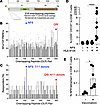 Figure 1
Immunodominant NF9/A24-specific T cell responses in vaccinated donors. (A) Scaled schematic of SARS-CoV-2 spike the S1 and S2 subunits, signal peptide (SP), receptor binding domain (RBD), and transmembrane domain (TM). Overlapping peptides spanning the spike peptide used for functional assays. (B and C) Magnitude of T cell responses, and fraction of HLA-A*24:02+ donors responding to overlapping peptide (OLP) pairs spanning SARS-CoV-2 spike protein (n = 11) as measured by IFN-γ ELISpot. Each well contained 2 overlapping peptides (11-aa overlap). Positive responses were defined as > 3 spot-forming cells above background. OLP pairs 111–112 and 301–302, which encompasses the A24/NF9 and the A24/QI9 epitopes, respectively, are indicated in red and blue with color-matched arrows. (D) CD25+CD137+CD8+ T cells from HLA-A*24:02+ and HLA-A*24:02– donors following 14-day incubation ± NF9 peptide. Summary data from all donors (n = 14) (****P < 0.0001 by Mann-Whitney U test ± NF9 peptide is indicated). Gating strategy is shown in Supplemental Figure 1A. (E) Detection of A24/NF9-specific T cells in PBMCs using A24/NF9 tetramers in vaccinated and unvaccinated HLA-A*24:02+ donors (*P = 0.0167, Mann-Whitney U test). Representative plots are shown in Supplemental Figure 1B.
The response to HLA-A*24:02 NF9 involves shared TCR features across donors. Single-cell sorting of ex vivo PBMCs was performed following A24/NF9 tetramer staining (31) (Supplemental Tables 1 and 2), and the TCR repertoires of A24/NF9 specific T cells were analyzed for vaccinated (n = 9) and convalescent donors (n = 4). The TCRα and TCRβ sequences revealed clear convergence in repertoire usage. Most notably, we observed recurrent use of the TRBJ2-7 gene segment (CDR3 amino acid residues GYEQYF) for both vaccinees and convalescent donor (Figure 2, A and B, and Supplemental Figures 2–4), which contributed to a highly conserved CDR3β motif in the form CASSXXXGYEQYF, where “X” represents variable residues (Figure 2C and Supplemental Figures 2–4). This public CDR3β motif was frequently associated with TRBV2 or TRBV6-1 (contributing CDR3 amino acid residues CASS) (Figure 2B and Supplemental Figures 2–4). For the TCRα chains, the TRAJ gene segments usage was highly varied, and for TRAV genes, there was a bias toward TRAV12-1 (Figure 2, A–C, and Supplemental Figures 2–4). The CDR3β motif and public TRAV12-1+ clonotypes were also detected in A24/NF9-specific CD8+ T cells from other published cohorts (32, 33) (Supplemental Figure 5). These data demonstrate that this TCR pattern is consistent across studies and independent of whether T cells were induced by vaccination or infection, indicating a strong structural selection for TCRs that can productively engage the A24/NF9 complex.
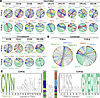 Figure 2
T cell receptor analysis of NF9/A24 and QI9/A24-specific T cells. (A) TRAV–TRAJ and TRBV–TRBJ gene usage among NF9-specific T cells from 9 vaccinated and 4 convalescent HLA-A*24:02+ donors. Circos plots depict relative usage of TRAJ/TRBJ (left arcs) and TRAV/TRBV (right arcs), with arc size reflecting gene frequency. Ribbons indicate V–J pairings. (B) Combined Circos plots from all 13 donors (vaccinated + convalescent) showing TCRα and TCRβ chain usage. A strong bias toward TRAV12-1 and TRBJ2-7 is evident in the α and β chains, respectively. (C) Sequence logo plots showing CDR3α (left) and CDR3β (right) motifs derived from the combined donor set. CDR3α: TRAV12-1+ sequences, most common length = 15 aa. CDR3β: TRBJ2-7+ sequences, most common length = 13 aa. Colored bars at the center indicate the diversity of TRAJ (α chain) and TRBV (β chain) gene usage contributing to each motif, ordered by frequency. See Supplemental Figures 2–4 for additional TCRα/β characteristics, including full CDR3 length distributions.
TCR cross-reactivity at P5 of the HLA-A*24:02 NF9 peptide. The L452 residue of the SARS-CoV-2 spike protein lies within the receptor-binding domain and forms the fifth position (P5) of the A24/NF9 epitope. Mutations at this site, including L452R and L452Q, were characteristic of the Delta, Epsilon, and Lambda variants and later appeared in multiple Omicron-derived lineages such as BA.5, BQ.1 BA.2.86 and JN.1 (34, 35). To define how amino acid substitutions at this position affect immune recognition, we synthesized a panel of NF9/5X peptides (a positional “X-scan” where “X” represents any proteogenic amino acid substitution at P5). All variant peptides bound efficiently to HLA-A*24:02 (Supplemental Table 3), consistent with previous report that this position is not a primary HLA anchor (36). We next evaluated TCR recognition using 8 representative A24/NF9 TCRs using TRAV12-1 and incorporating the CDR3β motif CASSXXXGYEQYF (TRBV2 or TRBV6-1, and TRBJ2-7), and additionally 5 other TCRs with similar features to that of the canonical TCRs (Figure 3A and Supplemental Figure 6 for NF9 tetramer staining). Across all 13 TCRs, the index leucine at P5 was the most potent agonist (Figures 3, B and C). Fifteen of 20 substitutions abolished activation across the TCRs, including the naturally occurring L452R, L452Q, and L452M mutations (Figure 3B). Only isoleucine, threonine, valine, and tryptophan were tolerated, and even these substitutions produced weaker responses (Figure 3, B and C). Peptide titrations confirmed that NF9-5L from the Wuhan strain was the strongest agonist, while NF9-5R was not recognized by any TCR even at 100 nM peptide (Figure 3C). For completeness, we also included the Y453F mutation (NF9-6F) associated with a SARS-CoV-2 outbreak in farmed Mink (37) (Figure 3C). These data indicate that TCRs using TRAV12-1—and possessing the CDR3β CASSXXXGYEQYF motif—as well as noncanonical TCRs have limited capacity to tolerate amino acid substitutions at P5 of the NF9 peptide. These data confirm that the NF9-5L sequence found in the original SARS-CoV-2 Wuhan strain and present in COVID-19 vaccines was the strongest agonist for these T cells. Importantly, none of the NF9-specific T cell clones, including those with non-canonical TCR pairings, responded to NF9-5R. Together these findings demonstrate that all NF9-specific clonotypes, show a strong preference for the NF9-5L Wuhan sequence. The L452R substitution found in Delta and subsequent variants therefore provides profound, population-wide escape from A24/NF9-specific T cell recognition. We next explored this escape further by examining the binding of a canonical TCR to NF9 variants.
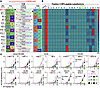 Figure 3
Preference for leucine and nonrecognition of arginine at P5 by NF9-specific TCRs. (A) Paired TCRs from vaccinated or convalescent HLA-A*24:02+ donors that recognize the NYNYLYRLF448-456 spike peptide. Each TCR’s variable (V) and joining (J) segments and corresponding CDR3 sequences are shown. V and J segments are color-coded to match the Circos plots used elsewhere in the study. Black text in CDR3 sequence indicates amino acids derived from P or N nucleotide additions or, for TRB chains, from diversity (D) segments. TRAV12-1 expression and the conserved CDR3β motif CASSXXXGYEQYF (red star) identify canonical NF9-specific TCRs, with other clonotypes included for comparison. (B) Heatmap summarizing Jurkat reporter cell activation for each TCR in A against single amino acid substitutions at position-5 of the NF9 peptide. Responses are normalized to each TCR’s maximal activation to enable parallel comparison. (C) Titration assays of each TCR from A expressed in Jurkat cells, tested against the position-5 variants recognized in B, as well as the 5R (L452R) escape mutant and the 6F (Y453F) variant identified in farmed mink (37).
Strong P1-15 TCR binding to HLA-A*24:02-NF9 but weak or absent binding to all other NF9 variants. To investigate the molecular basis of A24/NF9 recognition and cross-reactivity, we focused on representative public TCR P1-15, isolated from convalescent donor KK-008 (TRAV12-1, TRBV6-1, CDR3β CASSSGGGYEQYF, and TRBJ2-7). Surface plasmon resonance (SPR) was used to quantify equilibrium binding affinities between the P1-15 TCR and HLA-A*24:02 complexes presenting either the wild-type or variant NF9 peptides (Figure 4A). Most antiviral TCR-pHLA class I interactions exhibit affinities in the range of KD = 1–10 μM (38). In contrast the P1-15 TCR bound to A24/NF9 with a KD of 0.67 μM, placing it among the highest affinity natural antiviral TCRs reported to date and suggesting that this interaction is close to the upper limit for naturally occurring A24/NF9-specific TCRs. This unusually strong binding is compatible with, but does not itself define, the convergent public architecture observed among A24/NF9-specific clonotypes.
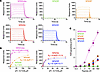 Figure 4
Binding affinity and cross-reactivity of P1-15:A24/NF9 interaction. (A) Surface plasmon resonance (SPR) analysis of P1-15 TCR binding to HLA-A*24:02 complexes presenting NF9 (magenta), NF9-6F (orange), NF9-5R (green), NF9-5Q (red), and NF9-5M (blue). (B) SPR responses to 10 serial dilutions of P1-15 TCR were measured. KDs were determined by non-linear fit curve (y = [P1 x]/[P2 + x]). (C) NFAT-luciferase reporter activity in Jurkat cells transduced with P1-15 TCR and stimulated with NF9 or variant peptides (NF9-5R, NF9-6F, NF9-5Q, and NF9-5M), demonstrating functional sensitivity corresponding to the measured binding affinities.
Despite this high affinity, P1-15 exhibited no detectable binding to A24/NF9-5R and only weaker affinity for NF9-5Q (KD = 6.8 μM), NF9-5M (KD = 6.7 μM) and NF9-6F (KD = 54.4 μM) (Figure 4B). These affinities closely mirrored functional responses measured in T cell activation assays (Figure 4C). Deng et al. reported affinities for 2 similar TRAV12-1/TRBV6-1 NF9-specific TCRs, NYN-I and NYN-II, were 13.6 and 8.6 μM (39), more than 10 times weaker than P1-15 yet still within the expected antiviral range. Given its high affinity and robust expression yield, we selected P1-15 for crystallization with A24/NF9 and its variant complexes to define the structural basis for immune escape.
P1-15 TCR recognition is governed by NF9 peptide conformation within HLA-A*24:02. To elucidate the structural basis for P1-15 TCR recognition, we crystallized P1-15 in complex with A24/NF9 and solved the structure at 3.1 Å resolution (Supplemental Figure 7 and Supplemental Table 4). All structures described in this study have been deposited and validated in the Protein Data Bank (P1-15:HLA-A*24:02–NF9 PDB: 28IL, HLA-A*24:02–NF9-6F PDB: 8RJH, HLA-A*24:02–NF9-5R PDB: 8RJI). Note that the P1-15 TCR β chain construct contained a short N-terminal extension resulting from the expression system, and the PDB numbering therefore begins from the first residue of this construct. For consistency with the published literature (e.g., PDB: 8YE4), amino acid numbering in this manuscript follows the canonical TCR sequence — i.e., –3 relative to the PDB files for the β chain. In the P1-15/A24/NF9 complex residues Tyr4, Tyr6, and Arg7 of the peptide projected upward toward the TCR, whereas Tyr2 and Phe9 were buried as canonical HLA-A*24:02 anchor residues (Figure 5A). Analysis of the molecular contacts between the P1-15 TCR and the NF9 peptide (Supplemental Table 5) revealed that the TCR interacted extensively through CDR1α (23% of TCR contacts), CDR3α (37%), and CDR3β (40%) (Figure 5B). Tyr4, Tyr6, and Arg7 of the peptide were key contact residues for the CDR3α and CDR3β (Figure 5, C and D). The CDR3β dominance reflected a conserved Tyr99β residue that contributed 18 van der Waals and 1 hydrogen bonds in P1-15 TCR recognition with NF9-7R and NF9-8L, explaining the recurrent TRBJ2-7 encoded CDR3β motif (CASSXXXGY99EQYF, TRBJ2-7 amino acids underlined) across different donors. The recently published A24/NF9–NYN-I TCR complex (39) (bearing similar TRAV12-1/TRBV6-1 pairing, TRBJ2-7 usage and CDR3β motif) bound NF9 in the same “P5-down, P6-up” configuration and with similar TCR CDR3 loop distribution (Figure 5, E and F), indicating that public NF9-specific TCRs converge on a shared structural solution.
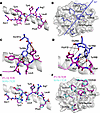 Figure 5
Structural analysis of the public P1-15 TCR/NF9-A24 complex. (A) Presentation of the NF9 peptide (magenta sticks) when in complex with the P1-15 TCR. (B) Top-down view of the NF9 peptide (white sticks) showing the distribution of the P1-15 CDR loops (blue cartoon). The crossing angle is indicated by the blue line. (C and D) Detailed views of contacts between CDR1α (C), CDR3β (D), and CDR3α and the NF9 peptide (magenta sticks) showing Van der Waals (black dotted lines) and hydrogen (red dotted lines) interactions. (E) Structural comparison of the NF9 peptide (sticks) bound to P1-15 TCR (magenta) or NYN-I TCR (cyan). (F) Top-down comparison of the P1-15 (blue cartoon) and NYN-I (cyan cartoon) CDR loop distributions over the NF9 peptide (white sticks).
We next solved the structures of HLA-A*24:02 bound to NF9-6F and NF9-5R at 2.6 Å and 2.3 Å resolution, respectively (Supplemental Figure 7 and Supplemental Table 4). Both variant peptides retained a similar overall conformation to WT NF9 but showed striking rearrangements at P5 and P6 (Figure 6, A and B). In the WT complex, Leu5 pointed downward into the HLA groove, allowing Tyr6 to project upward and form 11 molecular interactions with P1-15. In contrast, the NF9-6F and NF9-5R peptides rotated residue 5 upward, forcing Tyr6 into the groove where it was buried and unavailable for TCR contact. This “P5-up, P6-down” orientation was consistent across all molecules in the crystallographic unit cell, suggesting it represents a stable alternate conformation favored by the escape variants. The previously published A24/NF9 structure (40) contains both conformations within the same unit cell, confirming that “P5-down, P6-up” and “P5-up, P6-down” orientations can coexist in the absence of TCR (Supplemental Figure 7). Additionally, modeling an Arginine residue into P5 of the “P5-down” configuration shows substantial steric hindrance even in the model’s most energetically favorable position (Figure 6C). Together, these observations indicate that the TCR selectively engages the “P5-down, P6-up” configuration, which is disfavored by L452R and related mutations. Contact heatmaps (Figure 6D) and schematic interaction maps (Figure 6E) reveal a tyrosine-centered binding chemistry; CDR3β Tyr99 and CDR3α tyrosines account for most hydrogen-bond and van der Waals contacts to both peptide and HLA helices. This convergence provides a clear structural explanation for the recurrent C-terminal GY(E/Q)QYF motif across A24/NF9-specific clonotypes. Thus, mutation at P5 enforces a conformational reorientation of the NF9 peptide that prevents productive TCR engagement. This conformational reorientation provides a clear structural mechanism for the universal loss of A24/NF9 recognition observed across public TCRs. The L452R mutation thereby reconfigures peptide presentation to prevent engagement by the dominant TCR repertoire.
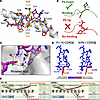 Figure 6
Structural basis for position-5–driven reorientation of the NF9 peptide within HLA-A*24:02. (A) A24/NF9 peptide (magenta sticks) in complex with the P1-15 TCR, with uncomplexed A24/NF9-6F (orange sticks) and A24/NF9-5R (green sticks) structures superimposed, demonstrating side chain flipping at positions 5 and 6. (B) Diagram illustrating the alternative “P5-up” (top, green) and “P5-down” (bottom, red) peptide orientations adopted within the peptide–HLA complexes in A. (C) Modeling of the NF9 peptide residue 5 (white sticks) mutated to arginine using PyMOL. Red discs indicate steric clashes; the displayed rotamer produced the fewest clashes after PyMOL energy minimization. (D) Structural heatmap showing the number and distribution of atomic contacts between each of the P1-15 and NYN-I TCRs and the NF9 peptide. (E) These bonds are also shown as a schematic representation of intermolecular contacts between NF9 peptide residues and the P1-15 (top) or NYN-I (bottom) TCRs, showing how CDR3 tyrosines dominate the molecular contacts with both HLA and peptide. In D, blue = no peptide and red = highest contacts with the colors reflecting P1-15 binds much stronger than NYN-1 (KD ≈ 0.67 μM versus > 10 μM).
HLA-A*24:02 NF9 5L and 5R peptides are not recognized by T cells in Delta-infected convalescents. Viral escape mutations can, in some cases, elicit new variant-specific T cell responses capable of recognizing the altered sequence, as observed in HIV-1 and other rapidly evolving viruses (41). We therefore asked whether individuals infected with the SARS-CoV-2 Delta variant, which harbors the L452R substitution at P5 of the A24/NF9 epitope, could mount new NF9-5R–specific responses. To test this, we analyzed unvaccinated convalescents known to have been infected with the Delta variant and with no prior history of SARS-CoV-2 exposure, representing likely first antigen encounters (Supplemental Table 2). PBMCs were stimulated in vitro with either A24/NF9 or A24/NF9-5R peptides, and proliferating CD8+ T cells were assessed by coexpression of CD25 and CD137. In vaccinated HLA-A*24:02+ donors, both NF9- and QI9-specific T cells were readily induced (*P = 0.0156 and **P = 0.0078, respectively) (Figure 7A and Supplemental Figure 8). In contrast, PBMCs from HLA-A*24:02+ Delta-infected convalescents showed no detectable activation following stimulation with either NF9 or NF9-5R peptides (no significance) but could mount a response to A24/QI9 (*P = 0.0391) (Figure 7B). Ex vivo tetramer staining confirmed the absence of NF9- or NF9-5R–specific CD8+ T cells in these donors, whereas robust A24/QI9-specific populations were detected (*P = 0.0316 versus A24/NF9-specific ones and *P = 0.0156 versus A24/NF9-5R–specific ones) (Figure 7C). Together, these data indicate that the L452R substitution abolishes recognition of the A24/NF9 epitope by preexisting vaccine- or infection-induced T cells and simultaneously fails to prime de novo variant-specific responses. Consequently, the Delta variant created a population-level T cell “blind spot” within an otherwise immunodominant region, providing a mechanistic link between structural peptide reorientation and immune escape in HLA-A*24:02+ individuals.
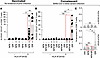 Figure 7
NF9-5R–specific T cells are not detectable in SARS-CoV-2 Delta-infected convalescents. (A) Activation-induced marker assay of PBMCs from vaccinated donors with no evidence of prior SARS-CoV-2 infection. Cells were stimulated for 14 days with A24/NF9 (NYNYLYRLF448–456) or A24/QI9 (QYIKWPWYI1208–1216) peptides. Data show the percentage of CD25+CD137+CD8+ T cells in HLA-A*24:02–negative (n = 4) and HLA-A*24:02+ (n = 8) donors. Wilcoxon matched-pairs signed-rank test (*P = 0.0156, **P = 0.0078). (B) Activation-induced marker assay of PBMCs from unvaccinated convalescents infected with the SARS-CoV-2 Delta variant. Cells were stimulated with A24/NF9, A24/NF9-5R, or A24/QI9 peptides. Data show the percentage of CD25+CD137+CD8+ T cells in HLA-A*24:02–negative (n = 9) and A*24:02+ (n = 8) donors. Wilcoxon matched-pairs signed-rank test (*P = 0.0391). (C) Ex vivo detection of HLA-A*24:02–restricted tetramer+ CD8+ T cells in Delta-infected convalescents. PBMCs from HLA-A*24:02–negative (n = 6) and A*24:02+ (n = 7) donors were stained with tetramers specific for HIV-KW9 (negative control), A24/NF9, A24/NF9-5R, or A24/QI9. Wilcoxon matched-pairs signed-rank test (*P = 0.0156 versus A24/HIV-KW9 and A24/NF9-5R and *P = 0.0312 versus A24/NF9).


