
Research ArticleCell biologyOncology
Open Access |  10.1172/jci.insight.202414
NOTCH1 acts as a tumor suppressor that induces early differentiation in head and neck cancer
Chenfei Huang,1,2 Shhyam Moorthy,3,4 Qiuli Li,3,5 Kazi M. Ahmed,1 Kalil Saab,1 Defeng Deng,1,6 Jiping Wang,3 Xiayu Rao,7 Jiexin Zhang,7 Yuanxin Xi,7 Jing Wang,7 Zhiyi Liu,3,8 Noriaki Tanaka,3,9 David A. Wheeler,10,11 Eve Shinbrot,10 Rami Saade,12 Curtis R. Pickering,3,13 Tong-Xin Xie,3 Adel K. El-Naggar,14 Abdullah A. Osman,3 Kunal Rai,15 Patrick A. Zweidler-McKay,16 John V. Heymach,17 Lauren A. Byers,17 Faye M. Johnson,17,18 Vlad C. Sandulache,1,19,20 Jeffrey N. Myers,3 Pedram Yadollahi,1 and Mitchell J. Frederick1
1Bobby R. Alford Department of Otolaryngology-Head and Neck Surgery, Baylor College of Medicine, Houston, Texas, USA.
2Celularity Inc., Florham Park, New Jersey, USA.
3Department of Head and Neck Surgery, University of Texas MD Anderson Cancer Center, Houston, Texas, USA.
4Merck, Rahway, New Jersey, USA.
5Department of Head and Neck, Sun Yat-sen University Cancer Center, Guangzhou, China.
6Department of Integrative Medicine, and
7Department of Bioinformatics and Computational Biology, University of Texas MD Anderson Cancer Center, Houston, Texas, USA.
8LC Sciences, Houston, Texas, USA.
9Department of Oral and Maxillofacial Surgery, Osaka University School of Dentistry, Suita City, Osaka, Japan.
10Human Genome Sequencing Center, Baylor College of Medicine, Houston, Texas, USA.
11Department of Computational Biology, St. Jude Children’s Research Hospital, Memphis, Tennessee, USA.
12Department of Otolaryngology, Lebanese American University, Beirut, Lebanon.
13Department of Surgery-Otolaryngology, Yale School of Medicine, New Haven, Connecticut, USA.
14Department of Pathology,
15Department of Genomic Medicine and MDACC Epigenomics Therapy Initiative,
16Department of Pediatric Leukemia and Lymphoma, and
17Department of Thoracic/Head & Neck Medical Oncology, University of Texas MD Anderson Cancer Center, Houston, Texas, USA.
18The University of Texas Graduate School of Biomedical Sciences, Houston, Texas, USA.
19ENT Section, Operative Care Line, and
20Center for Translational Research on Inflammatory Diseases, Michael E. DeBakey Veterans Affairs Medical Center, Houston, Texas, USA.
Address correspondence to: Mitchell J. Frederick, Baylor College of Medicine, BLDG RM NA 520, 6501 Fannin St., Houston, Texas 77030, USA. Phone: 713.798.1963; Email: mitchell.frederick@bcm.edu. Or to: Pedram Yadollahi, Baylor College of Medicine, BLDG RM NA 503, 6501 Fannin St., Houston, Texas 77030, USA. Phone: 713.798.4512; Email: pedram.yadollahi@bcm.edu.
Authorship note: CG, SM, and QL contributed equally to this work and are co–first authors.
Find articles by Huang, C. in: PubMed | Google Scholar
1Bobby R. Alford Department of Otolaryngology-Head and Neck Surgery, Baylor College of Medicine, Houston, Texas, USA.
2Celularity Inc., Florham Park, New Jersey, USA.
3Department of Head and Neck Surgery, University of Texas MD Anderson Cancer Center, Houston, Texas, USA.
4Merck, Rahway, New Jersey, USA.
5Department of Head and Neck, Sun Yat-sen University Cancer Center, Guangzhou, China.
6Department of Integrative Medicine, and
7Department of Bioinformatics and Computational Biology, University of Texas MD Anderson Cancer Center, Houston, Texas, USA.
8LC Sciences, Houston, Texas, USA.
9Department of Oral and Maxillofacial Surgery, Osaka University School of Dentistry, Suita City, Osaka, Japan.
10Human Genome Sequencing Center, Baylor College of Medicine, Houston, Texas, USA.
11Department of Computational Biology, St. Jude Children’s Research Hospital, Memphis, Tennessee, USA.
12Department of Otolaryngology, Lebanese American University, Beirut, Lebanon.
13Department of Surgery-Otolaryngology, Yale School of Medicine, New Haven, Connecticut, USA.
14Department of Pathology,
15Department of Genomic Medicine and MDACC Epigenomics Therapy Initiative,
16Department of Pediatric Leukemia and Lymphoma, and
17Department of Thoracic/Head & Neck Medical Oncology, University of Texas MD Anderson Cancer Center, Houston, Texas, USA.
18The University of Texas Graduate School of Biomedical Sciences, Houston, Texas, USA.
19ENT Section, Operative Care Line, and
20Center for Translational Research on Inflammatory Diseases, Michael E. DeBakey Veterans Affairs Medical Center, Houston, Texas, USA.
Address correspondence to: Mitchell J. Frederick, Baylor College of Medicine, BLDG RM NA 520, 6501 Fannin St., Houston, Texas 77030, USA. Phone: 713.798.1963; Email: mitchell.frederick@bcm.edu. Or to: Pedram Yadollahi, Baylor College of Medicine, BLDG RM NA 503, 6501 Fannin St., Houston, Texas 77030, USA. Phone: 713.798.4512; Email: pedram.yadollahi@bcm.edu.
Authorship note: CG, SM, and QL contributed equally to this work and are co–first authors.
Find articles by Moorthy, S. in: PubMed | Google Scholar
1Bobby R. Alford Department of Otolaryngology-Head and Neck Surgery, Baylor College of Medicine, Houston, Texas, USA.
2Celularity Inc., Florham Park, New Jersey, USA.
3Department of Head and Neck Surgery, University of Texas MD Anderson Cancer Center, Houston, Texas, USA.
4Merck, Rahway, New Jersey, USA.
5Department of Head and Neck, Sun Yat-sen University Cancer Center, Guangzhou, China.
6Department of Integrative Medicine, and
7Department of Bioinformatics and Computational Biology, University of Texas MD Anderson Cancer Center, Houston, Texas, USA.
8LC Sciences, Houston, Texas, USA.
9Department of Oral and Maxillofacial Surgery, Osaka University School of Dentistry, Suita City, Osaka, Japan.
10Human Genome Sequencing Center, Baylor College of Medicine, Houston, Texas, USA.
11Department of Computational Biology, St. Jude Children’s Research Hospital, Memphis, Tennessee, USA.
12Department of Otolaryngology, Lebanese American University, Beirut, Lebanon.
13Department of Surgery-Otolaryngology, Yale School of Medicine, New Haven, Connecticut, USA.
14Department of Pathology,
15Department of Genomic Medicine and MDACC Epigenomics Therapy Initiative,
16Department of Pediatric Leukemia and Lymphoma, and
17Department of Thoracic/Head & Neck Medical Oncology, University of Texas MD Anderson Cancer Center, Houston, Texas, USA.
18The University of Texas Graduate School of Biomedical Sciences, Houston, Texas, USA.
19ENT Section, Operative Care Line, and
20Center for Translational Research on Inflammatory Diseases, Michael E. DeBakey Veterans Affairs Medical Center, Houston, Texas, USA.
Address correspondence to: Mitchell J. Frederick, Baylor College of Medicine, BLDG RM NA 520, 6501 Fannin St., Houston, Texas 77030, USA. Phone: 713.798.1963; Email: mitchell.frederick@bcm.edu. Or to: Pedram Yadollahi, Baylor College of Medicine, BLDG RM NA 503, 6501 Fannin St., Houston, Texas 77030, USA. Phone: 713.798.4512; Email: pedram.yadollahi@bcm.edu.
Authorship note: CG, SM, and QL contributed equally to this work and are co–first authors.
Find articles by Li, Q. in: PubMed | Google Scholar
1Bobby R. Alford Department of Otolaryngology-Head and Neck Surgery, Baylor College of Medicine, Houston, Texas, USA.
2Celularity Inc., Florham Park, New Jersey, USA.
3Department of Head and Neck Surgery, University of Texas MD Anderson Cancer Center, Houston, Texas, USA.
4Merck, Rahway, New Jersey, USA.
5Department of Head and Neck, Sun Yat-sen University Cancer Center, Guangzhou, China.
6Department of Integrative Medicine, and
7Department of Bioinformatics and Computational Biology, University of Texas MD Anderson Cancer Center, Houston, Texas, USA.
8LC Sciences, Houston, Texas, USA.
9Department of Oral and Maxillofacial Surgery, Osaka University School of Dentistry, Suita City, Osaka, Japan.
10Human Genome Sequencing Center, Baylor College of Medicine, Houston, Texas, USA.
11Department of Computational Biology, St. Jude Children’s Research Hospital, Memphis, Tennessee, USA.
12Department of Otolaryngology, Lebanese American University, Beirut, Lebanon.
13Department of Surgery-Otolaryngology, Yale School of Medicine, New Haven, Connecticut, USA.
14Department of Pathology,
15Department of Genomic Medicine and MDACC Epigenomics Therapy Initiative,
16Department of Pediatric Leukemia and Lymphoma, and
17Department of Thoracic/Head & Neck Medical Oncology, University of Texas MD Anderson Cancer Center, Houston, Texas, USA.
18The University of Texas Graduate School of Biomedical Sciences, Houston, Texas, USA.
19ENT Section, Operative Care Line, and
20Center for Translational Research on Inflammatory Diseases, Michael E. DeBakey Veterans Affairs Medical Center, Houston, Texas, USA.
Address correspondence to: Mitchell J. Frederick, Baylor College of Medicine, BLDG RM NA 520, 6501 Fannin St., Houston, Texas 77030, USA. Phone: 713.798.1963; Email: mitchell.frederick@bcm.edu. Or to: Pedram Yadollahi, Baylor College of Medicine, BLDG RM NA 503, 6501 Fannin St., Houston, Texas 77030, USA. Phone: 713.798.4512; Email: pedram.yadollahi@bcm.edu.
Authorship note: CG, SM, and QL contributed equally to this work and are co–first authors.
Find articles by Ahmed, K. in: PubMed | Google Scholar
1Bobby R. Alford Department of Otolaryngology-Head and Neck Surgery, Baylor College of Medicine, Houston, Texas, USA.
2Celularity Inc., Florham Park, New Jersey, USA.
3Department of Head and Neck Surgery, University of Texas MD Anderson Cancer Center, Houston, Texas, USA.
4Merck, Rahway, New Jersey, USA.
5Department of Head and Neck, Sun Yat-sen University Cancer Center, Guangzhou, China.
6Department of Integrative Medicine, and
7Department of Bioinformatics and Computational Biology, University of Texas MD Anderson Cancer Center, Houston, Texas, USA.
8LC Sciences, Houston, Texas, USA.
9Department of Oral and Maxillofacial Surgery, Osaka University School of Dentistry, Suita City, Osaka, Japan.
10Human Genome Sequencing Center, Baylor College of Medicine, Houston, Texas, USA.
11Department of Computational Biology, St. Jude Children’s Research Hospital, Memphis, Tennessee, USA.
12Department of Otolaryngology, Lebanese American University, Beirut, Lebanon.
13Department of Surgery-Otolaryngology, Yale School of Medicine, New Haven, Connecticut, USA.
14Department of Pathology,
15Department of Genomic Medicine and MDACC Epigenomics Therapy Initiative,
16Department of Pediatric Leukemia and Lymphoma, and
17Department of Thoracic/Head & Neck Medical Oncology, University of Texas MD Anderson Cancer Center, Houston, Texas, USA.
18The University of Texas Graduate School of Biomedical Sciences, Houston, Texas, USA.
19ENT Section, Operative Care Line, and
20Center for Translational Research on Inflammatory Diseases, Michael E. DeBakey Veterans Affairs Medical Center, Houston, Texas, USA.
Address correspondence to: Mitchell J. Frederick, Baylor College of Medicine, BLDG RM NA 520, 6501 Fannin St., Houston, Texas 77030, USA. Phone: 713.798.1963; Email: mitchell.frederick@bcm.edu. Or to: Pedram Yadollahi, Baylor College of Medicine, BLDG RM NA 503, 6501 Fannin St., Houston, Texas 77030, USA. Phone: 713.798.4512; Email: pedram.yadollahi@bcm.edu.
Authorship note: CG, SM, and QL contributed equally to this work and are co–first authors.
Find articles by Saab, K. in: PubMed | Google Scholar
1Bobby R. Alford Department of Otolaryngology-Head and Neck Surgery, Baylor College of Medicine, Houston, Texas, USA.
2Celularity Inc., Florham Park, New Jersey, USA.
3Department of Head and Neck Surgery, University of Texas MD Anderson Cancer Center, Houston, Texas, USA.
4Merck, Rahway, New Jersey, USA.
5Department of Head and Neck, Sun Yat-sen University Cancer Center, Guangzhou, China.
6Department of Integrative Medicine, and
7Department of Bioinformatics and Computational Biology, University of Texas MD Anderson Cancer Center, Houston, Texas, USA.
8LC Sciences, Houston, Texas, USA.
9Department of Oral and Maxillofacial Surgery, Osaka University School of Dentistry, Suita City, Osaka, Japan.
10Human Genome Sequencing Center, Baylor College of Medicine, Houston, Texas, USA.
11Department of Computational Biology, St. Jude Children’s Research Hospital, Memphis, Tennessee, USA.
12Department of Otolaryngology, Lebanese American University, Beirut, Lebanon.
13Department of Surgery-Otolaryngology, Yale School of Medicine, New Haven, Connecticut, USA.
14Department of Pathology,
15Department of Genomic Medicine and MDACC Epigenomics Therapy Initiative,
16Department of Pediatric Leukemia and Lymphoma, and
17Department of Thoracic/Head & Neck Medical Oncology, University of Texas MD Anderson Cancer Center, Houston, Texas, USA.
18The University of Texas Graduate School of Biomedical Sciences, Houston, Texas, USA.
19ENT Section, Operative Care Line, and
20Center for Translational Research on Inflammatory Diseases, Michael E. DeBakey Veterans Affairs Medical Center, Houston, Texas, USA.
Address correspondence to: Mitchell J. Frederick, Baylor College of Medicine, BLDG RM NA 520, 6501 Fannin St., Houston, Texas 77030, USA. Phone: 713.798.1963; Email: mitchell.frederick@bcm.edu. Or to: Pedram Yadollahi, Baylor College of Medicine, BLDG RM NA 503, 6501 Fannin St., Houston, Texas 77030, USA. Phone: 713.798.4512; Email: pedram.yadollahi@bcm.edu.
Authorship note: CG, SM, and QL contributed equally to this work and are co–first authors.
Find articles by Deng, D. in: PubMed | Google Scholar
1Bobby R. Alford Department of Otolaryngology-Head and Neck Surgery, Baylor College of Medicine, Houston, Texas, USA.
2Celularity Inc., Florham Park, New Jersey, USA.
3Department of Head and Neck Surgery, University of Texas MD Anderson Cancer Center, Houston, Texas, USA.
4Merck, Rahway, New Jersey, USA.
5Department of Head and Neck, Sun Yat-sen University Cancer Center, Guangzhou, China.
6Department of Integrative Medicine, and
7Department of Bioinformatics and Computational Biology, University of Texas MD Anderson Cancer Center, Houston, Texas, USA.
8LC Sciences, Houston, Texas, USA.
9Department of Oral and Maxillofacial Surgery, Osaka University School of Dentistry, Suita City, Osaka, Japan.
10Human Genome Sequencing Center, Baylor College of Medicine, Houston, Texas, USA.
11Department of Computational Biology, St. Jude Children’s Research Hospital, Memphis, Tennessee, USA.
12Department of Otolaryngology, Lebanese American University, Beirut, Lebanon.
13Department of Surgery-Otolaryngology, Yale School of Medicine, New Haven, Connecticut, USA.
14Department of Pathology,
15Department of Genomic Medicine and MDACC Epigenomics Therapy Initiative,
16Department of Pediatric Leukemia and Lymphoma, and
17Department of Thoracic/Head & Neck Medical Oncology, University of Texas MD Anderson Cancer Center, Houston, Texas, USA.
18The University of Texas Graduate School of Biomedical Sciences, Houston, Texas, USA.
19ENT Section, Operative Care Line, and
20Center for Translational Research on Inflammatory Diseases, Michael E. DeBakey Veterans Affairs Medical Center, Houston, Texas, USA.
Address correspondence to: Mitchell J. Frederick, Baylor College of Medicine, BLDG RM NA 520, 6501 Fannin St., Houston, Texas 77030, USA. Phone: 713.798.1963; Email: mitchell.frederick@bcm.edu. Or to: Pedram Yadollahi, Baylor College of Medicine, BLDG RM NA 503, 6501 Fannin St., Houston, Texas 77030, USA. Phone: 713.798.4512; Email: pedram.yadollahi@bcm.edu.
Authorship note: CG, SM, and QL contributed equally to this work and are co–first authors.
Find articles by Wang, J. in: PubMed | Google Scholar
1Bobby R. Alford Department of Otolaryngology-Head and Neck Surgery, Baylor College of Medicine, Houston, Texas, USA.
2Celularity Inc., Florham Park, New Jersey, USA.
3Department of Head and Neck Surgery, University of Texas MD Anderson Cancer Center, Houston, Texas, USA.
4Merck, Rahway, New Jersey, USA.
5Department of Head and Neck, Sun Yat-sen University Cancer Center, Guangzhou, China.
6Department of Integrative Medicine, and
7Department of Bioinformatics and Computational Biology, University of Texas MD Anderson Cancer Center, Houston, Texas, USA.
8LC Sciences, Houston, Texas, USA.
9Department of Oral and Maxillofacial Surgery, Osaka University School of Dentistry, Suita City, Osaka, Japan.
10Human Genome Sequencing Center, Baylor College of Medicine, Houston, Texas, USA.
11Department of Computational Biology, St. Jude Children’s Research Hospital, Memphis, Tennessee, USA.
12Department of Otolaryngology, Lebanese American University, Beirut, Lebanon.
13Department of Surgery-Otolaryngology, Yale School of Medicine, New Haven, Connecticut, USA.
14Department of Pathology,
15Department of Genomic Medicine and MDACC Epigenomics Therapy Initiative,
16Department of Pediatric Leukemia and Lymphoma, and
17Department of Thoracic/Head & Neck Medical Oncology, University of Texas MD Anderson Cancer Center, Houston, Texas, USA.
18The University of Texas Graduate School of Biomedical Sciences, Houston, Texas, USA.
19ENT Section, Operative Care Line, and
20Center for Translational Research on Inflammatory Diseases, Michael E. DeBakey Veterans Affairs Medical Center, Houston, Texas, USA.
Address correspondence to: Mitchell J. Frederick, Baylor College of Medicine, BLDG RM NA 520, 6501 Fannin St., Houston, Texas 77030, USA. Phone: 713.798.1963; Email: mitchell.frederick@bcm.edu. Or to: Pedram Yadollahi, Baylor College of Medicine, BLDG RM NA 503, 6501 Fannin St., Houston, Texas 77030, USA. Phone: 713.798.4512; Email: pedram.yadollahi@bcm.edu.
Authorship note: CG, SM, and QL contributed equally to this work and are co–first authors.
Find articles by Rao, X. in: PubMed | Google Scholar
1Bobby R. Alford Department of Otolaryngology-Head and Neck Surgery, Baylor College of Medicine, Houston, Texas, USA.
2Celularity Inc., Florham Park, New Jersey, USA.
3Department of Head and Neck Surgery, University of Texas MD Anderson Cancer Center, Houston, Texas, USA.
4Merck, Rahway, New Jersey, USA.
5Department of Head and Neck, Sun Yat-sen University Cancer Center, Guangzhou, China.
6Department of Integrative Medicine, and
7Department of Bioinformatics and Computational Biology, University of Texas MD Anderson Cancer Center, Houston, Texas, USA.
8LC Sciences, Houston, Texas, USA.
9Department of Oral and Maxillofacial Surgery, Osaka University School of Dentistry, Suita City, Osaka, Japan.
10Human Genome Sequencing Center, Baylor College of Medicine, Houston, Texas, USA.
11Department of Computational Biology, St. Jude Children’s Research Hospital, Memphis, Tennessee, USA.
12Department of Otolaryngology, Lebanese American University, Beirut, Lebanon.
13Department of Surgery-Otolaryngology, Yale School of Medicine, New Haven, Connecticut, USA.
14Department of Pathology,
15Department of Genomic Medicine and MDACC Epigenomics Therapy Initiative,
16Department of Pediatric Leukemia and Lymphoma, and
17Department of Thoracic/Head & Neck Medical Oncology, University of Texas MD Anderson Cancer Center, Houston, Texas, USA.
18The University of Texas Graduate School of Biomedical Sciences, Houston, Texas, USA.
19ENT Section, Operative Care Line, and
20Center for Translational Research on Inflammatory Diseases, Michael E. DeBakey Veterans Affairs Medical Center, Houston, Texas, USA.
Address correspondence to: Mitchell J. Frederick, Baylor College of Medicine, BLDG RM NA 520, 6501 Fannin St., Houston, Texas 77030, USA. Phone: 713.798.1963; Email: mitchell.frederick@bcm.edu. Or to: Pedram Yadollahi, Baylor College of Medicine, BLDG RM NA 503, 6501 Fannin St., Houston, Texas 77030, USA. Phone: 713.798.4512; Email: pedram.yadollahi@bcm.edu.
Authorship note: CG, SM, and QL contributed equally to this work and are co–first authors.
Find articles by Zhang, J. in: PubMed | Google Scholar
1Bobby R. Alford Department of Otolaryngology-Head and Neck Surgery, Baylor College of Medicine, Houston, Texas, USA.
2Celularity Inc., Florham Park, New Jersey, USA.
3Department of Head and Neck Surgery, University of Texas MD Anderson Cancer Center, Houston, Texas, USA.
4Merck, Rahway, New Jersey, USA.
5Department of Head and Neck, Sun Yat-sen University Cancer Center, Guangzhou, China.
6Department of Integrative Medicine, and
7Department of Bioinformatics and Computational Biology, University of Texas MD Anderson Cancer Center, Houston, Texas, USA.
8LC Sciences, Houston, Texas, USA.
9Department of Oral and Maxillofacial Surgery, Osaka University School of Dentistry, Suita City, Osaka, Japan.
10Human Genome Sequencing Center, Baylor College of Medicine, Houston, Texas, USA.
11Department of Computational Biology, St. Jude Children’s Research Hospital, Memphis, Tennessee, USA.
12Department of Otolaryngology, Lebanese American University, Beirut, Lebanon.
13Department of Surgery-Otolaryngology, Yale School of Medicine, New Haven, Connecticut, USA.
14Department of Pathology,
15Department of Genomic Medicine and MDACC Epigenomics Therapy Initiative,
16Department of Pediatric Leukemia and Lymphoma, and
17Department of Thoracic/Head & Neck Medical Oncology, University of Texas MD Anderson Cancer Center, Houston, Texas, USA.
18The University of Texas Graduate School of Biomedical Sciences, Houston, Texas, USA.
19ENT Section, Operative Care Line, and
20Center for Translational Research on Inflammatory Diseases, Michael E. DeBakey Veterans Affairs Medical Center, Houston, Texas, USA.
Address correspondence to: Mitchell J. Frederick, Baylor College of Medicine, BLDG RM NA 520, 6501 Fannin St., Houston, Texas 77030, USA. Phone: 713.798.1963; Email: mitchell.frederick@bcm.edu. Or to: Pedram Yadollahi, Baylor College of Medicine, BLDG RM NA 503, 6501 Fannin St., Houston, Texas 77030, USA. Phone: 713.798.4512; Email: pedram.yadollahi@bcm.edu.
Authorship note: CG, SM, and QL contributed equally to this work and are co–first authors.
Find articles by Xi, Y. in: PubMed | Google Scholar
1Bobby R. Alford Department of Otolaryngology-Head and Neck Surgery, Baylor College of Medicine, Houston, Texas, USA.
2Celularity Inc., Florham Park, New Jersey, USA.
3Department of Head and Neck Surgery, University of Texas MD Anderson Cancer Center, Houston, Texas, USA.
4Merck, Rahway, New Jersey, USA.
5Department of Head and Neck, Sun Yat-sen University Cancer Center, Guangzhou, China.
6Department of Integrative Medicine, and
7Department of Bioinformatics and Computational Biology, University of Texas MD Anderson Cancer Center, Houston, Texas, USA.
8LC Sciences, Houston, Texas, USA.
9Department of Oral and Maxillofacial Surgery, Osaka University School of Dentistry, Suita City, Osaka, Japan.
10Human Genome Sequencing Center, Baylor College of Medicine, Houston, Texas, USA.
11Department of Computational Biology, St. Jude Children’s Research Hospital, Memphis, Tennessee, USA.
12Department of Otolaryngology, Lebanese American University, Beirut, Lebanon.
13Department of Surgery-Otolaryngology, Yale School of Medicine, New Haven, Connecticut, USA.
14Department of Pathology,
15Department of Genomic Medicine and MDACC Epigenomics Therapy Initiative,
16Department of Pediatric Leukemia and Lymphoma, and
17Department of Thoracic/Head & Neck Medical Oncology, University of Texas MD Anderson Cancer Center, Houston, Texas, USA.
18The University of Texas Graduate School of Biomedical Sciences, Houston, Texas, USA.
19ENT Section, Operative Care Line, and
20Center for Translational Research on Inflammatory Diseases, Michael E. DeBakey Veterans Affairs Medical Center, Houston, Texas, USA.
Address correspondence to: Mitchell J. Frederick, Baylor College of Medicine, BLDG RM NA 520, 6501 Fannin St., Houston, Texas 77030, USA. Phone: 713.798.1963; Email: mitchell.frederick@bcm.edu. Or to: Pedram Yadollahi, Baylor College of Medicine, BLDG RM NA 503, 6501 Fannin St., Houston, Texas 77030, USA. Phone: 713.798.4512; Email: pedram.yadollahi@bcm.edu.
Authorship note: CG, SM, and QL contributed equally to this work and are co–first authors.
Find articles by Wang, J. in: PubMed | Google Scholar
1Bobby R. Alford Department of Otolaryngology-Head and Neck Surgery, Baylor College of Medicine, Houston, Texas, USA.
2Celularity Inc., Florham Park, New Jersey, USA.
3Department of Head and Neck Surgery, University of Texas MD Anderson Cancer Center, Houston, Texas, USA.
4Merck, Rahway, New Jersey, USA.
5Department of Head and Neck, Sun Yat-sen University Cancer Center, Guangzhou, China.
6Department of Integrative Medicine, and
7Department of Bioinformatics and Computational Biology, University of Texas MD Anderson Cancer Center, Houston, Texas, USA.
8LC Sciences, Houston, Texas, USA.
9Department of Oral and Maxillofacial Surgery, Osaka University School of Dentistry, Suita City, Osaka, Japan.
10Human Genome Sequencing Center, Baylor College of Medicine, Houston, Texas, USA.
11Department of Computational Biology, St. Jude Children’s Research Hospital, Memphis, Tennessee, USA.
12Department of Otolaryngology, Lebanese American University, Beirut, Lebanon.
13Department of Surgery-Otolaryngology, Yale School of Medicine, New Haven, Connecticut, USA.
14Department of Pathology,
15Department of Genomic Medicine and MDACC Epigenomics Therapy Initiative,
16Department of Pediatric Leukemia and Lymphoma, and
17Department of Thoracic/Head & Neck Medical Oncology, University of Texas MD Anderson Cancer Center, Houston, Texas, USA.
18The University of Texas Graduate School of Biomedical Sciences, Houston, Texas, USA.
19ENT Section, Operative Care Line, and
20Center for Translational Research on Inflammatory Diseases, Michael E. DeBakey Veterans Affairs Medical Center, Houston, Texas, USA.
Address correspondence to: Mitchell J. Frederick, Baylor College of Medicine, BLDG RM NA 520, 6501 Fannin St., Houston, Texas 77030, USA. Phone: 713.798.1963; Email: mitchell.frederick@bcm.edu. Or to: Pedram Yadollahi, Baylor College of Medicine, BLDG RM NA 503, 6501 Fannin St., Houston, Texas 77030, USA. Phone: 713.798.4512; Email: pedram.yadollahi@bcm.edu.
Authorship note: CG, SM, and QL contributed equally to this work and are co–first authors.
Find articles by Liu, Z. in: PubMed | Google Scholar
1Bobby R. Alford Department of Otolaryngology-Head and Neck Surgery, Baylor College of Medicine, Houston, Texas, USA.
2Celularity Inc., Florham Park, New Jersey, USA.
3Department of Head and Neck Surgery, University of Texas MD Anderson Cancer Center, Houston, Texas, USA.
4Merck, Rahway, New Jersey, USA.
5Department of Head and Neck, Sun Yat-sen University Cancer Center, Guangzhou, China.
6Department of Integrative Medicine, and
7Department of Bioinformatics and Computational Biology, University of Texas MD Anderson Cancer Center, Houston, Texas, USA.
8LC Sciences, Houston, Texas, USA.
9Department of Oral and Maxillofacial Surgery, Osaka University School of Dentistry, Suita City, Osaka, Japan.
10Human Genome Sequencing Center, Baylor College of Medicine, Houston, Texas, USA.
11Department of Computational Biology, St. Jude Children’s Research Hospital, Memphis, Tennessee, USA.
12Department of Otolaryngology, Lebanese American University, Beirut, Lebanon.
13Department of Surgery-Otolaryngology, Yale School of Medicine, New Haven, Connecticut, USA.
14Department of Pathology,
15Department of Genomic Medicine and MDACC Epigenomics Therapy Initiative,
16Department of Pediatric Leukemia and Lymphoma, and
17Department of Thoracic/Head & Neck Medical Oncology, University of Texas MD Anderson Cancer Center, Houston, Texas, USA.
18The University of Texas Graduate School of Biomedical Sciences, Houston, Texas, USA.
19ENT Section, Operative Care Line, and
20Center for Translational Research on Inflammatory Diseases, Michael E. DeBakey Veterans Affairs Medical Center, Houston, Texas, USA.
Address correspondence to: Mitchell J. Frederick, Baylor College of Medicine, BLDG RM NA 520, 6501 Fannin St., Houston, Texas 77030, USA. Phone: 713.798.1963; Email: mitchell.frederick@bcm.edu. Or to: Pedram Yadollahi, Baylor College of Medicine, BLDG RM NA 503, 6501 Fannin St., Houston, Texas 77030, USA. Phone: 713.798.4512; Email: pedram.yadollahi@bcm.edu.
Authorship note: CG, SM, and QL contributed equally to this work and are co–first authors.
Find articles by Tanaka, N. in: PubMed | Google Scholar
1Bobby R. Alford Department of Otolaryngology-Head and Neck Surgery, Baylor College of Medicine, Houston, Texas, USA.
2Celularity Inc., Florham Park, New Jersey, USA.
3Department of Head and Neck Surgery, University of Texas MD Anderson Cancer Center, Houston, Texas, USA.
4Merck, Rahway, New Jersey, USA.
5Department of Head and Neck, Sun Yat-sen University Cancer Center, Guangzhou, China.
6Department of Integrative Medicine, and
7Department of Bioinformatics and Computational Biology, University of Texas MD Anderson Cancer Center, Houston, Texas, USA.
8LC Sciences, Houston, Texas, USA.
9Department of Oral and Maxillofacial Surgery, Osaka University School of Dentistry, Suita City, Osaka, Japan.
10Human Genome Sequencing Center, Baylor College of Medicine, Houston, Texas, USA.
11Department of Computational Biology, St. Jude Children’s Research Hospital, Memphis, Tennessee, USA.
12Department of Otolaryngology, Lebanese American University, Beirut, Lebanon.
13Department of Surgery-Otolaryngology, Yale School of Medicine, New Haven, Connecticut, USA.
14Department of Pathology,
15Department of Genomic Medicine and MDACC Epigenomics Therapy Initiative,
16Department of Pediatric Leukemia and Lymphoma, and
17Department of Thoracic/Head & Neck Medical Oncology, University of Texas MD Anderson Cancer Center, Houston, Texas, USA.
18The University of Texas Graduate School of Biomedical Sciences, Houston, Texas, USA.
19ENT Section, Operative Care Line, and
20Center for Translational Research on Inflammatory Diseases, Michael E. DeBakey Veterans Affairs Medical Center, Houston, Texas, USA.
Address correspondence to: Mitchell J. Frederick, Baylor College of Medicine, BLDG RM NA 520, 6501 Fannin St., Houston, Texas 77030, USA. Phone: 713.798.1963; Email: mitchell.frederick@bcm.edu. Or to: Pedram Yadollahi, Baylor College of Medicine, BLDG RM NA 503, 6501 Fannin St., Houston, Texas 77030, USA. Phone: 713.798.4512; Email: pedram.yadollahi@bcm.edu.
Authorship note: CG, SM, and QL contributed equally to this work and are co–first authors.
Find articles by Wheeler, D. in: PubMed | Google Scholar
1Bobby R. Alford Department of Otolaryngology-Head and Neck Surgery, Baylor College of Medicine, Houston, Texas, USA.
2Celularity Inc., Florham Park, New Jersey, USA.
3Department of Head and Neck Surgery, University of Texas MD Anderson Cancer Center, Houston, Texas, USA.
4Merck, Rahway, New Jersey, USA.
5Department of Head and Neck, Sun Yat-sen University Cancer Center, Guangzhou, China.
6Department of Integrative Medicine, and
7Department of Bioinformatics and Computational Biology, University of Texas MD Anderson Cancer Center, Houston, Texas, USA.
8LC Sciences, Houston, Texas, USA.
9Department of Oral and Maxillofacial Surgery, Osaka University School of Dentistry, Suita City, Osaka, Japan.
10Human Genome Sequencing Center, Baylor College of Medicine, Houston, Texas, USA.
11Department of Computational Biology, St. Jude Children’s Research Hospital, Memphis, Tennessee, USA.
12Department of Otolaryngology, Lebanese American University, Beirut, Lebanon.
13Department of Surgery-Otolaryngology, Yale School of Medicine, New Haven, Connecticut, USA.
14Department of Pathology,
15Department of Genomic Medicine and MDACC Epigenomics Therapy Initiative,
16Department of Pediatric Leukemia and Lymphoma, and
17Department of Thoracic/Head & Neck Medical Oncology, University of Texas MD Anderson Cancer Center, Houston, Texas, USA.
18The University of Texas Graduate School of Biomedical Sciences, Houston, Texas, USA.
19ENT Section, Operative Care Line, and
20Center for Translational Research on Inflammatory Diseases, Michael E. DeBakey Veterans Affairs Medical Center, Houston, Texas, USA.
Address correspondence to: Mitchell J. Frederick, Baylor College of Medicine, BLDG RM NA 520, 6501 Fannin St., Houston, Texas 77030, USA. Phone: 713.798.1963; Email: mitchell.frederick@bcm.edu. Or to: Pedram Yadollahi, Baylor College of Medicine, BLDG RM NA 503, 6501 Fannin St., Houston, Texas 77030, USA. Phone: 713.798.4512; Email: pedram.yadollahi@bcm.edu.
Authorship note: CG, SM, and QL contributed equally to this work and are co–first authors.
Find articles by Shinbrot, E. in: PubMed | Google Scholar
1Bobby R. Alford Department of Otolaryngology-Head and Neck Surgery, Baylor College of Medicine, Houston, Texas, USA.
2Celularity Inc., Florham Park, New Jersey, USA.
3Department of Head and Neck Surgery, University of Texas MD Anderson Cancer Center, Houston, Texas, USA.
4Merck, Rahway, New Jersey, USA.
5Department of Head and Neck, Sun Yat-sen University Cancer Center, Guangzhou, China.
6Department of Integrative Medicine, and
7Department of Bioinformatics and Computational Biology, University of Texas MD Anderson Cancer Center, Houston, Texas, USA.
8LC Sciences, Houston, Texas, USA.
9Department of Oral and Maxillofacial Surgery, Osaka University School of Dentistry, Suita City, Osaka, Japan.
10Human Genome Sequencing Center, Baylor College of Medicine, Houston, Texas, USA.
11Department of Computational Biology, St. Jude Children’s Research Hospital, Memphis, Tennessee, USA.
12Department of Otolaryngology, Lebanese American University, Beirut, Lebanon.
13Department of Surgery-Otolaryngology, Yale School of Medicine, New Haven, Connecticut, USA.
14Department of Pathology,
15Department of Genomic Medicine and MDACC Epigenomics Therapy Initiative,
16Department of Pediatric Leukemia and Lymphoma, and
17Department of Thoracic/Head & Neck Medical Oncology, University of Texas MD Anderson Cancer Center, Houston, Texas, USA.
18The University of Texas Graduate School of Biomedical Sciences, Houston, Texas, USA.
19ENT Section, Operative Care Line, and
20Center for Translational Research on Inflammatory Diseases, Michael E. DeBakey Veterans Affairs Medical Center, Houston, Texas, USA.
Address correspondence to: Mitchell J. Frederick, Baylor College of Medicine, BLDG RM NA 520, 6501 Fannin St., Houston, Texas 77030, USA. Phone: 713.798.1963; Email: mitchell.frederick@bcm.edu. Or to: Pedram Yadollahi, Baylor College of Medicine, BLDG RM NA 503, 6501 Fannin St., Houston, Texas 77030, USA. Phone: 713.798.4512; Email: pedram.yadollahi@bcm.edu.
Authorship note: CG, SM, and QL contributed equally to this work and are co–first authors.
Find articles by Saade, R. in: PubMed | Google Scholar
1Bobby R. Alford Department of Otolaryngology-Head and Neck Surgery, Baylor College of Medicine, Houston, Texas, USA.
2Celularity Inc., Florham Park, New Jersey, USA.
3Department of Head and Neck Surgery, University of Texas MD Anderson Cancer Center, Houston, Texas, USA.
4Merck, Rahway, New Jersey, USA.
5Department of Head and Neck, Sun Yat-sen University Cancer Center, Guangzhou, China.
6Department of Integrative Medicine, and
7Department of Bioinformatics and Computational Biology, University of Texas MD Anderson Cancer Center, Houston, Texas, USA.
8LC Sciences, Houston, Texas, USA.
9Department of Oral and Maxillofacial Surgery, Osaka University School of Dentistry, Suita City, Osaka, Japan.
10Human Genome Sequencing Center, Baylor College of Medicine, Houston, Texas, USA.
11Department of Computational Biology, St. Jude Children’s Research Hospital, Memphis, Tennessee, USA.
12Department of Otolaryngology, Lebanese American University, Beirut, Lebanon.
13Department of Surgery-Otolaryngology, Yale School of Medicine, New Haven, Connecticut, USA.
14Department of Pathology,
15Department of Genomic Medicine and MDACC Epigenomics Therapy Initiative,
16Department of Pediatric Leukemia and Lymphoma, and
17Department of Thoracic/Head & Neck Medical Oncology, University of Texas MD Anderson Cancer Center, Houston, Texas, USA.
18The University of Texas Graduate School of Biomedical Sciences, Houston, Texas, USA.
19ENT Section, Operative Care Line, and
20Center for Translational Research on Inflammatory Diseases, Michael E. DeBakey Veterans Affairs Medical Center, Houston, Texas, USA.
Address correspondence to: Mitchell J. Frederick, Baylor College of Medicine, BLDG RM NA 520, 6501 Fannin St., Houston, Texas 77030, USA. Phone: 713.798.1963; Email: mitchell.frederick@bcm.edu. Or to: Pedram Yadollahi, Baylor College of Medicine, BLDG RM NA 503, 6501 Fannin St., Houston, Texas 77030, USA. Phone: 713.798.4512; Email: pedram.yadollahi@bcm.edu.
Authorship note: CG, SM, and QL contributed equally to this work and are co–first authors.
Find articles by Pickering, C. in: PubMed | Google Scholar
1Bobby R. Alford Department of Otolaryngology-Head and Neck Surgery, Baylor College of Medicine, Houston, Texas, USA.
2Celularity Inc., Florham Park, New Jersey, USA.
3Department of Head and Neck Surgery, University of Texas MD Anderson Cancer Center, Houston, Texas, USA.
4Merck, Rahway, New Jersey, USA.
5Department of Head and Neck, Sun Yat-sen University Cancer Center, Guangzhou, China.
6Department of Integrative Medicine, and
7Department of Bioinformatics and Computational Biology, University of Texas MD Anderson Cancer Center, Houston, Texas, USA.
8LC Sciences, Houston, Texas, USA.
9Department of Oral and Maxillofacial Surgery, Osaka University School of Dentistry, Suita City, Osaka, Japan.
10Human Genome Sequencing Center, Baylor College of Medicine, Houston, Texas, USA.
11Department of Computational Biology, St. Jude Children’s Research Hospital, Memphis, Tennessee, USA.
12Department of Otolaryngology, Lebanese American University, Beirut, Lebanon.
13Department of Surgery-Otolaryngology, Yale School of Medicine, New Haven, Connecticut, USA.
14Department of Pathology,
15Department of Genomic Medicine and MDACC Epigenomics Therapy Initiative,
16Department of Pediatric Leukemia and Lymphoma, and
17Department of Thoracic/Head & Neck Medical Oncology, University of Texas MD Anderson Cancer Center, Houston, Texas, USA.
18The University of Texas Graduate School of Biomedical Sciences, Houston, Texas, USA.
19ENT Section, Operative Care Line, and
20Center for Translational Research on Inflammatory Diseases, Michael E. DeBakey Veterans Affairs Medical Center, Houston, Texas, USA.
Address correspondence to: Mitchell J. Frederick, Baylor College of Medicine, BLDG RM NA 520, 6501 Fannin St., Houston, Texas 77030, USA. Phone: 713.798.1963; Email: mitchell.frederick@bcm.edu. Or to: Pedram Yadollahi, Baylor College of Medicine, BLDG RM NA 503, 6501 Fannin St., Houston, Texas 77030, USA. Phone: 713.798.4512; Email: pedram.yadollahi@bcm.edu.
Authorship note: CG, SM, and QL contributed equally to this work and are co–first authors.
Find articles by Xie, T. in: PubMed | Google Scholar
1Bobby R. Alford Department of Otolaryngology-Head and Neck Surgery, Baylor College of Medicine, Houston, Texas, USA.
2Celularity Inc., Florham Park, New Jersey, USA.
3Department of Head and Neck Surgery, University of Texas MD Anderson Cancer Center, Houston, Texas, USA.
4Merck, Rahway, New Jersey, USA.
5Department of Head and Neck, Sun Yat-sen University Cancer Center, Guangzhou, China.
6Department of Integrative Medicine, and
7Department of Bioinformatics and Computational Biology, University of Texas MD Anderson Cancer Center, Houston, Texas, USA.
8LC Sciences, Houston, Texas, USA.
9Department of Oral and Maxillofacial Surgery, Osaka University School of Dentistry, Suita City, Osaka, Japan.
10Human Genome Sequencing Center, Baylor College of Medicine, Houston, Texas, USA.
11Department of Computational Biology, St. Jude Children’s Research Hospital, Memphis, Tennessee, USA.
12Department of Otolaryngology, Lebanese American University, Beirut, Lebanon.
13Department of Surgery-Otolaryngology, Yale School of Medicine, New Haven, Connecticut, USA.
14Department of Pathology,
15Department of Genomic Medicine and MDACC Epigenomics Therapy Initiative,
16Department of Pediatric Leukemia and Lymphoma, and
17Department of Thoracic/Head & Neck Medical Oncology, University of Texas MD Anderson Cancer Center, Houston, Texas, USA.
18The University of Texas Graduate School of Biomedical Sciences, Houston, Texas, USA.
19ENT Section, Operative Care Line, and
20Center for Translational Research on Inflammatory Diseases, Michael E. DeBakey Veterans Affairs Medical Center, Houston, Texas, USA.
Address correspondence to: Mitchell J. Frederick, Baylor College of Medicine, BLDG RM NA 520, 6501 Fannin St., Houston, Texas 77030, USA. Phone: 713.798.1963; Email: mitchell.frederick@bcm.edu. Or to: Pedram Yadollahi, Baylor College of Medicine, BLDG RM NA 503, 6501 Fannin St., Houston, Texas 77030, USA. Phone: 713.798.4512; Email: pedram.yadollahi@bcm.edu.
Authorship note: CG, SM, and QL contributed equally to this work and are co–first authors.
Find articles by El-Naggar, A. in: PubMed | Google Scholar
1Bobby R. Alford Department of Otolaryngology-Head and Neck Surgery, Baylor College of Medicine, Houston, Texas, USA.
2Celularity Inc., Florham Park, New Jersey, USA.
3Department of Head and Neck Surgery, University of Texas MD Anderson Cancer Center, Houston, Texas, USA.
4Merck, Rahway, New Jersey, USA.
5Department of Head and Neck, Sun Yat-sen University Cancer Center, Guangzhou, China.
6Department of Integrative Medicine, and
7Department of Bioinformatics and Computational Biology, University of Texas MD Anderson Cancer Center, Houston, Texas, USA.
8LC Sciences, Houston, Texas, USA.
9Department of Oral and Maxillofacial Surgery, Osaka University School of Dentistry, Suita City, Osaka, Japan.
10Human Genome Sequencing Center, Baylor College of Medicine, Houston, Texas, USA.
11Department of Computational Biology, St. Jude Children’s Research Hospital, Memphis, Tennessee, USA.
12Department of Otolaryngology, Lebanese American University, Beirut, Lebanon.
13Department of Surgery-Otolaryngology, Yale School of Medicine, New Haven, Connecticut, USA.
14Department of Pathology,
15Department of Genomic Medicine and MDACC Epigenomics Therapy Initiative,
16Department of Pediatric Leukemia and Lymphoma, and
17Department of Thoracic/Head & Neck Medical Oncology, University of Texas MD Anderson Cancer Center, Houston, Texas, USA.
18The University of Texas Graduate School of Biomedical Sciences, Houston, Texas, USA.
19ENT Section, Operative Care Line, and
20Center for Translational Research on Inflammatory Diseases, Michael E. DeBakey Veterans Affairs Medical Center, Houston, Texas, USA.
Address correspondence to: Mitchell J. Frederick, Baylor College of Medicine, BLDG RM NA 520, 6501 Fannin St., Houston, Texas 77030, USA. Phone: 713.798.1963; Email: mitchell.frederick@bcm.edu. Or to: Pedram Yadollahi, Baylor College of Medicine, BLDG RM NA 503, 6501 Fannin St., Houston, Texas 77030, USA. Phone: 713.798.4512; Email: pedram.yadollahi@bcm.edu.
Authorship note: CG, SM, and QL contributed equally to this work and are co–first authors.
Find articles by Osman, A. in: PubMed | Google Scholar
1Bobby R. Alford Department of Otolaryngology-Head and Neck Surgery, Baylor College of Medicine, Houston, Texas, USA.
2Celularity Inc., Florham Park, New Jersey, USA.
3Department of Head and Neck Surgery, University of Texas MD Anderson Cancer Center, Houston, Texas, USA.
4Merck, Rahway, New Jersey, USA.
5Department of Head and Neck, Sun Yat-sen University Cancer Center, Guangzhou, China.
6Department of Integrative Medicine, and
7Department of Bioinformatics and Computational Biology, University of Texas MD Anderson Cancer Center, Houston, Texas, USA.
8LC Sciences, Houston, Texas, USA.
9Department of Oral and Maxillofacial Surgery, Osaka University School of Dentistry, Suita City, Osaka, Japan.
10Human Genome Sequencing Center, Baylor College of Medicine, Houston, Texas, USA.
11Department of Computational Biology, St. Jude Children’s Research Hospital, Memphis, Tennessee, USA.
12Department of Otolaryngology, Lebanese American University, Beirut, Lebanon.
13Department of Surgery-Otolaryngology, Yale School of Medicine, New Haven, Connecticut, USA.
14Department of Pathology,
15Department of Genomic Medicine and MDACC Epigenomics Therapy Initiative,
16Department of Pediatric Leukemia and Lymphoma, and
17Department of Thoracic/Head & Neck Medical Oncology, University of Texas MD Anderson Cancer Center, Houston, Texas, USA.
18The University of Texas Graduate School of Biomedical Sciences, Houston, Texas, USA.
19ENT Section, Operative Care Line, and
20Center for Translational Research on Inflammatory Diseases, Michael E. DeBakey Veterans Affairs Medical Center, Houston, Texas, USA.
Address correspondence to: Mitchell J. Frederick, Baylor College of Medicine, BLDG RM NA 520, 6501 Fannin St., Houston, Texas 77030, USA. Phone: 713.798.1963; Email: mitchell.frederick@bcm.edu. Or to: Pedram Yadollahi, Baylor College of Medicine, BLDG RM NA 503, 6501 Fannin St., Houston, Texas 77030, USA. Phone: 713.798.4512; Email: pedram.yadollahi@bcm.edu.
Authorship note: CG, SM, and QL contributed equally to this work and are co–first authors.
Find articles by
Rai, K.
in:
PubMed
|
Google Scholar
|

1Bobby R. Alford Department of Otolaryngology-Head and Neck Surgery, Baylor College of Medicine, Houston, Texas, USA.
2Celularity Inc., Florham Park, New Jersey, USA.
3Department of Head and Neck Surgery, University of Texas MD Anderson Cancer Center, Houston, Texas, USA.
4Merck, Rahway, New Jersey, USA.
5Department of Head and Neck, Sun Yat-sen University Cancer Center, Guangzhou, China.
6Department of Integrative Medicine, and
7Department of Bioinformatics and Computational Biology, University of Texas MD Anderson Cancer Center, Houston, Texas, USA.
8LC Sciences, Houston, Texas, USA.
9Department of Oral and Maxillofacial Surgery, Osaka University School of Dentistry, Suita City, Osaka, Japan.
10Human Genome Sequencing Center, Baylor College of Medicine, Houston, Texas, USA.
11Department of Computational Biology, St. Jude Children’s Research Hospital, Memphis, Tennessee, USA.
12Department of Otolaryngology, Lebanese American University, Beirut, Lebanon.
13Department of Surgery-Otolaryngology, Yale School of Medicine, New Haven, Connecticut, USA.
14Department of Pathology,
15Department of Genomic Medicine and MDACC Epigenomics Therapy Initiative,
16Department of Pediatric Leukemia and Lymphoma, and
17Department of Thoracic/Head & Neck Medical Oncology, University of Texas MD Anderson Cancer Center, Houston, Texas, USA.
18The University of Texas Graduate School of Biomedical Sciences, Houston, Texas, USA.
19ENT Section, Operative Care Line, and
20Center for Translational Research on Inflammatory Diseases, Michael E. DeBakey Veterans Affairs Medical Center, Houston, Texas, USA.
Address correspondence to: Mitchell J. Frederick, Baylor College of Medicine, BLDG RM NA 520, 6501 Fannin St., Houston, Texas 77030, USA. Phone: 713.798.1963; Email: mitchell.frederick@bcm.edu. Or to: Pedram Yadollahi, Baylor College of Medicine, BLDG RM NA 503, 6501 Fannin St., Houston, Texas 77030, USA. Phone: 713.798.4512; Email: pedram.yadollahi@bcm.edu.
Authorship note: CG, SM, and QL contributed equally to this work and are co–first authors.
Find articles by Zweidler-McKay, P. in: PubMed | Google Scholar
1Bobby R. Alford Department of Otolaryngology-Head and Neck Surgery, Baylor College of Medicine, Houston, Texas, USA.
2Celularity Inc., Florham Park, New Jersey, USA.
3Department of Head and Neck Surgery, University of Texas MD Anderson Cancer Center, Houston, Texas, USA.
4Merck, Rahway, New Jersey, USA.
5Department of Head and Neck, Sun Yat-sen University Cancer Center, Guangzhou, China.
6Department of Integrative Medicine, and
7Department of Bioinformatics and Computational Biology, University of Texas MD Anderson Cancer Center, Houston, Texas, USA.
8LC Sciences, Houston, Texas, USA.
9Department of Oral and Maxillofacial Surgery, Osaka University School of Dentistry, Suita City, Osaka, Japan.
10Human Genome Sequencing Center, Baylor College of Medicine, Houston, Texas, USA.
11Department of Computational Biology, St. Jude Children’s Research Hospital, Memphis, Tennessee, USA.
12Department of Otolaryngology, Lebanese American University, Beirut, Lebanon.
13Department of Surgery-Otolaryngology, Yale School of Medicine, New Haven, Connecticut, USA.
14Department of Pathology,
15Department of Genomic Medicine and MDACC Epigenomics Therapy Initiative,
16Department of Pediatric Leukemia and Lymphoma, and
17Department of Thoracic/Head & Neck Medical Oncology, University of Texas MD Anderson Cancer Center, Houston, Texas, USA.
18The University of Texas Graduate School of Biomedical Sciences, Houston, Texas, USA.
19ENT Section, Operative Care Line, and
20Center for Translational Research on Inflammatory Diseases, Michael E. DeBakey Veterans Affairs Medical Center, Houston, Texas, USA.
Address correspondence to: Mitchell J. Frederick, Baylor College of Medicine, BLDG RM NA 520, 6501 Fannin St., Houston, Texas 77030, USA. Phone: 713.798.1963; Email: mitchell.frederick@bcm.edu. Or to: Pedram Yadollahi, Baylor College of Medicine, BLDG RM NA 503, 6501 Fannin St., Houston, Texas 77030, USA. Phone: 713.798.4512; Email: pedram.yadollahi@bcm.edu.
Authorship note: CG, SM, and QL contributed equally to this work and are co–first authors.
Find articles by
Heymach, J.
in:
PubMed
|
Google Scholar
|
1Bobby R. Alford Department of Otolaryngology-Head and Neck Surgery, Baylor College of Medicine, Houston, Texas, USA.
2Celularity Inc., Florham Park, New Jersey, USA.
3Department of Head and Neck Surgery, University of Texas MD Anderson Cancer Center, Houston, Texas, USA.
4Merck, Rahway, New Jersey, USA.
5Department of Head and Neck, Sun Yat-sen University Cancer Center, Guangzhou, China.
6Department of Integrative Medicine, and
7Department of Bioinformatics and Computational Biology, University of Texas MD Anderson Cancer Center, Houston, Texas, USA.
8LC Sciences, Houston, Texas, USA.
9Department of Oral and Maxillofacial Surgery, Osaka University School of Dentistry, Suita City, Osaka, Japan.
10Human Genome Sequencing Center, Baylor College of Medicine, Houston, Texas, USA.
11Department of Computational Biology, St. Jude Children’s Research Hospital, Memphis, Tennessee, USA.
12Department of Otolaryngology, Lebanese American University, Beirut, Lebanon.
13Department of Surgery-Otolaryngology, Yale School of Medicine, New Haven, Connecticut, USA.
14Department of Pathology,
15Department of Genomic Medicine and MDACC Epigenomics Therapy Initiative,
16Department of Pediatric Leukemia and Lymphoma, and
17Department of Thoracic/Head & Neck Medical Oncology, University of Texas MD Anderson Cancer Center, Houston, Texas, USA.
18The University of Texas Graduate School of Biomedical Sciences, Houston, Texas, USA.
19ENT Section, Operative Care Line, and
20Center for Translational Research on Inflammatory Diseases, Michael E. DeBakey Veterans Affairs Medical Center, Houston, Texas, USA.
Address correspondence to: Mitchell J. Frederick, Baylor College of Medicine, BLDG RM NA 520, 6501 Fannin St., Houston, Texas 77030, USA. Phone: 713.798.1963; Email: mitchell.frederick@bcm.edu. Or to: Pedram Yadollahi, Baylor College of Medicine, BLDG RM NA 503, 6501 Fannin St., Houston, Texas 77030, USA. Phone: 713.798.4512; Email: pedram.yadollahi@bcm.edu.
Authorship note: CG, SM, and QL contributed equally to this work and are co–first authors.
Find articles by
Byers, L.
in:
PubMed
|
Google Scholar
|
1Bobby R. Alford Department of Otolaryngology-Head and Neck Surgery, Baylor College of Medicine, Houston, Texas, USA.
2Celularity Inc., Florham Park, New Jersey, USA.
3Department of Head and Neck Surgery, University of Texas MD Anderson Cancer Center, Houston, Texas, USA.
4Merck, Rahway, New Jersey, USA.
5Department of Head and Neck, Sun Yat-sen University Cancer Center, Guangzhou, China.
6Department of Integrative Medicine, and
7Department of Bioinformatics and Computational Biology, University of Texas MD Anderson Cancer Center, Houston, Texas, USA.
8LC Sciences, Houston, Texas, USA.
9Department of Oral and Maxillofacial Surgery, Osaka University School of Dentistry, Suita City, Osaka, Japan.
10Human Genome Sequencing Center, Baylor College of Medicine, Houston, Texas, USA.
11Department of Computational Biology, St. Jude Children’s Research Hospital, Memphis, Tennessee, USA.
12Department of Otolaryngology, Lebanese American University, Beirut, Lebanon.
13Department of Surgery-Otolaryngology, Yale School of Medicine, New Haven, Connecticut, USA.
14Department of Pathology,
15Department of Genomic Medicine and MDACC Epigenomics Therapy Initiative,
16Department of Pediatric Leukemia and Lymphoma, and
17Department of Thoracic/Head & Neck Medical Oncology, University of Texas MD Anderson Cancer Center, Houston, Texas, USA.
18The University of Texas Graduate School of Biomedical Sciences, Houston, Texas, USA.
19ENT Section, Operative Care Line, and
20Center for Translational Research on Inflammatory Diseases, Michael E. DeBakey Veterans Affairs Medical Center, Houston, Texas, USA.
Address correspondence to: Mitchell J. Frederick, Baylor College of Medicine, BLDG RM NA 520, 6501 Fannin St., Houston, Texas 77030, USA. Phone: 713.798.1963; Email: mitchell.frederick@bcm.edu. Or to: Pedram Yadollahi, Baylor College of Medicine, BLDG RM NA 503, 6501 Fannin St., Houston, Texas 77030, USA. Phone: 713.798.4512; Email: pedram.yadollahi@bcm.edu.
Authorship note: CG, SM, and QL contributed equally to this work and are co–first authors.
Find articles by
Johnson, F.
in:
PubMed
|
Google Scholar
|
1Bobby R. Alford Department of Otolaryngology-Head and Neck Surgery, Baylor College of Medicine, Houston, Texas, USA.
2Celularity Inc., Florham Park, New Jersey, USA.
3Department of Head and Neck Surgery, University of Texas MD Anderson Cancer Center, Houston, Texas, USA.
4Merck, Rahway, New Jersey, USA.
5Department of Head and Neck, Sun Yat-sen University Cancer Center, Guangzhou, China.
6Department of Integrative Medicine, and
7Department of Bioinformatics and Computational Biology, University of Texas MD Anderson Cancer Center, Houston, Texas, USA.
8LC Sciences, Houston, Texas, USA.
9Department of Oral and Maxillofacial Surgery, Osaka University School of Dentistry, Suita City, Osaka, Japan.
10Human Genome Sequencing Center, Baylor College of Medicine, Houston, Texas, USA.
11Department of Computational Biology, St. Jude Children’s Research Hospital, Memphis, Tennessee, USA.
12Department of Otolaryngology, Lebanese American University, Beirut, Lebanon.
13Department of Surgery-Otolaryngology, Yale School of Medicine, New Haven, Connecticut, USA.
14Department of Pathology,
15Department of Genomic Medicine and MDACC Epigenomics Therapy Initiative,
16Department of Pediatric Leukemia and Lymphoma, and
17Department of Thoracic/Head & Neck Medical Oncology, University of Texas MD Anderson Cancer Center, Houston, Texas, USA.
18The University of Texas Graduate School of Biomedical Sciences, Houston, Texas, USA.
19ENT Section, Operative Care Line, and
20Center for Translational Research on Inflammatory Diseases, Michael E. DeBakey Veterans Affairs Medical Center, Houston, Texas, USA.
Address correspondence to: Mitchell J. Frederick, Baylor College of Medicine, BLDG RM NA 520, 6501 Fannin St., Houston, Texas 77030, USA. Phone: 713.798.1963; Email: mitchell.frederick@bcm.edu. Or to: Pedram Yadollahi, Baylor College of Medicine, BLDG RM NA 503, 6501 Fannin St., Houston, Texas 77030, USA. Phone: 713.798.4512; Email: pedram.yadollahi@bcm.edu.
Authorship note: CG, SM, and QL contributed equally to this work and are co–first authors.
Find articles by Sandulache, V. in: PubMed | Google Scholar
1Bobby R. Alford Department of Otolaryngology-Head and Neck Surgery, Baylor College of Medicine, Houston, Texas, USA.
2Celularity Inc., Florham Park, New Jersey, USA.
3Department of Head and Neck Surgery, University of Texas MD Anderson Cancer Center, Houston, Texas, USA.
4Merck, Rahway, New Jersey, USA.
5Department of Head and Neck, Sun Yat-sen University Cancer Center, Guangzhou, China.
6Department of Integrative Medicine, and
7Department of Bioinformatics and Computational Biology, University of Texas MD Anderson Cancer Center, Houston, Texas, USA.
8LC Sciences, Houston, Texas, USA.
9Department of Oral and Maxillofacial Surgery, Osaka University School of Dentistry, Suita City, Osaka, Japan.
10Human Genome Sequencing Center, Baylor College of Medicine, Houston, Texas, USA.
11Department of Computational Biology, St. Jude Children’s Research Hospital, Memphis, Tennessee, USA.
12Department of Otolaryngology, Lebanese American University, Beirut, Lebanon.
13Department of Surgery-Otolaryngology, Yale School of Medicine, New Haven, Connecticut, USA.
14Department of Pathology,
15Department of Genomic Medicine and MDACC Epigenomics Therapy Initiative,
16Department of Pediatric Leukemia and Lymphoma, and
17Department of Thoracic/Head & Neck Medical Oncology, University of Texas MD Anderson Cancer Center, Houston, Texas, USA.
18The University of Texas Graduate School of Biomedical Sciences, Houston, Texas, USA.
19ENT Section, Operative Care Line, and
20Center for Translational Research on Inflammatory Diseases, Michael E. DeBakey Veterans Affairs Medical Center, Houston, Texas, USA.
Address correspondence to: Mitchell J. Frederick, Baylor College of Medicine, BLDG RM NA 520, 6501 Fannin St., Houston, Texas 77030, USA. Phone: 713.798.1963; Email: mitchell.frederick@bcm.edu. Or to: Pedram Yadollahi, Baylor College of Medicine, BLDG RM NA 503, 6501 Fannin St., Houston, Texas 77030, USA. Phone: 713.798.4512; Email: pedram.yadollahi@bcm.edu.
Authorship note: CG, SM, and QL contributed equally to this work and are co–first authors.
Find articles by Myers, J. in: PubMed | Google Scholar
1Bobby R. Alford Department of Otolaryngology-Head and Neck Surgery, Baylor College of Medicine, Houston, Texas, USA.
2Celularity Inc., Florham Park, New Jersey, USA.
3Department of Head and Neck Surgery, University of Texas MD Anderson Cancer Center, Houston, Texas, USA.
4Merck, Rahway, New Jersey, USA.
5Department of Head and Neck, Sun Yat-sen University Cancer Center, Guangzhou, China.
6Department of Integrative Medicine, and
7Department of Bioinformatics and Computational Biology, University of Texas MD Anderson Cancer Center, Houston, Texas, USA.
8LC Sciences, Houston, Texas, USA.
9Department of Oral and Maxillofacial Surgery, Osaka University School of Dentistry, Suita City, Osaka, Japan.
10Human Genome Sequencing Center, Baylor College of Medicine, Houston, Texas, USA.
11Department of Computational Biology, St. Jude Children’s Research Hospital, Memphis, Tennessee, USA.
12Department of Otolaryngology, Lebanese American University, Beirut, Lebanon.
13Department of Surgery-Otolaryngology, Yale School of Medicine, New Haven, Connecticut, USA.
14Department of Pathology,
15Department of Genomic Medicine and MDACC Epigenomics Therapy Initiative,
16Department of Pediatric Leukemia and Lymphoma, and
17Department of Thoracic/Head & Neck Medical Oncology, University of Texas MD Anderson Cancer Center, Houston, Texas, USA.
18The University of Texas Graduate School of Biomedical Sciences, Houston, Texas, USA.
19ENT Section, Operative Care Line, and
20Center for Translational Research on Inflammatory Diseases, Michael E. DeBakey Veterans Affairs Medical Center, Houston, Texas, USA.
Address correspondence to: Mitchell J. Frederick, Baylor College of Medicine, BLDG RM NA 520, 6501 Fannin St., Houston, Texas 77030, USA. Phone: 713.798.1963; Email: mitchell.frederick@bcm.edu. Or to: Pedram Yadollahi, Baylor College of Medicine, BLDG RM NA 503, 6501 Fannin St., Houston, Texas 77030, USA. Phone: 713.798.4512; Email: pedram.yadollahi@bcm.edu.
Authorship note: CG, SM, and QL contributed equally to this work and are co–first authors.
Find articles by Yadollahi, P. in: PubMed | Google Scholar
1Bobby R. Alford Department of Otolaryngology-Head and Neck Surgery, Baylor College of Medicine, Houston, Texas, USA.
2Celularity Inc., Florham Park, New Jersey, USA.
3Department of Head and Neck Surgery, University of Texas MD Anderson Cancer Center, Houston, Texas, USA.
4Merck, Rahway, New Jersey, USA.
5Department of Head and Neck, Sun Yat-sen University Cancer Center, Guangzhou, China.
6Department of Integrative Medicine, and
7Department of Bioinformatics and Computational Biology, University of Texas MD Anderson Cancer Center, Houston, Texas, USA.
8LC Sciences, Houston, Texas, USA.
9Department of Oral and Maxillofacial Surgery, Osaka University School of Dentistry, Suita City, Osaka, Japan.
10Human Genome Sequencing Center, Baylor College of Medicine, Houston, Texas, USA.
11Department of Computational Biology, St. Jude Children’s Research Hospital, Memphis, Tennessee, USA.
12Department of Otolaryngology, Lebanese American University, Beirut, Lebanon.
13Department of Surgery-Otolaryngology, Yale School of Medicine, New Haven, Connecticut, USA.
14Department of Pathology,
15Department of Genomic Medicine and MDACC Epigenomics Therapy Initiative,
16Department of Pediatric Leukemia and Lymphoma, and
17Department of Thoracic/Head & Neck Medical Oncology, University of Texas MD Anderson Cancer Center, Houston, Texas, USA.
18The University of Texas Graduate School of Biomedical Sciences, Houston, Texas, USA.
19ENT Section, Operative Care Line, and
20Center for Translational Research on Inflammatory Diseases, Michael E. DeBakey Veterans Affairs Medical Center, Houston, Texas, USA.
Address correspondence to: Mitchell J. Frederick, Baylor College of Medicine, BLDG RM NA 520, 6501 Fannin St., Houston, Texas 77030, USA. Phone: 713.798.1963; Email: mitchell.frederick@bcm.edu. Or to: Pedram Yadollahi, Baylor College of Medicine, BLDG RM NA 503, 6501 Fannin St., Houston, Texas 77030, USA. Phone: 713.798.4512; Email: pedram.yadollahi@bcm.edu.
Authorship note: CG, SM, and QL contributed equally to this work and are co–first authors.
Find articles by
Frederick, M.
in:
PubMed
|
Google Scholar
|
Published April 16, 2026 - More info
JCI Insight. 2026;11(11):e202414. https://doi.org/10.1172/jci.insight.202414.
© 2026 Huang et al. This work is licensed under the Creative Commons Attribution 4.0 International License. To view a copy of this license, visit http://creativecommons.org/licenses/by/4.0/.
Received: November 20, 2025; Accepted: March 31, 2026

-
Results
NOTCH1 restoration inhibits growth in 2-dimensional cultures and alters morphology of HNSCC cell lines harboring inactivating NOTCH1 mutations. To understand the consequences of NOTCH1 signaling in HNSCC lines harboring NOTCH1 inactivating mutations (Supplemental Table 1; supplemental material available online with this article; https://doi.org/10.1172/jci.insight.202414DS1), we reexpressed WT full-length NOTCH1 receptor (NFL1) using a bicistronic retroviral vector harboring an IRES-EGFP tag. This allowed purification and testing of NFL1-expressing cells while avoiding artifacts of long-term selection. Following NFL1 overexpression, cells were continuously cultured (1–10 days) on plates precoated with either recombinant NOTCH1 ligand Jagged1 fused to an Fc receptor (JAG1) or immobilized control Fc protein. We detected cleaved/activated intracellular NOTCH1 (cl-NOTCH1) protein only in NOTCH1 mutants infected with NFL1 and not empty vector control virus (MigR1), which increased substantially after just 16 hours of growth on JAG1 compared with Fc control protein (Supplemental Figure 1A) and confirmed that endogenous NOTCH1 mutations were indeed inactivating. NFL1 overexpression alone, without external JAG1, modestly decreased colony formation in both UMSCC47 and UMSCC22A (Supplemental Figure 1, B and C) over a 10-day period. However, when grown in the presence of immobilized JAG1 ligand, NFL1 expression led to a significant reduction in colony formation in 4 different NOTCH1-mutant cell lines when compared with growth on control Fc protein (Supplemental Figure 1, B and C).
Reduced colony growth in NOTCH1-mutant UMSCC22A expressing WT NFL1 that were exposed to JAG1 was accompanied by the onset of profound morphological changes after 3 to 5 days, which included a vast reduction in cell size and compact growth as loosely attached spheroids (Supplemental Figure 1D). A fraction of NOTCH1-mutant HN4 and HN31 cells expressing NFL1 became spindle-shaped after 3 to 5 days of growth on JAG1 and positive for the senescent marker β-galactosidase (β-Gal) (Supplemental Figure 2, A and B). Likewise, the loosely formed spheroids produced by NOTCH1-mutant UMSCC22A cells that express NFL1 and were grown on JAG1 showed considerable β-Gal staining (Supplemental Figure 2A). Collectively, reactivating NOTCH1 signaling in mutant tumors profoundly inhibited cell growth in 2-dimensional cultures and led to altered morphology and senescence.
HNSCC cell lines harboring WT NOTCH1 show similar patterns of growth inhibition and altered morphology following NOTCH1 activation. Next, we examined the morphological and proliferation phenotypes associated with NOTCH1 pathway activation in 4 randomly selected HNSCC cell lines expressing endogenous WT NFL1 receptors (Supplemental Table 1). Expression of full-length transmembrane NOTCH1 (Tm-NOTCH1) receptor proteins at various levels was confirmed by Western blotting (Figure 1A). Levels of cl-NOTCH1 protein were examined in 3 of the cell lines grown on control Fc protein and found to be barely detectable but increased following a brief 16-hour exposure to JAG1 (Figure 1A). Extended cultivation of NOTCH1-WT tumors on immobilized JAG1 inhibited colony formation (Figure 1B) in 4 cell lines tested (PJ34, 183, CAL27, and UMSCC1), particularly in 3 of 4 cell lines where JAG1-induced NOTCH1 activation was confirmed (e.g., Figure 1A), consistent with growth inhibition observed in NOTCH1 mutants. In the fourth NOTCH1-WT cell line, UMSCC1, JAG1 induced a mild but significant reduction in colony formation (Figure 1B). Remarkably, growth of 183 and PJ34 cell lines on JAG1 (but not control Fc protein) led to the very same morphological transformation found earlier in UMSCC22A, characterized by substantial cell shrinkage and the formation of loosely attached compacted tumor spheroids (Figure 1C). These spheroids also displayed positive staining for β-Gal (Figure 1D).
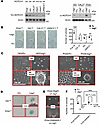 Figure 1
NOTCH signaling alters cell morphology and inhibits growth in 2-dimensional cultures. (A) Expression of full-length transmembrane NOTCH1 (Tm-NOTCH1) in cells with WT NOTCH1 (PJ34, 183, CAL27, and UMSCC1) and cleaved activated NOTCH1 (cl-NOTCH1) protein after 16 hours of growth on immobilized NOTCH1 ligand (JAG1) or Fc control protein (Fc). HN31 and UM47 harbor homozygous missense (ms) and nonsense (ns) NOTCH1 mutations, respectively. (B) Extended growth (e.g., 8–10 days) on JAG1 ligand significantly reduced colony formation compared with control Fc protein in 4 NOTCH1-WT cell lines. (C) Growth on JAG1, but not control Fc, induces morphological transformation of cell lines with WT NOTCH1 (183 and PJ34) observed by 5 days, characterized by reduced cell size and formation of loosely attached tumor spheroids. (D) Tumor spheroids induced by growth on JAG1 express the senescence marker β-Gal. (E) Ectopic expression of dominant negative MAML1 (dnMAML1), which inhibits NOTCH1-mediated transcriptional regulation, prevents JAG1-induced tumor spheroid formation, and reverses inhibition of colon formation in PJ34 cells. (F) Quantitation of colonies from parental PJ34 or PJ34 expressing dnMAML1 cultured on either control Fc or JAG1 protein. Scale bars: 100 μm (C–E). Differences between Fc and JAG1 treatment (simple contrasts) or comparison of JAG1-mediated inhibition in parental or cells expressing dnMAML1 (interaction contrasts) were determined with a cell means model. *P < 0.05; **P < 0.01; ***P < 0.001.
The growth inhibition and associated morphological changes induced by JAG1 exposure in PJ34 were effectively reversed by expressing a dominant negative form of Mastermind-like 1 (Figure 1, E and F), known to inhibit NOTCH family signaling. Intrigued, we aimed to dissect the individual phenotypic contributions of NOTCH1 and NOTCH2 signaling in PJ34, since both receptors can be triggered by their shared ligand JAG1. Through CRISPR-mediated KO experiments targeting NOTCH1, NOTCH2, or both genes (Supplemental Figure 3A), we observed that KO of either NOTCH gene only partially rescued PJ34 from the growth inhibition induced by JAG1 (Supplemental Figure 3B). However, double KO of both genes (N1N2KO) completely prevented JAG1-mediated growth inhibition (Supplemental Figure 3B) and prevented morphological formation of tumor spheroids (Supplemental Figure 3E). Reexpression of NFL1 alone in N1N2KO cells was sufficient to restore JAG1-induced NOTCH1 activation (Supplemental Figure 3C), growth inhibition (Supplemental Figure 3D), and morphological changes (Supplemental Figure 3E).
NOTCH1 activation does not drive proliferation in HNSCC tumors with high endogenous NOTCH1 signaling. Because previous studies linked NOTCH1 signaling to proliferation and cancer stem cell–like (CSC-like) behavior in HNSCC cell lines, we investigated the function of NOTCH1 signaling in tumors with high endogenous levels of activated cl-NOTCH1 initially identified by reverse-phase protein arrays (RPPAs). Levels of cl-NOTCH1 along with 155 other proteins/phosphoproteins, including total NOTCH1, were measured across 53 different HNSCC cell lines with known NOTCH1 and NOTCH2 mutational status (Supplemental Table 1). As predicted, RPPA levels of cl-NOTCH1 were significantly lower in cell lines harboring NOTCH1 mutations (P = 0.03, Supplemental Figure 4A). Western blotting (Supplemental Figure 4, B and C) confirmed relatively high levels of baseline cl-NOTCH1 protein in 6 cell lines (FaDu, SCC61, SCC15, PCI24, MDA1986LN, and MDA686LN) identified by RPPA, compared with 2 of the NOTCH1-WT cell lines, PJ34 and CAL27, utilized earlier and found to undergo JAG1-mediated growth inhibition (e.g., Figure 1B and Supplemental Figure 4B). To evaluate the necessity of NOTCH1 signaling in these cells with high cl-NOTCH1 levels, we inhibited the formation of cl-NOTCH1 using 250 or 500 nM γ-secretase inhibitor dibenzazepine (DBZ) in all 6 cell lines (Figure 2A and Supplemental Figure 4D). The inhibition of NOTCH1 activation persisted 48 to 72 hours after DBZ treatment and continuous exposure to DBZ (refreshed every 48 hours) failed to inhibit clonogenic growth in NOTCH1-WT cells FADU, PCI24, SCC61, SCC15, or MDA686LN (Figure 2, B and C). On the contrary, there was even a slight increase in colony formation for 2 of the cell lines with DBZ. Although MDA1986LN failed to form colonies, its growth was unaffected by DBZ in standard proliferation assays (not shown).
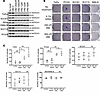 Figure 2
NOTCH1 is not a driver of cell growth in multiple HNSCC cell lines with high endogenous NOTCH1 activation. (A) Western blot validation of high basal levels of cl-NOTCH1 protein in 5 untreated NOTCH1-WT HNSCC cell lines (i.e., no treatment) with different genomic backgrounds and persistent inhibition of NOTCH1 signaling after 72 hours of treatment with various doses of the NOTCH1 inhibitor DBZ. (B) Staining of colony formation in the presence or absence of continuous treatment with γ-secretase inhibitor DBZ (replaced every 48 hours) for the duration of culture. (C) Quantitation of colony formation shows no decrease in growth after continued treatment with DBZ. For each cell line, comparisons between treatment groups were analyzed by 1-way ANOVA and individual comparisons were made using a post hoc Tukey’s test. *P < 0.05; **P < 0.01.
Proteins correlating with NOTCH1 activation in HNSCC cell lines. The top protein correlating with cl-NOTCH1 levels among analytes analyzed by RRPA was total NOTCH1 (r = 0.679, AdjP = 3.50 × 10⁻⁶, Supplemental Table 2), followed by FBXW7 (r = 0.612) and EZH2 (r = 0.608). FBXW7 is known to degrade active cl-NOTCH1 in the nucleus and likely represents negative feedback, while EZH2 is a histone methyltransferase that represses gene expression. NRF2, which is a stress-induced transcriptional activator responsive to reactive oxygen species (ROS), was also positively correlated (r = 0.449), as was KEAP1 (0.331) that negatively regulates NRF2, and NF-κB-p65 (r = 0.382), which also responds to ROS. Among significantly anticorrelated proteins were the receptor tyrosine kinase AXL (r = –0.457) that regulates survival and proliferation and fibronectin (r = –0.385), an extracellular matrix protein that can mediate binding of fibroblasts.
Persistent NOTCH1 signaling downregulates proto-oncogenes, growth factors, and integrins while increasing expression of early differentiation markers. To elucidate the molecular mechanisms and understand phenotypes associated with prolonged activated NOTCH1 signaling, we examined changes in gene expression in NOTCH1-WT HNSCC cell lines (PJ34 and 183) induced by growth on JAG1 ligand for 5 days. A 2-way ANOVA identified genes downregulated (Supplemental Table 3) and upregulated (Supplemental Table 4) due to growth on JAG1 as a main effect (e.g., JAG treatment) and for the individual cell lines PJ34 and 183 grown on JAG1 in post hoc analyses. We focused on the top significant genes that showed at least a 1.4-fold change in both cell lines and found 50 genes upregulated and 70 downregulated because of JAG1 exposure. Gene Ontology (GO) enrichment analysis of these 120 altered genes identified pathways related to proliferation, differentiation, cell adhesion, cytokine production, response to oxygen-containing compounds, and cytokine production (Supplemental Tables 5 and 6, and Supplemental Figure 5). Among the top genes downregulated by NOTCH activation were 3 prosurvival/proliferation genes, CTNNAL1 (α-catulin), AXL, and EREG (epiregulin). Notably, CTNNAL1 exhibited the most significant reduction in magnitude among all genes (e.g., 24-fold in 183) following NOTCH activation. AXL ranked among the top 5 genes with the greatest reduction in both cell lines and was consistent with the earlier finding of an inverse correlation between AXL protein and cl-NOTCH1 by RRPA (Supplemental Table 2). Multiple genes regulating cellular adhesion, including ITGA3 (integrin α3), ITGA5 (integrin α5), LAMC2 (laminin γ2), and LAMC1, were downregulated in both cell lines after NOTCH activation (Supplemental Table 3). Keratins 4 and 13 emerged as the top 2 upregulated genes in 183 cells (7.9- and 3.6-fold, respectively) and among the top 15 upregulated genes in PJ34 (2.0- and 1.8-fold, respectively) following NOTCH activation (Supplemental Table 4). Additionally, putative tumor suppressors such as EPHA4, TP53INP1, PDCD4, DSP, and TXNIP were among top genes upregulated by NOTCH activation. The specific pattern of integrins downregulated and keratins upregulated (Figure 3A) mirrors what happens to normal oral mucosa during very early differentiation as basal stem cells divide and migrate upwards to the suprabasal layer of squamous epithelium. Collectively, the genes commonly regulated in both PJ34 and 183 cells after growth on ligand suggest a loss of proliferation and loss of substrate adhesion consistent with very early squamous cell differentiation.
 Figure 3
The activation of NOTCH1 signaling through multiple experimental approaches consistently downregulates oncogenic drivers and modulates adhesion or other markers of early differentiation. (A) Growth for 5 days on JAG1 significantly inhibited RNA expression of the basal cell marker genes ITGA1, ITGA3, ITGA6, LAMC1, and LAMC2 in 2 NOTCH1-WT cell lines, PJ34 and 183, while stimulating expression of the suprabasal maker genes KRT4 and KRT13. (B) Ectopic expression of cDNA encoding cl-NOTCH1 decreased expression of ITGA3, LAMC2, AXL, and α-catulin at 3 days and 5 days after infection in a NOTCH1-WT cell (PJ34) and in a NOTCH1-mutant cell (HN31). (C) AXL and α-catulin protein levels decline in NOTCH1-WT (PJ34) tumor cells grown on JAG1 (3 days) and in 3 different NOTCH1-mutant cell lines (HN31, UMSCC22A, UMSCC47) when expression of WT full-length NOTCH1 receptors (NFL1) is restored and then grown on JAG1 ligand for 3 days. Cells were also infected with empty vector (MigR1) and/or grown on control Fc protein. (D) PJ34 with CRISPR-mediated NOTCH1 KO were further engineered to express a DOX-inducible cl-NOTCH cDNA (PJ34-iICN1) whose expression was titrated after 72 hours of treatment with different doses of DOX, to achieve protein levels equivalent to parental PJ34 stimulated with JAG1 for 16 hours. (E) ICN1 induction with 1000 ng/mL DOX caused massive cell shrinkage and formation of loosely attached tumor spheroids. Scale bars: 100 μm. (F) Venn diagram illustrates overlap of genes in PJ34 significantly upregulated (FDR < 0.1, |fold change| ≥ 1.25) by growth on JAG1 or after 24 hours of iICN1 induction, and genes specifically bound in the promoter or gene body regions by iICN1 after ChIP-seq experiments. (G) Venn diagram illustrates overlap of genes in PJ34 significantly downregulated (FDR < 0.1, |fold change| ≥ 1.25) by growth on JAG1 or after 24 hours of iICN1 induction, and genes specifically bound in the promoter or gene body regions by iICN1 after ChIP-seq experiments.
Validation of genes and proteins regulated by NOTCH1 activation. Given strong links between AXL and α-catulin and HNSCC aggressiveness, we validated their decreased protein expression following NOTCH1 activation in both WT and mutant tumors using multiple approaches. First, we exogenously expressed activated cl-NOTCH1 using a retroviral construct encoding ICN1 widely used by others for functional studies (31); construct integrity was confirmed as described in Supplemental Methods (Supplemental Figure 6A). Infection with ICN1 but not empty vector MigR1 induced morphological changes in UMSCC22A and NOTCH1-WT 183 and PJ34 cells identical to that observed earlier for growth of these cell lines on JAG1 (Supplemental Figure 6, B–D). ICN1 expression caused substantial reduction in AXL and α-catulin proteins in NOTCH1-WT PJ34 and 183 (Figure 3B and Supplemental Figure 6E) and NOTCH1-mutant HN31 and UMSCC22A (Figure 3B and Supplemental Figure 6A). Likewise, growth of PJ34, or NOTCH1-mutant cells with restored NFL1 (HN31, UMSCC22A, and UM47) on JAG1 ligand also suppressed AXL and α-catulin protein levels (Figure 3C). Decreased LAMC2 and ITGA3 protein was also confirmed following ICN1 expression in PJ34 and HN31. Consistent with negative regulation by NOTCH1, increased AXL and α-catulin protein levels were found after pharmacological inhibition of NOTCH1 signaling with DBZ in the NOTCH1-WT cell lines with normally high NOTCH1 activation (Supplemental Figure 7).
NOTCH1 regulates many genes indirectly. To better understand the mechanisms and timing of NOTCH1 activation, we constructed a doxycycline-inducible (DOX-inducible) ICN1 (iICN1) retroviral construct encoding intracellular NOTCH1 from the known cleavage site, enabling precise control over activation levels and detection by cl-NOTCH1–specific antibodies. We combined this tool with NOTCH1 ChIP-seq experiments to identify genes directly regulated. NOTCH1/NOTCH2 double-KO PJ34 cells (e.g., Supplemental Figure 3) were engineered to express the Tet3 regulator (PJ34Tet3 cells) along with iICN1 (PJ34-iICN1) so that NOTCH1 was activated in the presence of DOX. Dose-response experiments determined that 500–1000 ng/mL DOX induced levels of cl-NOTCH1 protein equivalent to those found after incubating parental PJ34 (PJ34-P) on JAG1 (Figure 3D). Within 1 week after iICN1 induction with DOX, PJ34-iICN underwent the same morphological transformation observed earlier when parental PJ34 were grown on JAG1, characterized by massive cell shrinkage and formation of loosely attached tumor spheroids (Figure 3E). RNA-seq performed from samples isolated 20 hours after peak iICN1 expression identified 1223 genes downregulated and 666 genes upregulated by 1.25-fold or greater (FDR < 0.1) specifically in PJ34-iICN1 treated with DOX but not in control PJ34Tet3 cells treated with DOX (Supplemental Table 7). NOTCH1 ChIP-seq experiments identified 357 unique genes in PJ34-iICN1 bound by NOTCH1 at one or more loci in their gene promoters or gene bodies after DOX induction (Supplemental Table 8). Venn diagrams illustrating the overlap of genes regulated by iICN1, JAG, and bound by ICN1 appear in Figure 3, F and G, with intersecting genes listed in Supplemental Tables 9 and 10. AXL, CTNNAL1, ITGA3, ITGA5, LAMC1, and LAMC2 were all significantly downregulated by both iICN1 and JAG1 in PJ34, but only LAMC2 was bound by ICN1 (e.g., within the gene body) in ChIP-seq experiments, suggesting the majority of observed changes linked to early differentiation were an indirect but early effect of NOTCH1 activation.
Genes from the hairy and enhancer of split (HES) and hairy/enhancer-of split with YRPW motif (HEY) family of transcriptional repressors are key canonical downstream targets of NOTCH1 signaling cascades that were also found to be elevated after ICN1 induction and identified through NOTCH1 ChIP-seq. Specifically, HES2, HES4, HEY2, and HEYL were all bound by NOTCH1 in their promoter/gene body regions and significantly upregulated by 20-hour iICN1 induction (Supplemental Tables 7 and 8) but showed lower fold changes with prolonged growth on JAG1 incubation (Supplemental Tables 3 and 7). This likely reflects the cyclical nature of HES/HEY transcription following NOTCH1 activation. HES5, on the other hand, was bound by ICN1, and was strongly elevated after ICN1 induction or prolonged JAG1 exposure (Supplemental Tables 3, 7, and 8). In contrast, the early differentiation markers KRT13 and KRT4, and tumor suppressors EPHA4, PDCD4, and TXNIP — all upregulated by prolonged JAG1 exposure — were not identified as direct NOTCH1 targets by ChIP-seq nor were they strongly induced within 20 hours of ICN1 expression (Supplemental Table 10), suggesting these are later events indirectly triggered through NOTCH1 signaling. Collectively, the data support a model through which NOTCH1 activation triggers early, but indirect, suppression of cell adhesion receptors involved in transitioning away from basement membrane attachment, with subsequent upregulation of differentiation markers.
NOTCH1 signaling drives anchorage-independent growth but fails to increase CSC frequency or promote in vivo tumor growth. In vitro growth of tumor spheroids in 3-dimensional culture systems employing low-serum medium is frequently used to propagate and quantify CSCs. The loosely attached tumor spheroids that formed in both NOTCH1-mutant and NOTCH1-WT cell lines after growth on JAG1 or NOTCH1 signaling stained positive for the senescence marker β-Gal when cultivated in media with regular serum concentrations. However, serum is known to cause differentiation of CSCs. Therefore, we engineered some additional cell lines to robustly examine whether NOTCH1 signaling would increase anchorage-independent growth, survival, or expression of CSC markers in the presence of diminished serum, using our DOX iICN1 vector system. NOTCH1-null/mutant UMSCC22A cells were engineered to express the Tet3 regulator and iICN1. For FaDu, we used CRISPR-mediated gene KO to first delete endogenous NOTCH1, since baseline cl-NOTCH1 levels are normally high, before introducing the Tet3 regulator and iICN1. Titration experiments indicated that physiological levels of cl-NOTCH1 and the characteristic morphological changes and spheroid formation were achieved at doses of 250–500 ng/mL in FaDu-iICN1 (Supplemental Figure 8, A and B). Physiological levels of activated NOTCH1 were achieved at 200–300 ng/mL DOX in UMSCC22A-iICN1, although morphological changes happened at an even lower dose (Supplemental Figure 8, C and D). At these doses of DOX, profound inhibition of growth in 2-dimensional cultures accompanied expression of cl-NOTCH1 in both cell lines as well as PJ34-iICN1 (Supplemental Figure 9, A and B). In the absence of iICN1 infection, DOX failed to induce morphological changes or growth inhibition in any of the control Tet3G cells (Supplemental Figure 9C). DOX-induced iICN1 expression significantly increased the number of tumor orospheres formed from FaDu and UMSCC22A (Supplemental Figure 10, A and B) in suspension cultures maintained with low serum, compared with control Tet3G cells or cultures lacking DOX.
Next, we examined whether increased tumor spheroid survival reflected increased resistance to anoikis (i.e., cell death associated with detachment). Following 48-hour pretreatment with or without DOX, iICN1 induction was significantly protective against anoikis in both FaDu and UMSCC22A compared with cells without DOX or control Tet3G cells (Supplemental Figure 10C). Because anoikis resistance and spheroid growth are both characteristics of CSCs, we examined whether NOTCH1 activation would also increase CSC markers previously associated with HNSCC, including Aldefluor activity, CD133 expression, and SOX2 protein levels. A 48-hour induction of ICN1 failed to increase CD44+/brightAldefluor+ cells in both UMSCC22A and FaDu (Supplemental Figure 11), or the percentage and mean fluorescence of CD133-expressing cells (Supplemental Figure 12, A and B). However, SOX2 gene expression increased an average of 1.4-fold in PJ34 and 183 cells grown on JAG1 and 1.3-fold in PJ34 after ICN1 induction (Supplemental Tables 4 and 7), although SOX2 was not bound by NOTCH1 in ChIP-seq (Supplemental Table 8), ruling out direct regulation. SOX2 protein was similarly elevated 2- to 4-fold after ICN1 induction in PJ34, FaDu, and UMSCC22A (Supplemental Figure 12C).
Although stem cell markers and tumor spheroid formation can be surrogates for CSCs, the gold standard remains measuring the in vivo tumor-initiating frequency in mice through limiting dilution assays. We reasoned that if NOTCH1 signaling were driving CSC behavior, it would most likely happen in NOTCH1-WT tumors that endogenously express activated NOTCH1, like FaDu. Furthermore, for tumors to grow in vivo, stem cells must be allowed to reenter a proliferative state resembling progenitors by turning NOTCH1 signaling off again. To avoid artifacts from non-physiological levels of NOTCH1 activation, we conducted pilot studies to determine the in vivo DOX dose that would be equivalent to an in vitro dose of 400 ng/mL, which induced physiological levels of NOTCH1 signaling in FaDu-iICN1 (Supplemental Figure 8A). Using a reporter cell line engineered to express luciferase from the same inducible promoter as iICN1, a dose of 1 mg DOX by oral gavage in mice led to a fold induction of luciferase equivalent to that induced by 400 ng/mL DOX in vitro (Supplemental Figure 13).
FaDu-iICN1 cells were then treated with 400 ng/mL DOX in vitro for 72 hours to activate NOTCH1 and potentially enrich for CSCs before inoculating increasing amounts of cells (100–100,000 cells range) subcutaneously into mouse flanks. This was followed by daily oral gavage with 1 mg DOX for an additional week to maintain NOTCH1 activation, followed by discontinuation of DOX for the remaining period to allow tumor cells to transition back to a proliferative state. As a control, matching numbers of untreated FaDu-iICN1 cells (e.g., no DOX) were inoculated into mice that never received DOX. Tumor cells treated with DOX grew much more slowly (Figure 4, A–D) and formed tumors later than tumor cells never treated with DOX at every inoculum dose (Figure 4, E–H). Eventually, tumors formed in 100% of animals for all groups except for the lowest inoculum of 100 cells, where only 40% of mice from the DOX group ever formed tumors by 100 days compared with 100% of mice that grew tumors within 40 days when no DOX was given. Statistical analysis estimated a tumor-initiating frequency of 1/189 for DOX treated tumors compared with 1/1 for FaDu with no NOTCH1 induction (Supplemental Table 11, P = 0.00142), indicating a drastic reduction in CSC frequency with NOTCH1 activation.
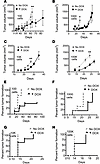 Figure 4
NOTCH1 activation reduces in vivo tumor growth and formation in NOTCH1-WT FaDu. After CRISPR-mediated NOTCH1 KO, FaDu were engineered to express iICN1 and pretreated with or without 300 ng/mL DOX for 72 hours in vitro before injecting 100 cells (A), 1000 cells (B), 10,000 cells (C), or 100,000 cells (D) into flanks of mice. Equivalent numbers of untreated NOTCH1-KO FaDu were also inoculated and grown in mice receiving no DOX. The DOX-treated group received additional in vivo DOX (1 mg) for 1 week by oral gavage after implantation and tumor growth was plotted verses postinoculation time. DOX-treated tumors (squares) grew considerably more slowly than untreated controls (circles). Time to tumor formation in mice was plotted verses postinoculation time for 100, 1000, 10,000, or 100,000 inoculated tumor cells (E–H) in the no-DOX groups (gray dotted lines) or DOX-treated groups (black solid lines). Differences in tumor volumes (A–D) were compared with a 2-sided Student’s t test. *P < 0.05; **P < 0.01.
When NOTCH1 signaling was restored in a NOTCH1-mutant background using UMSCC22A-iICN, it also profoundly inhibited tumor growth. UMSCC22A-iICN1 were implanted into flanks of nude mice, which were randomized to receive placebo or 1 mg DOX by oral gavage daily for 3 weeks to persistently induce iICN1. NOTCH1 activation profoundly suppressed in vivo tumor growth (Supplemental Figure 14A). After discontinuation of DOX, tumors eventually grew in some mice. Histological staining revealed a roughly 50% reduction in the presence of mouse fibroblasts within the DOX-treated tumor group (P < 0.01, Supplemental Figure 14B).
Suppression of oncogenic AXL and α-catulin expression contributes to NOTCH1-mediated growth inhibition. NOTCH1 activation increased expression of multiple tumor suppressor genes and simultaneously reduced expression of AXL and CTNNAL1, which encode 2 oncogenic proteins linked to tumor growth and aggressiveness in HNSCC. We functionally examined the impact of reduced AXL and CTNNAL1 expression on tumor growth in vitro and in vivo, with bicistronic shRNA IRES EGFP constructs targeting these 2 genes. Phenotypes were measured shortly after purifying infected (e.g., EGFP+) cells. Specific knockdown of either AXL or α-catulin protein in both NOTCH1-mutant HN31 and NOTCH1-WT PJ34 was confirmed by Western blotting (Supplemental Figure 15, A, B and G) and found to significantly reduce colony formation in clonogenic assays (P < 0.006, Supplemental Figure 15, C and D). Importantly, shRNA knockdown of either AXL or CTNNAL1 severely diminished tumor growth of HN31 in an orthoptic tongue tumor model (Supplemental Figure 15E) and in a subcutaneous flank model using alternate shRNA sequences (Supplemental Figure 15F), demonstrating the phenotype was robust.
We used PJ34-iICN1 and UMSCC22A-iICN1 to functionally examine whether preventing NOTCH1-induced increases in HES/HEY family members would prevent associated decreases in AXL and CTNNAL1 gene expression. In both cell lines, prior knockdown of HES1, HES2, HES4, HEY1, or HEY2 with siRNA shortly before ICN1 induction reduced their elevation stemming from NOTCH1 activation but did little to prevent associated reductions in AXL and CTNNAL1 expression (determined by quantitative real-time PCR [qPCR], Supplemental Figure 16). Furthermore, combined simultaneous knockdown of some of the more strongly induced NOTCH1 targets, HES5/HEY1/HEY2, also failed to prevent NOTCH1-induced decreases in AXL and CTNNAL1 expression in both PJ34 and UMSCC22A (data not shown).
A gene expression signature identifies primary HNSCC tumors with intact NOTCH1 signaling and an altered tumor microenvironment. A robust in vivo gene expression signature of NOTCH1 activation was developed based on the top 120 differentially regulated genes identified in vitro after JAG1 stimulation (Supplemental Figure 5) by examining their cross-correlation in primary tumors from The Cancer Genome Atlas (TCGA) oral squamous cell carcinoma (OSCC) cohort of 312 patients. After removing one gene for low expression, 2-way hierarchical clustering of cross-correlation coefficients identified 2 primary gene clusters or modules (Supplemental Figure 17A) from TCGA data. Genes from each cluster showed a dominant but opposite pattern of JAG1 regulation in vitro, identifying up- and downregulated gene groups. After removal of several inconsistently regulated genes, 95 genes remained in the final signature (Supplemental Figure 17B and Supplemental Table 12). We applied the 95 gene signature to perform consensus hierarchical clustering on the TCGA OCSCC and TCGA laryngeal\hypopharyngeal SCC (LHSCC) cohorts individually. Consensus clustering metrics identified that the choice of 2 sample clusters was optimal for both TCGA cohorts (Supplemental Figure 18). After 2-way clustering (Figure 5, A and B), it was predicted that NOTCH1 signaling is off in sample cluster 1 but on in sample cluster 2 for both OCSCC and LHSCC cohorts, based on the direction of gene regulation from the 95-gene signature observed (Supplemental Table 13 and 14). The predicted NOTCH1 pathway states were compared to the NOTCH1 mutational status of samples in both cohorts to validate the NOTCH1 signature. In both cases, sample cluster 2 was depleted for NOTCH1 mutations but sample cluster 1 was enriched (P = 0.015 and P = 0.013, Figure 5, A and B), consistent with inactivating NOTCH1 mutations preventing NOTCH1 pathway signaling. Consequently, the gene signature likely distinguished tumors based on their NOTCH1 pathway status, and the data suggest that NOTCH1 signaling is active in a subset of OCSCC and LHSCC tumors (e.g., sample cluster 2).
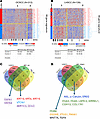 Figure 5
Comparison of genes regulated by NOTCH1 in vitro and genes differentially expressed in primary HNSCC tumors with a NOTCH1 activation signature. (A) Consensus hierarchical clustering of TCGA OCSCC primary tumors based on a 95-gene NOTCH1 activation signature identified a cluster of patient tumors (Cluster 2, N = 57) with an expression pattern indicative of active NOTCH1 signaling and another cluster (Cluster 1, N = 255) predicted to have loss of NOTCH1 signaling. Genes are annotated with vertical boxes according to whether they were upregulated (red) or downregulated (blue) by JAG1 in vitro. Samples with a NOTCH1 mutation are annotated horizontally with a black box and association between NOTCH1 mutation status and cluster for patients with sequencing information was analyzed by χ2 analysis. (B) Parallel clustering and analysis of TCGA LHSCC primary tumors using the same 95-gene NOTCH1 signature. (C) Venn diagram illustrating overlap of genes upregulated (FDR < 0.1, |fold change| ≥ 1.25) by NOTCH1 in vitro (JAG_up), the subset of upregulated genes part of the NOTCH1 signature (Sig_up), and genes upregulated (FDR < 0.1, |fold change| ≥ 1.25) in Cluster 2 from OCSCC or LHSCC. (D) Venn diagram illustrating overlap of genes downregulated (FDR < 0.1, |fold change| ≥ 1.25) by NOTCH1 in vitro (JAG_down), the subset of downregulated genes part of the NOTCH1 signature (Sig_down), and genes downregulated (FDR < 0.1, |fold change| ≥ 1.25) in Cluster 2 from OCSCC or LHSCC.
Next, we identified all genes differentially expressed by the subset of TCGA tumors predicted to have NOTCH1 activated in the OCSCC (Supplemental Table 15) and LHSCC (Supplemental Table 16) cohorts and compared them to genes found differentially regulated by JAG1 binding in vitro, including the subset of 95 genes defining the pathway signature. Venn diagrams depicting overlap of differentially expressed genes appear in Figure 5, C and D. Among the commonly upregulated genes (Supplemental Table 17) were early differentiation markers KRT13, KRT14, and KRT15; the immune checkpoint VTCN1; and several enzymes involved in the antioxidant response, including AKR1C3, which neutralizes lipid peroxides, as well as GCLC, GSTA1, and GSTA4, which are essential for glutathione synthesis and antioxidant response. Among commonly downregulated genes (Supplemental Table 18) were multiple integrins and cell adhesion molecules ITGA3, ITGA5, ITGB6, LAMC2, KIRREL1, CDH13, including COL17A1 (collagen XVII) that mediates adhesion to basement membranes as a component of hemidesmosomes. The pro-oncogenic genes AXL and CTNNAL1 were also commonly downregulated. So was WNT7A, which contributes to HNSCC growth by stimulating β-catenin, as well as EREG and TGFA, both EGFR ligands that promote HNSCC.
Single-sample gene set enrichment analysis (ssGSEA) was used to determine associations between the tumor microenvironment and NOTCH1 signaling, using published lists (Supplemental Table 19) specific for immune subtypes, endothelial cells, and a robust gene list we constructed for cancer-associated fibroblasts (CAFs). Our CAF signature was derived by clustering cross-correlation coefficients for fibroblast-associated genes across more than 9000 solid tumors from TCGA. In the TCGA OCSCC cohort, tumors with a NOTCH1 activation signature had significantly reduced proportions of nearly every immune subset analyzed (Supplemental Table 20), indicating they are immunologically “cold.” Two-way hierarchical clustering with the immune subset ssGSEA scores demonstrated significant depletion of tumors with active NOTCH1 signaling among OCSCC “hot” tumors (P < 0.0001, Figure 6A). In LHSCC samples with NOTCH1 activation there was a similar trend of broad decrease in leukocytes subpopulations present when NOTCH1 signaling was on, although differences only reached statistical significance for T helper type 1 and mast cells (Supplemental Table 21). Because we previously showed that a cold immune microenvironment was associated with elevated NRF2 gene signatures specifically in OCSCC but not LHSCC (32), we revisited the connection between NOTCH1 signaling and the antioxidant response inferred from some of the top genes commonly regulated by NOTCH1 (Figure 5C) or proteins correlating with cl-NOTCH1 (Supplemental Table 2). HNSCC TCGA tumors with NOTCH1 activation had NRF2 pathway scores (Figure 6B) that were on average profoundly elevated regardless of disease subsite (P < 0.0001). In contrast, NOTCH1 activation was associated with a significant reduction in the proportion of CAFs present, imputed from CAF ssGSEA scores in both OCSCC and LHSCC (Figure 6C), which was supported by gross differences in fibroblast content visible in H&E images downloaded from the TCGA project (Supplemental Figure 19).
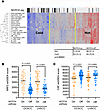 Figure 6
NOTCH1 activation in primary HNSCC is associated with changes to the tumor microenvironment. (A) ssGSEA scores representing 18 different leukocyte subsets derived from TCGA OCSCC were used for hierarchical clustering to classify samples as immunologically cold (sample cluster 1) or hot (sample cluster 3) and the membership of samples from previous clustering based on the NOTCH1 gene signature is annotated with a black box for NOTCH1 signaling on or a gray box for NOTCH1 signaling off. Tumors with activated NOTCH1 are depleted from immunologically hot tumors and enriched in cold tumors by χ2 analysis (P < 0.0001). (B) NRF2 pathway activation scores are significantly higher among OCSCC and LHSCC tumors when NOTCH is activated. (C) CAF pathway scores are significantly higher in OCSCC and LHSCC tumors where NOTCH signaling is turned off. Differences in NRF2 pathway scores were analyzed with a 2-sided Student’s t test (C and D).
NOTCH1 signaling correlates with survival and PIK3CA genomic changes. When NOTCH1 signaling status was treated as a dichotomous variable for OCSCC TCGA samples based on clustering, there was no significant association (Figure 7A) with overall survival (OS). Because signaling pathways are rarely binary, we used the NOTCH1 gene signature to generate ssGSEA scores for samples and treated NOTCH1 signaling as a continuous variable, which demonstrated clear separation between sample clusters found previously (Figure 7B). Optimal dichotomization identified a NOTCH1 ssGSEA threshold of –1554 that stratified OCSCC patients into 2 groups that differed significantly by survival, with poor survival corresponding to lower levels of NOTCH1 signaling (P = 0.0061, Figure 7C). The threshold identified seemed biologically meaningful, as it corresponded to roughly the average value for samples from the NOTCH1-off clusters in both OCSCC and LHSCC (Figure 7B), and it also separated the LHSCC samples into 2 groups that differed in survival in the same manner (P = 0.0.0045, Figure 7D). Likewise, patients with NOTCH1 ssGSEA scores below this same threshold had significantly worse progression-free survival (PFS) in both disease subsites (Figure 7, E and F). Using an independent cohort of OCSCC tumors (N = 43) previously characterized by our group (2) but profiled for gene expression using a microarray platform, we were able to validate that NOTCH pathway activation was associated with better survival (Supplemental Figure 20). Patients whose tumors had low NOTCH scores had a median survival time that was roughly half of that for those with tumors having a high NOTCH score. No associations were found between lymph node stage, tumor stage, or smoking history in either disease subsite, although there was a significant decline in NOTCH signaling levels among poorly differentiated tumors found in OCSCC tumors (not shown).
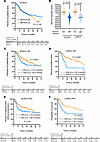 Figure 7
Higher levels of NOTCH1 activation correlate with better survival in OCSCC and LHSCC TCGA cohorts. (A) No difference in OS among TCGA OCSCC patients when NOTCH1 activation is treated as a categorical variable based on clusters with the NOTCH gene signature. (B) Validation that ssGSEA scores derived from the NOTCH1 gene signature provide a continuous value measurement that faithfully replicates sample clustering. (C) OCSCC samples with higher ssGSEA scores (e.g., NOTCH1 signaling) above a threshold (–1554) determined by optimal cutpoint selection have significantly improved OS. (D) LHSCC samples with higher ssGSEA scores above the same threshold (–1554) have significantly improved OS, validating the threshold. (E) OCSCC patients with higher NOTCH1 signaling have improved PFS. (F) LHSCC patients with higher NOTCH1 signaling have improved PFS. At-risk tables underneath Kaplan-Meier curves indicate the number of patients still at risk or censored at the indicated time intervals. P values for survival curves were determined with a log-rank test.
The improved survival associated with higher NOTCH signaling in tumors conflicts with what would be predicted based on their higher levels of NRF2 signaling (e.g., Figure 6B), which itself is associated with worse survival and a colder tumor immune microenvironment (32). To disentangle the relationships between NOTCH, NRF2, leukocyte infiltration, and survival, we plotted NRF2 versus NOTCH scores in TCGA OCSCC tumors, confirming a positive correlation (Supplemental Figure 21A). An overlay of the pathway thresholds defined 4 quadrants or risk groups (Supplemental Figure 21A). As predicted, tumors annotated by immunological status above the NRF2 threshold tended to be immunologically colder. Kaplan-Meier plots (Supplemental Figure 21B) revealed that patients whose tumors had high NRF2 and low NOTCH signaling (quadrant 1) had the worst median survival time (15.2 months). Patients whose tumors had low NRF2 and high NOTCH scores had the best prognosis with a median survival of 71.2 months, with patients in the remaining 2 quadrants showing an intermediate and similar survival phenotype. A Cox proportional hazards model fit of survival time demonstrated independent contributions of both NRF2 (P = 0.008) and NOTCH (P = 0.0206) pathway status with no significant interaction (Supplemental Table 22). Having either a low NOTCH score or high NRF2 score led to an increased chance of death, with hazard ratios (HRs) of 1.24 and 1.3, respectively.
Next, we examined the relationship between these pathways and immunological status of OCSCC tumors in a nominal logistic regression model (Supplemental Table 23). NRF2 was the dominant factor driving colder tumors (P < 0.0001) with an odds ratio of 5.08 (per 1000 units of NRF2 score, P < 0.0001), but NOTCH score did have a significant and smaller independent effect (P < 0.03) with an odds ratio of 0.78 (per 1000 units of NOTCH score, P < 0.05), signifying that lower NOTCH score (e.g. NOTCH off) was associated with hotter tumors.
We previously reported that HNSCC cell lines harboring NOTCH1 loss-of-function mutations are exquisitely sensitive to PI3K inhibitors (28, 29), which was supported by a small clinical trial we conducted (30). Direct links between NOTCH1 signaling and PI3K inhibitor sensitivity proved context dependent, leading us to hypothesize that tumors evolving with NOTCH1 mutations may have altered pathway dependencies, including PI3K. We analyzed the relationship between TCGA NOTCH1 sample clusters and found that the presence of PIK3CA genomic changes (e.g., high-level copy gains or mutations) was significantly enriched among OCSCC (P = 0.024) and LHSCC samples (P = 0.0004) belonging to the NOTCH-on clusters (Supplemental Figure 22).


