
Submit a comment
Abstract
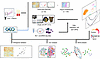
Primary sclerosing cholangitis (PSC) is a chronic, idiopathic cholestatic liver disease characterized by inflammation and fibrosis of the bile ducts, yet the cellular crosstalk driving periductal fibrosis remains poorly defined. This study applied a multiomics approach integrating spatial transcriptomics, RNA-Seq, and proteomics to characterize fibrotic periductal regions and their cell-cell communications. Macrophage subsets, including monocyte-derived macrophages and lipid-associated macrophage–like cells, colocalized with cholangiocytes, lymphocytes, and hepatic stellate cells (HSCs). Cell niche analysis identified periductal regions with elevated fibrotic signals, where cell-cell communication analysis revealed potential macrophage-HSC interactions involving 17 fibrotic driver genes in macrophages, including ITGB2, GRN, and CCL21, and 6 fibrotic effector genes in HSCs. In validation analyses, bulk RNA-Seq data showed higher driver and effector gene expression in PSC with established fibrosis compared with early-stage PSC or healthy controls. Plasma proteins encoded by macrophage driver genes were elevated in PSC and in patients with elevated (≥3.29 kPa) liver stiffness on MR elastography. Immunofluorescence and second harmonic generation imaging showed enrichment of CD68+/CD18+(ITGB2) macrophages in fibrotic regions of PSC liver biopsies. These findings revealed enrichment of monocyte-derived macrophages and lipid-associated macrophage–like cells in fibrotic regions and suggest that they likely contribute to fibrotic activation of nearby HSCs in PSC.
Authors
Yunguan Wang, David Adeleke, Xiangfei Xie, Zi F. Yang, Xiangya Wang, Giulia Loi, Annika Yang vom Hofe, Manavi Singh, Astha Malik, Ramesh Kudira, Cyd Castro-Rojas, Liva Pfuhler, Mosab Alquraish, Pamela Sylvestre, Jonathan R. Dillman, Andrew T. Trout, Emily R. Miraldi, Alexander G. Miethke
Guidelines
The Editorial Board will only consider comments that are deemed relevant and of interest to readers. The Journal will not post data that have not been subjected to peer review; or a comment that is essentially a reiteration of another comment.
- Comments appear on the Journal’s website and are linked from the original article’s web page.
- Authors are notified by email if their comments are posted.
- The Journal reserves the right to edit comments for length and clarity.
- No appeals will be considered.
- Comments are not indexed in PubMed.
Specific requirements
- Maximum length, 400 words
- Entered as plain text or HTML
- Author’s name and email address, to be posted with the comment
- Declaration of all potential conflicts of interest (even if these are not ultimately posted); see the Journal’s conflict-of-interest policy
- Comments may not include figures


