
Research ArticleImmunologyInfectious disease
Open Access |  10.1172/jci.insight.199206
Previous malaria exposure attenuates monocyte-driven inflammation and correlates with modulation of the B cell response
Maximilian Julius Lautenbach,1,2,3 Pengjun Xi,1,2,3 Linn Kleberg,1,2,3 Alan-Dine Courey-Ghaouzi,1,2,3 Maia Serene Gower,1,2,3 Carolina Sousa Silva,1,2,3 Felicia Chammas,1,2,3 Anna Färnert,1,2,3 and Christopher Sundling1,2,3
1Department of Medicine Solna, Karolinska Institutet, Stockholm, Sweden.
2Department of Infectious Diseases and
3Center for Molecular Medicine, Karolinska University Hospital, Stockholm, Sweden.
Address correspondence to: Christopher Sundling or Maximilian Julius Lautenbach, Karolinska Sjukhuset, BioClinicum J7:20, Akademiska Stråket 1, 171 64, Solna, Stockholm, Sweden. Phone: 46.8.524.800.00; Email: christopher.sundling@ki.se (CS); julius.lautenbach@ki.se (MJL).
Find articles by Lautenbach, M. in: PubMed | Google Scholar
1Department of Medicine Solna, Karolinska Institutet, Stockholm, Sweden.
2Department of Infectious Diseases and
3Center for Molecular Medicine, Karolinska University Hospital, Stockholm, Sweden.
Address correspondence to: Christopher Sundling or Maximilian Julius Lautenbach, Karolinska Sjukhuset, BioClinicum J7:20, Akademiska Stråket 1, 171 64, Solna, Stockholm, Sweden. Phone: 46.8.524.800.00; Email: christopher.sundling@ki.se (CS); julius.lautenbach@ki.se (MJL).
Find articles by Xi, P. in: PubMed | Google Scholar
1Department of Medicine Solna, Karolinska Institutet, Stockholm, Sweden.
2Department of Infectious Diseases and
3Center for Molecular Medicine, Karolinska University Hospital, Stockholm, Sweden.
Address correspondence to: Christopher Sundling or Maximilian Julius Lautenbach, Karolinska Sjukhuset, BioClinicum J7:20, Akademiska Stråket 1, 171 64, Solna, Stockholm, Sweden. Phone: 46.8.524.800.00; Email: christopher.sundling@ki.se (CS); julius.lautenbach@ki.se (MJL).
Find articles by Kleberg, L. in: PubMed | Google Scholar
1Department of Medicine Solna, Karolinska Institutet, Stockholm, Sweden.
2Department of Infectious Diseases and
3Center for Molecular Medicine, Karolinska University Hospital, Stockholm, Sweden.
Address correspondence to: Christopher Sundling or Maximilian Julius Lautenbach, Karolinska Sjukhuset, BioClinicum J7:20, Akademiska Stråket 1, 171 64, Solna, Stockholm, Sweden. Phone: 46.8.524.800.00; Email: christopher.sundling@ki.se (CS); julius.lautenbach@ki.se (MJL).
Find articles by Courey-Ghaouzi, A. in: PubMed | Google Scholar
1Department of Medicine Solna, Karolinska Institutet, Stockholm, Sweden.
2Department of Infectious Diseases and
3Center for Molecular Medicine, Karolinska University Hospital, Stockholm, Sweden.
Address correspondence to: Christopher Sundling or Maximilian Julius Lautenbach, Karolinska Sjukhuset, BioClinicum J7:20, Akademiska Stråket 1, 171 64, Solna, Stockholm, Sweden. Phone: 46.8.524.800.00; Email: christopher.sundling@ki.se (CS); julius.lautenbach@ki.se (MJL).
Find articles by Gower, M. in: PubMed | Google Scholar
1Department of Medicine Solna, Karolinska Institutet, Stockholm, Sweden.
2Department of Infectious Diseases and
3Center for Molecular Medicine, Karolinska University Hospital, Stockholm, Sweden.
Address correspondence to: Christopher Sundling or Maximilian Julius Lautenbach, Karolinska Sjukhuset, BioClinicum J7:20, Akademiska Stråket 1, 171 64, Solna, Stockholm, Sweden. Phone: 46.8.524.800.00; Email: christopher.sundling@ki.se (CS); julius.lautenbach@ki.se (MJL).
Find articles by Sousa Silva, C. in: PubMed | Google Scholar
1Department of Medicine Solna, Karolinska Institutet, Stockholm, Sweden.
2Department of Infectious Diseases and
3Center for Molecular Medicine, Karolinska University Hospital, Stockholm, Sweden.
Address correspondence to: Christopher Sundling or Maximilian Julius Lautenbach, Karolinska Sjukhuset, BioClinicum J7:20, Akademiska Stråket 1, 171 64, Solna, Stockholm, Sweden. Phone: 46.8.524.800.00; Email: christopher.sundling@ki.se (CS); julius.lautenbach@ki.se (MJL).
Find articles by Chammas, F. in: PubMed | Google Scholar
1Department of Medicine Solna, Karolinska Institutet, Stockholm, Sweden.
2Department of Infectious Diseases and
3Center for Molecular Medicine, Karolinska University Hospital, Stockholm, Sweden.
Address correspondence to: Christopher Sundling or Maximilian Julius Lautenbach, Karolinska Sjukhuset, BioClinicum J7:20, Akademiska Stråket 1, 171 64, Solna, Stockholm, Sweden. Phone: 46.8.524.800.00; Email: christopher.sundling@ki.se (CS); julius.lautenbach@ki.se (MJL).
Find articles by
Färnert, A.
in:
PubMed
|
Google Scholar
|

1Department of Medicine Solna, Karolinska Institutet, Stockholm, Sweden.
2Department of Infectious Diseases and
3Center for Molecular Medicine, Karolinska University Hospital, Stockholm, Sweden.
Address correspondence to: Christopher Sundling or Maximilian Julius Lautenbach, Karolinska Sjukhuset, BioClinicum J7:20, Akademiska Stråket 1, 171 64, Solna, Stockholm, Sweden. Phone: 46.8.524.800.00; Email: christopher.sundling@ki.se (CS); julius.lautenbach@ki.se (MJL).
Find articles by
Sundling, C.
in:
PubMed
|
Google Scholar
|
Published September 8, 2026 - More info
JCI Insight. 2026;11(20):e199206. https://doi.org/10.1172/jci.insight.199206.
© 2026 Lautenbach et al. This work is licensed under the Creative Commons Attribution 4.0 International License. To view a copy of this license, visit http://creativecommons.org/licenses/by/4.0/.
Received: August 15, 2025; Accepted: September 3, 2026


-
Results
The transcriptome of monocytes is affected by clinical P. falciparum infection. We investigated transcriptional changes in monocytes during acute malaria compared with healthy state 12-month control samples, by examining their gene expression profiles. We utilized a recently described targeted multi-omics single-cell dataset of peripheral blood mononuclear cells (PBMCs) in a cohort of returning travelers (19). The overall cohort was composed of returning travelers infected for the first time (primary infection) or with a previous history of malaria infection (previously exposed). The study participants presented with clinical malaria at the Karolinska University Hospital where they were included in the study. Samples were collected at treatment initiation or the day afterward, followed by additional sampling at 10 days and 1, 3, 6, and 12 months (Supplemental Table 1; supplemental material available online with this article; https://doi.org/10.1172/jci.insight.199206DS1). For the multi-omics single-cell dataset, 2 donors with primary infection and 2 donors with previous malaria exposure were analyzed.
Based on previously annotated immune cell subsets (Figure 1A and Supplemental Figure 1A), we extracted all 14,940 monocytes for in-depth analysis (Figure 1B) originating from 12 samples of 4 individuals with 3 time points each. In this study, “acute” refers to the sampling at diagnosis/treatment of symptomatic P. falciparum malaria, “D10” to the visit 10 days after treatment, and “M12” to the convalescent visit 12 months later. The multi-omics character of the data enabled us to also assess the surface protein abundance of commonly used markers for the 11,602 CD14+ monocytes and the 3,338 CD16+ monocytes (Figure 1C and Supplemental Figure 1, B and C).
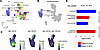 Figure 1
Transcriptomics profiles of monocytes during acute malaria. (A) UMAP representation of 73,121 CD45+ immune cells during and after acute malaria based on weighted nearest neighbor integrated targeted transcriptomic and epitope single-cell profiling, previously published by Lautenbach et al. (19). (B) Digital isolation of monocyte subsets of all 3 sampling time points; during acute P. falciparum malaria (Acute), approximately 10 days after treatment (D10) and at a healthy state 1 year after disease (M12). (C) Density plots for monocytes during acute malaria (only acute samples) for typical monocyte surface markers CD14 and CD16. (D) Hallmark gene expression sets enriched in monocytes of acute compared with the M12 healthy state (nAcute = 4, nM12 = 4). Red indicates higher in acute and blue higher in M12. FDR corrected P values were calculated using camera. See also related Supplemental Figure 1.
First, we assessed the differentially expressed genes (DEGs) for both monocyte subsets in the acute disease phase (Acute) compared with 10 days after treatment initiation and the healthy state after 12 months (M12). Due to the low number of donors, relatively few DEGs were identified using pseudobulk analysis. We did observe more DEGs in CD16+ compared with CD14+ monocytes, with higher expression of C1QB, S100A9, CD63, and AQP9 at the acute time point compared with 12 months (Supplemental Figure 1E). To further investigate the overall gene expression patterns, we assessed hallmark gene sets. Monocytes during acute malaria were associated with an upregulation of IFN-α response and protein secretion and reduced gene sets for hypoxia and glycolysis (Figure 1D).
Previous malaria exposure alters the transcriptional response during acute malaria. Next, we investigated the effect of previous malaria exposure on the transcriptomic response during acute P. falciparum malaria. We compared the summarized gene expression (pseudobulk) of monocytes from 2 primary infected and 2 previously exposed individuals during the acute disease phase. This revealed that both CD14+ and CD16+ monocytes from primary infected individuals exhibited overall higher gene expression than previously exposed donors (Figure 2A). For the CD16+ monocytes, however, some genes such as NKG7, ADGRE1, and VMO1 were more expressed in cells from previously exposed individuals compared with cells from primary infected individuals (Figure 2A and Supplemental Figure 1E). To determine if the changes in expression was associated with specific functional programs, we assessed hallmark gene sets (Figure 2B). Consistent with overall higher expression in primary infected individuals, more gene sets were enriched in both CD14+ and CD16+ monocytes. Among top gene sets were responses to IFN-γ and IFN-α, but also gene sets associated with inflammation and cell division (Figure 2B).
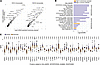 Figure 2
Previous malaria exposure affects transcriptomics profiles of monocytes during acute malaria. (A) Gene expression in individual cells of CD14+ and CD16+ monocytes at acute malaria, from primary infected individuals (n = 2) and previously exposed individuals (n = 2). Mean expression from 3,043/2,583 cells (CD14+ monocytes) and 640/1,426 (CD16+ monocytes). (B) Hallmark gene expression sets in acute CD14+ and CD16+ monocytes in previously exposed compared with primary-infected individuals. (C) Plasma protein levels of IFN-γ response hallmark genes during acute malaria for previously exposed (n = 48, orange boxes) and primary infected (n = 24, purple boxes) individuals of the same cohort (19), measured with Olink Explore1536 and shown as normalized protein expression (NPX) values. Statistical analysis for C was done by Wilcoxon rank sum with Benjamini-Hochberg correction for multiple testing with P values indicated. See also related Supplemental Figure 1.
To investigate whether the monocyte gene expression differences we observed were reflected at the systemic protein level, we repurposed a proteomic dataset generated from plasma samples from the same individuals and additional individuals from the malaria cohort of returning travelers (19). We specifically assessed the relative protein levels from genes included in the IFN-γ response gene set (Figure 2C). Out of 48 proteins, 20 were significantly different (P < 0.05, Benjamini-Hochberg correction), with all being more highly abundant in primary infected individuals (Figure 2C). These proteins included the IFN-γ response proteins CXCL9, -10, and -11; the cytokine receptors/adaptors IL-15RA, IL-18BP, and IL-2RB; cytotoxic granzyme A; and the HLA-associated molecule CD74 (Figure 2C and Supplemental Figure 1E). In summary, previous malaria exposure was associated with monocyte responses characterized by reduced production and secretion of proinflammatory mediators.
Monocyte functions are differently modulated by primary infection or previous malaria exposure. Next, we wanted to understand the functional implication of changes in the monocyte populations between primary-infected and previously exposed individuals in response to stimulation and to their microenvironment. To test this, we used iRBCs to mimic the physiological stimuli of blood-stage malaria to assess monocyte responses. We stimulated PBMCs from primary (n = 5) and previously exposed (n = 6) individuals for 24 hours using acute and convalescent (M12) samples, and we and measured intracellular TNF and CXCL9 levels and membrane levels of lysosomal-associated membrane protein-1 (LAMP-1/CD107a) as a surrogate for overall protein secretion (Supplemental Figure 2A). No differences were observed for TNF or CXCL9 (Supplemental Figure 2B) while we observed reduced CD107a levels on CD14+ monocytes from previously malaria-exposed individuals during clinical malaria that was normalized at convalescence (Figure 3A). Although the overall CD107a levels were high in primary-infected individuals during acute malaria, the response was further elevated in response to iRBCs compared with stimulation with uninfected RBCs (uRBCs) (Figure 3B). Assessing the effect of stimulation on monocyte numbers, there was no effect from adding uRBC or iRBC, while PMA/ionomycin led to significantly fewer monocytes (Supplemental Figure 2, C and D).
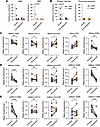 Figure 3
Previous malaria exposure is reflected in differences in plasma protein profiles. (A) CD107a+ monocytes after stimulation with uninfected (uRBC) or infected red blood cells (iRBC). PBMCs from primary infected (n = 5) and previously exposed individuals (n = 6) from acute and matched 12-month (convalescent) sample time points were stimulated, and degranulation was assessed via surface staining for CD107a. Data are pooled from 2 independent experiments. Primary infected individuals were compared with previously exposed individuals in A and acute samples versus convalescent samples in B. (C–E) PBMCs isolated from healthy donors (n = 11) stimulated with antibody-depleted plasma pools from the acute or convalescent time points for primary infected and previously exposed individuals. A ratio indicating geometric mean fluorescence intensity surface expression changes is shown for classical monocytes (C), intermediate monocytes (D), and nonclassical monocytes (E). Data were pooled from 2 independent experiments. Statistical analysis in A was done using a mixed effects model matched on donor, followed by Šídák’s post hoc test to correct for multiple comparisons. Statistical analysis in B was calculated using 2-tailed matched pair 2-way ANOVA followed by Šídák’s post hoc test for multiple comparisons. Statistical analyses in C–E was done using 2-tailed Student’s t tests; *P < 0.05, **P < 0.01, ***P < 0.001, ****P < 0.0001. See also related Supplemental Figures 2 and 3. Data represent individual donors.
To test the effect of the microenvironment on monocyte function, we pooled acute or 12-month convalescent plasma from primary infected donors (n = 8) and previously exposed donors (n = 8) and depleted IgG antibodies to reduce antibody-mediated cytotoxic effects (20). We then cultured PBMCs isolated from healthy blood donors with 20% antibody-depleted patient plasma for 24 hours and assessed levels of CD64 (FcgRI), CD11c, HLA-DR, CD86, and CD69, as indicators of functional modulation and activation (Supplemental Figure 3A). The culture did not affect overall monocyte frequencies or cell counts between plasma pools, although there were significantly more intermediate and nonclassical monocytes detected in PBMCs cultured with acute plasma from primary infected donors (Supplemental Figure 3, B and C). To assess protein surface levels, geometric mean fluorescence intensity (geoMFI) ratios were calculated between cells stimulated with acute and convalescent plasma. The ratio was then compared between cells receiving plasma from primary infected or previously exposed individuals (Figure 3, C–E, and Supplemental Figure 3, D–F). HLA-DR and CD11c only displayed minor changes between pools in classical monocytes, with a slight increased ratio of HLA-DR and reduced ratio of CD11c in the pool from previously exposed individuals (Figure 3C). CD86 had a consistently higher ratio in the pool from previously exposed individuals for all monocyte subsets, although geoMFI changes were mainly observed for classical monocytes, while CD64 and CD69 had a consistently higher ratio and geoMFI in the pool from primary infected individuals (Figure 3, C–E).
In summary, monocytes from individuals previously exposed to malaria displayed reduced baseline activation and response to stimulation, while the plasma stimulated increased levels of the costimulatory molecule CD86. In contrast, monocytes from primary infected individuals displayed high baseline activation and exocytosis and a plasma profile promoting monocyte activation, indicated by increased surface levels of CD64 and CD69.
Previous malaria alters circulating protein profiles during acute malaria. Due to the reduced monocyte responses in previously exposed donors upon ex vivo iRBC stimulation and different effect of plasma pools from primary infected and previously exposed donors on cellular responses, we thought to further investigate differences in protein profiles associated with previous malaria exposure. For a more accurate analysis, we focused on individuals with available protein profiling data at both the acute and 12-month time points. Between primary infected (n = 10) and previously exposed (n = 21) individuals, there were no differences in age (P = 0.5), sex (P = 0.4), or parasitemia (% iRBCs; P = 0.4) (Supplemental Table 1). We identified 40 differentially abundant proteins (DAPs) between the groups at acute, compared with their 12-month follow-up, using a linear mixed-effect model approach to account for individual patient effects (Figure 4, A and B).
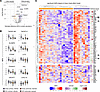 Figure 4
Plasma protein differences associated with malaria in individuals with primary infection versus previous exposure. Differential protein abundance between primary infected (n = 10) and previously exposed individuals (n = 21), based on a linear mixed-effects model accounting for interdonor variation, with FDR correction (Benjamini-Hochberg, 0.05) applied throughout. (A) Volcano plot comparing NPX values between primary infected and previously exposed donors (controlling for donor and time) and highlighting the top 10 differentially abundant proteins (DAPs) ranked by adjusted P value and NPX difference. (B) Protein abundance of the top 10 significant proteins (all have adjusted P ≤ 0.05) across acute and convalescent (M12) states. (C) Heatmap of ΔNPX (Acute–M12) for all significant DAPs, annotated with NPX differences and –log10(adjusted P values). Parameter estimate indicates the estimated difference in protein abundance.
Overall, we observed that most proteins (29 of 40) were higher in primary infected individuals, including cytokines (TNFSF13B, TNFSF13, FASLG, CSF1), enzymes (ASAH2, GALNT10, GZMA), and receptors (PTPRF, CRLF1, CD27) (Figure 4C). In contrast, only 11 proteins were higher in previously exposed individuals, including chemokines (CXCL16, CCL14), receptors (FCRL5), enzymes (FUCA1), and enzyme inhibitors (SPINK4, SPINK6).
Among the 40 proteins, 7 (TNFSF13B, CXCL16, FUCA1, ALDH1A1, TNFSF13, AXL, and TIGAR) have been linked to monocytes and DCs via blood gene expression profiles generated by the Human Protein Atlas (proteinatlas.org) and are indicated by arrows in Figure 4C. Among them, TNFSF13B, or B cell activating factor (BAFF), showed the greatest difference between primary-infected and previously exposed individuals with 4-fold higher abundance in primary-infected compared with previously exposed individuals.
Association between monocyte and DC-produced BAFF and BAFF-R levels on B cells. The significant differences in circulating TNFSF13B (BAFF) levels associated with previous malaria exposure prompted an investigation into potential immune cell sources. To approximate this, we analyzed gene expression levels from the single-cell RNA-seq dataset in various immune cell subsets. Comparing the average gene expression per immune cell subset from all 4 donors with acute malaria, we found that myeloid cells (CD14+ and CD16+ monocytes, mDCs, and pDCs) exhibited the highest average expression among PBMCs (Supplemental Figure 4A), corroborating existing literature (21). The gene expression of TNFSF13B in mDCs, CD14+, and CD16+ monocytes showed a decreasing trend across the sampling time points (Acute, 10 days, 12 months), consistent with higher expression during acute infection (Supplemental Figure 4, B and C). To further illustrate this temporal pattern, we compared the average gene expression levels between acute and 12-month samples, which showed higher average TNFSF13B expression across samples during the acute phase, most prominently in mDCs with a 0.48-fold increase, followed by CD16+ monocytes at a 0.37-fold increase and CD14+ monocytes at a 0.35-fold increase (Supplemental Figure 4D).
BAFF is the sole ligand for the BAFF-receptor (BAFF-R), encoded by the TNFRSF13C gene, and serves as a critical prosurvival receptor for B cells (21). The TNFRSF13C gene expression was low for B cells in our cohort, while the surface protein expression was high for naive and memory B cells but was low for plasma cells (Supplemental Figure 5, A–C). To validate these observations, we downloaded and repurposed a previously published malaria single-cell RNA-seq dataset (22) including samples from individuals with acute malaria (day 0), and days 7 and 28 after treatment, as well as from noninfected controls (Supplemental Figure 5D). We observed relatively even BAFF-R expression levels over time and compared with noninfected controls. Consistent with our own dataset, TNFRSF13C expression was low in plasma cells compared with other B cells.
To further explore the potential association between BAFF and the BAFF-R in clinical malaria, we reanalyzed previously generated flow cytometry data from 50 individuals of the same traveler cohort (23), where we examined BAFF-R expression on B cell subsets from acute infection through to 12 months after infection (Supplemental Figure 6A). During acute malaria, BAFF-R levels on circulating B cells were significantly depleted, with levels returning to those of healthy controls (n = 14) approximately 3–6 months after infection (Figure 5, A and B). This pattern was similar across B cell subsets (Supplemental Figure 6, B and C). When comparing BAFF-R levels on B cells from primary (n = 17) and previously exposed (n = 33) individuals during acute infection, we observed significantly lower levels in the primary infected group (P = 0.0068) (Figure 5C). This was also reflected in the surface expression of single-cell data (Supplemental Figure 5C).
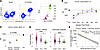 Figure 5
BAFF-R levels on B cells are reduced during acute malaria and highly negatively correlated with circulating BAFF levels. (A) Representative FACS plots of BAFF-R expression on total live lymphocytes at acute P. falciparum malaria or after 12 months (left and middle panel) and for CD19+ CD20+ B cells at all time points (right panel). (B) Longitudinal assessment of BAFF-R expression on CD19+CD20+ B cells at and after acute P. falciparum malaria. The points denote the mean with error bars showing the SEM. The gray lines indicate data from individual donors. Healthy individuals (Ctrl) as a reference with dotted line of their mean (n = 14) (C). Comparison of CD19+CD20+BAFF-R+ B cells during acute malaria for primary infected (purple, n = 15) and previously exposed individuals (orange, n = 28). Mean of control group as dotted line as in B. (D) Relative protein abundance NPX of BAFF (TNFSF13B) in primary infected and previously exposed individuals over the sampling time points, assessed using linear mixed-effects models accounting for repeated measures. *P < 0.05, ****P < 0.0001. (E) Association between plasma BAFF (TNFSF13B) levels and CD19+CD20+ B cell surface BAFF-R (MFI) levels during acute infection using a multiple linear regression model with BAFF and prior exposure status as predictors. The correlation coefficient (R2) was corrected for multiple testing (BAFF, exposure, BAFF × exposure). The line represents the fitted linear regression model with 95% CI. See also related Supplemental Figure 6. Data represent individual donors.
BAFF protein level dynamics in plasma over the 3 sampling time points (Acute, 10 days, and 12 months) for primary infected and previously exposed individuals confirmed that primary infected individuals exhibited highly elevated levels in response to malaria. In contrast, previously exposed individuals displayed only slightly elevated levels during acute malaria compared with at 12 months (Figure 5D). To formally assess the relationship between plasma BAFF and B cell BAFF-R levels, we fitted a multiple linear regression model including BAFF and prior exposure status as predictors (Figure 5E). Plasma BAFF was significantly associated with BAFF-R expression (β = −1,895, P = 5.8 × 10⁻⁷), whereas prior malaria exposure was not independently associated with BAFF-R expression after adjustment for plasma BAFF (P = 0.79). Inclusion of a BAFF × exposure interaction term did not improve model fit (P = 0.30), indicating that the association between plasma BAFF and BAFF-R expression was similar in primary infected and previously exposed individuals. These observations are consistent with previous findings from a controlled human malaria infection study, where primary malaria was associated with increased plasma BAFF levels and an inverse correlation between plasma BAFF and B cell BAFF-R expression (24).
BAFF-R downregulation is mediated by soluble plasma factors. The better understand which factors that could modulate BAFF-R levels on B cells, we used in vitro experimental approaches. We first assessed if soluble factors within the patient plasma could modulate BAFF-R levels. This was done by culturing healthy PBMCs with plasma pools from primary infected or previously exposed patients at acute malaria or convalescence for 24 hours followed by gating for B cells (Figure 6A).
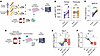 Figure 6
BAFF-R levels are affected by the plasma microenvironment and soluble BAFF. (A) Schematic illustration of the in vitro experimental setup for plasma stimulations of PBMCs. Plasma was pooled from primary infected (n = 8) or previously exposed (n = 8) donors while PBMCs were isolated from healthy blood donors (n = 11). (B) Geometric mean fluorescence intensity (geoMFI) of BAFF-R levels on gated B cells 24 hours after culture with indicate plasma pools. (C) Comparison of the BAFF-R geoMFI ratio for acute over 12-month plasma for primary infected and previously exposed donors. Statical analysis in B was done using a paired 2-tailed Student’s t tests and, in C, an unpaired 2-tailed Student’s t test. ***P < 0.001, ****P < 0.0001. (D) Schematic illustration of the experimental setup for recombinant BAFF stimulations of purified B cells. (E) BAFF-R geoMFI ratios between nonstimulated and BAFF, anti-Ig+CpGC, or anti-Ig+CpGC+BAFF stimulated sorted B cells after 2 days (n = 11) (E) or 4 days (n = 4) (F) of culture. Statistical analyzes in E and F were done using repeated-measures 1-way ANOVA followed by Šídák’s post hoc test with *P < 0.05, **P < 0.01. See also related Supplemental Figure 7. Data represent individual donors.
B cells from PBMCs stimulated with plasma were gated as indicated in Supplemental Figure 3 with an additional gate for BAFF-R+ cells (Supplemental Figure 7A). The stimulation had no effect on overall B cell numbers or BAFF-R+ cells (Supplemental Figure 7, B and C). In addition to BAFF-R levels, we also assessed surface expression of HLA-DR, CD11c, FcRL5, CD69, and CD86. Of these, only plasma from primary infected individuals at the acute time point could promote significant changes in B cell surface expression. FcRL5 displayed a modest upregulation compared with convalescent plasma, although the geoMFI levels remained similar to those from previously exposed plasma (Supplemental Figure 7, D and E). BAFF-R levels, however, were robustly reduced in both geoMFI and in ratio compared with plasma from previously exposed donors (Figure 6, B and C).
Since the plasma pools from primary infected individuals contained high levels of BAFF at the acute time point compared with previously exposed donors and convalescent time points (Supplemental Figure 7F), we next assessed if recombinant BAFF could be the driver of BAFF-R downregulation. We sorted total B cells from healthy individuals and stimulated them with BAFF alone, or in combination with anti-Ig (BCR ligand) and CpGC (TLR9 ligand), to mimic B cell activation during malaria infection (Figure 6D). After 2–4 days of culture, we compared BAFF-R levels between nonstimulated and stimulated cells. We observed that B cells stimulated with BAFF exhibited significant downregulation of BAFF-R (P < 0.05) compared with nonstimulated cells; however, B cells stimulated with BCR/TLR9 ligands initially (day 2) showed significant upregulation of BAFF-R (P < 0.05) compared with nonstimulated cells (Figure 6E) but then reduced overall BAFF-R levels at day 4 of culture (gated on nonplasmablasts) (Figure 6F). B cells stimulated with both BCR/TLR9 ligands and BAFF showed no significant difference in BAFF-R levels (P > 0.05) compared with cells stimulated with BCR/TLR9 ligands alone (Figure 6E). As expected from our own and previous data (25), we observed low BAFF-R levels on plasmablasts on day 4 of stimulation (Supplemental Figure 7G). Further analysis of the BAFF-R levels together with other B cell markers on day 2 and 4 of stimulation indicated that BAFF-R–low cells also displayed reduced levels of CD19 but normal levels of CD20 and no increased staining for a cell death marker (Supplemental Figure 7, H–J). This phenotype was not observed in B cells from malaria patient samples (Supplemental Figure 7I). Such a population was also seen when cultured with patient plasma, although the reduced BAFF-R levels observed were gated from the BAFF-R+ CD19 high population and not CD19 low cells (Supplemental Figure 7J).
In summary, the plasma from acute malaria in primary infected individuals, but not previously exposed donors, could drive BAFF-R downregulation. This effect could not be completely replicated through the addition of recombinant BAFF to B cells, indicating that additional factors or different oligomeric forms of BAFF in the plasma could be important in mediating the BAFF-R downregulation.
High levels of BAFF in circulation are associated with reduced parasite-specific antibody responses. To investigate the association between circulating BAFF and humoral immunity during acute malaria, we fitted linear mixed effects models including plasma BAFF levels, exposure group, and BAFF × exposure interaction terms and evaluated association with parasite-specific antibodies. Antibody responses were summarized using a cumulative response score (CRS) across 5 P. falciparum merozoite antigens (AMA1, MSP1-19, MSP2, MSP3, and GAMA). No significant interaction was observed for any antibody isotype (IgG: P = 0.996, IgG1: P = 0.675, IgG3: P = 0.453, IgM: P = 0.960), indicating that the association between BAFF and antibody responses was comparable across exposure groups. BAFF levels were negatively associated with CRS for IgG (R2adj = 0.48, P = 0.00079), IgG1 (R2adj = 0.54, P = 0,0029), IgG3 (R2adj = 0.51, P < 0.001), and IgM (R2adj = 0.24, P = 0.02) (Figure 7). Previous malaria exposure affected total IgG (P = 0.016) and IgG1 (P = 0.00046) — but not IgG3 and IgM. We next examined whether parasitemia could be a driving factor to explain either the BAFF (Supplemental Figure 8A) or antibody levels (Supplemental Figure 8B). However, no significant correlations were observed in either case, indicating that the negative association between circulating BAFF and antibody levels was not driven by parasitemia.
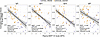 Figure 7
Circulating BAFF levels are inversely correlated with malaria-specific IgG responses. Linear regression analysis of acute BAFF levels (TNFSF13B NPX) and Cumulative Response Score (CRS) of total IgG, IgG1, IgG3, and IgM responses to 5 merozoite antigens in matching individuals (total n = 55, with primary infected n = 20 and previously exposed n = 35). BAFF × exposure interactions were determined for primary infected (purple) and previously exposed (orange) individuals. Lines represent fitted linear regression models with 95% CIs. Correlation coefficients (R2) were corrected for multiple testing (BAFF, exposure, BAFF × exposure). See also related Supplemental Figure 8. Data represent individual donors.
Together, these findings suggest that elevated BAFF during acute infection may be associated with less effective antibody responses in individuals experiencing their first malaria exposure.


