
Research ArticleAgingEndocrinology
Open Access |  10.1172/jci.insight.206012
Local growth hormone promotes benign prostatic hyperplasia
Masaki Ryuzaki,1 Svetlana Zonis,1 Neil A. Bhowmick,2 Sandrine Billet,2 Saravana Kumar Kailasam Mani,2 Stephen J. Freedland,3 Hyung L. Kim,3 Vera Chesnokova,1 and Shlomo Melmed1
1Pituitary Center, Department of Medicine,
2Division of Medical Oncology, Department of Medicine, and
3Department of Urology, Cedars-Sinai Health Sciences University, Los Angeles, California, USA.
Address correspondence to: Shlomo Melmed, Cedars-Sinai Health Sciences University, 8700 Beverly Blvd., ST2622, Los Angeles, California, 90048, USA. Phone: 310.423.4691; Email: melmed@csmc.edu.
Authorship note: VC and SM have been designated as co–senior authors.
Find articles by Ryuzaki, M. in: PubMed | Google Scholar
1Pituitary Center, Department of Medicine,
2Division of Medical Oncology, Department of Medicine, and
3Department of Urology, Cedars-Sinai Health Sciences University, Los Angeles, California, USA.
Address correspondence to: Shlomo Melmed, Cedars-Sinai Health Sciences University, 8700 Beverly Blvd., ST2622, Los Angeles, California, 90048, USA. Phone: 310.423.4691; Email: melmed@csmc.edu.
Authorship note: VC and SM have been designated as co–senior authors.
Find articles by Zonis, S. in: PubMed | Google Scholar
1Pituitary Center, Department of Medicine,
2Division of Medical Oncology, Department of Medicine, and
3Department of Urology, Cedars-Sinai Health Sciences University, Los Angeles, California, USA.
Address correspondence to: Shlomo Melmed, Cedars-Sinai Health Sciences University, 8700 Beverly Blvd., ST2622, Los Angeles, California, 90048, USA. Phone: 310.423.4691; Email: melmed@csmc.edu.
Authorship note: VC and SM have been designated as co–senior authors.
Find articles by
Bhowmick, N.
in:
PubMed
|
Google Scholar
|

1Pituitary Center, Department of Medicine,
2Division of Medical Oncology, Department of Medicine, and
3Department of Urology, Cedars-Sinai Health Sciences University, Los Angeles, California, USA.
Address correspondence to: Shlomo Melmed, Cedars-Sinai Health Sciences University, 8700 Beverly Blvd., ST2622, Los Angeles, California, 90048, USA. Phone: 310.423.4691; Email: melmed@csmc.edu.
Authorship note: VC and SM have been designated as co–senior authors.
Find articles by Billet, S. in: PubMed | Google Scholar
1Pituitary Center, Department of Medicine,
2Division of Medical Oncology, Department of Medicine, and
3Department of Urology, Cedars-Sinai Health Sciences University, Los Angeles, California, USA.
Address correspondence to: Shlomo Melmed, Cedars-Sinai Health Sciences University, 8700 Beverly Blvd., ST2622, Los Angeles, California, 90048, USA. Phone: 310.423.4691; Email: melmed@csmc.edu.
Authorship note: VC and SM have been designated as co–senior authors.
Find articles by Kailasam Mani, S. in: PubMed | Google Scholar
1Pituitary Center, Department of Medicine,
2Division of Medical Oncology, Department of Medicine, and
3Department of Urology, Cedars-Sinai Health Sciences University, Los Angeles, California, USA.
Address correspondence to: Shlomo Melmed, Cedars-Sinai Health Sciences University, 8700 Beverly Blvd., ST2622, Los Angeles, California, 90048, USA. Phone: 310.423.4691; Email: melmed@csmc.edu.
Authorship note: VC and SM have been designated as co–senior authors.
Find articles by
Freedland, S.
in:
PubMed
|
Google Scholar
|
1Pituitary Center, Department of Medicine,
2Division of Medical Oncology, Department of Medicine, and
3Department of Urology, Cedars-Sinai Health Sciences University, Los Angeles, California, USA.
Address correspondence to: Shlomo Melmed, Cedars-Sinai Health Sciences University, 8700 Beverly Blvd., ST2622, Los Angeles, California, 90048, USA. Phone: 310.423.4691; Email: melmed@csmc.edu.
Authorship note: VC and SM have been designated as co–senior authors.
Find articles by Kim, H. in: PubMed | Google Scholar
1Pituitary Center, Department of Medicine,
2Division of Medical Oncology, Department of Medicine, and
3Department of Urology, Cedars-Sinai Health Sciences University, Los Angeles, California, USA.
Address correspondence to: Shlomo Melmed, Cedars-Sinai Health Sciences University, 8700 Beverly Blvd., ST2622, Los Angeles, California, 90048, USA. Phone: 310.423.4691; Email: melmed@csmc.edu.
Authorship note: VC and SM have been designated as co–senior authors.
Find articles by Chesnokova, V. in: PubMed | Google Scholar
1Pituitary Center, Department of Medicine,
2Division of Medical Oncology, Department of Medicine, and
3Department of Urology, Cedars-Sinai Health Sciences University, Los Angeles, California, USA.
Address correspondence to: Shlomo Melmed, Cedars-Sinai Health Sciences University, 8700 Beverly Blvd., ST2622, Los Angeles, California, 90048, USA. Phone: 310.423.4691; Email: melmed@csmc.edu.
Authorship note: VC and SM have been designated as co–senior authors.
Find articles by Melmed, S. in: PubMed | Google Scholar
Published July 28, 2026 - More info
JCI Insight. 2026;11(17):e206012. https://doi.org/10.1172/jci.insight.206012.
© 2026 Ryuzaki et al. This work is licensed under the Creative Commons Attribution 4.0 International License. To view a copy of this license, visit http://creativecommons.org/licenses/by/4.0/.
Received: February 24, 2026; Accepted: July 22, 2026


-
Results
Prostate npGH expression increases with age concurrently with increased DNA damage. Employing normal prostate tissue microarrays derived from young (21–39 years; n = 46), middle-aged (40–60 years; n = 42), and aged (61–83 years; n = 84) patients (Figure 1, A–C), we found that epithelial npGH expression increases with age. Cytoplasmic npGH was detected in 2% of samples derived from the young cohort, and in 12% and 20% of microarray samples derived from middle-aged and aged cohorts (P = 0.014435; Figure 1D and Supplemental Figure 1A; supplemental material available online with this article; https://doi.org/10.1172/jci.insight.206012DS1). Stromal npGH expression showed a similar age-dependent increase (P < 0.05; Figure 1, A–C, and E, and Supplemental Figure 1B) and correlated with epithelial npGH expression (R2 = 0.275, P < 0.0001; Supplemental Figure 1C). We found a similar age-associated increase in prostate npGH expression in WT C57BL/6 mice ages 4–6 months and 24 months (Figure 1F and Supplemental Figure 1D). These results confirmed that npGH expression appears to increase with aging in normal human and murine prostate tissue. While in WT mice prostate weight increased with age, in GHR–/– mice devoid of GHR signaling, prostate weight did not change with age, and the prostate weight/body weight ratio was significantly lower compared with aged WT mice (Figure 1, G and H).
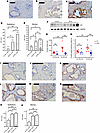 Figure 1
Prostate npGH and γH2AX expression increases with age. (A–C) Representative IHC images of GH expression (brown, cytoplasmic) in normal human prostate tissue specimens derived from individual patients aged (A) 35, (B) 47, or (C) 70 years. Scale bars: 100 μm. GH is expressed in both epithelial cells and in stroma in the aged group. (D and E) Graphs depict percentage of prostate tissue samples positive for GH in (D) epithelial cells and (E) stroma. IHC scores of ≥55 for epithelial cells and ≥32 for stroma were considered positive. Each dot represents an individual patient sample with positive GH expression. Results were analyzed by χ2 test, as shown in Supplemental Figure 1, A and B. (F) Western blot of GH expression in individual prostate tissues derived from C57BL/6 WT male mice aged 4–6 months and 24 months. ImageJ quantifications of Western blots are depicted in Supplemental Figure 1D. (G) Prostate weight and (H) prostate weight/body weight ratio in WT or GHR–/– mice aged 4–6 months and 24 months. (I–N) Representative IHC images of γH2AX expression (brown, intranuclear) in normal human prostate tissue specimens derived from patients aged (I and J) 28, (K and L) 40, or (M and N) 72 years. Magnification is ×10 in I, K, and M, and ×20 in insets in J, L, and N. Scale bars: 100 μm. (O and P) Graphs depict percentage of prostate tissue samples positive for γH2AX in (O) epithelial cells and (P) stroma. IHC scores of ≥22 for epithelial cells and ≥11 for stroma were considered positive. Each dot represents an individual patient sample with positive γH2AX. Results were analyzed by χ2 test, as shown in Supplemental Figure 1, E and F. *P < 0.05; **P < 0.01; ***P < 0.001.
As DNA damage induces npGH expression (2, 43), we examined expression of γH2AX, a DNA damage marker, in surgically resected human prostate tissue arrays (Figure 1, I–N, and Supplemental Figure 1, E and F). Epithelial γH2AX expression increased markedly with age (P = 0.003) and was detected in 16% of specimens in the young cohort (n = 38), and in 42% and 51% of normal prostate specimens derived from middle-aged and aged cohorts (n = 24 and n = 45, respectively; Figure 1O and Supplemental Figure 1E). Stromal γH2AX expression also increased with age (P = 0.02) (Figure 1P and Supplemental Figure 1F), and correlated with epithelial γH2AX expression (R2 = 0.3152, P < 0.001; Supplemental Figure 1G).
Prostate cell DNA damage response triggers npGH, further enhancing DNA damage accumulation. As both GH and DNA damage appeared to accumulate concurrently in aging human prostate cells, we considered whether activated DNA damage response triggers local prostate npGH, as was previously shown in colon cells (2, 44). We induced DNA damage in non-tumorous primary human prostate epithelial cells (HPrECs) derived from 2 separate young individuals, as well as in normal human prostate–associated fibroblasts (NAFs). Treatment with etoposide, a topoisomerase II inhibitor producing both single-strand and double-strand DNA breaks, induced DNA damage, as evidenced by increased levels of p53 and γH2AX, and also enhanced npGH expression in all prostate cell models tested (Figure 2, A–C, and Supplemental Figure 2, A–C), indicating that local prostate npGH expression is activated by DNA damage.
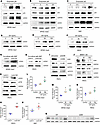 Figure 2
Prostate cell DNA damage response triggers npGH expression, further enhancing prostate DNA damage accumulation. (A–C) Western blots in (A) HPrEC line 1, (B) HPrEC line 2, and (C) NAFs treated with indicated doses of etoposide for 24 hours. (D–F) Western blots of (D) HPrEC line 1, (E) HPrEC line 2, and (F) PNT2 treated with indicated doses of GH and analyzed 24 hours later. (G and H) Western blots in (G) HPrEC line 1 and (H) PNT2 cocultured with lentiGH- or lentiV-infected NAFs for 24 hours. (I) Western blots in PNT2 infected with lentivirus expressing scramble shRNA (shControl) or GHR shRNA (shGHR) and analyzed 4 days later. (J) PNT2 treated with indicated doses of BM001 and analyzed 6 hours later. (K) Western blots in lentiGH- or lentiV-infected PNT2 and analyzed 4 weeks later. (L–N) Comet assay quantifying DNA damage in (L) HPrEC line 1, (M) HPrEC line 2, and (N) PNT2 treated with indicated doses of GH for 24 hours compared with control. (O and P) Comet assay quantifying DNA damage in (O) PNT2 and (P) lentiGH- or lentiV-infected NAFs and analyzed 4 weeks later. (Q) Western blot in prostate tissue derived from 24-month-old WT or GHR–/– mice. For A–K, representative blots from at least 3–4 independent experiments are shown. For A–K, ImageJ quantification of Western blots is depicted in Supplemental Figure 2, A–F, H–K, and M. For L–Q, 200–400 nuclei were analyzed in 3 separate experiments, each represented by 1 dot. Results shown are mean ± SEM. Results are shown as percentage of control, but statistical testing was performed on raw numbers. *P < 0.05, **P < 0.01 versus control by 2-way ANOVA followed by Tukey’s post hoc test to adjust for multiple comparisons (L–N) or 2-tailed Student’s t test (O and P). For Q, ImageJ quantifications of Western blots are depicted in Supplemental Figure 2P.
To elucidate endocrine GH action in prostate epithelial cells, we treated HPrEC line 1, HPrEC line 2, and the human prostate epithelial cell line PNT2 with GH (50 and 100 ng/mL) and demonstrated markedly increased γH2AX expression in all lines after 24 hours (Figure 2, D–F, and Supplemental Figure 2, D–F). To explore a paracrine mechanism for npGH action on prostate epithelial cells, human NAFs were infected with lentivirus expressing either hGH (lentiGH) or vector (lentiV) (Supplemental Figure 2G), then cocultured with either HPrEC line 1 or PNT2 for 24 hours. HPrEC line 1 or PNT2 exposed to paracrine GH expressed increased γH2AX levels compared with lentiV NAF cocultures (Figure 2, G and H and Supplemental Figure 2, H and I). We confirmed the specificity of paracrine npGH action by infecting PNT2 with lentivirus stably expressing short hairpin GHR (shGHR) and by blocking GHR synthesis with the small molecule inhibitor BM001. As GH action is mediated by STAT5, abrogation of GH signaling was also confirmed by decreased expression of p-STAT5, and attenuated γH2AX expression in both experimental models (Figure 2, I and J, and Supplemental Figure 2, J and K).
To investigate the mechanisms of npGH effects on DNA damage, PNT2 cells were infected with lentiGH or lentiV (Supplemental Figure 2L). Our earlier experiments show that GH induces DNA damage by activating Wip1, which, in turn, suppresses phosphorylation of ATM and p53, diminishing DNA repair pathway activity. Indeed, PNT2 cells infected with lentiGH exhibit increased Wip1 and decreased pATM, consistent with increased γH2AX expression (Figure 2K and Supplemental Figure 2M). GH also activated Wip1 and suppressed both pATM and p53 in HPrEC cells 3–6 hours after the treatment, preceding the effects on γH2AX (Supplemental Figure 2, N and O). DNA damage quantifications assessed by comet assay were consistent with elevated γH2AX expression observed by Western blot. Specifically, treatment with 100 ng/mL GH for 24 hours increased DNA damage approximately 80% in HPrEC line 1, approximately 100% in HPrEC line 2, and approximately 50% in PNT2 (Figure 2, L–N). PNT2 and NAFs infected with lentiGH similarly exhibited DNA damage accumulation (~130% and ~40%, respectively) compared with control (Figure 2, O and P).
In agreement with in vitro results, prostate tissue harvested from 24-month-old GHR–/– mice showed lower γH2AX expression, indicative of decreased DNA damage accumulation, compared with WT (Figure 2Q and Supplemental Figure 2P).
Overall, these results showed both endocrine and autocrine/paracrine GH act to enhance prostate epithelial cell DNA damage accumulation.
Age-associated stimulation of prostate EMT and proliferation is mediated by npGH. We next examined local npGH action on prostate cell EMT. In human prostate tissue samples obtained at surgical resection, immunohistochemical analysis showed that epithelial transcription factors TWIST1 and -2, important for triggering EMT, were induced with age (P = 0.012; Figure 3, A–F, and Supplemental Figure 3A). TWIST1 and -2 were detected in 5% of samples from the young cohort (n = 38), in 17% from the medium-aged (n = 24), and 30% of the aged cohorts (n = 46; Figure 3G and Supplemental Figure 3A). TWIST1/2 expression strongly correlated with local npGH expression in normal prostate epithelial cells (R2 = 0.248, P < 0.0001; Supplemental Figure 3B). In sum, these results suggest that age-associated increased prostate epithelial npGH expression occurs concurrently with EMT activation.
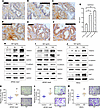 Figure 3
Age-associated stimulation of prostate EMT and proliferation are mediated by npGH. (A–F) Human prostate TWIST1/2 expression increases with age. Representative IHC images of TWIST1/2 expression (brown) in normal human prostate tissue specimens derived from patients aged (A and B) 30, (C and D) 45, and (E and F) 80 years. Magnification is ×10 in A, C, and E, and ×20 in insets in B, D, and F. Scale bars: 100 μm. (G) Graph depicts percentage of samples positive for TWIST1/2 in normal human prostate tissue. IHC scores of ≥70 were considered positive. Each dot represents an individual patient with positive TWIST1/2. **P < 0.01 by χ2 test, as shown in Supplemental Figure 3A. (H–J) Endocrine GH induces prostate cell EMT and proliferation. Western blot of EMT markers in (H) HPrEC line 1, (I) HPrEC line 2, and (J) PNT2. Cells were treated with indicated GH doses and analyzed 24 hours later. Representative blots from at least 2–4 independent experiments are shown. ImageJ quantification of Western blots is depicted in Supplemental Figure 3, C–E. For H, the Western blot membrane from Figure 2D was stripped and re-probed for TWIST2 and Ki67; the GAPDH loading control is the same. (K–M) Migration of (K) HPrEC line 1, (L) HPrEC line 2, and (M) PNT2 cells treated with GH. Cells were plated into migration chambers with GH (100 ng/mL) or left untreated (control); 24 hours later, cells were stained with crystal violet, imaged (magnification, ×100), and the number of migrated cells was assessed. Results shown are mean ± SEM. Each dot represents results of 3 separate experiments performed in duplicate. Results are shown as percentage of control, but statistical testing was performed on raw numbers. Results in K–M were analyzed by 2-tailed Student’s t test. **P < 0.01 versus control.
We next tested whether endocrine GH alters EMT in normal non-tumorous prostate epithelial cells. Treatment with GH induced TWIST2 and SNAI1 expression in both HPrEC cell lines and in PNT2 cells. GH also dose-dependently increased TWIST1, TWIST2, and SNAI1 mRNA levels in PNT2 cells. By contrast, E-cadherin, required for cell-to-cell adhesion, was decreased by GH treatment, consistent with activated EMT, while Ki67, a marker of cell proliferation, was increased (Figure 3, H–J, and Supplemental Figure 3, C–F). Consistent with these results, we observed enhanced cell migration in both HPrEC lines and PNT2 (60%, 50%, and 30%, respectively) 24 hours after GH treatment (Figure 3, K–M). These changes in EMT markers and enhanced migration likely reflect mesenchymal differentiation in response to GH treatment of non-malignant prostate epithelia.
Autocrine/paracrine GH induces prostate EMT and proliferation. To test whether autocrine/paracrine npGH exerts similar effects on EMT, PNT2 were infected with lentiGH or lentiV, and HPrEC line 1 and PNT2 cells were cocultured with lentiGH- or lentiV-infected NAFs. Induction of TWIST2 and SNAI1, and suppression of E-cadherin were observed in cells overexpressing GH (Figure 4A and Supplemental Figure 4A) as well as in prostate cells exposed to paracrine npGH (Figure 4, B and C, and Supplemental Figure 4, B and C). To confirm the specificity of paracrine npGH signaling, we treated PNT2 with lentivirus expressing shGHR or with the GHR synthesis blocker BM001. Both inhibitors of GH signaling blocked the induction of TWIST2 (Figure 4, D and E, and Supplemental Figure 4, D and E) and BM001 treatment suppressed TWIST2 mRNA expression concurrently with suppressed GHR mRNA expression (Supplemental Figure 4F). Similarly, 2-year-old GHR–/– mice devoid of GH signaling showed decreased prostate Twist2 and Snai1 (Figure 4F and Supplemental Figure 4G). Furthermore, in both HPrEC line 1 and PNT2 as well as in GHR–/– mice, while GH induced Ki67, the effect was blunted by blocking GHR signaling (Figure 4, A–F, and Supplemental Figure 4, A–G). We also observed enhanced migration and invasion of PNT2 cells infected with lentiGH versus lentiV (Figure 4, G and H), as well as in HPrEC line 1 (Figure 4, I and J) and PNT2 cells (Figure 4, K and L) cocultured with NAFs infected with lentiGH versus lentiV. Overall, the results indicate that autocrine/paracrine npGH induces EMT in prostate epithelium.
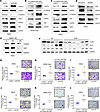 Figure 4
Autocrine/paracrine GH induces prostate EMT and proliferation. (A–E) Western blots of EMT marker expression in (A) PNT2 infected with lentiGH or lentiV and analyzed 4 weeks later, (B) HPrEC line 1 or (C) PNT2 cocultured for 24 hours with NAFs infected with lentiGH or lentiV; (D) PNT2 infected with lentivirus expressing control shRNA (shControl) or GHR shRNA (shGHR) and collected after 4 days; and (E) PNT2 treated with indicated doses of BM001 and analyzed 6 hours later. Representative blots from at least 3 independent experiments are shown. (F) Western blot of EMT marker expression in prostate tissue samples derived from 24-month-old WT (n = 5) and GHR–/– (n = 6) mice. For A–F, ImageJ quantification of Western blots is depicted in Supplemental Figure 4, A–E, and G. For B, the Western blot membrane from Figure 2G was stripped and re-probed for Ki67; the GAPDH loading control is the same. (G-I) Migration and (J-L) invasion of (G and J) PNT2 cells infected with lentiGH and lentiV and (H and K) HPrEC or (I and L) PNT2 cells co-cultured with lentiGH- or lentiV-infected NAF. Migrated or invaded cells were stained with crystal violet, imaged (magnification, ×100), and cells counted. Results shown are mean ± SEM/field. Each dot represents results of 2–3 separate experiments in duplicate or triplicate. Results are shown as percentage of control, but statistical testing was performed on raw numbers. Results were analyzed by 2-tailed Student’s t test. *P < 0.05, **P < 0.01 versus control.
IGF-1 induces EMT and proliferation, but attenuates DNA damage in human prostate cells. To further understand mechanisms of GH action in prostate epithelium, we next assessed whether the effects were mediated through IGF-1 or directly through GH/GHR signaling. IGF-1 levels were not significantly increased with age in WT mice (Figure 5, A and B), whereas IGF-1 expression was induced in cells treated with etoposide or GH, in PNT2 cells overexpressing GH, and in HPrEC line 1 and PNT2 cells cocultured with GH-expressing NAFs (Supplemental Figure 5, A–R). To examine direct IGF-1 involvement in GH action, we treated PNT2 cells with IGF-1 or picropodophyllin (PPP), an inhibitor of IGF-1 receptor (IGF-1R) tyrosine autophosphorylation (45). IGF-1 markedly increased TWIST2 and SNAI1 expression and decreased E-cadherin expression. Although IGF-1 elevated Ki67, there was no impact on γH2AX expression (Figure 5C and Supplemental Figure 5S). As expected, PPP treatment of PNT2 cells suppressed IGF-1R phosphorylation, but expression of IGF-1R, GH, and GHR was induced, suggestive of a negative feedback autoregulatory loop. Suppression of IGF-1 signaling with PPP also markedly suppressed TWIST2 expression (Figure 5D and Supplemental Figure 5T). We next tested the effect of PPP on GH action in PNT2 cells. PPP treatment suppressed TWIST2 and SNAI1 and did not alter E-cadherin expression, whereas the addition of PPP to GH treatment suppressed GH-induced increases in TWIST2 and SNAI1, but did not reverse GH-induced suppression of E-cadherin (Figure 5E and Supplemental Figure 5U). Similar results were observed with PPP treatment of PNT2 cells infected with lentiV or lentiGH, as PPP suppressed TWIST2 and SNAI1 but had no effect on E-cadherin in lentiV-infected PNT2 (Figure 5F and Supplemental Figure 5V). In contrast to the demonstrated increase in DNA damage with GH treatment (Figure 2), comet assay in PNT2 cells showed a dose-dependent decrease in DNA damage over 24 hours of IGF-1 treatment (Figure 5G), consistent with the observation that IGF-1R signaling promotes DNA damage repair (46). As GH can also act through IGF-1R (47), we tested whether blocking this receptor affects GH-induced DNA damage accumulation. We found an approximately 30% increase in DNA damage in PNT2 cells treated with PPP, with GH, or with both PPP and GH (Figure 5H). Together, these results suggest that GH-induced local IGF-1 may at least partially activate EMT and increase proliferation. However, the DNA damage increase is mediated directly through GH/GHR signaling independently of IGF-1.
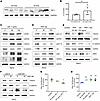 Figure 5
IGF-1 induces EMT and proliferation, but attenuates DNA damage. (A and B) IGF-1 expression in prostate tissue derived from 4- to 6-month-old and 24-month-old WT male mice. (A) Western blot. (B) ImageJ quantification of expression normalized to loading controls. Average measurements of four 4- to 6-month-old and five 24-month-old mice are shown. Each dot represents sample analysis derived from an individual animal. Results are shown as mean ± SEM for each group. Data are graphed as percentage of control, but statistical testing was performed on raw numbers. Differences were assessed with 2-tailed Student’s t-test. (C and D) Western blots of protein expression in PNT2 cells treated with indicated doses of (C) IGF-1 or (D) IGF-1R inhibitor PPP and analyzed 24 hours later. tIGF-1R, total IGF-1 receptor; pIGF-1R, phosphorylated IGF-1R. (E) Western blot of protein expression in PNT2 cells treated with 50 nM PPP, 100 ng/mL GH, or both. (F) Western blot of protein expression in PNT2 cells infected with lentiGH or lentiV, treated with 50 nM PPP after 4 weeks and analyzed 24 hours later. (G and H) Comet assay in PNT2 cells treated with indicated doses of (G) IGF-1 or (H) PPP, GH, or both for 24 hours. Results shown are mean ± SEM. Each dot in G and H represents a single experiment in which 300–400 nuclei were analyzed. Results are shown as percentage of control, but statistical testing was performed on raw numbers. Results were analyzed by 2-way ANOVA followed by Tukey’s multiple-comparison test. *P < 0.05, **P < 0.01 versus control. For C–F, representative blots of at least 3 experiments are shown. ImageJ quantification of protein expression is shown in Supplemental Figure 5, S–V.
GH suppresses DNA damage repair pathways in HPrECs. Next, employing RNA-seq and subsequent bioinformatics analysis, we found that several signaling pathways were altered and genes differentially expressed in both HPrEC line 1 and line 2 treated with 100 mg/mL GH for 24 hours (Supplemental Figure 6, A and B). We then sought to identify regulators of DNA damage repair in HPrECs exposed to GH (Figure 6, A–C). Specifically, BRCA1/BRCA2-containing complex subunit 3 (BRCC3) (P = 0.029 in line 1 and P = 0.043 in line 2), TAF5 (P = 0.001 in line 2), H4C16 (P = 0.018 in line 2), NUDT16L1 (P = 0.016 in line 2), and TADA3 (P = 0.021 in line 2), all pivotal for DNA damage repair (48–54), were downregulated by GH treatment. Real-time PCR confirmed RNA-seq results (Figure 6D). Furthermore, Western blot analysis showed suppressed BRCC3, TADA3L, and TAF5 protein expression with GH treatment (Figure 6E and Supplemental Figure 6C). These findings define a potential mechanism underlying GH-induced prostate cell DNA damage accumulation.
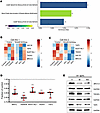 Figure 6
GH suppresses DNA damage repair pathways in HPrECs. RNA-seq conducted on RNA extracted from HPrEC line 1 or HPrEC line 2 with or without treatment of 100 ng/mL GH for 24 hours. Results from 3 independent experiments shown. (A) Bar plot showing DNA repair related pathways identified by over-representation analysis. The x axis (enrichment ratio) represents the ratio of differentially expressed genes (DEGs) within a specific pathway to the total number of genes annotated to that pathway. The number of DEGs within each pathway is given next to its respective bar. P value is indicated by color of the bar. (B and C) Heatmaps of 5 representative genes associated with the DNA damage repair pathway showing significant downregulation in response to GH treatment in (B) HPrEC line 1 or (C) HPrEC line 2. (D) Real-time PCR of mRNA expression of genes identified as significantly suppressed by RNA-seq in HPrEC line 2 treated with 100 ng/mL GH for 24 hours. Normalized PCR results are expressed as fraction of control taken as 1. The experiment was performed in triplicate. Differences were assessed with 2-tailed Student’s t test. *P < 0.05, **P < 0.01 versus control. (E) Western blot of DNA repair protein expression in HPrEC line 2 treated with indicated doses of GH for 24 hours. Representative blots from at least 3 independent experiments are shown. ImageJ quantification is depicted in Supplemental Figure 6.
npGH, γH2AX, and TWIST1/2 expression is increased in both aged normal human prostate tissue and in BPH. We showed that both epithelial and stromal npGH, γH2AX, and TWIST2 all markedly increase with age (Figure 1, A–C, and I–N, and Figure 3, A–F). As both EMT and DNA damage accumulation contribute to pathogenesis of age-related BPH (10, 42), we examined whether local npGH induction of DNA damage and EMT enables BPH development. Comparing commercially available BPH tissue microarrays with normal prostate tissue, we found epithelial BPH npGH expression was similar to npGH expression in the aged normal prostate (Figure 7, A–C, and Supplemental Figure 7A). Stromal npGH expression in BPH also was not different from the aged normal prostate cohort (Figure 7, A, B, and D, and Supplemental Figure 7B). npGH abundance in BPH epithelium correlated with abundance in stromal fibroblasts (R2 = 0.2751, P < 0.0001; Supplemental Figure 7C). To confirm that GH in BPH is active, we immunostained BPH samples with anti–p-STAT5 antibodies (Figure 7E) and found that in BPH epithelial GH positively correlates with p-STAT5 expression (R2 = 0.1186, P = 0.0076, Supplemental Figure 7K). Assessment by immunohistochemistry (IHC) revealed similar frequency of epithelial and stromal γH2AX expression in BPH samples and aged normal prostate (Figure 7, F–I, and Supplemental Figure 7, D and E). BPH epithelial γH2AX correlated with stromal γH2AX expression (R2 = 0.3954, P < 0.0001; Supplemental Figure 7F). However, BPH epithelial TWIST1/2 expression markedly increased compared with aged normal cohorts (P < 0.05; Figure 7, G–L, and Supplemental Figure 7H). Importantly, γH2AX in BPH epithelium also correlated with epithelial npGH expression (R2 = 0.1305, P = 0.0049; Supplemental Figure 7G) and epithelial TWIST1/2 expression correlated with epithelial GH (R2 = 0.0875, P = 0.007) and with γH2AX (R2 = 0.06291, P = 0.0422; Supplemental Figure 7, I and J). Taken together, these results indicated that npGH, DNA damage, and EMT are similarly induced in BPH and in the normal aged cohort and that in BPH both γH2AX and TWIST2 are connected to npGH.
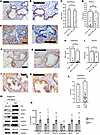 Figure 7
npGH, γH2AX, and TWIST1/2 expression is increased in aged normal human prostate tissue and in BPH. (A and B) Representative IHC images of GH expression (brown) in BPH specimens from a 68-year-old patient. (C and D) Percentage of GH-positive normal prostate or BPH (C) epithelium and (D) stroma. Scores of ≥55 for epithelium and ≥32 for stroma were considered positive. Each dot represents 1 patient. Results were analyzed by χ2 test, as shown in Supplemental Figure 7, A and B. (E) Representative IHC images of intranuclear p-STAT expression (brown) in BPH specimen. (F and G) Representative IHC images of γH2AX expression (brown) in BPH specimen from a 64-year-old patient. (H and I) Percentage of γH2AX-positive normal prostate or BPH (H) epithelium and (I) stroma. Scores of ≥22 for epithelium and ≥11 for stroma were considered positive. Each dot represents 1 patient. Results were analyzed by χ2 test, as shown in Supplemental Figure 7, D and E. (J and K) Representative IHC images of TWIST1/2 expression (brown) in BPH specimen from a 70-year-old patient. Magnification, ×10 (A, F, and J) and ×20 (B, G, and K insets). Scale bars: 100 μm. (L) Percentage of TWIST1/2-positive normal prostate or BPH samples. Scores of ≥70 were considered positive. Each dot represents 1 patient. Results were analyzed by χ2 test, as shown in Supplemental Figure 7H. (M and N) DNA damage, EMT, and proliferation protein expression in primary human BPH cultures treated overnight with 100 ng/mL GH. (M) Western blot in cells from a single patient. (N) ImageJ quantification of protein expression normalized to loading controls in cells from 9 patients. Each dot represents 1 patient. Results are shown as mean ± SEM. Results are shown as percentage of control, but statistical testing was performed on raw numbers. Results were analyzed by 2-tailed Student’s t test. *P < 0.05, **P < 0.01 versus control. Patient characteristics are shown in Table 1.
GH induces DNA damage, EMT, and proliferation in cultured human BPH cells. We next generated primary cultures derived from 9 freshly resected human BPH surgical specimens (Table 1). We first confirmed that GH is induced in BPH tissue compared with HPrECs derived from young healthy individuals. Indeed, GH mRNA levels were markedly higher in all BPH specimens (Supplemental Figure 8A). BPH cultures were treated overnight with 100 ng/mL GH (Figure 7, M and N). p53 and γH2AX were induced by GH in all but one patient, suggesting GH induced DNA damage. Furthermore, expression of TWIST2 and SNAI1 was enhanced, whereas E-cadherin expression decreased with GH treatment, indicative of EMT activation. GH also induced Ki67 expression, a marker of proliferation. Thus, these results support our hypothesis that GH may act to facilitate BPH growth.
Endocrine/paracrine GH induces changes consistent with BPH. To assess the role of age-associated npGH induction in promotion of BPH development, both anterior prostate glands of 8-week-old syngeneic C57BL/6 mice were allografted with 6 × 10⁵ lentivirus-infected mouse fibroblasts expressing either mouse GH (mGH) or control vector suspended in Matrigel (experiment 1) or in collagen (experiment 2). In experiment 1, after 8 weeks, palpable allografts in 8 of 9 mice injected with mGH-expressing fibroblasts were observed, compared with only 5 of 11 mice in the control group. In experiment 2, after 6 weeks, 4 of 11 mice injected with mGH-expressing fibroblasts formed palpable allografts, compared with no palpable grafts in the control group. Serum GH did not rise appreciably in allografted mice in experiment 1 (data not shown), but 4 mice with palpable allografts in experiment 2 had elevated serum GH concentrations (261–790 ng/mL). We confirmed strong immunoreactive mGH expression in all allografts tested (Figure 8A). Expression of both γH2AX (P = 0.0274; Figure 8, B–D) and Ki67 (P < 0.0001; Figure 8, E–G) was markedly increased in prostate tissue adjacent to grafts expressing mGH compared with vector control. In 6 of 9 animals in experiment 1 (Figure 8, H–O) and in 4 of 11 animals in experiment 2 (Supplemental Figure 9, A–D), we observed epithelial phenotypic features consistent with BPH in tissue adjacent to mGH-expressing fibroblasts. Prostate epithelial hyperplasia was not observed in prostate tissue adjacent to grafts expressing lentiV in control mice in either experiment.
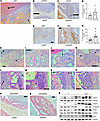 Figure 8
Endocrine/paracrine GH induces changes consistent with BPH. Murine anterior prostate glands in 8-week-old C57BL/6 mice were injected with 6 × 10⁵ mouse prostate fibroblasts infected with lentivirus expressing mouse GH (mGH) or empty vector (V) and euthanized after 2 months. (A) Representative IHC image of GH expression (brown) in allograft tumor (dashed arrow) and epithelial hyperplasia focus (solid arrow) in close proximity to GH-secreting allograft tumor. (B and C) Representative IHC images of γH2AX expression (brown) in the prostate in close proximity to allograft tumors expressing (B) lentiV or (C) lenti-mGH. (D) Percentage of cells positive for γH2AX detected by IHC. (E and F) Representative IHC images of Ki67 expression (brown) in the prostate in close proximity to allograft tumors expressing (E) lentiV or (F) lenti-mGH. (G) Percentage of cells positive for Ki67 detected by IHC. γH2AX staining in D and Ki67 staining in G are presented as average percentage of positively stained anterior prostate epithelial cells from 5–7 images per individual mouse. Results are presented as mean ± SEM. Differences were assessed with 2-tailed Student’s t test. *P < 0.05, **P < 0.01 versus control. (H–O) Representative H&E images of prostate tissue from mice injected with lenti-mGH fibroblasts. Magnification, ×10 (H, J, L, and N) and ×20 (I, K, M, and O insets). Hyperplastic (BPH) areas are marked by solid arrows and allograft tumor areas are marked by dashed arrows. Scale bars: 50 μm. (P and Q) Representative double-staining image of p63 (red) and p504s (brown) in a prostate specimen injected with fibroblasts infected with (P) lentiV or (Q) lenti-mGH imaged at ×10. Scale bars: 50 μm. BPH is positive for p63 but negative for p504s. Stromal brown cells depicting lymphocytes positive for p504s served as a positive control. (R) Western blot of dorsolateral prostate γH2AX, EMT markers, and PCNA. ImageJ quantification is shown in Supplemental Figure 9G.
8-Hydroxy-2′-deoxyguanosine (8-OH-dG), a marker of oxidative stress, has been shown to be induced in BPH (55–59). We also found that 8-OH-dG expression is enhanced in BPH lesions in mice injected with lenti-mGH–expressing fibroblasts (Supplemental Figure 9, E and F).
Human BPH and normal prostate, but not prostate cancer, shows positive nuclear p63 staining (60) and negative p504s (also called AMACR) staining (61, 62). Double staining with both antibodies revealed negative p504s and positive p63 staining, suggesting the hyperplastic lesions with mGH-expressing fibroblasts were consistent with a pathologic diagnosis of BPH (Figure 8, P–Q). Furthermore, Western blot analysis of the dorsolateral prostate carefully dissected to isolate prostate tissue adjacent to mGH-expressing or control fibroblasts showed that paracrine npGH emanating from the allografts increased DNA damage, as evidenced by increased γH2AX expression, and activated EMT, as evidenced by elevated TWIST1/2 and SNAI1 expression and reduced E-cadherin. In addition, epithelial proliferation in tissue adjacent to mGH-expressing fibroblasts was increased, as evidenced by PCNA activation (Figure 8R and Supplemental Figure 9G). In sum, the in vivo mouse studies reflected endocrine/paracrine GH-mediated prostate DNA damage and EMT that engendered epithelial changes consistent with the development of BPH.


