
Submit a comment
Abstract
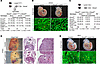
Roberts syndrome is caused by biallelic ESCO2 pathogenic variants, but the mechanisms linking ESCO2 loss to embryonic endothelial failure remain poorly defined. Endothelial cells must maintain identity and resist endothelial-mesenchymal transition (EndMT), yet conventional transcriptomics measures gene abundance rather than isoform composition. Here, using endothelial-specific Esco2 deletion in a mouse model relevant to Roberts syndrome, we show that Esco2 loss causes yolk sac vascular remodeling failure, pathological EndMT, diversion from hemogenic endothelial fate, hemogenic endothelial depletion, impaired hematopoietic output, and embryonic lethality. Short-read single-cell RNA-seq revealed broad endothelial reprogramming, whereas single-cell long-read isoform sequencing uncovered a hidden layer of isoform dysregulation that conventional gene-level analysis failed to resolve. Esco2-deficient endothelium exhibited transcriptome-wide isoform switching, disruption of a multi-tier splicing-factor network, and predicted broad loss or rewiring of protein-coding output. Chromatin occupancy profiling localized Esco2 to exonic regions near alternatively spliced loci, supporting a cotranscriptional route to spliceopathy. Whole-genome sequencing showed that local DNA variation was insufficient to explain these changes, supporting a predominantly posttranscriptional mechanism. These findings identify isoform control as a disease-relevant layer of endothelial identity maintenance in Roberts syndrome.
Authors
Roy Jung, Sherin Saheera, Chinmay M. Trivedi
Guidelines
The Editorial Board will only consider comments that are deemed relevant and of interest to readers. The Journal will not post data that have not been subjected to peer review; or a comment that is essentially a reiteration of another comment.
- Comments appear on the Journal’s website and are linked from the original article’s web page.
- Authors are notified by email if their comments are posted.
- The Journal reserves the right to edit comments for length and clarity.
- No appeals will be considered.
- Comments are not indexed in PubMed.
Specific requirements
- Maximum length, 400 words
- Entered as plain text or HTML
- Author’s name and email address, to be posted with the comment
- Declaration of all potential conflicts of interest (even if these are not ultimately posted); see the Journal’s conflict-of-interest policy
- Comments may not include figures


